

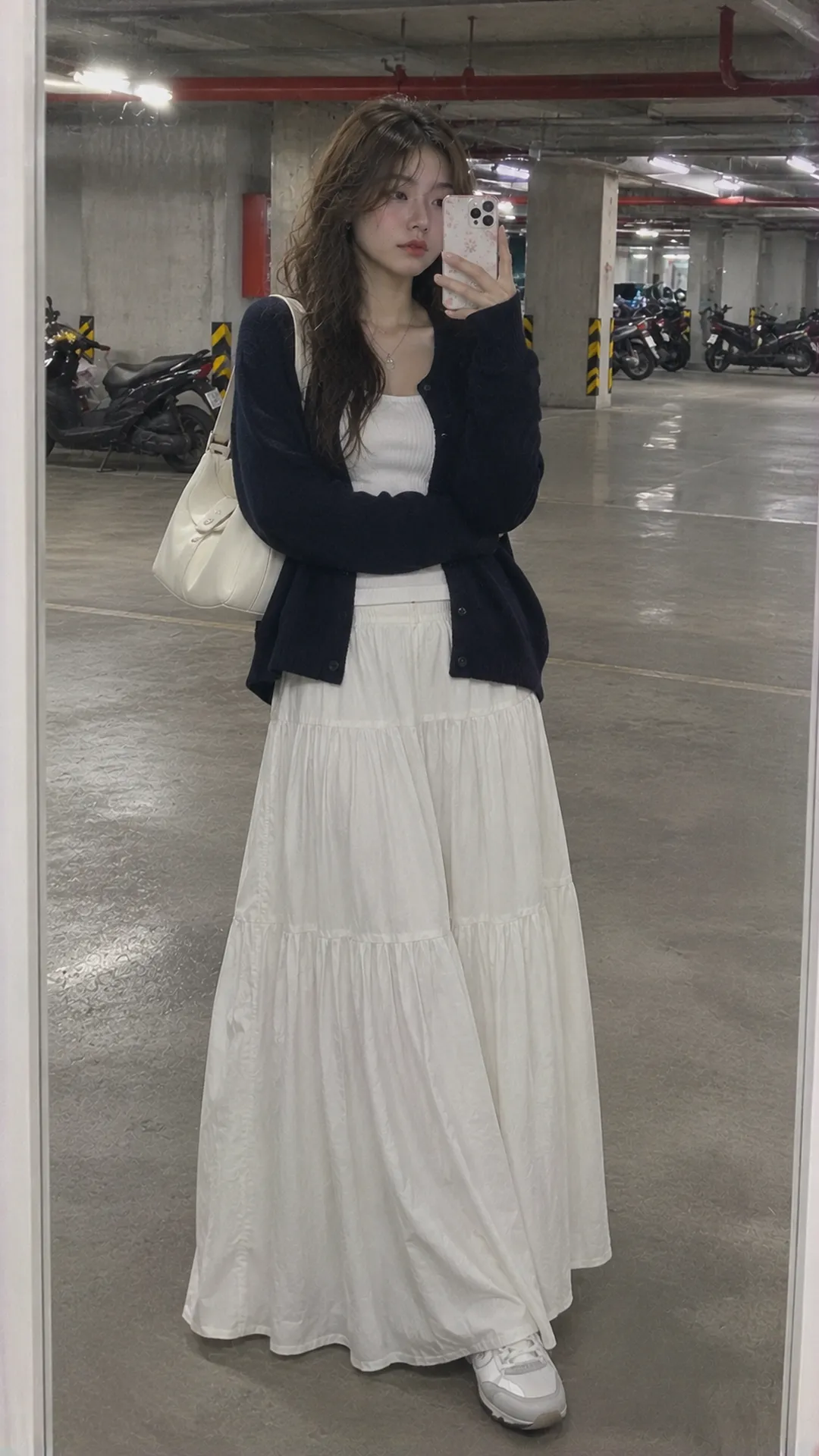
Check the skirt before choosing a top
Look at the front, back, and sides while standing naturally. Check the outer fabric, seams, pockets, and lining. Those details can stand out more on a light skirt. See whether you like the effect before adding accessories.
Sit and walk to see whether the fabric strains, the lining rolls, or the waist shifts. A lining shorter than the skirt can be part of the design. Check that the coverage suits where you plan to wear it.
Try lighting beyond the fitting room if possible. A place with natural light can show you more. When shopping online, ask for photos without heavy brightening and details about the lining. A white background can make it hard to see the edge or opacity of the fabric.
Our guide to skirt shapes and lengths explains the different cuts. Check coverage and underlayers on the exact white skirt. The fabric name alone won’t settle those details.
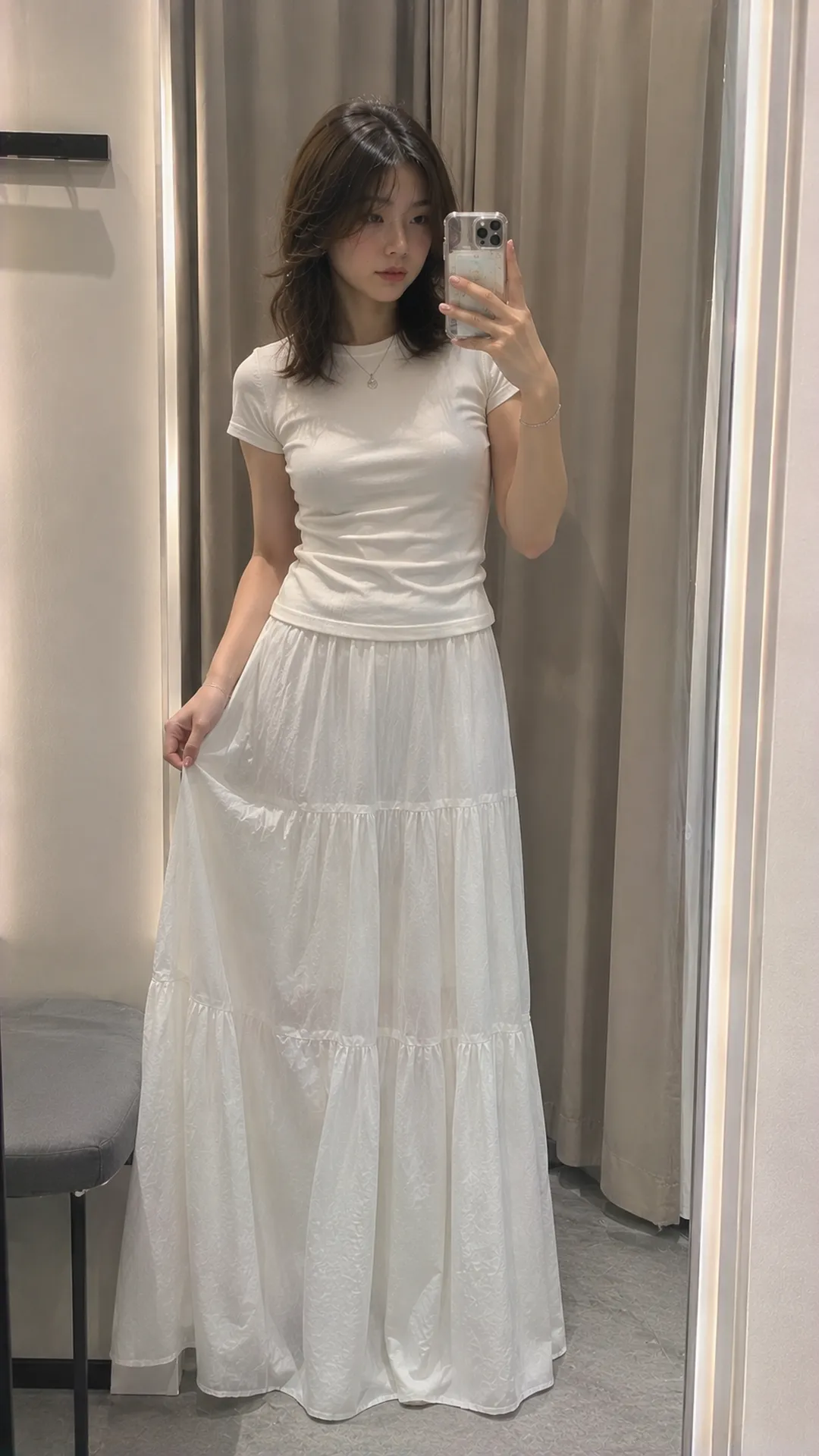
Choose an underlayer based on what shows
Underwear close to your skin tone is worth trying under thin white fabric. Check how the shade, seams, and thickness show through. Colors sold as nude come in different shades, so choose one that works on you.
White underwear can still show under a thin white skirt. Compare both options in the same light and positions to see which one gives the coverage you want.
If you need a separate slip, choose a length and width that let you sit and walk. See whether it shows at a slit or rides up in motion. A slip that is very tight or bulky can change how the skirt hangs.
With a slit, check how far it opens when you sit and walk as well as its length on the hanger. If the coverage doesn’t suit you, try another design or ask about an alteration. Choose a skirt you can move in without constantly holding it in place.
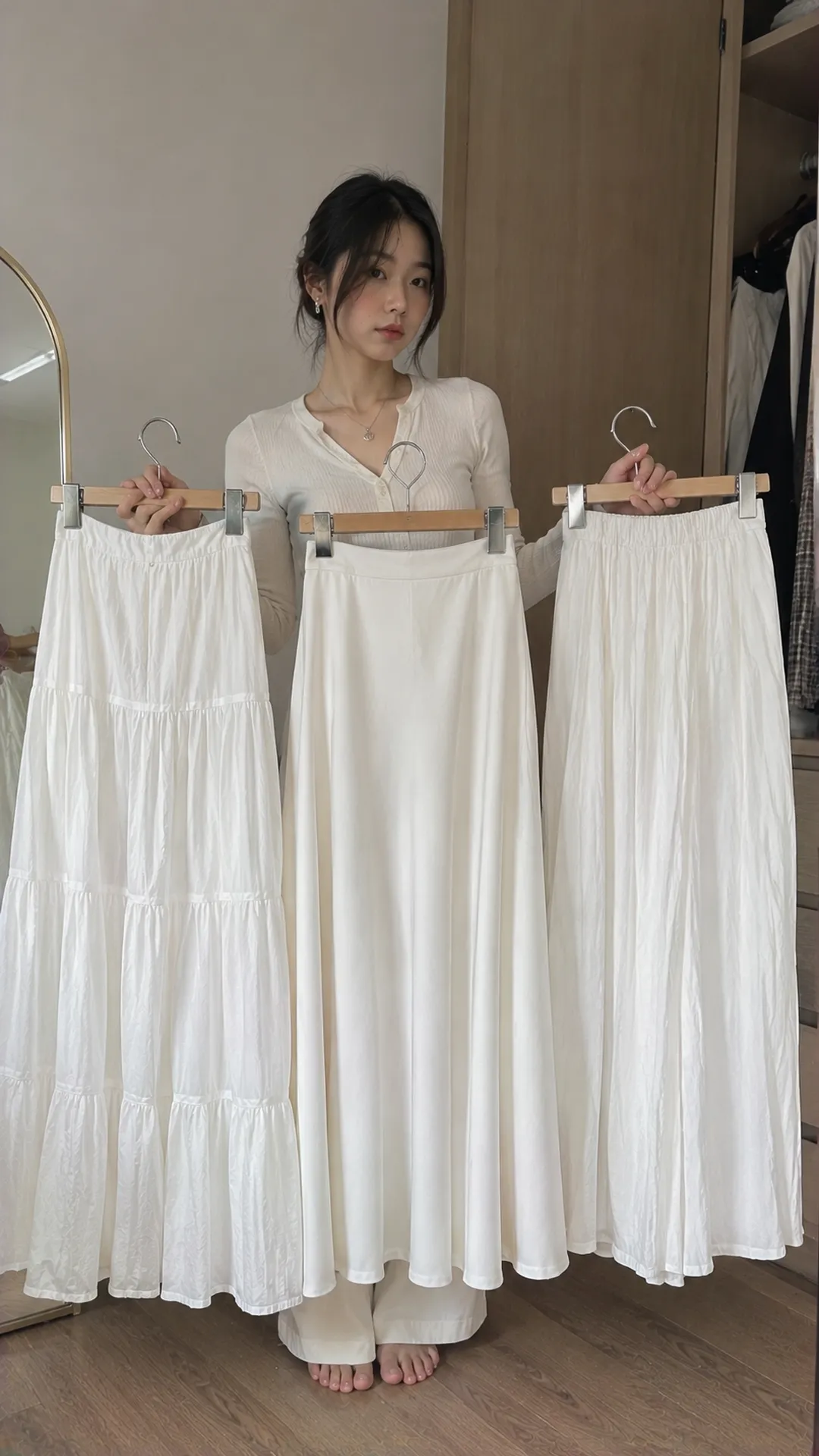
Balance straight, flared, and tiered skirts with your top
A straight long white skirt gives the outfit a fairly continuous line. A fitted top can keep it defined, while a looser top gives a relaxed shape. With a long top, see how much of the skirt remains visible and whether you like the proportions.
Flared or gathered skirts add volume below the waist. A top that ends near the waistband makes the transition clear. A top that covers the hips softens that line. Check from the side to see how much fabric overlaps.
Tiered skirts already have horizontal seams and movement. For a simpler outfit, start with a top with few ruffles and moderately sized sleeves. If you like puff sleeves, try simplifying the bag or other trim so one detail can stand out.
Choose where you want the focus, such as the waist, neckline, or shoes. A long white skirt can work across body types. Check how the outfit fits, where it ends, and whether you can move comfortably.
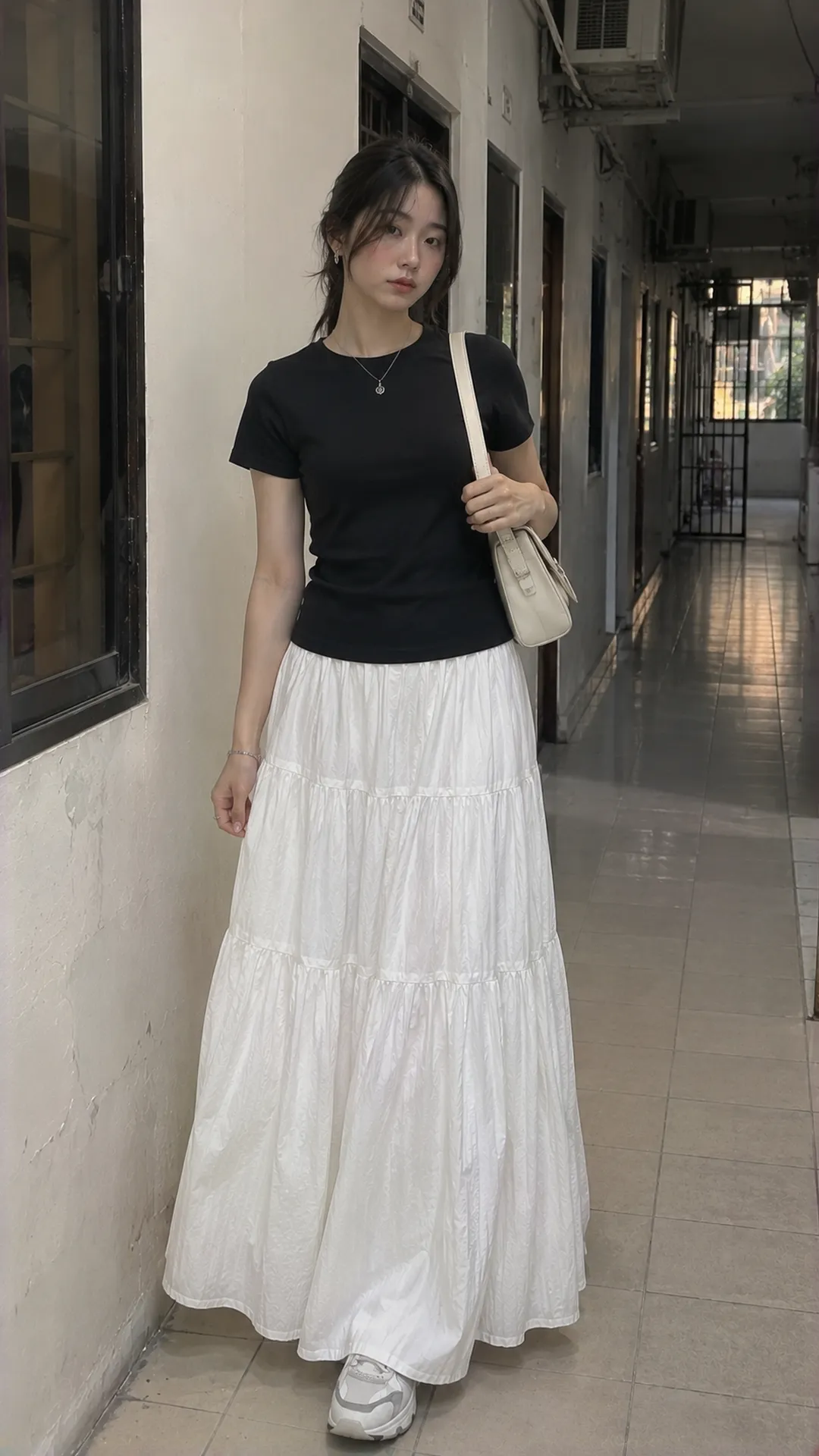
Try a plain tee for an everyday outfit
Start with a light gray, black, soft blue, or white tee. A fitted tee defines the waist with a flared skirt, while a moderately loose tee can work with a straight skirt. Judge the amount of fabric rather than relying on a label such as “basic.”
If you tuck in a tee, see whether its tails show through. A long dark tee can form a visible patch under thin white fabric. Try a shorter top, adjust the tails, or wear it another way if the fabric shows through more than you want.
If you leave the tee untucked, look at where it ends. A hem near the waistband shows more of the skirt, while a longer tee changes the proportions. A knot is optional and may add tension or bulk.
A graphic tee can work too. Check how close the print sits to the waistband. A simple skirt lets the print stand out, while a plain tee can give lace, tiers, or embroidery room to show.
Choose between a shirt and a fitted top
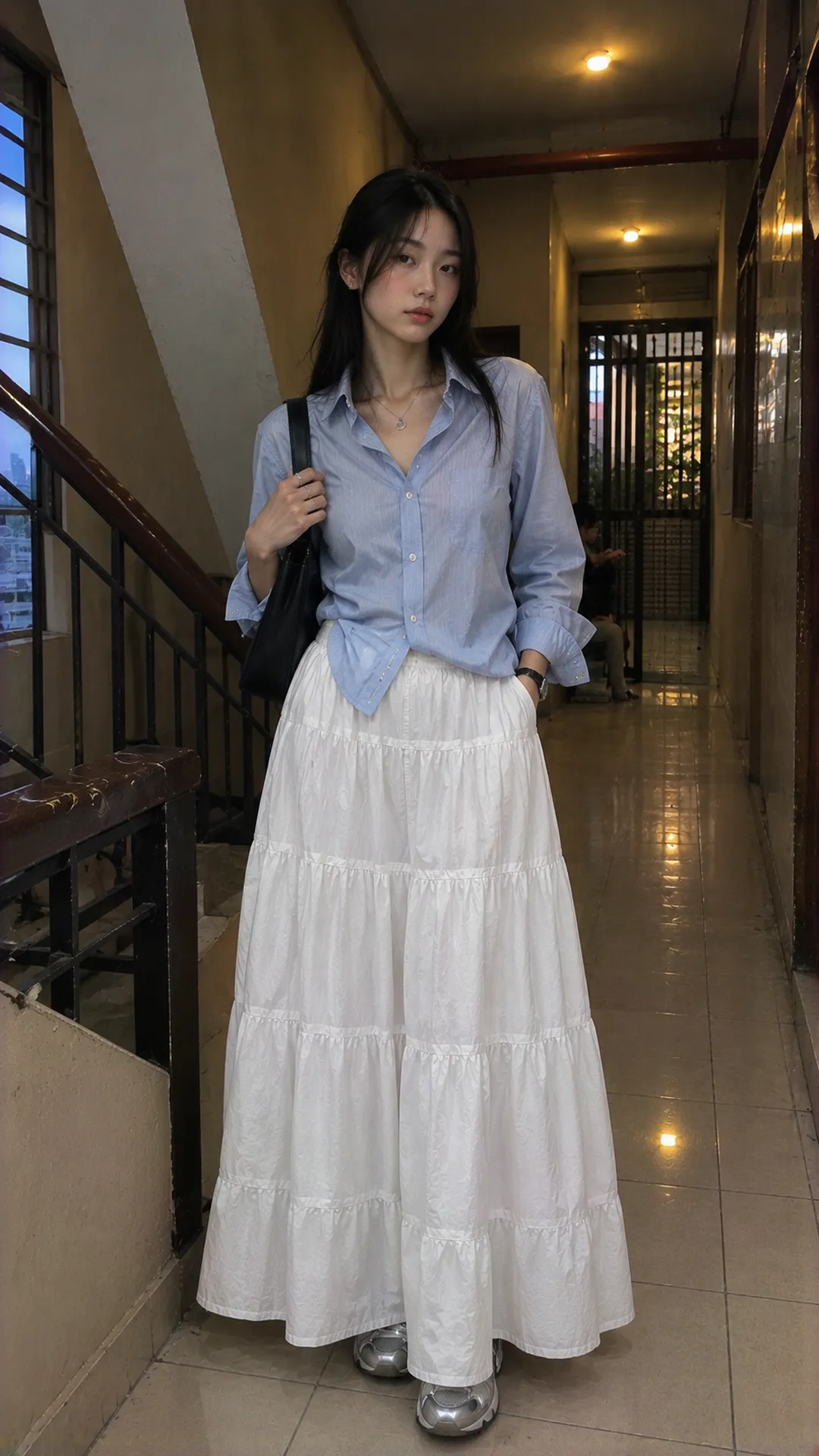
A pale blue shirt and white skirt give you a light outfit with a clear distinction between the pieces. Adjust the shirt tails for the fabric weight and waist, and check the placket while sitting. If the shirt is very loose, try a neat tuck or a different length to keep the fabric from bunching under the skirt.
A striped shirt can add pattern to a plain skirt. Pick a bolder or finer stripe according to how much attention you want it to draw and start with a simple bag. If the outfit feels busy, check the collar, sleeves, and tails as well as the stripes.
A fitted or sleeveless top can contrast with a flared skirt. Reach and sit to check whether the hem rolls or the neckline pulls. Choose coverage and an underlayer for the top separately from the skirt.
Our outfit guide by garment helps you start with the tops you already own. Keep the skirt the same as you try different tops so you can tell whether color, length, or silhouette makes the difference.
Give an all-white outfit some definition
Put the top and skirt next to each other in the same light. Bright white, ivory, and pale cream can look quite different. Similar shades or a deliberate contrast can both work.
If the shades are close, use texture or shape to distinguish the pieces. Try a lightweight knit against a smooth skirt or a crisp shirt against a soft one. A dark belt is optional if you already like how the pieces are defined.
Our guide to white-on-white outfits goes deeper into the palette. With a long white skirt, check the lining, tucked fabric, and hem so you can enjoy the color combination in practice.
For contrast, try a black top with the white skirt. For a single color accent, start with a colored top and simple shoes and bag. Add accessories once you know where you want another detail.
Add a cardigan or jacket with a purpose
A cropped cardigan keeps much of the skirt and waistband visible. A long one frames the outfit and covers more of the skirt at the hips. Try it open and buttoned to see how much white shows in each version.
If you wear the cardigan as a top, check the button front and coverage as you move. Over a tee, check the thickness at the waist before tucking. A light-colored outfit can still have more layers than you need for the weather.
Our women’s cardigan guide covers hems, sleeves, and base layers. Choose a layer that adds color, structure, or warmth as needed, and start with a skirt that already fits comfortably.
Choose shoes once you know where the hem falls
Sneakers make the outfit casual, strappy sandals leave more of the foot visible, and closed shoes can define the endpoint. Pick shoes for the activity, walking conditions, and dress code before choosing a color.
White shoes can extend the light palette, while black shoes add a dark accent. Brown or a shade close to your skin can give a different effect, depending on how much of the shoe shows. Compare the shoes beneath the actual hem.
If the skirt drags or catches as you walk, check whether the length needs adjusting. A higher shoe only helps if you’re comfortable wearing it for the occasion. Choose a hem and shoes that work together for what you’ll do.
With a full skirt, walk through a narrow space and sit down. Check whether the hem catches on chair legs or nearby objects. The movements show whether you’ll be able to wear the outfit comfortably beyond a fitting or photo.
Try bag and accessory colors beyond white
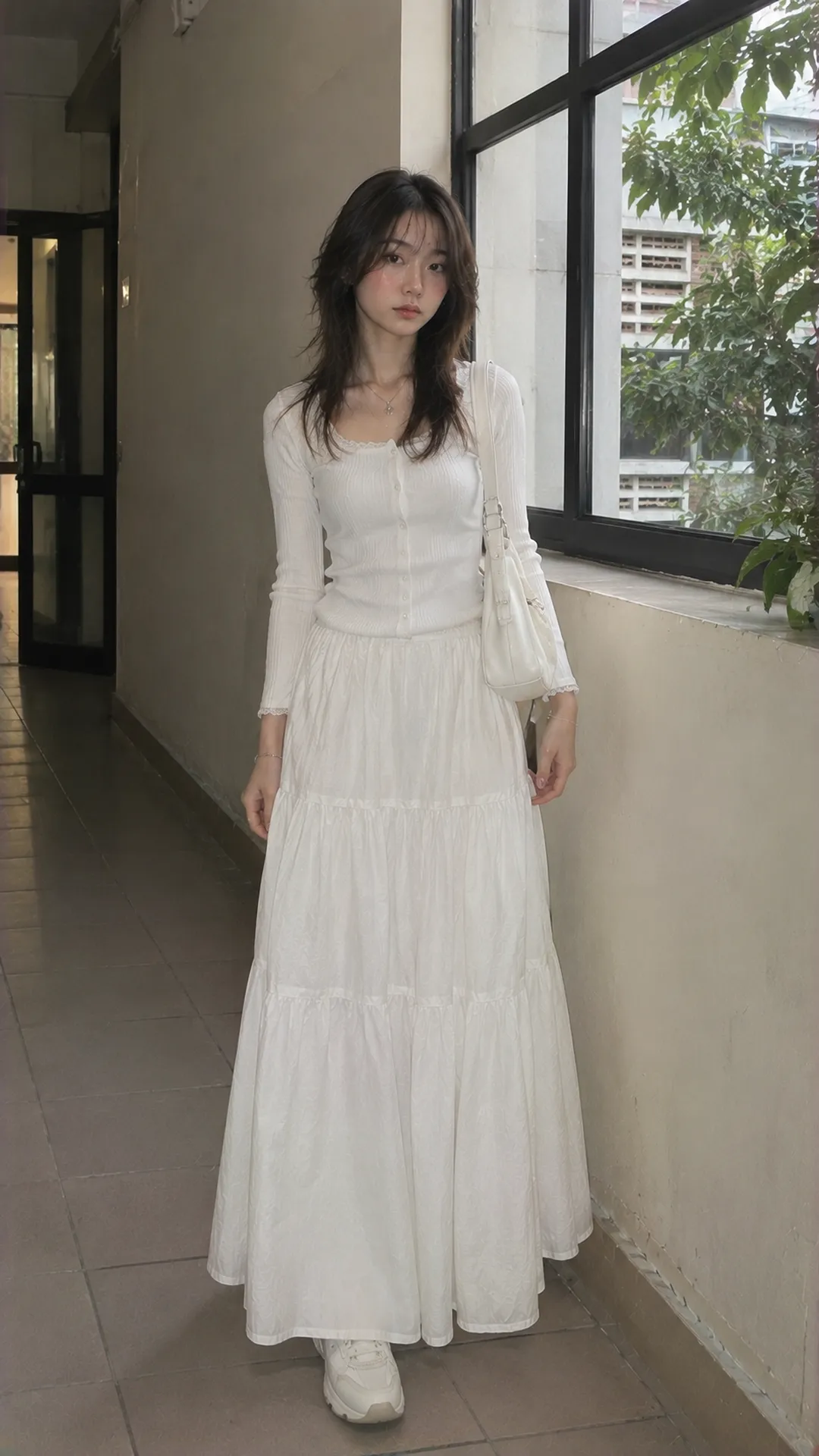
A neutral bag can blend in, while a bright one creates another accent. If the top is already bright, start with a plain bag. Check the size and position too. A bag across the waist can hide the area you want to highlight.
Start with jewelry at the ears or neckline and add more if you like. A white base can show small details clearly, so consider your neckline, hairstyle, and top texture before adding more pieces.
Check the care guidance for any bag, strap, or accessory that touches the white skirt, especially if the seller warns it may transfer dye. Avoid rubbing it directly on the skirt to test for color transfer.
Try the complete outfit before deciding
Put on the top, underlayer, shoes, and bag and look at them in ordinary light. Sit, walk, turn, and check the back. See whether the shirt tails show, the lining shifts, and the hem works with the shoes. Adjust one thing at a time so you can see what helps.
Wash and treat stains according to the skirt’s label. White clothing can still be damaged by bleach or high heat. Store it clean and dry as directed so it’s ready to wear again.
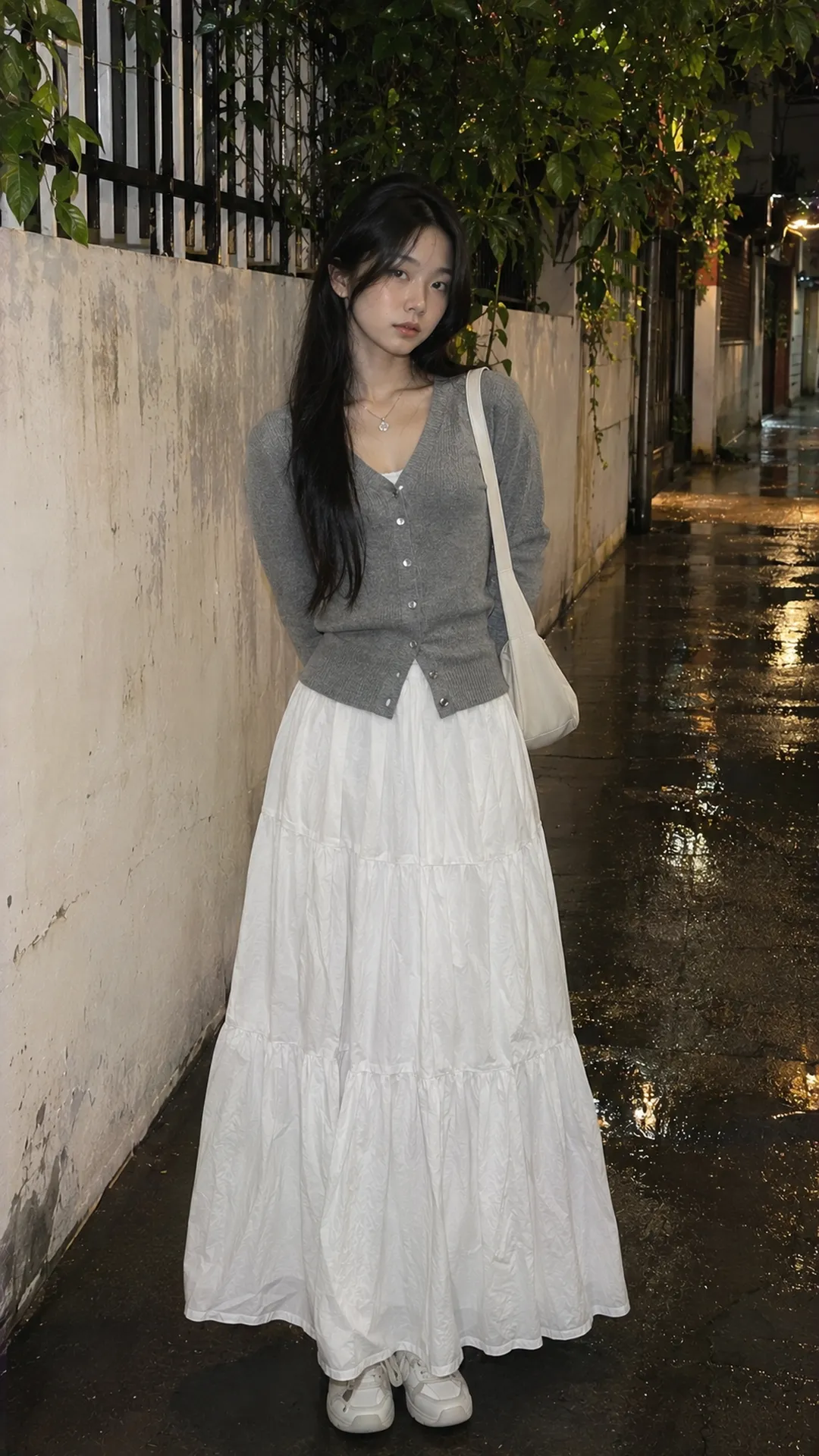
Once the fabric and coverage work for you, choose a top to balance the skirt’s shape, colors for the contrast you want, and shoes you can wear for your plans. That gives you a combination you can adapt to other tops.