

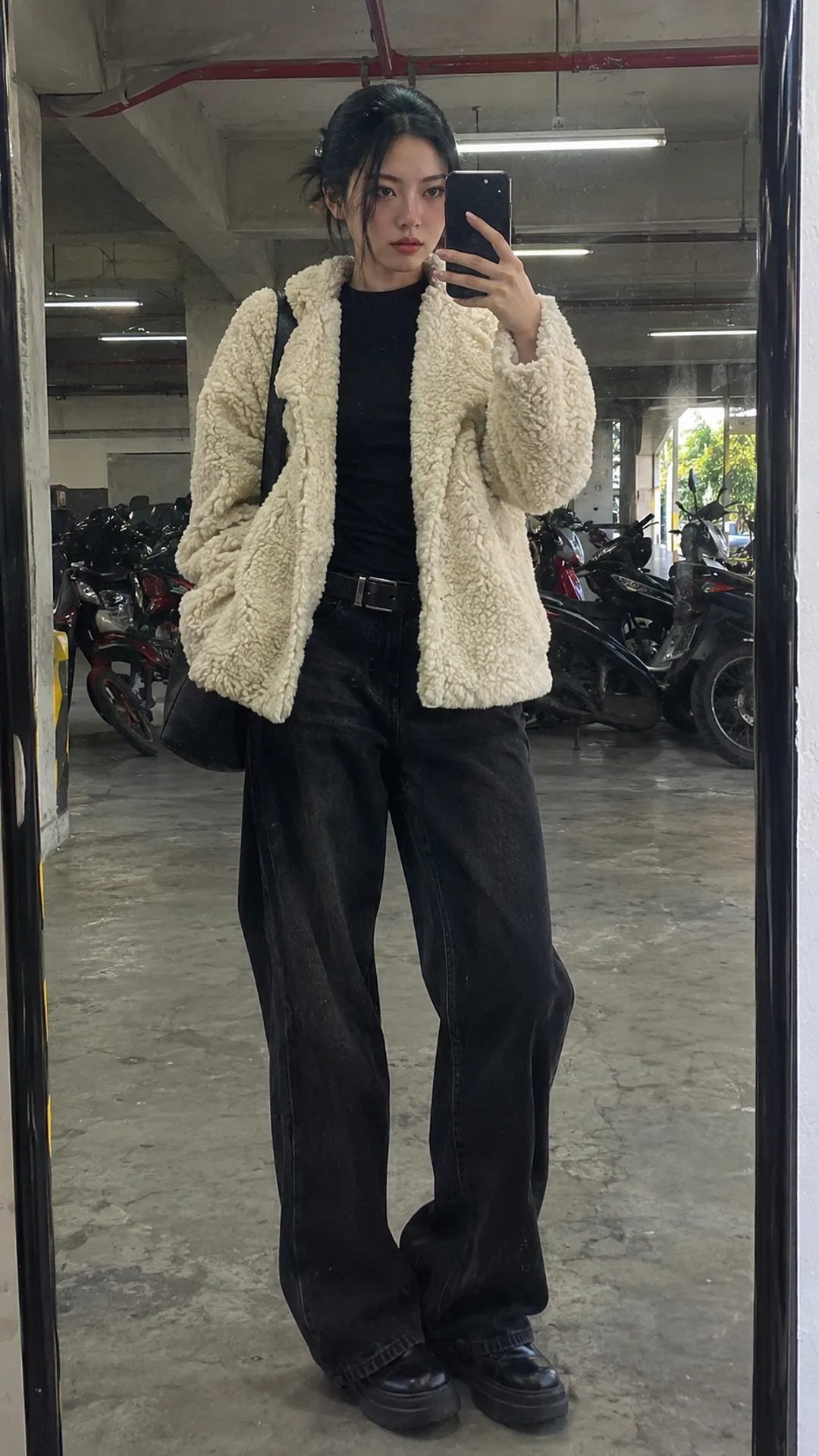
Check four details before choosing trousers
First, put on the jacket and see whether the hem sits at the waist, hip, or below it with your arms relaxed. The actual length can differ from what “cropped” or “oversized” suggests. The spot where the jacket meets your trousers or skirt changes how the whole outfit looks.
Next, check how raised the surface is. A short, even pile can give a cleaner outline than a fluffy surface. Plain trousers can leave the cut of a textured jacket visible. Add another texture after you’ve seen how the first combination works.
Third, check the stand collar, fold-down collar, or hood. A large collar takes up room around the face and shoulders, so start with a simple neckline underneath. Finally, see whether the hem and cuffs are banded. A banded hem gathers fabric, and thick cuffs can feel bulky over a watch or another sleeve.
If you’re comparing outer layers, our women’s tops guide by fit and layering covers other jacket shapes. For a fleece or teddy jacket, use the outline and texture of the specific garment to choose the rest of the outfit.
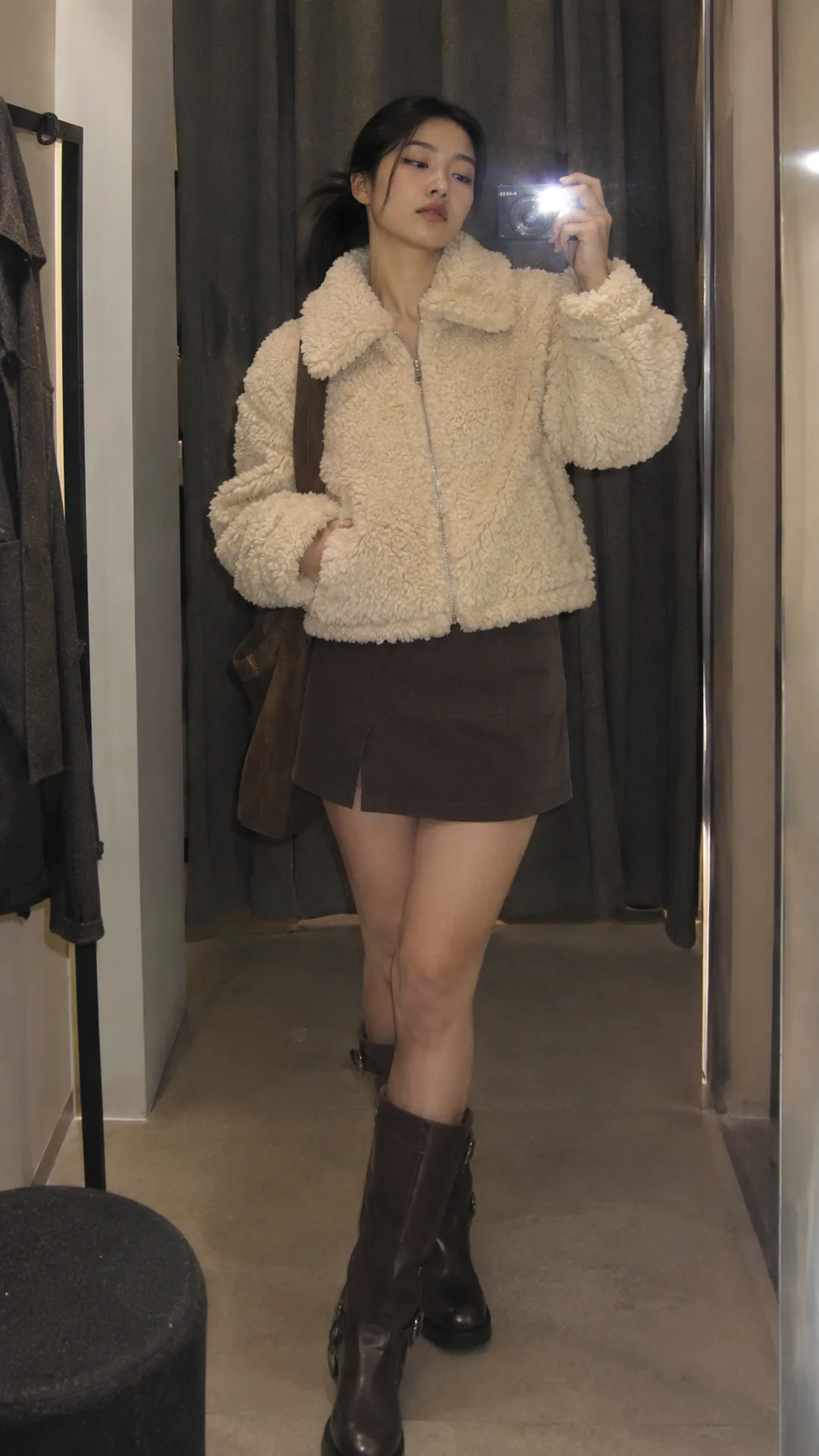
Short jackets: Continue the line from the hem
Straight trousers give you a defined line
Try a short cream jacket, a plain top, and straight black trousers. The jacket stops near the waist and the trousers continue down to the shoes. Check that the hips and thighs fit while you sit. If the trousers pull, try another cut before using the jacket to cover that area.
Choose a streamlined shoe or a medium-weight sole to suit the leg opening. Fabric stacking on the shoes adds volume where you may want less. Check the hem length or try another shoe height before adding a belt for definition.
Wide trousers can work with a clear transition at the waist
Try a short, straight-hanging jacket or one with a gently fitted hem and a top that sits smoothly at the waist. Flowing, plain trousers keep the line easy to see. Stiff fabric, large pockets, and thick pile together give a bolder silhouette. Choose the volume you want.
An open jacket can show a stripe of the top in a color close to the trousers. Zip it up too and check that you can move without pulling across the bust. Our women’s trousers guide compares leg width and rise so you can try different proportions.
Hip-length and long jackets: Give one shape the focus
With a long, full jacket, straight or gently tapered trousers can give the lower half definition. See where the jacket hem meets the trousers. A snug hem band can sit on top of bulky pockets. Try a straighter jacket, simpler trousers, or a different length if the overlap feels too bulky.
Try wearing a long jacket open over a tonal base. A brown teddy jacket over a black top and trousers creates a dark line down the center. A smaller bag leaves that line visible. Gray or cream can give you the same continuity with a lighter palette.
Look from the side when wearing a long jacket with wide trousers. Fabric that looks neat from the front can collect around the back or waist. If you like a roomy silhouette, keep it and simplify small details. A belt can bunch the pile and fabric if the coat wasn’t designed for one.
Wear fleece jackets with skirts and dresses
A straight skirt contrasts with the volume of a fluffy jacket. Try a short jacket, mid-length skirt, and streamlined shoes. With a slit, check how far it opens as you walk and sit. Choose the coverage you want from the skirt itself.
An A-line skirt can work with a cropped jacket. Check where the skirt begins to flare. If the jacket hem presses into the flare, try a shorter jacket or a skirt with a slimmer upper panel. That changes the proportions without changing the colors.
With a dress, check the neckline and sleeves first. Puff sleeves can compress under a jacket, and a ruffled neckline can compete with a large pile collar. A dress that fits neatly at the shoulders often layers more easily. Our women’s skirts and dresses guide helps you choose a length before adding the jacket.
Choose your layers for the actual conditions
A fitted top with a smooth surface can reduce bulk under fleece. Bend and reach to check that its seams don’t pull. If the jacket has a high collar, try a slightly lower neckline underneath. If you want the base neckline to show, make the visible edge even.
REI notes that wind can pass through fleece, depending on the construction and whether it has a wind-blocking layer. A fluffy surface tells you little about weather protection. Read the specifications and bring suitable wind or rain protection if your plans call for it.
Try on all the layers if you’ll add a shell. A tight shell can compress fleece at the shoulders and armholes and make it harder to move. Check width as well as length. For a day mostly indoors, choose layers you can remove easily. Our guide to layering women’s outfits helps you decide what each layer needs to do.
Use colors and accessories to show the texture
A cream jacket with brown trousers gives a closer match, while black trousers define the jacket’s outline. With a dark jacket, try gray or a similar tone underneath before adding a bright accent. With a color-blocked jacket, echo one of its shades in the bag or shoes.
A smooth bag can contrast with a fluffy jacket. Check where the strap touches the pile, especially if you wear it crossbody. A strap can flatten a visible line into the surface or pull the coat out of place when you walk. A shoulder bag also needs room under the arm.
Choose shoes for the trouser cut and how much you’ll walk. A streamlined shoe makes the outfit lighter, while chunky boots add volume. Our women’s footwear styling guide helps you compare boot height, soles, and the gap at the hem.
Check fit and follow the care label
When an online order arrives, try the jacket over a plain top in a contrasting color so you can see the outline. Take open and closed photos from the same angle. If it only feels comfortable open, decide whether you’ll need to close it. Try the pockets too. Pockets that sit too high or low can make you pull the jacket out of place to reach them. Note how each model fits and works before deciding which to keep.
Wear a base layer similar to what you’ll use. Zip the jacket, cross your arms, sit down, and carry your bag. Check the shoulders, armholes, and collar. If the sleeves are long, see whether you can fold the cuffs neatly. Several folds can add more volume than you want at the wrists.
Check the composition, lining, and care symbols. Jackets sold under similar names can need different washing methods, especially with leather, decorative details, or mixed materials. Ask the seller if the label is unclear. Check the instructions before using heat or a stiff brush on the pile.
Before buying accessories, try the jacket with one trouser outfit and one skirt outfit you own. Take front and side photos and note specific issues, such as overlapping hems, a crowded neckline, or a strap pulling the jacket sideways. Adjust those details one at a time.