

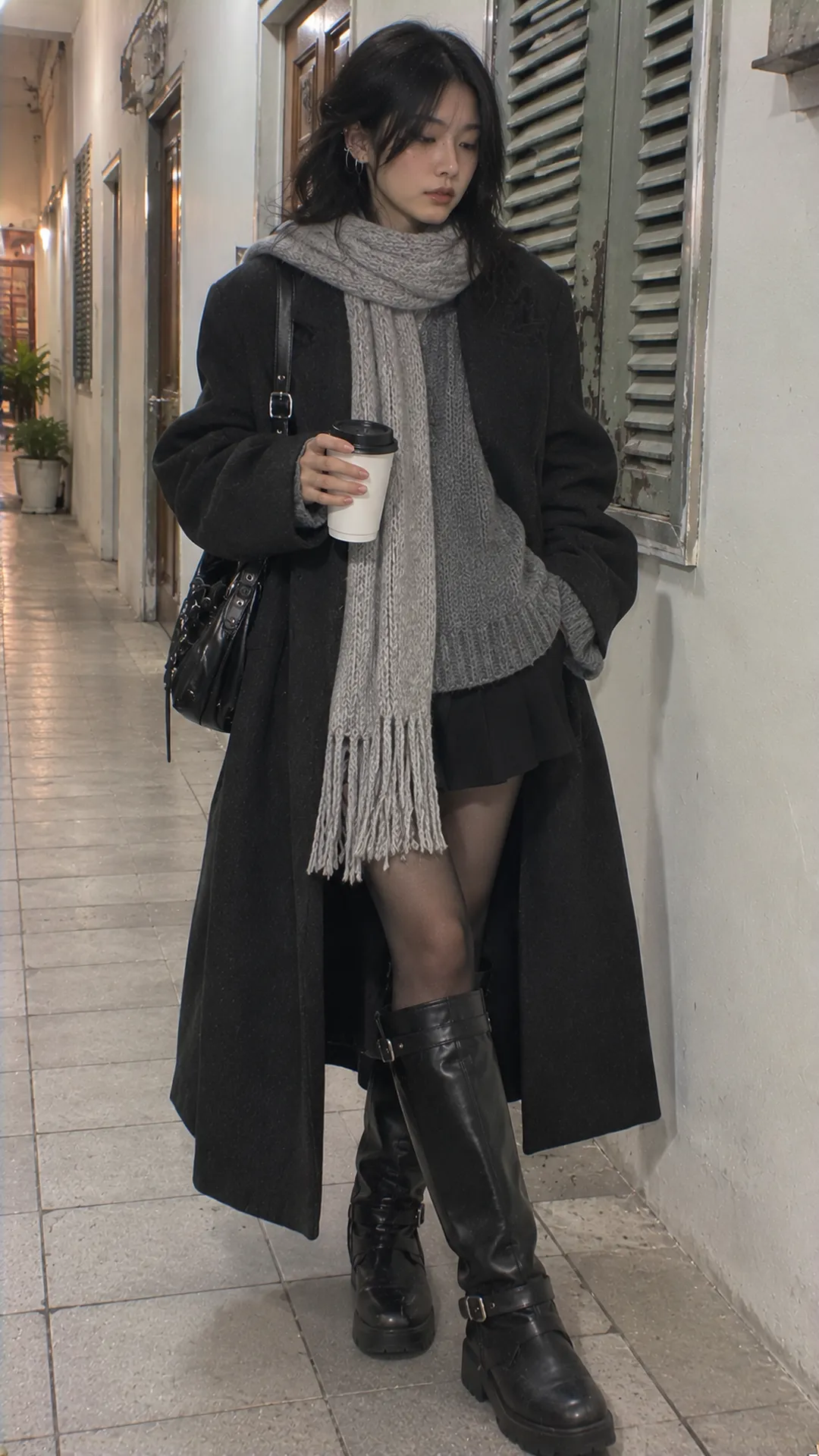
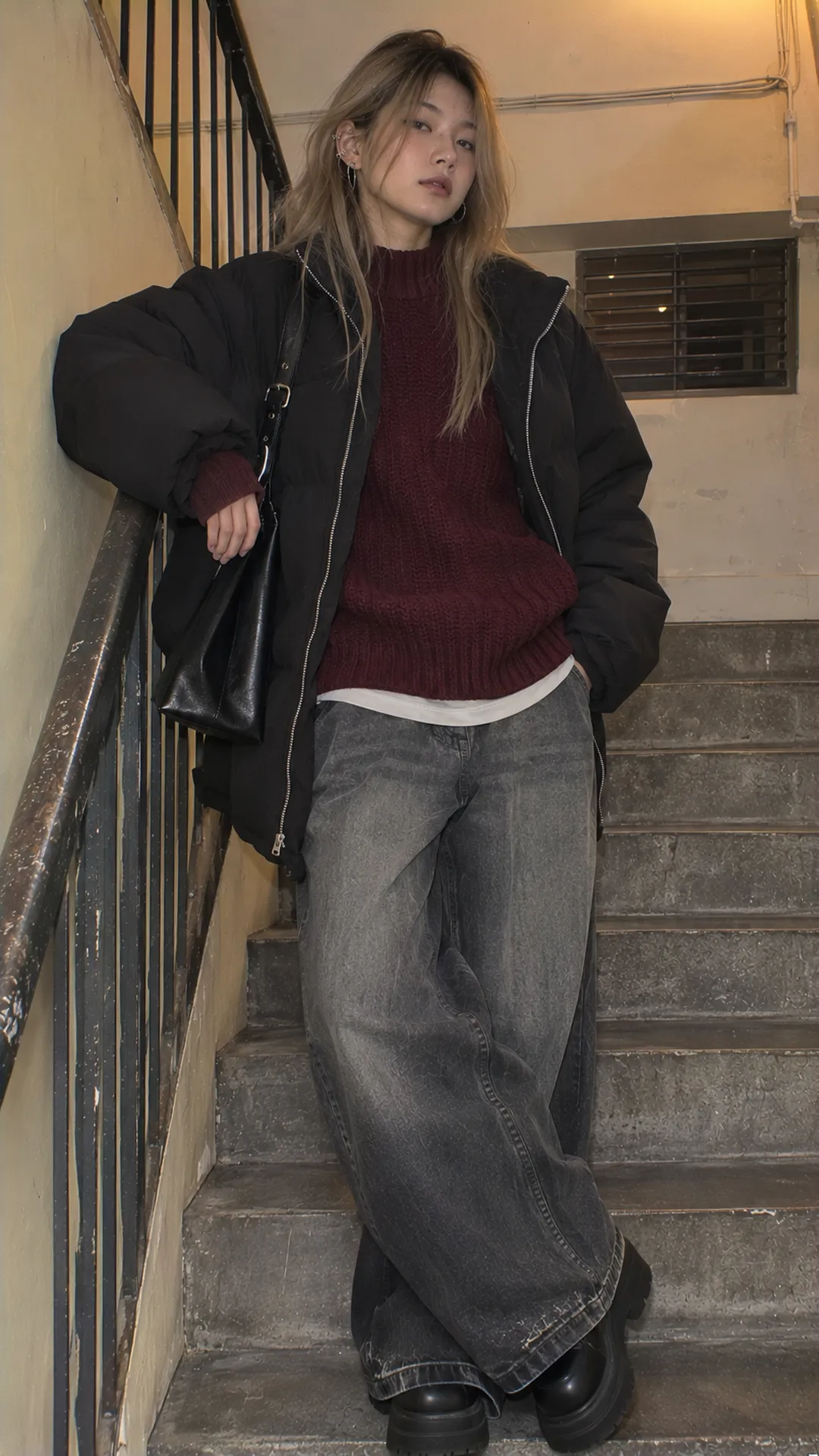
Dress for where you’ll spend most of the day
If you’ll spend most of the day in an office or classroom, make the clothes underneath your main outfit. Choose a coat you can remove, carry, and hang easily. If the base outfit is too thin, you may end up wearing the coat indoors even when it’s uncomfortable. For a day with several outdoor walks, choose the coat and shoes from the start.
Check the forecast for your destination and return time, including wind and rain, and consider the distance you’ll travel. Someone sitting for hours and someone walking a lot may need different layers on the same day. A fall or winter label won’t tell you how a garment will perform in those conditions.
For coffee and a walk, try the outfit with and without the coat. Leave room in your bag for a scarf or other small layer. Choose shoes for the longest walk. Our women’s going-out outfit guide helps you dress for the activity, then add layers for cold weather.
Three jobs your layers can do
REI’s layering guide describes a base layer that manages moisture, a midlayer that adds warmth, and an outer layer that helps protect against wind and rain. Use those roles to decide what you need. Some outings only require one or two light layers.
A base layer should fit and stay in place when you sit. A bulky seam or an uncomfortable neckline may feel more obvious under a coat. Reach forward and sit in the base outfit before putting on the outer layer. If the top underneath pulls, check its fit before looking for a larger coat.
The midlayer adds much of the volume. Try a medium-weight knit or one layer that provides the warmth you need. Leave room to move in the coat with everything on. Our guide to layering women’s outfits explains how to use different lengths and textures while keeping the layers distinct.
Balance the shoulders, waist, and hems before adding a scarf
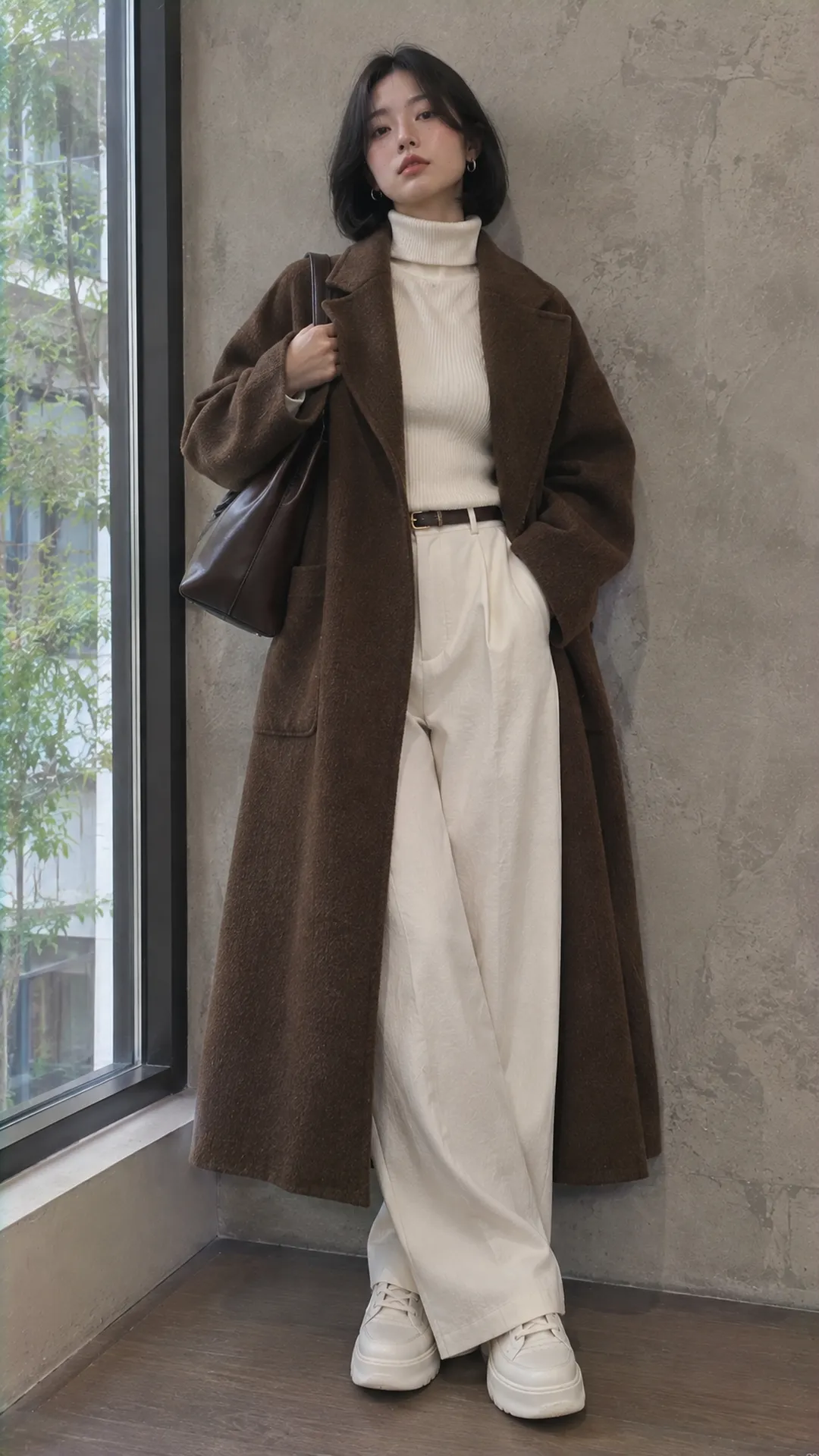
Look at the shoulders and neck, waist and hips, and hems and shoes. Choose one clear transition. A puffy hip-length jacket with straight trousers gives a different line from a long coat with a flared skirt. If the top and bottom are both full, smaller accessories can leave the shapes easier to see.
Check where the top ends. A hem that shows below a short jacket can look intentional. Smooth a small, bunched section before changing the outfit. With an open long coat, a top close in color to the trousers makes a continuous line through the middle. Use contrast if you want the waist to stand out.
Try your bag with all the layers on. A short strap can pull fabric toward the armhole. A large bag can add volume exactly where the coat is already full. Move the bag so the transition you want stays visible. That may be easier than tucking a thick sweater into the trousers.
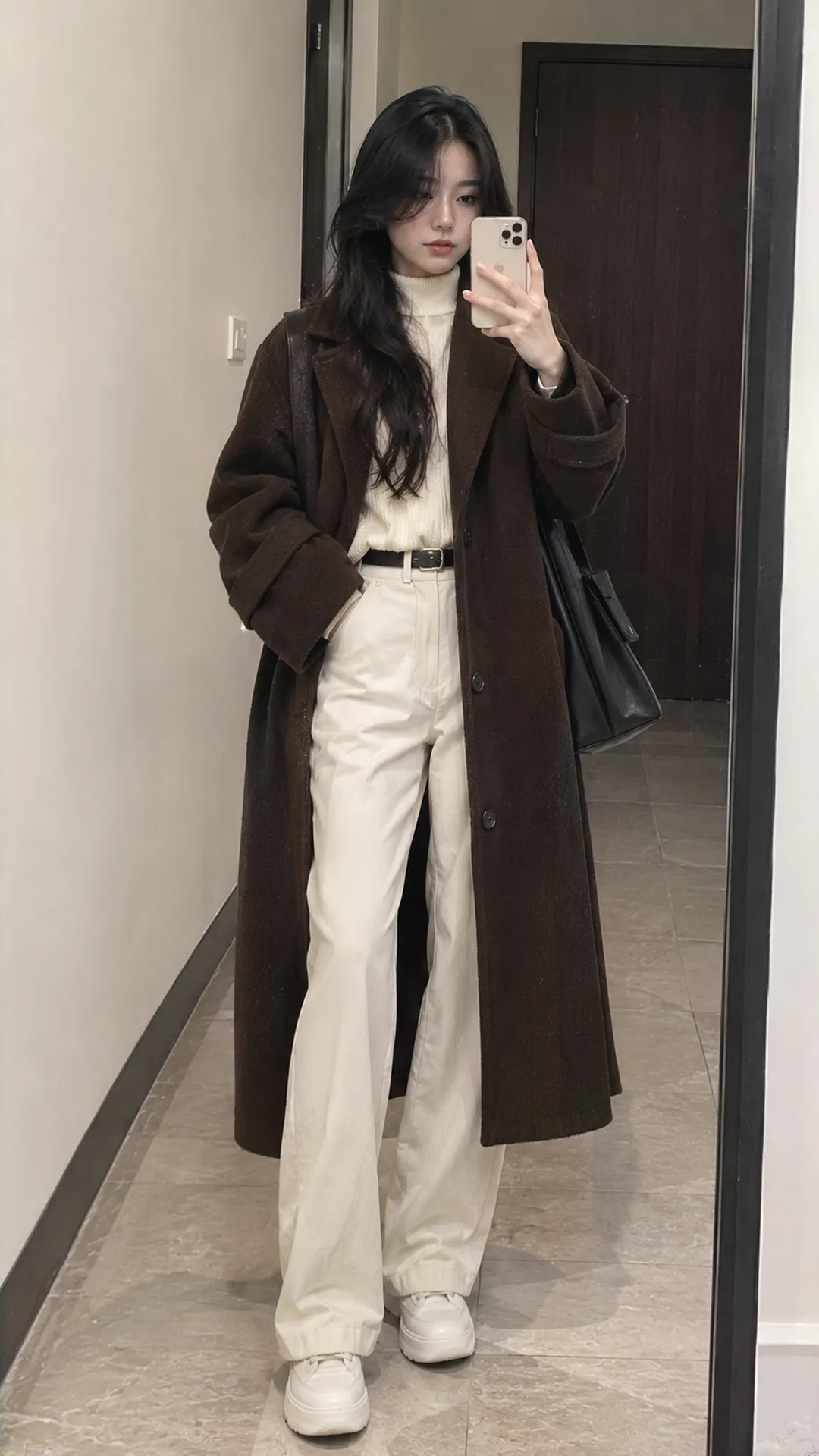
Three trouser outfits for different kinds of days
A day mostly indoors at school or work
Try a plain long-sleeved top, straight trousers, and a cardigan or jacket you can remove easily. Check thigh room while seated. Tuck a thin top if it’s long, leaving the cardigan outside the waistband. Streamlined shoes and a bag that holds what you need work for both the desk and the street.
A day with lots of walking and travel
Start with a simple outfit, trousers that clear the ground, and a coat suited to the expected wind or rain. A long coat can get in the way on stairs or when you sit in a vehicle. Try those movements. A secure bag leaves your hands free, and the strap should sit comfortably over your layers.
Dinner or meeting friends
Try a smooth knit, dark trousers, and a coat with a defined shoulder. For an accent, use a colorful scarf or structured bag. Check how much attention each piece draws before adding more sheen through the top, shoes, or jewelry. Our women’s trousers guide can help you choose the rise and leg width first.
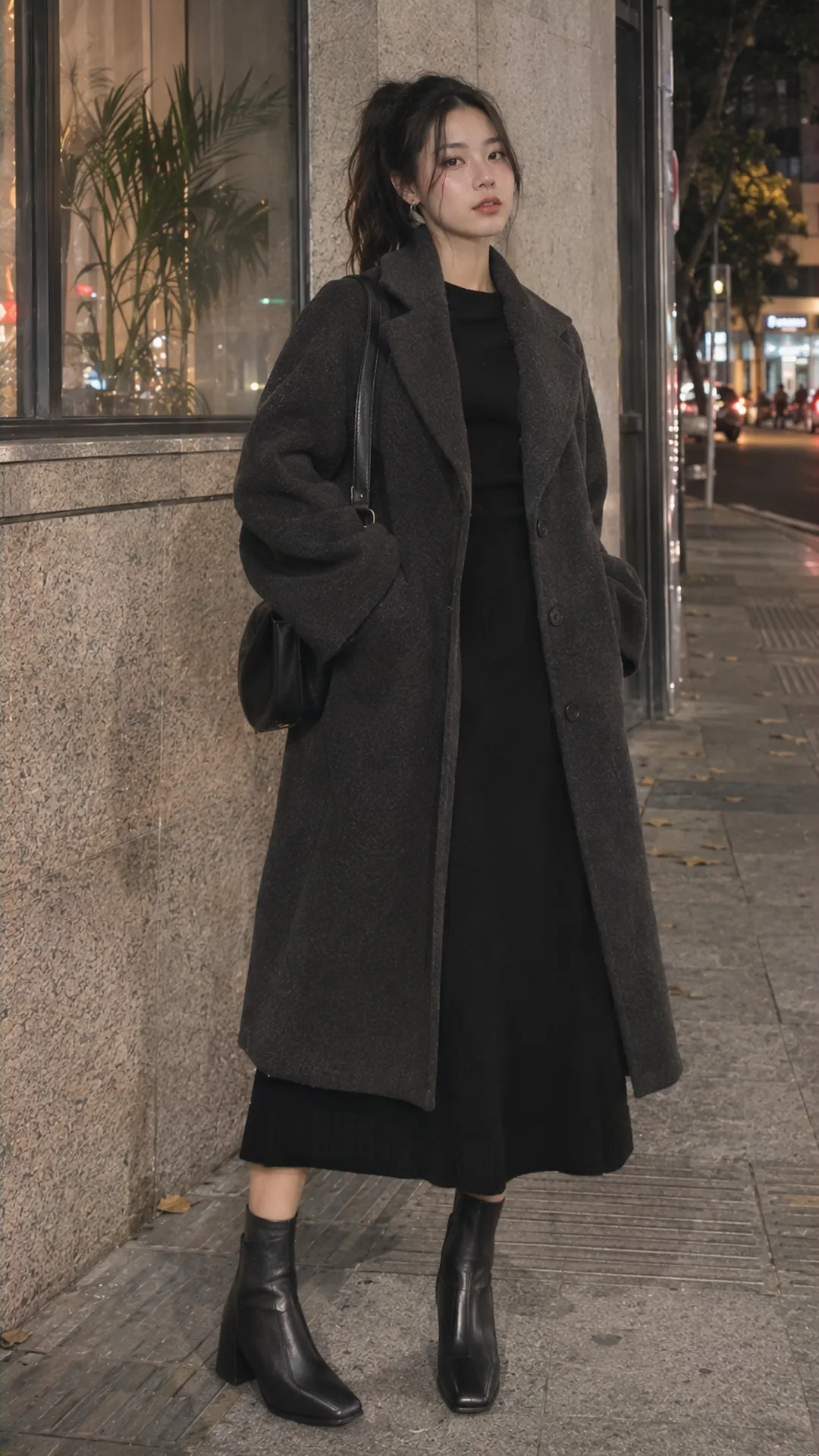
Winter dresses and skirts: Check the hems and underlayers
With a knit dress, check the elbows, hips, and seat as you move. The dress should give you the coverage you want on its own. Choose an underlayer that fits the neckline and fabric thickness without creating ridges at the shoulders or waist.
A heavy or wool-style skirt can hold a defined shape. A fitted top can show the waist, while a loose one gives a softer silhouette. Check the length where the two pieces meet. If fabric collects at the hips, try a shorter top or a tuck that lies flat.
With tights and boots, look at the gap between the hem and boot tops while standing and walking. Similar shades can make the leg line more continuous. Contrast can highlight the gap. Our women’s skirts and dresses guide compares flare and length, including longer styles for winter.
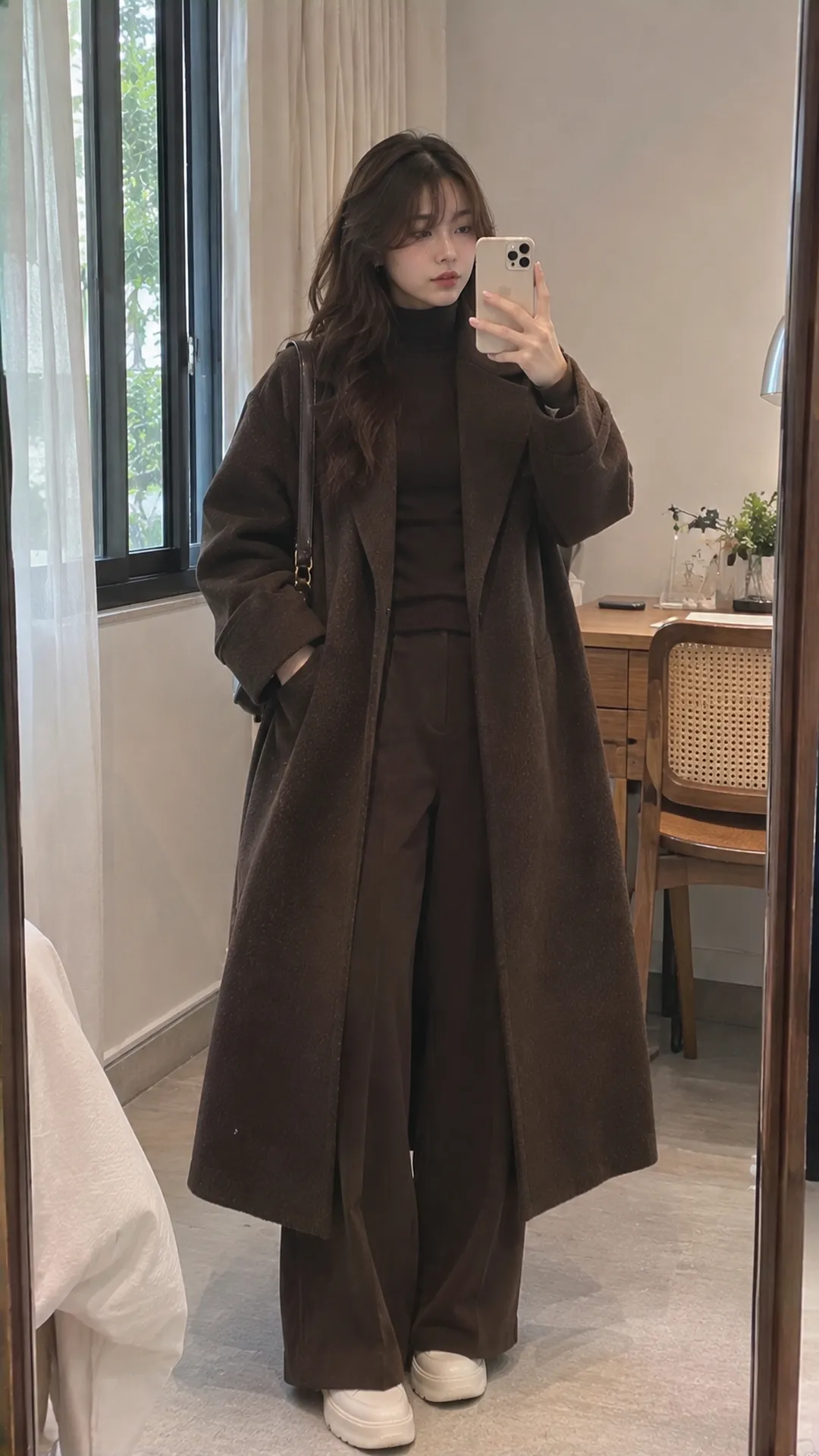
Winter outfits for women around 150 cm tall
Try where the coat and trousers actually end on your body. A jacket labeled short may still reach below the waist, and a long coat can look streamlined when the shoulders fit and the outfit underneath has a continuous line. Compare full-length photos of two lengths.
Hem trousers for the shoes you usually wear so the fabric doesn’t stack at the ankles. Check coat sleeve length too. Sleeves that cover most of your hands can make a coat look larger than you wanted. If you like a roomy body, choose shoulder and sleeve proportions that feel intentional.
Try a top and trousers in similar shades under an open coat in a different color. Or wear a waist-length top with trousers that have a defined crease. Either gives you visible proportions with flat shoes. If you choose thick soles, try walking in the shoes and make sure the hems don’t catch.
Use color and texture to keep layers distinct
Start with two colors you already own, such as gray and black or cream and brown. Let one layer have a noticeable texture. Try a ribbed knit under a smooth coat, or a fuzzy coat over a flat knit. If several layers are already textured, check what a large scarf would cover before adding it.
With a striped fall or winter top, repeat one stripe color in plain trousers and then decide whether the scarf needs a pattern. For a matching set, check the top and bottoms separately. You may need different sizes or proportions even if they’re sold together.
Look at fiber content, seams, and care instructions behind labels such as “premium.” Turn the coat inside out to check the joins and try fastening it over your base outfit. Our women’s tops guide covers different cuts once you know what each layer needs to do.
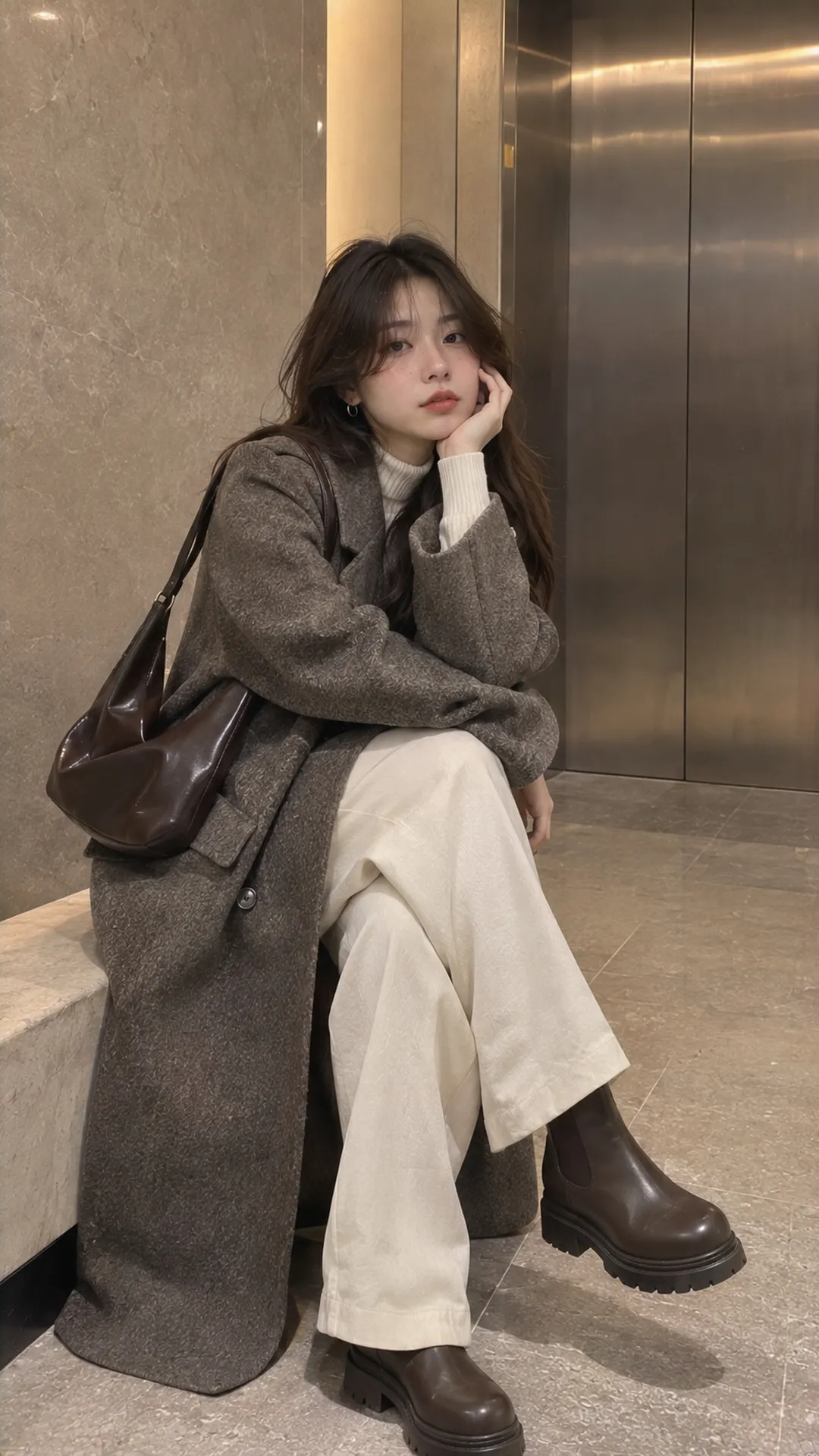
Try on the whole outfit before leaving
For a short trip, choose trousers or a skirt you can wear with two tops before packing a second coat. Check each combination for bulk at the waist and sleeves. Pack scarves, socks, and small layers with the outfits they go with. Leave room for clothes that crease or have a raised surface, and unpack or hang them as their care instructions allow.
Sit, reach up, take a long stride, and carry your bag for a few minutes. If the neckline, scarf, and coat collar are too bulky together, remove one piece or change the wrap. If the waistband presses while seated, adjust the tuck or try other trousers.
Take off the coat and check the outfit underneath, then try carrying the coat and bag together. Keep a place to put the first layer you’ll remove. A winter outfit is easier to wear all day when you can adjust it quickly as you move between places.