

Four things to check before choosing a dress
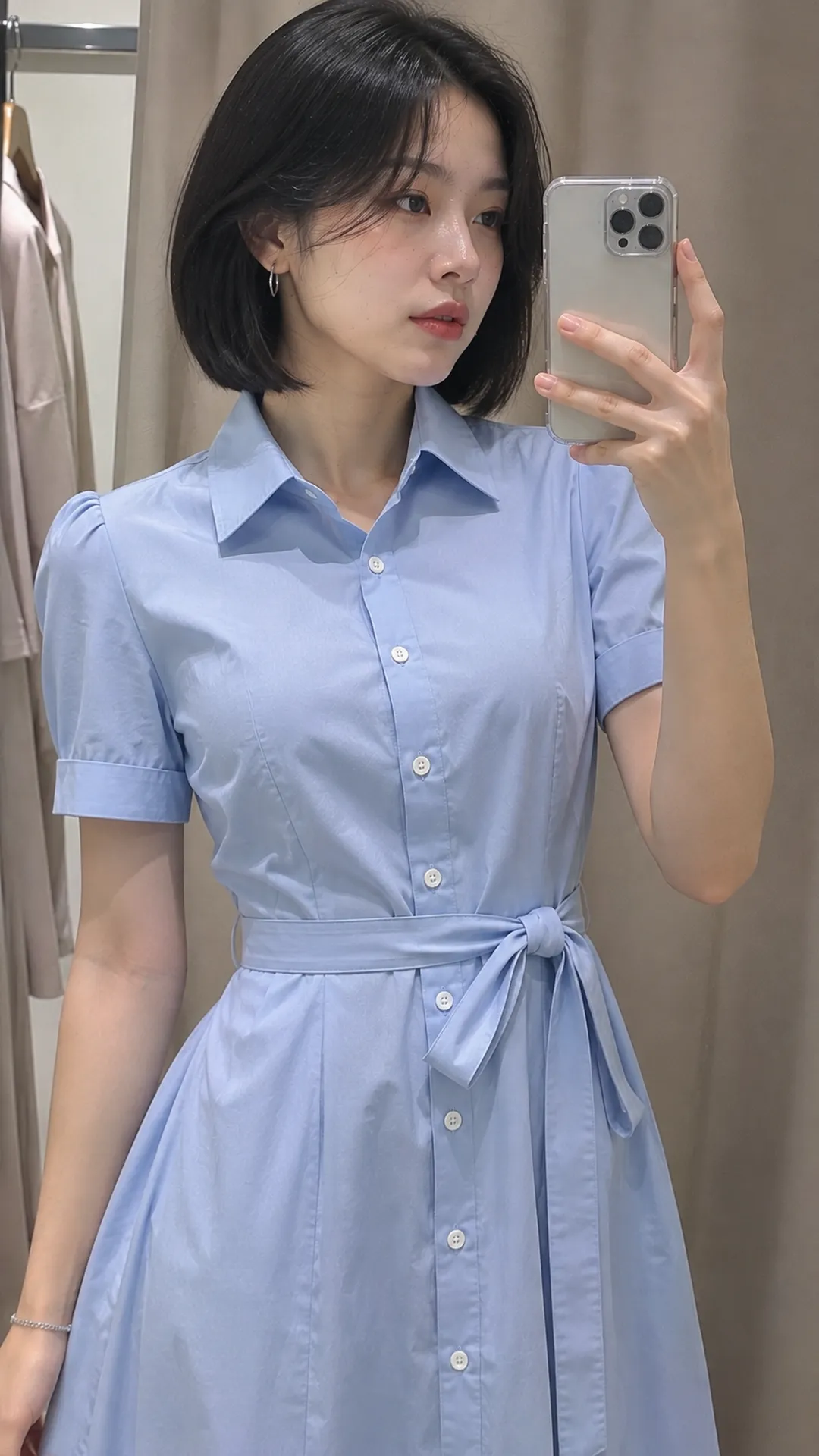
Start with the shoulders. A set-in seam and a deliberate drop shoulder can both work. Reach forward to see whether the back pulls hard enough to distort the placket at the front.
Next, look at the waist. Shaping or a fixed tie should sit where it feels comfortable on you. If it lands too high or too low, try a removable belt or a straight cut that lets you set the proportions yourself.
Third, check the placket. The buttons should lie flat while you stand and sit, especially at the bust, stomach, and hips. A small gap can widen as you move. Choose room across those areas even if a smaller size gives you a closer waist.
Finally, check the hem and slits. A below-knee dress can still open high if its last button sits high or the hem curves sharply upward at the sides. Look at the side and back. See our guide to women’s dress cuts and lengths to compare silhouettes and hem placement.
Seven shirtdress styles to try
Straight shirtdress: a relaxed waist and flexible styling
A straight cut falls fairly evenly from shoulder to hem. It works if you want room to move or prefer less shaping at the waist. A gently loose cut keeps the outline clean. An oversized cut adds volume, so check where it ends.
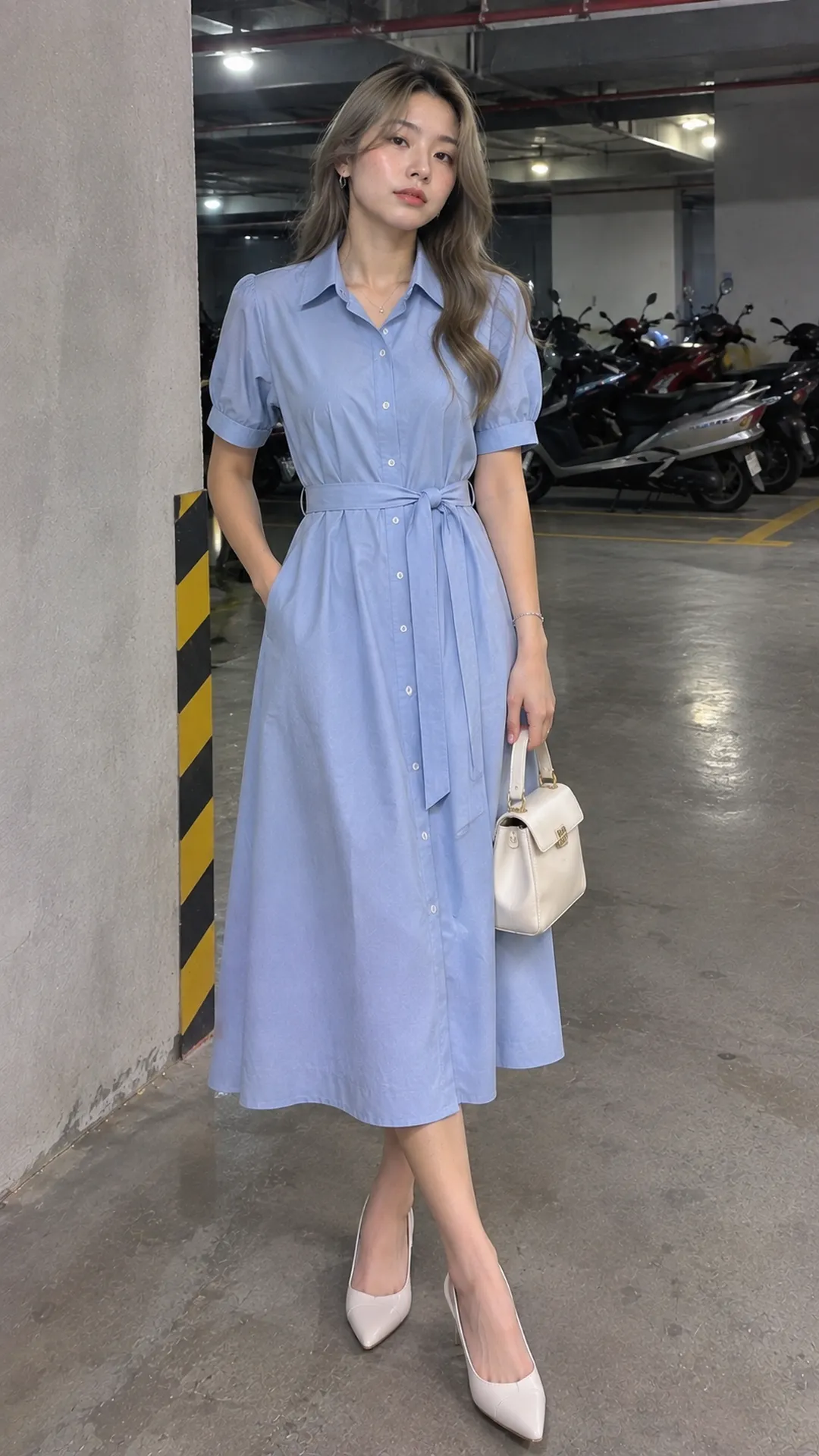
Try pale blue with black loafers and a compact bag for a workplace that allows it. For a casual outing, swap in sandals and simplify the accessories. To define the waist, use a separate belt and tighten it only enough to hold. A tight belt can make the fabric puff and pull the buttons out of line.
Belted shirtdress: define the waist
A matching tie gives the outfit a continuous look. A contrasting belt makes a stronger accent. If the dress already has a large collar or prominent chest pockets, try a matching tie first. A tidy knot adds less volume at the front than a large bow.
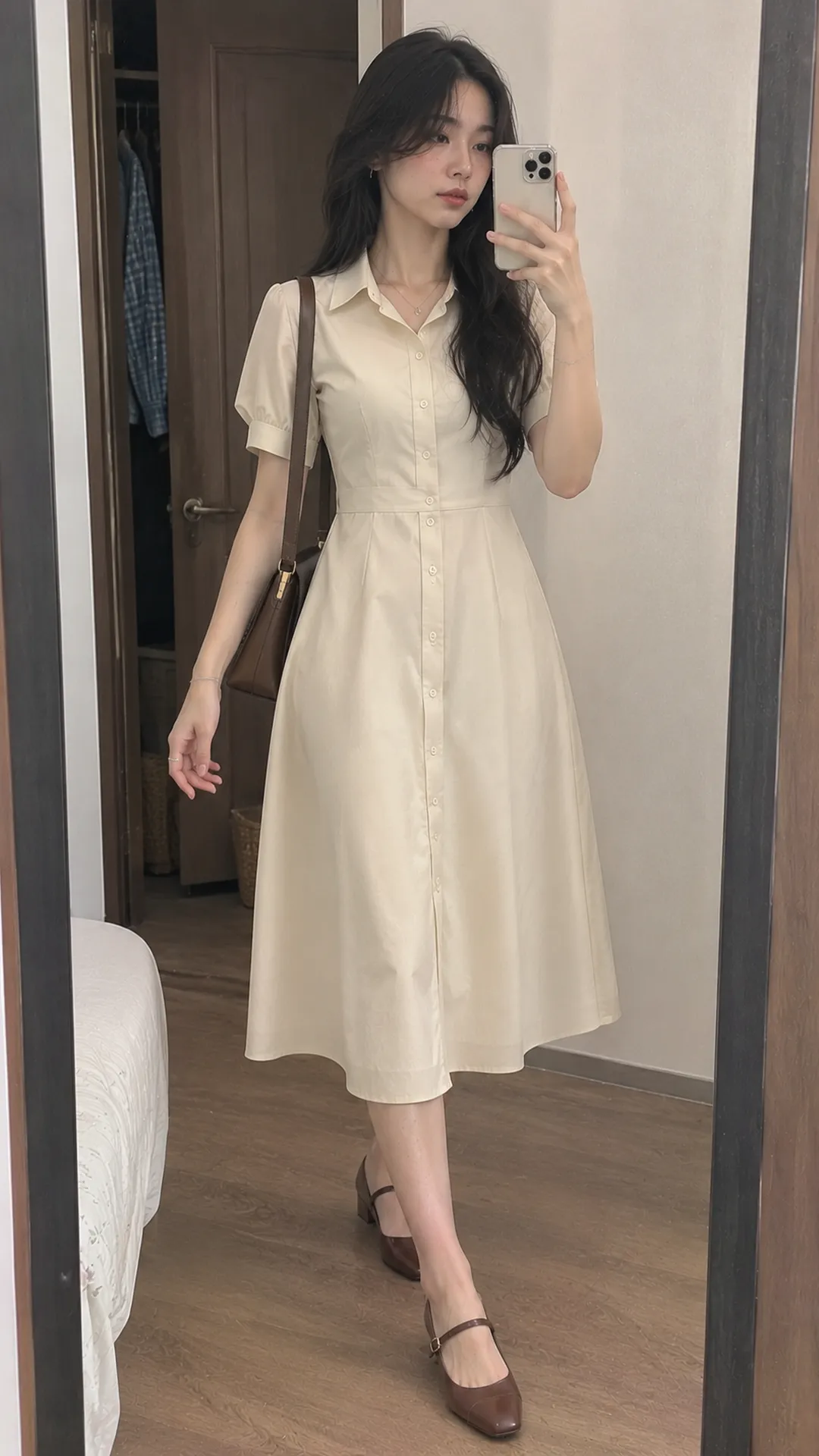
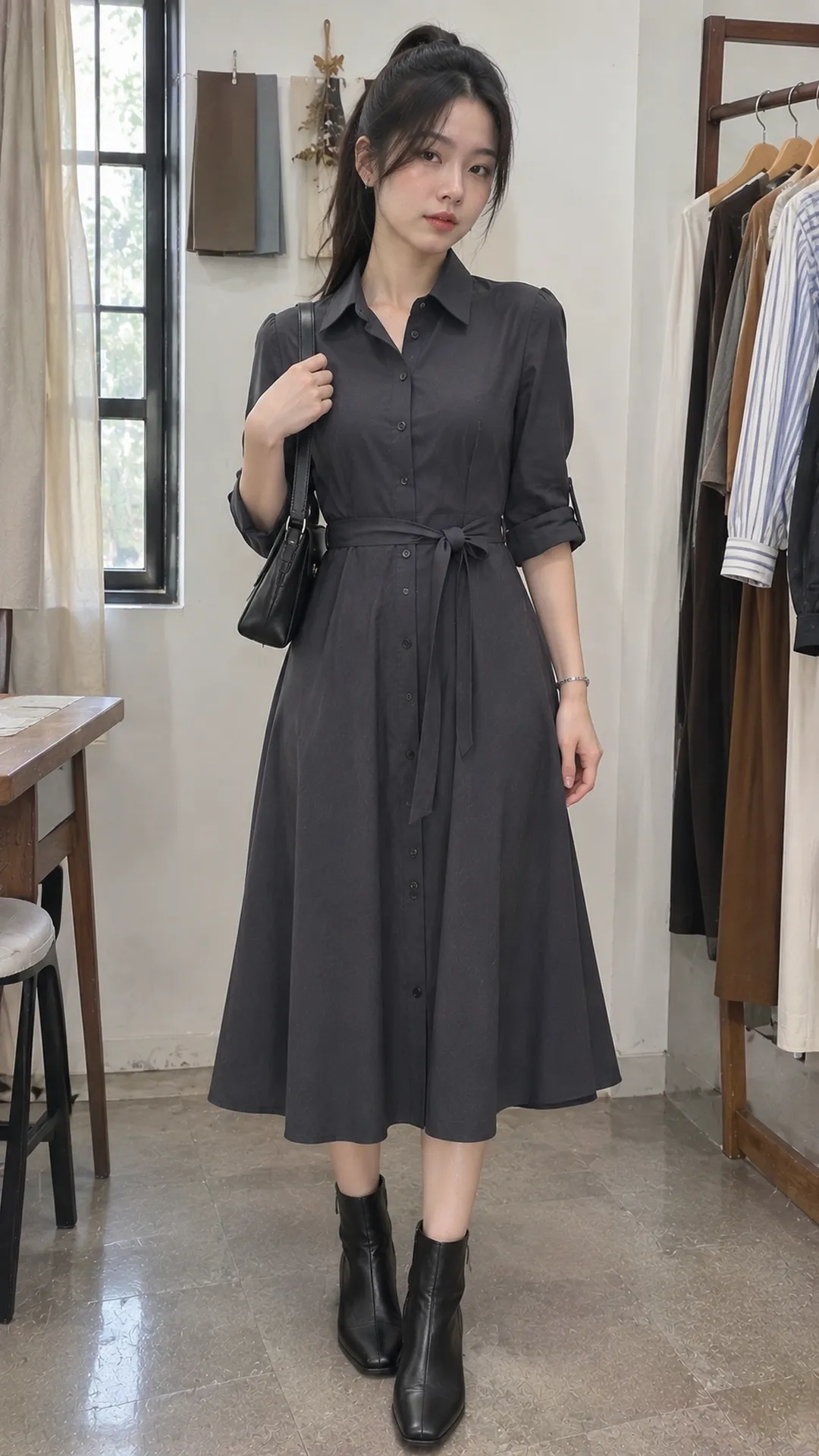
Try a cream dress with a lightly tied waist and brown sandals. For a stronger look, try charcoal with a medium-width black belt and ankle boots. Check the hem again after tying the belt, since gathering the dress can lift it.
A-line shirtdress: defined above with a flared hem
An A-line opens toward the hem, offering more room to move than a fitted straight dress. Look at where it starts to flare. A shape that opens near the waist looks different from one that widens only near the hem. Choose the outline you like on yourself.
With a fuller skirt, simple shoes and a compact bag leave room for the silhouette. Try Mary Janes or simple strap sandals. A collar and row of buttons already create a vertical line, so small earrings can finish the outfit.
Midi shirtdress: check the hem and your stride
A midi has more fabric, so drape and slit placement affect how freely it moves. Take long steps, step onto a stair, and sit down. Choose a cut you can walk in at your usual pace.
Try a solid midi with slingbacks or sleek flats to leave some space below the hem. If you wear boots, check the gap above the shaft. If the edges sit close and you like the effect, consider a smaller bag or shorter jacket to limit extra volume.
Denim shirtdress: a more defined shape
Denim varies in thickness and softness. A structured fabric holds the shoulder and hem, while softer denim can drape closer to the body. Check the underarms, elbows, and waist after sitting to see whether movement feels restricted.
Try mid-blue denim with cream sneakers for walking or brown boots for a stronger look. If the dress has contrast stitching, metal buttons, and several pockets, plain accessories are easy to wear with it.
Striped shirtdress: check how the pattern runs
Stripes draw attention to the buttons, seams, and fabric tension. If they bend sharply across the bust or hips, try another cut. Look at how the fabric sits on you.
Blue-and-white stripes can work with ivory or brown shoes. Broad, high-contrast stripes go easily with a plain bag. Fine stripes leave more room for earrings or a stronger belt if you want one.
Short or oversized shirtdress: test it while moving
A short cut can feel light and draw attention to the shoes. Check coverage while sitting, bending, and lifting your arms. Look at the front, back, and sides, since a curved hem may be much shorter at the hips.
With an oversized cut, shoes with some visual weight can balance the dress. A small shoulder bag keeps the outfit compact. If you want pants underneath, try both pieces together to check whether they layer comfortably and give the silhouette you want.
Choose shoes for the hem and your plans
Well-kept flats can look polished with a shirtdress. Loafers give it a defined shape, Mary Janes add a strap, and sandals leave the foot more open. Choose by hem length and how much walking you’ll do.
Sneakers work with many straight and denim cuts. Check sole size. A thick sole under a short, roomy dress looks different from a slim sneaker under a midi. If both shoes and dress are substantial, try a small bag and keep layers at the waist light.
Boots can add a focal point to a plain dress. Check that the shaft fits comfortably and the hem stays clear when you walk. For a pair to wear with several outfits, see our item-by-item styling guide before shopping.
Give the belt, bag, and jacket a purpose
Use a belt to define the waist or add a deliberate block of color. A straight dress can work without one, and an already shaped waist can bunch under the wrong belt. Compare full-length views with and without it.
Balance the bag size with the dress’s volume. A large soft bag can add fullness at the hips beside a flared skirt. A medium structured bag or small shoulder bag gives a clearer outline. If you need a large work bag, a dress with less flare may be easier to manage.
A short jacket shows the waist, while a long one adds a vertical line and more fabric. Check whether you want the two hems to end close together. Our guide to layering women’s outfits helps you choose an extra layer for an air-conditioned room or evening plans.
The collar and buttons already give the neckline structure. Unbutton to a depth you find comfortable, try a small necklace, or leave the neck clear. With large earrings, a simple neckline gives them more room.
Match the fabric and level of formality to the occasion
For work, check the dress code and choose suitable length, coverage, and fit. A smooth placket, fabric with enough coverage, and neat shoes can be easier to adapt than several deep slits. Our smart casual guide helps balance comfort and polish where that dress code fits.
For a hot day out, try the dress on to check comfort. Thickness, lining, and cut all play a role. An unlined dress still needs enough coverage, while a lining can add weight in humid weather.
If you’re traveling by motorbike, secure the hem before getting on. Gather extra fabric on a roomy midi and check coverage while seated in a short dress. Choose a cut that works for the whole journey.
Fix these fit issues during the try-on
A gaping placket signals a fit or room issue. If one area pulls while the rest is loose, try another cut. For alterations, check button placement and how much fabric is available so the dress keeps its shape.
An overly tight belt makes the bodice puff, raises the hem, and gathers wrinkles at the waist. Loosen it or try a softer belt. For a long dress, hem it for the shoes you actually wear.
Before buying, try at least two outfits with things you own: one everyday and one more polished. If you’d need new shoes, a bag, and a jacket just to wear it, reconsider. Choose a fit and style that work with your wardrobe and plans.