Understand the shape of a beret before you buy
Merriam-Webster describes a beret as a visorless cap, usually made of wool, with a close-fitting band and a soft, full, fairly flat crown. In Vietnamese, “mũ nồi beret” and “nón beret” usually refer to the same general shape. Individual hats can differ considerably in stiffness, fullness, and how the band is made.
When looking at photos, distinguish crown diameter from the circumference of the band. Two hats can fit the same head size and still look different. A wider crown gives you more fabric to drape to one side, while a smaller crown gives a closer silhouette. Choose the proportion you prefer.
Look at side views to see whether the hat sits high or low. A stiff crown may be hard to shape into the soft folds you like in a reference photo. If you want to wear the hat several ways, ask the seller how pliable it is. Matching the color in the photo won’t guarantee the same shape.
Measure your head and check the fit
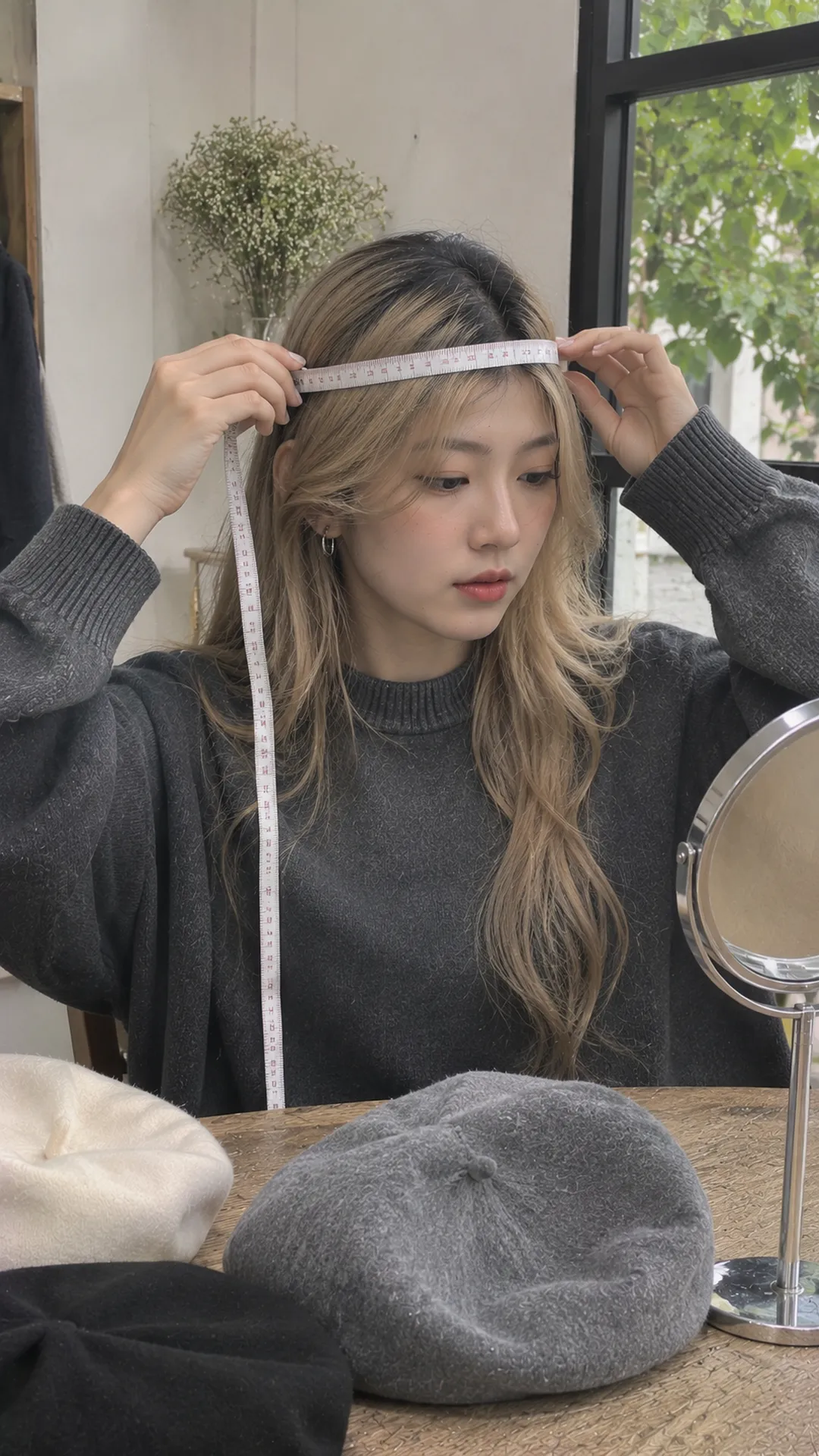
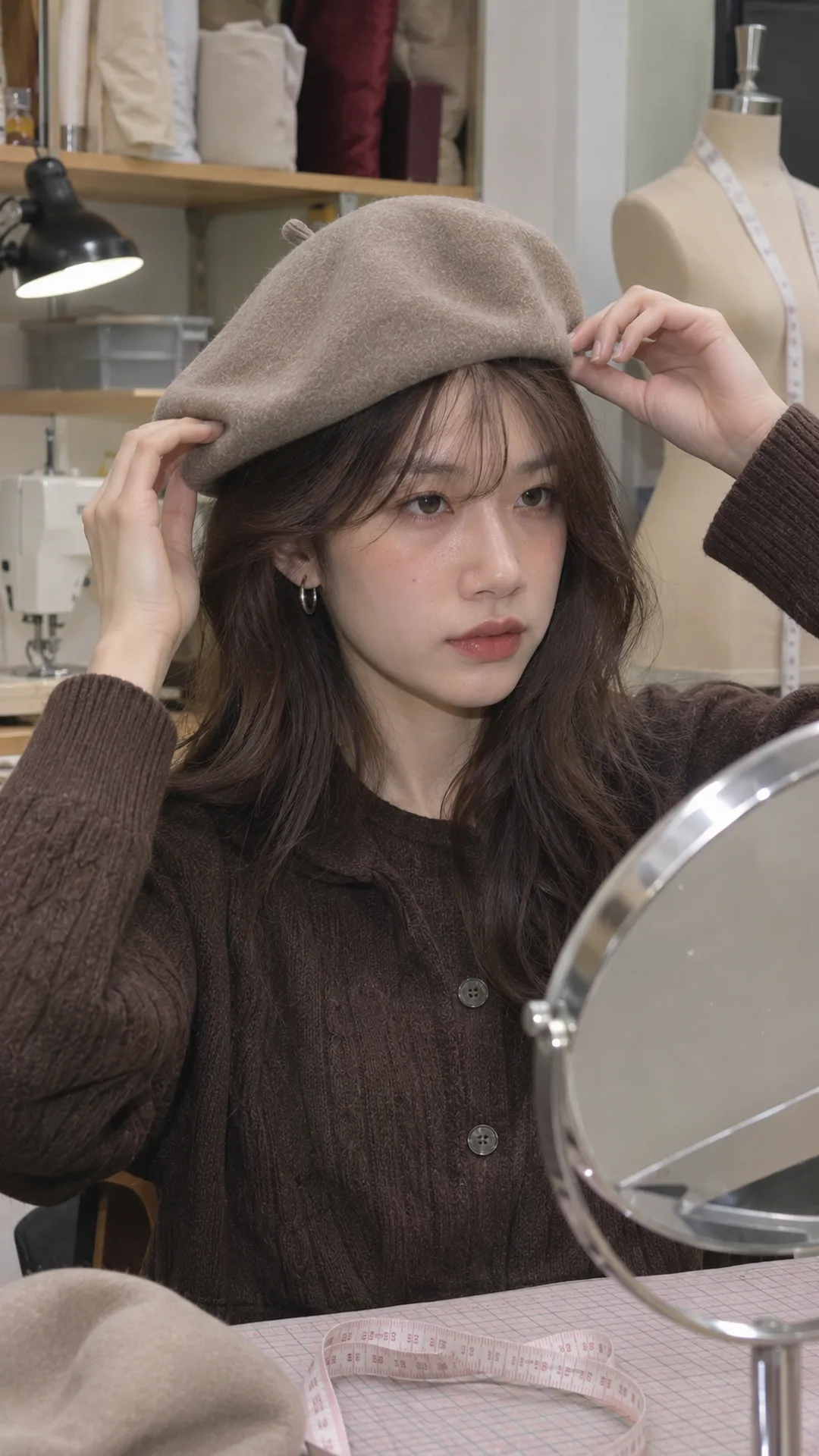
Wrap a soft tape measure around your head where the band will sit. Keep the tape roughly level and avoid pulling it tight against your hair. Compare that measurement with the chart for the exact hat. If it has an adjuster or an elastic band, ask what range it covers. A one-size label says little about how comfortable it will be on you.
Keep the hat on for a few minutes and turn your head gently to see whether it shifts. The band should stay in place without constant adjustments. Try it with the hairstyle you normally wear. Loose hair, a low bun, and more voluminous hair all change how the band sits. A fitting with your hair flattened down may give a different result.
If you’re between sizes, check the adjustment range and the exchange policy before buying the larger size and relying on pins. A hairpin can help secure one position, but it won’t solve every fit issue. Our guide to choosing a size online from measurements explains how to use an item’s own size chart, a habit that helps when buying accessories from photos.
Three ways to wear a beret
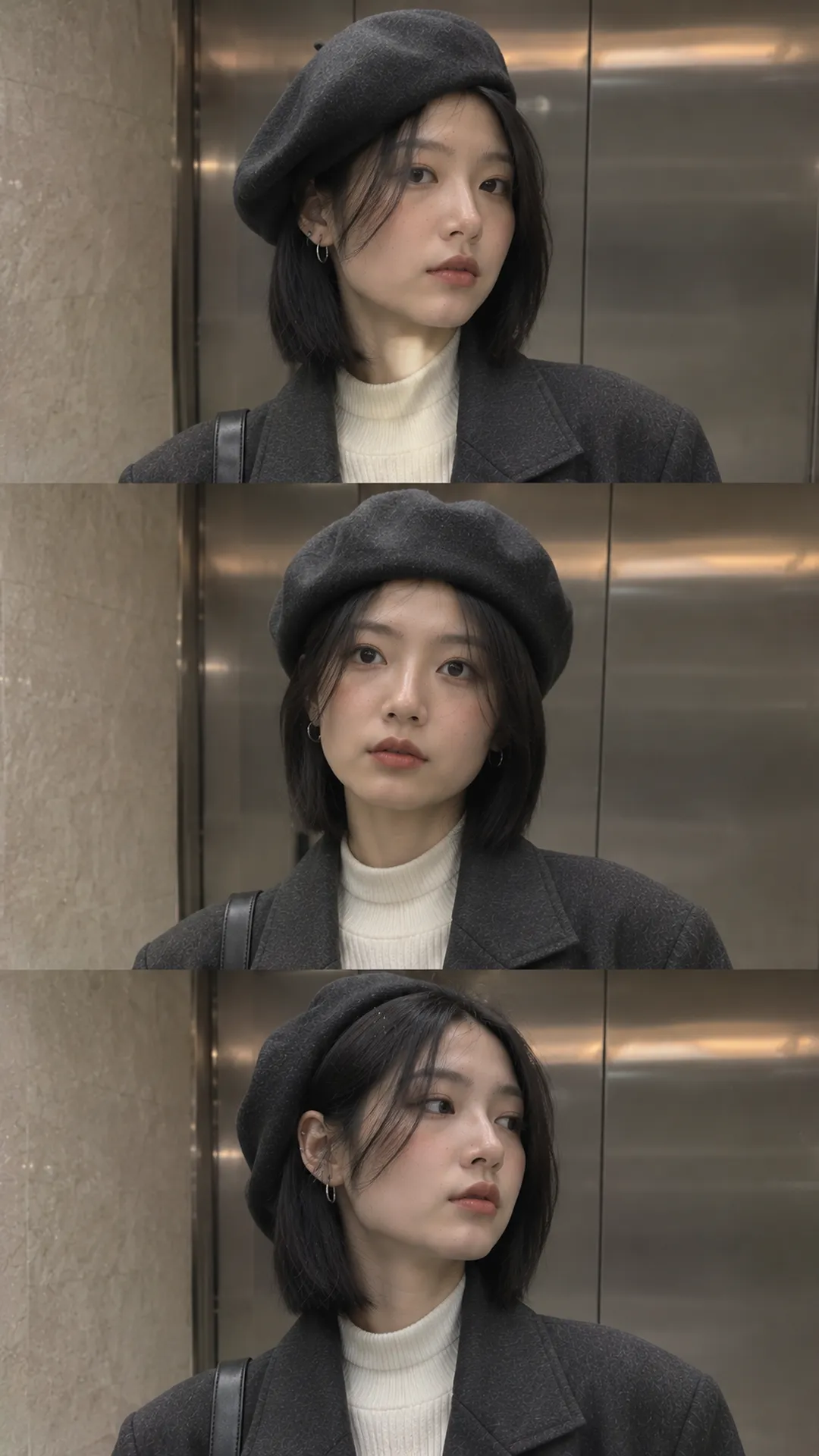
Start with the band in a stable position and gently draw the crown to one side. Keep the band in place as you adjust the fabric above it, so one side doesn’t come down over your ear. Check the tilt from the front and side. Start with a small tilt and increase it gradually until you like how the fabric falls.
You can also set the beret farther back to show more of your fringe and forehead. This makes the hat an accent higher on the head, but check that it stays put when you lean forward slightly. If the band is loose, setting it too far back may leave you holding the hat in place. Try bringing it a little lower or choosing a different cut.
For a compact shape, leave the crown roughly centered. Soften the folds with your hands so the top retains some shape. The effect is quite different from a tilted beret. Try it with a simple neckline first so you can see the shape clearly before adding earrings or glasses.
Take three photos at the same distance and in the same light. Keep your hair, top, and camera angle consistent so you can tell what changed. Choose a position that still works while you talk, walk, and turn your head.
Pair a beret with your hair, glasses, and earrings
If you have a fringe, try placing the band just behind it so it doesn’t flatten the whole hairline. If the fringe creases or parts where you didn’t want it to, lift the hat and move the band slightly. Without a fringe, try leaving a few strands around your face for softness or sweeping them back for a cleaner outline.
A low ponytail or bun is often easier to wear under a beret than a bun placed where the crown needs to drape. Check whether the hair tie touches the band and pushes it up. With short hair, you can leave a little hair visible at the temples or tuck it back to emphasize the outline of the hat. Try both with the outfit you intend to wear.
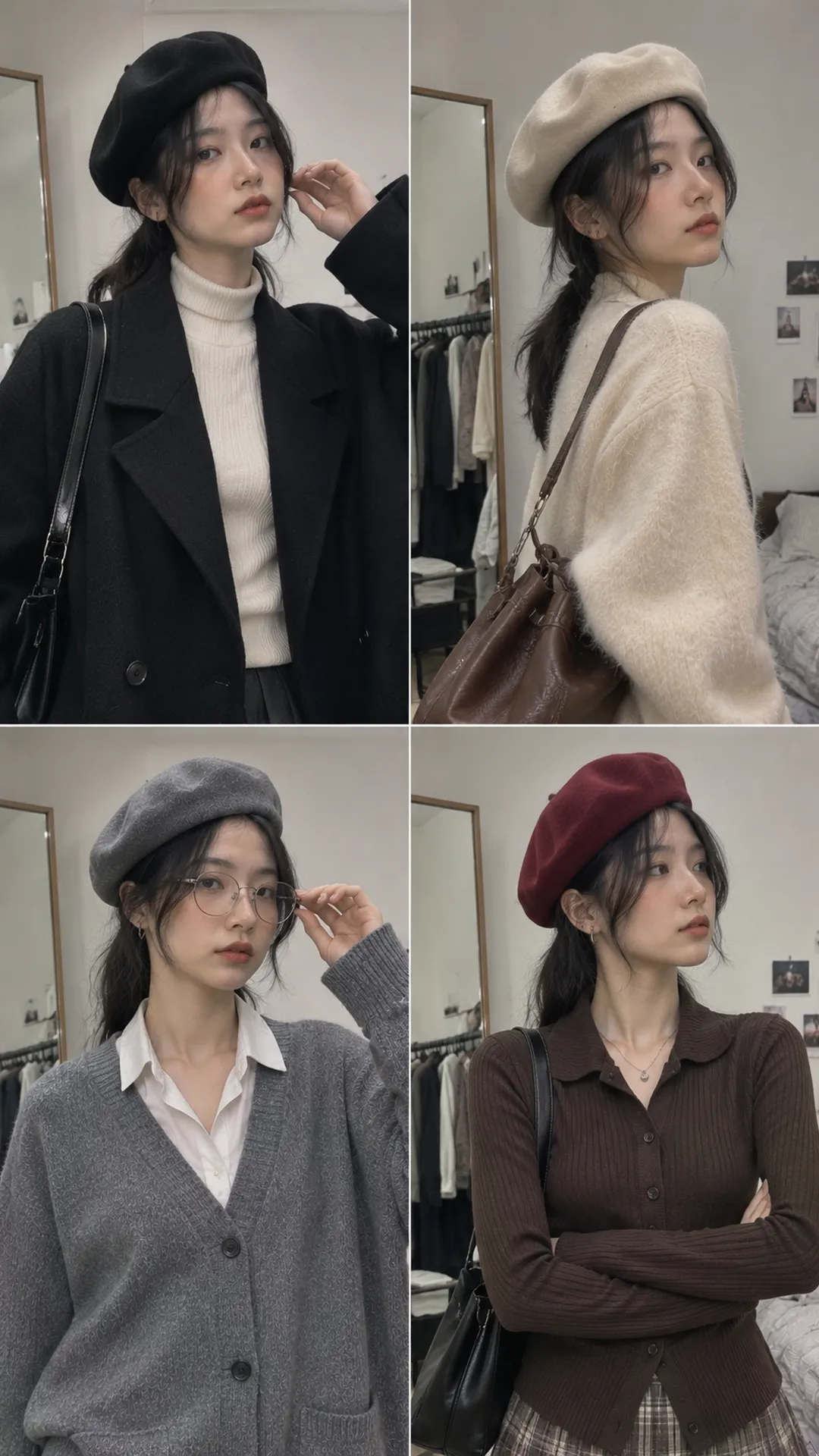
Large frames already draw attention to the area around your eyes. Add a beret and try smaller earrings or a simpler neckline to leave room around your face. If you want the earrings to stand out, tilt the crown the other way and see how it looks. Treat this as a styling experiment and keep whichever arrangement suits you.
Our guide to alternative accessories for women looks at where each item draws the eye. A beret already takes up space around the head, so assess your necklace, glasses, and earrings together in the same frame.

Choose a material for the shape and the occasion
Read the fiber or material label. A wool-like surface can be synthetic or blended, and shine alone won’t tell you whether something is genuine leather. Look for material, lining, and care details in the listing. Ask the seller if they’re missing, especially if you plan to wear the hat often.
With a soft beret, see whether the crown holds the folds you create or springs back to a set shape. With a structured hat, check whether its height works with your neckline and hairstyle. If you want a soft drape, a different material or design will be easier to work with than trying to stretch a stiff crown into shape.
Consider the weather and how you’ll spend the day. A thick hat may work on a cool evening and feel impractical for hours outside in the heat. If you’ll take it off indoors, think about where to put it and whether you can easily fix your hair afterward. That helps you choose a hat you’ll wear beyond a single photo.
Four ways to style a women’s beret
With a T-shirt and straight-leg trousers, a beret gives a simple outfit a focal point. Match the hat to the trousers and use a lighter top to break up the color. If the crown is full, start with a top that sits fairly close at the shoulders. Try an oversized tee once you’re comfortable with the proportions.
With a shirt, compare the look buttoned at the collar and with the top button undone. A soft beret creates subtle contrast with a crisp shirt, while a compact beret and a softer shirt give a different effect. Our guide to styling women’s shirts can help you choose a cut and decide how to tuck the shirt before adding the hat.
With a solid-color dress and boots, you can use the beret to echo the color of the footwear. If the dress already has tiers, lace, or a print, start with a plain hat. A small bag with understated hardware keeps the outfit easy to take in. For an edgier look, change one element such as the bag or earrings, then check the whole outfit again.
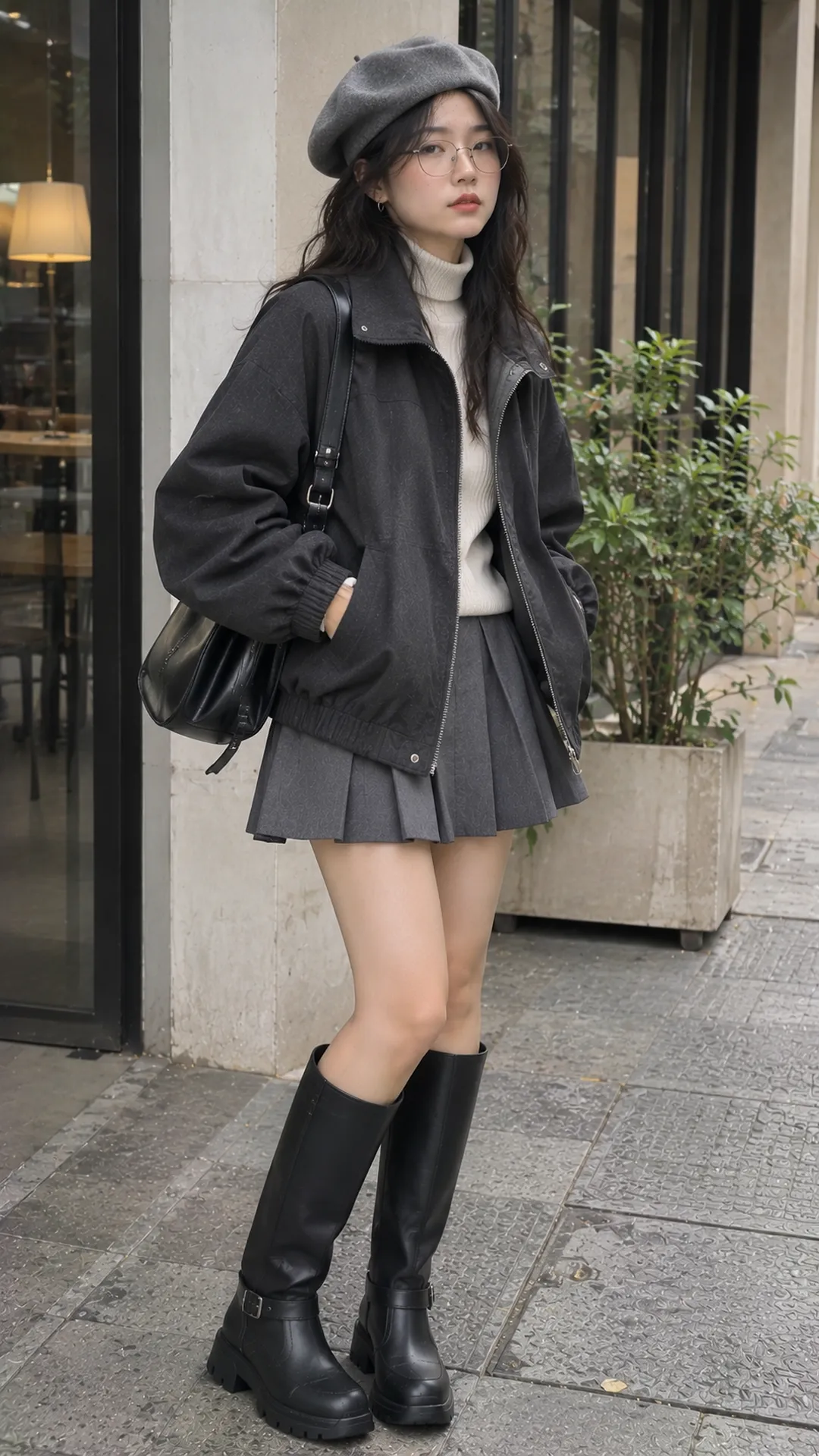
With a jacket and wide-leg trousers, look at the volume of the shoulders, beret, and trouser legs together. You can keep the outfit roomy and choose a flatter beret to balance it. Our guide to essential alt-fashion accessories can help you pick one more accent that works with the rest of the outfit.
Adjust one thing at a time when the hat feels off
If the beret looks too large, reduce the tilt and move the band back to a stable position. Check whether your hair is lifting the crown higher than intended. If there’s still too much volume, the crown may simply be wider than you want. A smaller crown is easier to wear than pulling the band down over your eyes.
If the beret looks like it’s just perched on your head, give the crown a more deliberate fold and tidy the hair around the band. If the outfit feels busy, take away one accessory near your face and retake the photo. Changing one element at a time makes it easier to see what the hat actually needs.
Help your beret hold its shape between wears
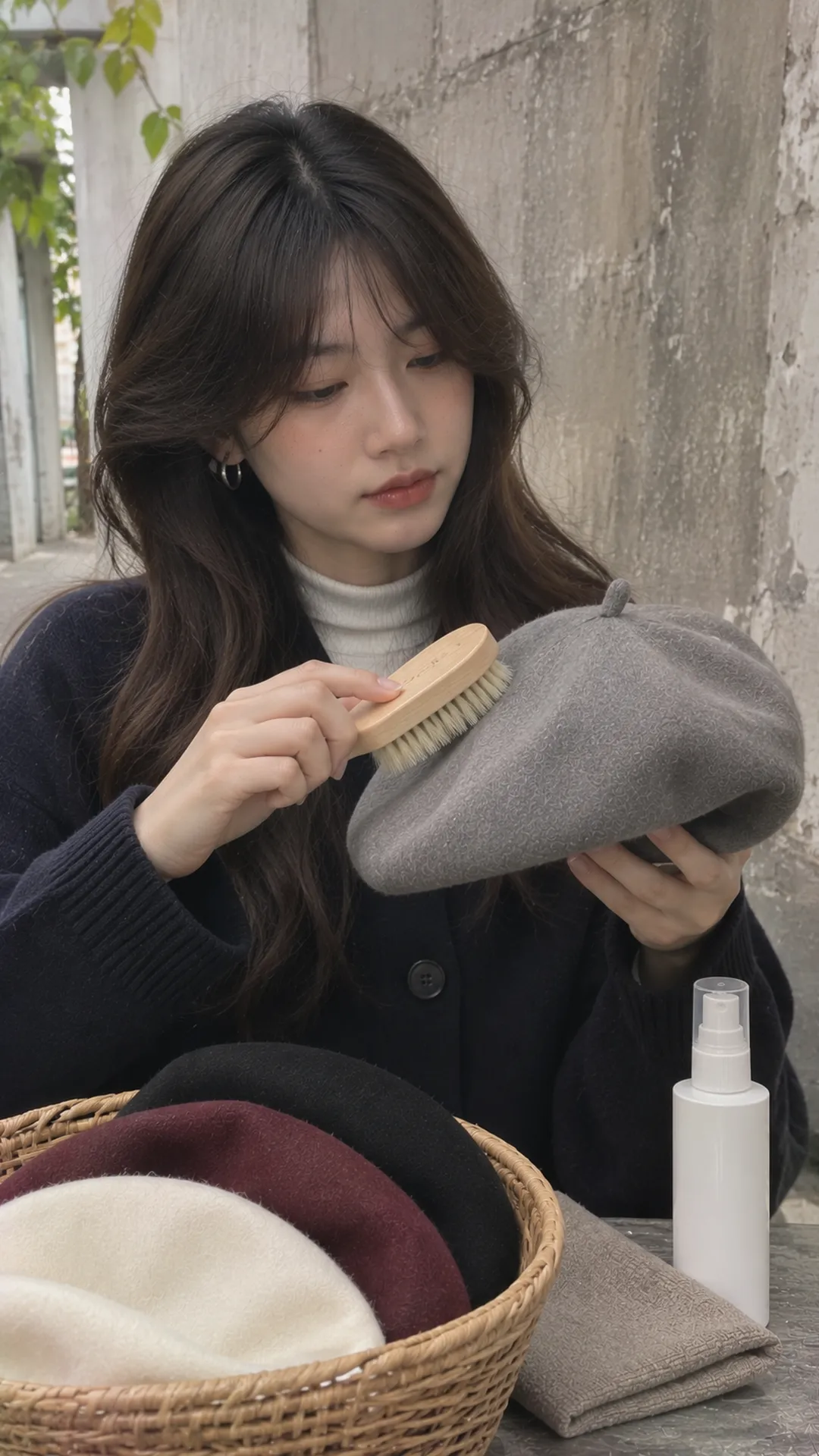
Check the care label before washing. Different beret materials need different treatment, and a small hat can still be unsuitable for soaking or machine washing. Store it where heavier objects won’t flatten the crown. If you’ll carry it in a bag, choose a way to pack it that suits how soft or structured it is.
Before going out, try the beret with the hairstyle and top you’ve chosen, then decide where to put it when you go inside. A comfortable band, a crown in proportion, and some space around your face make it easier to wear the hat naturally without checking the mirror all day.