

Start with the occasion
For a long seated dinner, choose a dress that feels comfortable at the waist, hips, and back against a chair. For an event where you’ll stand for a long time, choose shoes you’ve worn before and a hem that stays out of the way. If you’ll be outside and indoors, think about when you’ll put on or take off an outer layer.
“Elegant” in a product name says little about the finish. Look at the seams, zipper, lining, neckline symmetry, and how the fabric sits on your body. A plain dress that fits is often easier to style than a detailed design you have to keep adjusting.
If you like a dark palette, try black, deep blue, or burgundy. For a softer effect, consider brown or a muted shade you like. Sheen, lightness, and the amount of decoration do more to shape the look than any age-based color rule.
Five velvet dress styles and what to check
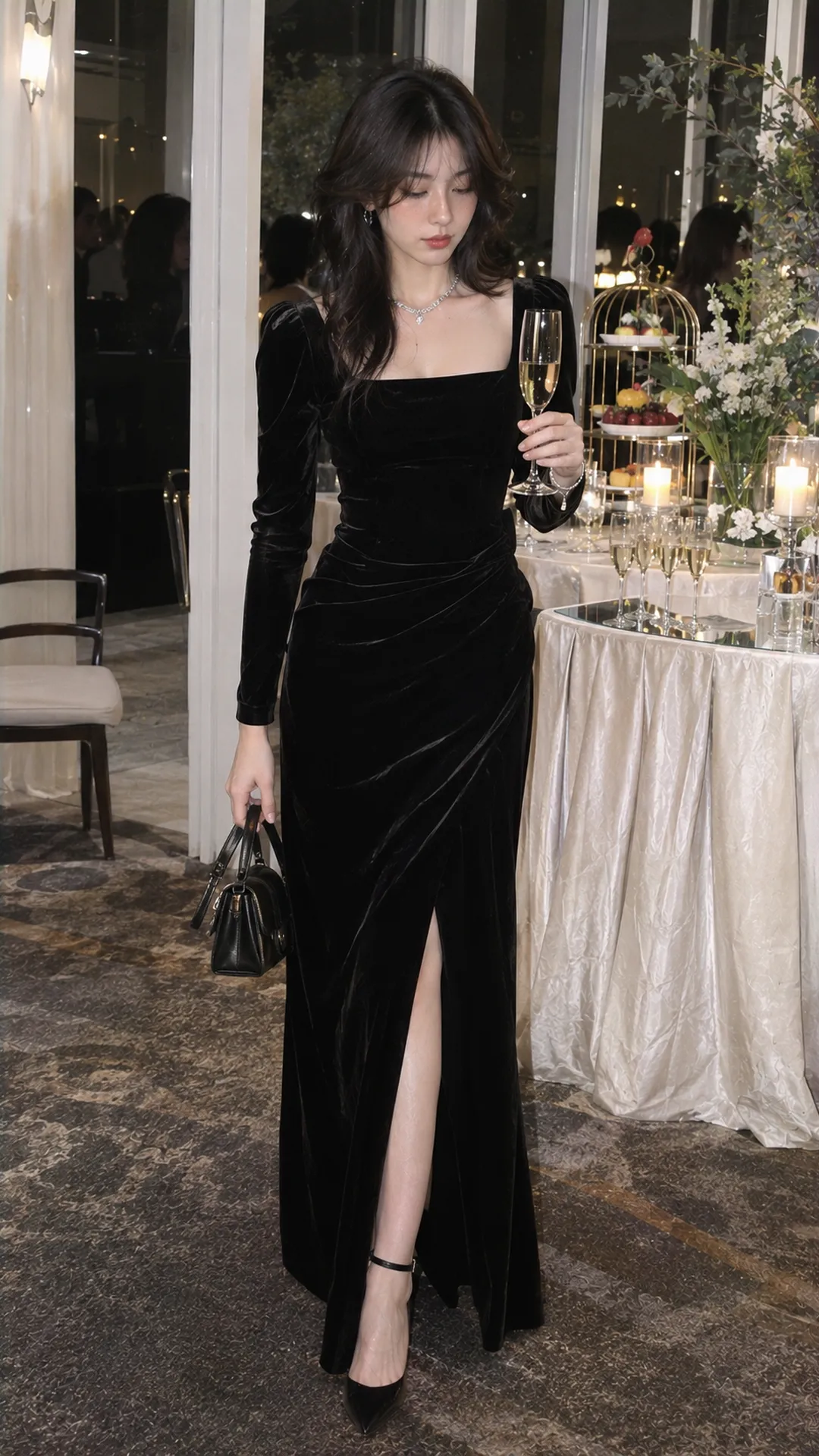
A-line midi: Room to move below the waist
The skirt widens toward the hem, giving you a defined waist without a close fit around the entire hip. Check whether the waist sits where you want it, then watch the hem as you walk and sit. Measure where it falls on you, since a midi label doesn’t specify the length on your body.
Slim-strap sandals or flats with a defined shape are good options to try. If the skirt already has plenty of fabric, a small, plain bag keeps the outfit easy to read. A chunky shoe can work if you want a deliberately edgier look.
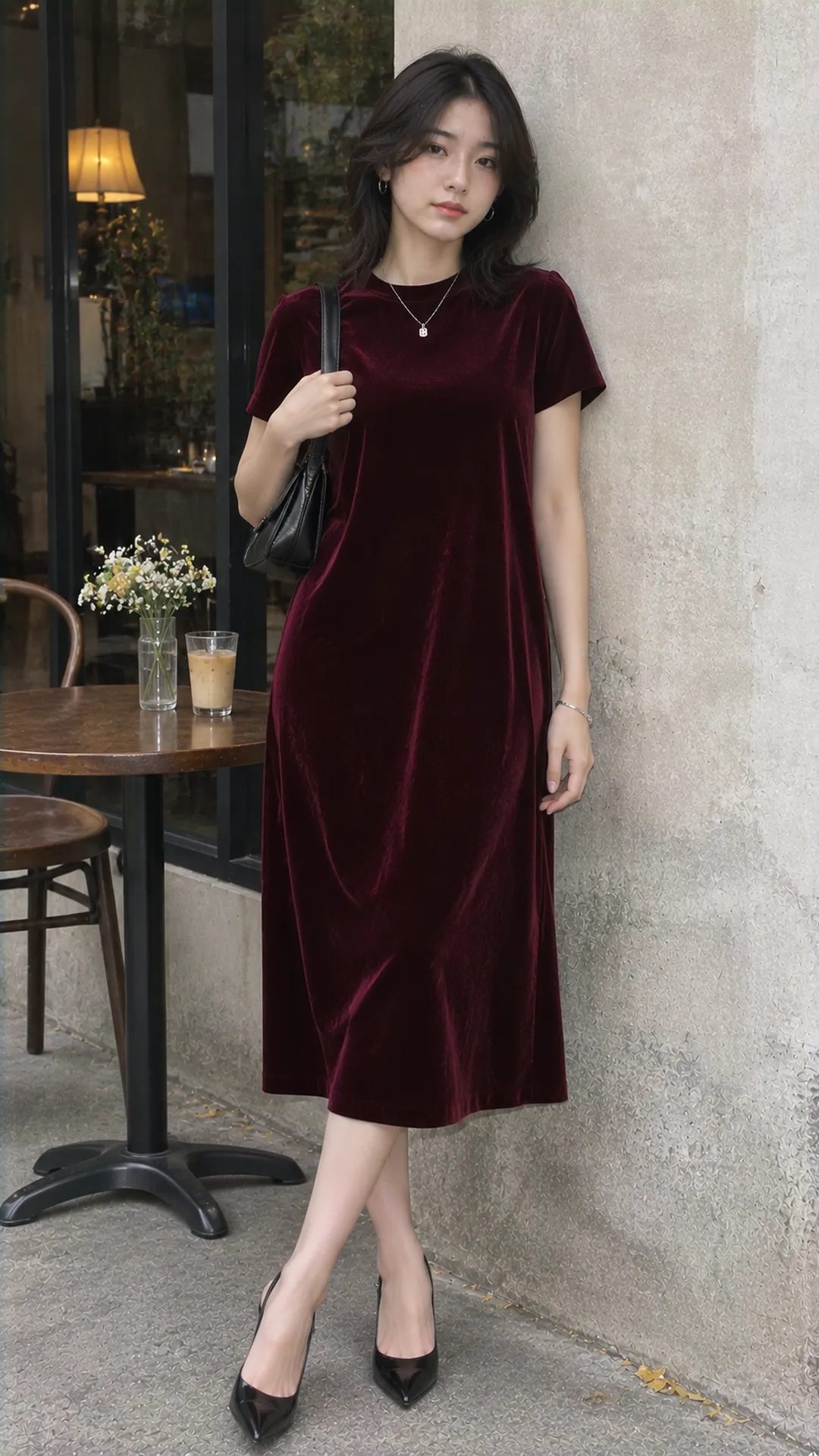
Shift dress: Check the shoulders and drape
A shift dress can look polished with a loose waist. See how the shoulders, armholes, and body sit. If it’s too wide everywhere, a belt may do little for the shoulders or armholes. Try another size or cut.
A simple neckline and neat sleeves let the velvet show. If you want to keep the front uncluttered, try earrings instead of a necklace. With a longer shift dress, walk and turn to check that the hem won’t catch on your shoes.
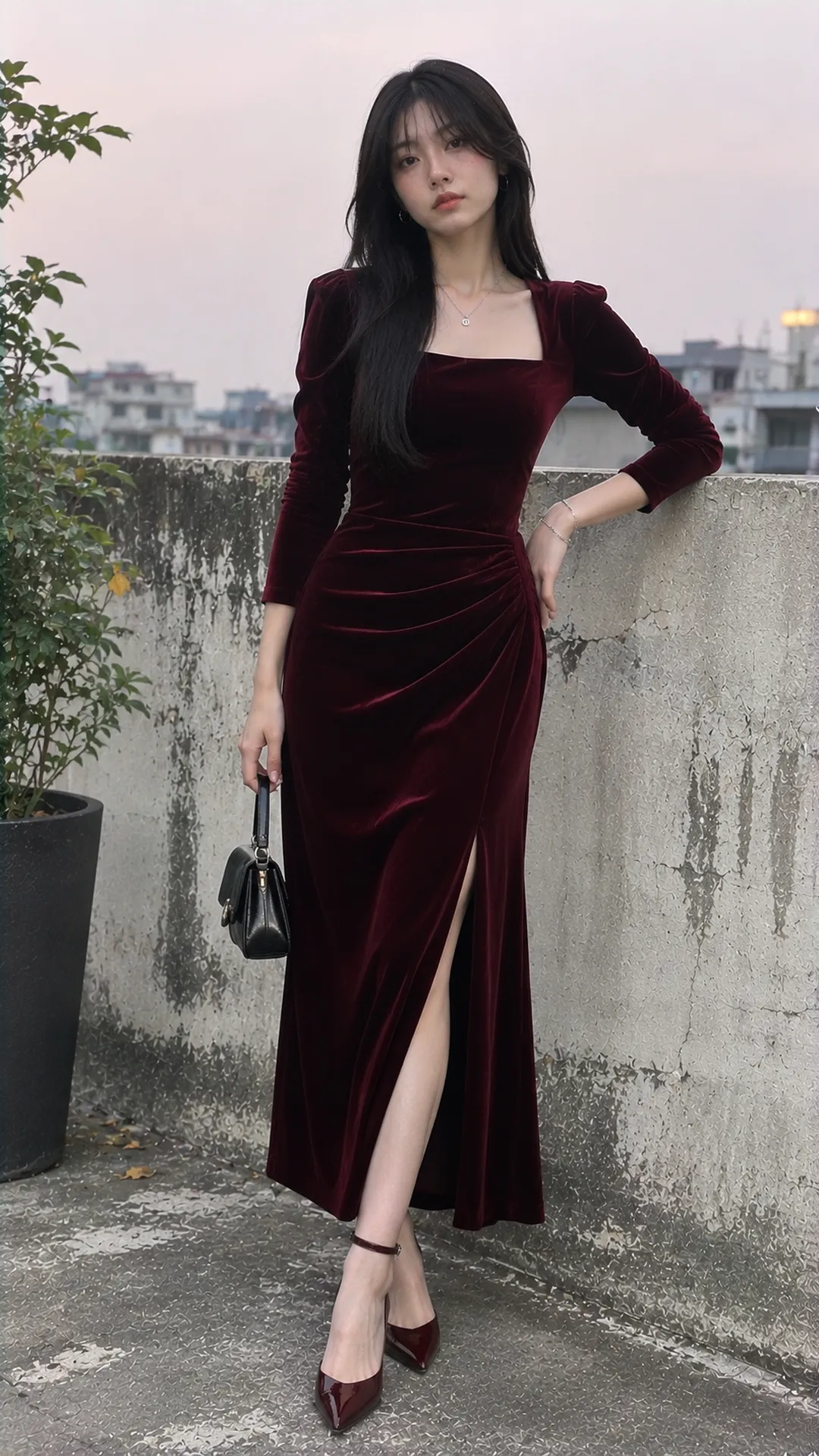
Close-fitting dress: Sit down before you decide
Judge the fit in motion. Sit, reach forward, and step onto a low stair to see whether the seams pull. If the dress has a slit, check how far it opens in the positions you’ll actually use.
Avoid sizing down just for a closer fit in a photo. A cut with room to move can still give you a clear silhouette without straining the fabric. Our women’s skirts and dresses guide explains how to compare lengths and fit points by construction.
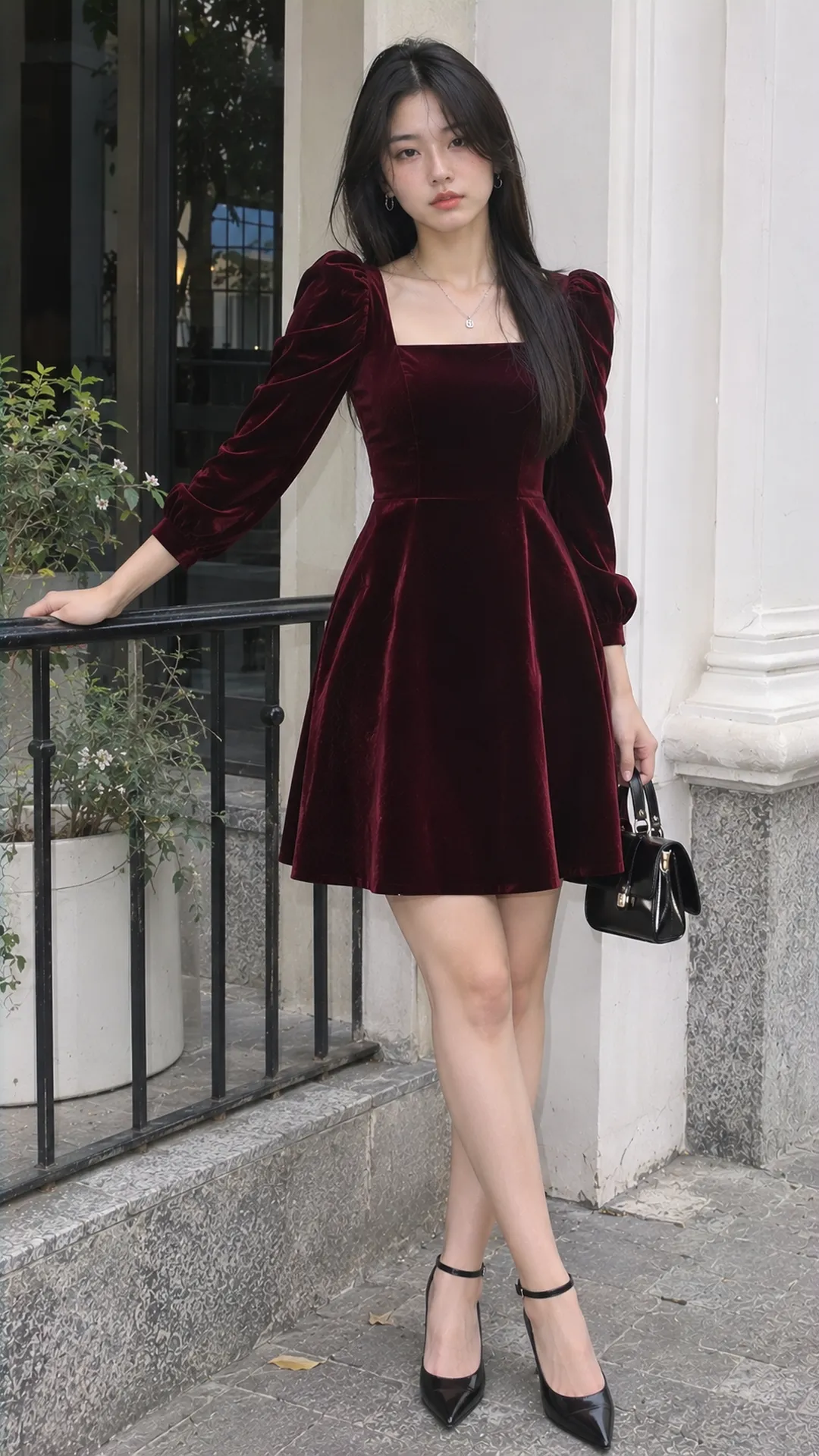
Square or V neckline: Draw attention upward
Choose a neckline depth that feels comfortable and suits the occasion. Lean forward a little and raise your arms to see how much the neckline shifts. Try the dress with the intended base layer early so you can see whether its edges show where you want them to.
If the neckline already has a strong shape, a small piece of jewelry may be enough. Skip the necklace in favor of earrings, or keep both understated. Decide which detail you want people to notice first.
Wrap dress or one-sided ruching
A diagonal line draws the eye differently from a plain dress front. Try the tie, fastening, and overlap while sitting, and check that the ruching falls where you want it. See how the individual dress fits you before deciding based on the design name alone.
Keep the bag and shoes simple if the ruching already stands out. If the dress has long ties, check that they won’t snag on a bag clasp or chair. A detail that looks good but needs holding in place all evening may not suit your plans.
Look at the velvet from several angles in the light
Oxford Learner’s Dictionaries describes velvet as a fabric with a thick, soft surface. Look at photos or video of the dress in motion to see the specific fabric. Thickness and drape can vary among garments labeled velvet.
Turn the dress through several angles in the light to see which areas catch the light and which look darker. One well-lit photo won’t establish that the surface is even everywhere. If an area looks unusual, ask for a close-up or check it in person before deciding whether it’s part of the texture or a flaw.
Check the fiber content and lining separately. The word velvet doesn’t tell you all the fibers, how much the fabric stretches, or how to wash it. For warm weather, try the complete dress with its sleeves, lining, and fit instead of judging how cool it will feel from the material name alone.
Build the accessories around one focal point
Plain dress with a simple neckline: Try more noticeable earrings or a neat necklace as the focal point. Check each in the lighting you’ll be in. Shiny metal and velvet together may give the outfit enough detail without a large embellished bag.
Dress with a statement neckline or sleeves: Give that feature some space. Start with a plain bag, small clasp, and lightly decorated shoes. For a bolder look, add one piece and see how it works with the dress.
Dress with ruching, a slit, or a wrap front: Check whether your bag and strap cover the design. A crossbody strap can cut across the ruching, while a clutch needs to stay in your hand. Choose for how often you’ll need both hands free.
Our guide to alternative accessories for women helps you balance accents around the neck, waist, and feet. One familiar piece can carry your style into the outfit without a whole new set of accessories.
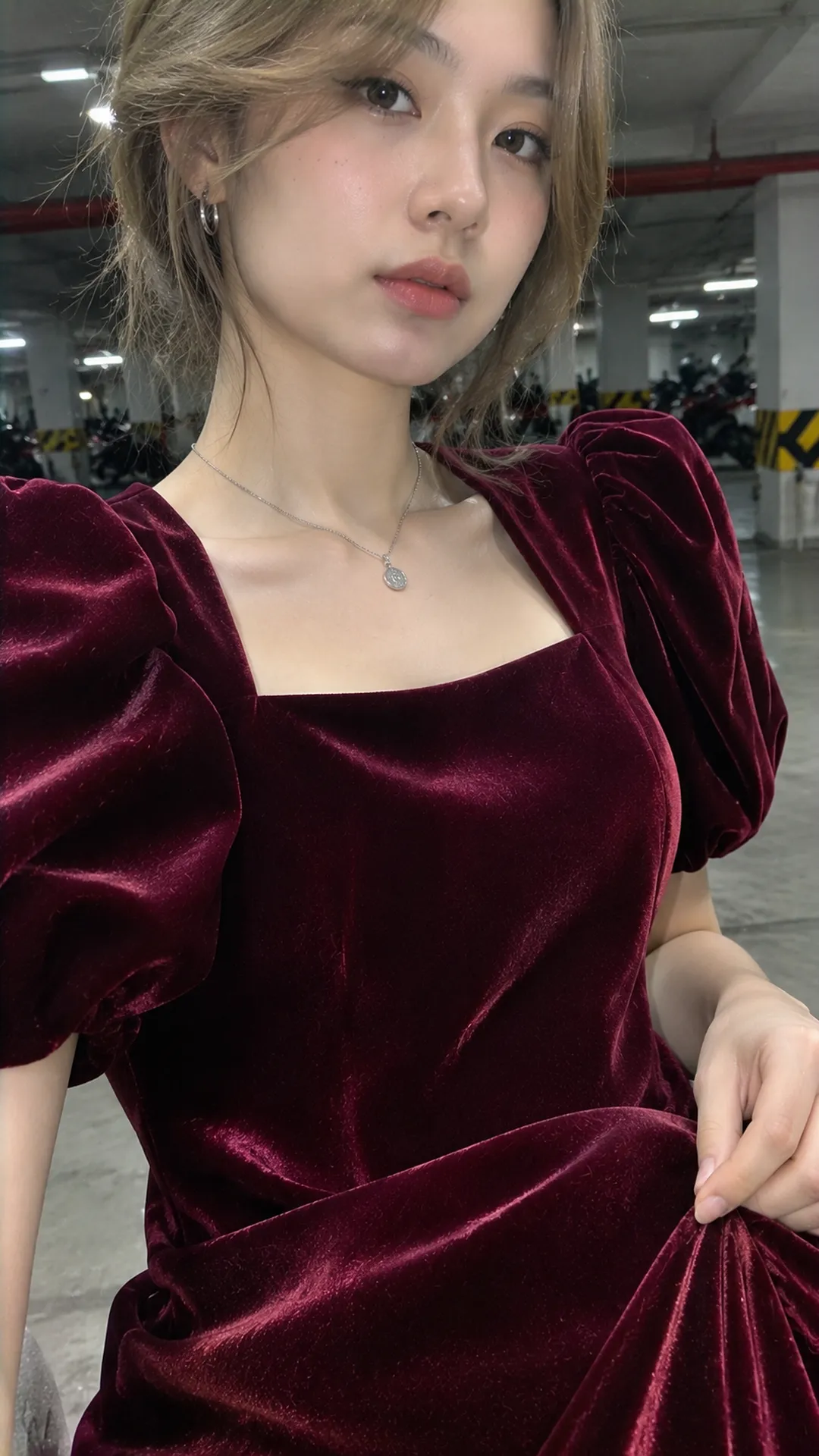
Try the dress with your shoes and outer layer
Flats with a defined shape work when you expect to walk a lot. Low or mid heels are options if you can walk comfortably in them and like the proportions. Check the hem in the exact shoes you’ll wear. Changing heel height after an alteration can change where the dress ends.
For a long dress, watch the hem as you step up and turn. With a midi, check the space between the hem and the shoes in a full-length mirror. Choose the gap that looks right to you and lets you walk comfortably.
An outer layer should give the sleeves and body of the dress enough room. A tight jacket can bunch up puff sleeves. Our guide to layering women’s outfits can help you choose what the outer layer should do while keeping the outfit underneath complete on its own.
Three outfits to picture before you buy
Indoor dinner: A dark velvet shift dress, structured flats, a small plain bag, and earrings. The velvet is the focal point, with accessories to finish the look at the face and feet. Sit for a while to check the neckline, waist, and hem.
A polished event: An A-line midi, familiar mid-height heels, a small clutch, and a suitable outer layer. Check the dress code first, especially for low necklines and slits. You can change the coverage without giving up the silhouette.
An edgier outing: A streamlined velvet dress, well-fitting boots, and one metal accessory. Make sure the hem won’t catch on the boot tops. If you’re unsure what should lead the look, our women’s outfit guide by garment helps you start with the dress you already own.
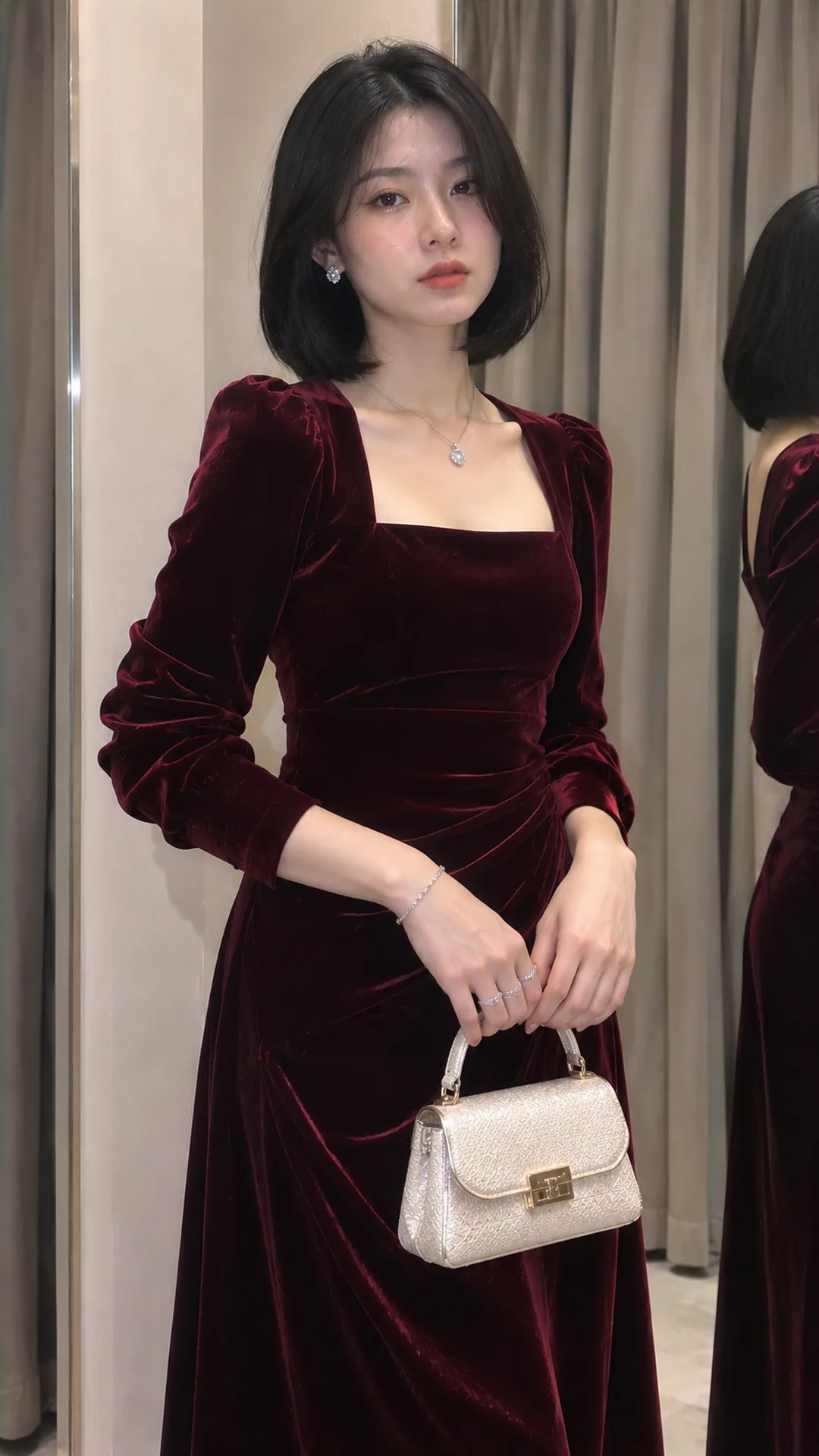
Check the dress when it arrives and care for it after wearing
When it arrives, check the zipper seam, lining edges, neckline, and underarm seams. Try it with the intended underlayer and shoes in line with the seller’s policy. Take full-length photos from the front, side, and back to see what a single front view can miss.
Ask how to clean the dress if the label lacks detail. Two dresses called velvet may need different heat settings or ironing methods. Check the instructions for the specific dress before steaming, ironing, drying, or treating stains. The lining and trims may affect what’s safe to do.
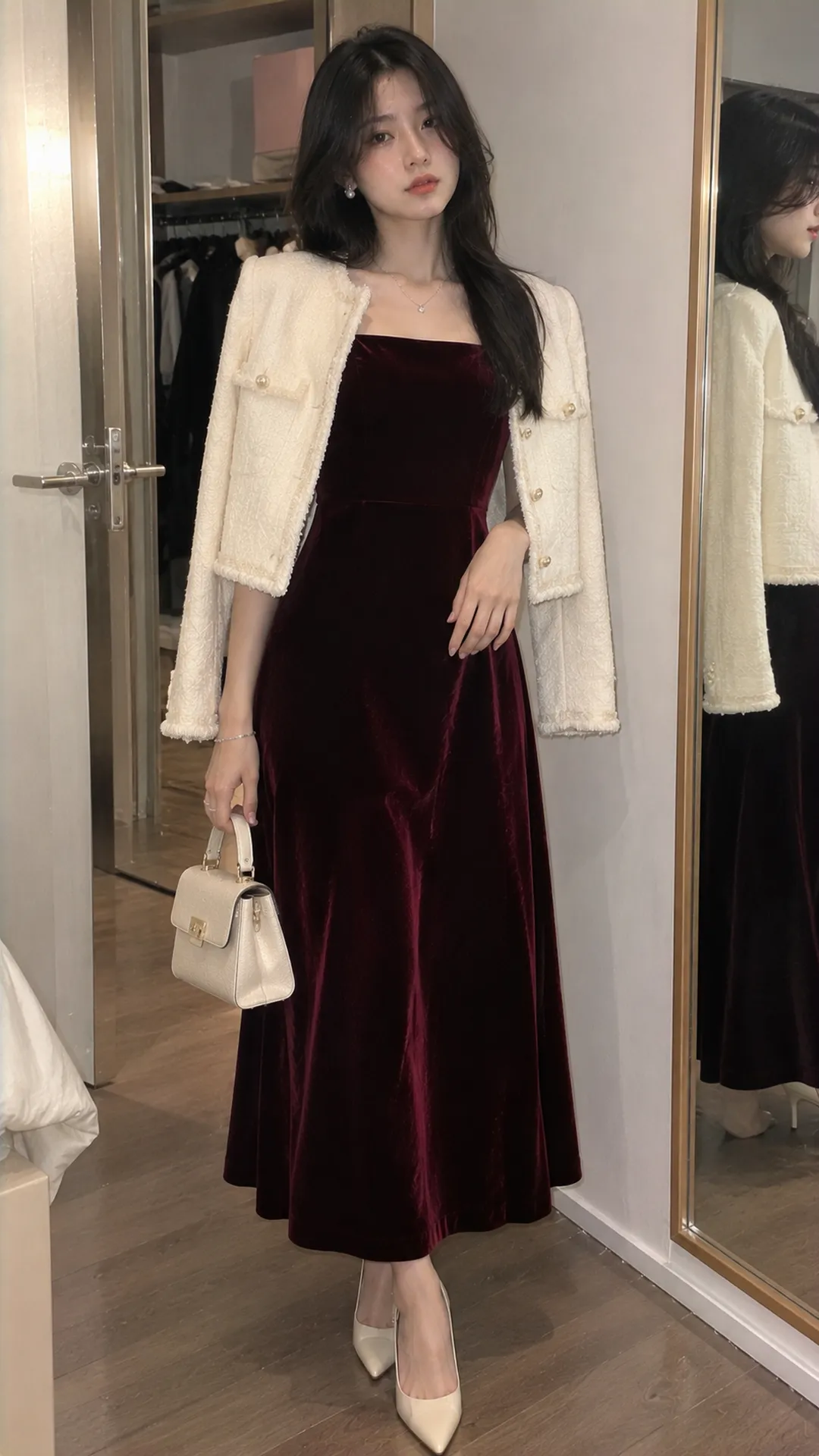
Before storing, make sure the dress is clean and dry as directed. Choose whether to hang or fold it based on the construction. Keep sharp accessory hooks away from the velvet. Fix a loose button or seam early so the dress is ready the next time you wear it.
Before choosing jewelry, sit down with the dress and bag you plan to use. See whether the strap pulls the dress off your shoulder, the clasp rubs against the velvet, or the front catches on the chair. If you need a hand to hold the dress in place, adjust the fit or carry the bag differently before adding jewelry.
Choose a dress you can comfortably wear, sit in, move in, and care for. Once the fit suits the occasion, shoes, a bag, and one small accent may be all you need.