


Read lens edges to distinguish three constructions
Full-rim has rigid framing around the whole lens. Semi-rimless has rigid framing around only part. Rimless has no surrounding lens-edge frame, using separate connections. Distant images can obscure the distinction.
Warby Parker describes semi-rimless as framing supporting part of the lens while leaving the rest exposed. Focus on actual framing, not whether the lower image area looks transparent or faint.
Some glasses have thick upper bars and very thin metal lower rims, visually suggesting half-rims while remaining full-rim in construction. Browline names, Clubmaster-like shape or seller labels cannot settle it. Request lower-edge and side close-ups.
Transparent frames are not automatically half-rim either. Clear plastic can surround the whole lens. For clear semi-rimless designs, confirm which parts are clear plastic and which actually lack rigid framing before comparing.
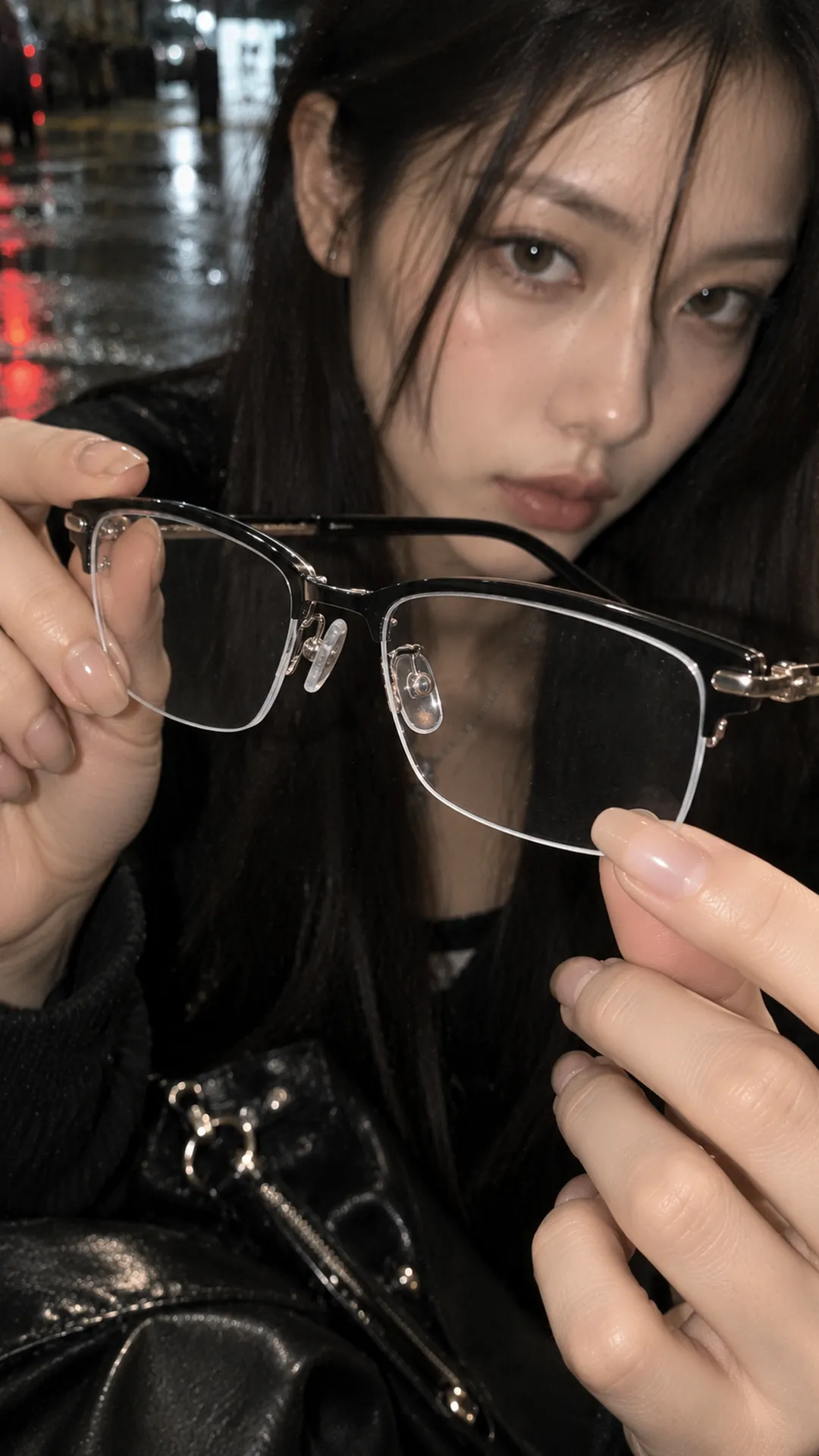
Upper and lower rims create different emphasis
Upper-rim designs concentrate lines above the lenses. Black or contrasting rims attract attention near eyebrows. Choose delicate lines for subtlety or stronger bars when glasses should lead.
Lower-rim versions emphasize the lower lens edge. Check cheek distance and position when smiling. This is a design choice, not identical lens compatibility or use across all lower-rim models.
With cord retention, apparently empty edges still hold the lens. Anna Eyewear's construction explanation describes cord in a lens-edge groove. Do not remove it assuming temporary display material.
Searches for lens-free lower-rim glasses often seek styling props. A lens-free prop cannot be assumed suitable for real lens fitting without manufacturer confirmation. Specify photography, accessorizing or actual optical use.
Choose square, round or oval through proportions
Square shapes add clear geometry around the eyes. Round lenses repeat curves; ovals often extend horizontally depending on design. Width-height proportions and corner curvature can differ within one label, so try the actual product.
For a round face, squares can contrast and circles preserve softness. For a defined jaw, ovals may soften while squares continue strong lines. These are effects, not a list of forbidden face-shape combinations.
For a long face and desired horizontal volume, compare lens proportions within a suitable overall width. For less visual area, try smaller designs that still fit. Do not select shallow lenses only because they look delicate on someone else.
A women's category alone cannot establish fit. Check dimensions, bridge, temples and actual placement. A differently categorized design may suit your appearance, but practical use depends on the particular frame.
Check fit before color
Wear naturally, look forward, bend slightly and turn. Notice repeated slipping, tilt or continual adjustment. Temple or behind-ear pressure belongs in the fitting discussion rather than being ignored for appearance.
Check cheek clearance when smiling and eyelash contact when blinking. A pair stable at rest may touch during speech or expressions. Try usual hair, since density behind the ears can affect temple comfort.
Temple numbers commonly describe lens width, bridge and arm length. Tâm Đức Eyewear's frame-construction guide illustrates reading them. Similar measurements do not guarantee identical placement because bridge shape and curvature vary.
Bring a comfortable existing pair for comparison. Describe likes and problems: slipping, headphone contact, awkward storage or overly prominent rims. Specifics filter options better than asking only what suits your face.

Assess prescription semi-rimless glasses as a complete pair
Display frames and finished glasses may differ in weight and feel. Do not decide solely because an empty frame feels light. Ask whether the design suits the required lenses and intended shape.
Do not independently choose material or thinness from claims that half-rims must use one option. Fitting also depends on design, dimensions and individual vision needs. It requires direct assessment rather than face photographs or one number in a fashion article.
On receipt, check stable assembly, position and any discomfort needing feedback. For looseness, lens movement or irregularities, return for inspection. Do not glue or tighten retention parts merely to hold the lens temporarily.
For nonprescription use, distinguish actual lenses from demonstration inserts. Lens color alone cannot establish UV protection, glare reduction or filtering. Advertised functions need specific information, not the half-rim name.
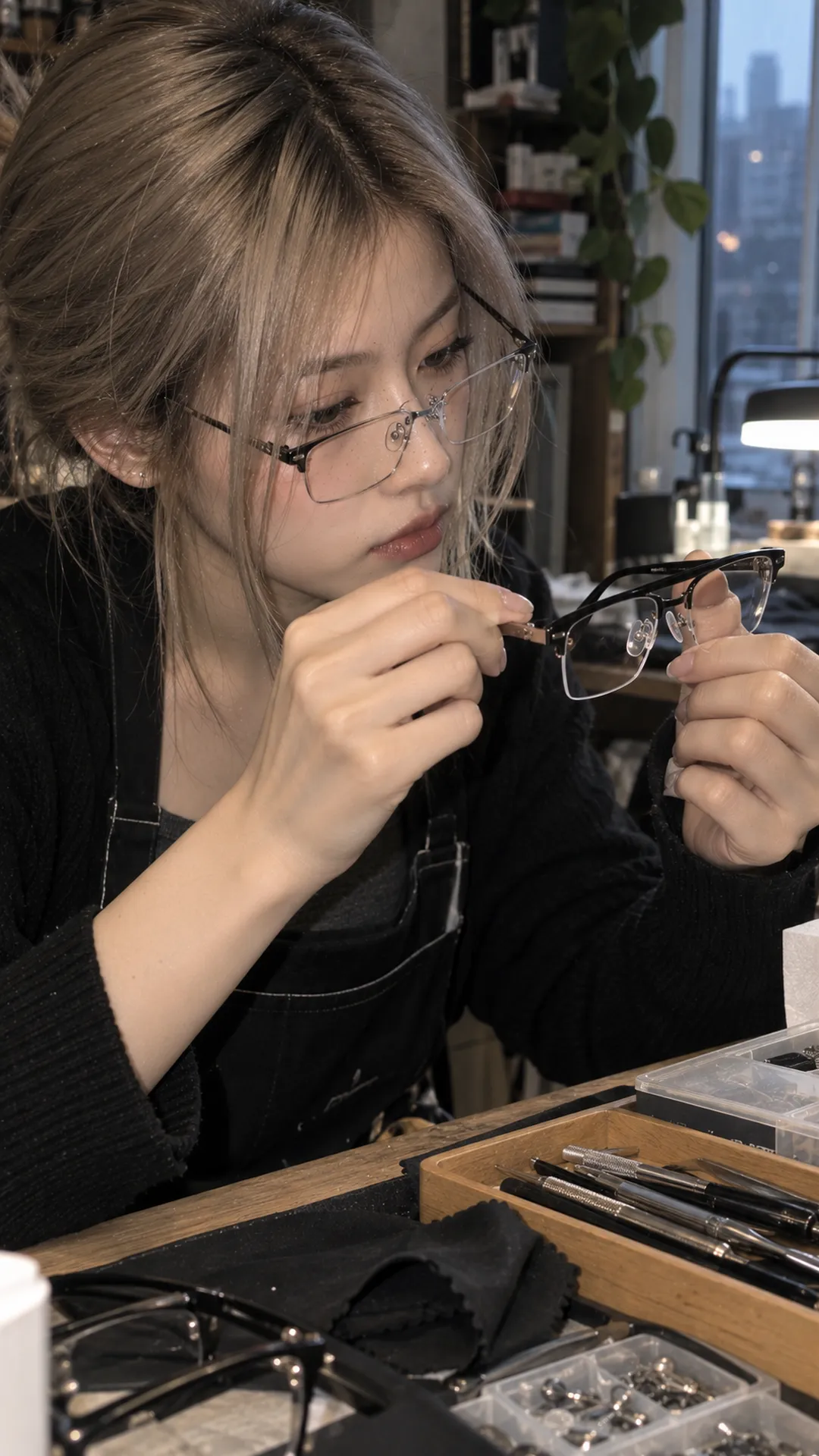
Coordinate black, metal and clear areas
Black half-rims create clearer lines beside lighter skin and hair, though contrast depends on the whole face. To emphasize glasses, simplify nearby pieces. For subtlety, try finer rims or shades related to regular accessories.
Silver, gold and other metals create reflection. Earrings and bag hardware need not match exactly. Keep one dominant tone and a smaller different detail; for competing accents, reduce quantity before replacing everything.
Clear portions can lighten the visible outline, but check real color in natural light. White-background images may erase edges that appear differently on the face. Compare near and distant views.
The expressive women's accessories guide considers glasses beside other accents. Because they sit around the eyes, choose earrings, hair bows and collars after understanding the rim's effect.
Three existing-wardrobe combinations
A plain shirt and fine upper rim
Pair a light shirt, dark trousers and fine upper rim for definition without excessive detail. For a bow or ruffled collar, omit a large necklace. Glasses already create upper structure; accessories need not duplicate that role.
Dark clothing and defined black glasses
A minimally patterned black top, swept hair and square black glasses create strong lines. Small earrings can add light, or retain darkness throughout. Read Minimalist Style for fewer pieces with controlled proportion and surface.
Soft clothing with round or oval glasses
A light knit, straight dress or soft trousers can accompany fine round rims. For more contrast, try sharper corners with the clothes unchanged. Changing hair, top and bag together makes the glasses' contribution difficult to identify.
For polished occasions, Smart Casual interprets the whole outfit. Glasses neither create professionalism independently nor establish occupation; they remain an accessory needing practical suitability.

Care and questions before purchase
Put on and remove gently and use a suitable case. Avoid lenses face-down on surfaces or loose storage with keys. Exposed edges make storage habits particularly relevant to daily use.
Follow frame and lens supplier cleaning guidance. Do not choose harsh solutions for stubborn marks or pull cord to test strength. Loose or damaged retention requires qualified assessment rather than an unsuitable improvised repair.
Before payment, ask whether price includes lenses or frame alone, post-fitting adjustments and remedies for poor fit. The shopping hub continues information and budget checks. Worthwhile half-rims have clear construction, stable fit and the intended effect rather than merely a currently discussed shape name.