

Choose through three questions
First, can your hair tie or wrap without pulling short layers tight? Layered shoulder-length hair may not gather like a one-length cut. For repeatedly escaping strands, try half-up or side clips instead of forcing everything together.
Next, how will you travel and will you wear a helmet? A high bun or rigid rear accessory may interfere. Travel with simple hair and finish on arrival, or choose easy post-helmet readjustment.
Finally, should neckline and shoulders show clearly? Detailed collars often work with gathered hair; simple necklines leave room for loose hair if preferred. For the entire guest outfit, see choosing a wedding guest outfit, then base hair on actual clothing structure.
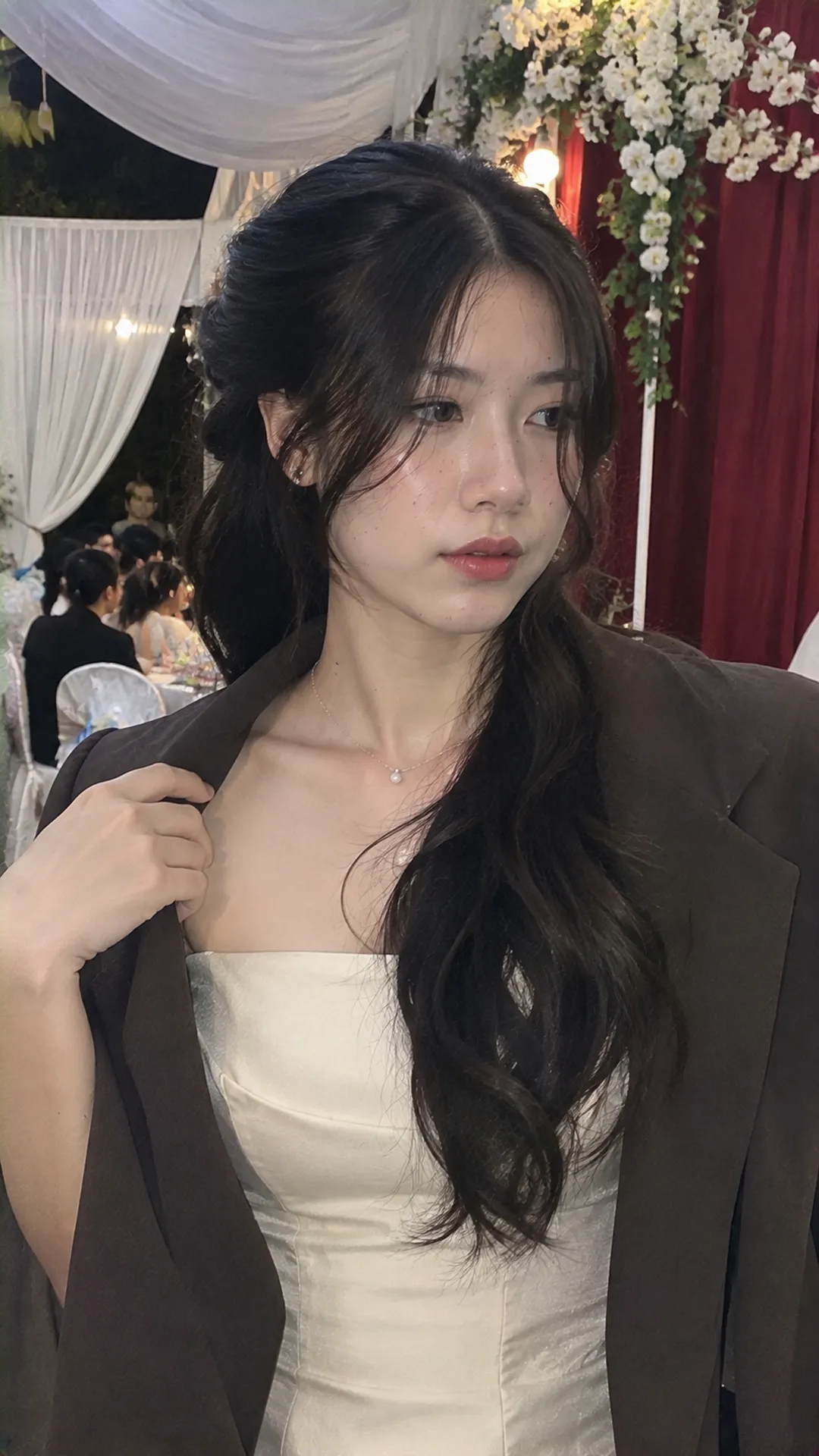
Half-up: retain length with a clear face
This suits loose-hair preferences without front sections repeatedly falling across the face. Take sections above both ears, bring them back and secure with an appropriate tie or clip. Leave the rest natural or arrange ends in your familiar texture.
- Choose a part and brush the gathered sections neatly.
- Take fairly balanced amounts from both sides without pulling excessive hair near the forehead.
- Bring them to your preferred fastening point and check the front before tying.
- Gently arrange the surface and retain deliberate loose strands rather than randomly pulling out many small ones.
If the section drops, reduce its amount or use better holding tools. A decorative clip may belong over an already secure tie rather than hold everything. Styling product cannot replace an unstable fastening.
Low ponytails: surface and tie placement
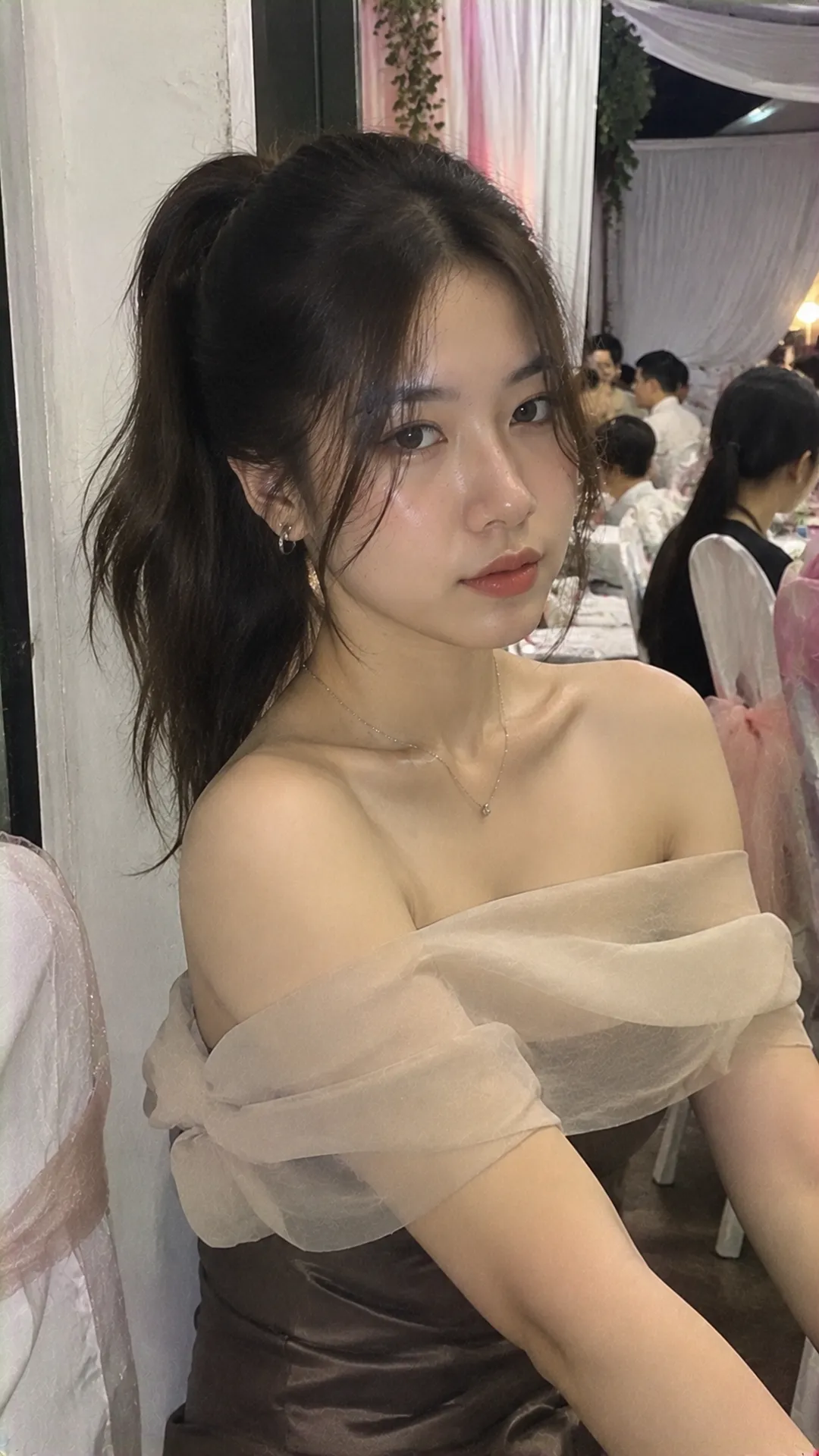
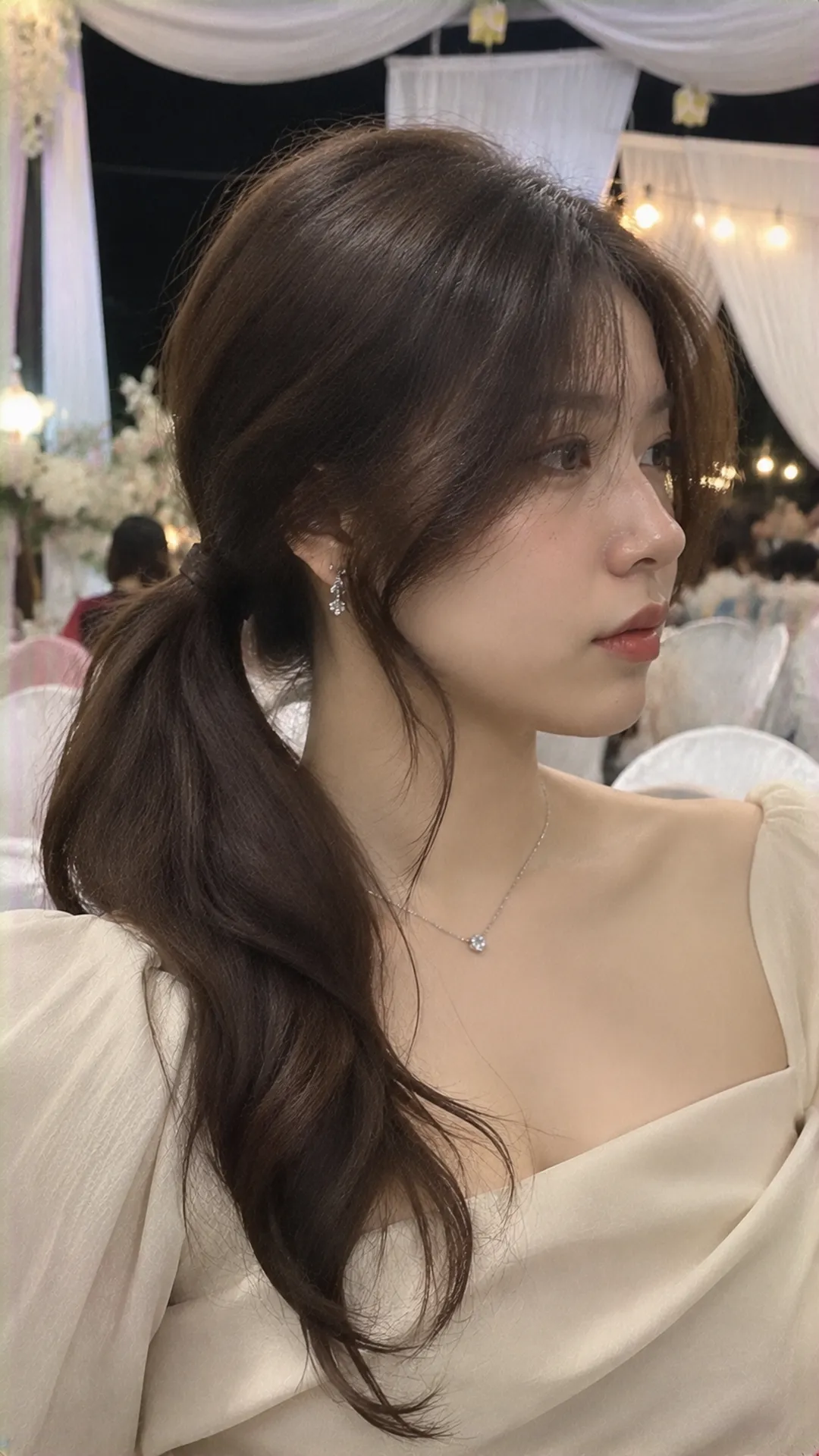
A low ponytail gives manageable structure to sufficient length. Gather at a comfortable nape position and tie moderately securely. Check both sides for uneven pulling or unwanted upper bulk.
Keep a middle part, side part or brushed-back surface according to emphasis. Wrap a small strand around the tie and pin its end if desired. Concealment is unnecessary if the tie already suits the look and you prefer simplicity.
A ponytail need not flatten the entire head. Gently loosen for slight volume without undermining the fastening. Turn and bend before adding accessories.
A simple low bun for sufficient length
A low bun clears the neck and concentrates volume at the nape. Start with a secure low ponytail, gently twist and wrap around its base. Pin sections appropriately rather than expect one pin to retain all the hair.
Layers need not all be forced into the bun. Keep deliberate soft front strands if preferred, with secure rear support. For heavy volume, divide the tail and wrap sequentially or choose another tied style.
Check pin ends when leaning against a chair. Release and adjust tension or pain rather than endure the party. A useful low bun holds during sitting, eating and conversation beyond a standing pose.
Braids: one defined line rather than many details
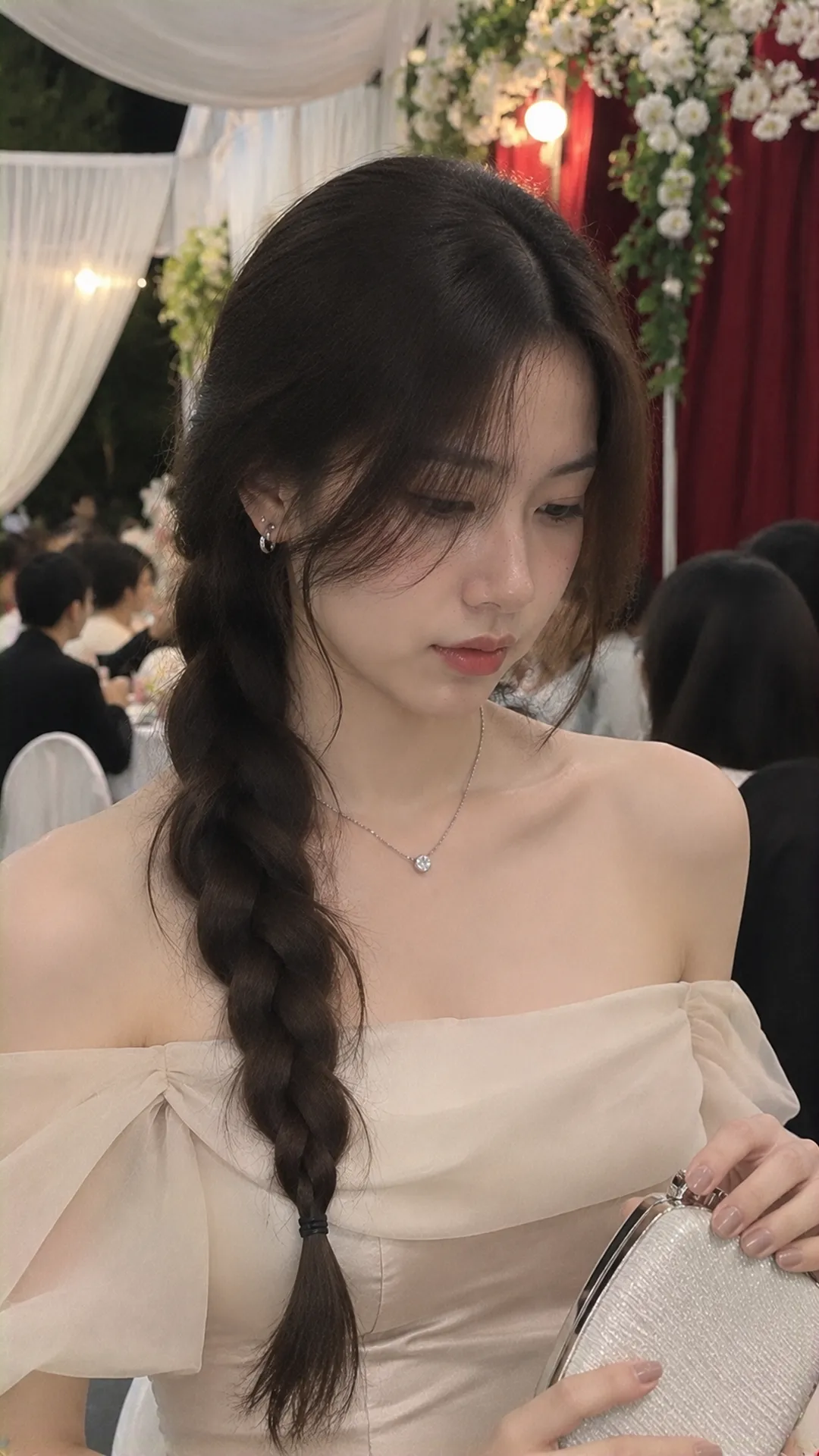
For long hair, a three-strand braid down the back or over one shoulder is an accessible start. Divide into three, alternate each outer section across the middle and secure. Keep tension fairly even rather than tight above and loose below.
For softness, loosen small sections after securing the end. Work gradually and inspect short layers; hard pulling may undo the structure. A small side braid can also join a half-up style without gathering all hair.
With layered shoulder-length hair, two side twists may be easier than an under-length braid. Choose actual feasibility over exact image copying. One neat braid and a small clip can already provide a clear guest accent.
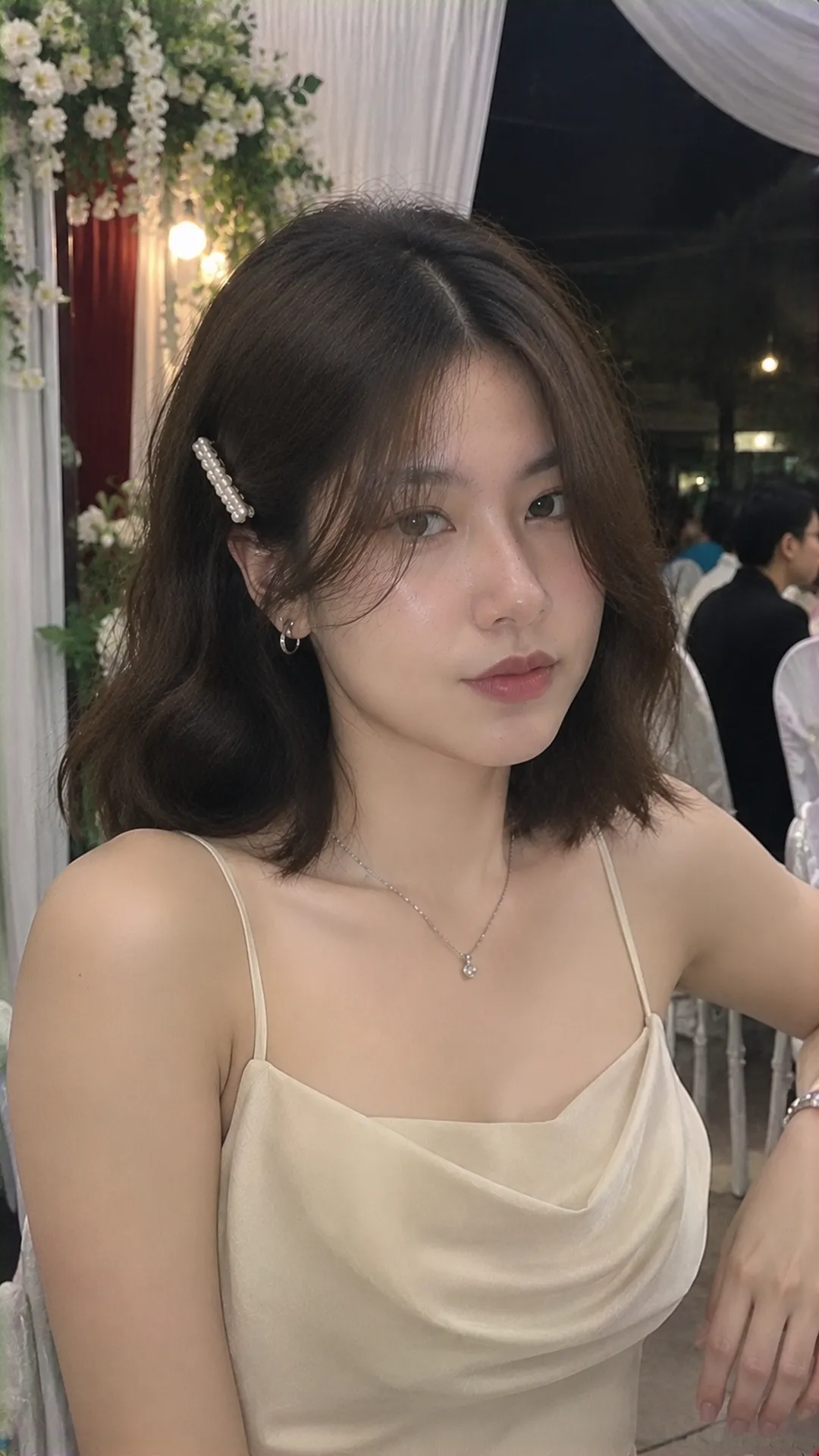
Short and shoulder-length hair: part, ends and clips
For a bob or shoulder length, try another part and one tucked side before buns. One ear exposed and the other side naturally curved creates definition. Choose a clip for your thickness and position it clear of head-turn pressure.
If sides are long enough, twist small sections back and secure, leaving the nape free. Avoid gathering too much with short lower layers. This clears the face without forcing a bun from insufficient length.
Very short hair can emphasize texture and fringe instead of large accessories. A side detail or different part can shift the look. Short hair need not imitate a long-hair updo; each length has its own structure.
Round faces and volume choices
There is no single hairstyle for a round face. For height, retain slight crown volume; for softness, try a side part or a few front strands. These are visual options, not requirements for an acceptable face.
Photograph front and side at conversational distance. Close selfies can distort perceived proportions. Change part, volume or tie placement one at a time to identify your preference.
For dark or sharp everyday taste, retain a defined part, neat ends and one small accessory. The women's Goth hairstyle guide explores shape and texture without requiring an elaborate complete look for personality at a wedding.
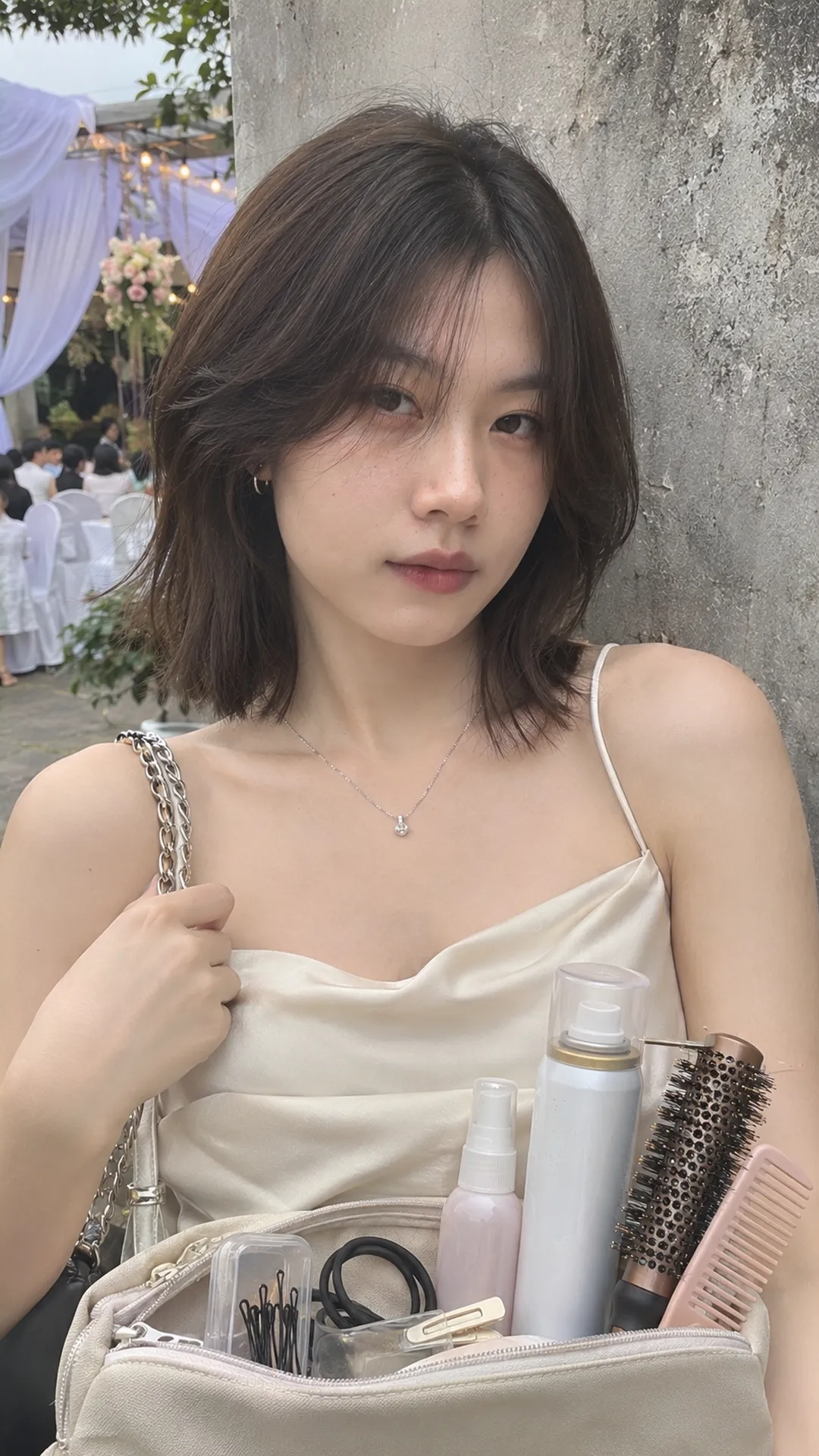
Prepare enough tools and product
Prepare a brush, ties, pins and accessories already tested. Ties should hold your volume, pins avoid irritating edges and decoration have suitable weight. Test actual earrings and neckline for catching.
For heat tools, follow device and product instructions rather than one temperature for every hair type. Use only on permitted hair conditions and avoid rushed skin-adjacent handling. Ties, braids and twists offer heat-free options if unfamiliar.
Start hold products sparingly as instructed. Unwanted stiffness or weight can be harder to fix than a few untidy strands. Avoid several unfamiliar products just before the event without knowing their effect.
No last-minute hair-color or accessory changes required
Hair dye is unnecessary to match a reference bun or braid. Lightness affects visible braid and fold definition; seek images close to your current color. For lasting color changes, consult the dark aesthetic hair-color guide separately rather than decide for one party.
Choose one main decoration: clip, bow or prominent earrings, then reassess additions. Check any host requirements, especially for large or ceremonial-looking pieces. Balancing accessories around the face connects hair, ears and neck.
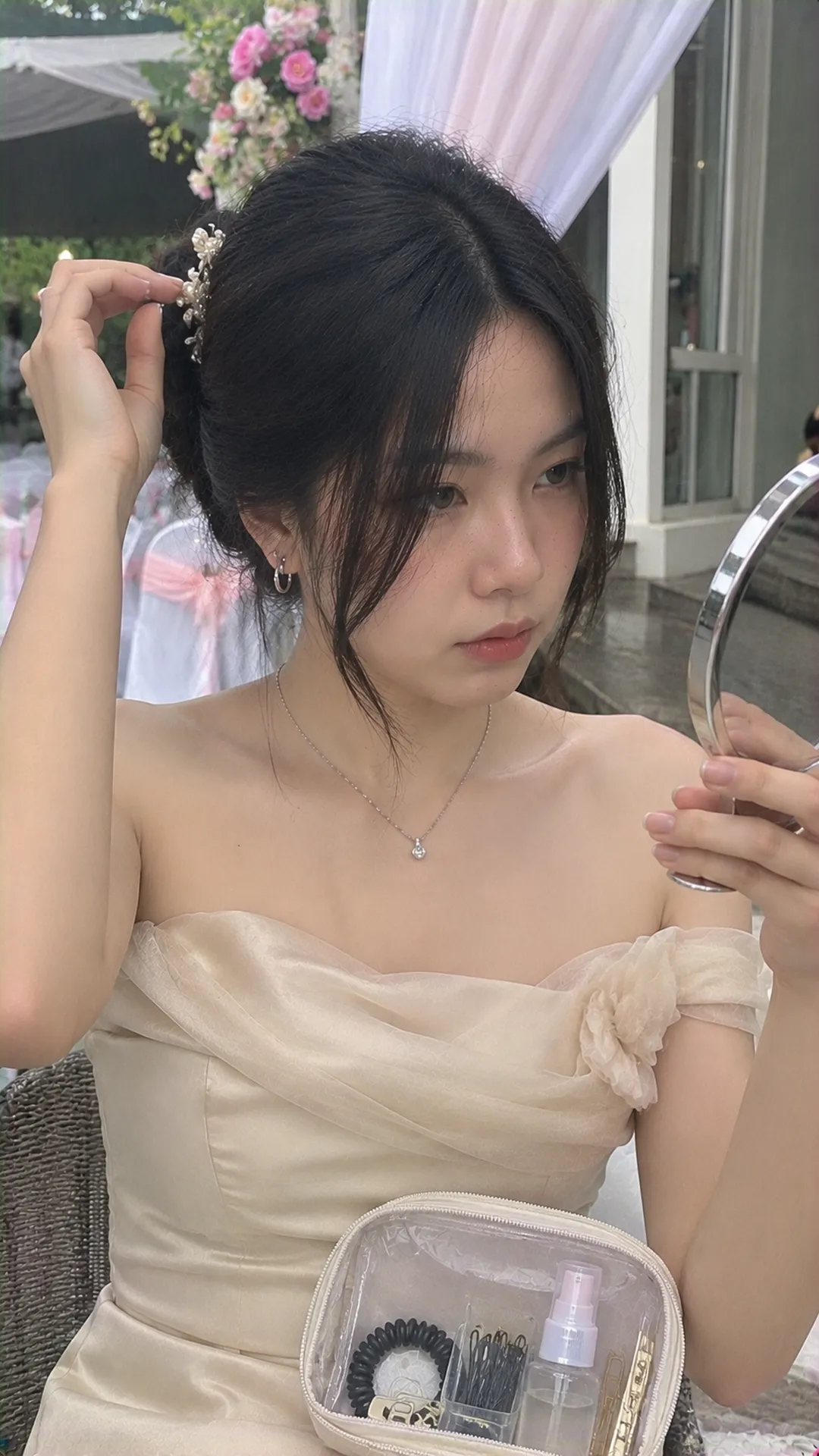
Rehearse and carry a small repair kit
Try the hairstyle during ordinary activity: sit, walk, bend and lean back. Note loose points and improve fastening rather than only spray more. For helmet travel, rehearse arrival adjustments and allow enough time.
Carry a spare tie, familiar pins and a small comb if needed. If hair releases, use a simple style you can manage instead of reconstructing complexity. Stable, comfortable hair at your preferred prominence helps you enjoy the celebration.