

What Is Gurokawa? Kawaii, Creepy-Cute Motifs, and Outfits
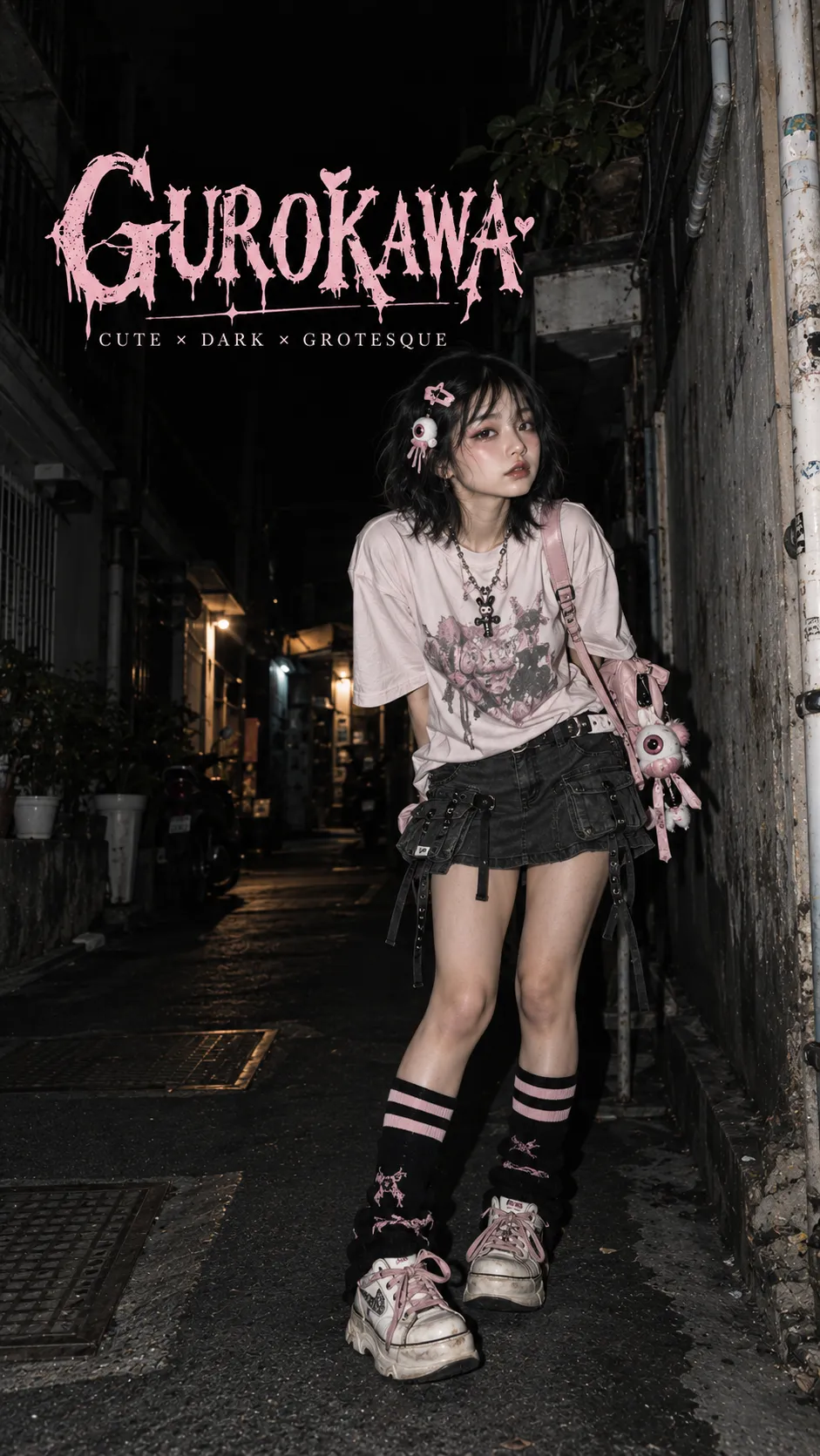
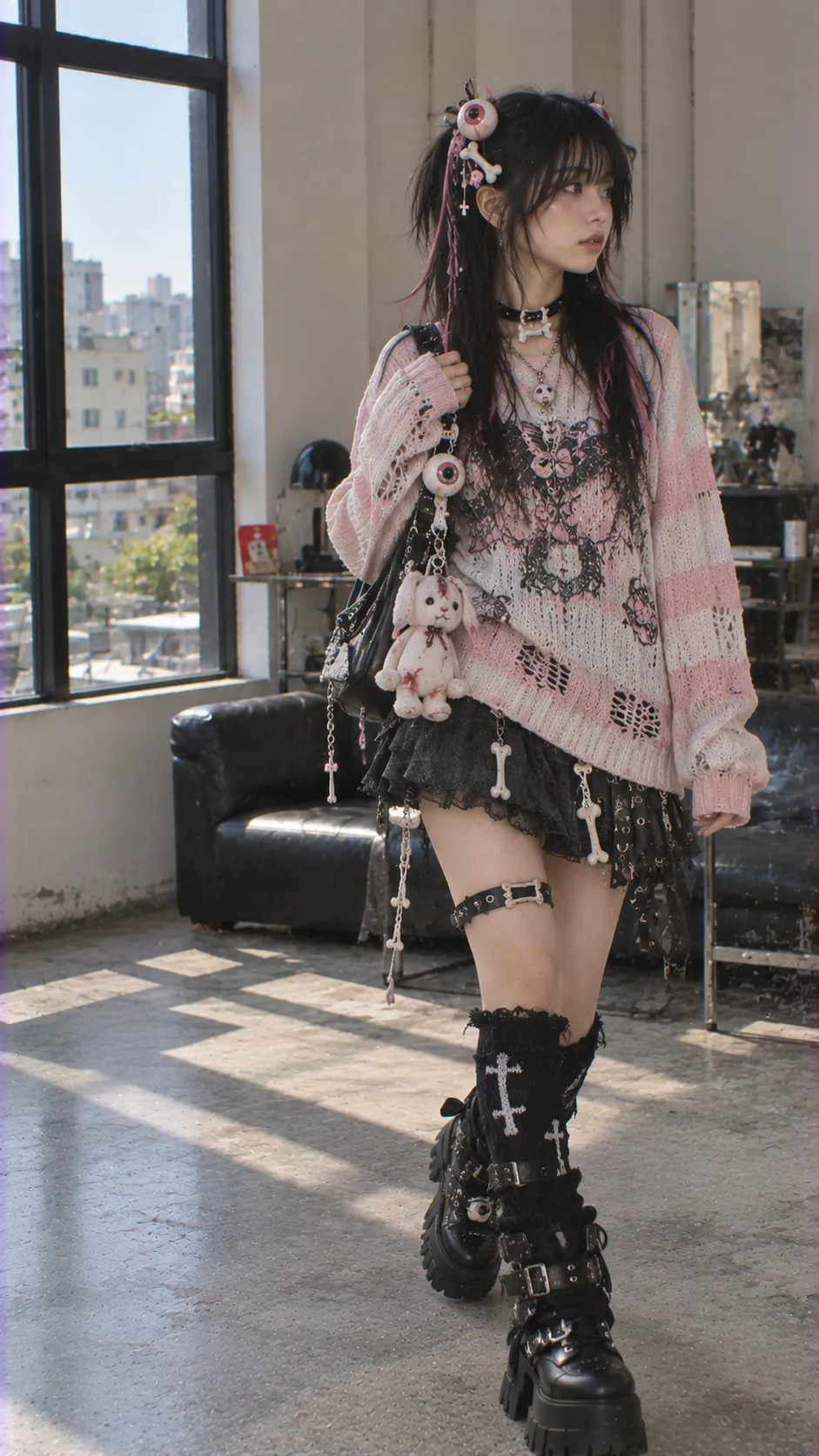
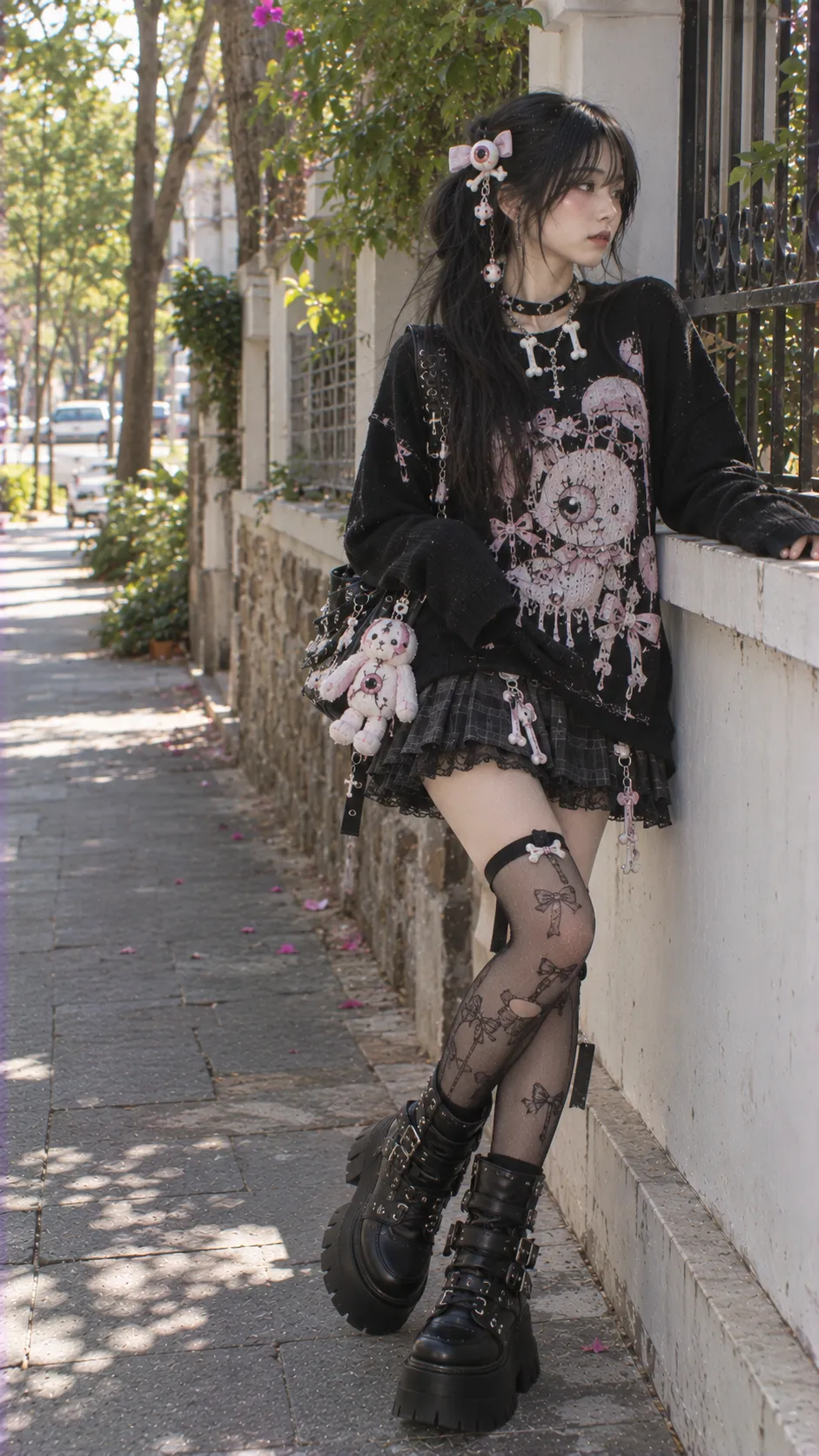
Gurokawa — also called gurokawaii or creepy cute in many online communities—juxtaposes kawaii with grotesque or horror references. Cartoon eyes, bones, monsters, stitches, or stylized anatomical motifs can appear on otherwise cute tees, skirts, clips, and mascot accessories.
The relationship between the two sides matters. Cute styling without a strange counterpoint may remain kawaii; horror without cuteness may suggest another dark-fashion direction. Use a recognizable cute base and a deliberate disruption.
Guide collection: Aesthetic Dictionary: A Guide to Fashion Styles (Vietnamese)
What Is Gurokawa?
Gurokawa combines guro — shorthand associated with grotesque—with kawa from kawaii. Japan Today's 2012 coverage discussed grotesquely cute character and fashion items, including eyes, bones, and stylized anatomical references in cute accessories.
The point is not maximizing fear. Its effect comes from contrasting expectations: a normally cute form gains a strange, anatomical, or horror-related detail. The visual tension changes when one side disappears.
A casual clothing base—tees, hoodies, skirts, shorts, or legwear—can support distinctive graphics and accessories. Patches, pins, brooches, clips, and custom prints can modify familiar clothes without requiring a complete specialist set.
Terminology and Early-2010s Visibility
Cute-grotesque imagery predates one fashion label, but early-2010s pop imagery provides recognizable examples. Japan Today's 2012 coverage connected eye-themed accessories with Kyary Pamyu Pamyu. Her 2011 PONPONPON video is a notable reference for playful anatomical and surreal props rather than conventional horror alone.
IDEA magazine's 2013 feature describes Kyary's music graphics and booklets as helping bring wider attention to the term. The example connects graphic design, props, makeup, and clothing as a visual world rather than one palette.
This does not establish Kyary as the inventor of all Gurokawa imagery. She is a significant popular-culture reference within a broader cute-horror landscape that also includes characters such as Gloomy Bear.
A Cute-Guro Scale: How Much Horror Emphasis?
A cute pastel or black base with an eye ring or bone clip: a manageable starting point.
A cute monster or stylized anatomy tee with a simpler skirt and suitable platforms.
Repeat an eye, stitch, skull, or bone reference in a few proportionate details.
Stronger makeup, printed horror effects, prop-like bags, or several motifs may suit a themed event or photograph more than everyday use.
Start with a lower level if you prefer. One unexpected detail can be recognizable without covering the whole outfit in horror imagery.
Six Recognizable Gurokawa Motifs
An anatomical reference that can also be drawn as a cute cartoon; use it in a ring, clip, sock, or print.
Bone clips, skeleton graphics, or X-ray-inspired prints can suggest horror without graphic injury.
Mascots with teeth, claws, horns, or strange expressions can retain a strong kawaii component.
Stylized hearts, brains, teeth, or hands. Illustration can be easier to adapt for everyday settings than realistic depiction.
Decorative stitching, bandage-like graphics, or patchwork can suggest a repaired creature.
Dripping shapes, neon slime, or red accents add movement and playful graphic references.
Six Gurokawa Outfit Formulas
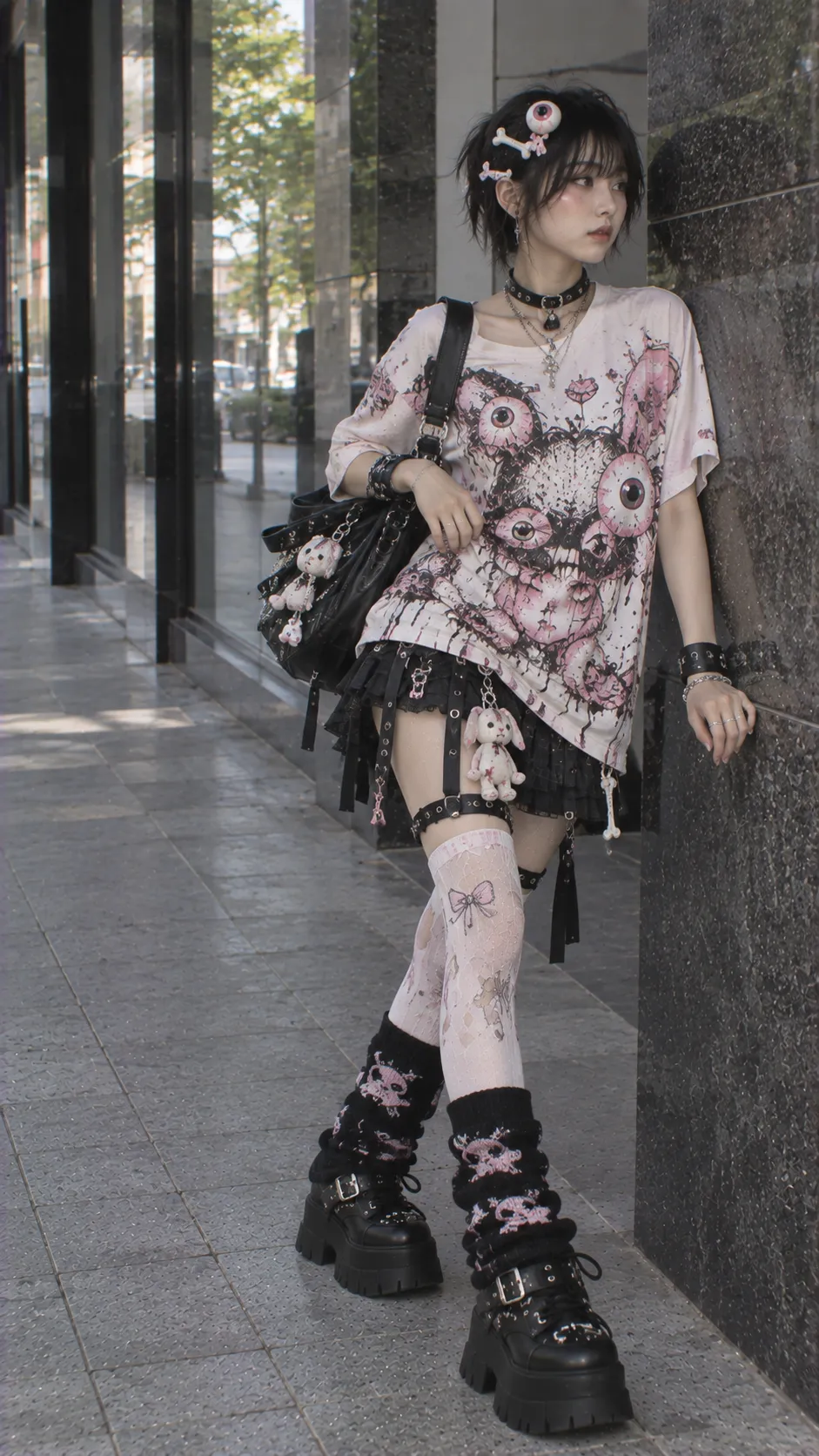
Black Oversized Tee, Pleated Skirt, Eye Clip, and Sneakers
Why it works: an alternative casual base gains one unexpected accessory.
Pastel Cardigan, Creepy-Cute Tee, Black Mini, and Platforms
Why it works: the soft cardigan supplies kawaii, the graphic adds strangeness, and a dark skirt provides a quieter connection.
Monster hoodie + shorts + striped socks + chunky shoes
Why it works: the hoodie leads through its mascot, while striped socks repeat playfulness without another large horror graphic.
Plain Tee, Selected Patches or Pins, Cargo Skirt, and a Small Chain
Why it works: DIY lets you choose intensity. Related illustration styles can keep several patches coherent instead of creating an arbitrary pinboard.
Black Knit, A-Line Skirt, Bone Jewelry, and a Bow Clip
Why it works: the bow and bones carry opposite references at a manageable scale.
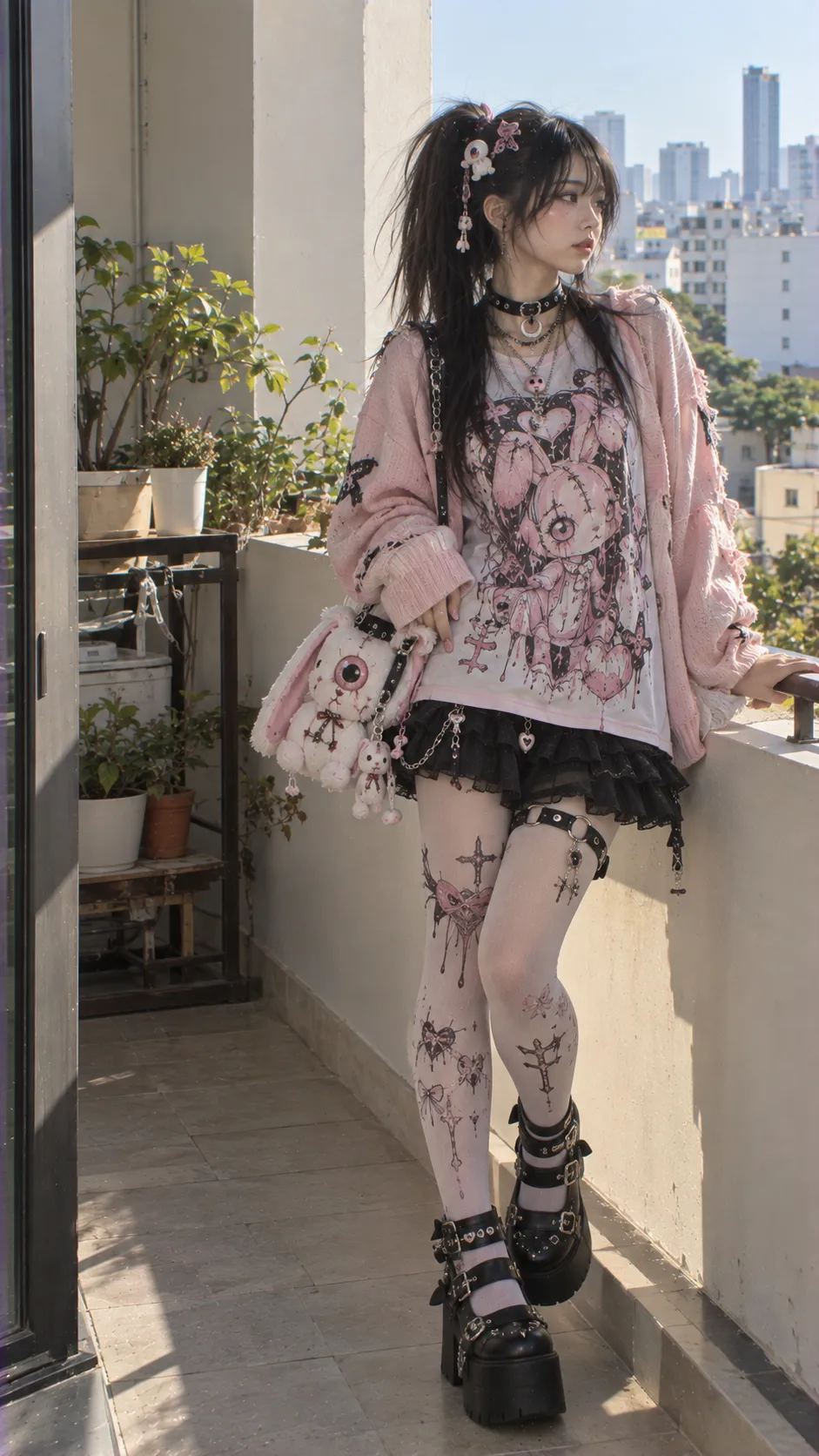
Graphic dress + patterned tights + platform + one prop-like bag
Why it works: the dress already supplies a large graphic area, leaving one bag as the accessory statement. Adapt this stronger route for events or photographs.
Color, Materials, and Graphics beyond Pastel
Black-white-red creates a more direct horror contrast; pink, lavender, or mint with black can feel softer; slime greens or purples can introduce another graphic direction. Cute-dark styling need not be entirely pastel.
Familiar cotton tees, sweatshirts, jersey, imitation leather, or pleated fabric can provide the foundation. Give extra vinyl, mesh, or faux fur a clear role: a shiny bag accent, sleeve texture, or playful clip.
Set graphic hierarchy. One large eye print with smaller accessories may read more clearly than several unrelated anatomical prints. Repeated motifs or line styles help DIY additions connect.
Gurokawa vs. Yami Kawaii, Pastel Goth, and Cutecore
The main contrast here is cute and grotesque: eyes, bones, monsters, or stylized anatomy.
centers cuteness without requiring horror. Read what Cutecore means (Vietnamese).
combines pastel with Goth-associated imagery. Read Pastel Goth and Related Directions.
Yami Kawaii is often described in community usage through cute imagery with darker emotional or medical motifs. Gurokawa places more direct emphasis on grotesque or horror contrast. Shared graphics can blur boundaries; identify the overall leading reference rather than claiming absolute separation.
Harajuku Style (Vietnamese) provides broader context for different visual languages within Japanese street fashion, rather than being interchangeable with this specific label.
Everyday Gurokawa Styling
As an optional starting exercise, try roughly 80% wearable base + 20% strange signal. Familiar jeans, skirts, hoodies, or tees form the base; an eye clip, unusual print, or bone jewelry adds the specific reference. Events can support more graphic legwear, makeup, or a prop-like bag if desired.
A printed blood effect alone may read as general horror or Halloween rather than cute-grotesque contrast. Eyes, cartoon bones, monsters, or surreal anatomy offer other reusable references. With a darker base, retain a cute mascot or shape to distinguish the result from Devilcore or Goth.
The style need not involve heavy layers. A suitable graphic tee, skirt, socks, and hair accessory can work in warmer conditions; add a hoodie or cardigan where temperature permits.
A Gurokawa Starter Kit: Accessories Before a Complete Set
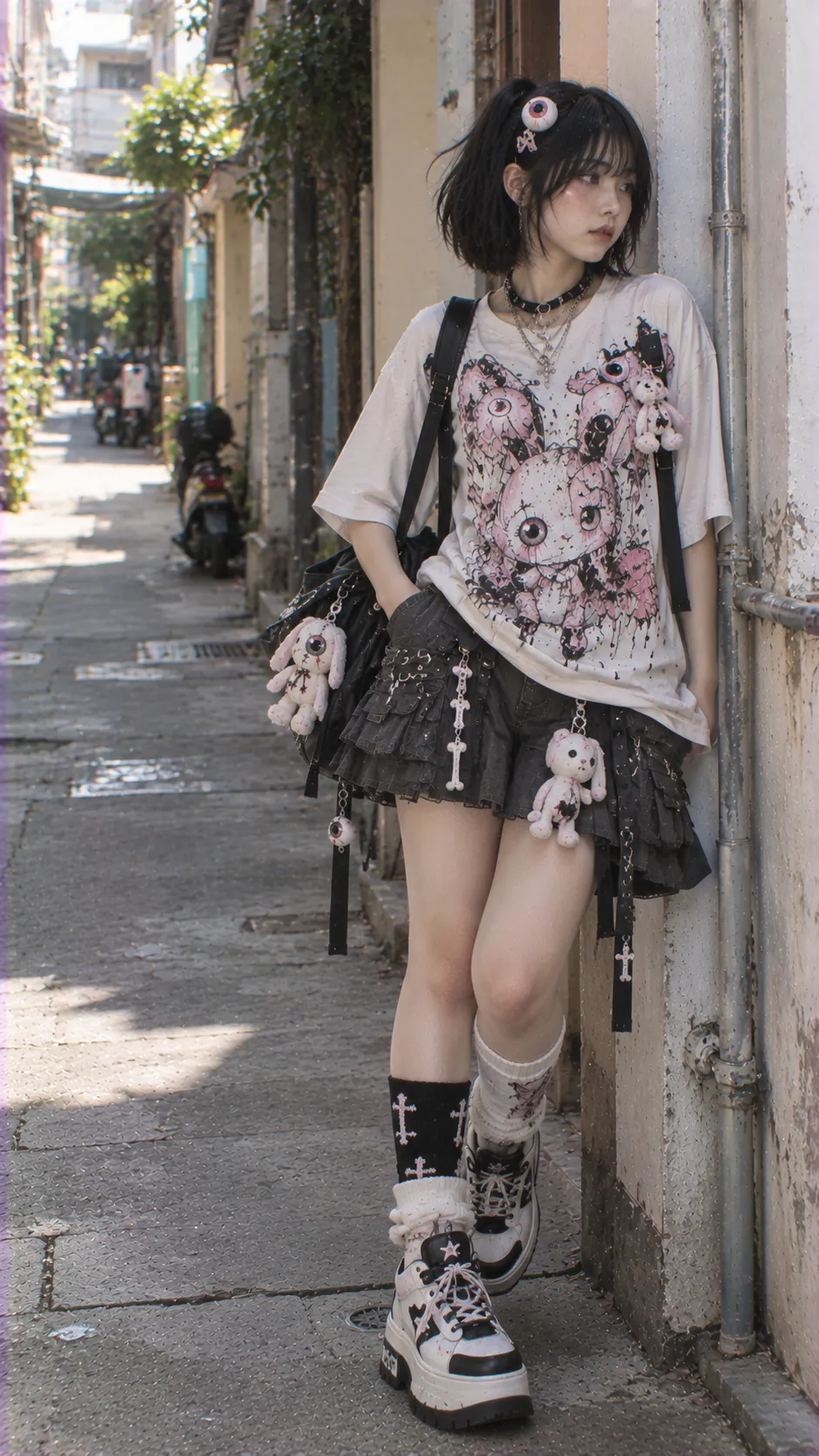
Try a familiar cute or quieter foundation with one unexpected detail. This lets you assess whether you enjoy the cute or horror emphasis before buying many specialized pieces.
A black tee and skirt, pastel cardigan and denim, or a roomy hoodie need not already carry the full aesthetic.
An eye clip, bone earrings, creepy-cute tote, or monster tee can be enough for a first combination.
A smaller eye at a ring or sock can echo a clip. Repetition creates connection; many equal details can become more theatrical than intended.
Sneakers, Mary Janes, or suitable black platforms can balance the clothing without additional horror graphics.
Why DIY Works Well Here
Graphics and small objects let you adjust emphasis without relying on one brand. Pins, patches, garment-safe transfers, clips, bag charms, or customized socks provide options. Secure attachments and smooth edges matter; choose materials appropriate for clothing and skin contact.
Use a related motif group—eyes with dripping shapes, bones with bows, or monsters with stitches. Repeat a shape or color so the result feels connected rather than merely unusual.
A large torso graphic already attracts attention, leaving room for smaller clips or jewelry. A smaller print can balance more patterned socks or a statement bag. Establish the focal point before adding decoration.
Five Common Styling Mistakes
1. Assuming pastel alone defines Gurokawa
Pastel may provide cuteness, but a strange or grotesque reference creates the intended contrast.
2. Horror without kawaii
If the cute side disappears, the result may be another horror or dark-fashion direction.
3. Graphic realism everywhere
Stylized illustrations can adapt more readily to everyday settings. Choose intensity around the occasion.
4. Calling every dark-cute combination Yami Kawaii
Assess the leading motif and context rather than assuming all horror or medical references use the same label.
5. Buying a complete set before testing a small detail
A clip, pin, tote, or graphic tee can help you try the relationship before expanding the wardrobe.
Frequently Asked Questions
What is Gurokawa?
Gurokawa combines kawaii with grotesque or horror references, such as eyes, bones, monsters, or stylized anatomy, on cute shapes or within playful palettes.
Are Gurokawa and gurokawaii the same?
The terms are often used for overlapping creepy-cute imagery; Gurokawa is a shortened compound. Usage varies across communities.
Does Gurokawa require pastel?
No. Black, white, red, neon, or other darker colors can work when the cute-grotesque contrast remains visible.
How does Gurokawa differ from Pastel Goth?
Gurokawa emphasizes cute-grotesque contrast, while Pastel Goth combines pastel with Goth-associated imagery. They can overlap without being identical.