

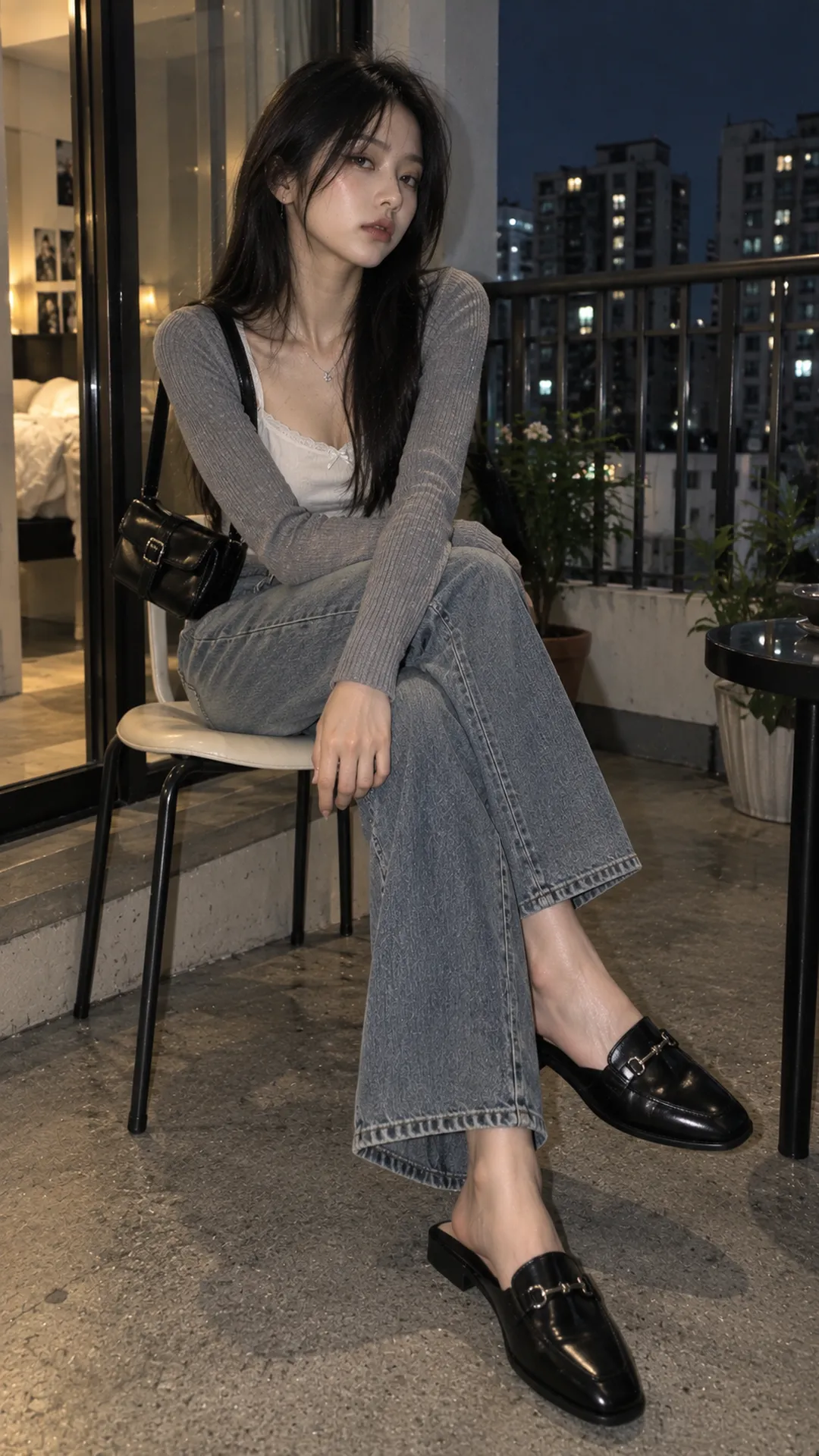
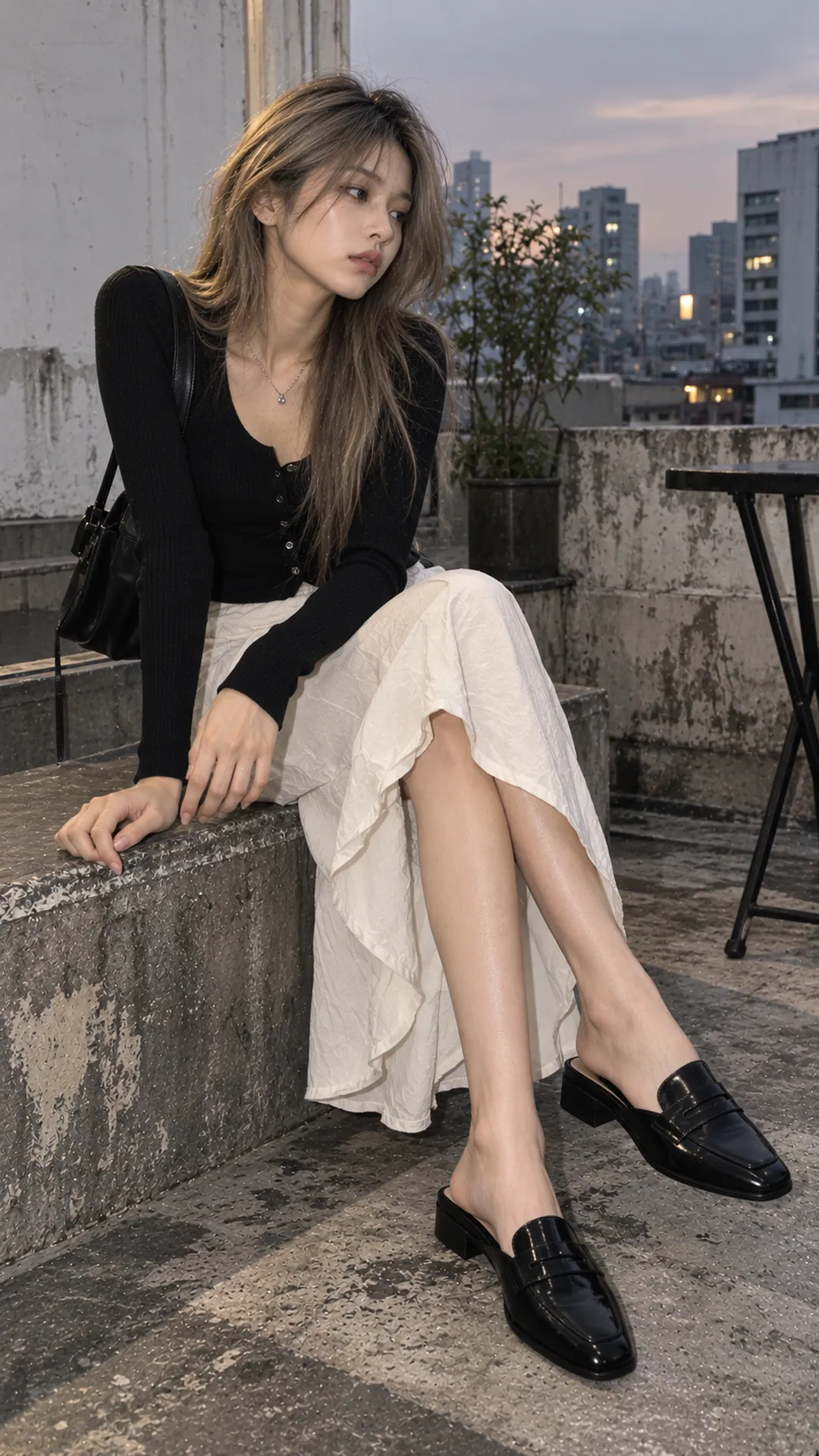
Recognize mules through the open back and foot hold
A mule's recognizable feature is its open heel. The front may resemble a loafer upper, one panel over the instep or several straps. The category therefore does not establish a closed toe, high heel or intended walking surface.
Do not group every easy-on shoe together. Slip-ons can retain a heel counter; slingbacks have a rear strap; mules generally rely on the front for retention. This distinction matters when assessing walking and stability.
Clarks' clogs and mules category includes varied uppers, heights and materials. Use the category to find a direction, then examine the exact model rather than assuming every item works alike.
This article defines mules by construction rather than using one brand to define the entire group. If a product name is unclear, inspect back and side photos and use instructions. Those angles often answer more quickly than an abbreviated name.
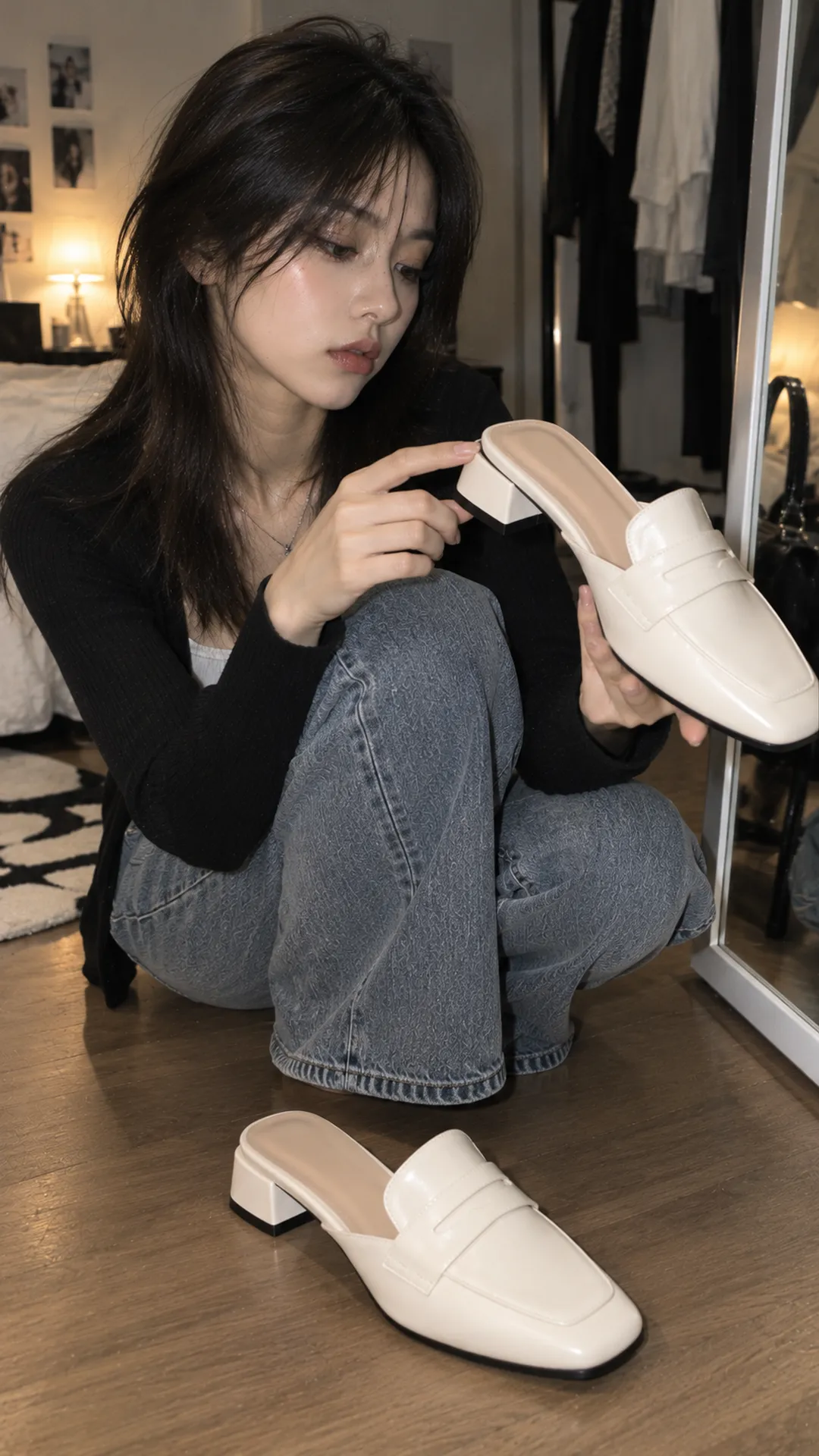
The upper should secure the instep without squeezing
A deeper or shallower front changes contact points. Less coverage may look delicate but needs testing for security in motion. More coverage does not guarantee fit if curvature or width does not suit your foot.
Place your foot naturally rather than forcing it forward to position the heel attractively on the sole. Check instep pressure and comfortable toe placement. If you need force to insert your foot, reconsider fit instead of waiting for the shoe to change as hoped.
Use adjustable straps within their designed settings and check both feet, as feel can differ. Do not punch extra holes or stretch a new pair before discussing sizes and returns.
For open toes, observe toe position standing and walking, not only the opening in a photo. Closed toes need internal space even when the tip extends decoratively. That extension is not all usable foot length.
Test flats, block heels and platforms separately
Low soles do not automatically mean easy walking, nor do block heels guarantee stability in every condition. Consider contact width, weight, designed flexibility and front hold together. One favorable feature cannot represent the whole shoe.
For platform mules, ask for rear height and forefoot thickness if specified. Two similarly tall pairs can create different slopes. Do not focus only on added height while ignoring how your foot sits.
Lift your foot and walk normally to see whether the sole follows or separates excessively. Constantly changing your stride to retain it suggests another model or reassessment is needed. Staying on while motionless is insufficient.
The high-heel guide separately explains heel construction, forefoot platform and intended use. For heeled mules, also assess the open back and foot-holding mechanism instead of applying height criteria alone.
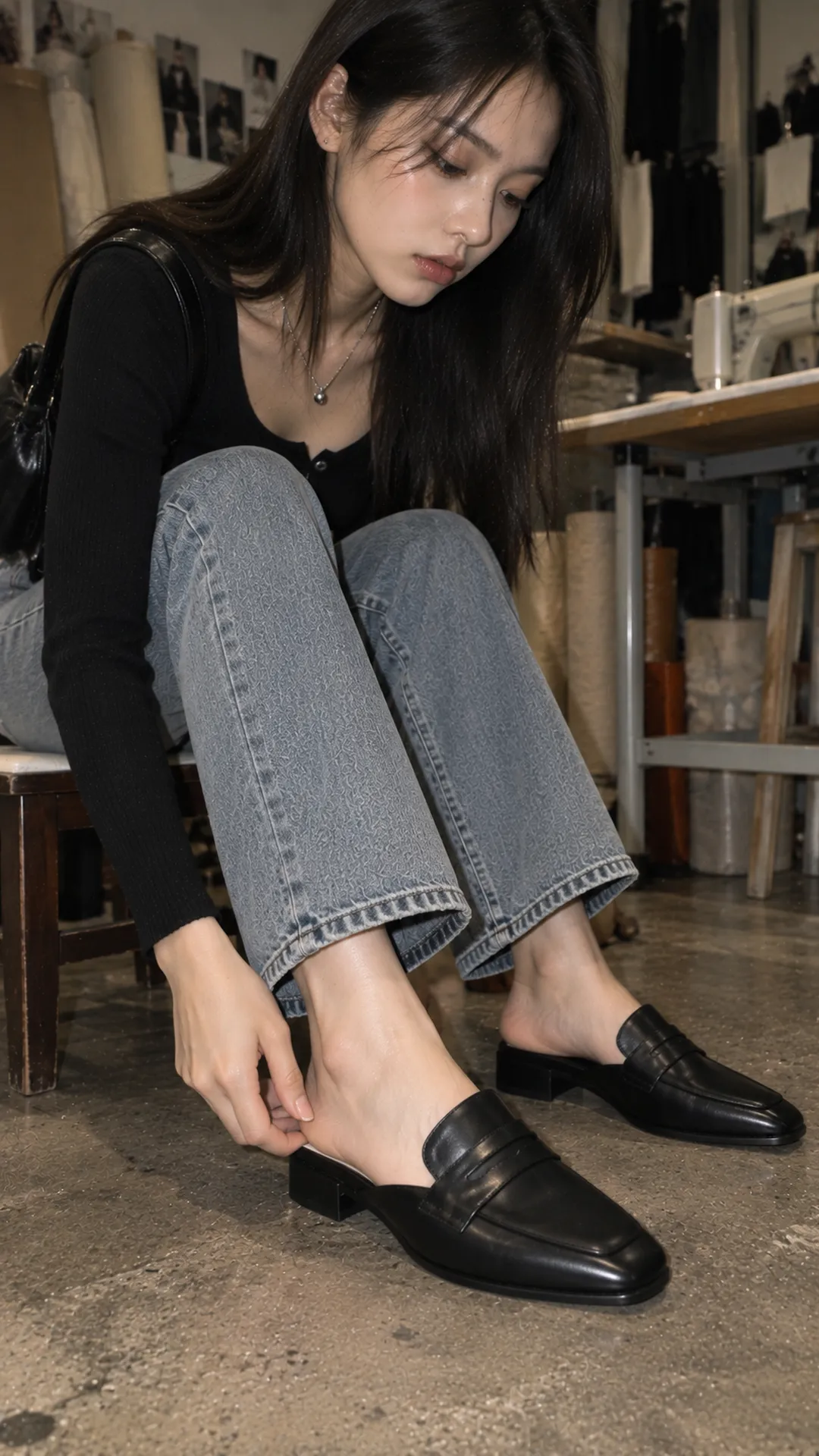
Try them for your actual movement needs
Start on a clean floor within fitting and return conditions. Walk straight, turn, sit and stand. Notice whether the heel shifts off its support, the upper presses or your toes unconsciously curl to grip.
If wearing socks, test your intended type. Socks change internal contact, so a secure barefoot fit may feel different with them. Mules need not always be worn barefoot; evaluate the actual combination.
Imagine the hardest part of your day: walking from parking, stairs, waiting upright or outdoor ground. If suitability is unclear, choose another pair for that activity or ask the manufacturer. A brief shop trial cannot guarantee every surface.
Do not automatically size down when slipping persists. If the toe is already tight, a smaller size introduces another problem. Discuss width and last shape; a rear strap or different upper may serve better than this mule.
Mules with trousers: clarify the hem and shoe
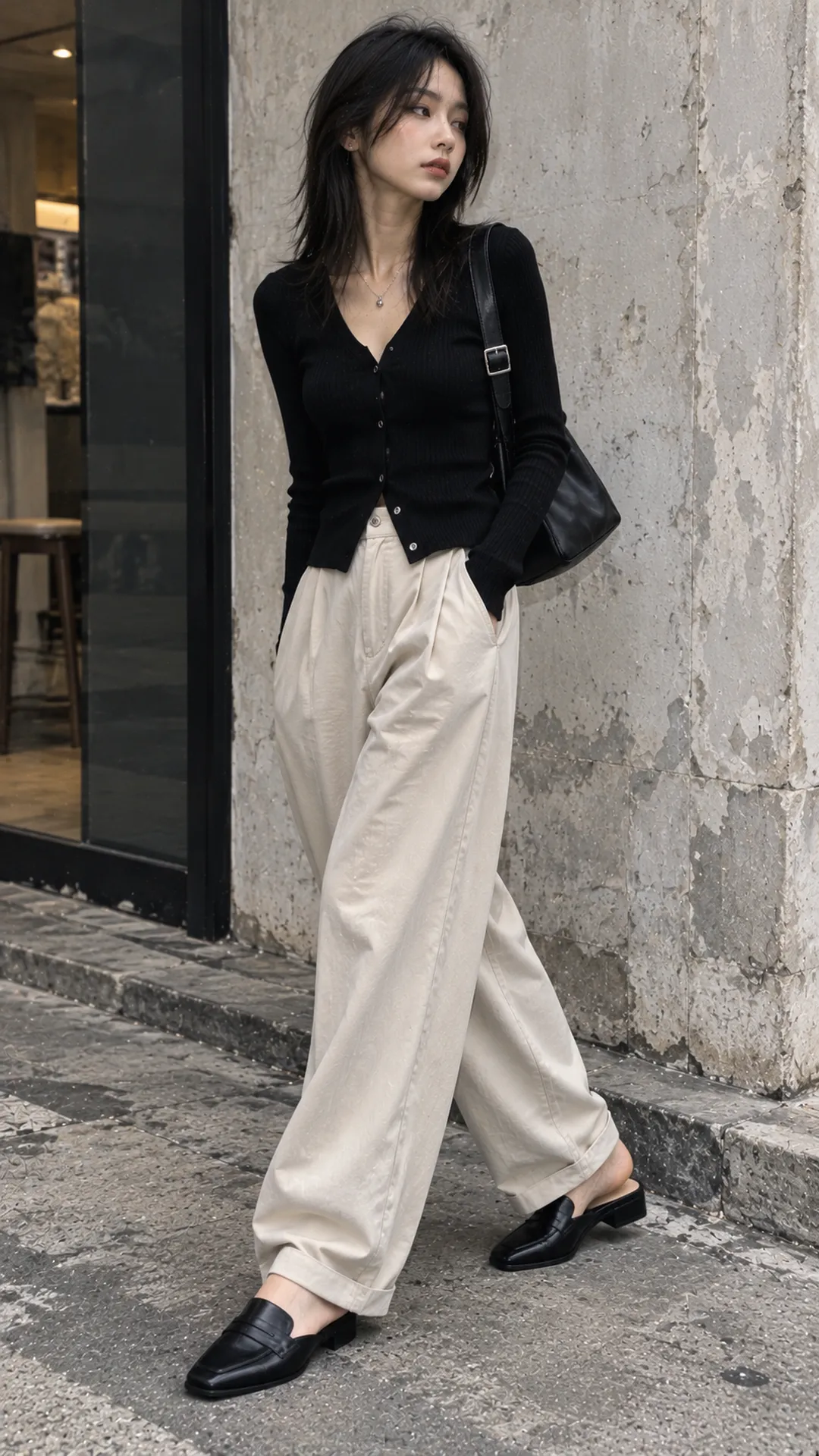
Straight or wide-leg trousers
A neat mule upper can give straight trousers a light finish. Check that the hem does not become trapped between foot and sole. Fix excess length first; changing shoe color cannot solve dragging or stepped-on fabric.
With thick-soled mules, wide legs can balance shoe volume to taste. Watch in motion to see whether the sole disappears entirely or the hem repeatedly catches. Retain both proportion and practicality in the decision.
Neat or above-ankle trousers
Higher hems reveal the mule shape. Choose round, square or pointed toes for your desired lines. A plain top and simple bag let you assess the shoes before adding accents.
With many trouser pockets or a pattern, plain mules are an easy trial. Minimal trousers leave more room for shoe buckles or texture. Exact shoe-and-bag color matching is unnecessary if the whole outfit already connects.
The women's trouser-shape guide helps choose the lower garment first. Try it with your actual shoes before deciding hems rather than assessing barefoot and adapting your stride afterward.
Style skirts and dresses through length and movement
Midi and long hems expose shoes differently. A skin-adjacent mule shade may be discreet in one outfit, while black gives a clear dark point. Exposed leg and skirt color also affect this, so assess full-length instead of prescribing one color for everything.
With soft fabric, minimally detailed mules can keep attention on the skirt's movement. For contrast, choose a defined shoe shape that still walks securely. A voluminous outfit need not have tiny shoes; choose your preferred lower-body weight.
Short skirts reveal more shoe, making toe and sole shape influential. If the shoes lead, try simple top lines. Do not add socks, anklets and an ornate bag together before evaluating each element.
Choose surfaces for use and achievable care
Confirm smooth leather, suede, textile or synthetic materials through labels and descriptions, not photos alone. Nude, silver and glossy black describe colors or effects, not composition. Ask about upper, lining and sole if important to you.
Shine adds reflections; matte surfaces are quieter; raised texture adds detail even in one color. Choose for your regular clothes. If you already own strongly decorated footwear, plain mules may add a different role.
Read water, cleaning and storage instructions before buying. Easy removal does not make all mules rain-suitable. Wet-condition use depends on the model's design and claims, not its category.
For designer mules, check the sales channel, model code and policies. A brand name does not replace fit, and a logo photo cannot authenticate origin. Separate authenticity from suitability for your feet and schedule.
Buy online with enough information to compare
Request the model's measurement chart, side views, footbed and outsole photos. Ask how stated length is measured, since external length differs from usable internal room. A familiar size number still needs comparison with seller guidance.
Read exchange terms before adding inserts or wearing outdoors. Mules lack a closed heel counter, so a conventional heel pad cannot simply be applied to a nonexistent surface. Use accessories only with compatible construction and clear instructions.
The Alt Fashion shopping guide helps check measurements, real photos and exchanges. These are more useful than a promise of perfect hold before you can try the shoes.
Keep the pair suited to your activities
After use, inspect soles, joins and contact surfaces before wearing again. Clean for the material and dry as directed. If construction appears damaged or the feel changes unexpectedly, investigate before continued use.
The Women's Shoes Item Guide compares mules with other footwear by need. You can enjoy their appearance yet choose another holding mechanism for a high-walking day; one shoe type need not serve every setting.
Suitable mules provide enough room, retain your foot during intended activity and work with existing trouser or skirt hems. Observable checks encourage longer use more than seeking a universal no-slip promise.