

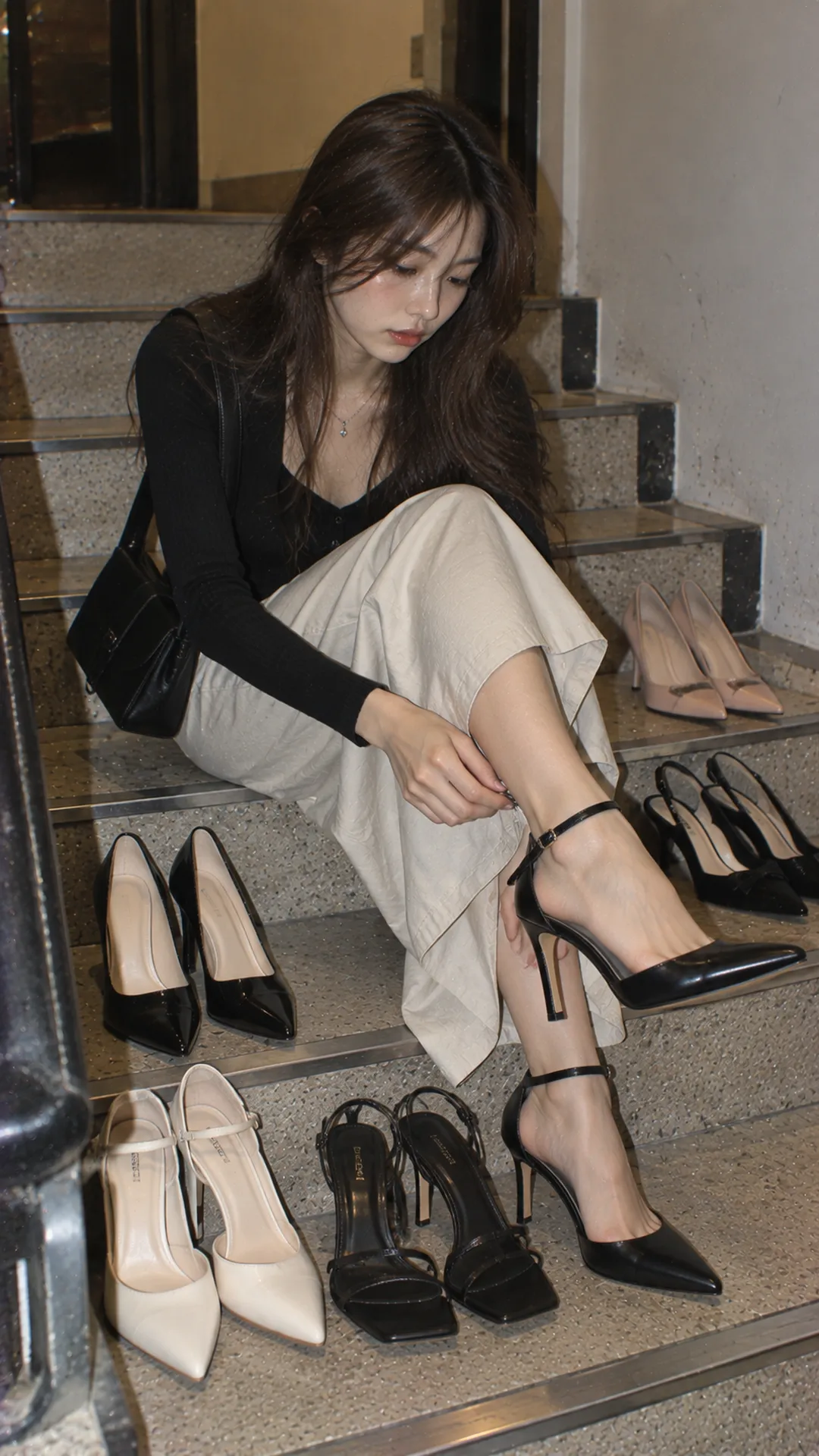
Start with the schedule, not the height
Identify the hardest section of the day: the parking lot to the lobby, uneven pavement, stairs or grass. A pair suitable for smooth indoor floors may be awkward elsewhere. If changing shoes, plan storage and check trouser or skirt length with both pairs.
Separate wear time from event duration. A two-hour party can include waiting for transport, standing to greet guests and earlier travel. A few minutes before the mirror cannot establish suitability for the whole schedule.
Check clothing requirements too. Some settings need closed toes or a particular level of polish; others permit sandals. Being high-heeled does not meet every dress code, and suitable flats remain options in many situations.

Distinguish heel types from shoe styles
Stilettos, block heels and wedges describe the supporting structure beneath. Pumps, slingbacks, sandals and mules describe uppers and how they retain the foot. A slingback can have a stiletto or block heel, so its style name does not describe every component.
A stiletto creates a slim line and small contact point. A block heel has a wider ground-contact area, but stability also depends on heel position, sole and fit. Wedges connect the raised back toward the front according to design; they are not automatically light or suitable for every surface.
Slingbacks have a rear strap, mules an open back, and sandals generally retain the foot through straps. Check where the foot is held and whether you curl your toes to keep the shoe on. A design attractive on a model does not establish suitability for your feet.
The ZARA women's high-heels category shows varied uppers, heels and surfaces. Use style names to filter, then return to specifications and real fitting; a name does not certify comfort.
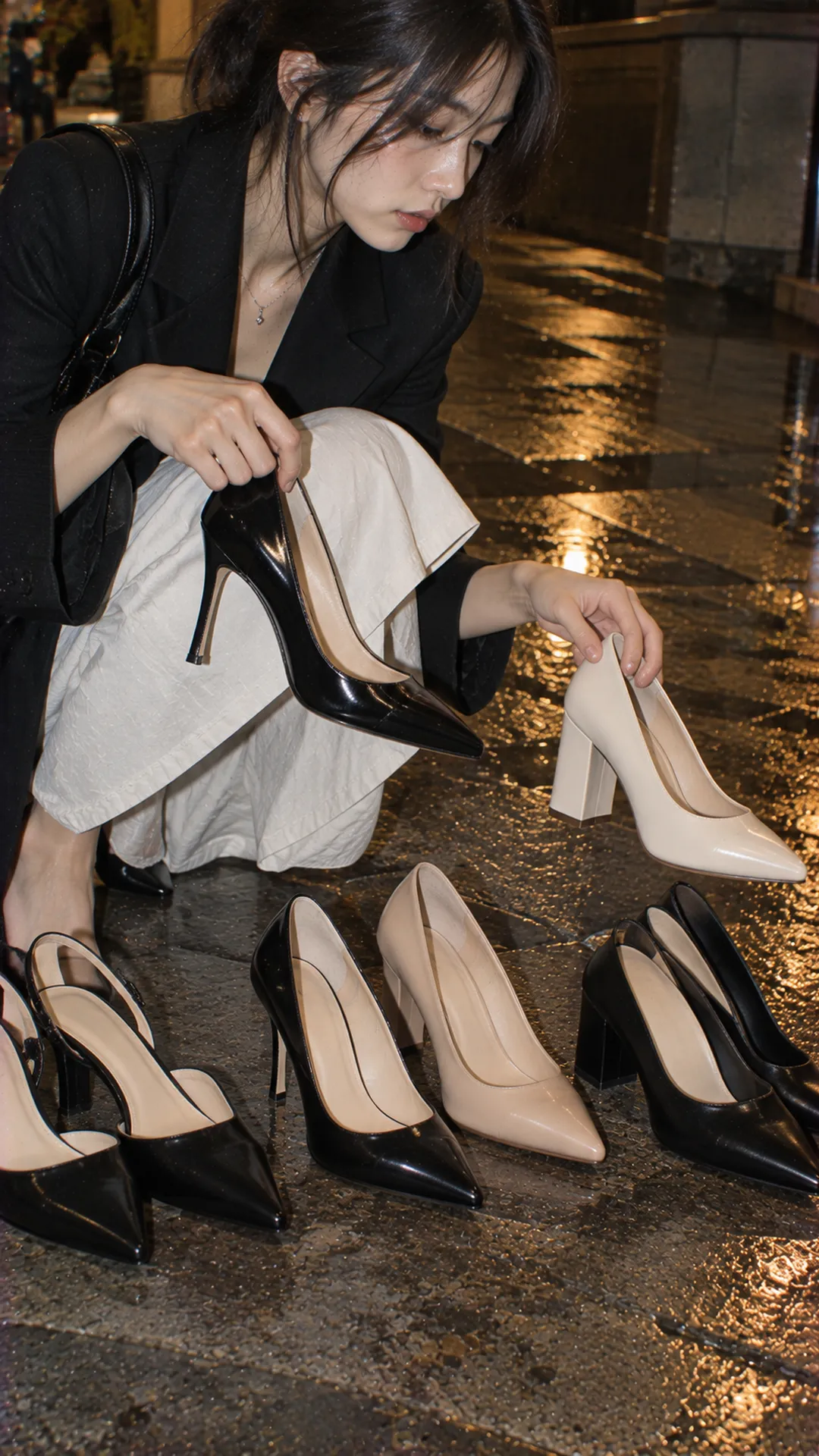
Read heel height and forefoot platform together
Stores may define low, mid and high differently. Ask for actual height and measuring method to compare pairs. For a platform at the front, establish that thickness too rather than rear heel height alone.
The front-to-back rise helps you picture the slope but does not guarantee cushioning or comfort. Footbed curve, sole stiffness, toe shape, weight and retention can make shoes with similar measurements feel different.
For branded 7 cm heels, separate three questions: does the design have the desired height, is the seller's provenance clear, and does it fit? Brand reputation cannot replace trying it, and no centimeter figure is universally right.
If inexperienced, start at a height you can control when walking and turning. An outfit does not need greater height to be attractive. A longer line can also come from trouser length, ankle exposure or toe shape.
Check toe shape, straps and fit separately
The pointed extension of a shoe may be design space rather than somewhere your toes should reach. Do not size down simply because the tip has space. Check the widest part of the foot and toe position while standing under weight, testing both feet.
For peep toes, check the opening edge while walking. Toes should not continually slide beyond it or rub its trim. Test with the socks and foot condition you expect to wear, not only a top-down photograph.
Ankle, cross-foot and rear straps should retain the foot without uncomfortable tightening. With adjustable straps, check whether the fastening holes suit you; a long leftover strap does not establish correct sizing. Inspect seams and material edges at contact points.
If heels slip while toes are already cramped, sizing down may worsen the front. Try a different last or cut instead. Inserts cannot correct every mismatch, especially when they reduce available space further.
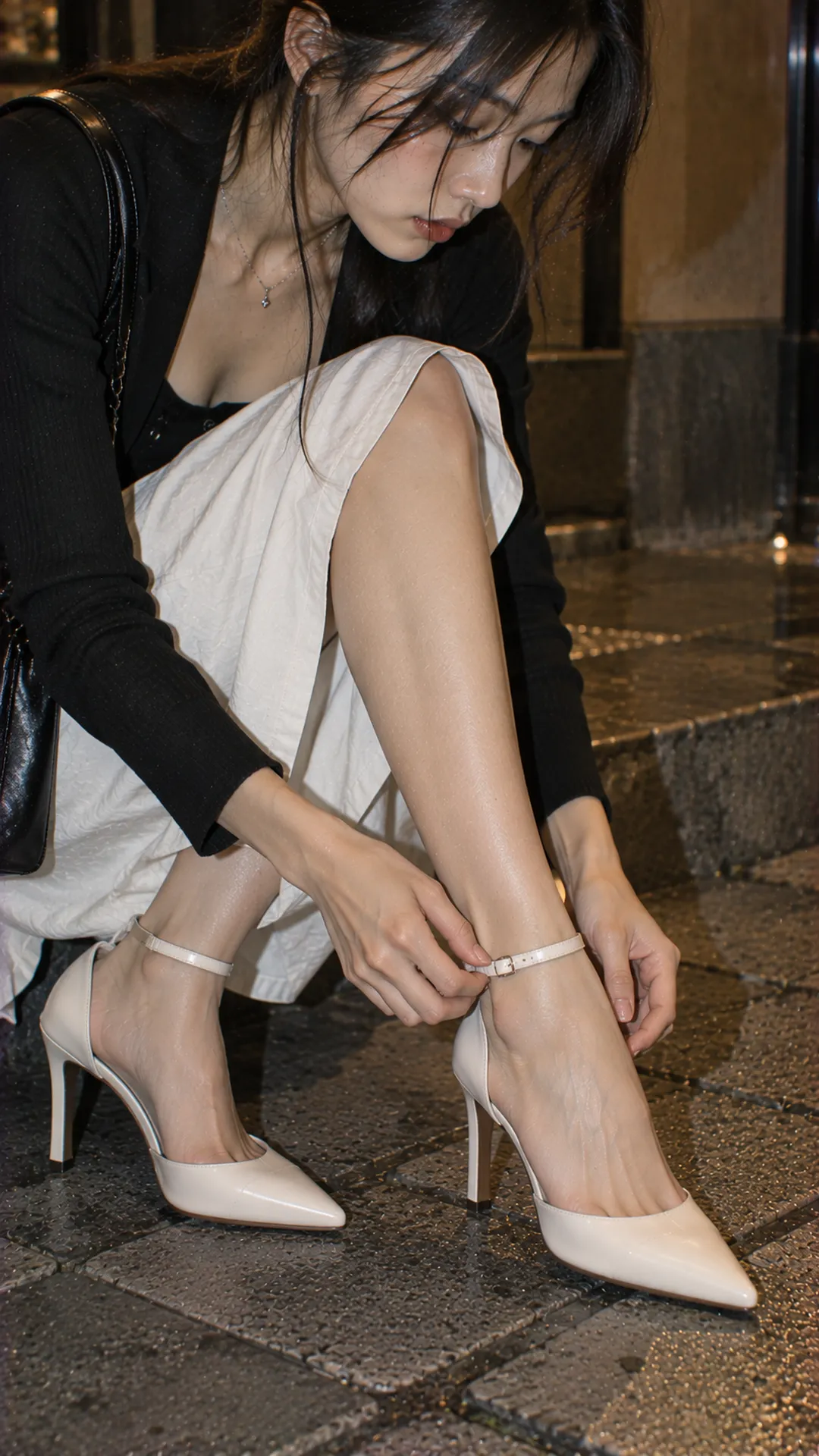
A fitting routine before deciding
- Try both shoes, fasten them as intended and stand naturally.
- Walk straight, turn, stop and restart in the store's permitted area.
- Notice forward sliding, slipping straps or localized pressure.
- Check heel wobble, unusual sole features and consistent finishing between shoes.
- If possible, try the intended trouser or skirt length.
Do not continue to prove a shoe suits you when there is pain, numbness or clear rubbing. Do not buy solely on promises that prolonged wear will eliminate tightness. Without sufficient fitting time, accurate measurements and returns become more important.
Online, follow that brand's or store's measuring instructions, compare the actual design's chart and ask about width. Do not convert sizes only from another brand. Save descriptions, exchange conditions and photographs for checking on arrival.
Choose for work, parties and busy days
Work in a suitable environment
Prioritize a design already tested for the expected wear time, a streamlined upper and an easy-to-maintain surface. Low or medium heels are starting points, not promises of pain-free wear. Try office trousers to check catching heels or floor-dragging hems.
Parties
Read the floor surface and schedule before choosing slim sandals or pumps. With a detailed dress, simple shoes let the dress lead. With a plain one, metallic texture or one distinctive strap can provide emphasis without increasing heel height.
Walking-heavy days
If the route exceeds what you have comfortably tested, consider another shoe or changing pairs. Account for the clothes too: trousers just meeting a high heel may drag with flats. Do not plan for your feet while forgetting the hem outdoors.
Style trousers and skirts through their hems
For long straight-leg trousers, test length on the actual shoes. The hem should permit walking and steps without catching. To reveal the toe, adjust length or leg shape rather than selecting an excessively long point to emerge from overly long trousers.
With ankle-length trousers, a horizontal strap makes a clear break. Retain it intentionally or choose fewer straps for continuity. This is a visual choice, not a rule assigning one shoe type to one leg shape.
With a midi skirt, assess the gap to the shoe and both pieces' visual weight. Layered skirts can use slim shoes for less volume or structured shoes for a stronger effect. The skirt and dress hub helps you continue according to your existing garment's shape.
If unsure whether the issue is the shoe or the outfit, use the women's footwear guide to assess visual weight. A change in tone or surface can alter the whole effect without changing height.
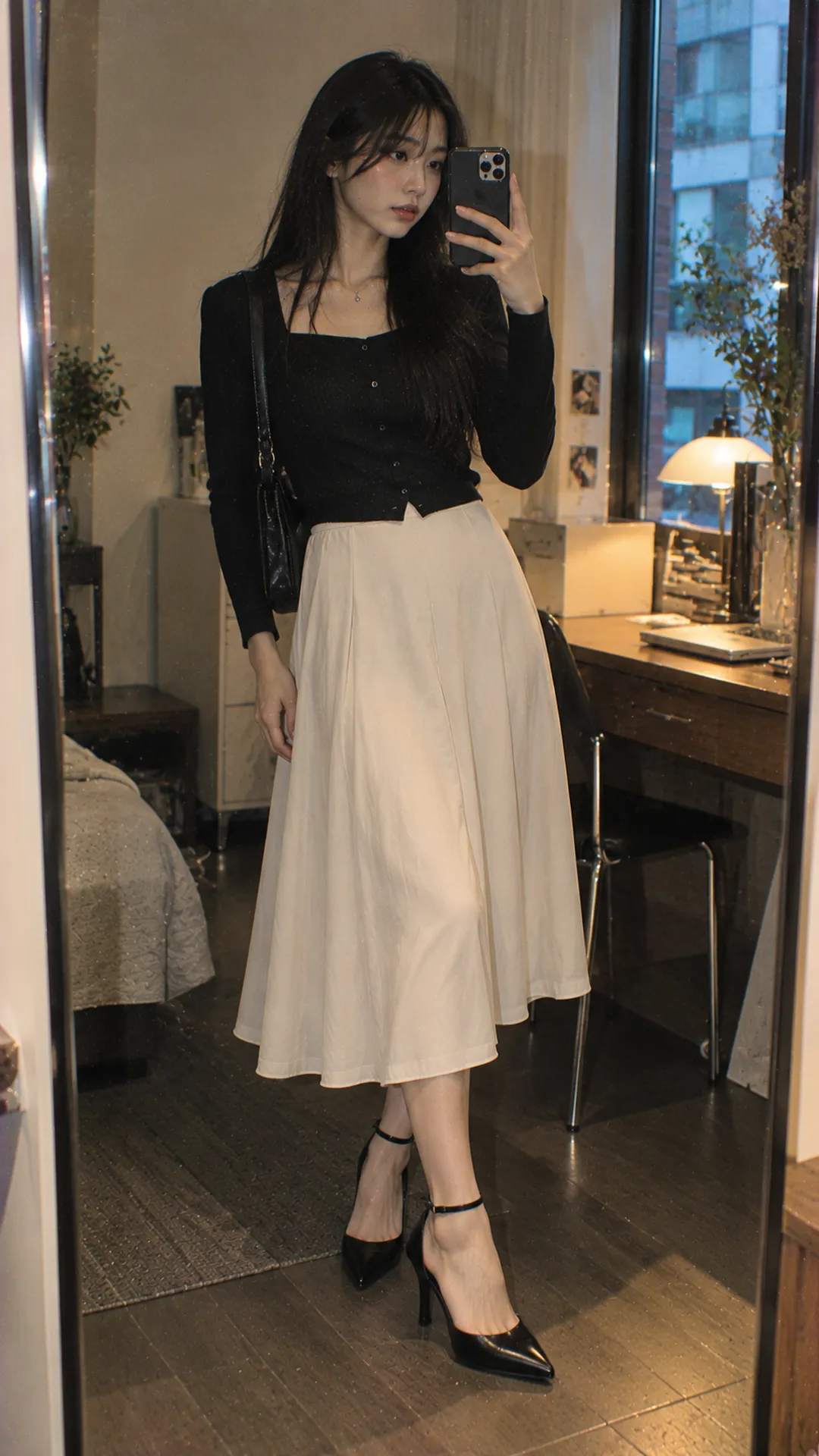
Let color and material support frequent use
Black, brown, white, skin-adjacent shades and metallics serve different wardrobe roles. Judge skin-adjacent colors on the actual wearer; there is no single nude for everyone. White contrasts clearly with dark clothes, so test the complete outfit rather than the shoes alone.
Leather, faux leather, fabric and glossy coatings need different care. Read upper, lining and sole materials; neither “leather” nor shine alone establishes quality. If rain is common, consult manufacturer guidance and plan travel rather than assuming water resistance.
For several combinations from one pair, compare three existing outfits through the garment-based styling guide. If the shoes work only with a rarely worn dress, consider likely use before spending more.
Care and signs that a pair needs checking
After wear, clean according to the material's instructions and dry before storing. Avoid strong drying heat unless permitted. Regularly inspect heel tips, soles and straps; address worn or loose components before wearing again.
For branded women's heels, prioritize verifiable sellers, product information and clear returns. The shopping hub helps compare useful information rather than claims of “absolute comfort.” A suitable pair fits your schedule and feet and works with clothes you actually wear.