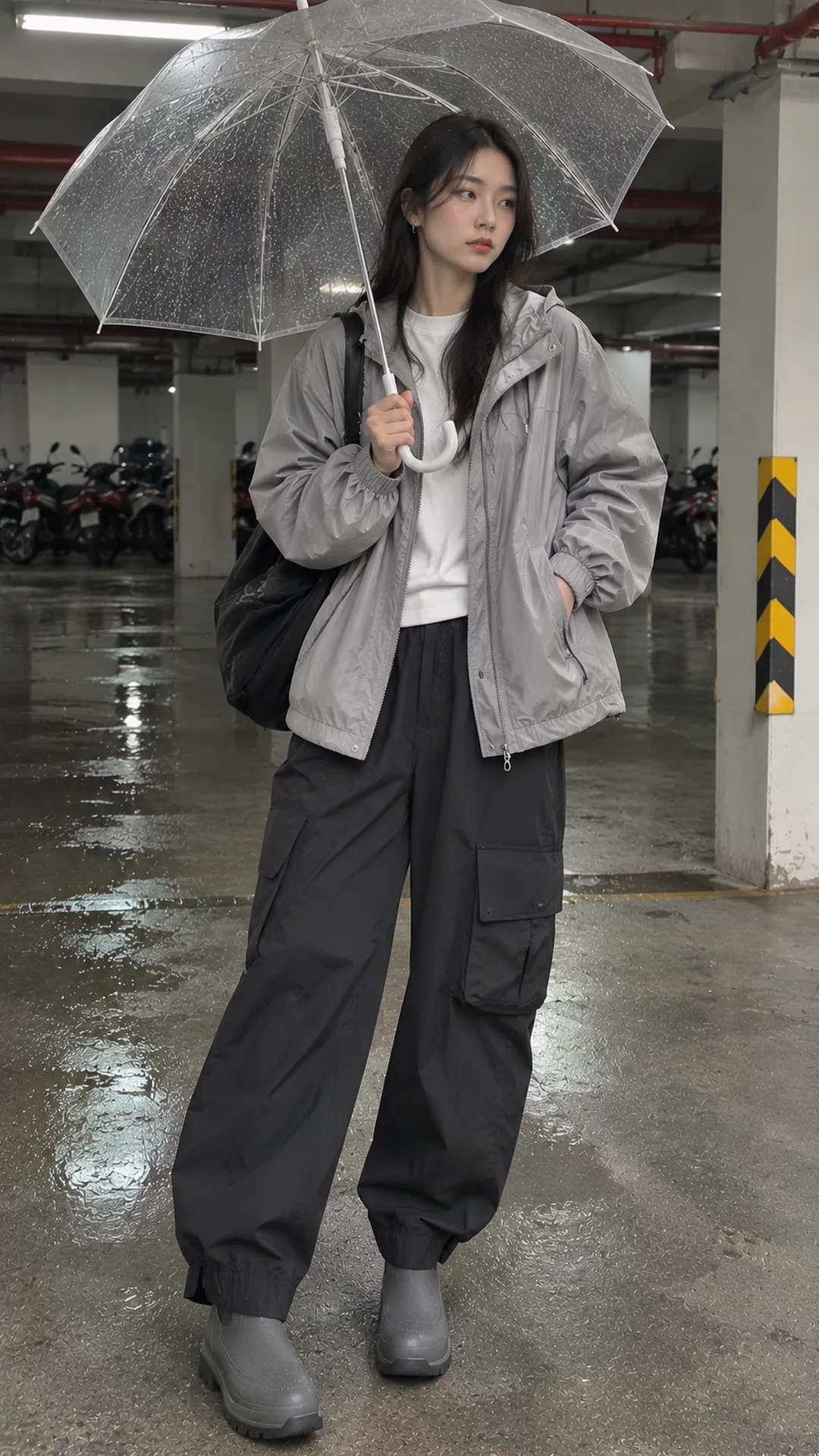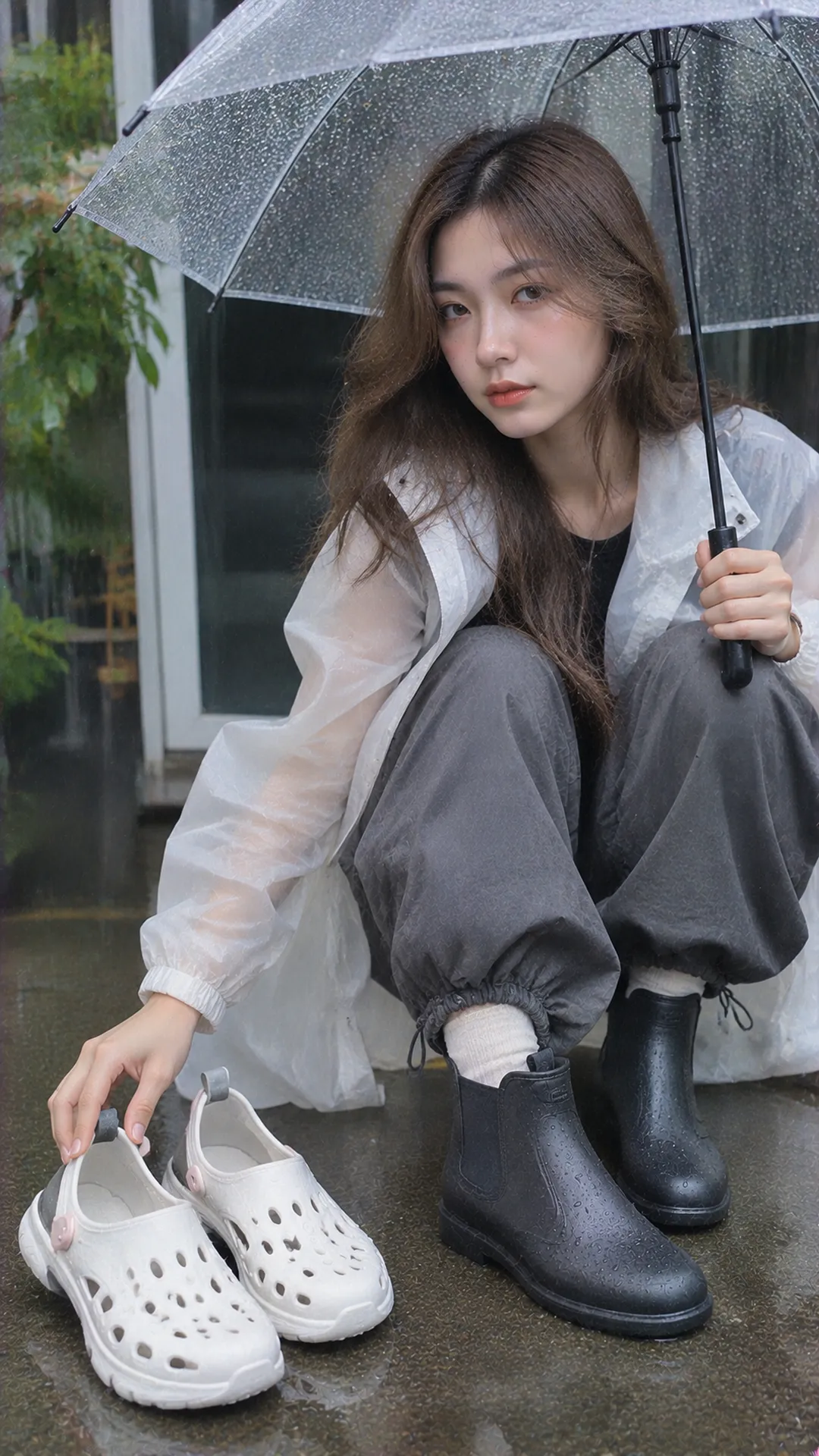
How do water shoes differ from waterproof shoes?
In its explanation of shoe construction, REI’s guide to water shoes notes that many shoes made for water activities use mesh and drainage openings. These features give water a way out after it enters. The words “water shoes” alone tell you little about whether a pair will keep your feet dry on the way to the office.
Waterproof footwear aims to limit water getting through the protected structure. Its performance depends on the upper, joins, tongue area, and specific design. An impermeable panel on the upper says little about whether the entire shoe is sealed. The opening around the ankle still leaves a route for water to get in if it rises above the collar.
Distinguish waterproofing from slip resistance. These features answer two different questions: whether water gets in and how the sole grips a surface. Waterproof rubber shoes may still offer inadequate grip on certain wet tiles. If the listing bundles these qualities into one vague promise, ask for specifics before buying.
Choose for your rainy-day itinerary
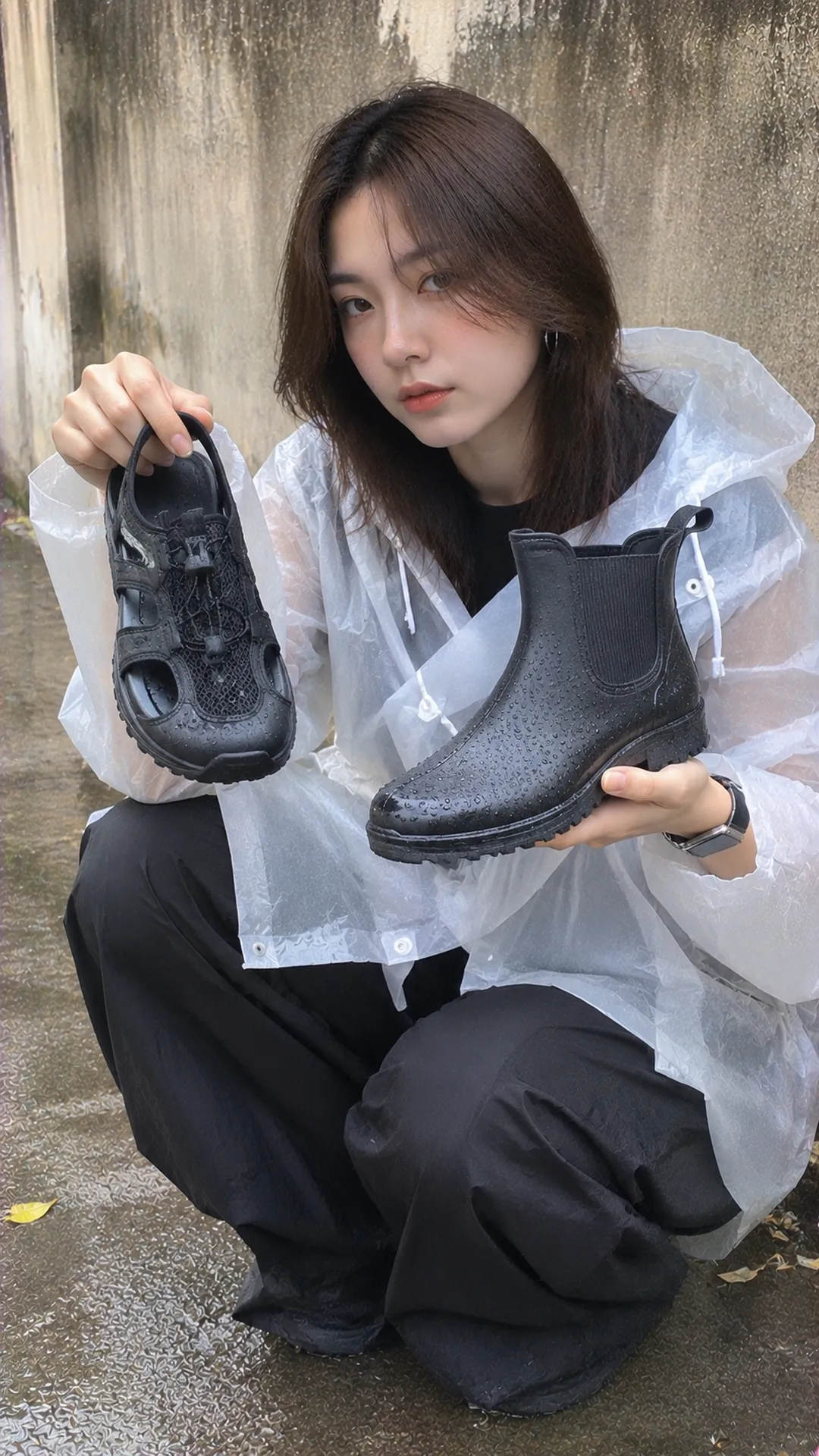
For a short walk from a vehicle to a building, choose something easy to put on and comfortable while you work indoors. Check what the shoes are designed to do, but tall boots may be unnecessary just because rain is forecast. Think about stairs, time spent waiting for elevators, and sitting in an enclosed room.
If you have a longer walk, pay close attention to heel hold, toe room, and flexibility as you stride. Waterproof sneakers can work when the manufacturer explains how they keep water out. A sporty shape, breathable mesh, decorative panels, or a chunky sole can’t establish waterproof performance on their own.
If your day includes work and an appointment, carrying a change of shoes may be easier than asking one pair to suit every setting. A separate bag keeps wet shoes away from clean belongings. If your route exceeds the shoe’s intended conditions, consider another route or way to travel.
Read the product description part by part
Start with the upper. What is it made of? Does the manufacturer specify a membrane or sealed construction? Which parts have only a surface treatment? Next, inspect the join between the upper and the sole, the seams, and any zippers or laces. A flattering front photo may hide these details, so look at the side, back, and interior as well.
Waterproof plastic shoes may be easy to wipe clean on the outside, but check for openings, whether the liner comes out, and whether the collar rubs. For rubber shoes, ask how to clean and store them. The material gives you a starting point. The design of the whole shoe determines how useful it will be.
For the sole, look for stated conditions of use or test details if the brand provides them. Deep grooves, an aggressive tread, and a slip-resistant label don’t guarantee grip on every surface. Avoid testing grip by walking fast on slippery flooring. In a shop, assess how the shoes feel in motion on a dry, flat surface where trying them on is allowed.
Finally, check the size-exchange policy, warranty, and care instructions on the page for the exact model. Two versions from the same line can differ in construction. Save the model number so you can get an answer about that specific pair.
Check the fit with your actual socks and clothes
Sizing up for rainy weather can leave you with too much room. Measure your feet, consult the model’s size chart, and try the shoes with the socks you’ll wear. Toes need space when you walk, while the heel should stay secure enough that you don’t have to curl your toes to hold the shoe on. If your feet differ in size, check both shoes.
With boots, check the opening and the fit around your calf. A tight shaft can make it hard to tuck in trousers. A very loose shaft can look sloppy and feel harder to control as you walk. Sit down, stand up, and take a few normal steps. These movements reveal more than posing in front of the mirror.
When shopping online, our guide to checking measurements and choosing a size online is a reminder to compare actual measurements instead of relying on S, M, or L. For shoes, always use the brand’s foot-length chart and any width guidance. Footwear needs its own sizing check.
Style trousers so the hems stay out of the way
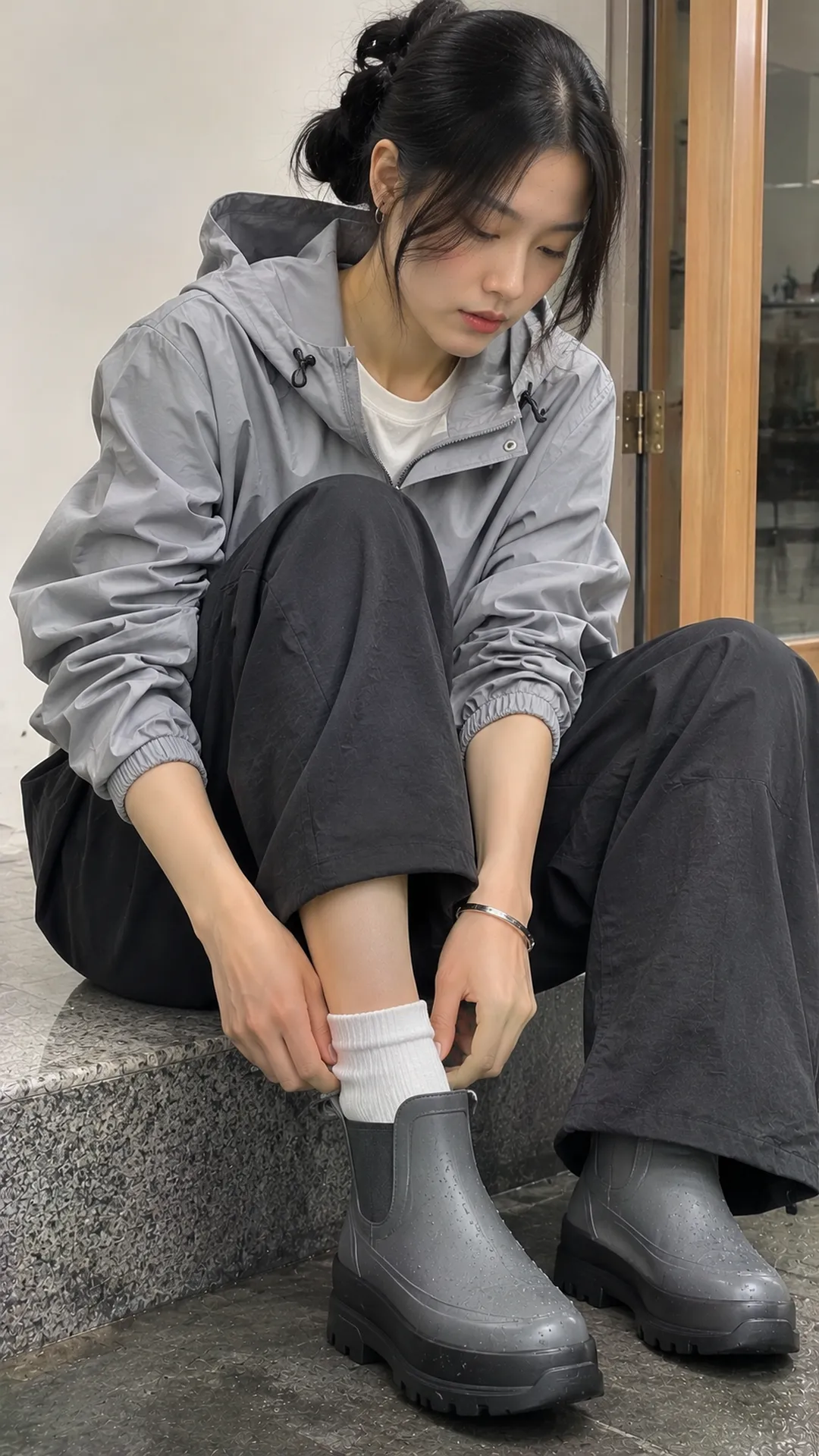
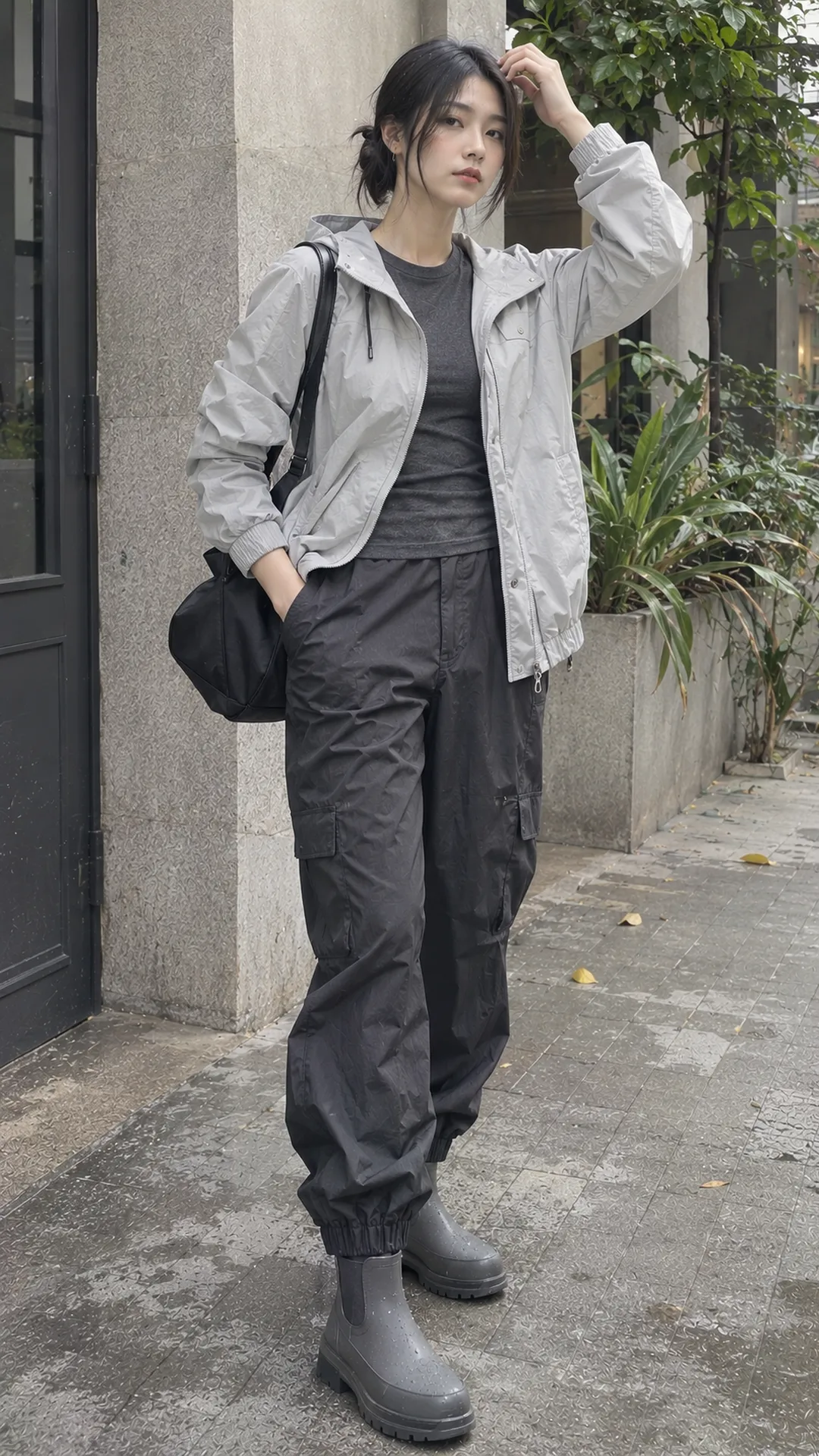
Try low-cut black shoes, straight-leg trousers that reach the tops of the shoes, and a top with a neat shoulder line. Watch the hems as you walk. A length that looks fine standing still can touch the ground in motion. If the trousers are too long, choose a different pair or have them hemmed. A thick makeshift cuff can weigh down the leg visually.
A boot with a prominent shaft is easier to pair with slim trouser legs for a clean transition. If you prefer wide-leg trousers, you can wear them over the boots when the cut allows it. Check whether the hems brush the ground. Avoid stuffing a lot of fabric into the boot just to copy a reference photo.
For an alternative look, try one accent on the top or bag and keep long chains and straps away from the ankles. The soles already add visual weight, so step back a few paces to look at the whole outfit. Our women’s footwear styling guide can help you balance the visual weight of the shoes against trouser width and top length.
Style dresses and outerwear for rain
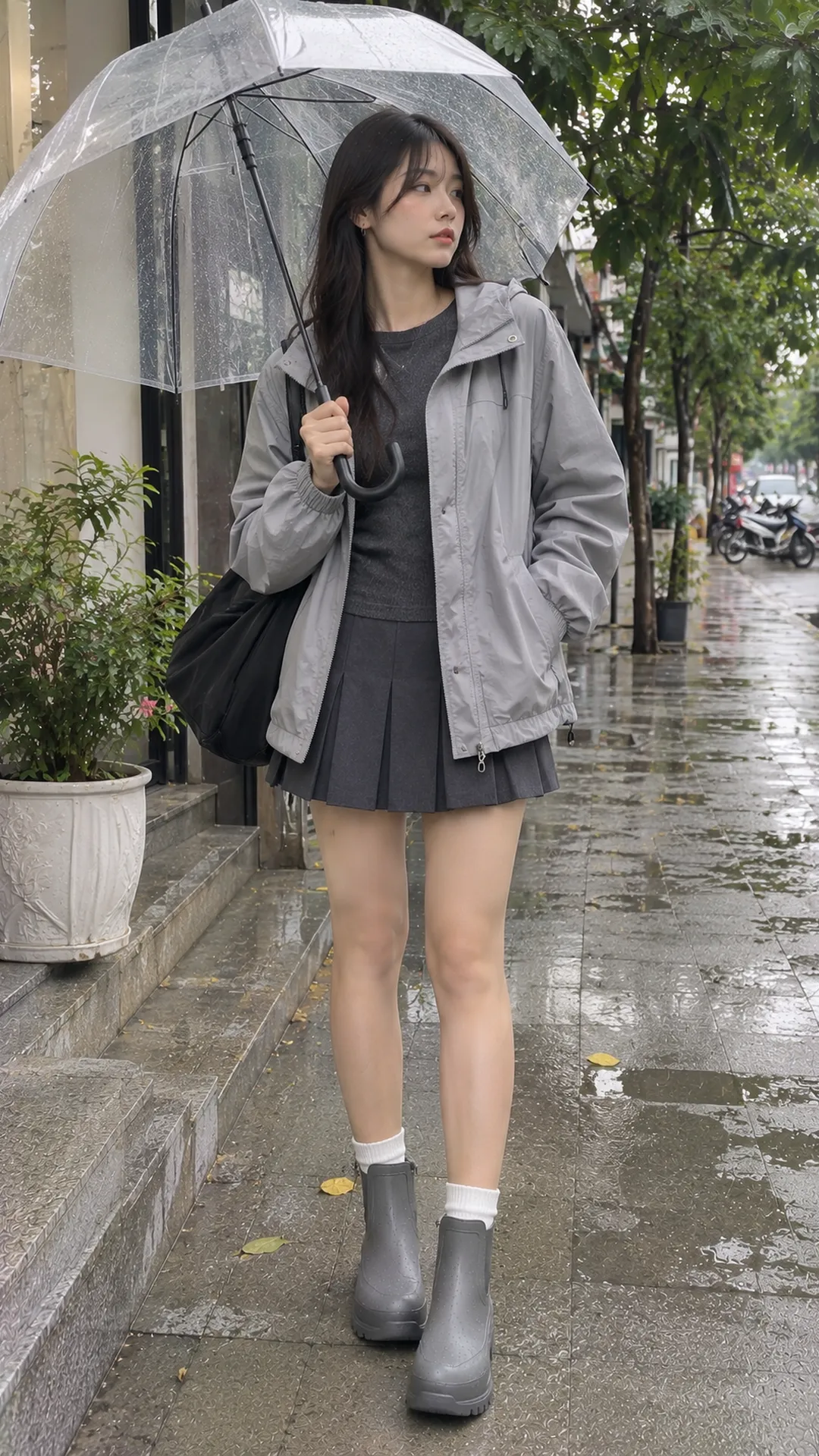
An A-line or straight-cut dress can work with streamlined waterproof shoes when you want a lighter look. Choose the length for the way you’ll move, and check how the skirt falls when you sit or step up. A dress you keep having to adjust will be hard to wear, even if it photographs beautifully while you stand still.
With boots and a midi skirt, look at the gap between the hem and the boot shaft in a full-length mirror. The right gap depends on your proportions. Look for horizontal breaks that accidentally chop up the silhouette. Wearing the skirt and boots in similar colors can help the eye move smoothly through the outfit.
Outerwear should work with the length of both the skirt and boots. If the coat hem, skirt hem, and boot tops all end close together, change one length to give the outfit some breathing room. If you need a layer for a cold room, see our guide to layering women’s outfits and try the outfit with the coat in your hand. The clothes underneath should still look complete when the outer layer comes off.
Care for shoes after wearing them in the rain
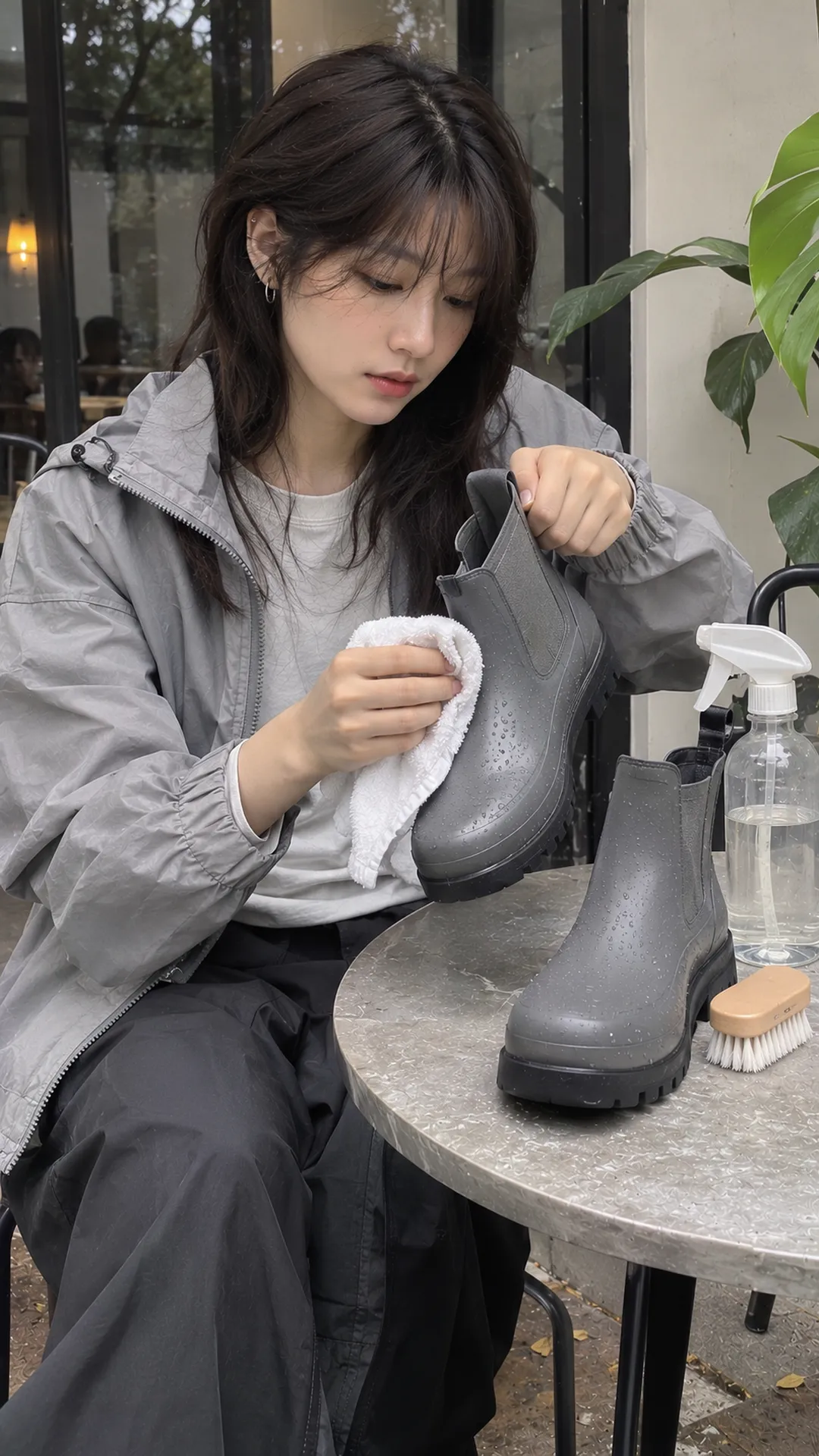
Set the shoes somewhere you can inspect and clean them before storage. Remove dirt and grit according to the material’s care instructions, undo laces or zippers to reach the inside, and remove the insoles only if the manufacturer allows it. Let damp shoes dry before putting them away in a closed bag.
For its own products, GORE-TEX’s footwear care instructions recommend cleaning the shoes as appropriate, air-drying them at a moderate temperature away from direct heat, and following the shoe manufacturer’s instructions. That guidance applies to the relevant products. Check the specific care instructions for your plastic, leather, or rubber shoes.
Choose waxes and sprays that are compatible with the shoe’s material and construction. A waterproofing label on the treatment alone doesn’t establish compatibility. Before wearing the shoes again, look over the joins, outsoles, and areas that see the most abrasion. If you spot damage, ask the retailer how to handle it before applying a new coating.
Make the final choice with a complete outfit
Before buying, pick trousers or a dress you actually wear in the rain and picture the bag, outerwear, and socks too. Shoes that go with only one special outfit may do little for your daily routine. Our guide to alternative outfits for going out can help you plan around how long you’ll be outside and how much you’ll walk.
Ask three last questions. Do the shoes let water drain or keep it out? Do they fit while you move? Can you care for them afterward? Once you have clear answers, choosing the color and shape gets easier. Start with the function your day calls for, then find a style you want to wear.