What gives a white dress a classic look?
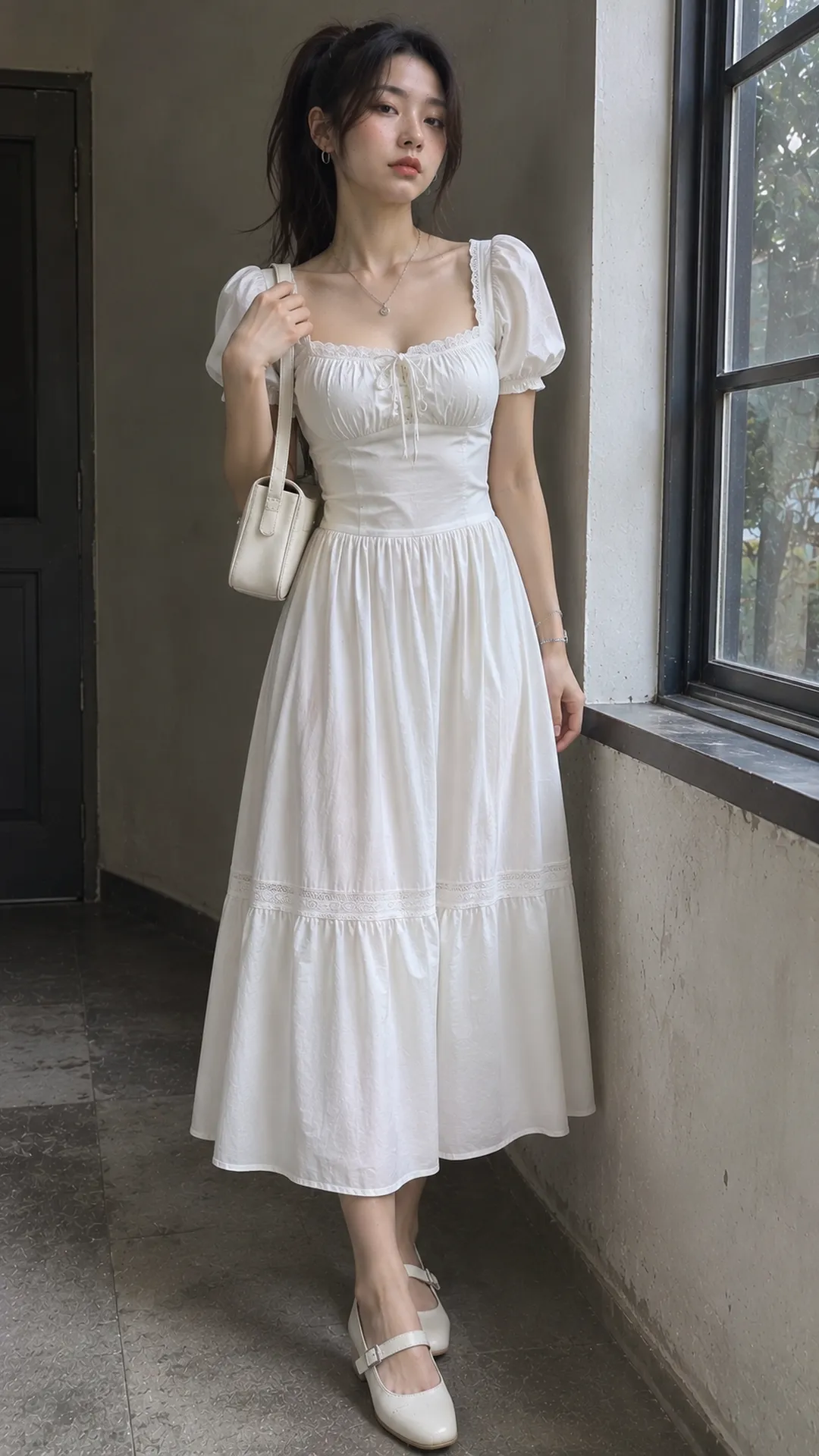
Look at the neckline, shoulders, waist, and hem before the decorations. A neat round neckline, short or elbow-length sleeves, a softly defined waist, and a flowing or flared skirt are details you can try. A dress can give you the look with only some of them.
Buttons, pleats, trim, or a bow can change the mood. If several areas already stand out, try simpler accessories. Or start with a plain dress and add shoes and a bag with defined shapes.
If you’re choosing between a dress and another skirt style, see our women’s skirts and dresses styling guide. A one-piece dress already joins the top and bottom. Look at its length, waist placement, and the space around the neckline, arms, and legs.
Choose a shade of white and check the coverage
Bright white, ivory, and creamy white look different with accessories. Compare the fabric in daylight and in the light where you usually dress if you can. Cream shoes may blend with ivory and contrast clearly with a cool white dress.
Check opacity standing and moving. Fabric can look opaque in a fitting room and reveal underwear lines in brighter light or when stretched. Look at the bodice, hips, seams, and spaces between layers. A lining can give different levels of coverage in different areas.
Smooth underwear close to your skin tone is one option to try. Check it under the exact dress. White underwear can still show through white fabric. If you need a slip, choose a length and width that stay in place and above the hem.
Round-neck white dresses: Check the neckline and sleeves
A round neckline can sit close to the base of the neck or open more widely. Try it on to check whether the edge lies flat, pulls backward, or feels uncomfortable when you lean forward. Check more than the front view.
With a high round neckline, small earrings can leave the neck clear. If you want a necklace, find a length that lets the pendant rest clearly on the skin or fabric without catching under the edge. With an open neckline, a thin chain can be enough to add definition.
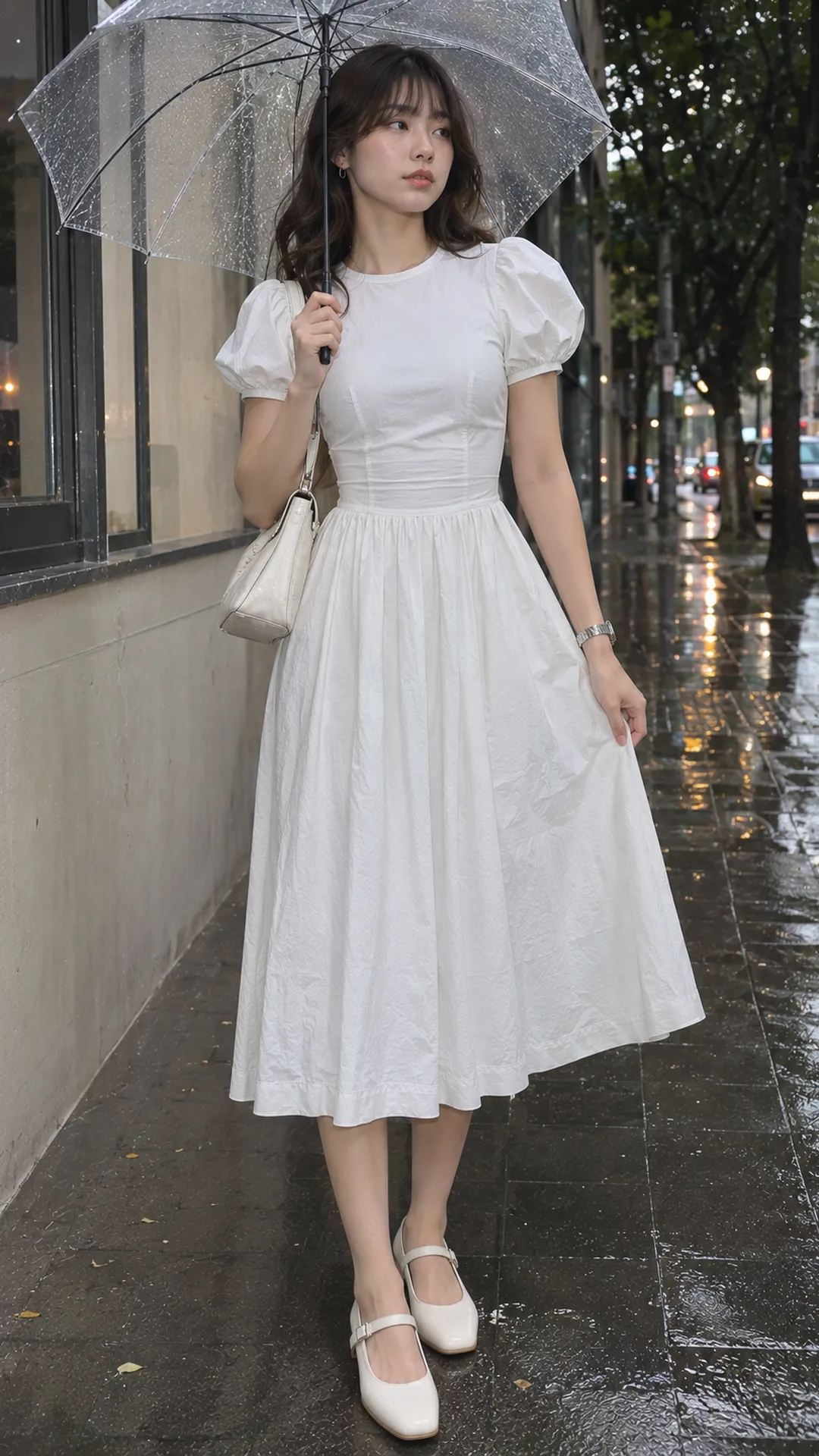
Slightly puffed sleeves make the shoulders stand out, while plain straight sleeves give a quieter line. Reach up, reach forward, and sit to see whether the armholes pull up the dress. Choose sleeves you can move in for a full day of school, work, or an outing.
Choose the waistline and skirt shape
A defined waist makes the proportions of the bodice and skirt easy to see. Check that the seam sits where you find it comfortable. If it rides up or presses while seated, look at the size and cut before adding a belt.
A shift dress can also feel classic when the shoulders, neckline, and hem are clean. Try slim shoes, a medium-sized bag, and simple jewelry if you want to keep the dress loose and comfortable.
For a flared skirt, check the volume from the side and while sitting. A crisp fabric holds a different shape from a fluid one, even at the same length. With a full skirt, start with a short jacket or one with a defined shoulder and compare the balance.
Choose one line you want to keep visible, such as the neckline, waist, or hem. Let other details stay quieter if you like the effect. This works across body shapes.
Check dress length with your stride and shoes
An above-knee dress can give a light look. Check the coverage while sitting and bending to reach something. A knee-length or longer dress leaves a different amount of space above the shoes. Try it to see where the hem falls on you.
With a long dress, wear the shoes you’ll use and try a low step. If you have to keep lifting the dress, consider hemming or another length. Higher shoes may change the hem position, but choose a pair you can walk in for the outing.
For online shopping, measure a dress that fits you at the same points the seller uses. Our online clothing size guide explains how body and garment measurements differ. Check the shoulders, bust, waist, hips, and full length of a one-piece dress.
Choose shoes and a bag for your plans
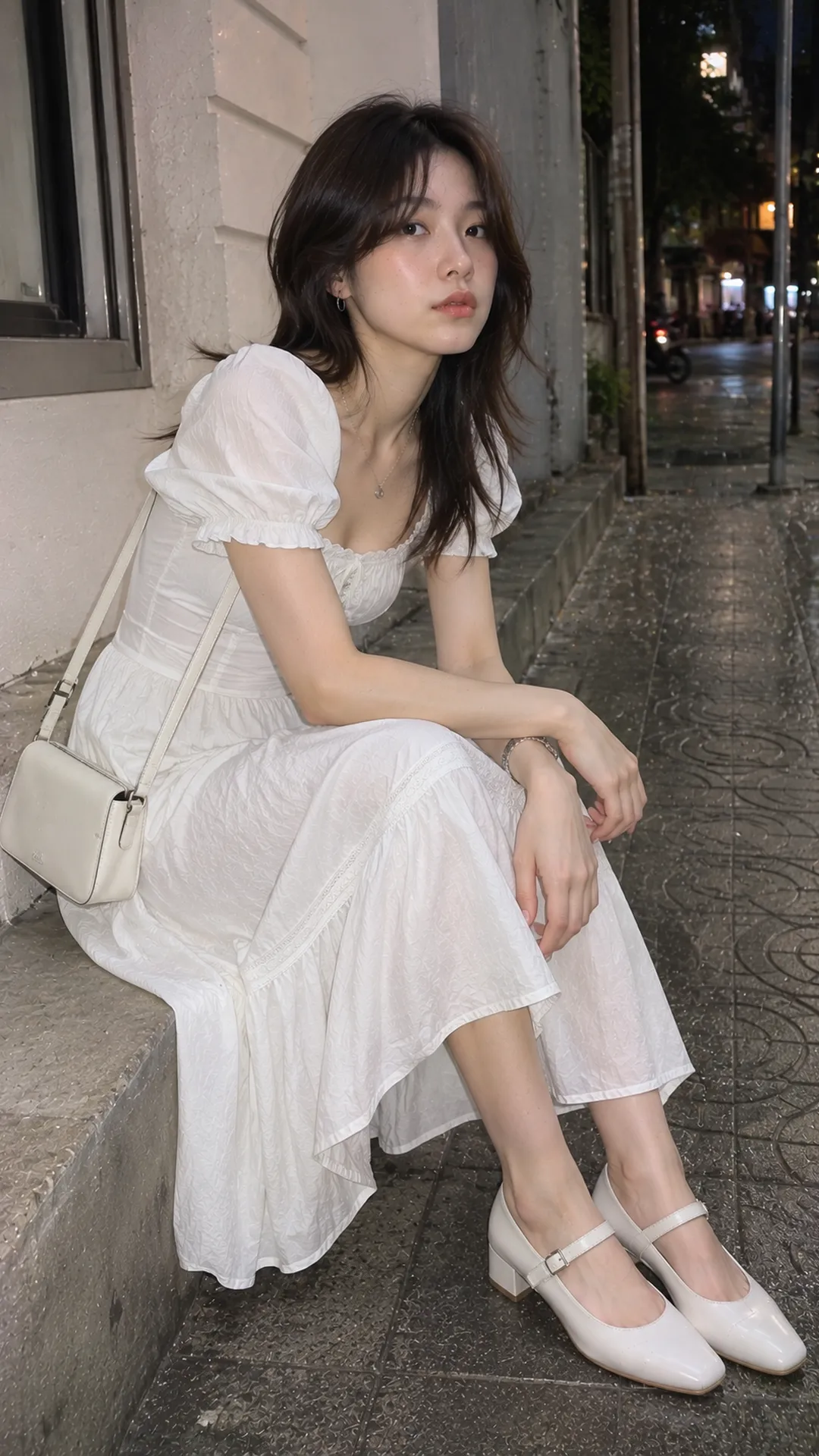
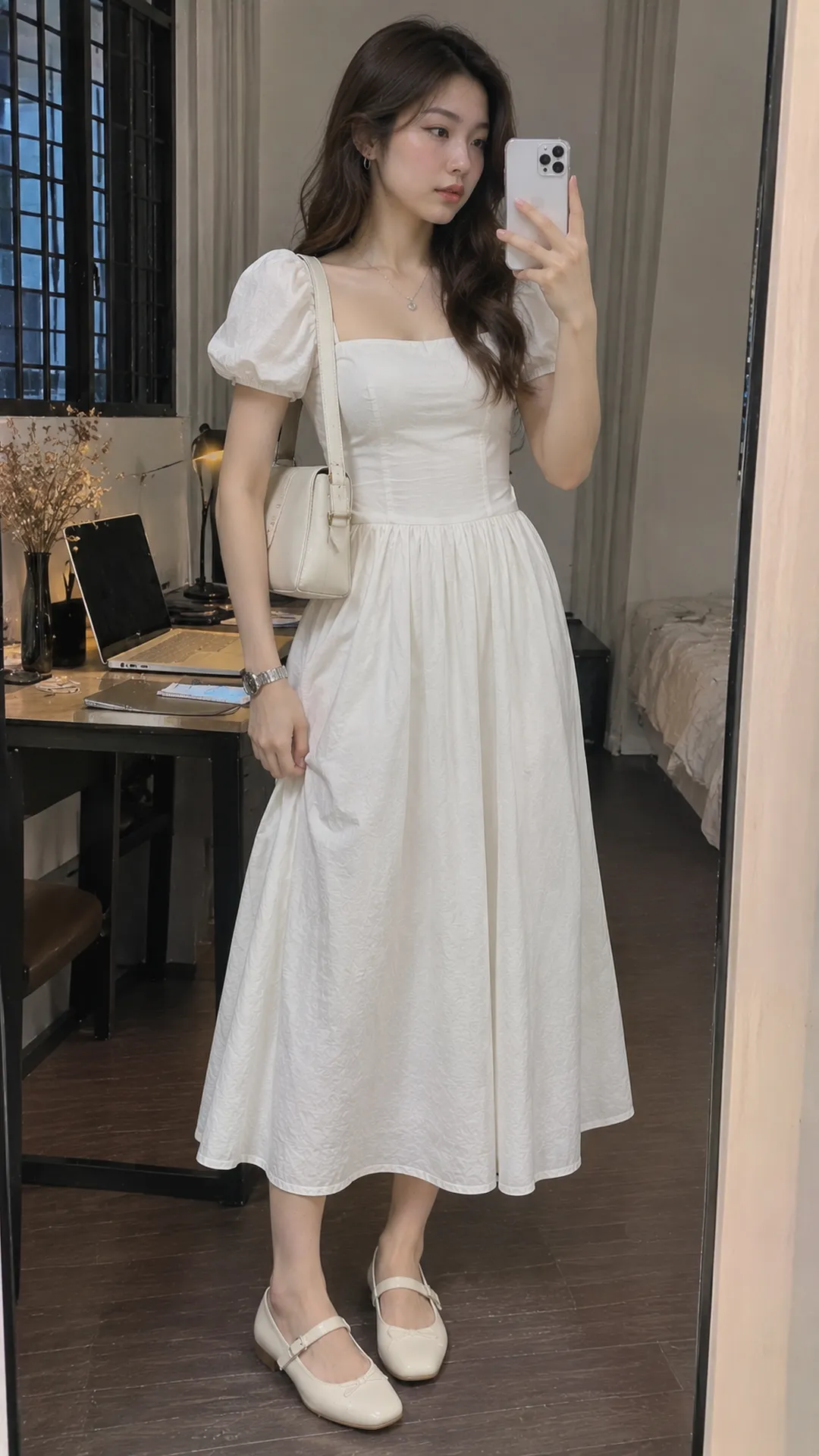
Try round-toe or streamlined flats for a lighter look. A strap adds a horizontal line across the foot. Check how that line looks against the dress length. If you’ll walk, prioritize a familiar pair that fits.
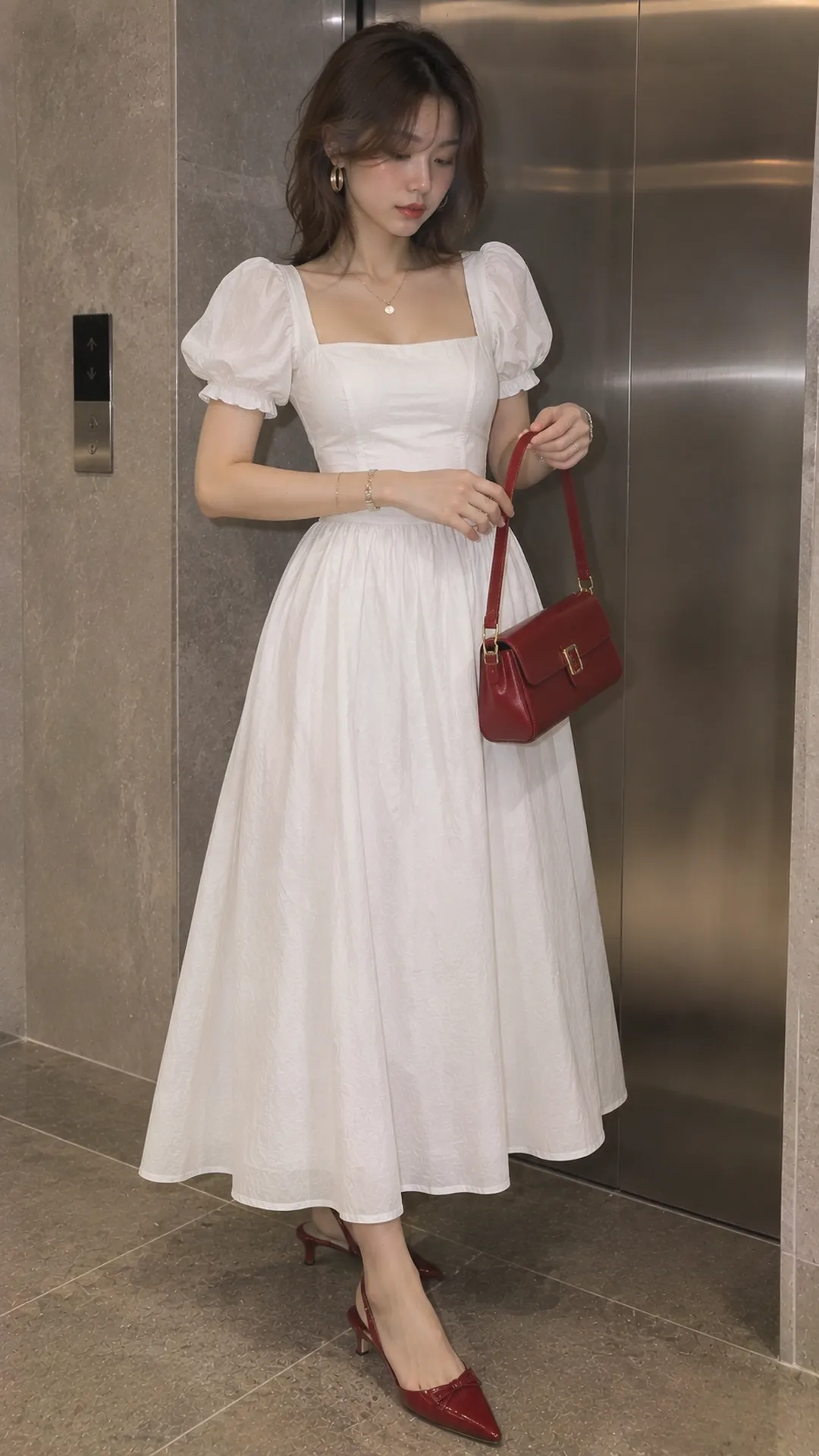
Low heels can make the outfit feel more polished for dinner or a meeting. Choose a height you’re used to and try it on a similar surface. Black shoes stand out against white, while cream or light brown can make a softer transition, depending on the fabric shade.
Pick a bag that holds what you need. A small structured bag echoes clean dress lines, while a soft bag gives a more relaxed effect. If the bag has a prominent buckle or print, see whether you still want a belt or jewelry near it.
Give jewelry and accent colors a clear role
Start at the ears, neck, or wrist. Small earrings and a watch may be enough with a decorated neckline. With a plain dress, try a larger piece and step back from the mirror to see it with the whole outfit.
Deep red, navy, or black can provide contrast. Use one shade in the shoes and a detail on the bag, or keep it to one piece. Try different finishes if matching several accessories feels too formal.
Our guide to choosing accessories around a focal point helps you decide where to add detail. With a classic white dress, choose an accessory that lets the dress’s main line show. Start with one and add more if you like the balance.
Add a layer without hiding the dress’s shape
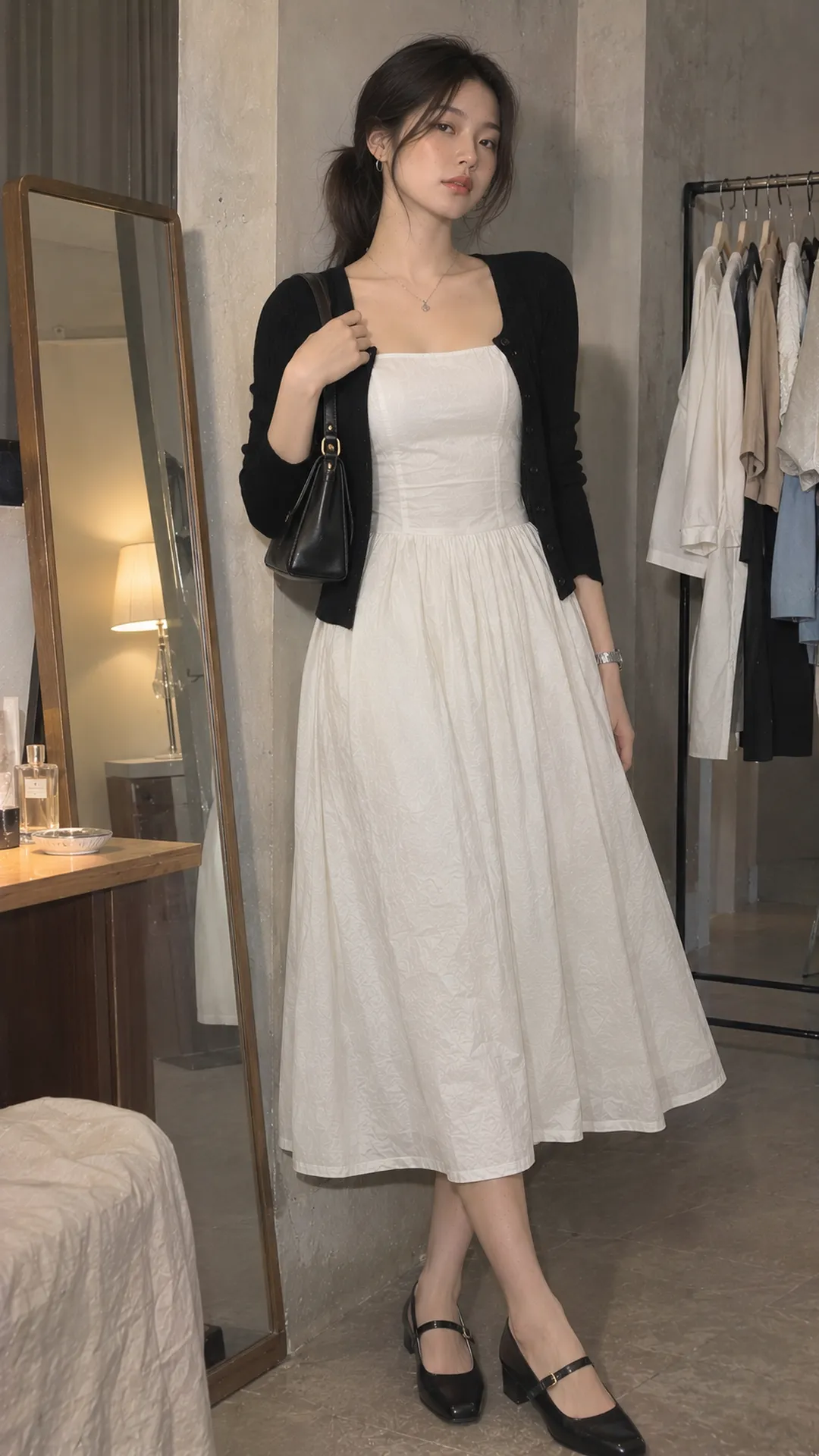
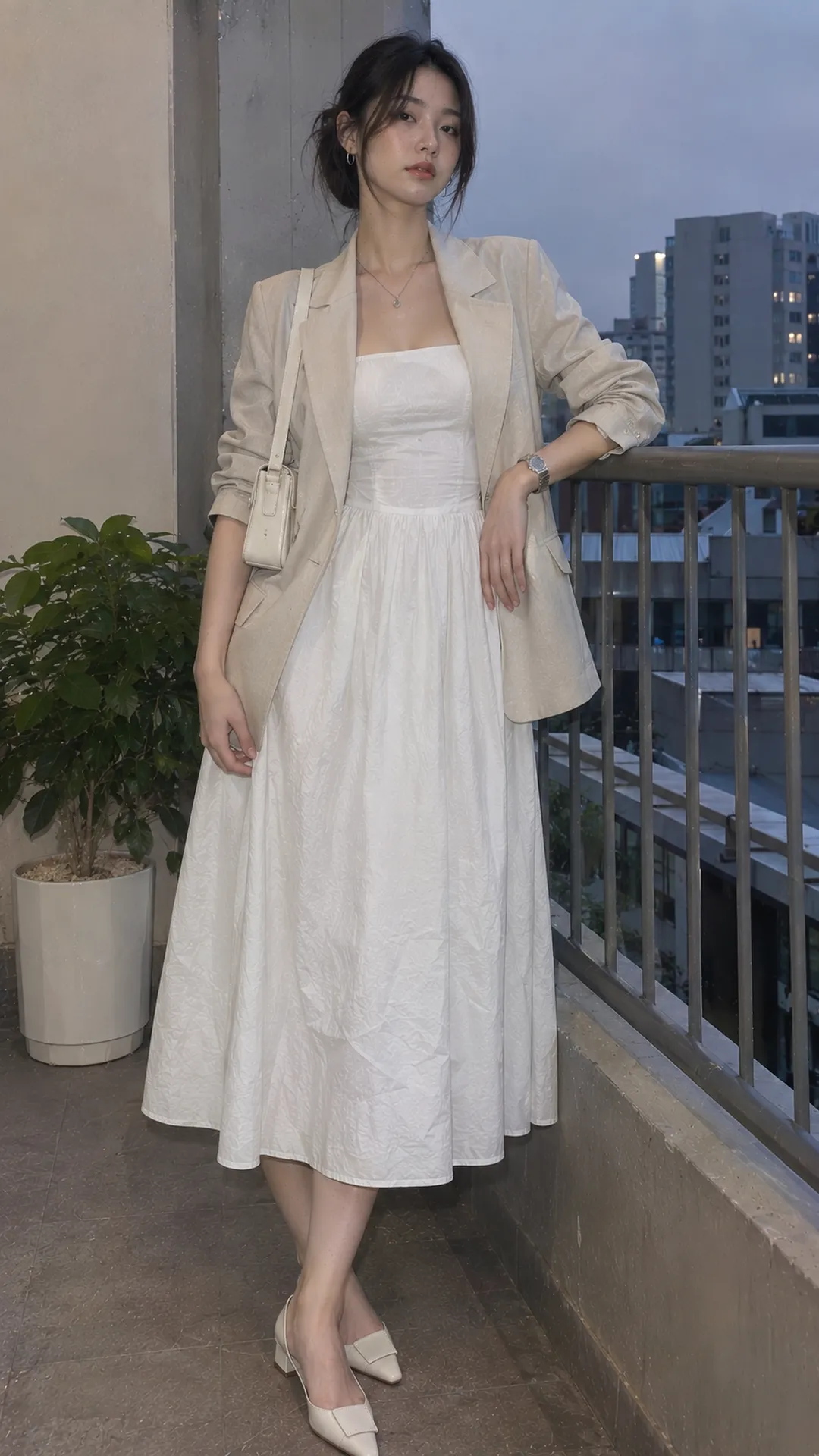
A compact cardigan can work with a gently flared dress. A structured jacket gives a shift more definition. Try the layer open and closed to see how it changes the waistline.
If the dress has puff sleeves, check for room at the shoulders and upper arms. If the neckline has a bow or prominent trim, see whether the jacket collar presses on it. Our layering guide helps you choose a purpose for each layer.
Try the outfit with the jacket off. You may take it off and put it on again between air conditioning and outdoor spaces. Check that the dress and accessories underneath have the fit and coverage you want on their own.
Three ways to wear it for different occasions
Coffee or a walk: Choose a length you can move in, familiar flats, and a bag that holds your essentials. Keep one detail, such as small earrings or narrow trim around a round neckline. For a longer outing, see our guide to dressing for different activities and consider walking, sitting, and the weather.
A polished meeting or gathering: Try a dress with a defined waist or bodice seams, low heels, and a simple bag. Check the coverage in bright light, how the fabric creases when you sit, and whether you can reach into the bag easily.
Photos: Choose a background and light that show the lines of the white fabric. Take a few full-length shots before deciding on accessories. Keep the dress that fits, gives you the coverage you want, and works with accessories you’ll wear.