

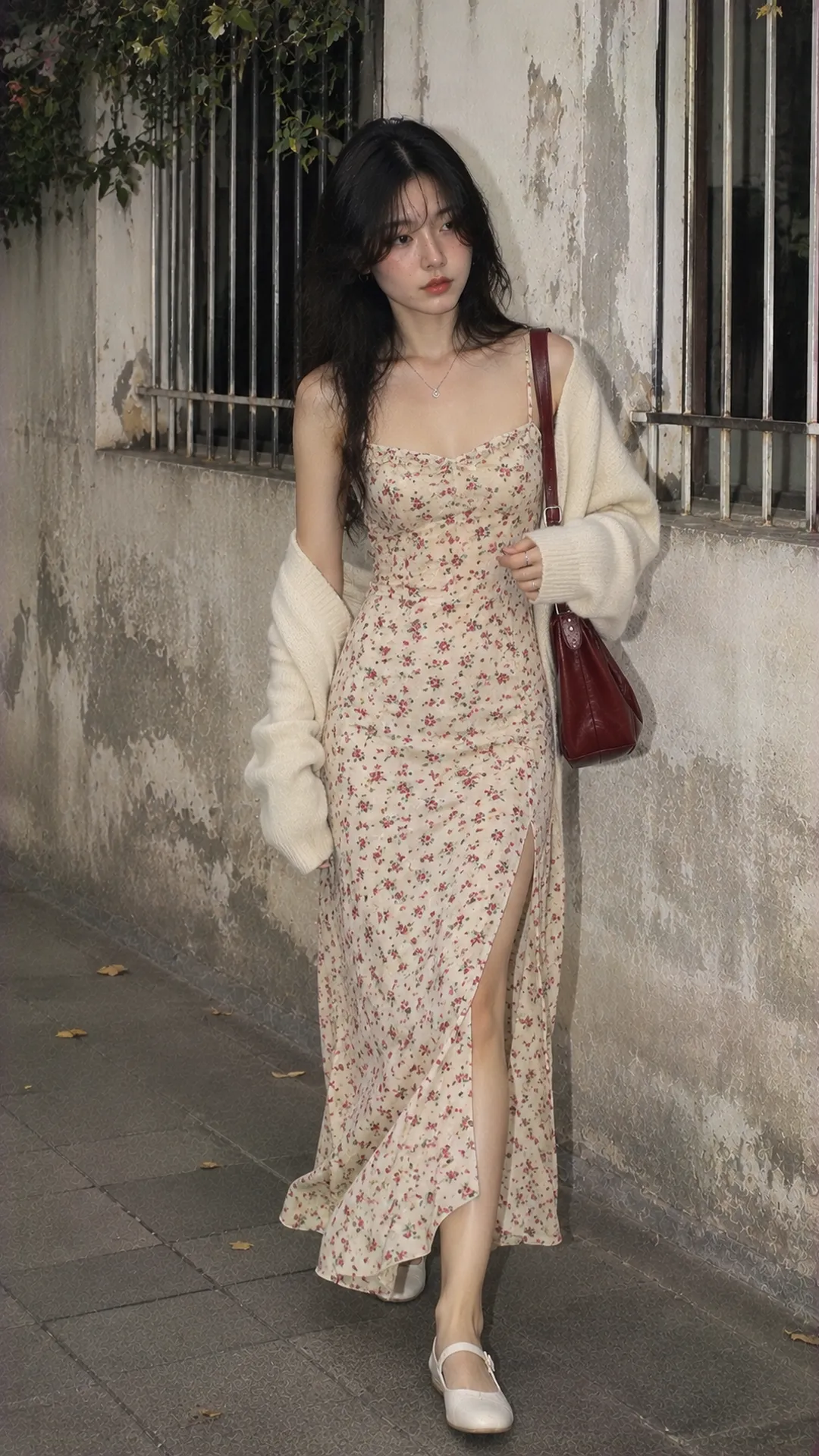
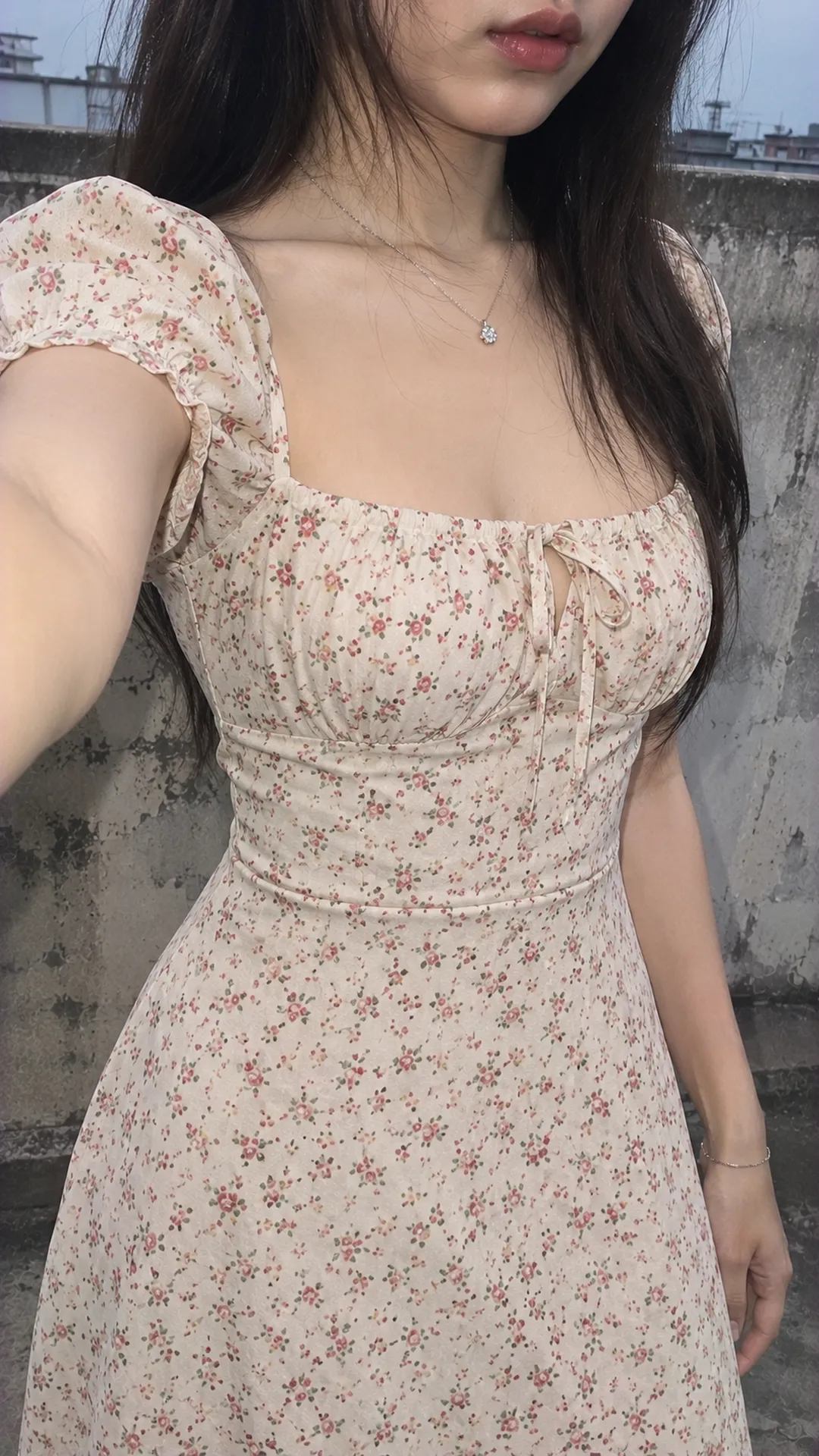
Small flowers can still make a bold print
Step back to see the full dress. Small flowers can stand out when they’re densely packed or contrast strongly with the background. A scattered print or flowers close to the background color will look different. The size of each flower is only one part of the effect.
Light flowers stand out against a dark ground, while a pale print on a light ground may feel softer. Try a scattered or low-contrast print if you want something subtle. If you want the print to lead, try simple shoes and a bag so the pattern remains easy to see.
Look beyond heavily edited product photos. For online shopping, look for ordinary lighting, a full-length view, and a close-up of the fabric. Ask about differences between photos if ivory looks yellow in one or purple flowers look red in another. A change in shade can affect how the dress works with accessories you own.
Choose the cut before the style label
An A-line skirt widens toward the hem, a straight dress changes width less, and a fit-and-flare dress has a more defined transition. Check where the dress begins to fit closely and where it opens out on your body. Two dresses with small floral prints can call for quite different shoes or layers.
A sewn-in waistline should sit where you feel comfortable. If it rides up when you reach or an elastic waist pinches when you sit, try another size or cut. A belt can shift the emphasis, but check the underlying fit before using one.
Ruching, ruffles, and puff sleeves add volume alongside the print. For a simpler silhouette, choose which area you want to highlight. If you like puff sleeves with florals, check whether your hair, earrings, and neckline leave enough room for those details to show.
Our guide to choosing dresses by shape and length helps you compare different cuts. Here the focus is a small floral print on a one-piece dress. A floral skirt worn with a separate top has different proportions because the print doesn’t extend across the whole outfit.
Try short, midi, and long dresses in motion
With a short dress, check coverage while sitting and stepping up. A length you like in the mirror can shift when you carry a bag or reach. Choose the coverage you feel comfortable with in the setting where you’ll wear it.
A midi ends somewhere between the knee and ankle, depending on the dress and your height. Look at the gap between the hem and the shoes. If the hem and shoe tops both create strong horizontal lines, try a more streamlined shoe or a different dress length.
Try a long dress with the exact shoes you’ll wear. You should be able to walk on ordinary surfaces without lifting the hem the whole time. Before shortening it, check how the alteration would affect a border, the print placement, or a tier.
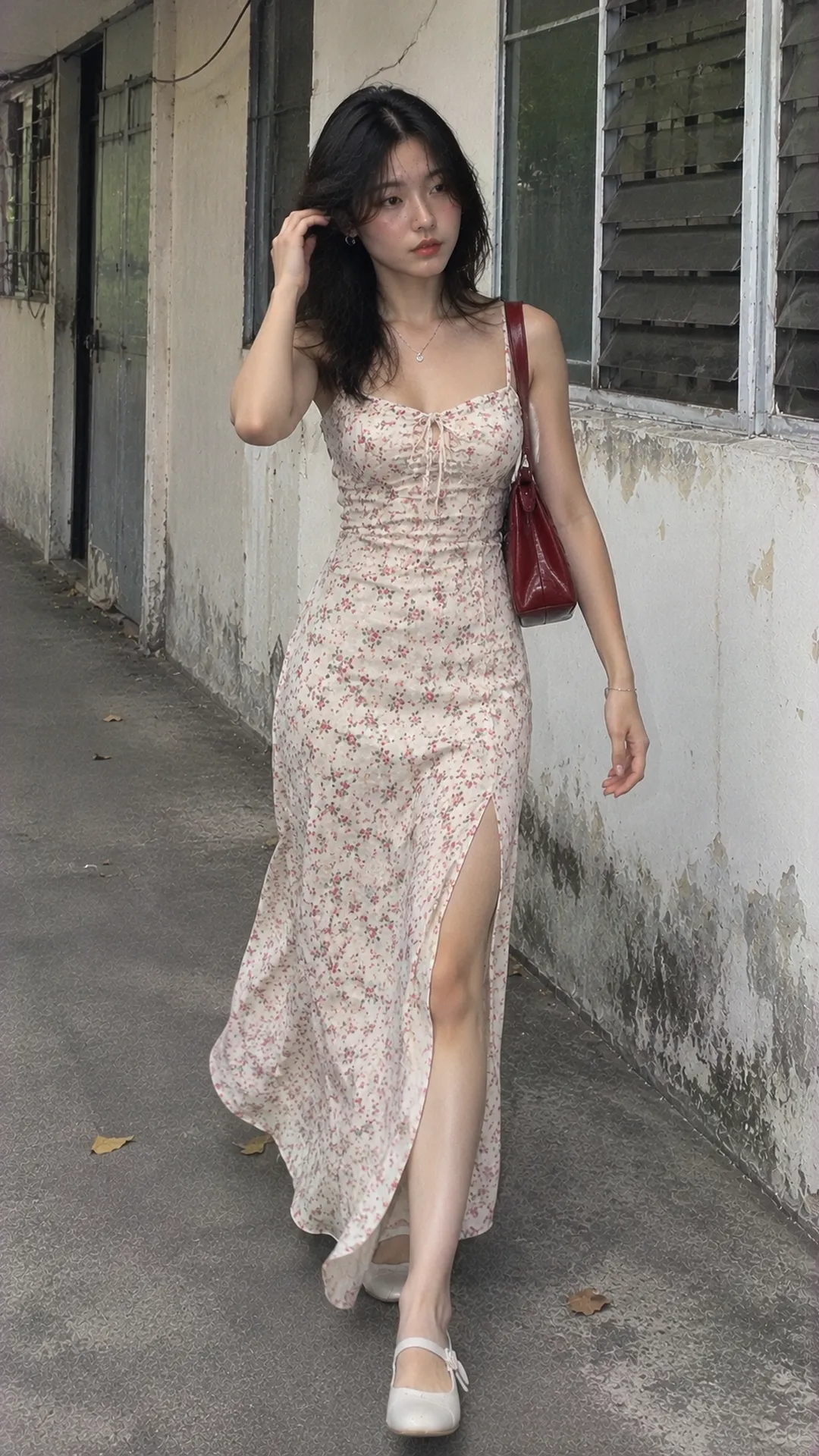
For a long floral dress with a slit, sit down in it
A slit gives your legs room to move and reveals more of them as you walk. Take a few steps, sit down, and turn sideways to see how far the slit opens. The distance from the hem is only part of the picture. Slit placement and skirt fit both affect how the panels separate.
Front, side, and off-center slits draw the eye differently. A high slit can add another focal point to a high-contrast floral print. If you like both details, keep the shoes and bag simple so the outfit remains easy to take in.
Check whether the slit edges pull or curl as you walk. If the dress is lined, see where the lining ends and whether it limits your stride. Try any underlayer with the dress so it stays where you want it when you sit or when wind opens the slit.
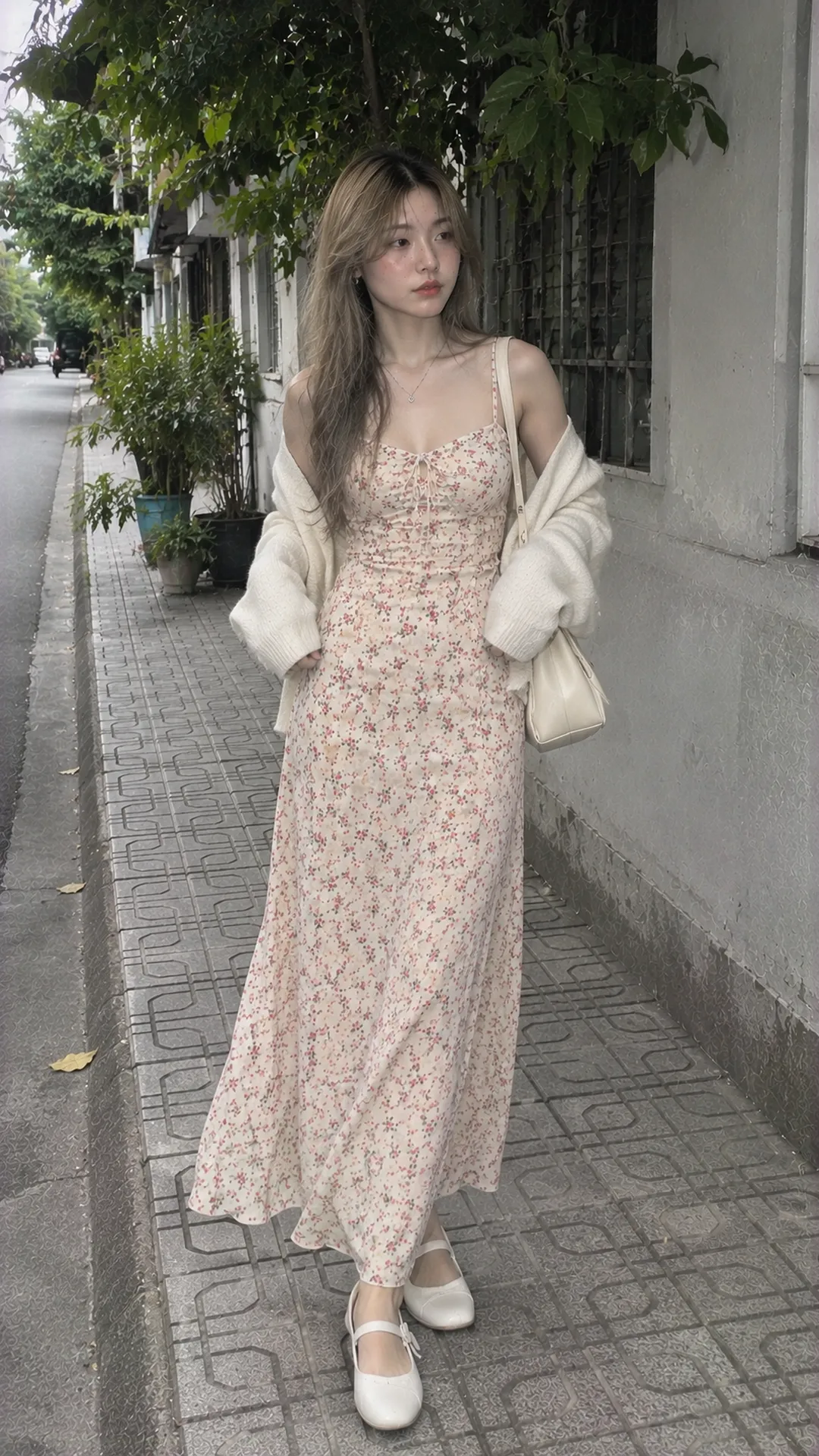
Check the straps and bodice on a strappy floral dress
Adjust the strap length before judging the bodice. Adjustable straps can help place the neckline and bust seam, but the body still needs enough room. If the straps have to pull hard to hold the dress up, check the cut and support of the bodice.
Try the dress with your intended underlayer and look from the side and back. A visible edge can be intentional if you like how it looks. Choose an underlayer for your own coverage and comfort.
For an outer layer, try a light cardigan or an open shirt. Look at which parts of the dress the length leaves visible. A long, loose layer may hide the waist and give the outfit a more relaxed shape.
Choose shoes for the hem length and your plans
Slim sandals, sneakers, and boots give different finishes. Think about how much you’ll walk before choosing from a photo. Wear a pair you can already walk in so you can judge the dress in motion without also breaking in shoes.
A small shoe can disappear under the hem of a flowing long dress. A chunky shoe can become a strong focal point with a short dress. Look at the full outfit and choose how much contrast you want. Small florals can work with dark or substantial shoes too.
Our footwear styling guide helps you balance shoe volume and shaft height with the hem. For an edgier effect, try changing the shoes before adding a jacket and jewelry. One change may give you the look you want.
Pick up a color from the dress in your bag
Choose a bag that echoes either the background or a small color in the print. A background match gives a more continuous look, while picking up a flower color can draw attention to the print. The shades can differ slightly. Check them against the actual dress to see whether they work together.
With a dense print, a plain bag keeps the outfit simpler. With scattered flowers, a structured bag or a small detail may be enough to stand out. Wear the bag where you’ll carry it. A bag across the bust, at the waist, or on the hip hides different parts of the print and cut.
Consider the neckline and sleeves when choosing jewelry. If the neckline has a ruffle, tie, or ruching, try small earrings before adding a necklace. If you want the necklace to lead, choose a neckline with enough space to show it.
A jacket can change the shape of the outfit
A cropped cardigan leaves more of the waist visible. A long cardigan creates vertical lines around the dress. A structured jacket can contrast with a soft skirt. Choose the outer layer for the temperature and activity, then check color, length, and how much of the print shows.
If the jacket has a print too, step back and see how the patterns work together. Try a lower-contrast outer layer or a plain jacket if both compete for attention. Our guide to layering women’s outfits can help when several hems end at the same point and interrupt the dress’s line.
Check the fabric, lining, and care before buying
Read the fiber content and care label. The flower print won’t tell you whether the dress breathes, stretches, or needs special washing. Look at the lining, seams, and sheerness in the light. You may want a different underlayer to get the coverage you like.
When ordering online, ask for bust, waist, hip, and length measurements and how the seller took them. Compare them with a dress that fits you. If the dress has a zipper, check whether you can use it on your own and whether it presses against you when seated.
Before adding accessories, use our women’s outfit guide by garment to decide what the dress needs. It may be shoes, an outer layer, or a change in proportions. Choose a dress that fits and works for your plans, then use accessories to finish the outfit.
After wearing it, check the hem, straps, and areas where your bag rubs. Follow the care label, fix loose details, and store the dress when it’s dry. If the cut needs changing, ask a tailor whether the print and construction can be preserved instead of trying to shrink the dress with heat.