

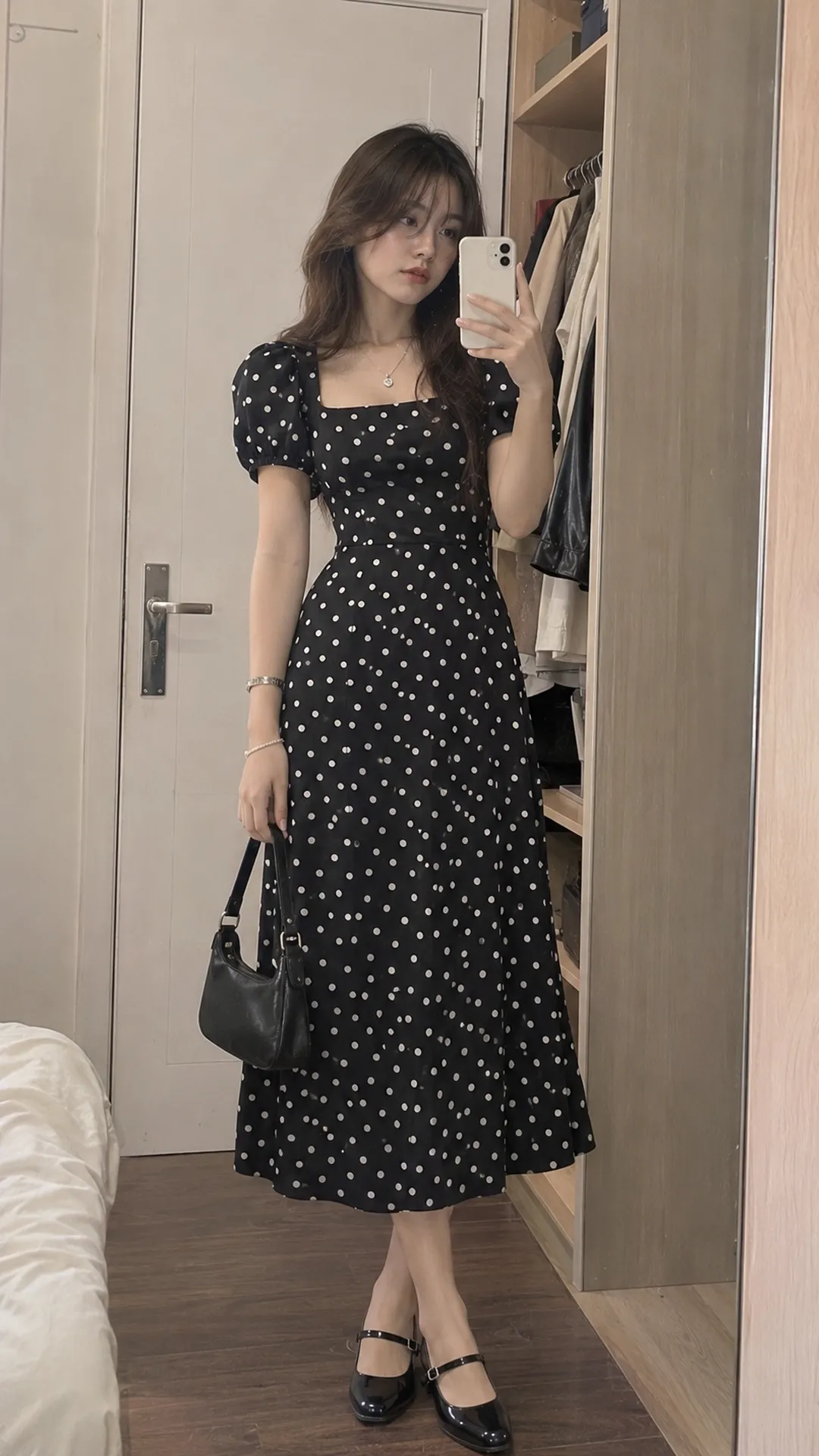
Read dot size, density, and contrast
Small, evenly spaced dots often create a subtle rhythm from a distance. Large dots read as separate shapes. Dense white dots on black can still look bold, while large tonal dots can appear softer.
Look at the full-length photo before the fabric close-up. The close-up shows print edges and color. The full view shows how dots fall across the bust, waist, sleeves, and skirt. A swatch can look different when the print covers a whole dress.
Consider the space between dots. Wide spacing shows more background and makes each dot distinct. Dense dots can make the waist tie, buttons, or seams less visible, especially when they share a color with the print.
Choose the area you want to highlight and compare two print densities in the same light. Keep your pose and distance from the camera consistent so you can judge the pattern itself.
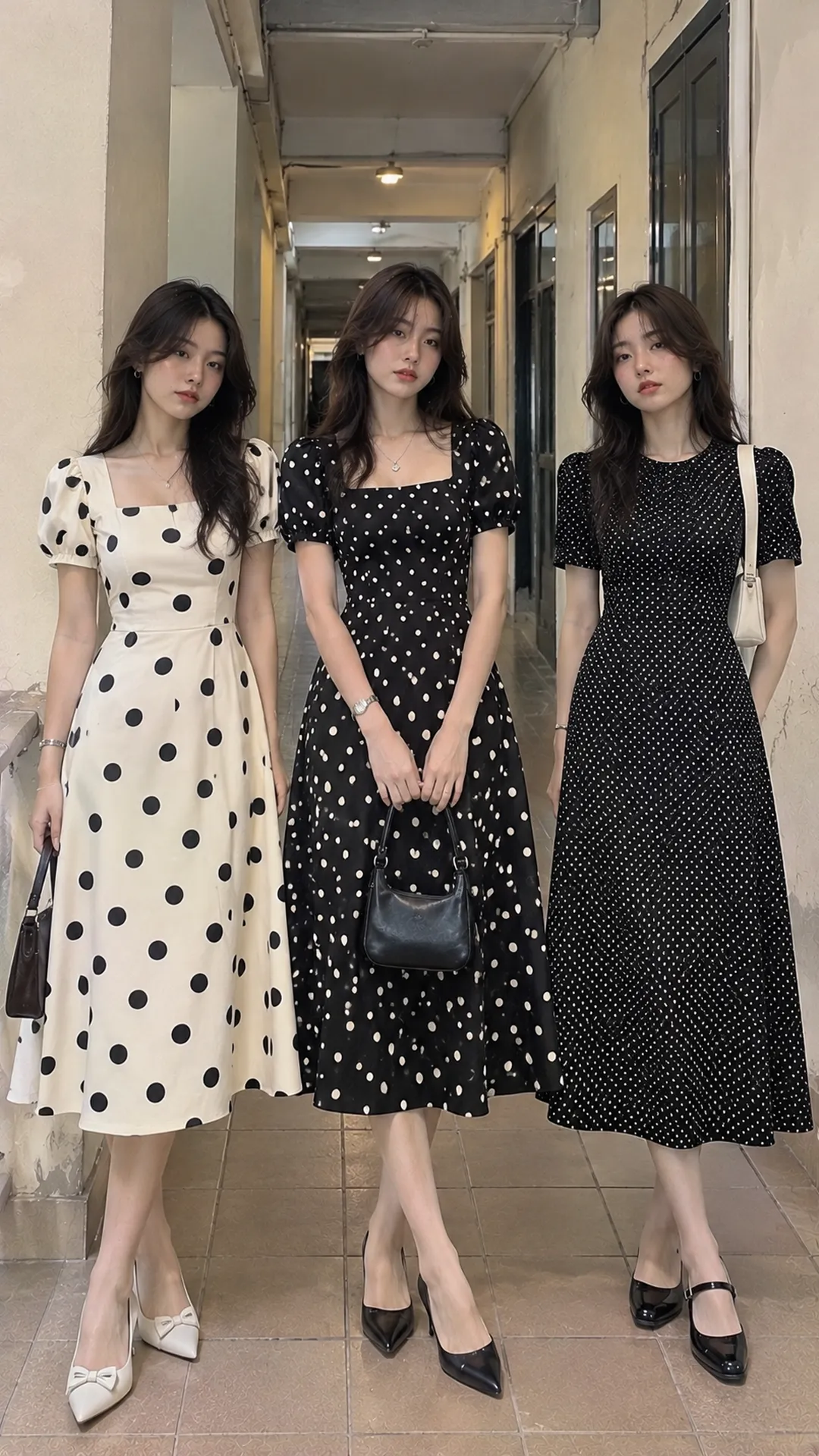
Choose the background color before the accessories
White dots on black create clear contrast and pair easily with black shoes or a light bag. For a softer look, try cream dots on brown or small dots on deep blue. Check the actual shade because cream, ivory, and bright white can look quite different.
If you want a red accent, choose where it will go: shoes, bag, or hair. Repeating it just once makes that detail easy to see.
With a light background, check the fabric and lining in bright light, while seated, and while walking. Small photos can hide undergarment lines. Check coverage directly, even with a dense print or lining.
Hold the dress next to your shoes and bag. A cream bag can look harmonious beside ivory and more distinct next to cool white dots. Decide whether the difference gives you the effect you want.
Three dress shapes and where they draw the eye
Defined waist with a flared skirt
This shape separates the bodice from the skirt. If the dress has a waist seam or tie, try it as designed before adding a belt. A wide belt can hide the seam, interrupt the print, and add bulk.
Choose flare for what you’ll do. A full skirt moves easily but still needs a check when sitting, stepping up, and carrying a bag. Check that the waist stays comfortable while seated.
Straight or gently fitted dress
On a straight dress, the print can run from shoulder to hem with few breaks. Highlight the neckline or shoes if you prefer to leave the waist unbelted. If you add a tie, check for bunching and see whether it changes the hem on either side.
With a gently fitted cut, see whether dots stretch out of shape at the bust or hips. Walk and sit to check seams, tension, and coverage. Try another cut if a larger size gives extra room in the wrong areas.
Button-front or wrap dress
A row of buttons draws a straight line through the pattern. With large contrasting buttons, simple jewelry works near the neckline. With a wrap, check the overlap when bending or sitting as well as standing.
For more on waist placement and length, see our guide to choosing women’s dress cuts. Notice whether the cut leaves the dots continuous, interrupts the print, or concentrates it in one area.
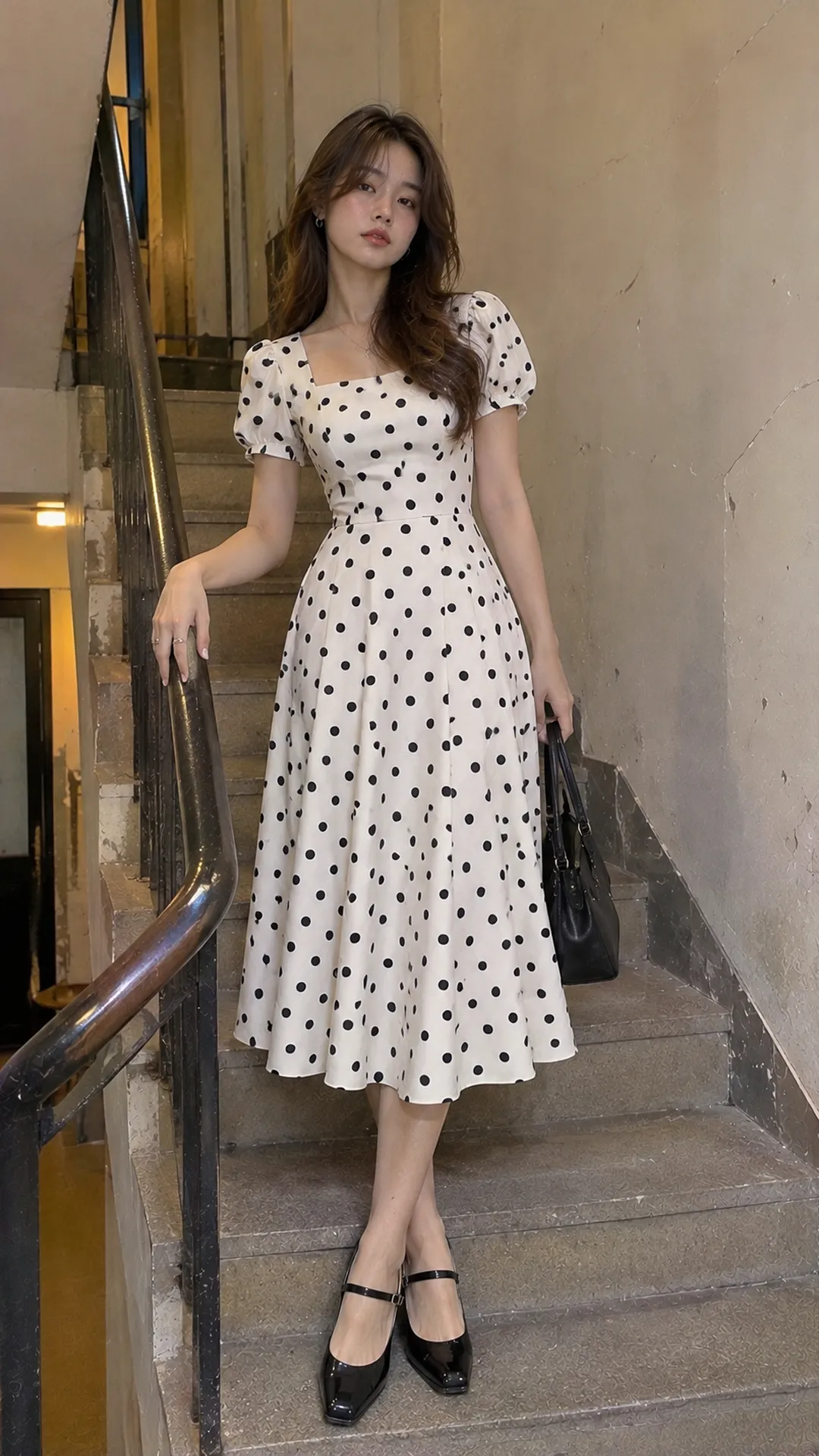
Check how much detail the neckline and sleeves add
A simple crew neck leaves attention on the dots. An open neckline gives a small necklace room near the face. Choose a chain length that keeps the pendant clear of the neckline and visible against the print.
Contrast trim, a bow, or ruffles already make the neck a focal point. Try small earrings with the neckline clear. If you wear long earrings, check from the side for contact with your hair, collar, or trim.
Puff sleeves, mid-length sleeves, and fitted sleeves add different amounts of fabric at the shoulder. Leave room under a jacket for puff sleeves so they don’t bunch at the underarms. Check where a mid-length sleeve lands relative to a watch or bracelet.
For a lightly vintage-inspired look, a defined waist and a trimmed neckline may be enough. Choose the hair bow, gloves, faux pearls, or shoes you actually want to wear and keep the outfit practical.
Change the look with shoes
Low shoes with a sleek toe keep the lower half light. Walk in them with a midi dress and check the gap under the hem. An ankle strap adds a break. Try a simpler shoe if you want a continuous line.
Block heels have more visual weight than slim soles. Choose a height you can manage throughout the day, then check the dress length with that pair.
Plain sneakers make a polka-dot dress feel more casual. Check a thick sole or color blocking against the skirt’s flare. See our guide to choosing shoes for an outfit to compare sole shape and hem placement.
Add a layer and keep the print visible
A short cardigan can end near the dress waist and leave the flare visible. A hip-length cardigan covers more of the print and changes where the outfit breaks. Try it open and buttoned.
A plain cardigan lets a dense dot print show clearly. Choose a shade from the background or the dots if you want to repeat a color. Our guide to styling women’s cardigans by length helps you pick the outer layer.
A blazer or jacket with defined shoulders gives the outfit structure. Check for sleeves rolling inside the jacket and its front panels pressing on the waist tie. If you’ll remove the jacket in warm weather, make sure the dress suits the setting on its own.
Three outfits for real occasions
For daytime coffee: Try a dark blue dress with small dots, cream flats, and a plain bag. If the neckline already has a bow, use small earrings. The print leads and the shoes give a light finish.
For a flexible workplace: Try a lightly fitted midi with small dots, a solid cardigan or blazer, and shoes that meet the dress code. Check coverage when seated and where the hem lands. Follow the actual workplace guidelines.
For dinner: Try a black dress with light dots, shoes you can walk in, and a small accent bag. If you prefer bold jewelry, simplify the hair accessories to keep the details distinct.
Use our women’s item guide to choose which piece to adjust next. Keep the dress in place and change the shoes, bag, or jacket one at a time to see what works.
Shop for and care for polka-dot fabric
When shopping online, ask for close-ups of the print at the seams and views from the front and back. Check the fibers, lining, closure, and garment measurements. If a photo is heavily brightened, look for one taken in ordinary light.
Choose a dress you can move in, wear for your plans, and pair with shoes you already own. Try a full outfit before deciding from an upper-body view alone.
Follow the dress’s washing and ironing instructions, especially if the lining, buttons, or trim use different materials. Choose temperatures for the fabric and construction. Store it so the shoulders and skirt keep their shape.