


How is suede made?
The Leather Working Group's Suede leathers section describes traditional suede as having a nap created on the flesh side of leather; many types use split leather. Nubuck is treated on the grain side to create a very fine nap. Both may look velvety, but their construction differs.
Suede's surface is not flat and glossy like many smooth-finished leathers. Changing nap direction changes reflected light. A dark area in a photo therefore does not establish a stain; inspect it directly under even lighting.
Not every product with suede in its sales name provides enough material information. Some descriptions refer only to a surface effect. Find the composition label or ask whether it is genuine leather, a similar-looking synthetic or a combination of materials.
Avoid identifying materials by burning, hard scratching or applying chemicals. These can damage the item without providing a clear answer. Product information, supplier details and professional assessment are more useful than an isolated identification trick.
Distinguish suede, nubuck and faux suede when buying
Genuine suede is leather with a napped surface. Nubuck is also leather but has a different surface treatment. Faux suede imitates the appearance; read its own composition and care directions rather than assuming it is machine-washable.
Close-ups help show texture but rarely prove material through a screen. Request label photos, descriptions of the outer surface and lining, and cleaning instructions. A product combining suede with textile, rubber or metal may need different treatment for each section.
For example, shoes with smooth-leather toes and suede uppers should not be treated as one surface. Keep a care product for one section from spreading to the other unless compatibility is confirmed.
Price alone cannot establish authenticity. Compare verifiable details: material, construction, finish, returns and care services. If the seller has not clarified something, treat it as missing information rather than filling the gap with assumptions.
Choose suede items for where you will use them
Shoes: consider your plans and sole construction
Before choosing suede shoes, consider walking distance, transport and possible rain. Do not choose solely by color; the surface needs specific care. Suitability also depends on shape, lining and sole rather than the upper material alone.
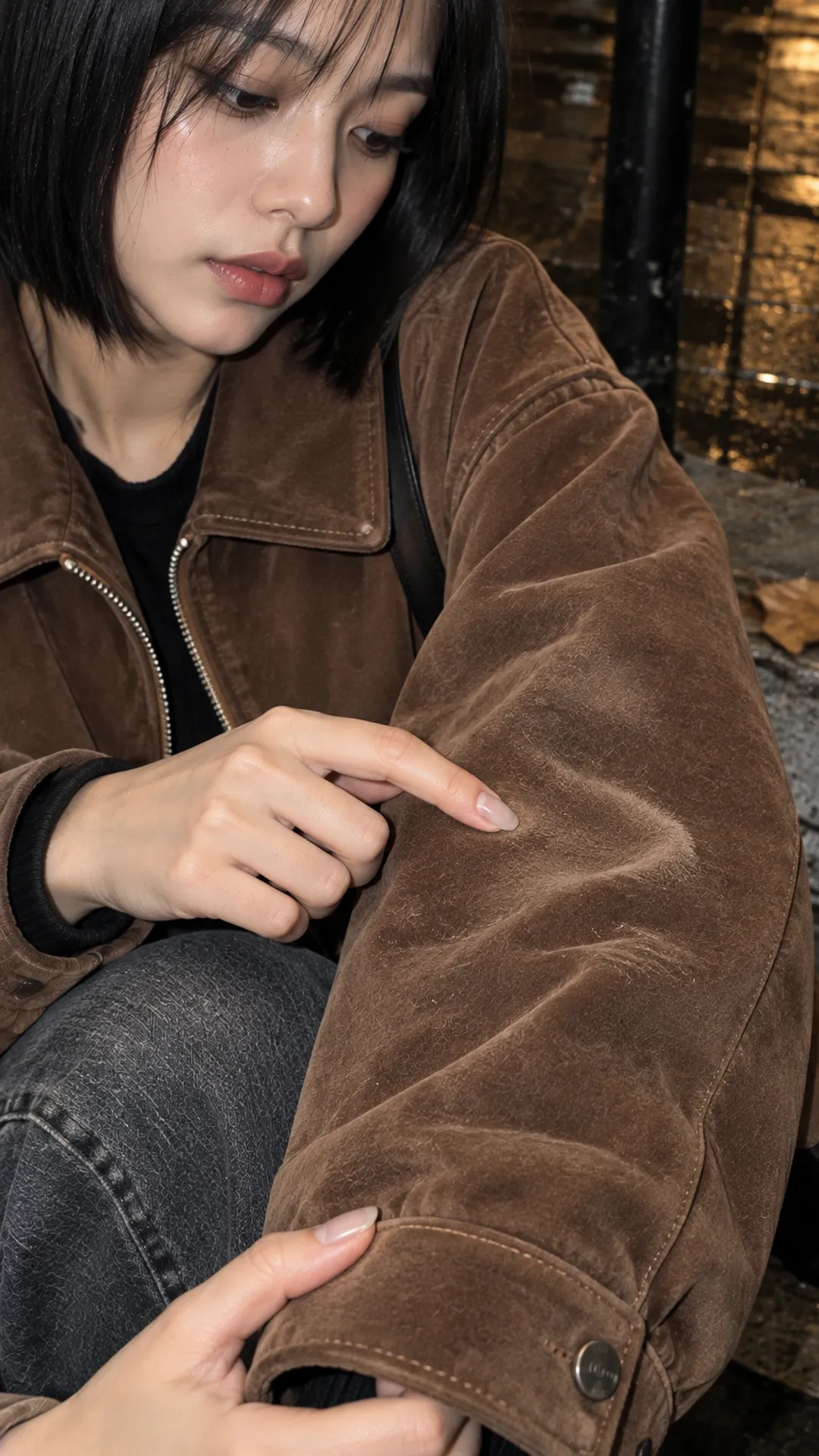
With loafers, check trouser hems to see how much suede remains visible. For a soft effect, brown or gray with plain trousers is an easy start. The guide to styling women's loafers helps relate toe shape, sole and trouser length.
Bags: examine handles and clothing contact areas
A bag's front gets attention, but handles and the body-facing side deserve inspection when buying. Check seams, edges, straps and opening mechanisms. Try it with your usual jacket or trousers to assess friction points.
If the bag is the main texture accent, keep top and trousers relatively smooth. A small bag is easier to trial than an entire suede outfit when you are unfamiliar with care. This is about habits, not a requirement to start with the cheapest item.
Tops and skirts: read fit alongside lining
For clothing, assess drape, thickness and lining as well as surface. Two garments called suede can feel very different. Sit, reach or walk while trying them to establish practicality for real plans.
Do not infer warmth or coolness from suede alone. For tops, layers and cut also matter. Consult the guide to choosing tops by fit for proportions first, then decide whether the suede surface suits your wardrobe.
Before cleaning: identify the material, stain and tools
Place the item in even light, photograph its initial condition and find its care label. Note the affected area, when you noticed it and the substance involved if known. This helps choose treatment or explain the issue to a cleaner instead of trying remedies in succession.
Prepare a clean work surface, a suitable cloth and tools labeled for suede. Do not reuse a brush carrying polish or oil from smooth-leather shoes. For cleaners, read material compatibility, concealed-area testing and drying conditions in the manufacturer's instructions.
Clarks' guidance recommends a dedicated suede/nubuck brush and cool, dry storage away from direct sunlight. This provides a starting point for the brand's shoes; for other items, prioritize their own instructions rather than copying the entire procedure.
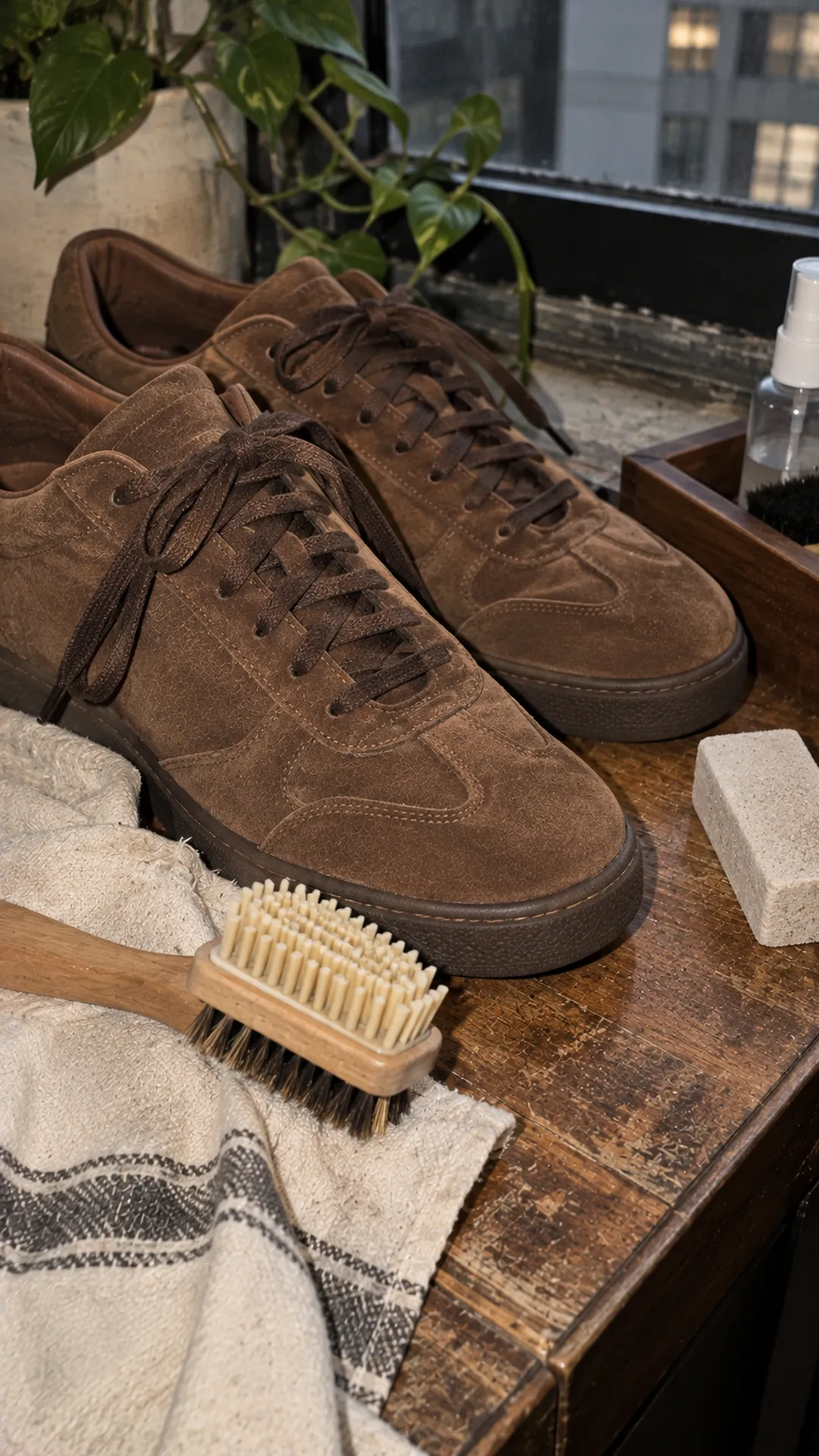
Observe a small test area after it dries as instructed, not only immediately after application. If it changes color, hardens or reacts unexpectedly, stop and ask the seller or a leather-care specialist.
Treat the situation rather than using one remedy for every stain
Dry dust or differently directed nap
First distinguish dust from shade changes caused by nap direction. Look at the same area from another angle. If brushing is needed, use suitable tools and gentle pressure as instructed. Pause between passes rather than continuously scrubbing one spot to make it identical to its neighbor.
If a mark remains after gentle treatment, reassess it: it may not be surface dust. Increasing force without identifying the stain makes it harder to distinguish the original problem from changes caused by your treatment.
Wet or rain-exposed items
Separate the item from things that may transfer color and check drying directions. Avoid rushing with a hot dryer or nearby heat unless the manufacturer permits it. Maintain shoe or bag shape as instructed and inspect the lining too.
Protective spray does not guarantee resistance to every kind of rain. Clarks notes that suede shoes are not automatically waterproof. For frequent wet conditions, choose specifications suited to that need or use a different item for those plans.
Oil, cosmetics or unidentified stains
Do not combine cleaners because results are not immediate. For oil, cosmetics or colored substances, note the substance if known and seek compatible treatment instructions. Avoid spreading treatment onto clean areas just to make the color temporarily uniform.
For a valuable item, a large stain or failed home treatment, consider specialist care early. Explain what you have already applied; without that information, the cleaner cannot readily assess the original condition.
Dark areas, matted nap or signs of mold
Darkening can have several causes, so a photo cannot provide an exact diagnosis. When the surface changes noticeably, do not assume polishing will solve it. Stop experimenting with chemicals and consult the manufacturer or an appropriate care provider.
If mold appears, separate the item from neighboring stored pieces and address storage conditions. Do not simply wipe the surface and return it to the same damp place. Mixed-material items or enclosed linings need inspection inside too.
Common suede-care misunderstandings
The first is treating all leather-care instructions as suitable for suede. Do not apply polish, creams or solutions for other surfaces without confirmation. Preserving nap is different from creating shine on smooth leather.
The second is using one method for shoes, bags and clothing. Linings, adhesives, hardware and treatment area sizes differ. Shoe-cleaning directions do not automatically suit a lined jacket or mixed-material bag.
The women's leather-care guide offers broader context. For suede, recheck the specific label and specialist directions rather than transferring smooth-leather steps to a napped surface.
The third is judging results before the material has stabilized after treatment. Follow the manufacturer's waiting times and inspection method. Before-and-after photos in the same light and angle are more useful than pictures with different exposures.
Style texture and store items for reuse
Suede provides a different visual surface from denim, flat-woven fabric or glossy leather. Start with one piece: suede loafers and straight trousers, a suede bag and plain top, or a suede jacket over a minimally detailed base. Matching every surface is unnecessary.
Try brown with cream, gray with black or a deep-colored piece against neutrals. Preserve the visible texture difference. If every section has strong patterns and accessories, the surface effect may disappear.
For shoes within the overall outfit, see the women's footwear guide to balance shape and hem length. Material is one factor; fit, mobility and the setting still need separate checks.
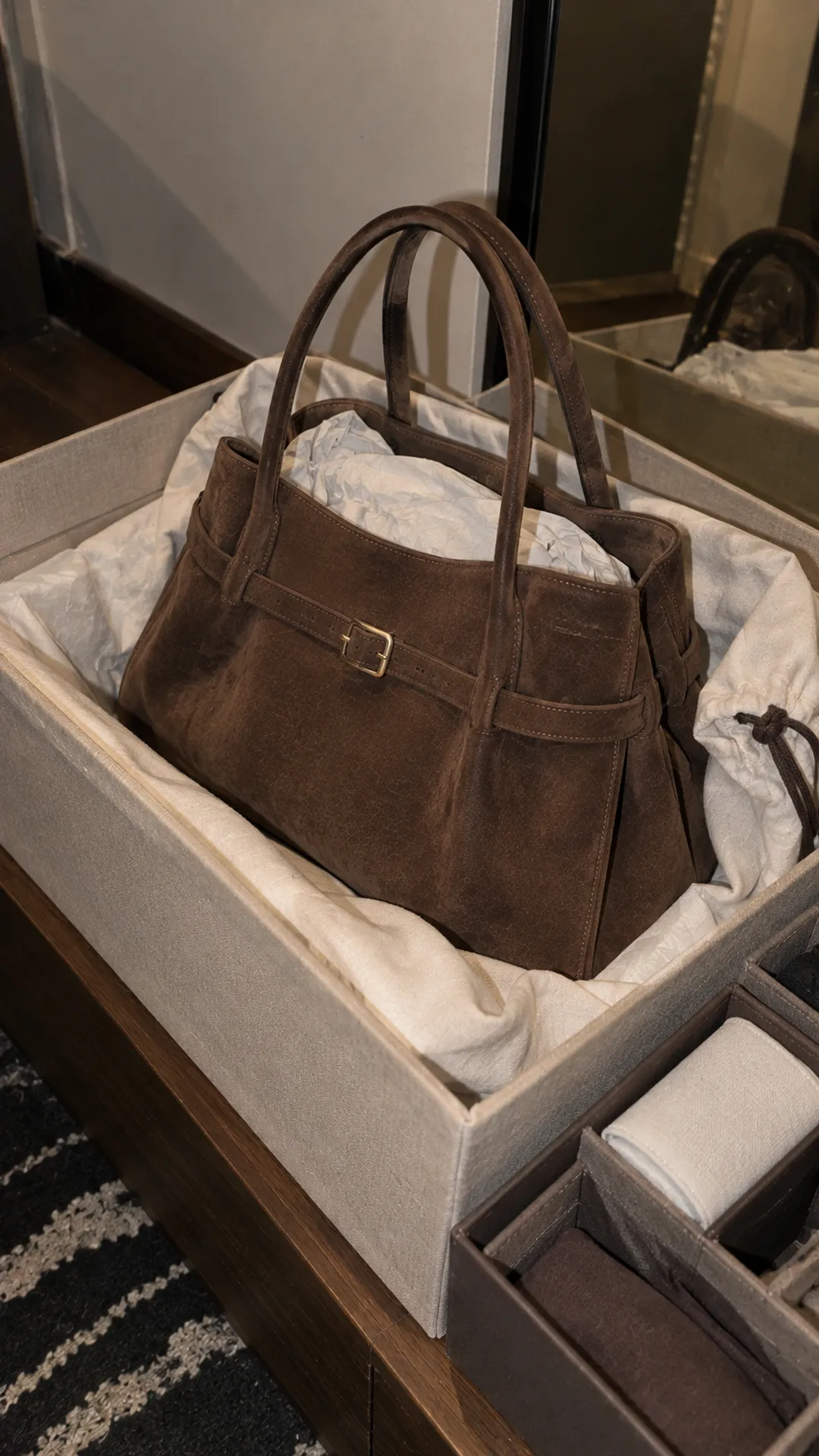
Before storing, ensure the item is dry as required and not compressed out of shape. Keep care instructions with product information so you need not guess next time. Suitable suede has a surface you enjoy, works in your real schedule and comes with a clear care process.