

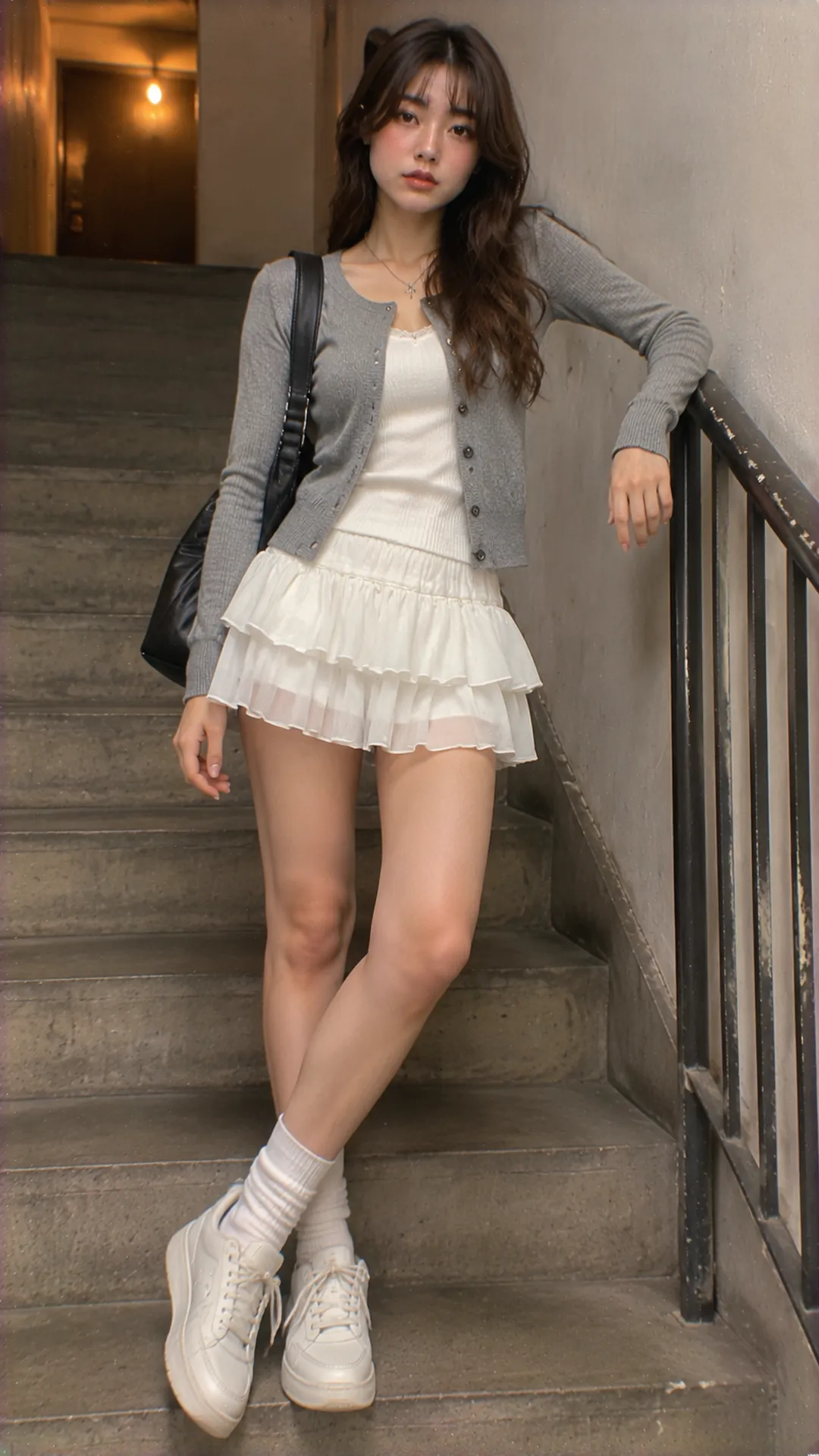
See where the tiers start and how much they flare
Lay the skirt flat, then try it on to see where the first tier starts. If the upper part fits closely and most of the ruffles are near the hem, the waist can work with a range of tops. If the gathers begin at the hips, the upper part of the skirt already has volume.
The spacing of the tiers changes how the skirt looks. Many narrow tiers create closely spaced horizontal lines, while a few broad tiers create larger blocks. Lace trim or color blocking adds detail at each seam as well as volume.
Check the skirt standing naturally and while walking. A tier that lies flat in a product photo may flare when worn. Soft fabrics and crisp fabrics also fall differently. Look at how the skirt moves to judge its visual weight.
Our women’s skirt and dress guide explains where pieces fit closely, how much they flare, and how length affects the shape. With a tiered skirt, also look at where each ruffle sits relative to the top’s hem and your accessories.
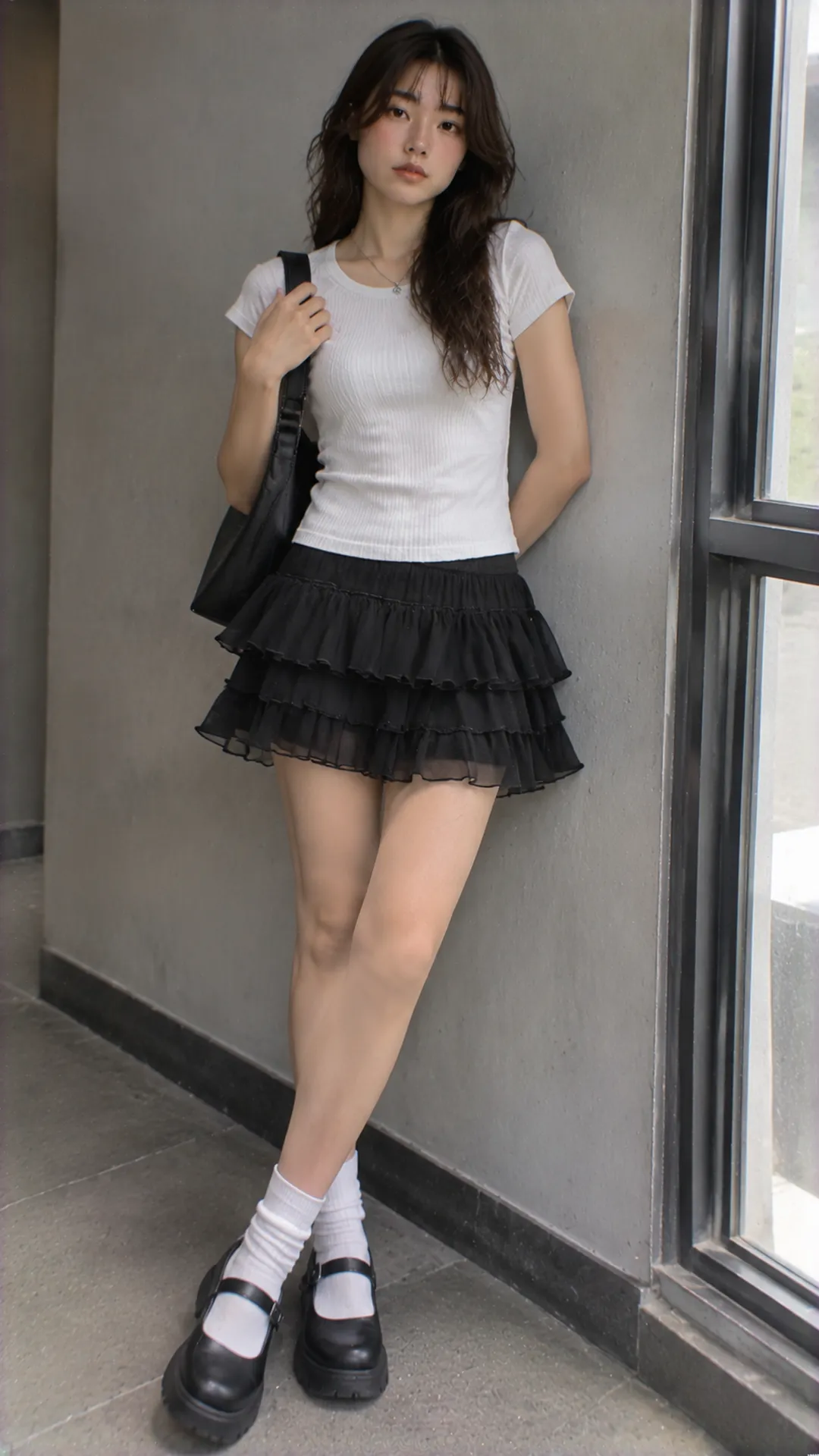
A plain tee for everyday wear
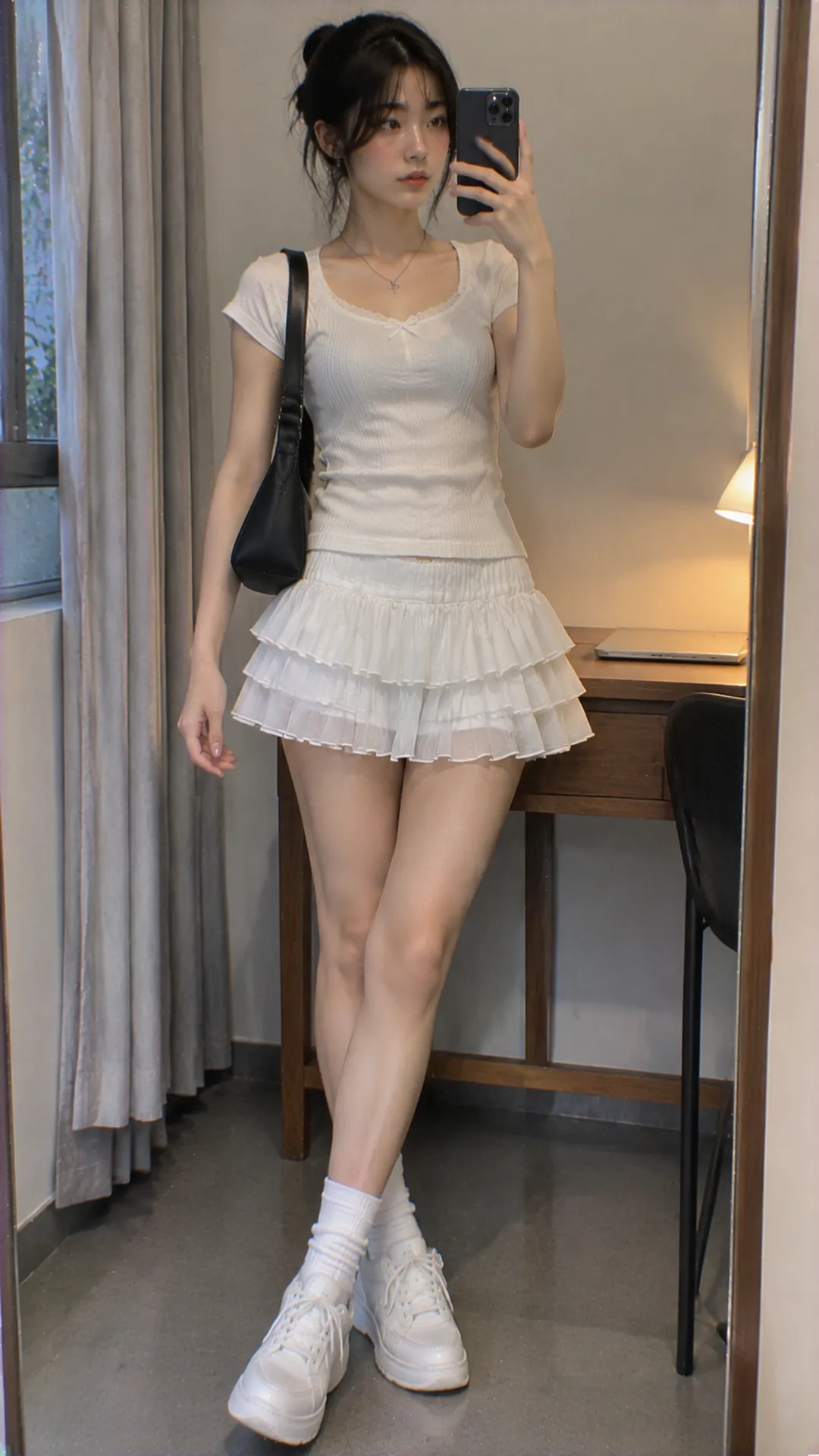
A white or cream tee and a dark tiered skirt make two clear blocks. Choose a sleeve and body width you can wear comfortably. An oversized tee can work if you like how much of the first tier it covers and the fabric around the waist sits smoothly.
For a full tuck, tuck the hem evenly and ease out a little fabric to move comfortably. Look at the hips for bunching under the waistband. A shorter or thinner tee may be easier to wear than a thick one with a full tuck.
If you leave it out, a hem near the waistband or just over the top of the skirt usually keeps the tiers visible. A longer top gives a relaxed look. Check in a full-length mirror to see how many tiers still show. You can keep your waist covered if you prefer.
A large graphic draws the eye to the chest. If you like that look, try a solid skirt and simple accessories first. A graphic that repeats a color from the skirt can tie the outfit together.
Fitted and sleeveless tops to show off the tiers
A slim bodice contrasts with a voluminous skirt. Choose a crew, square, or V-neck for the coverage and shape you like. Check that the fabric doesn’t pull at the underarms or roll at the hem when you sit. A fitted top should still leave room to move.
A plain black top creates clear contrast with a white tiered skirt. With a black skirt, a matching top gives the outfit a continuous line and highlights the texture of the ruffles. To add color, try a solid before adding a print so you can see what the color changes.
A sleeveless top can reduce bulk in suitable weather. Check the straps and armholes with whatever you plan to wear underneath. Reach, sit, and put on a bag to see whether it stays comfortable in motion.
With a skirt trimmed in lace and bows, you can repeat one small detail at the neckline. Look at where attention goes overall. If the neck, sleeves, waist, and hem all have big ruffles, decide whether that’s the effect you want.
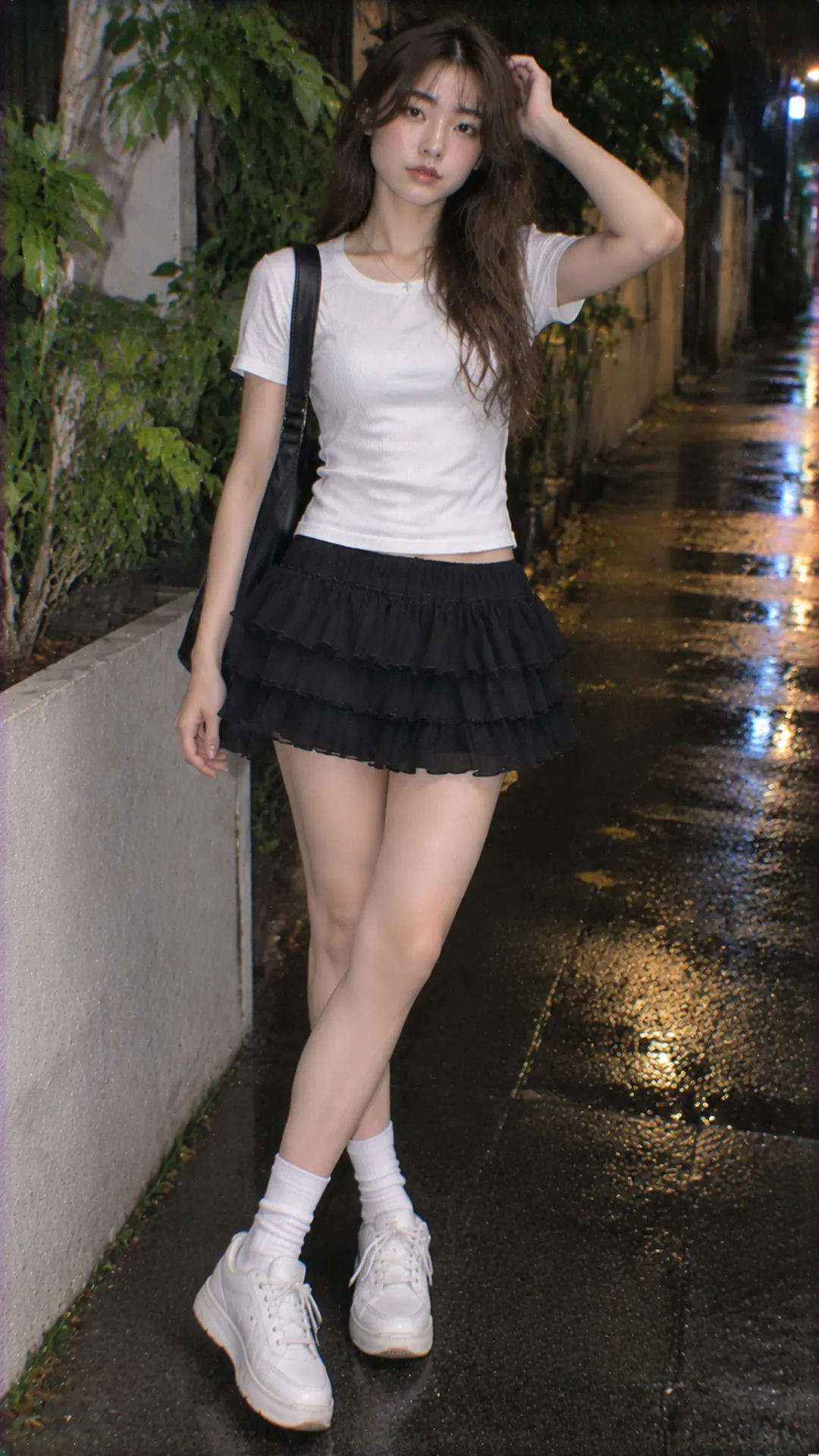
Button-ups and blouses: check the hem first
A simple button-up adds straight lines alongside the curved tiers. Try a light shirt, dark skirt, and simple shoes so you can see the shape clearly. If the collar stands out, small earrings can be enough for the first try-on.
A full tuck with a loose shirt works best when the waistband has room and the fabric is thin enough. A partial tuck can create a diagonal line. Check that the hem doesn’t land on a ruffle and bunch there. Sit down and stand up to see whether the tuck stays where you put it.
A puff-sleeve blouse adds volume above and can work with tiers if you like a fuller silhouette. A slim bodice or a color close to the skirt can make the combination clearer. Simplify another detail, such as a bow on the bag, to give the sleeves and tiers room.
If you’re starting with a top you own, see our item-by-item styling guide. Keep the top and try skirts with different amounts of flare to see which works with the puff sleeves.
Short cardigans and jackets keep the tiers visible
A cardigan that ends near the waistband makes a clear break before the tiers. If you button it up as a top, check the buttons as you move. If you wear it open, choose a base layer that keeps the top, waistband, and first tier from bunching together.
A dark cardigan frames the upper half against a light skirt. If the colors are close, use the difference between the knit stitches and the skirt’s surface for texture. Add another color only if you want one.
A longer jacket can work if some tiers show below the hem. Try it both open and closed. The proportions can shift when you fasten it for warmth.
Our guide to styling women’s cardigans covers hems, sleeves, and buttons. With a tiered skirt, check room to move and where the cardigan ends before choosing accessories.
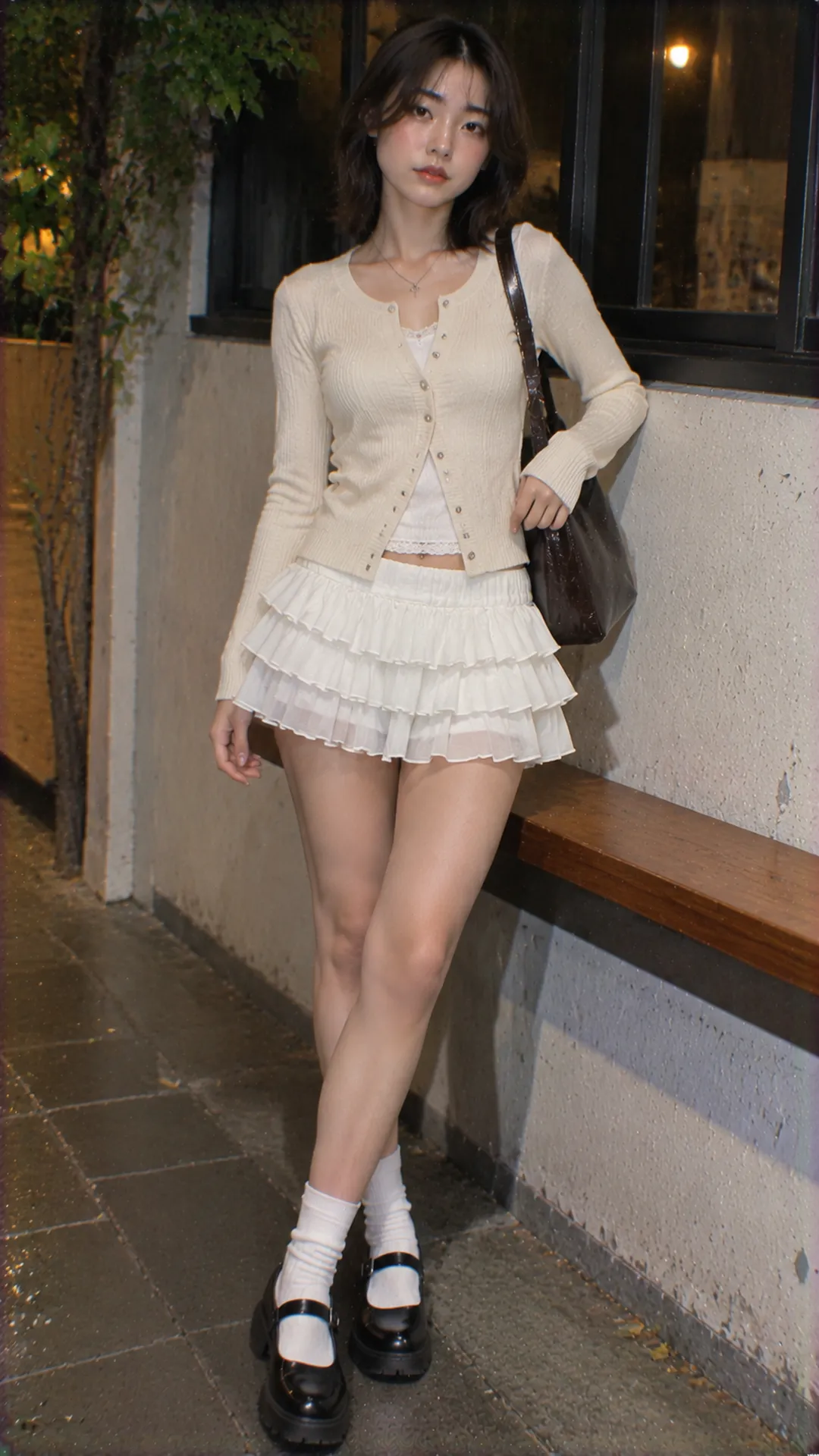
Give shoes, socks, and bags distinct roles
Simple sneakers give a tee and skirt a casual feel. Loafers with a button-up give the outfit a different line. Boots can add weight below the skirt. Try different shaft heights with the socks you plan to wear, since each visible edge changes the proportions.
Chunky soles can work with a tiered skirt if you like the visual weight and can walk comfortably. Look at the shoes, socks, skirt, and top together to see how many focal points they create.
With patterned socks, try a solid skirt and simple top first. If the skirt already has lace, contrast trim, and bows, solid socks keep the lower half quieter. Add detail after looking at the whole outfit.
A bag worn at hip height can rest on the first tier. Adjust the strap if the design allows, or carry it differently so it doesn’t flatten the ruffle. A large bag can work for class. Treat it as part of the silhouette when you try on the outfit.
Our guide to statement accessories for women helps you choose where to draw the eye. A short tiered skirt already has movement at the hem, so simpler details at the neck or waist can keep the outfit balanced.
Three ways to style the same skirt
Simple for everyday wear: Try a black tiered skirt, white tee, sneakers, and a plain bag. Keep the sleeves fairly slim and adjust the hem so the first tier shows clearly. This makes it easier to see how the skirt fits.
Soft with closely related colors: Try a cream skirt, a simple cream or pale pink top, and a short cardigan if needed. Add a different finish in the buttons or shoes to distinguish the pieces. If every piece has ruffles, try removing one before changing the palette.
Dark with texture: Try a black tiered skirt, slim black top, and boots you can move in. The shape of the tiers becomes the main detail. A small metal accent can add a spot of brightness if you want one.
Use these combinations as starting points. Substitute clothes you own with a similar shape. Try them first to see whether you actually need another color or a different cut.
Check the outfit as you sit, walk, and carry things
Try a short skirt in the positions you’ll use during the day. Sit down, step onto a low stair, and bend as you normally would to check coverage. Check the lining or built-in shorts if the skirt has them.
If a tier rolls or catches, see whether it’s touching the bag, a jacket zipper, or fabric tucked into the waistband. If the waistband twists, check the fit before adding a pin or belt. Choose a fit that stays put without constant adjustment.
If the outfit feels busy, change one thing at a time. Try a plain top, a slimmer sleeve, or a different bag. Keep the combinations that let the tiers show clearly while you move comfortably.
Before buying another top, record the hem length and width you like in the outfit you’ve tried. Compare measurements with a top that fits you. Try the new piece on if you can, since drape and sleeves can change how two tops of the same length look.