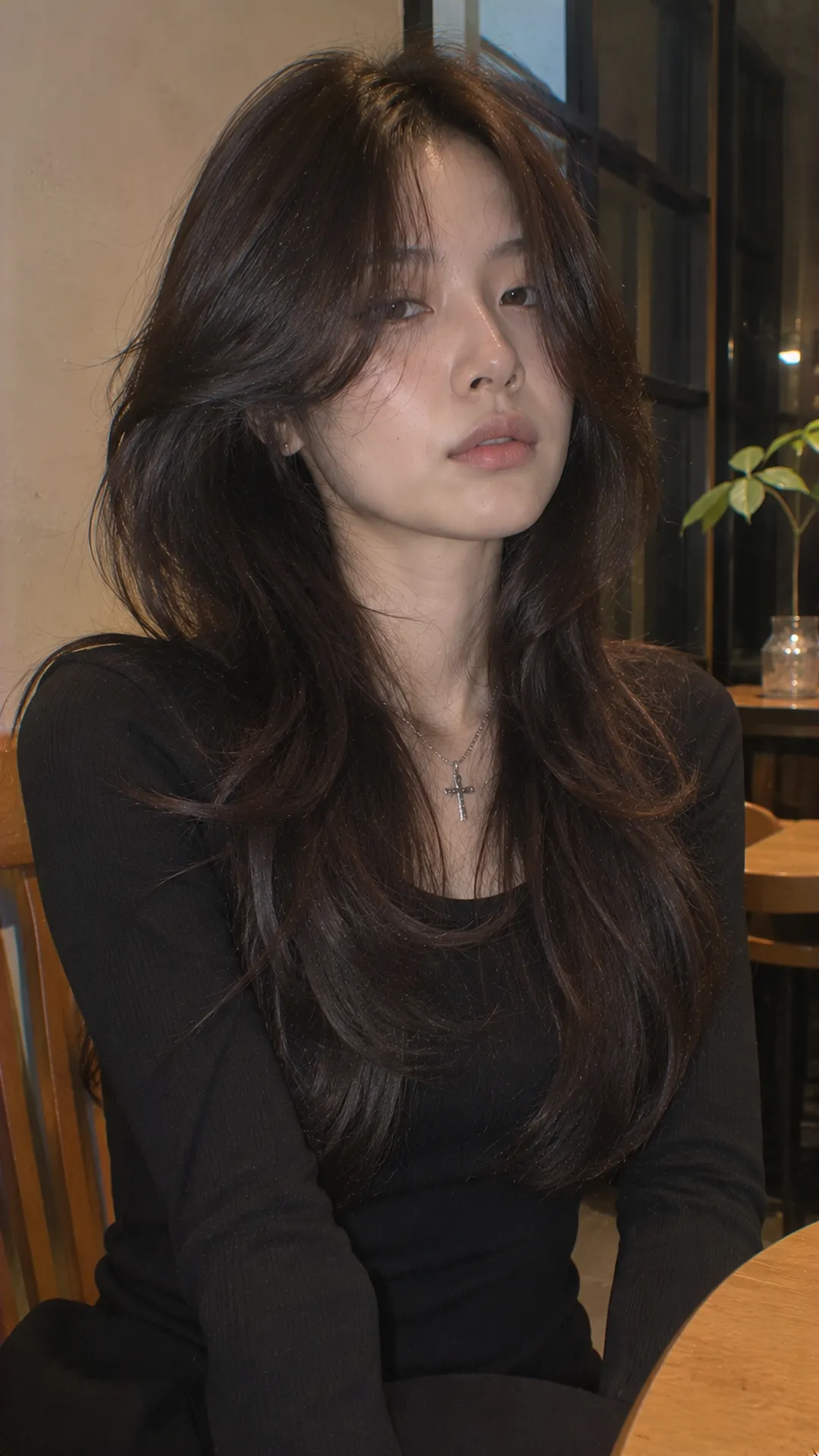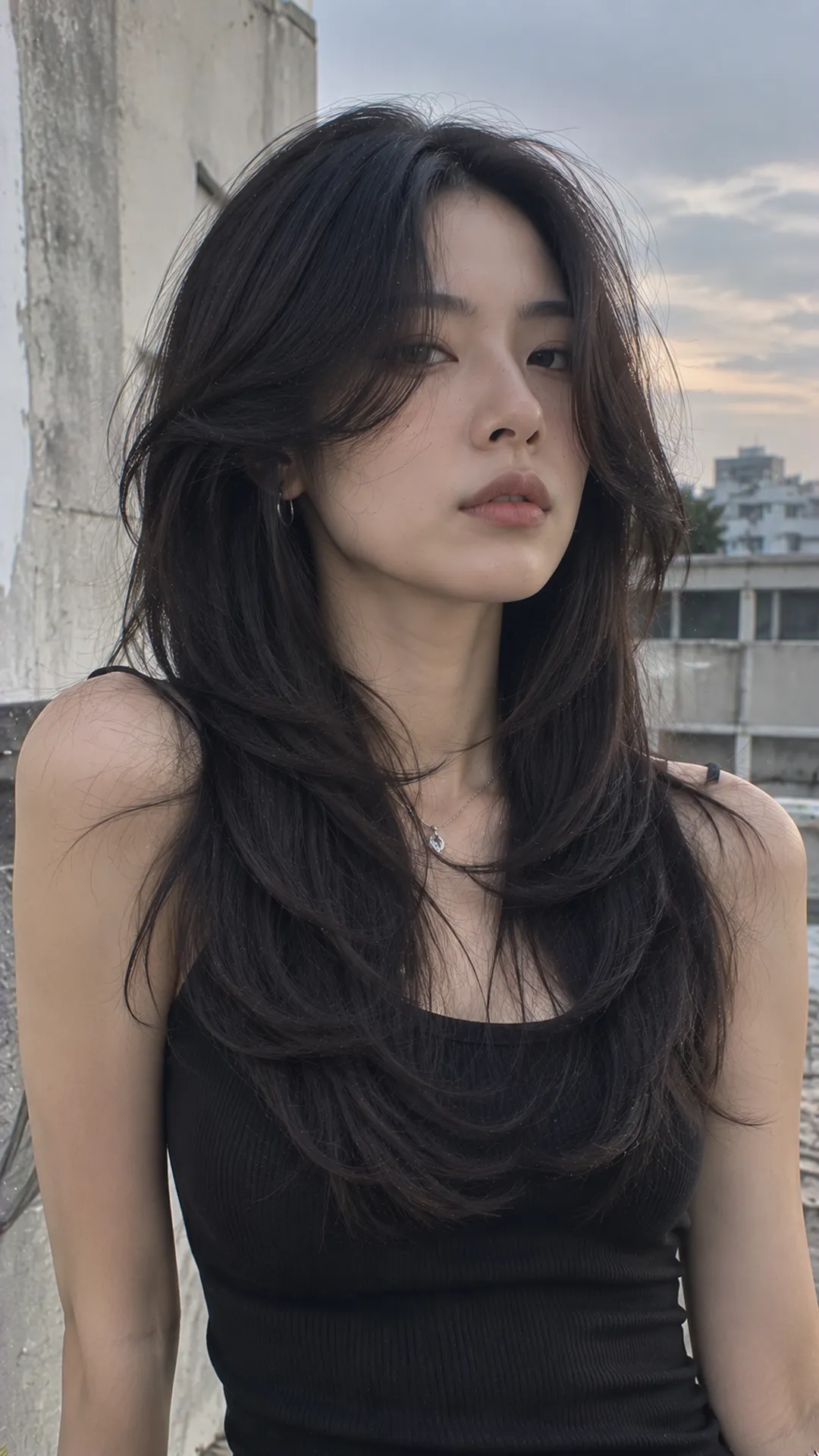
Read the layers rather than only volume
The cut suggests two lengths: lighter front and upper sections with length underneath. Short layers can begin near the chin or lower. Agree placement with your stylist from actual hair and desired movement rather than one universal cutting point.
Ordinary layers also vary in length, but butterfly effects emphasize outward face framing. Curtain bangs split to the sides and can accompany the cut, but bangs alone do not create the full structure. Specify fringe-only versus whole-length changes.
In the butterfly styling guide, movement and outward ends are emphasized. Post-styling volume is not automatic from cutting; brushes, sectioning and drying direction contribute.
Long hair: preserve ends or emphasize layers?
Well-below-shoulder hair leaves room for front-back length differences. To lighten a heavy outline while retaining long loose hair, preserve a full perimeter and emphasize front movement. Length remains visible when tucked back.
For obvious layers even over plain tops, ask to see the planned gap from shortest layer to ends. Larger differences increase contrast but make short sections harder to gather into low buns. Side and back views reveal continuity beyond front images.
If tying daily, gather your hair before cutting and identify strands that must remain in the tie versus those allowed around the face. This gives concrete guidance instead of asking for flowing layers without shortness.
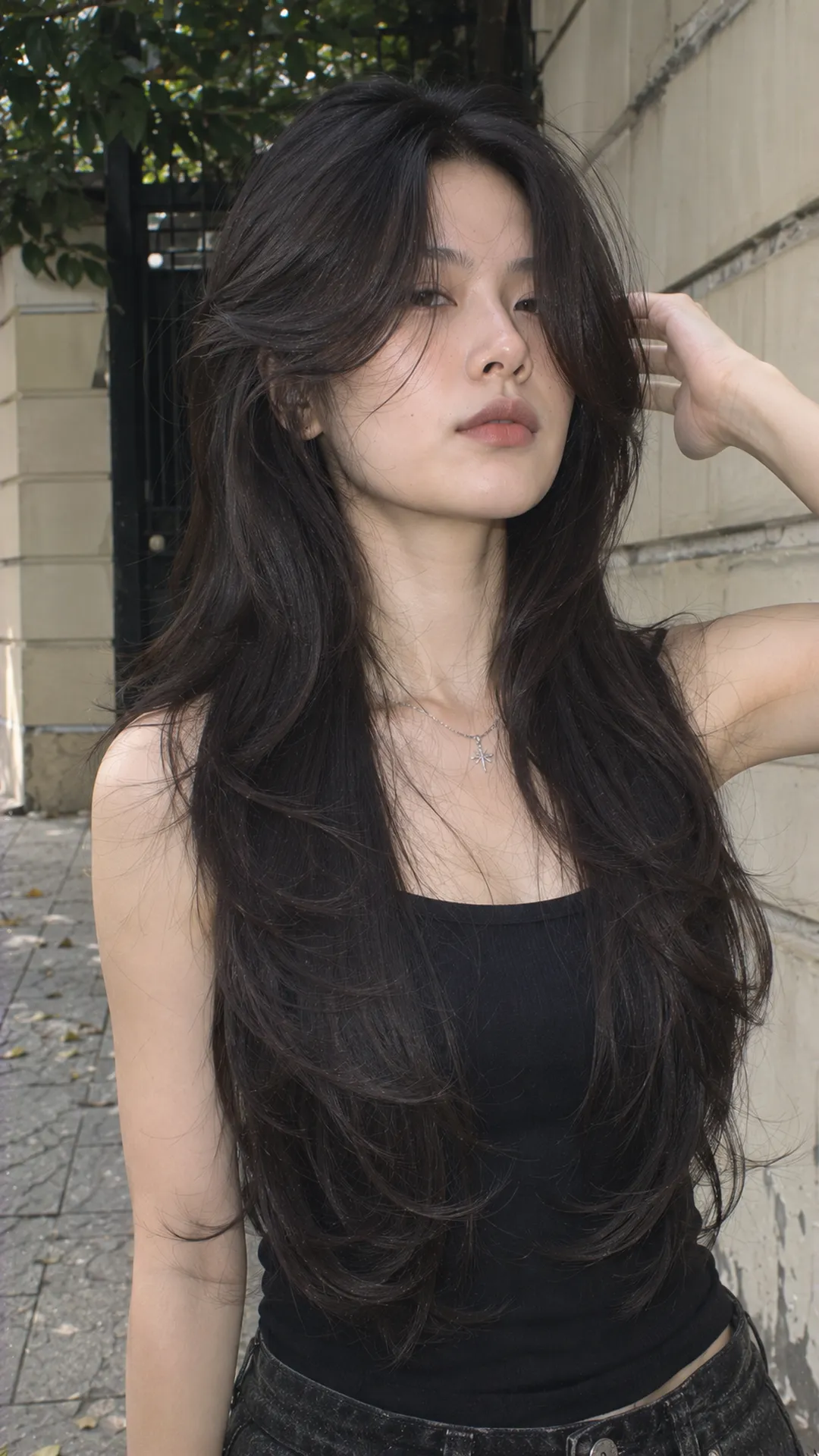
Shoulder-length and shorter butterfly versions
Less space for layers changes the effect from long-hair references. Shoulder contact can redirect ends when turning or wearing high collars. Treat this as a separately designed version rather than a long cut simply shortened at the bottom.
Short butterfly references may show front-layered bobs, collarbone lobs or short voluminous crowns. Describe final length and perimeter more precisely than names. Full ends, light ends and a neat nape are different choices.
When growing out a bob, preserve needed length. New short layers may delay tying. For softness near the face alone, adjusting a few front strands changes less than layering the whole head immediately.
Density determines suitable thinning
Fine hair or sparse ends
Ask how much perimeter fullness remains after layering. More layers do not automatically look thicker: the upper area may lift while ends become separated wisps. State a full straight-hair appearance as a consultation goal.
Bring a clear photo of your hair on an ordinary day. Distinguish cut concerns from missing styling. Extension-enhanced references cannot promise equivalent volume from cutting alone.
Thick, wavy or curly hair
Identify the heavy area: ears, nape or all ends. Targeted lightening differs from uniform thinning. For waves and curls, ask the stylist to inspect natural dry hair for shrinkage and layer stacking.
Curls need not be forced into a straight blowout reference. Keep natural movement and change framing only if desired. Share chemical-treatment history before combining cutting, curling or coloring in one appointment.
Turn reference photos into a clear brief
Choose a few images with one aim rather than several unrelated styles. A front, perimeter and length reference can suffice. Filtering references through a moodboard records what you like in each.
- Minimum length: indicate physically on your hair rather than only asking for a little off.
- Front layers: establish chin-level, below-chin or lower placement after drying.
- Tying needs: specify low buns, high ponytails or fully clipped hair.
- Habits: explain daily blow-drying versus mostly air-drying.
- What you do not want: for example, thin ends, short bangs or many required tools.
A useful brief is: 'Keep below-shoulder length, a gently opening front, full ends and most hair able to tie low. Please show the shortest layer before cutting.' This supports practical discussion despite differing salon terminology.
Create movement at home section by section
Start with the simplest salon-taught method for your hair. Every section need not dry alike: front layers may turn outward while the back only needs neat placement. For erratic ends, divide into manageable sections rather than lift everything onto one brush.
Follow tool and heat-protection instructions and avoid prolonged heat on one point. Ask which actions the cut truly needs and practice one side at the salon if possible. Watching differs from controlling brush direction yourself.
On busy days, arrange only the front and tie longer hair low. Small clips manage short pieces without tight pulling. For air-drying preferences, evaluate that state before many hold-product purchases.
Photograph several home-styling attempts to locate repeat difficulties: one side not opening, nape bulk or fringe in the eyes. Specific observations help the next adjustment more than more layers merely because hair differs from a reference.
Hair's role alongside the outfit
Butterfly cuts belong to no single aesthetic. Open necks reveal framing; high collars provide a background for ends. With side volume, reduce earring size or tuck one side so jewelry remains visible.
For dark wardrobes, separate cut from dye. The dark aesthetic hair-color guide concerns color and maintenance; new dye is unnecessary for compatible butterfly layers. Parting, lift and tucking also alter the look.
For a clearer Goth direction, women's Goth hairstyles separates hair's role from makeup and clothing. The cut can support a look without defining the wearer's aesthetic by name.
For glasses, clips and earrings beside new framing, the expressive women's fashion accessories guide balances face-area accents. Add one at a time instead of replacing every accessory after a cut.
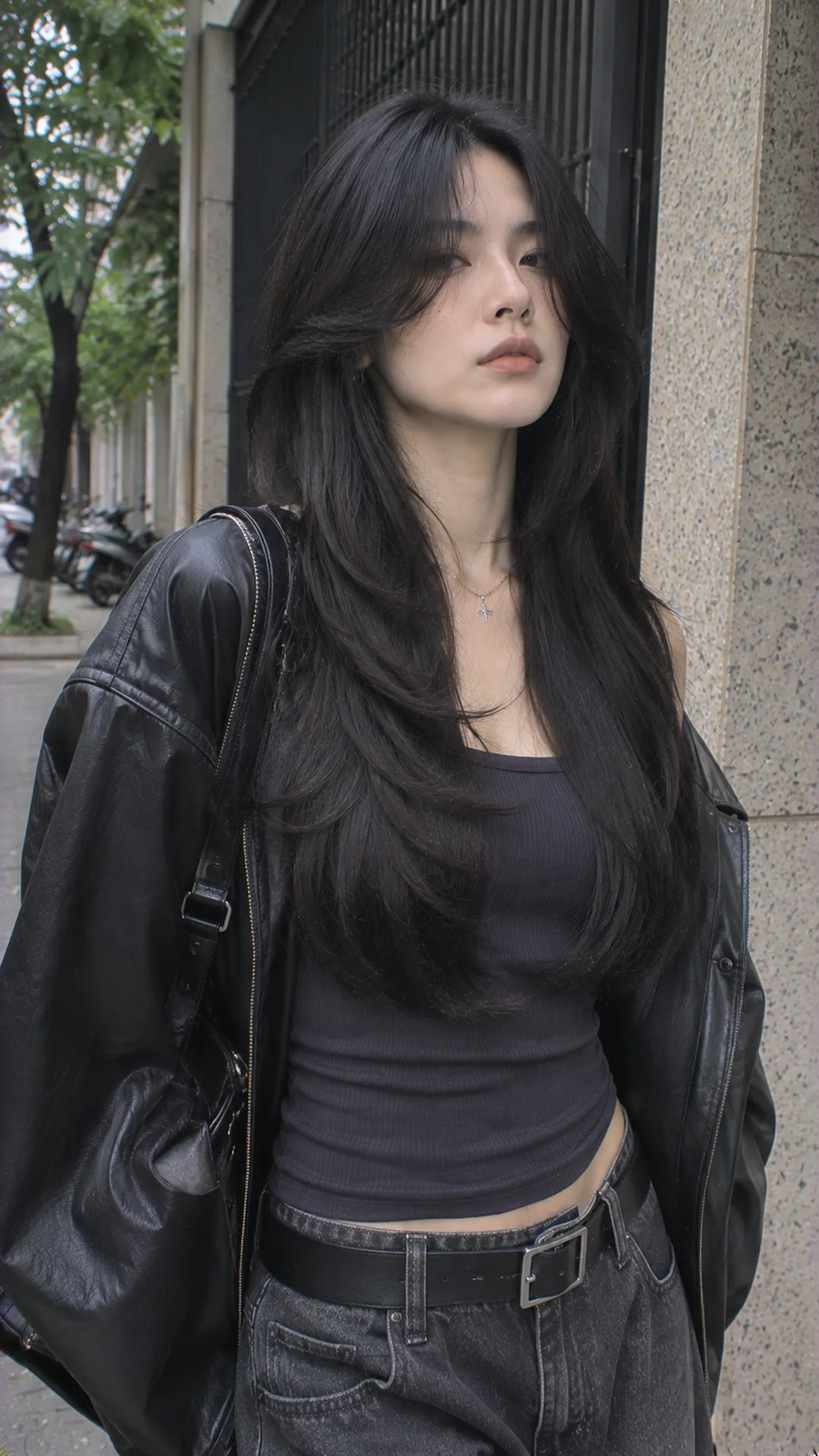
Maintain shape and identify adjustment needs
Before leaving, check your usual part and ear tucking. Ask how to manage persistent projecting strands on site rather than self-cut at home.
Adjust according to growth and the precision you want. Consult when front layers repeatedly fall wrongly or ends lose your preferred perimeter. The whole length need not shorten if only fringe and sides need work.
For frequent helmet travel, prioritize quick arrival restyling. Carry a small clip, reset the part and let hair settle before more product. The goal is a cut compatible with life even without fresh-salon volume.