

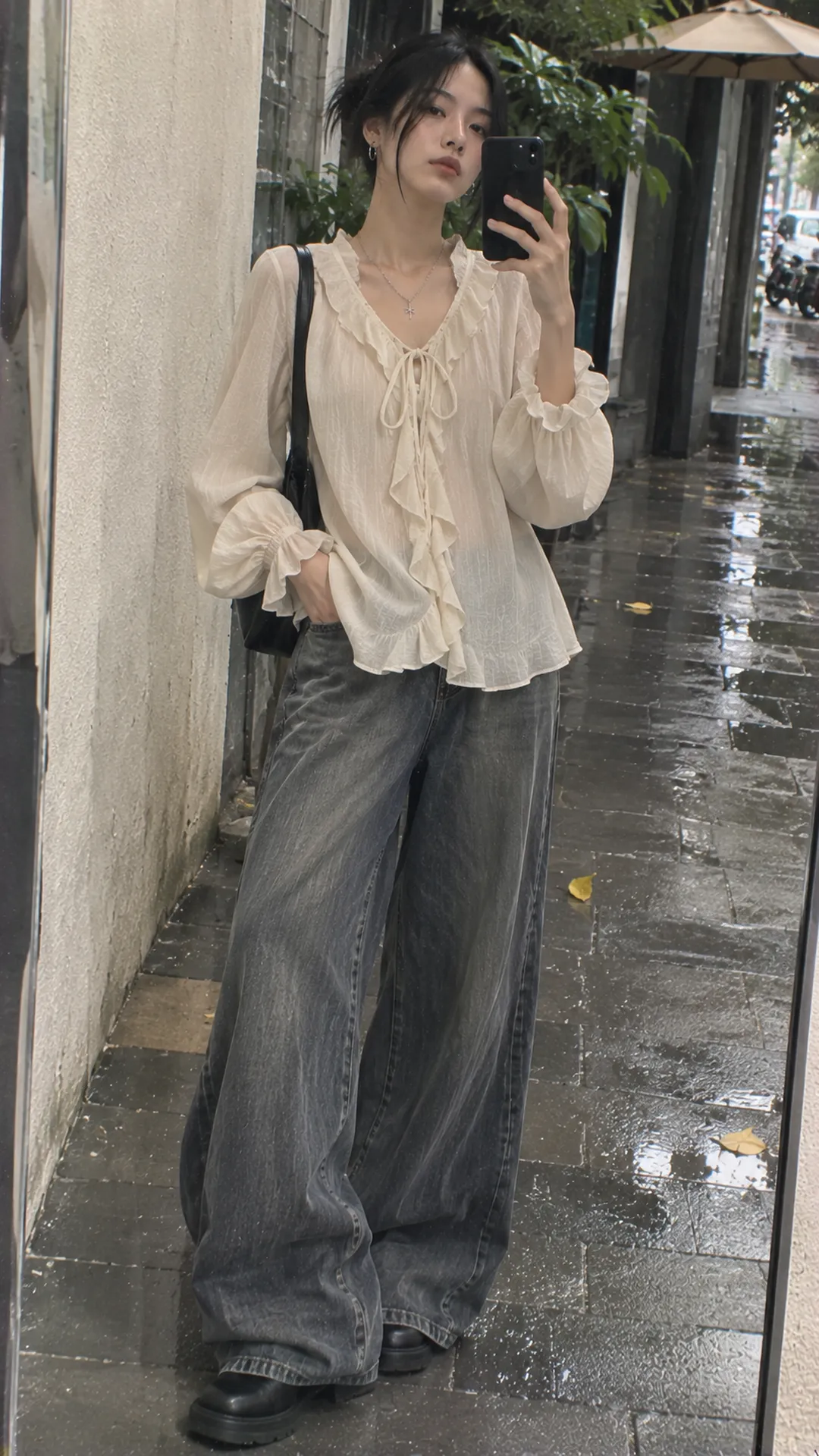
Why do blouses and shirts overlap?
Oxford Learner's Dictionaries defines a blouse as a shirt-like garment for women. This overlap means collars and buttons cannot form an absolute boundary between shirts and blouses.
Blouse often suggests softness, drape, gathering or altered necklines and sleeves. Yet neat buttoned blouses and soft-fabric shirts both exist. Names aid searching; construction determines suitability.
Consider structured versus draping, minimal versus detailed, and ease of untucked versus tucked wear. If unsure where to start, the Women's Tops Item Guide follows fit and layering before purchase.
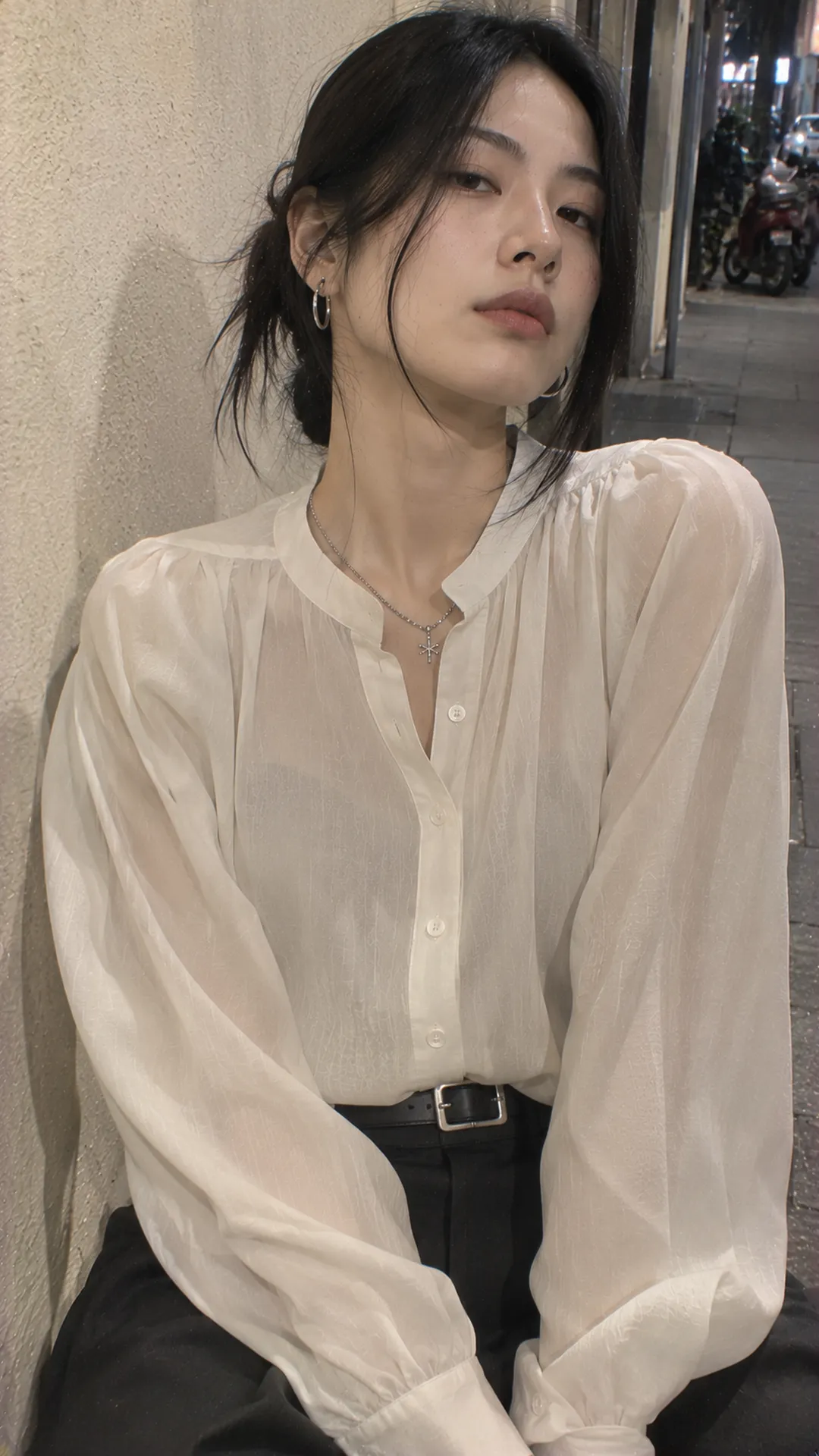
Compare visible details rather than labels
| Detail | Common blouse direction | Useful check |
|---|---|---|
| Fit | Soft, draping or gathered volume | Inspect standing and seated |
| Neckline | Round, V-shaped, tied or modified | Bend to assess coverage |
| Sleeves | Simple, puffed, flared or gathered | Reach forward and try outerwear |
| Opening | Buttons or pullover | Check opening and dressing ease |
| Surface | Plain, partly sheer, gathered or patterned | Inspect actual light |
These are tendencies, not requirements. An in-between design needs no absolute classification before wear. Ask whether it gives that day's polish, comfort and coverage.
This avoids purchases driven by appealing labels. A large bow can be practical daily if you enjoy it; a plain top can be difficult through a wide neckline or unsuitable cloth. Utility belongs to the complete design.
Choose the accent you want
Simple necklines for repeat styling
A plain top with moderate neckline leaves combination room with jeans, tailored trousers or skirts and existing accessories. Prioritize shoulders, length and drape: with few details, these define the outfit.
Puff sleeves: give them space
Puff sleeves add upper volume without requiring a particular body type. Choose your preferred fullness and balance below. If the top leads, try neat lower lines rather than detailed collar, sleeves and waist all competing.
Reach up, rest arms on a table and carry a bag. Cuffs should not require repeated fixing or sleeves catch straps. If frequently wearing jackets, test together because volume will not fit every outer sleeve.
Bow necklines: choose scale and position
A small neck bow differs from long tails covering the front. Check work passes or necklaces for interference. Omitting necklaces and using small earrings can reveal the collar instead of adding every jewelry type.
Wrap fronts: check movement
Crossed panels can define your preferred waist but need seated and bending tests. Check ties, buttons or hooks for security and convenience. Repeatedly pulling panels closed calls for another size or design beyond attractive standing poses.
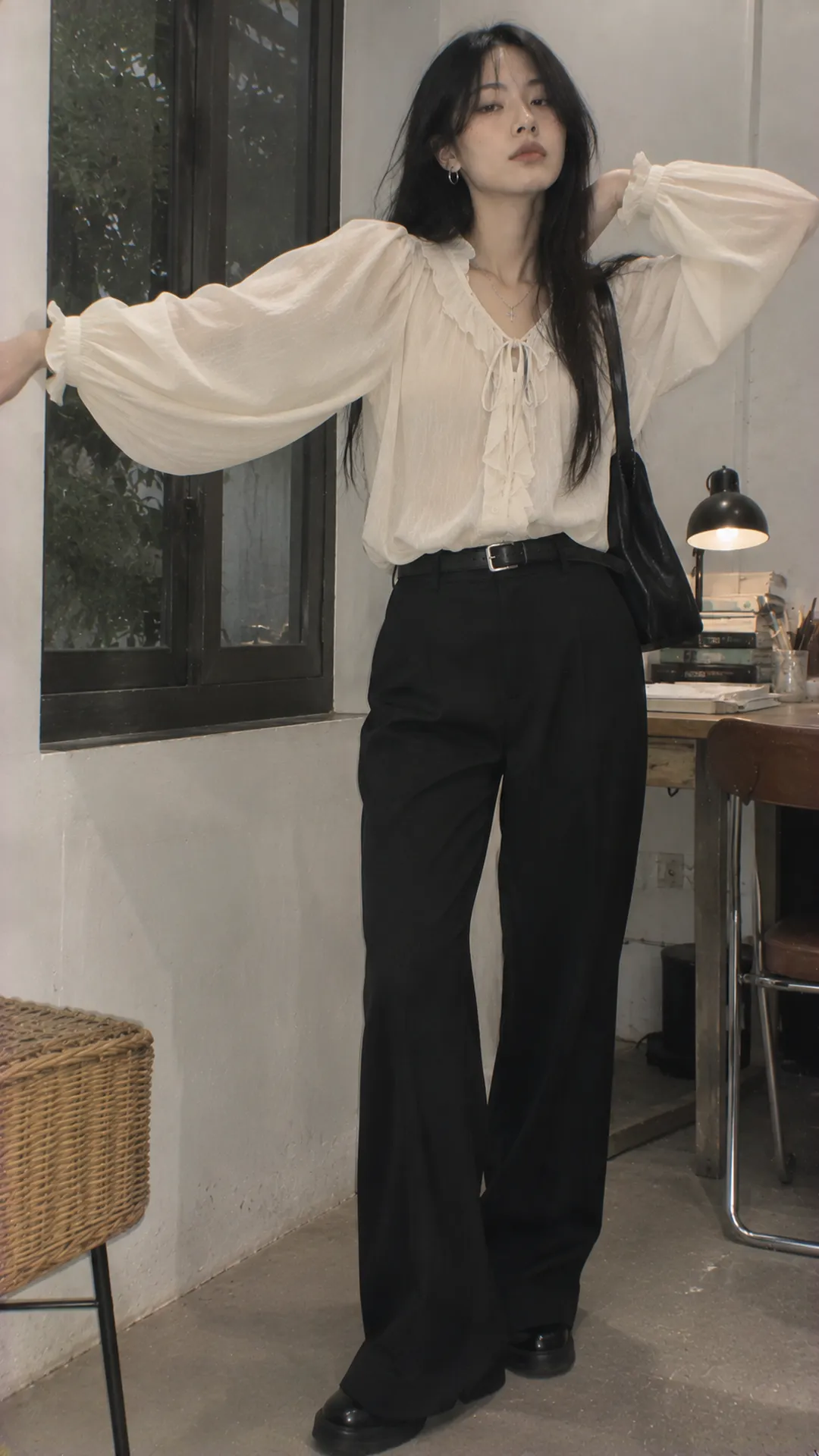
Five mirror fit checks
- Shoulders: seams or dropped placement should follow design without restricting arms.
- Chest: buttons and gathers should avoid unintended tension.
- Armholes and sleeves: reach forward, raise arms and rest them on a table.
- Length: inspect both untucked and tucked with intended trousers.
- Coverage: assess front, back and light passing through.
For slight sheerness, choose desired underlayers from the start. Their edges, straps and colors affect the look. If enough layers create heat or bulk, another cloth may suit daily use better.
Online, request finished measurements at key points rather than S, M or L alone. The online sizing guide compares a comfortable top, especially useful for nonstretch blouses or hard-to-adjust necklines.
Four outfits from soft to expressive
An ivory blouse and dark jeans
A simple neck or gentle sleeve gathers with straight jeans make a usable base. Sneakers support walking; loafers sharpen. A small plain bag can suffice with texture or prominent gathering.
If tucking piles fabric at the hips, tuck less or change length. Tight trousers are unnecessary to counter soft fabric. A suitable waistband-and-hem relationship still needs comfortable sitting.
A black blouse and gray tailored trousers
For polish and a muted palette, choose an appropriate workplace neckline, moderate drape and a placket secure while seated. Defined loafers or flats complete it without extra heel height.
Add a small metallic accessory if desired. With bows or large sleeves, a plain bag is often easier than decoration. Black does not require abundant details against boredom; surface contrast already contributes.
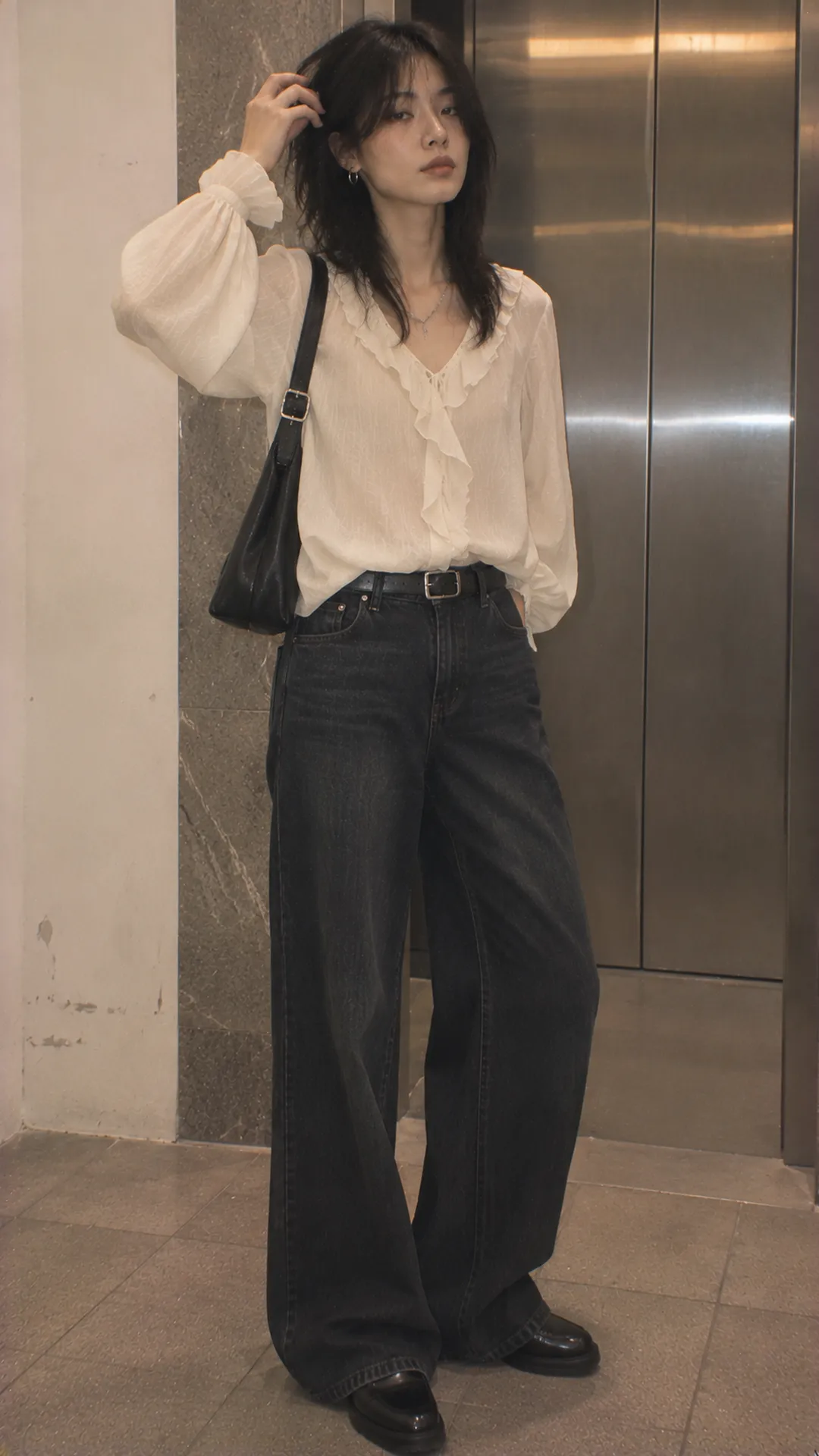
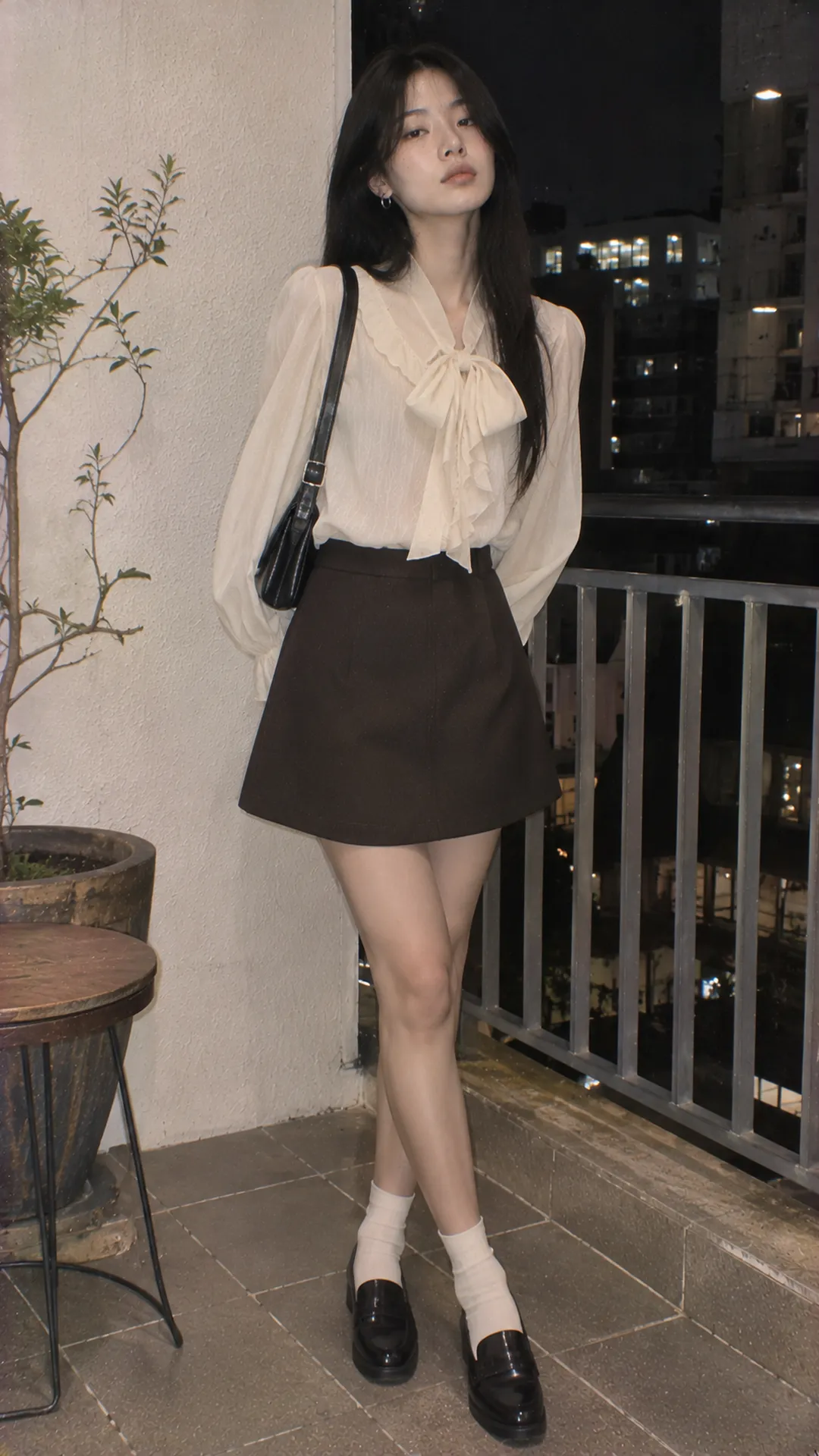
A bow blouse and A-line skirt
Let the bow lead above a neat skirt front. Beige or gray feels softer; black deepens. Loafers, flats or boots follow skirt length and walking distance.
Carry the bag too because straps may conceal or shift the bow. Ask whether a necklace adds anything visually. The expressive women's accessories guide selects by outfit area rather than habitual additions.
A soft blouse and simple cargos
Softness against structured trousers gives more character. Begin with a plain blouse, compact cargo pockets and practical shoes. If both sleeves and pockets are very large, reduce one volume against too many heavy areas.
Light tops separate dark trousers; a deep palette can instead vary surfaces. Test comfort and reuse before assigning a fixed aesthetic or buying themed accessories.
Layer under vests, blazers or jackets
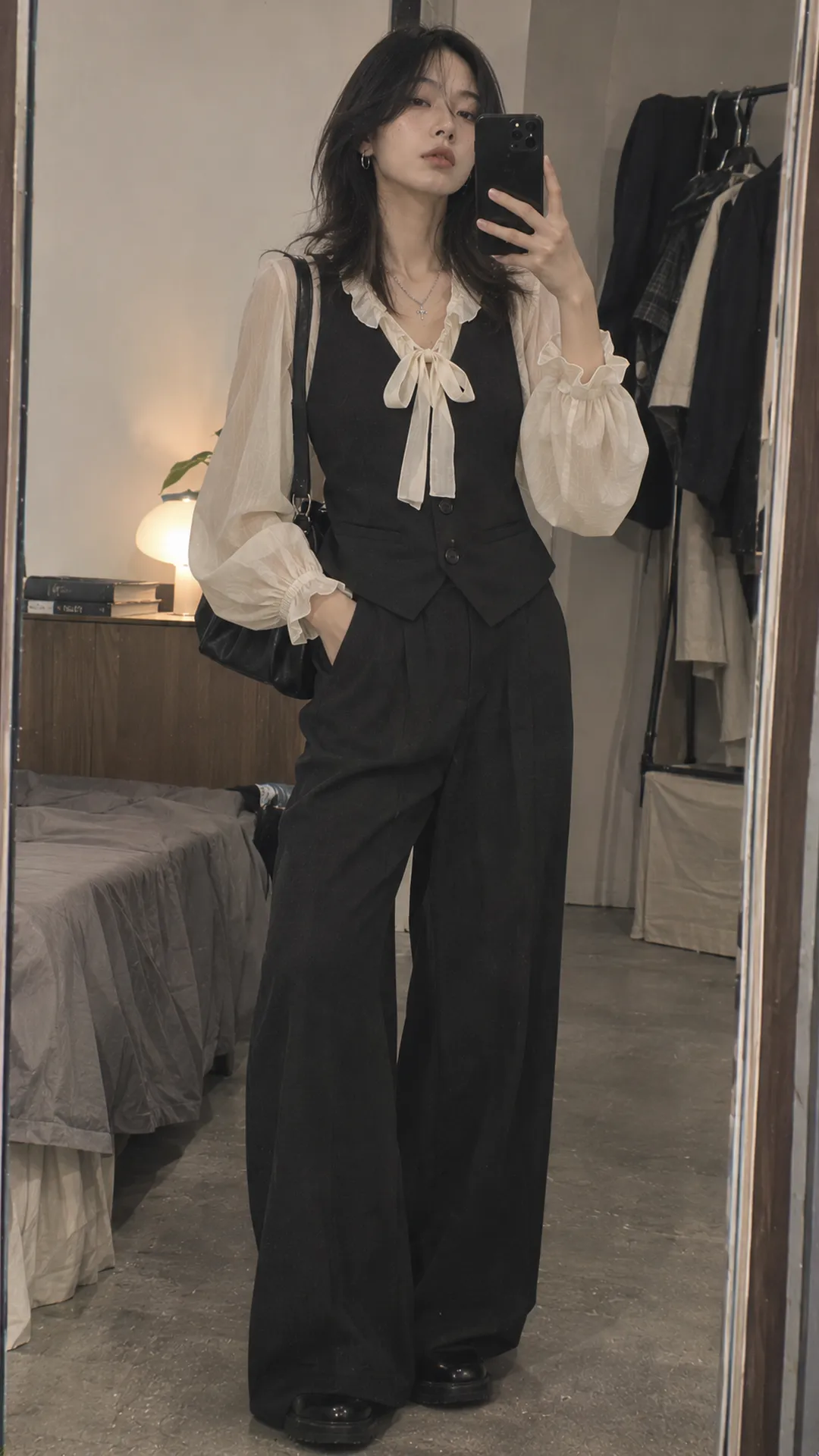
Assess neck, sleeves and length under the outer layer. Leave room for a bow; provide enough sleeve space for puffing or try a vest where suitable rather than force volume into tight arms.
The base should remain usable without outerwear. A very thin blouse should not depend solely on the jacket for acceptable coverage. The women's layering guide assigns inner and outer functions for changing settings.
Open and fasten outerwear, reach and sit. If collars bunch or panels pull from the waistband, fix width and length first. Attractive motionless layers may not suit all-day use.
Buy and care by fabric, not only the blouse name
Ask composition, lining, openings and care before ordering. Blouse names no universal wash temperature. Simple cotton, blends and decorated designs can need different handling.
On arrival, inspect small buttons, gathers, ties and sleeve edges. Test intended bottoms within seller conditions before keeping. If decoration demands excessive adjustment, consider a simpler design.
Frequently asked questions
Must blouses have ruffles or bows?
No. Many are plain and minimal. Choose softer shape, drape or neckline without extra decoration.
Can blouses be workwear?
Yes, depending on workplace rules and design. Check coverage, neck, sleeves and seated work comfort with appropriate bottoms.
Must a blouse be tucked?
No. Length and hem determine practical options. Test both with your actual pairing and choose shape retention without constant adjustment.