

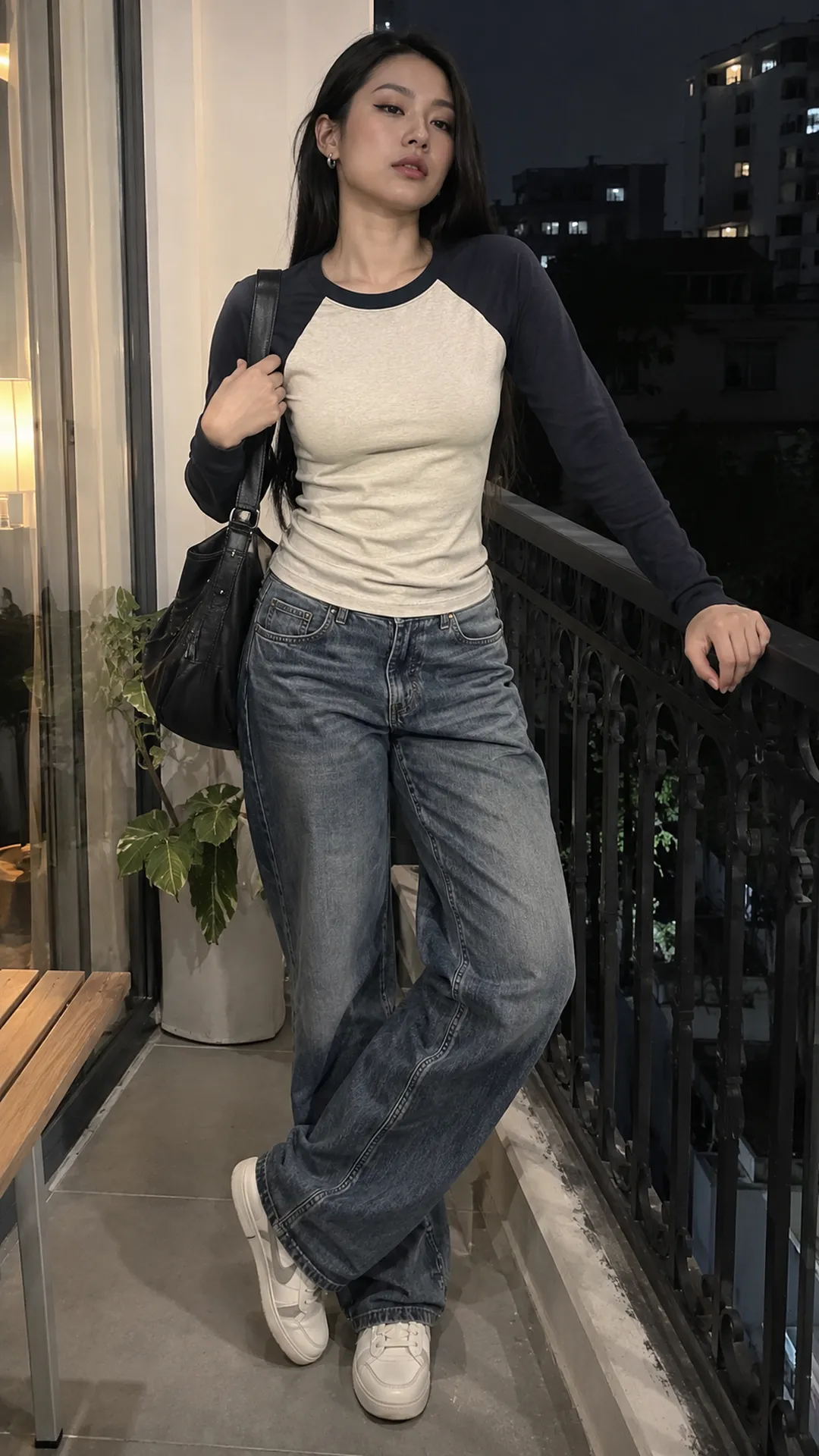
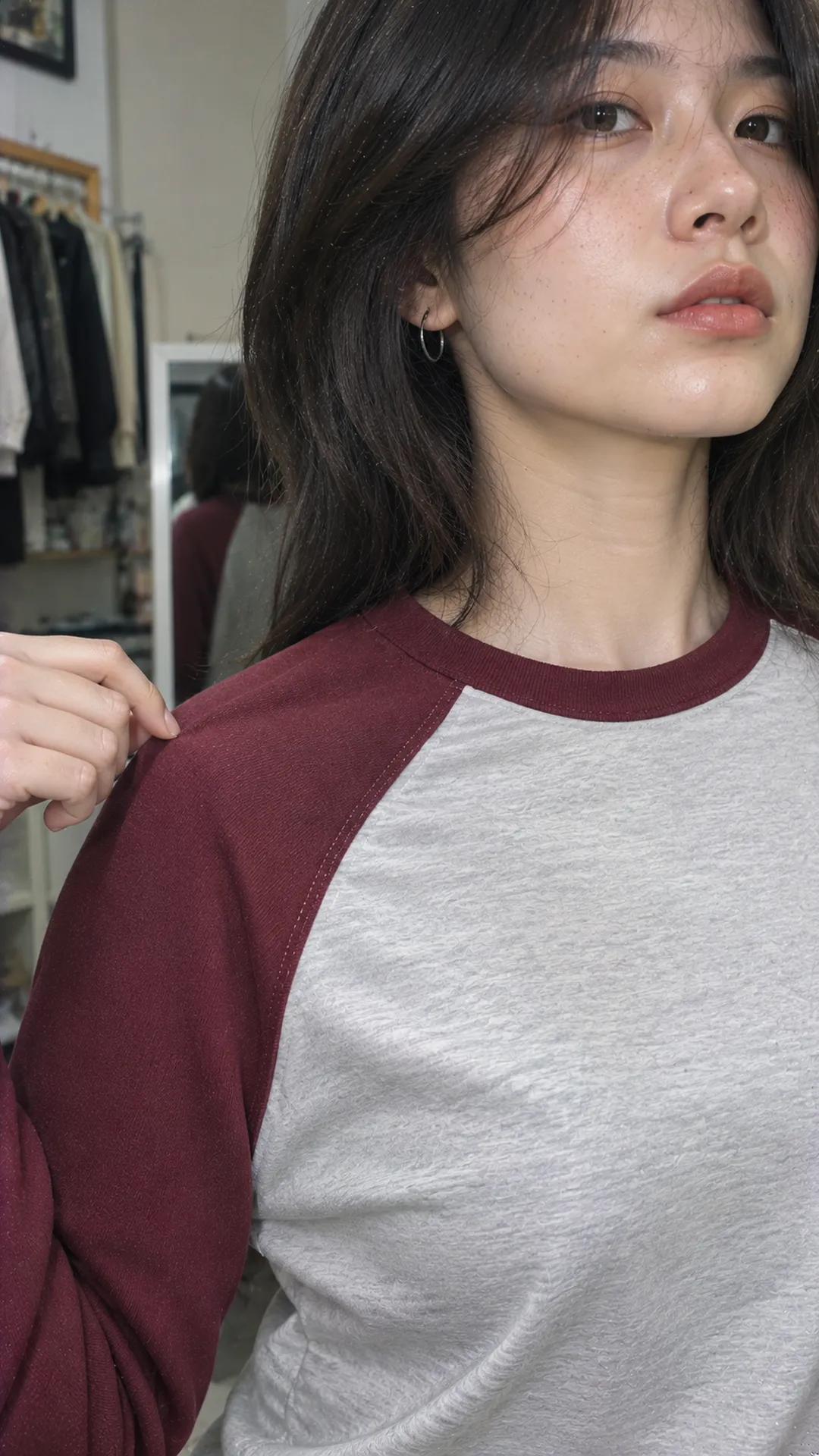
How to recognize a raglan sleeve
Mood Fabrics’ guide to sleeve types describes a raglan sleeve as having a seam that reaches the neckline. From the front, you’ll typically see the seam run diagonally from the neck toward the underarm. That’s a more reliable clue than colored sleeves on a white body, since a raglan can be made entirely in one color.
Color blocking at the shoulder can come from decoration or a panel seam on the body. When shopping online, zoom in on the neck and underarm or ask for a photo of the inside to see the seams. If the only photo is taken from a distance, the product name alone won’t confirm the construction.
Raglan sleeves can be short or long, and the same construction can appear on a T-shirt or a dressier top. Check the length, width, and fabric of the specific garment to see whether it gives you the look you want.
How to check the fit without a conventional shoulder seam
People often use the shoulder seam as a reference when sizing a top with set-in sleeves. For a raglan, check the neckline, chest, underarms, and range of arm movement. Put the top on, let your arms fall naturally, then reach forward. Try another size or cut if the neck shifts, the underarms feel tight, or the seams pull into taut creases.
A few folds as you move are normal. Look for the difference between soft folds that fall naturally and tension lines that keep pointing to one spot. Even a roomy top can fit poorly if low armholes lift the body of the shirt too far when you raise your arms. Check how the cut moves before going up a size for comfort.
Check sleeve length from the neckline or according to the brand’s measuring method. Raglan measurements may start in a different place than measurements for tops with shoulder seams. Our guide to reading size charts explains body and garment measurements. For a raglan, also ask where the sleeve measurement starts so you can compare it accurately.
Finally, sit down and put on the bag you normally carry. A strap can pull a top out of place even if it fits well when you stand without it. If you’ll wear a jacket over the raglan, try both at once to check room at the underarms and elbows.
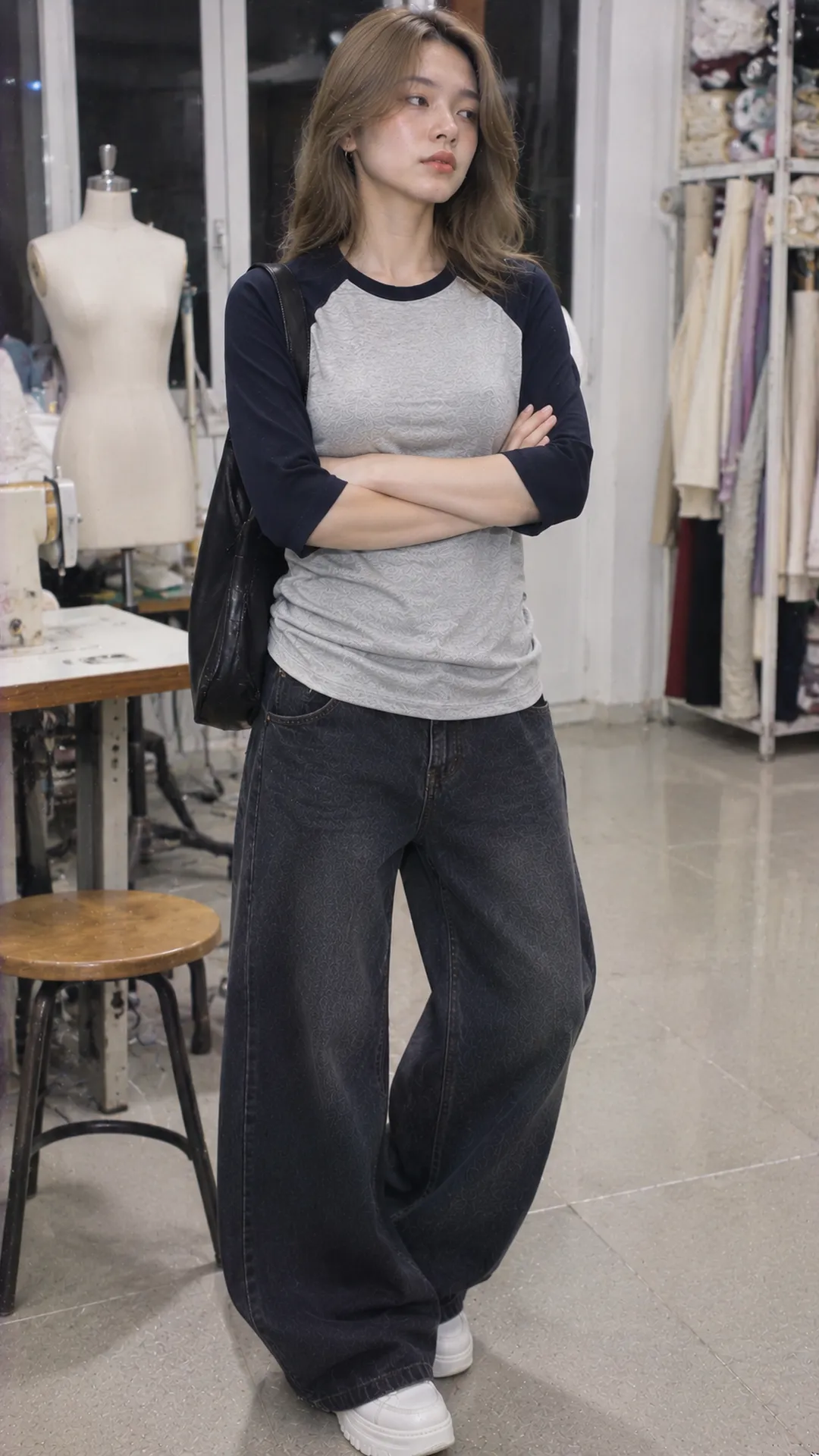
Choose short, mid-length, or long sleeves for how you’ll wear them
Short sleeves: check the opening
A short-sleeve raglan tee makes an easy base, especially if the sleeve opening leaves room to move. Choose a sleeve that ends where you like on your arm and stays in place as you move. With a dark contrast sleeve, check how strongly its edge stands out against the body.
Mid-length sleeves: check where they end when you bend your elbow
Mid-length sleeves may fall near the elbow or below it, depending on the design and your proportions. Try holding your phone, resting your arms on a table, and crossing them. A stiff opening right at the bend can get in the way. A soft, wide sleeve will feel different. Use those movements to find the length that works for you.
Long sleeves: check the cuffs and how the fabric stacks
On a long-sleeve raglan, the cuffs should land where they’re comfortable for your activities. If the top has ribbed cuffs, see whether they feel tight or let too much fabric bunch up. With bold contrast sleeves, a neat cuff keeps the color line visible and the fabric clear of your hands.
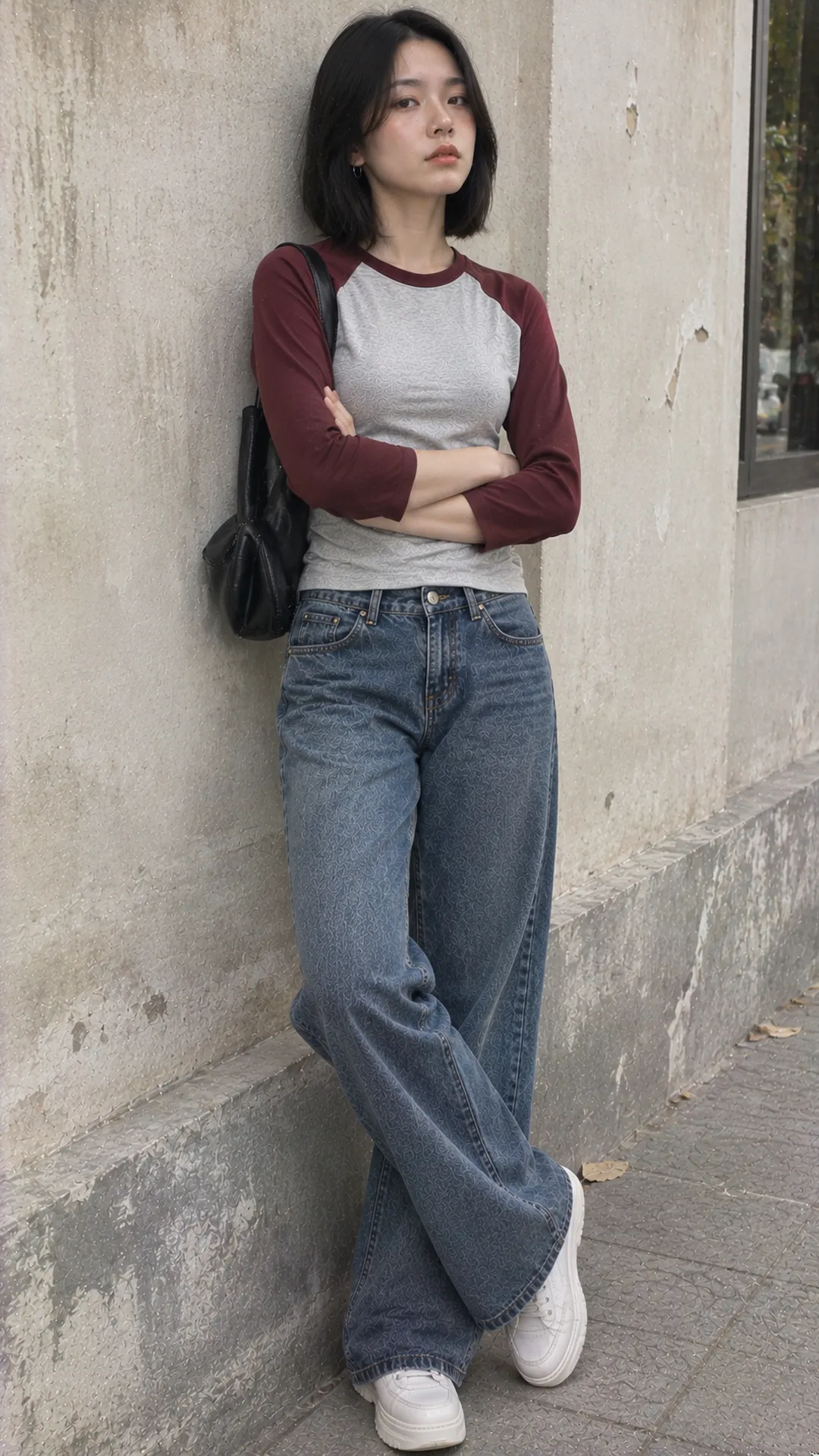
Three ways to pair raglan tops with pants
A close-fitting raglan with straight-leg jeans
A top that follows the body and jeans with a clear leg line make a simple pairing. Leave the top untucked if the hem hits where you want it, or tuck in a lightweight top to show the waistband. Try both and sit down. The one that keeps the proportions you like with less adjustment will usually be easier to wear.
A light body with dark sleeves and dark jeans repeats the sleeve color in the lower half. This ties the outfit together without needing shoes in an exact match. If the jeans have a pronounced wash, keep any print on the top understated so the two pieces have room to stand out.
A slim raglan with wide-leg pants
Wide-leg pants add volume below, while a slim top keeps the waist visible. A top long enough to tuck in neatly works here, as does a shorter top. Check that the fabric lies flat inside the waistband, especially with pleated or flat-front pants.
A roomy raglan with straight or tapered pants
If you like a roomy top, choose pants with a clear line down the leg before adding accessories. A roomy top and wide pants can work together if you define where the pieces meet, for example with a shorter hem or a visible waistband. Our guide to women’s pants by cut can help you compare straight, tapered, and wider options.
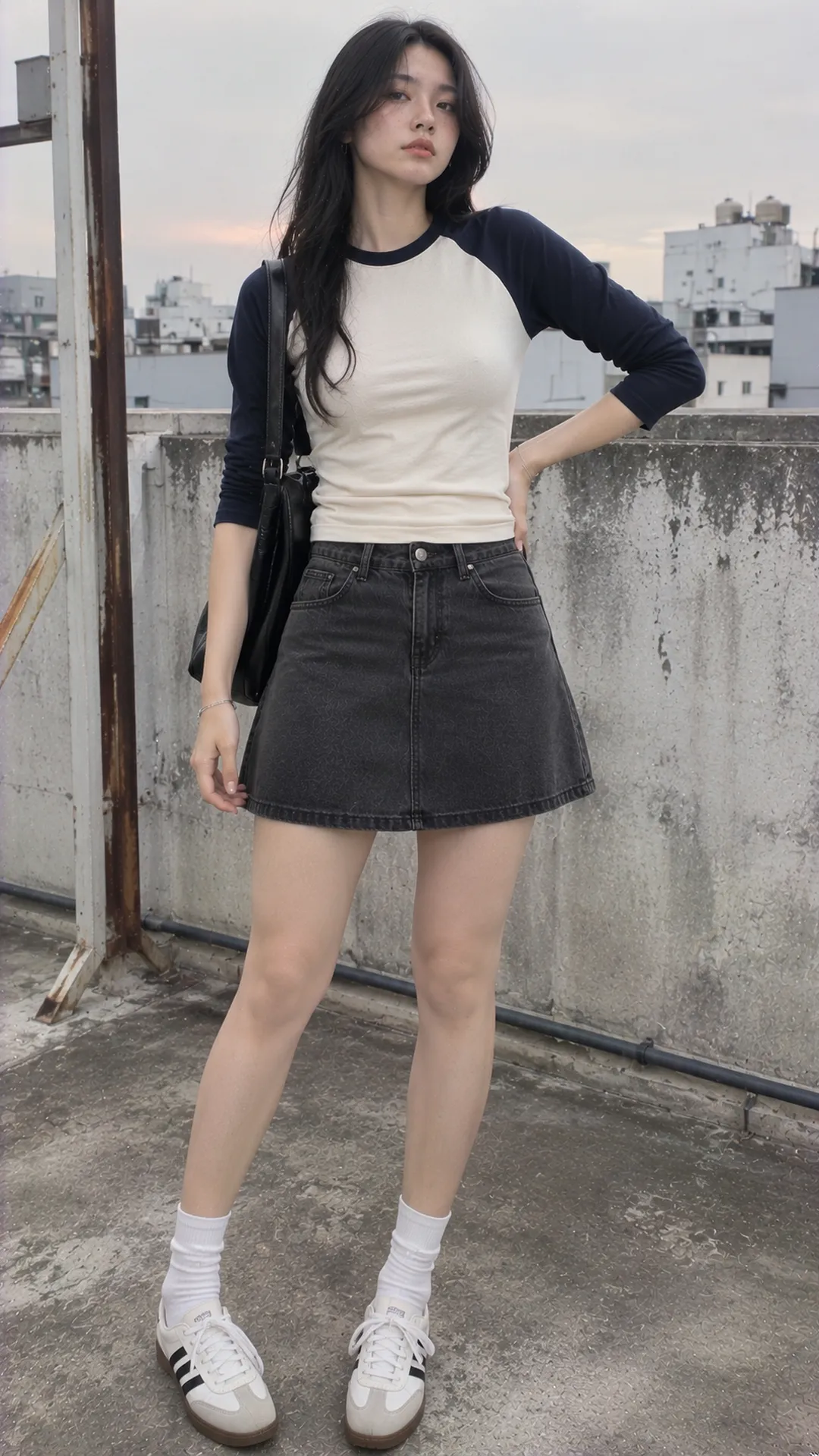
Raglan tops with skirts: balance the sleeves and the flare
A solid or two-tone raglan with an A-line skirt sets the diagonal sleeve seams against the skirt’s flare. Check where the hem meets the waistband. If the top extends over the part of the skirt that starts to flare, layers can bunch at the waist. Try a shorter top or a tidy tuck before swapping the skirt.
With a straight skirt, a moderately roomy raglan gives the upper half a relaxed look while keeping the skirt line visible. For a long skirt, check the shoes and hem length so you can walk freely. Sneakers can give the outfit a sporty feel, and simple closed-toe shoes can take it in a different direction.
Treat a raglan with a gathered or ruffled neckline as a top with its own detail around the neck. Keep the necklace small or leave it off if the area is already busy. If the sleeves are also puffed, try a skirt with a clean waistline to define where the pieces meet. Our guide to women’s dresses and skirts can help you choose the flare and length.
Use the sleeve color to tie the outfit together
With a cream body and brown sleeves, try repeating brown in the shoes or bag and using black pants or denim as a base. One repeat can be enough. Matching the sleeves, pants, shoes, and bag may feel more coordinated than you want. Step back to see which color block draws the eye.
A solid raglan gives the sleeve seam a subtler look and lets the silhouette take focus. To make the seam more visible, try stitching or a fabric finish with a little contrast. The seam can be an interesting detail on its own.
Raglan tees vary in how cool or stretchy they feel. Check the fiber content, look at the thickness, and gently test stretch as the manufacturer allows. With thin, light-colored fabric, check coverage in normal lighting and while moving as well as on the hanger.
Layer while keeping the sleeve seam visible
An open jacket can leave the body of the top visible while covering some of the sleeve seam at the shoulder. If you want the seam to stand out, wear the raglan on its own when conditions allow or choose a layer that leaves part of the shoulder visible. Add a layer when it serves the outfit or the occasion.
When wearing a long-sleeve top under a short-sleeve raglan, check how much room the two layers have at the underarms. Extra fabric can bunch, and the color of the inner sleeve adds another break. Keep the palette simple and raise your arms to test the fit. Our guide to layering women’s outfits explains how to give the base layer and outer layer distinct roles.
Use shoes and a bag to finish the outfit. A raglan and slim pants can work with sneakers for everyday wear. For a more defined look, try a structured bag or simple shoes. Our guide to women’s tops compares raglans with other cuts if you’re building a wardrobe around a few basics.
Before you decide to keep the top
With different colors on the body and sleeves, check where the seams meet at the neckline. Look at whether the two sides sit the way you want when worn or pull out of place. If there’s a ribbed neckband, turn your head and bend forward slightly to see whether it presses or sticks up. Small details like these affect comfort, especially when contrast sleeves draw attention to the neck.
Try the top with two bottoms you already own, such as pants and a skirt if you regularly wear both. Take front and side photos to see how the hem, underarms, and sleeve length work together. If it takes a complicated tuck to get the fit you like, consider another length or cut for easier everyday wear.
Read the care label on the actual top, especially if the body and sleeves are different colors. Avoid prolonged soaking or high heat to reshape the neckline. When drying or storing it, avoid pulling hard on one sleeve. If the top twists after washing, review the instructions and check the seams before trying to reshape it.
Choose a raglan that feels comfortable at the neckline, underarms, sleeves, and hem as you go about your day. Once the fit works, swap between pants and skirts or pick up the sleeve color in a different accessory to make several outfits.