

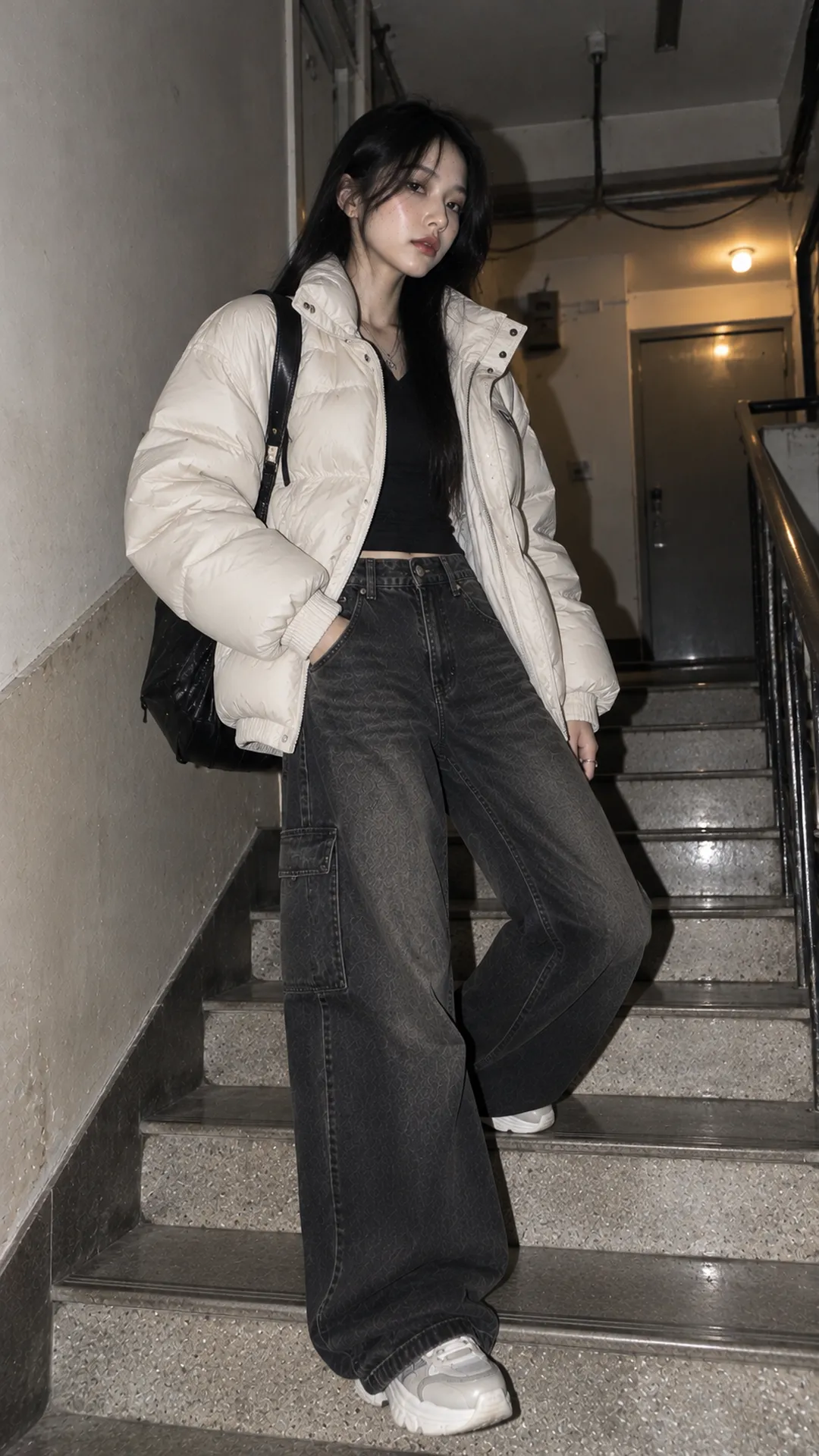
Identify when you actually need the jacket
Write one specific use before buying: commuting on cold mornings, visiting highlands, standing outdoors at night or taking a multi-stop trip. These differ in movement, wind, rain and time outdoors.
If mostly inside vehicles or heated buildings, a very thick jacket can be inconvenient to remove and carry. For long periods standing outdoors, coverage, collar, hood and layering matter more. Do not choose solely from an attractive snowy photo.
For trips within Vietnam, check the forecast close to departure and your actual itinerary. A destination's name does not determine the jacket required. A sunny noon and windy morning in the same place can call for different dressing.
If you own other outerwear, establish what function a puffer adds. The guide to choosing women's tops by fit and styling helps compare it with existing jackets, avoiding another piece that differs only in color while duplicating its use.
Read insulation and shell information separately
The REI guide to insulated jackets distinguishes fills such as down and synthetic fibers. For down, fill power describes loft, which differs from fill quantity. One fill-power figure alone cannot rank the warmth of two complete jackets.
Do not infer down from the word puffer. Check the fill composition label and manufacturer specifications. Descriptions such as 'warm,' 'ultralight' or 'thick' still leave insufficient information for product comparisons.
The shell is separate from the insulation. REI also distinguishes water-resistant shells from waterproof construction. A shiny surface or a few beads rolling off cannot establish suitability for prolonged rain, especially with seams, zippers and joins to consider.
For damp conditions, check the protection confirmed by the manufacturer and suitable outer-layer options. 'Women's down puffer' does not establish a fixed usable temperature. Cold perception also depends on activity, layers and circumstances.
Choose length while sitting and walking
Short or cropped: check the waist gap
A short puffer creates a clear upper-body endpoint and works with high-rise trousers or skirts. Its hem may rise when you reach or sit, though. Check whether the inner layer maintains your desired coverage, particularly when buying for warmth.
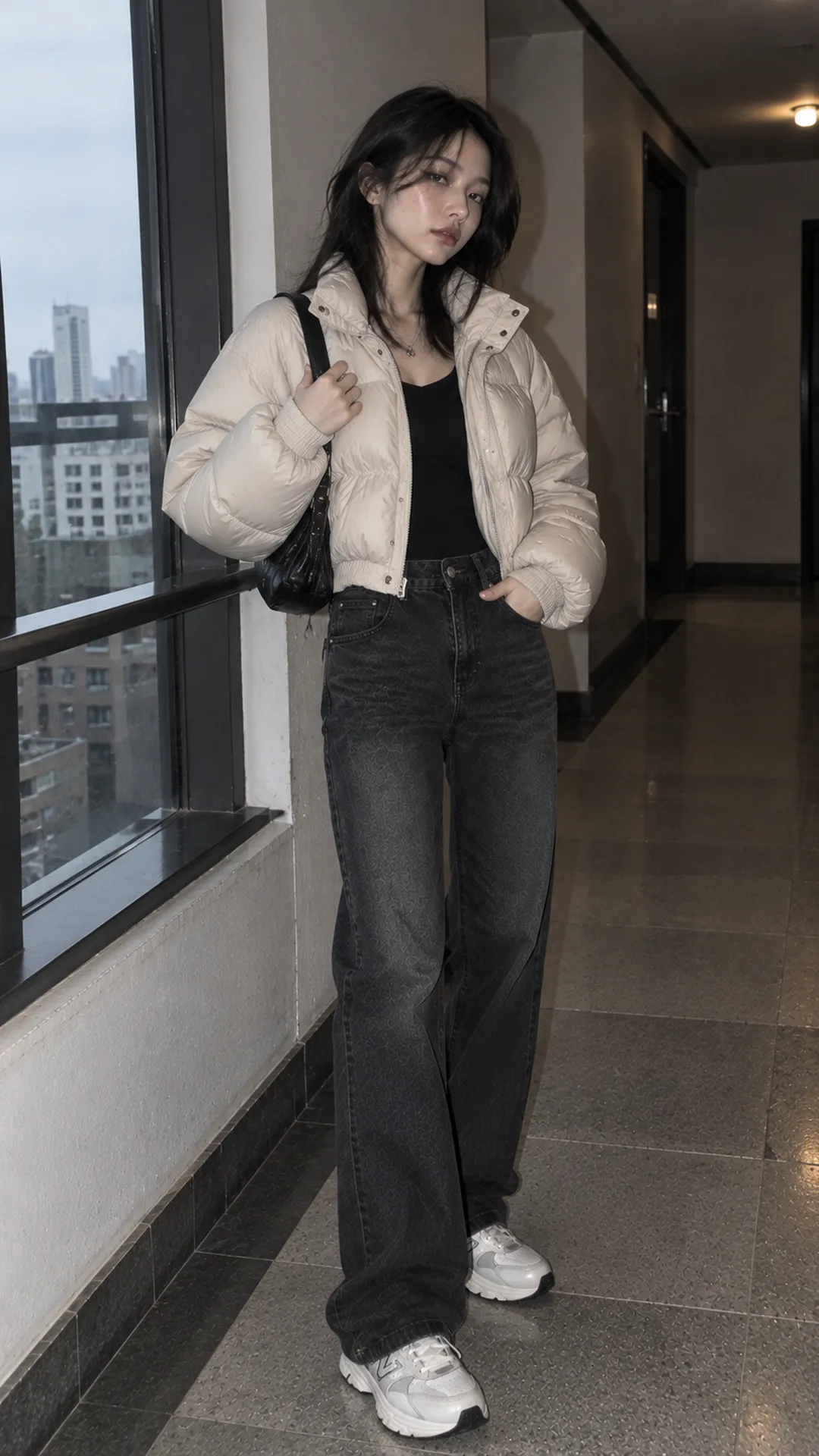
Do not pull a waistband uncomfortably high merely to meet the jacket. If the gap repeatedly bothers you, a jacket a few centimeters longer may work better. Choose for your body and activity rather than forcing the model's proportions.
Hip-length: check volume around the pockets
Hip-length puffers work with jeans and straight trousers, but assess where the hem grips. Elasticated hems or drawcords can make the body balloon. Putting belongings into pockets adds more front volume.
Sit with the zipper closed, then reach forward. If the back pulls or the hem rises excessively, check size and construction rather than only loosening the drawcord. A roomy stomach area can coexist with tight shoulders or sleeves.
Long designs: consider the lower opening
A long puffer creates a large area on the body and covers much of the trousers or skirt. Take a longer step, use a low step and sit while trying it. Two-way zippers, slits or hem construction may offer adjustment, but operate them as designed.
With a skirt underneath, compare the two hems. You may or may not like a narrow strip of skirt extending beyond the jacket. Try the jacket both open and closed to assess the outfit in either state.
Puffer vests: inner sleeves become prominent
A sleeveless vest reveals more of the base layer. Plain long sleeves let the vest surface stand out; puff sleeves add armhole volume. Check that the vest does not squeeze or pull the base when you raise your arms.
A vest is not an equivalent replacement for every sleeved puffer: its coverage differs. Choose for your needs. In styling, it lets inner sleeve color and texture show while retaining a distinctly shaped outer layer.
Try the size with your intended inner layers
Try the puffer over something close to what you will actually wear. If you usually use knitwear or fleece, a thin tee may lead you to insufficient shoulder and chest room. Excessive sizing up, however, may lengthen sleeves and displace the collar.
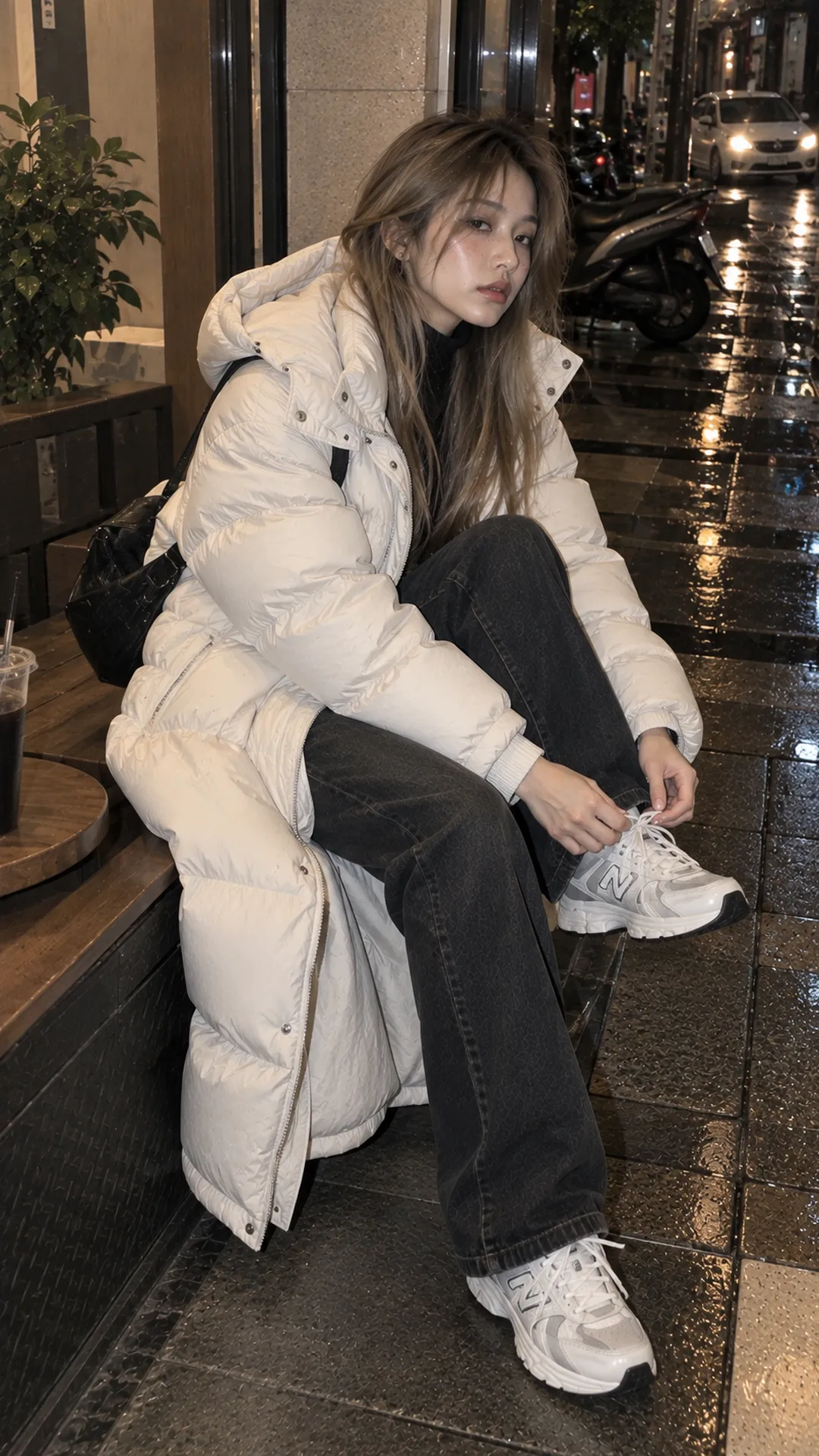
Zip up, reach both arms forward, bend gently and sit. Check chin irritation from the collar, sleeve rise and zipper tension. If there is a hood, put it up to assess visibility and head-turning comfort.
Online, distinguish body from finished-garment measurements. A well-fitting jacket is a useful reference when constructions are similar. See the online sizing guide to read charts more accurately instead of choosing by weight alone.
Check pocket placement while wearing a backpack or crossbody bag. A pocket that looks good standing may sit beneath a strap or too high for convenient use. These details determine whether you wear the jacket regularly or only like its photos.
Four outfits based on jacket volume
A short puffer with straight-leg trousers
A short puffer, neat inner layer and straight trousers make an easy-to-control formula. The puffy upper half contrasts with a straight leg line. Match trouser hems to the shoes so fabric does not add more bulk at the feet.
Black with gray trousers gives a subdued look; cream with blue jeans lightens the upper half. Tight trousers are not compulsory for balancing a puffer. Increase leg width if the drape and shoes remain visible.
A loose puffer with wide straight-leg trousers
Two loose pieces can work with intentional lengths. Try a jacket ending above the trousers' widest area or reveal the waistband when unzipped. Keep the inner top free of excess fabric so the stomach area gains no unnecessary volume beyond the jacket.
The guide to styling women's trousers compares straight and wider cuts. Rather than reducing every area of volume, define one point such as waistband, wrists or hems so the outfit does not become a continuous block.
A long puffer with a skirt or neat trousers
When the long jacket is the largest area, simplify the inner outfit. A straight skirt or trousers with few raised pockets keep the surface beneath relatively smooth. With a flared skirt, check whether the closed jacket presses it into folds.
Choose shoes for actual activity and weather. A color close to the trousers makes a quiet connection; contrast emphasizes the feet. Do not choose solely for a photo if the pair does not suit your walking distance.
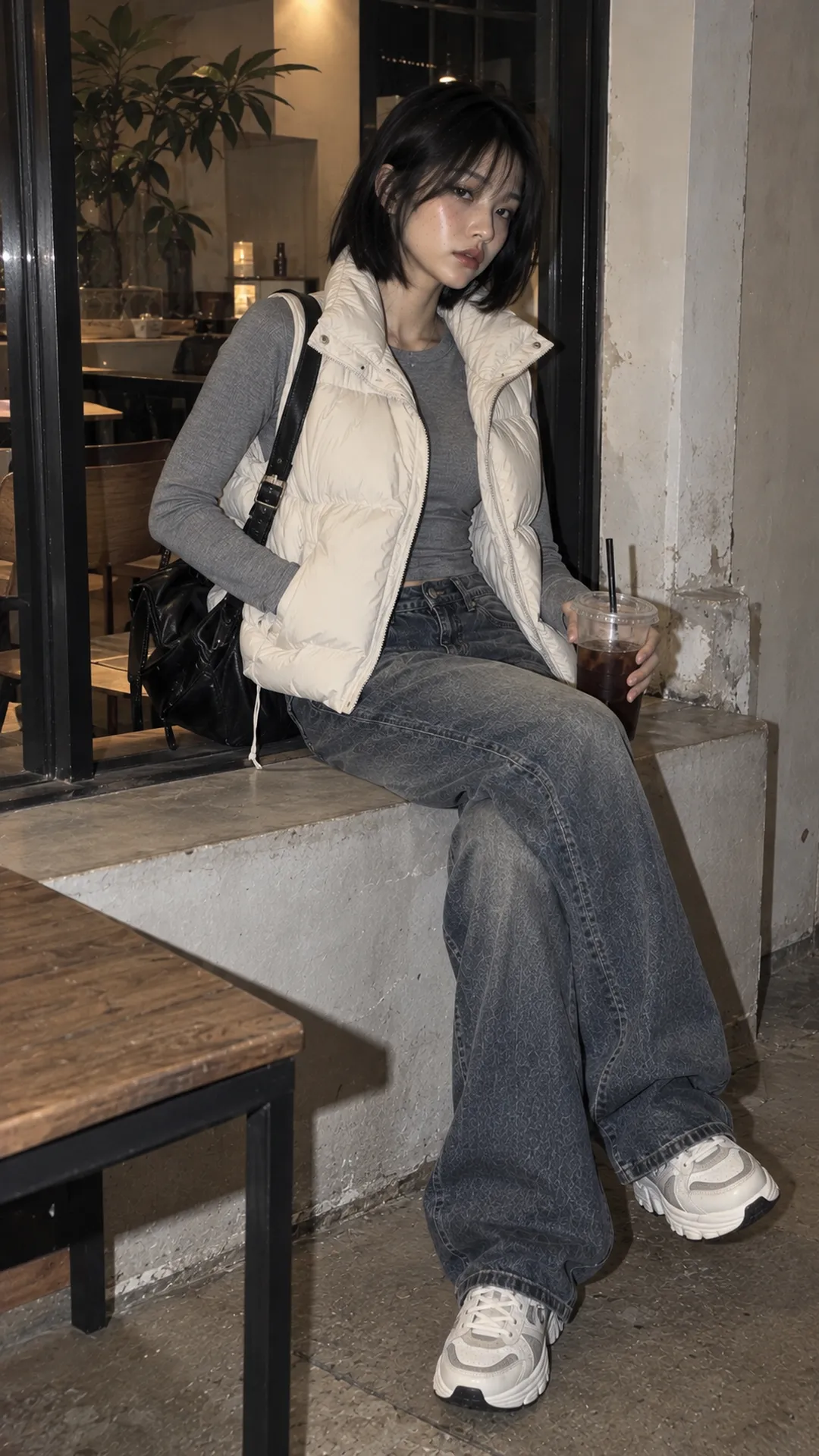
A puffer vest with long sleeves and jeans
Neat long sleeves define the vest armholes, while jeans provide a familiar base. Repeat the vest color in shoes or a bag and let sleeves act as a secondary color. A light vest over a dark top often makes the central torso clearer.
With a hoodie, check whether the hood bunches around the vest collar. Do not add one merely to complete a winter aesthetic. The guide to women's layering helps each layer serve a purpose rather than simply increasing their number.
Wash, dry and store for the actual construction
Choose color for your existing clothes and care habits too. Light jackets emphasize the upper-body area; dark jackets can merge with dark trousers into a continuous line. For a puffer as the only color accent, simplify the inner and lower pieces. Try daylight because glossy surfaces can photograph differently from how they look in person. A color you can reuse across outfits is more useful than one bought for a single travel look.
Read the label before washing because fill, shell and decorations may need different care. Do not choose a dryer temperature from the word puffer alone. If the label is unreadable or missing, ask the seller or a care provider experienced with that material.
Do not store the jacket damp or assume it is dry because the outside feels dry. Check thick areas, pockets and collar carefully. If instructions permit compression for travel, distinguish short-term packing from the manufacturer's long-term storage method.
Before the next season, inspect zippers, seams, hem and insulation for changes. A suitable jacket works with your existing layers, lets you sit and move conveniently and has care requirements you can meet.