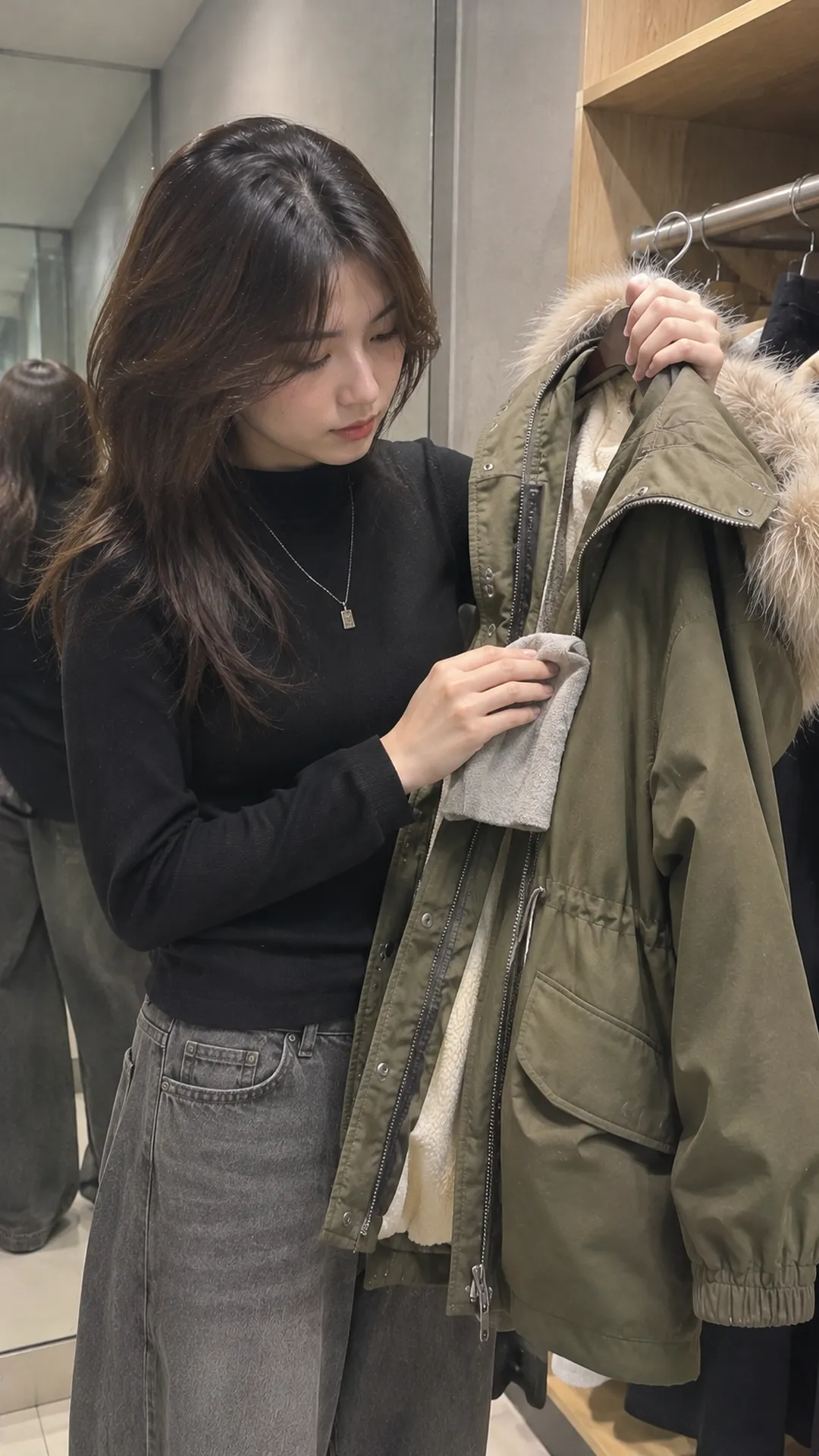
What is a parka, and what features should you look for?
Merriam-Webster describes a parka as an outer garment often worn with a lining and also records a hooded version for cold conditions. Check the hood, coverage, lining, and closure on the exact garment you’re considering.
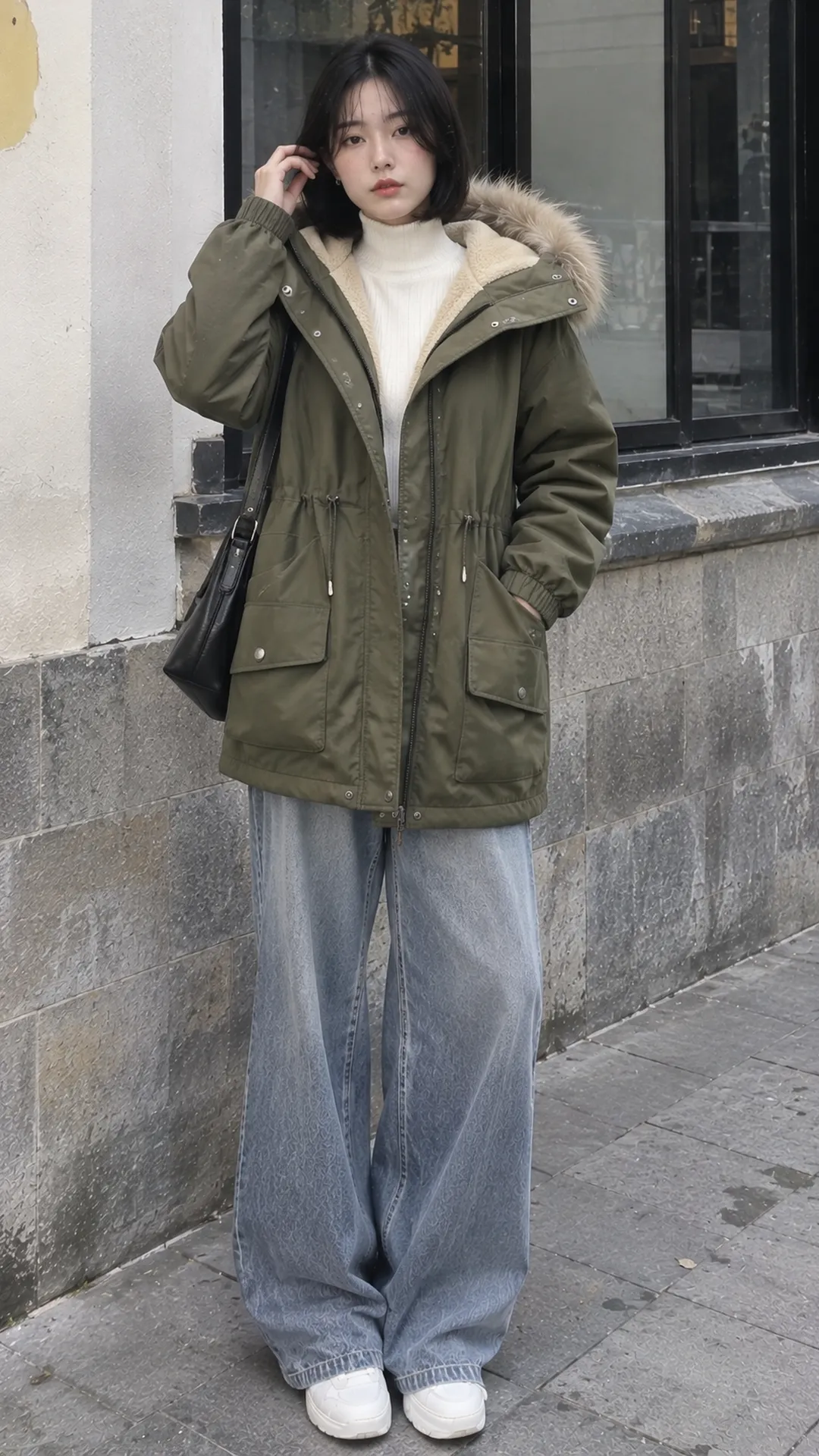
Look for photos with the front closed and open, plus a back view. A longer back hem, straight body, or adjustable waist can all change the silhouette. Those details also affect how the parka sits when you’re seated, carry a bag, or put the coat away.
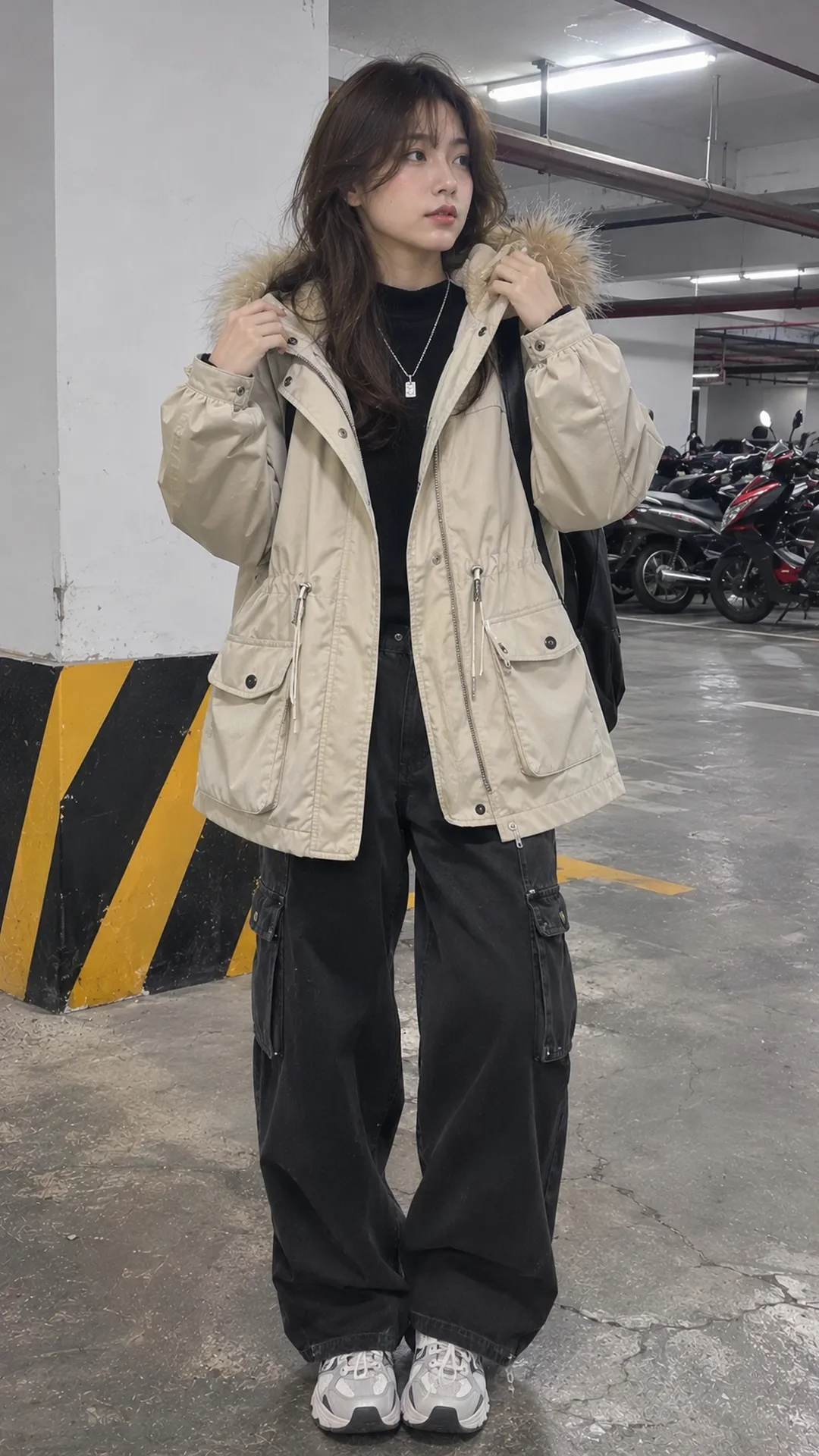
Utility and military-style jackets can have several pockets too. Decide which feature you want. If you like cargo pockets and a matte finish, a lighter jacket may suit you better than a parka with thick lining and a large hood.
Start with the weather and time outdoors
Think about your main use: a cool commute, an evening out, a short trip, or travel somewhere cold. How long you’ll stand outside and how much you’ll move both affect comfort. Choose for your itinerary and climate.
If you’ll spend most of the day indoors, see how easily the parka comes off, folds, or can be carried. A thick coat can suit the outdoor part of the day and still be awkward to hold for hours. Check the exact model for a removable liner if you want one.
If you need weather protection, read the stated features and conditions of use. A glossy surface or large hood gives little information about how the coat handles rain. Look for details about the seams, closures, fabric, and overall construction.
Lightweight, quilted, and fur-style linings
A smooth lining may mainly finish the inside and make the coat easier to put on. Quilting or insulation serves another purpose. Check the materials and manufacturer information to see how different lined coats compare.
For a fur-style lined parka, ask what the lining is made of, how far it extends, whether it continues into the sleeves, and whether you can remove it. Hood trim only shows one area. Look at the coat fully open to see the rest of the lining.
Feel the collar, cuffs, and any other parts that will touch your skin. Try it over a thin top if that’s what you’ll wear. With a thicker layer, check that the sleeves leave room at the elbows and armholes.
Read the washing and drying instructions for each part. A removable liner can require different care from the shell. Ask for the label before buying if the seller hasn’t provided it.
Try the parka over your layers and load the pockets
Put on your intended base layer and close the coat. Reach forward, raise your arms, and sit. Check the shoulders, armholes, neck, and hem. You should have enough room to move without pulling the front or shifting the collar.
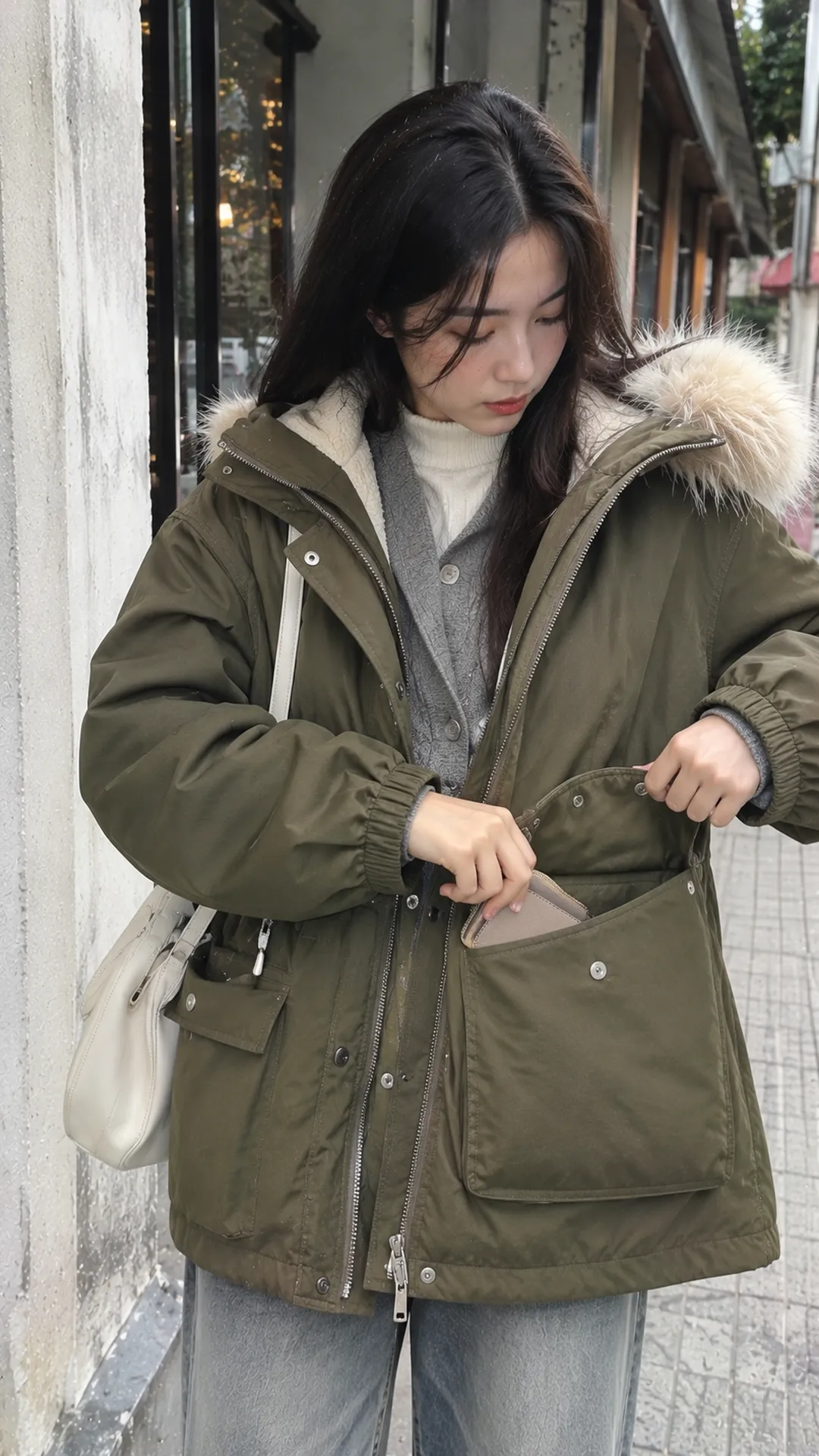
Put your phone or other usual items in the pockets and see whether they pull the coat to one side. A pocket can look large without being built for a heavy load. Carry a separate bag if that keeps the coat balanced.
Try the hood while standing still and turn your head gently. Check the fit, where the edge sits, and how it adjusts. See whether loose cords can be secured as intended. Check the hood while it’s up if you plan to use it.
For online shopping, use our online sizing guide to compare garment measurements. Check chest width, shoulder width, upper sleeve width, and back length. The coat may already include room for a layer underneath.
Short or long parka?
If the coat has a two-way zipper, try it while standing still and follow the product’s instructions. Opening the bottom can give you more room to sit. Align the zipper ends before pulling. If you’ll need to take the coat off quickly, try unzipping, taking the hood down, and folding it.
A short parka shows more of the trousers or skirt and can define the waist. Raise your arms and sit to see how the hem moves. A tightly drawn hem can make the body balloon more than you want.
A hip- or thigh-length parka covers more of the outfit. With wide pants, look at the volume of both pieces. A close-fitting top can give you a defined line down the middle when the coat is open. Straight pants can also make the combination feel lighter.
For a longer back hem, try sitting and stepping up. Check where it ends on you rather than choosing by the suggested height alone. Our women’s tops guide by fit and layering explains how to compare the coat length with the rest of the outfit.
Pair a parka with different trouser cuts
Start with a roomy parka and straight-leg trousers. A plain top makes the opening clear, and the trouser legs fall toward the shoes. Try the hem drawcord loose and lightly tightened before adding a belt or other accessories.
Both a parka and cargo pants can have prominent pockets. Try a detailed coat with slimmer-looking trousers, or a plain coat with noticeable cargo pockets. Check whether the pockets add more volume than you want around the hips and thighs.
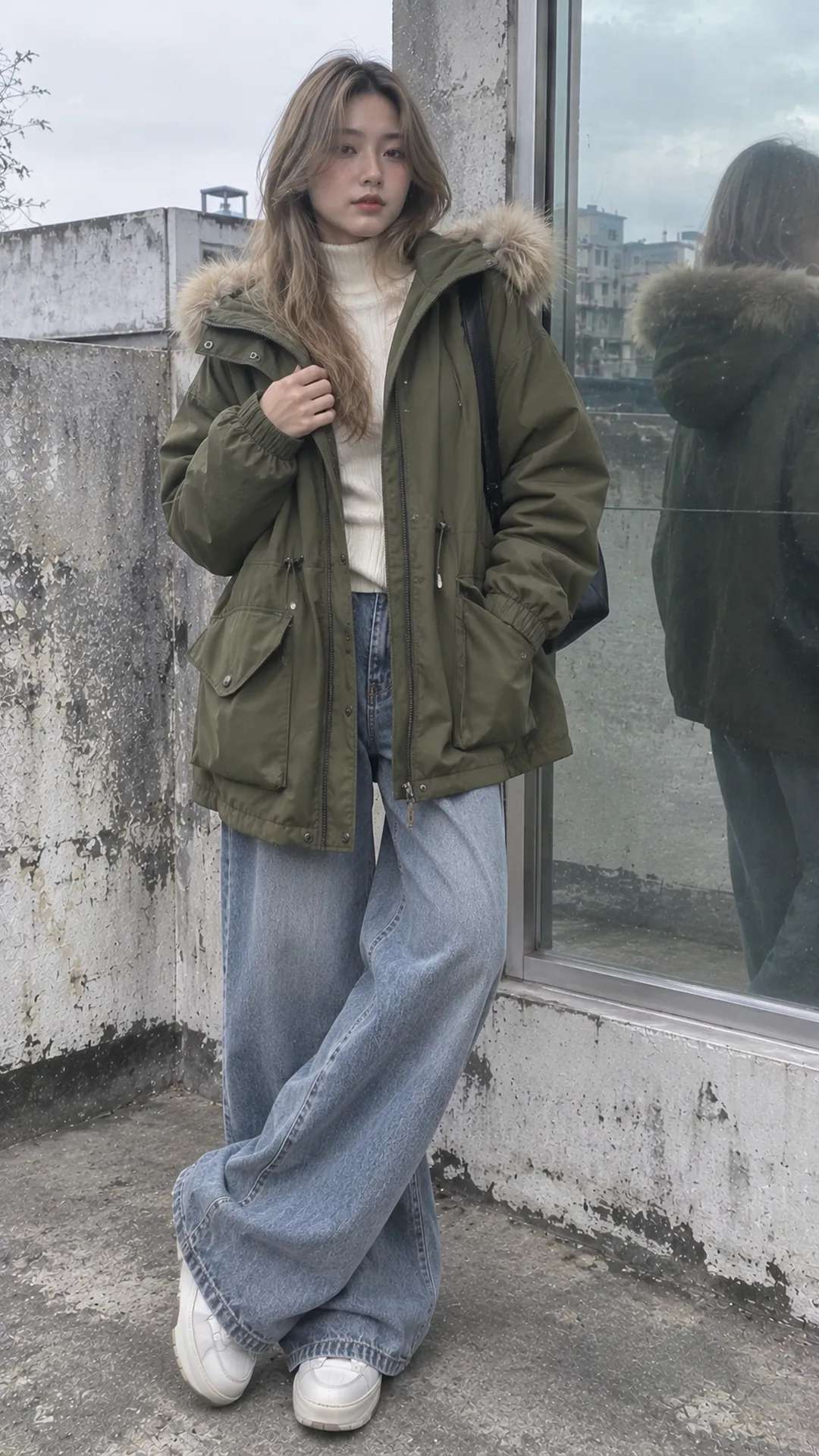
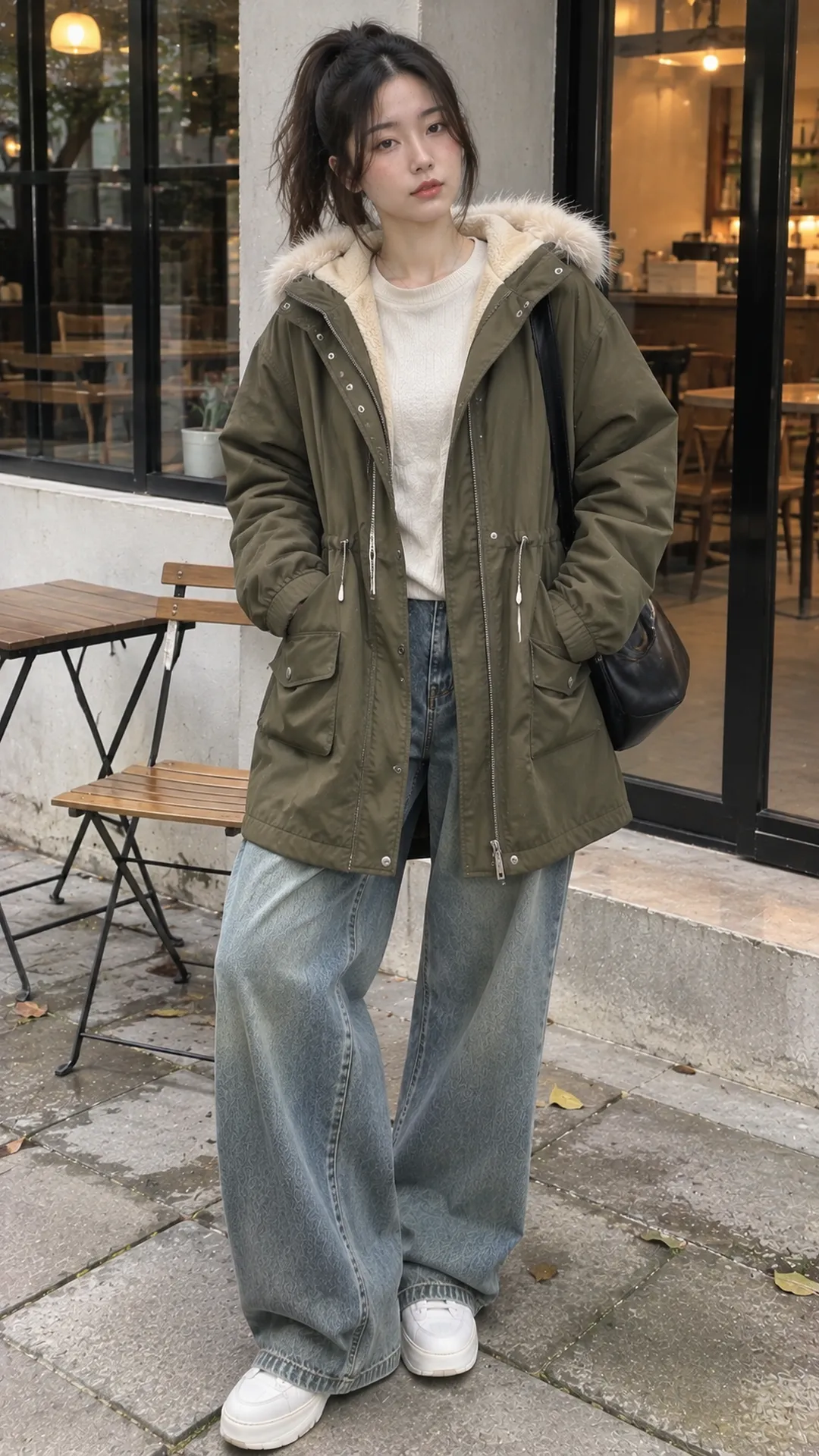
With wide jeans, choose a hem length that works with the actual shoes. A long coat, long jeans, and chunky soles together can feel visually heavy. If you want less volume, try a shorter coat or a narrower leg. Our women’s trousers styling guide compares rises and leg shapes.
Wear a parka with skirts and dresses
A short skirt with a long parka gives clear contrast in length. Check how much skirt shows when the coat is closed. Wear it open or try a different length if you want both layers visible. Sit down to check the coverage of the outfit underneath.
With a midi, look at the gaps between the coat hem, skirt hem, and boot top. If all three lines sit close together, try similar colors or change one length to give the pieces more room.
A simple dress is an easy base under a parka with several zippers, ties, and pockets. With a tiered or patterned dress, try simpler accessories. Our guide to layering women’s outfits helps you decide which layer you want to stand out.
Choose colors and shoes for your itinerary
A black parka over a gray top and black trousers gives a dark palette. Compare textures so each layer remains visible. An olive parka can work with denim, black, or cream. Check the actual shades and lighting.
A contrasting liner or hood trim adds color even if only a little shows. Echo it in one small item if you like. A compact bag and simple shoes can give the coat’s details room to stand out.
Choose shoes for how long you’ll walk and the surfaces you’ll use. Several styles of boots and shoes can work with a parka. For longer outings, our women’s outfit guide by itinerary starts with the activity and then helps you build the look.
Check and store the coat after wearing it
Empty the pockets, check the closures and cords, and read the label before cleaning. Parkas with different shells, linings, and trims can need different treatment. Follow the instructions for any removable parts.
Before the next wear, check that the coat is dry, the pockets are empty, and the adjusters sit where you want them. Choose a parka that suits the weather, fits over your layers, and works with clothes you already own. Then the colors and accessories are easier to change.