

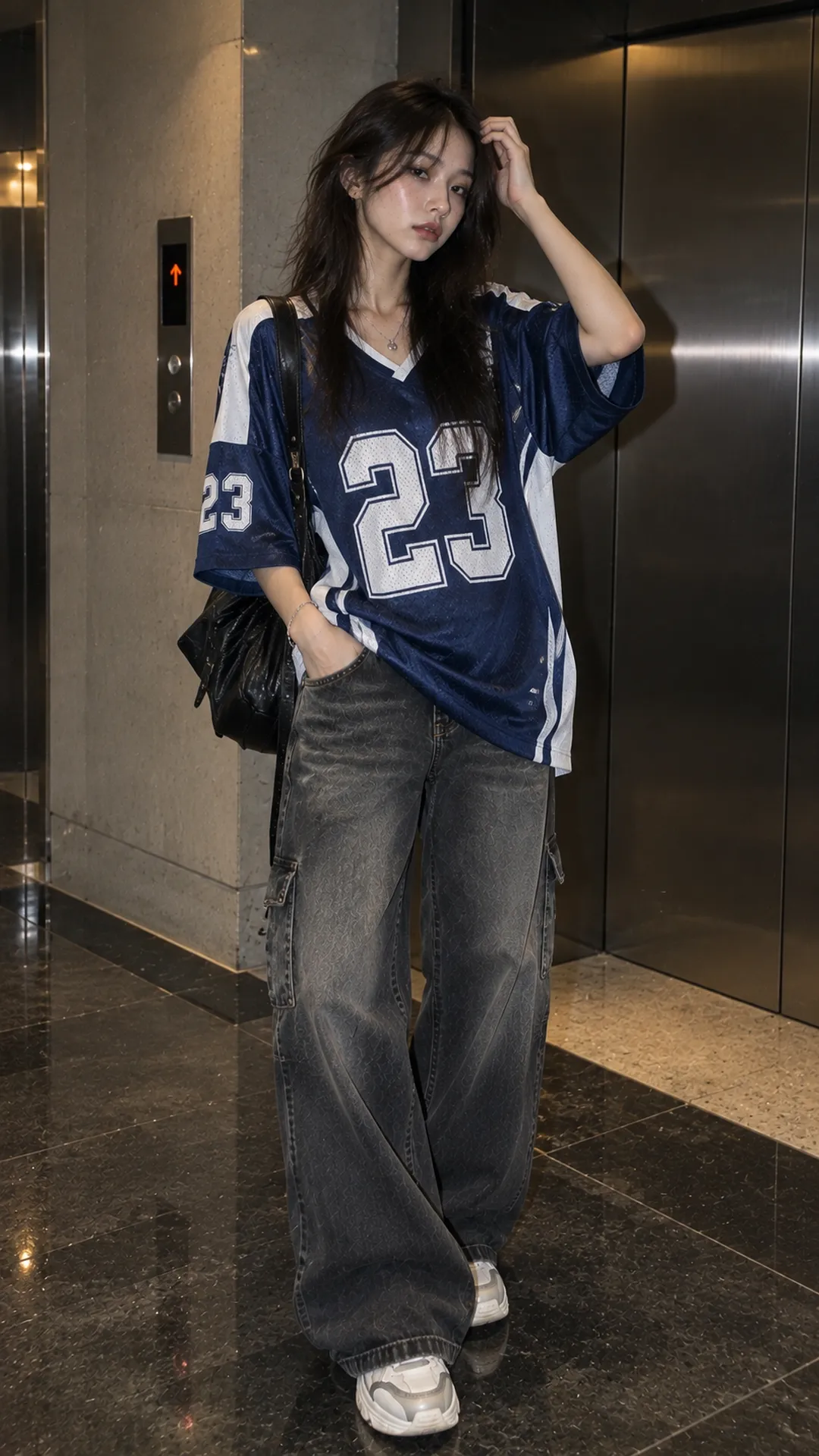
What does jersey mean in outfit styling?
Here, jersey means a sports or fashion top with athletic details such as player numbers, stripes, neck trim, team colors and competition-shirt construction. The word also names a knitted fabric, but the garment name alone does not establish fiber composition.
For example, the Nike Sportswear Club Jersey product page specifies a polyester body and lining and a loose fit. That describes one model, not evidence that every jersey shares its material, breathability or sweat-management properties.
For everyday wear, read descriptions in this order: fit, finished measurements, fabric composition, lining, graphic application and washing instructions. Athletic imagery does not necessarily mean the garment is designed for intense exercise.
Jersey is not synonymous with Blokecore. Blokecore is a style direction associated with football clothing and imagery; a jersey is an item that can be styled in several ways. For aesthetic context, see what Blokecore is; the sections below focus on choosing and wearing the top itself.
Identify the construction to choose suitable layers
Football jerseys: check the neck, shoulders and body
Many football designs have short sleeves with round, V-shaped or collared necklines. Fits range from close to loose, so check measurements before habitually sizing up. Shoulders and body length strongly affect how the top sits over trousers or a skirt.
Place it beside a well-fitting tee to compare chest width and length. If much longer, decide whether you want a loose silhouette or a tuck before buying, rather than trying to hide excess fabric inside a tight waistband.
Baseball jerseys: an opening placket adds options
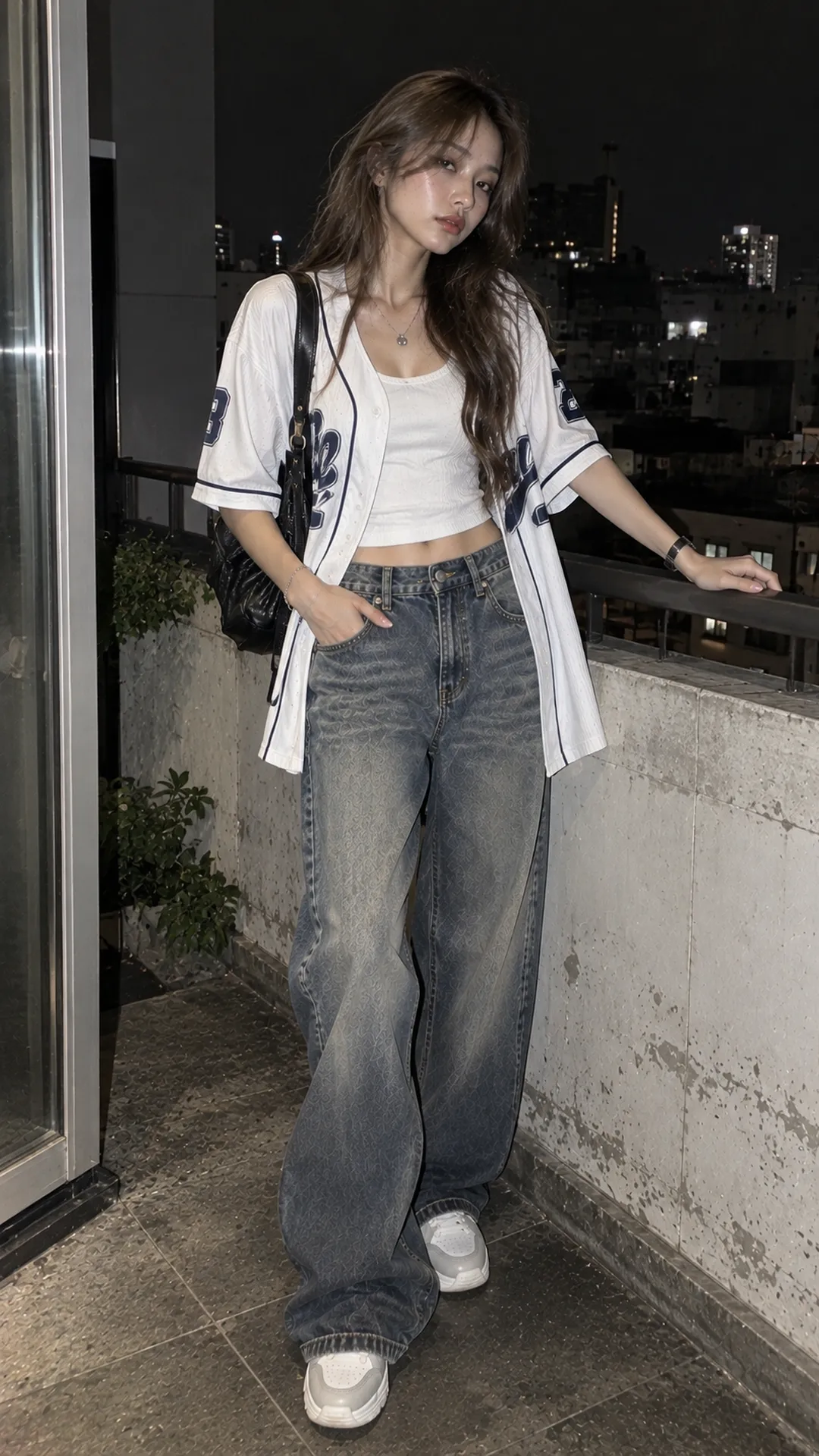
Baseball jerseys are often recognizable by front buttons and vertical piping. If the design opens, wear it over a neat tank or tee as a light outer layer. When buttoned, check for horizontal pulling or gaps at the chest.
Keep the inner top quieter if the jersey already has large lettering. A plain tank creates a central vertical line; a graphic tee competing with the lettering can crowd the chest. Two prints are possible, but let one lead.
Basketball jerseys: test armholes carefully
Basketball styles are commonly sleeveless with pronounced armhole openings. Alone, check exposure while reaching forward and bending. Over another top, choose a base that does not bunch at the armholes or crowd the neck.
Long sleeves underneath add color and lines but are not the default for hot days. Try a short-sleeved tee or a jersey with coverage better suited to standalone wear.
Long-sleeved jerseys: check the wrist width
Long sleeves add more upper-body fabric than short sleeves. If body and sleeves are both loose, neat trousers or a clearly shaped skirt keep the outfit readable. Check whether sleeves cover your hands or interfere with phone use.
Ribbed cuffs hold sleeves differently from straight openings. If rolling them, check for thick bunching at the elbow. Needing many rolls may indicate that the length does not suit daily use.
Choose intentional volume rather than simply sizing up
An intentionally loose top should keep the neckline and shoulder placement you want. Sizing up can also widen the neck, lengthen sleeves and lower the hem. Choose the cut first and a size within it, rather than treating one or two sizes larger as a streetwear formula.
Check chest width and body length in the product chart. Compare finished measurements with a top you own; for body measurements, follow the brand's directions. The online sizing guide helps distinguish these two systems.
Try the jersey with your planned pairing, not only the pants you wore shopping. One that works with wide jeans may almost hide a short skirt. If you like it covering the waistband, still check how much of the lower garment shows standing and seated.
In hot weather, consider lining and graphic thickness too. Visible mesh holes do not guarantee that the whole garment is breathable if the layer beneath is closed. A few minutes of wear and light movement can tell you more than touching a small fabric section.
Four women's jersey outfits with clear proportions
A jersey and straight-leg jeans
This is an easy starting point when the jersey has strong colors or large numbers. Choose minimally detailed blue, gray or black jeans so the top leads. With a long jersey, try a neat partial tuck or wear it loose with trouser hems that do not pool excessively.
Simple sneakers keep the look practical. For more presence at the feet, try a moderately larger sole while prioritizing comfort and your plans. A plain bag taking its color from the jersey trim connects the look without another pattern.
A loose jersey and clearly shaped skirt
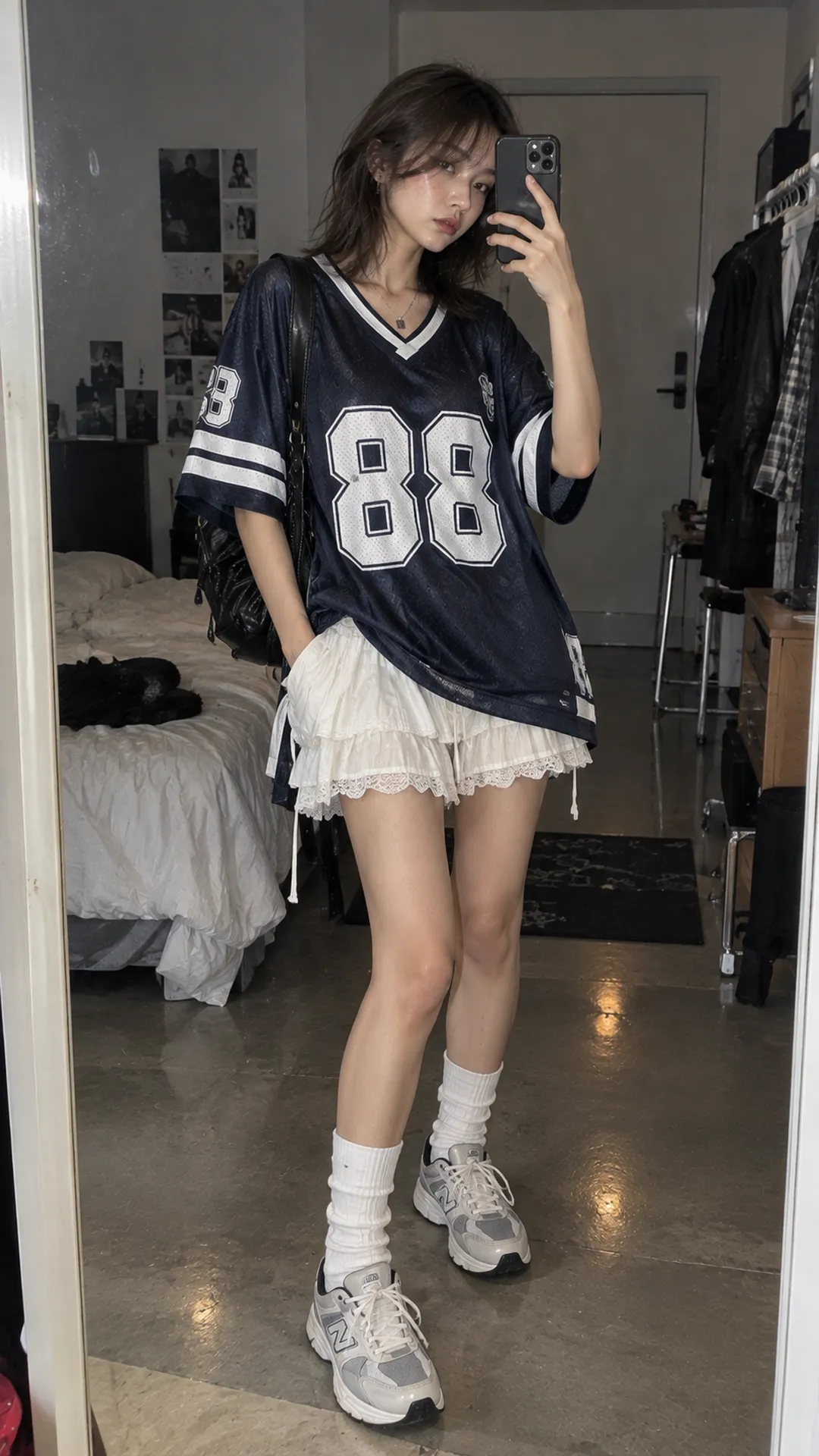
An A-line or pleated skirt contrasts with the athletic top. If you want both items recognizable, check that the jersey does not hide the skirt's entire construction. Choose a shorter top or tuck it if the fabric is soft enough.
With many pleats, avoid stuffing excess jersey fabric into the waistband and forcing them open. Try shoes and socks together: very tall socks combined with a long top may segment the visible legs more than intended.
An open baseball jersey over a plain top
Combine an unbuttoned jersey, single-color tank and straight trousers. A neat inner layer lets the fronts form a clear frame, while straight-hanging trousers limit accumulated bulk. A dark base under a light jersey can define the central line.
Keep the inner length intentional: near the waistband or securely tucked. A longer inner top showing randomly at the corners can look unfinished. See women's layering techniques to add layers while retaining distinct edges.
A jersey and minimally detailed cargos
Cargos add leg volume and can balance a large jersey. If the top already contains numbers, lettering and stripes, start with compact cargo pockets. Hanging straps, metal fasteners and bulky pockets can leave both halves competing for attention.
A colored jersey with black cargos is easy to control. If both are loose, check the top hem and shoes to preserve breaks. Use the guide to choosing trouser shapes to compare cargos with jeans and straight trousers before buying more.
Take colors from the jersey instead of matching every detail
Jerseys often contain several colors already. Start from a dominant background shade and neutral trousers or skirt, then repeat only one secondary shade in shoes, bag or socks. This connects the outfit without creating a completely matching uniform.
For example, a blue jersey with white numbers can work with gray jeans and white sneakers. Burgundy with cream trim can pair with black trousers and a cream bag. These are styling ideas, not rules based on teams or sports.
Notice color placement too: some jerseys are bolder at the back. A backpack or crossbody strap may cover or divide the graphic. Check front, back and side views to decide which accessories actually help.
Preserve graphics and shape according to each label
Before buying another jersey, style your existing one with two different bottoms. Note the exact difficulty: excess length, deep armholes or a hard-to-combine palette. If the issue is cut, another color in that cut may repeat it. The guide to choosing women's tops by construction helps compare jerseys with your existing base tops and identify what is genuinely missing.
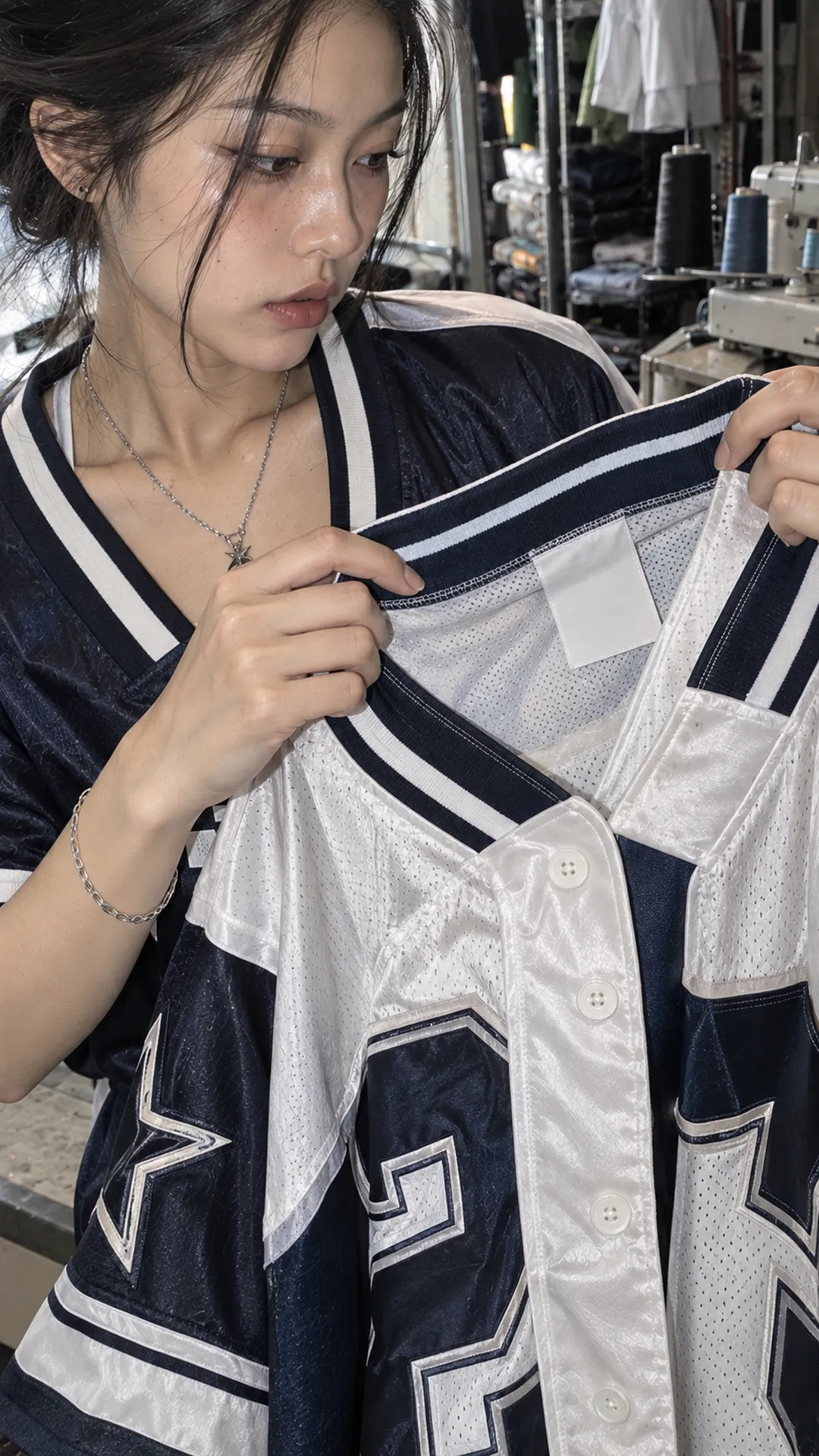
Jerseys use different methods for letters, numbers and badges. Do not apply one washing or ironing temperature to all. Read and keep the label instructions, and ask the brand if decoration needs different care from the body.
Before washing, check for zippers, metal hooks or loose accessories that may snag the fabric. Address peeling details or loose seams through suitable repair guidance. Do not use high heat to reattach a graphic without knowing its material and application method.
Return to three questions when preparing an outfit: do the neck and armholes stay comfortable in motion, does the hem work with the bottoms, and does the graphic have room to be seen? Once those work, shoes and a bag suited to your plans are often enough.