

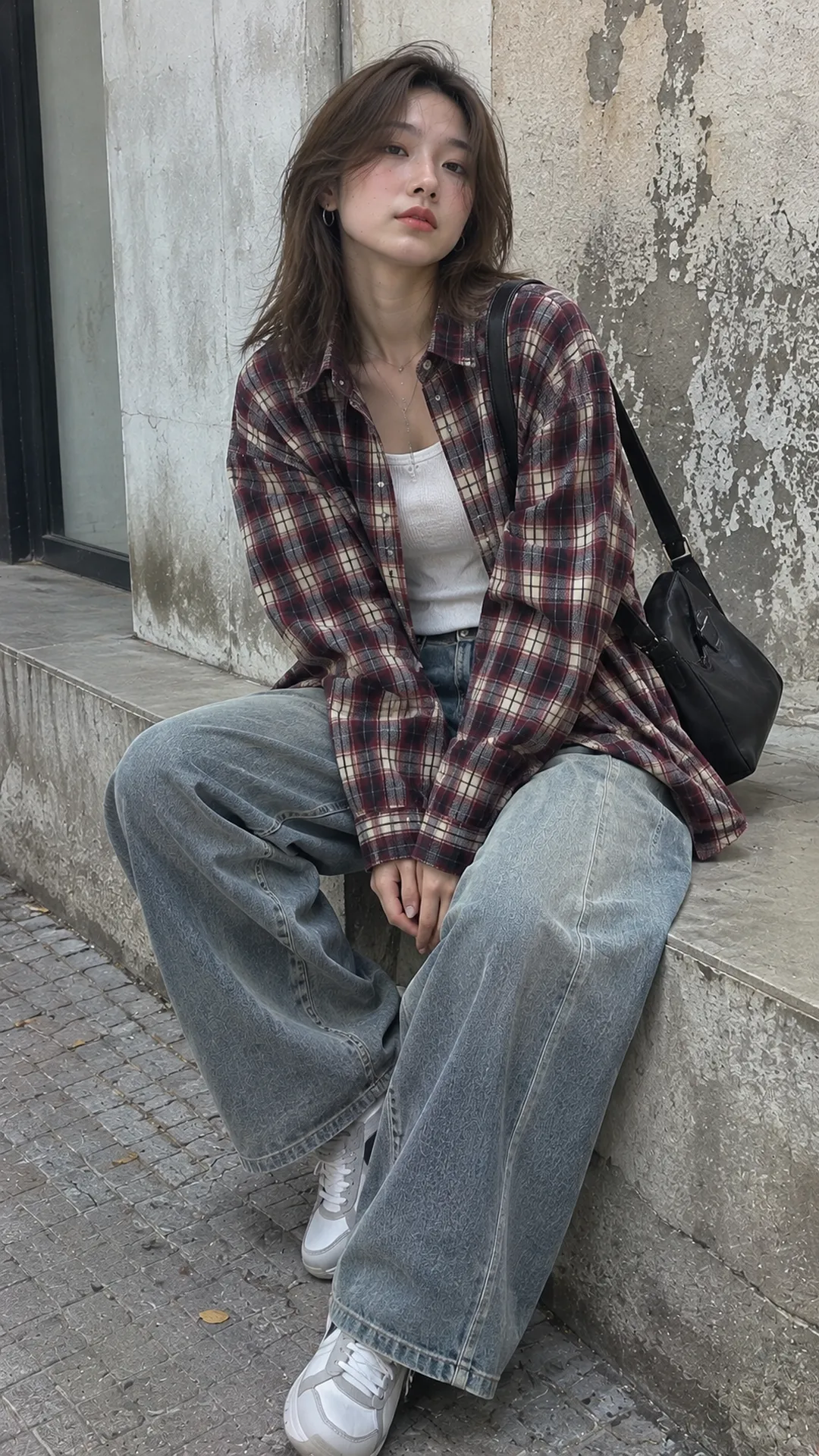
Identify the flannel garment before choosing a style
A flannel shirt generally means a shirt made from flannel fabric. CottonWorks describes flannel as a woven fabric brushed to raise surface fibers and create a soft feel. Flannel therefore refers to the fabric, while plaid describes the pattern; the terms are not interchangeable.
Product names are sometimes used loosely. A plaid shirt that looks like flannel may not have that surface, while a solid shirt can still be made from flannel. Check composition, close-up photos and construction details instead of choosing only by the plaid colors.
For styling, next establish whether the garment is soft or structured, thin or thick, lined or unlined. This guide focuses on choosing and wearing the garment. The fabric name alone does not mean every version offers the same warmth, breathability or seasonal suitability.
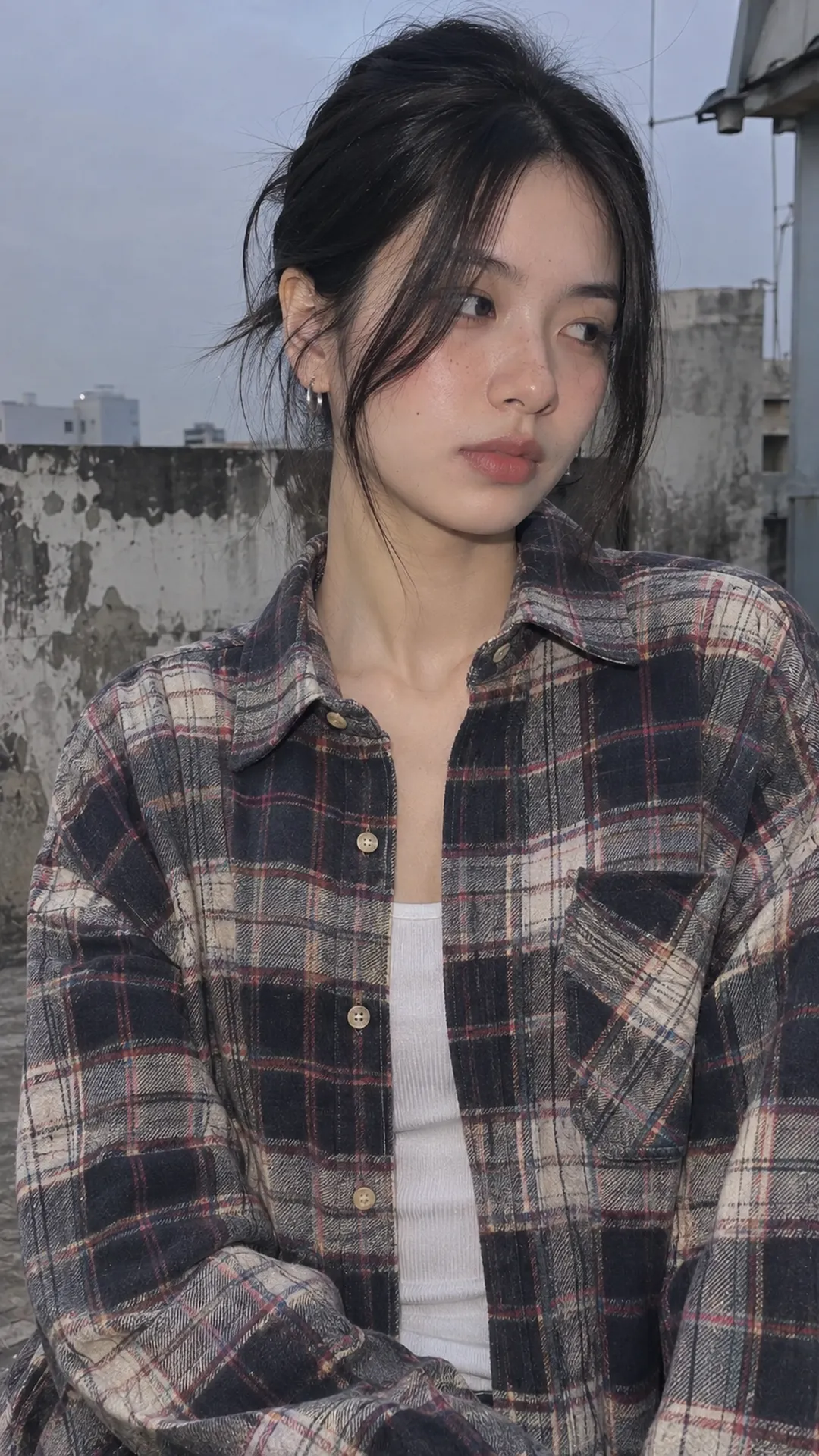
Shirt, jacket or hooded flannel: choose by use
A flannel shirt as your main top
Choose enough room to sit and reach forward without the buttons pulling open. For tucking, the fabric and body length need to sit comfortably inside the waistband. A very thick or long shirt can create bulk, even if it looks good untucked.
A regular fit suits you if you like a defined shoulder line; a loose cut feels more relaxed. Neither is compulsory for any body shape. Look at where the shirt ends on your hips, the sleeve width and how it works with your intended pants.
A flannel jacket or overshirt
Try an outer-layer design over your actual base top. Check whether the inner sleeves ride up, the back pulls or the cuffs lack room. If it is lined, account for that thickness rather than judging only the outside dimensions.
An overshirt can frame a simple T-shirt and pants. But if you need something to wear all day in hot weather, a thick, multilayered version may be inconvenient. Choosing function first helps avoid buying something that only feels good for a few minutes of photos.
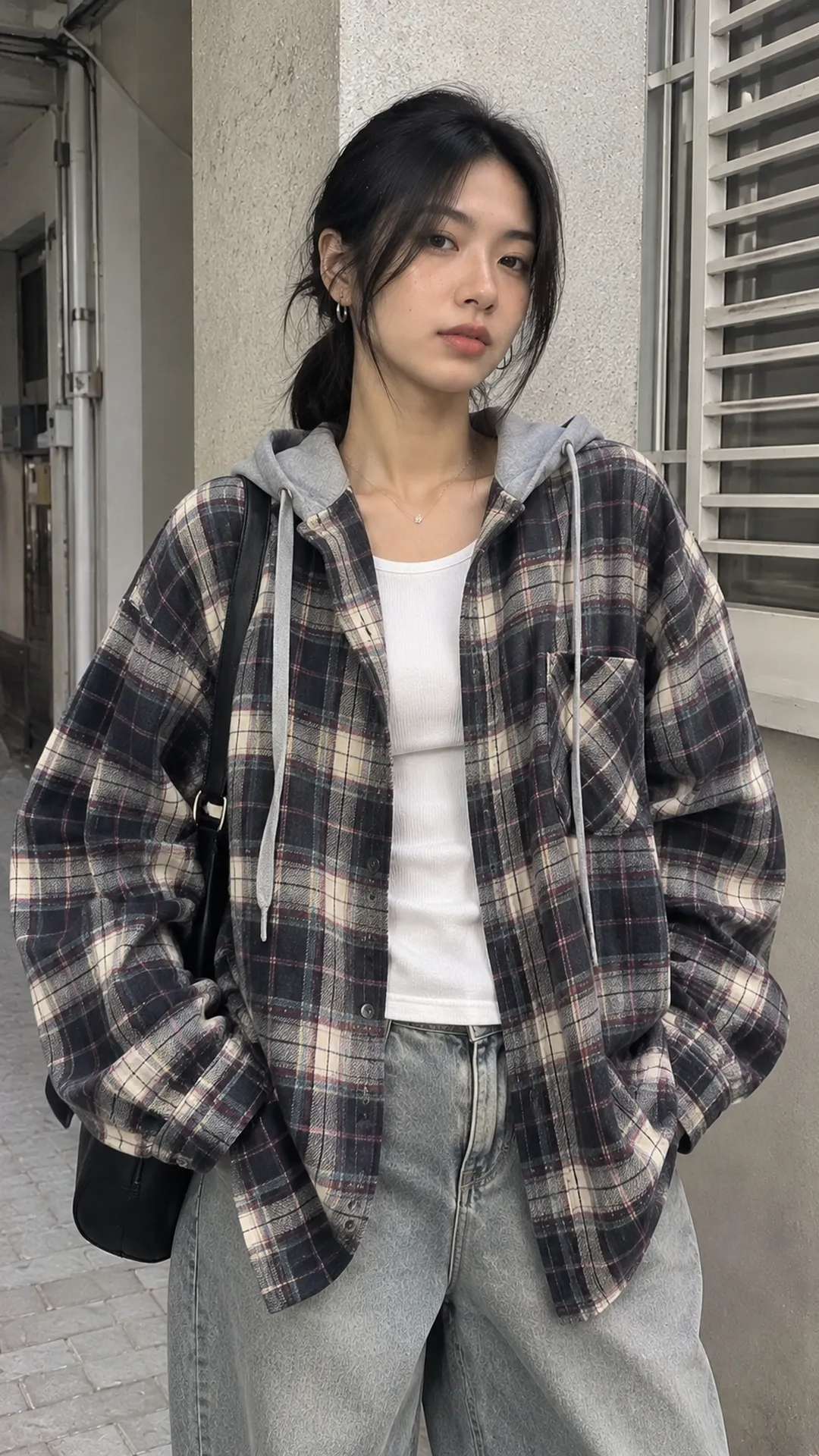
Hooded flannel
The hood adds volume at the neck and upper back. Turn, lean back in a chair and carry your bag to see whether it bunches or pulls the neckline. If the hood is removable, ask about its construction and try both arrangements; do not assume every product has that feature.
For a neater hooded look, try a simple neckline underneath and limit additional hoodie layers. If you intentionally wear two hoods, allow enough neck space and room in the outer garment. Our women's layering guide helps you assign each layer a role before adding more.
Try five movements, beyond standing at the mirror
- Button up and reach both arms forward: check for pulling across the back, armholes and button row.
- Sit down: check whether the hem, waistband and shirt body bunch together.
- Bend your elbows: see whether the sleeves pull at the wrists or squeeze the upper arms.
- Put on your usual bag: notice whether the strap pulls the shoulder far out of place.
- Put on and remove the outer layer: check that the base outfit stays neat and complete.
When buying online, ask for finished-garment shoulder, chest width, body length and sleeve measurements. Compare them with a well-fitting garment used in a similar way, rather than a tight stretch top. Even an oversized label needs measurements to show where the extra room is.
Check the hem separately too. A long curved hem can move nicely when untucked but behaves differently from a short straight hem. If you are comparing types of tops, our Women's Tops Guide helps you compare each item's shape, layering use and styling options.
Choose plaid or solid flannel for your wardrobe
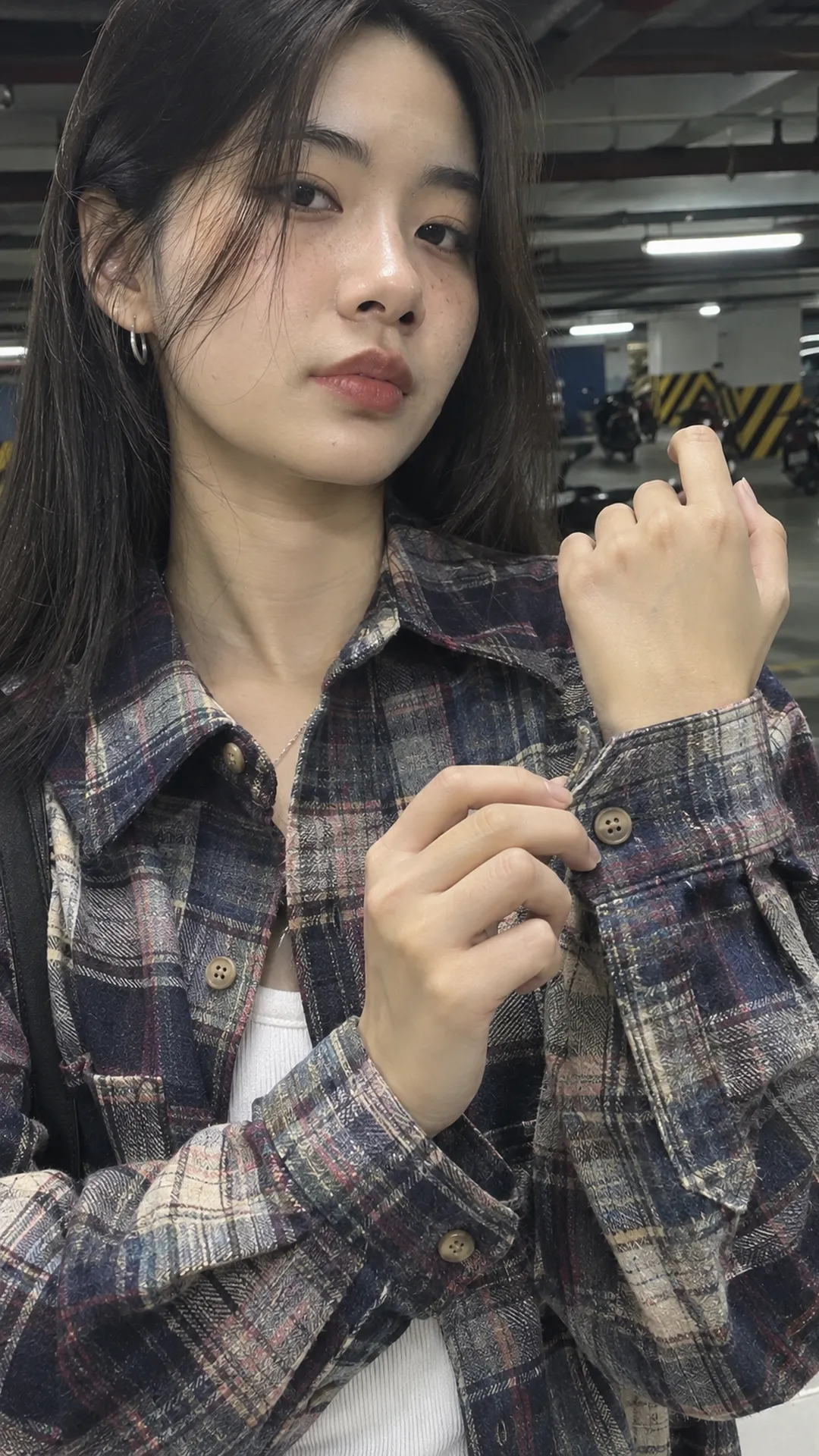
For multicolored plaid, repeating one check color in the base layer or pants is an easy starting point. Red-and-black checks can work with a black tee and dark jeans; blue-and-white checks with an ivory base. Accessories do not need to repeat every color in the shirt.
Large, strongly contrasting checks usually attract more attention than small lines in similar colors. Put the shirt on and look from a distance to see whether the pattern gives the impact you want. You may like it close up but find the full outfit too busy.
Solid flannel suits a focus on silhouette or a printed base top. Try charcoal, brown or muted green with pants you own. The soft surface and placket still provide character; plaid is not necessary to identify the fabric as flannel.
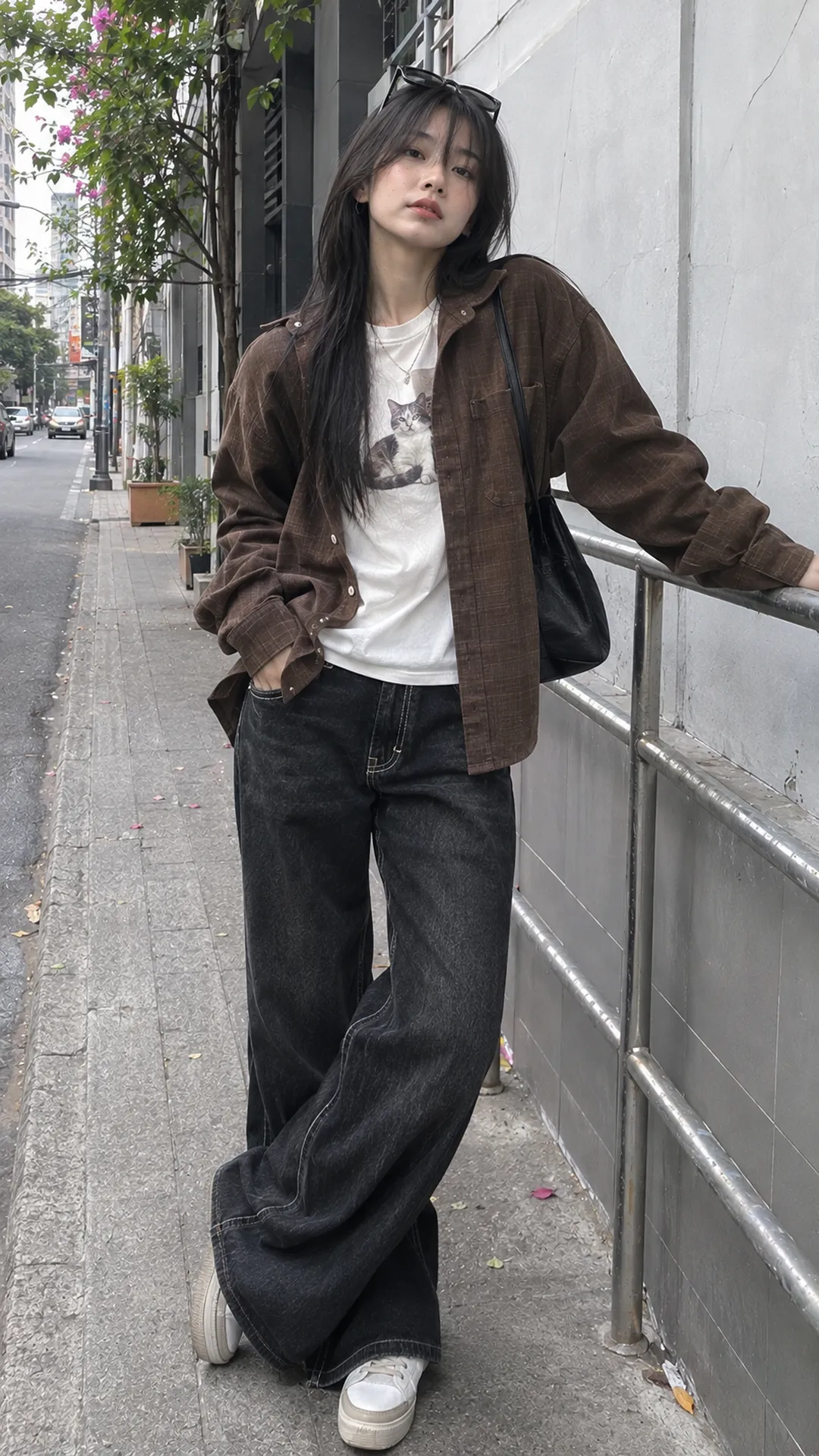
Five adaptable women's flannel outfits
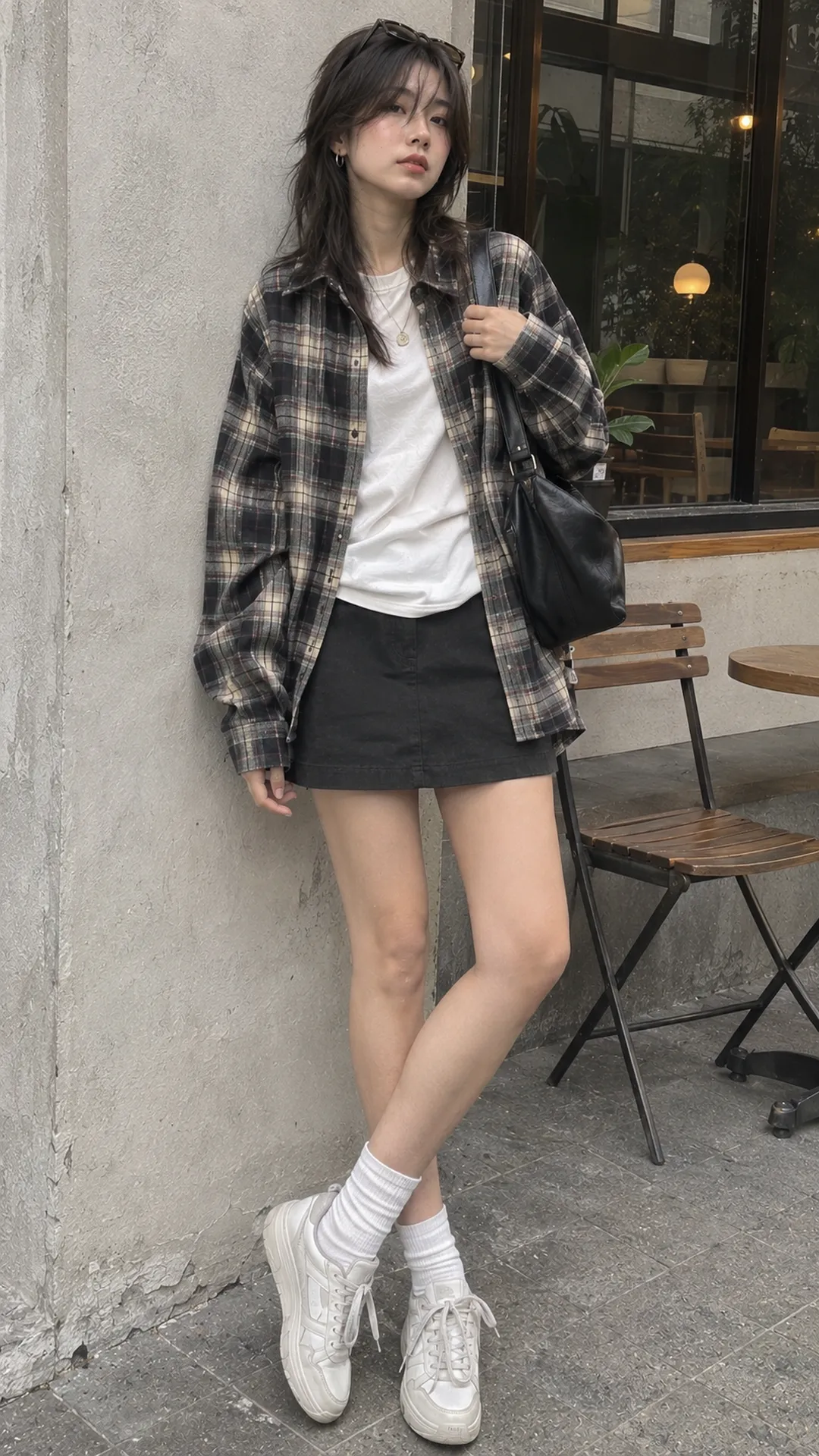
Open over a plain T-shirt and straight-leg jeans
Let the flannel provide the main color and keep the tee and jeans simple. The open fronts reveal the base layer; leave sleeves down or roll them neatly if the construction allows. Sneakers suit walking, while loafers give a neater feel without changing the clothes.
If the outer shirt is long and wide, try a tee ending near the waistband to define the outfit's middle. It need not be tight. What matters is avoiding fabric packed into folds beneath the arms and feeling comfortable when you remove the flannel.
Buttoned with relaxed trousers and streamlined shoes
Choose solid flannel or low-contrast checks for an everyday shirt. Relaxed trousers with a defined waistband connect the upper and lower halves. Tuck when the fabric is soft and not too thick; if untucked, choose a length that leaves the pants details you want visible.
Test the outfit while sitting at work as well as standing. If the shirt balloons at the waist, adjust the tuck or change the cut instead of tightening your belt. Shoes with enough presence for the trouser hem keep the outfit's finish visible.
Loose flannel with a plain skirt
An A-line or straight skirt can contrast with a loose shirt. Leave enough skirt visible for the proportions to look intentional; if the shirt hides nearly all of it, recheck length and coverage while moving. You need not choose a skirt shorter than you find comfortable.
With bold plaid, try a black skirt and plain bag. Boots give the feet a stronger accent, while sneakers soften the direction. Our women's grunge outfit guide offers more flannel and layering ideas; borrow one useful element without copying an entire outfit.
Solid flannel with minimally detailed cargo pants
Keep the base top simple and choose cargo pants whose width works with the shirt. If the cargo pockets already protrude, a slightly shorter outer shirt can keep them visible without pushing the fronts outward. When shirt and pants are both dark, a visible light base layer between them creates distinction.
Hooded flannel with a neater leg shape
The hood and shirt body often already add volume, so try straight or moderately tapered pants first. Keep the base neckline simple and choose a bag that does not push the hood upward. If you like wide pants, assess the hem length and shoe weight instead of assuming the combination is forbidden.
Vintage flannel: assess design and condition separately
“Vintage” in a listing may mean an actual older garment or a new design with an aged look. If origin and age matter to you, ask for specific details rather than inferring them from faded colors or filtered photos. Muted plaid alone does not make a shirt vintage.
For secondhand pieces, request photos of the collar, underarms, cuffs, placket and inside. Check for missing buttons, weak seams, worn areas and repairs, and ask for current measurements. An old size label cannot replace measuring the actual shirt, especially when its care history is unknown.
Distinguish wear you deliberately like from problems that make the shirt difficult to use. Faded color may suit your taste, but musty odors or open seams need attention and should affect your purchase decision. Look beyond an attractive front photo to areas that get frequent contact.
Finishing the outfit and keeping the shirt wearable
Plaid already has many lines, so add accessories one at a time. Try the bag first, then consider a bracelet or belt. If attention is pulled toward too many places, remove one detail instead of changing the whole outfit. Our statement accessories guide for women helps you choose by placement and visual impact.
On hot days, consider a thin unlined shirt or save flannel for cooler periods. When tying it around your hips, check whether sleeves and fronts interfere with sitting, riding or passing through narrow spaces. A styling accent is useful only if it does not require constant holding and adjusting.
Follow the specific product's care label: the name flannel does not reveal its full composition or construction. Check loose buttons and seams before problems grow, and store the shirt once dry according to its instructions. One well-fitting shirt that works with existing pieces is often more worth keeping than several similar versions differing only in color.