Choose for the Tết day you will actually have
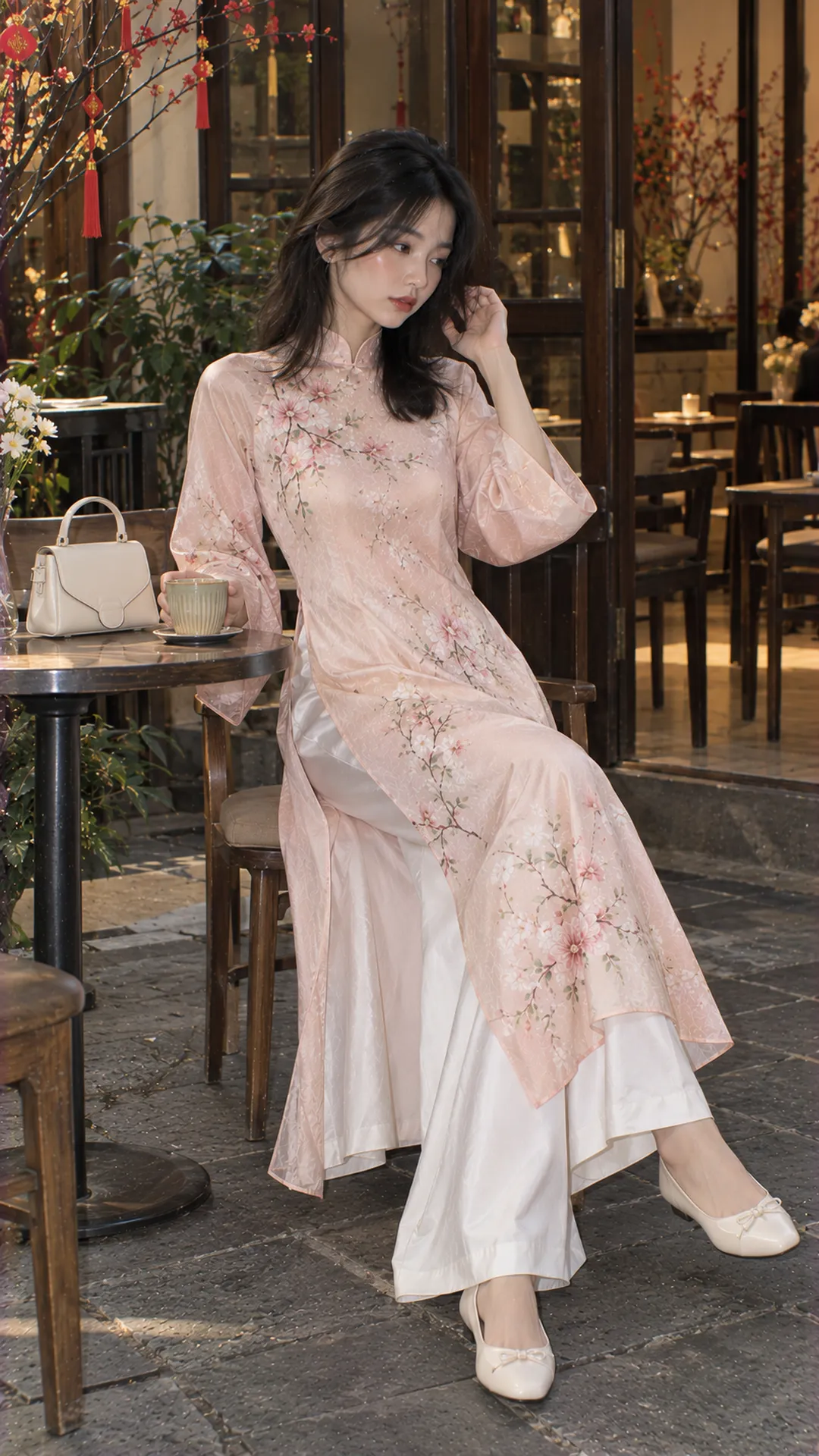
For family visits and meals, prioritize comfortable sitting, a waist that does not strain and sleeves that stay clear of the table. A fitted tunic may look right standing, while seated buttons or zippers reveal tightness. Sit for a few minutes, rest your hands on a table and turn before deciding.
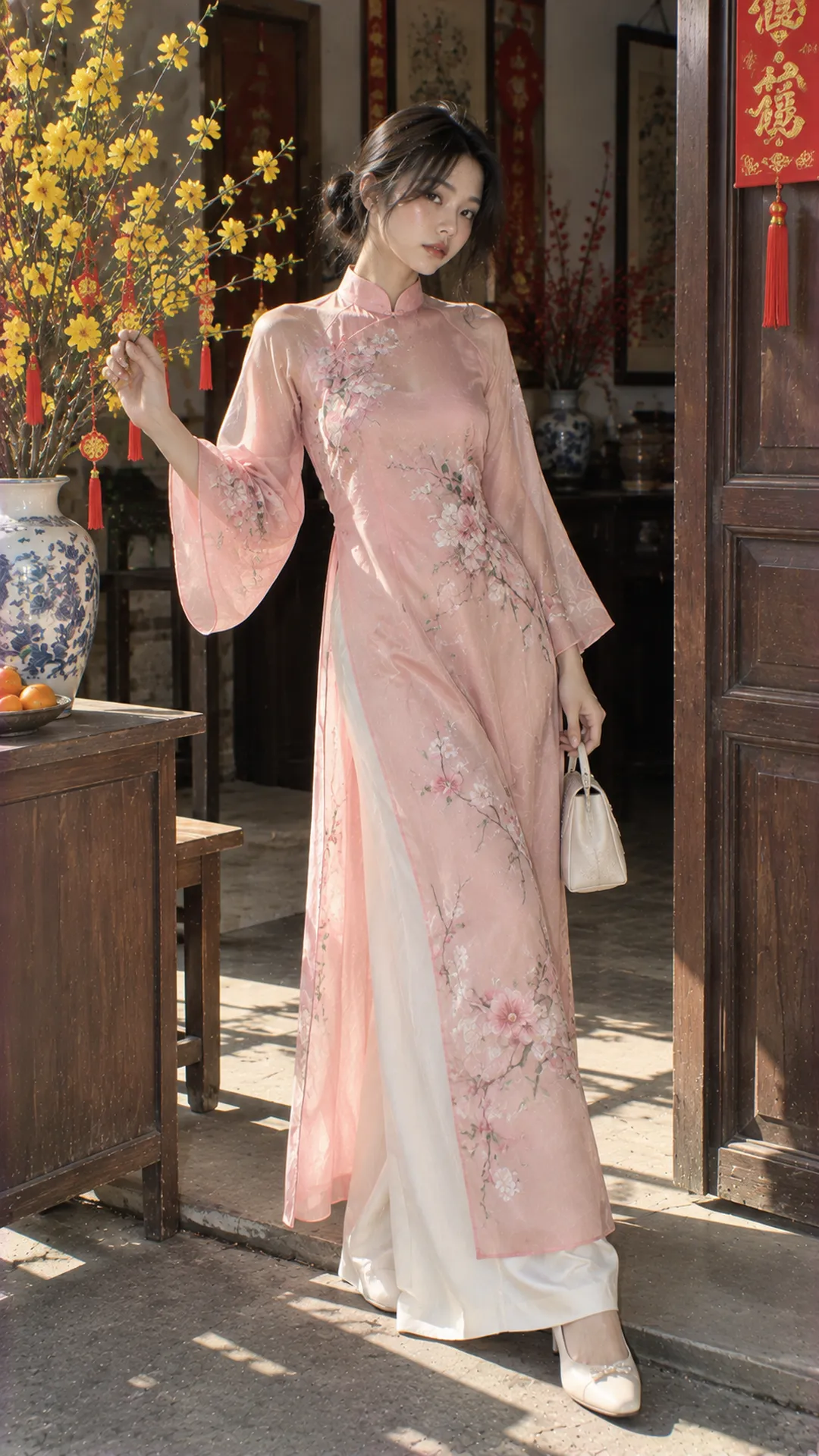
For street photographs in crowds, check panel length and shoe security before accessories. Overlong panels may sweep the ground or catch on someone behind you. On steps, try holding the panels with one hand while carrying the bag with the other. Continually lifting both tunic and trousers signals a length needing adjustment.
For morning-to-evening plans, consider outdoor and air-conditioned temperatures. A removable outer layer is more flexible than several enclosed underlayers. Apply activity-based choices from the guide to outfits for different outings, then adapt them to the áo dài's construction.
Lightly fitted, straight and adapted designs
Lightly fitted: a waistline with movement room
This defines the upper body and keeps panels falling neatly when you want waist emphasis. Look for horizontal tension at bust, armholes and hips. Multiple pulling lines while standing naturally suggest another size or alterations rather than holding your stomach in throughout.
Waist circumference alone does not determine fit. Waist placement, armhole depth and shoulder construction affect comfort. If the bust fits but raising arms is difficult, ask about sleeve construction rather than only sizing up. A shoulder or armhole change may help more than widening the whole torso.
Straight-cut áo dài: manage width without ignoring measurements
A straight cut reduces waist emphasis but still needs suitable shoulders, neck and bust. Excess sizing for comfort may make the tunic tip forward or shift sleeves. Seek movement room that preserves the panel line you want.
Trousers also change proportions. With a roomy tunic, moderate drape and tidy hems are easier to manage than several inflated fabric areas. If you like overall volume, retain relaxed tunic and trousers while testing length and fabric weight to reduce bunching at the feet.
Modern adaptations: do the changes serve your needs?
Round necks, short sleeves, shorter panels or altered cuts can bring comfort closer to everyday habits. Vietnam Tourism also introduces contemporary variations in necklines, sleeves and length. You do not need the most modified design; one useful detail can be enough.
Read fabric together with lining, not names alone
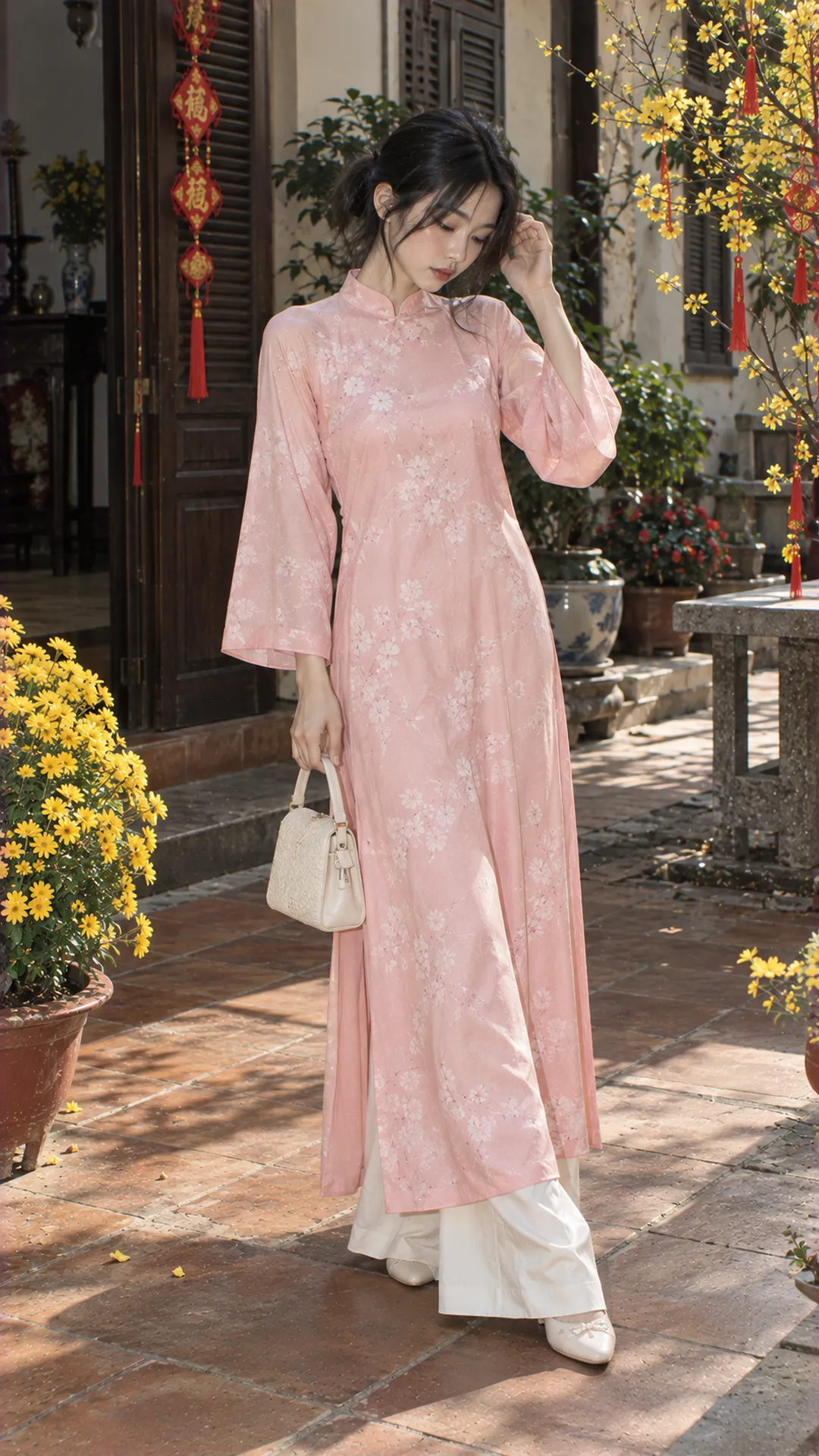
Names such as silk, satin, brocade, chiffon or organza do not explain the whole wearing experience. Ask about fiber content, weight, lining and care for the specific product. Two tunics sold as silk can differ considerably in drape or stuffiness over time.
For soft panel movement, watch normal-speed walking and turning video. For clearer lines, observe shape retention at collar, shoulders and sleeves. These are different visual priorities; no fabric is always best.
For thin materials, inspect transparency at torso, back and side slits in daylight, both standing and under slight tension. Underlayers should give your preferred coverage without unwanted edges. Avoid choosing a very sheer tunic then adding thick layers that defeat the original lightweight goal.
Test embroidery, attachments and raised surfaces with the bag and jewelry. A stiff strap may rub embellishments and bracelets may catch sleeves. Bring intended accessories to fittings, or at least check contact points instead of viewing each item on a hanger.
Choose color for your intended emphasis
Red áo dài are a familiar Tết choice; Vietnam Tourism associates red with wishes for good luck at this time. Choose bright red, deep red or one red detail according to desired emphasis. Red is not a condition for an appropriate Tết outfit.
For pink, blue, yellow or beige, hold fabric near your face in natural light and assess the complete outfit. Phone photographs and store lighting can differ outdoors. Choose a shade you like without assuming light skin is always cool-toned or darker skin must avoid pale colors.
A large chest motif draws attention upward; flowers running down a panel guide the eye along its length. These are focal choices, not rules for hiding bodies. For face or jewelry emphasis, plain fabric or sparse patterns leave more breathing room.
Trousers and shoes determine all-day usability
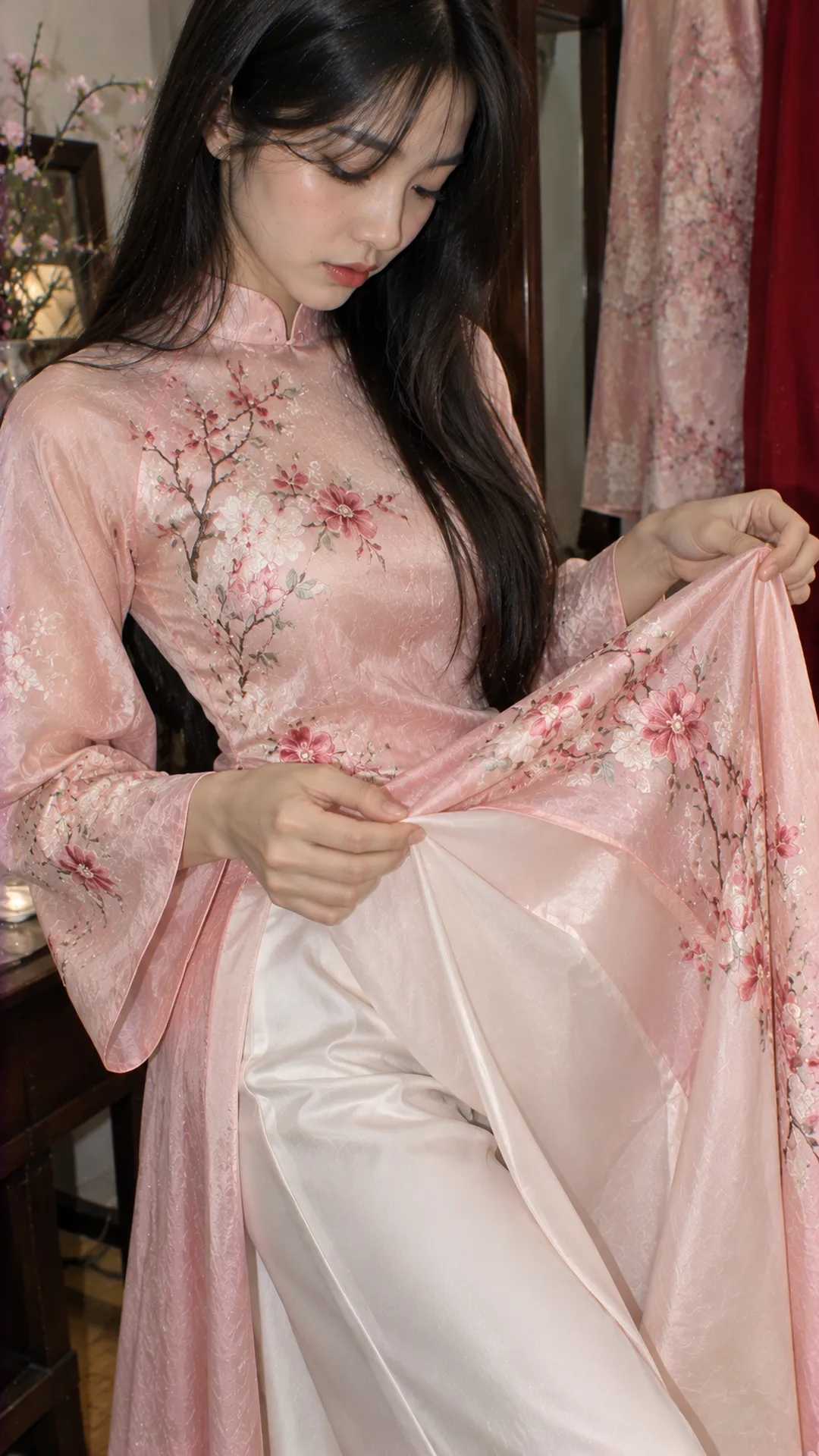
Try the trouser waistband with the tunic to check ridges or displaced waistlines. A waistband comfortable standing can dig in during a meal. For stretch trousers, check recovery after trying; for zippers, assess access and skin contact.
Finalize trouser length in the actual intended shoes. Do not hem for high heels then switch to flats without another test. Walk, turn and step up to check whether the hem rolls beneath the sole.
High heels are optional. Low shoes or streamlined sandals can work where proportions and context allow. For long walks, prioritize a familiar pair. Shoes forcing tiny steps or constant balance adjustments reduce comfort in the áo dài.
Accessories: one focal point, practical supporting pieces
With a bow collar, attached flowers or dense pattern, omit a necklace and try small earrings. For a plain tunic, clearly shaped earrings or a structured bag can lead. Step back: what appears first, and is that what you want?
A bag should hold phone and essentials without pulling the shoulder out of place. A clutch can suit a short visit; a strap may help during travel if it does not crease or rub decorations. A matching headpiece, clip or hair flower is optional, not a required accessory set.
For a jacket, check the sleeve and collar room of both layers. Principles from women's layering by thickness and length help choose an outer layer that does not compress the tunic. A light removable jacket is often more useful than accessories added merely for completeness.
Three reference outfits to try with existing items
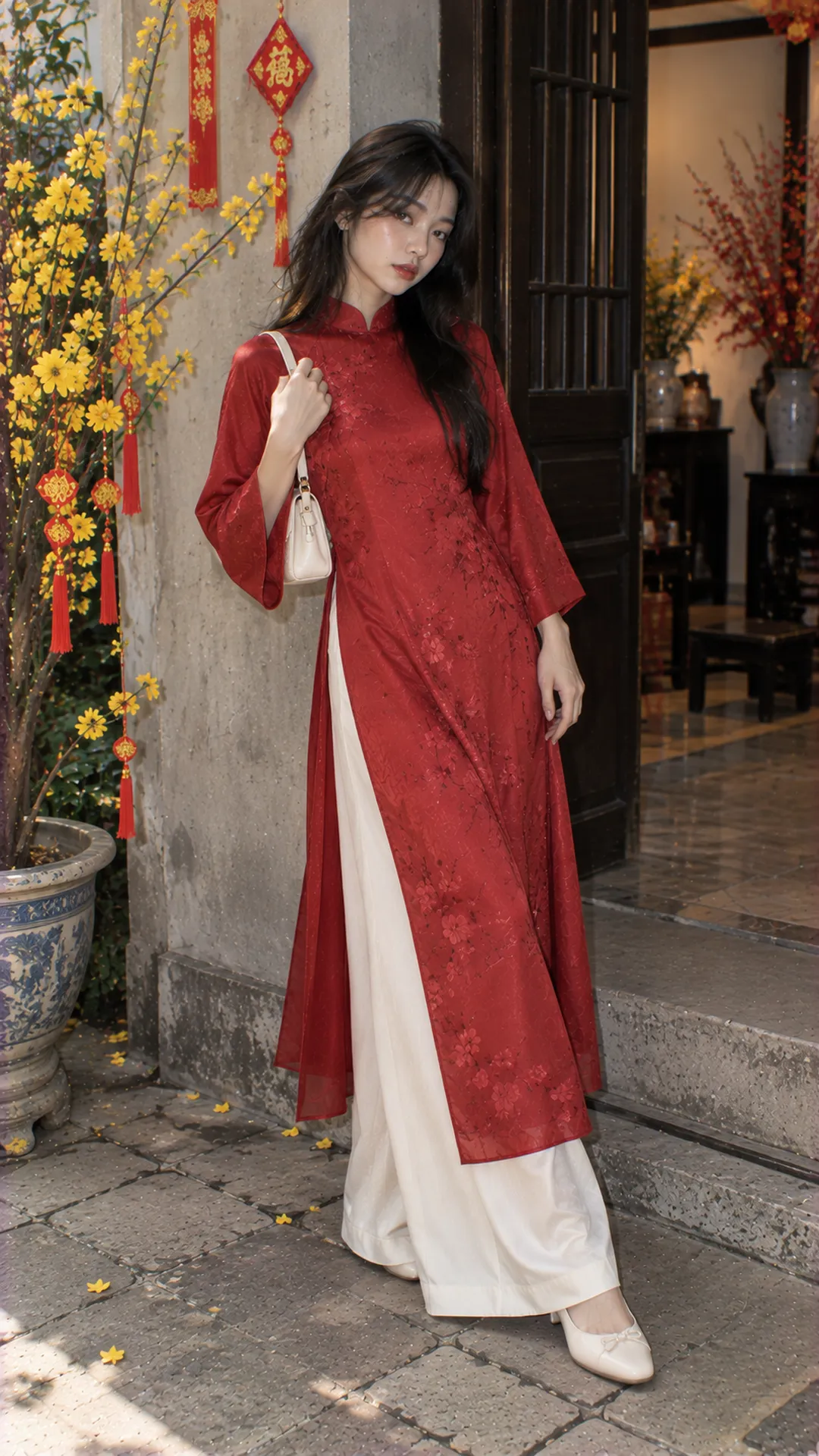
Family visits: deep red, light trousers and small accessories
Choose a lightly fitted or moderately straight tunic, draped light trousers and neat low shoes. Keep the bag simple when the tunic has flowers. Color leads, while light trousers create a clear transition between panels. Before all-day wear, sit on a chair similar in height to the dining seat.
A city walk: shorter panels, tidy trousers and familiar shoes
For an adapted design you like, prioritize panels clear of the ground and trousers that do not catch. A small zipped bag helps more than a prop for posing. Put your actual phone inside to check whether its weight distorts the tunic or restricts the arm.
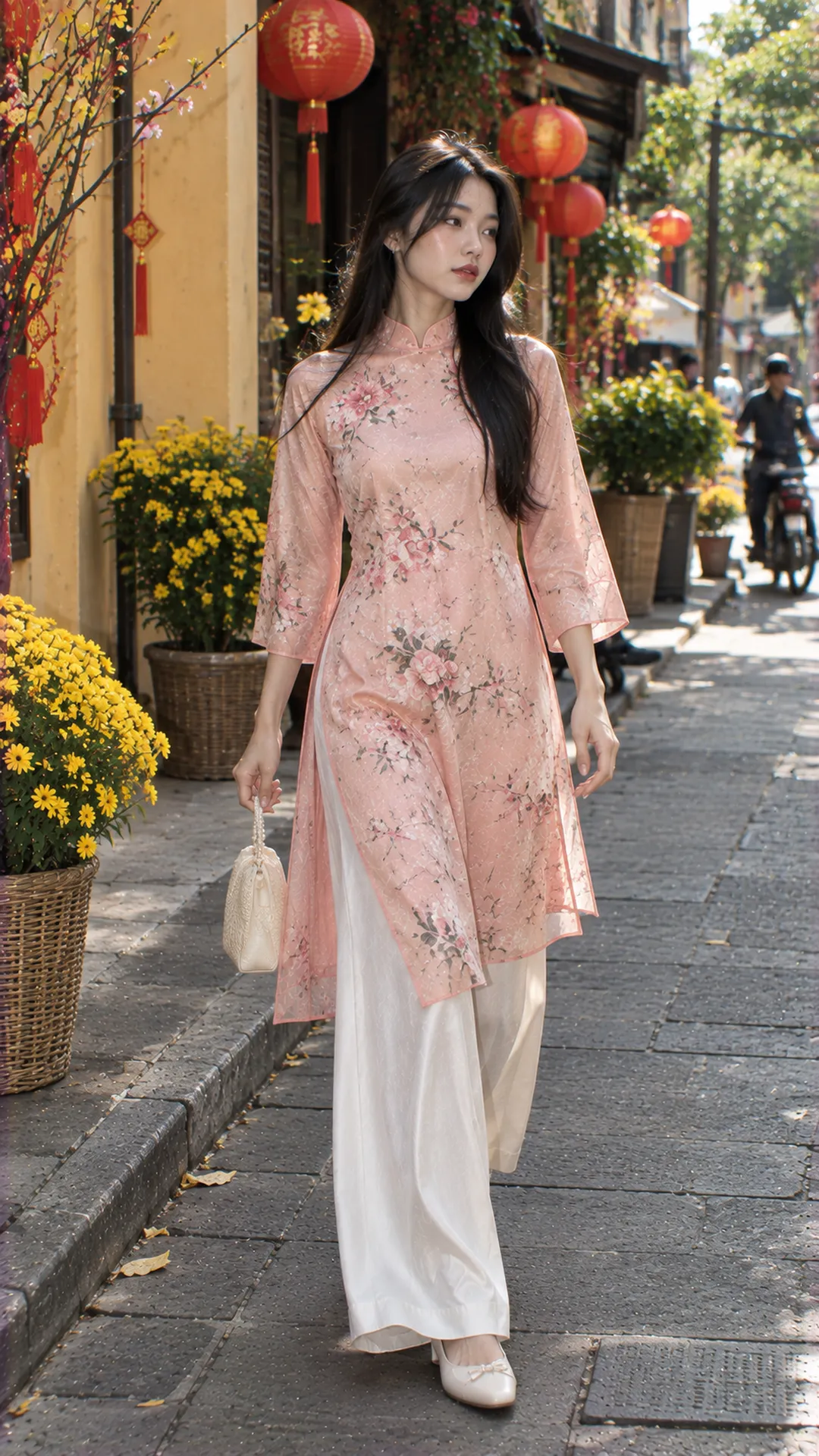
Gentle photographs: pale color and one contrast
Pale pink or soft blue can accompany cream trousers and a slightly darker bag. Small contrast prevents accessories disappearing against a light base. Test the intended backdrop: a very pale tunic against white may require a different standing position rather than a new dark outfit.
Check before buying or commissioning
For ready-made pieces, distinguish body measurements from finished-garment dimensions. The online sizing guide explains reading those charts; apply measuring principles rather than another top's measurements as an áo dài standard. Do not choose by S, M or L alone.
- Fasten every button or zipper without pulling the edges together under tension.
- Sit, raise your arms, turn and step up to assess movement.
- Check side slits, lining and transparency in clear light.
- Wear the actual shoes to finalize panel and trouser lengths.
- Ask whether the sale includes trousers, lining or accessories, or only the tunic.
- Confirm alteration timing and size-exchange conditions before paying.
Leave time to try again after alterations. Correct shoulders with incorrect length still need adjustment; hemming cannot solve a tight bust. With a limited budget, prioritize fit and existing accessories before more decoration.
Keep the áo dài wearable after Tết
Read care labels before washing or ironing, especially multiple layers and attachments. Do not use one temperature for every fabric. If composition is unclear, ask the seller rather than experimenting in a visible area. After wear, inspect hems and bag-contact areas before storing.
A design with fewer seasonal details may work for later gatherings or photographs. Different shoes, bags and hair can change the result. Reuse and additional costs are covered in Apocalypse Closet's shopping guide collection, supporting purchases based on actual use.