

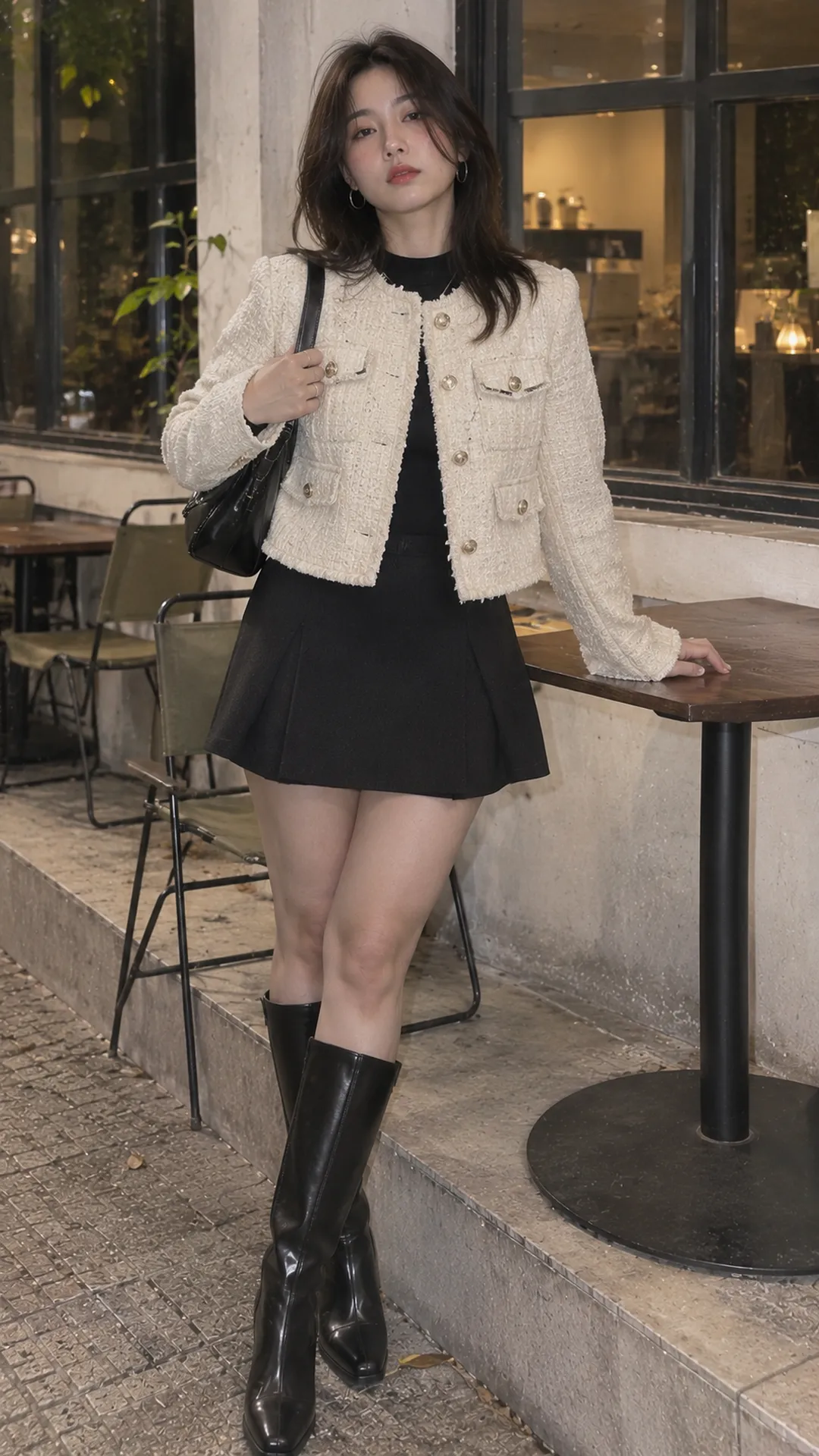
Read the texture before choosing colors
Look at the jacket up close and from a few steps away. Up close you see individual colors, raised yarns, and trim. From a distance, those colors may blend into a dominant shade. Use that shade to choose the trousers or skirt. Pick up a smaller yarn color in an accessory if you want.
Tweed comes in several patterns. For example, the Harris Tweed Authority shows twill, herringbone, and checks among Harris Tweed fabrics. Harris Tweed is a specific category. A garment listed as tweed can come from a different source and have a different fiber composition.
Check the fiber label and lining for the exact garment. Raised yarns alone won’t establish quality, warmth, or origin. If a listing says “premium,” look for details about the construction, finish, and warranty.
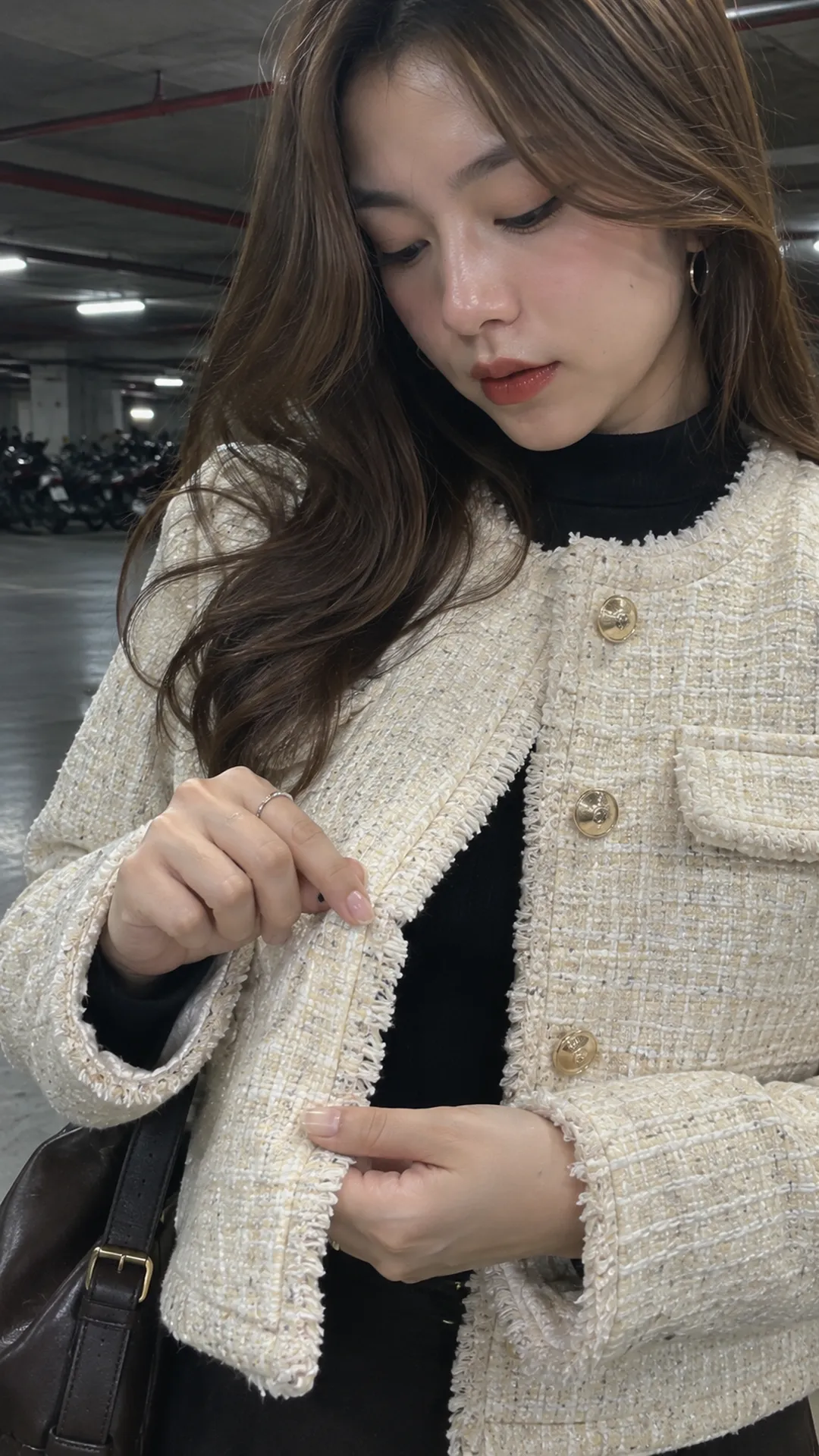
See how trim, buttons, and pockets shape the look
Contrasting trim can outline the neckline, front, hem, and pockets. If all four stand out, the jacket already has several strong lines. A plain top lets you see them, while a large graphic underneath may compete with the trim.
Large or shiny buttons make a row of focal points. Try the jacket fully closed, partly open, and open. If you want to wear it as a top, sit down to check coverage and gaps between buttons. The jacket’s construction and the setting will determine whether that works.
Chest pockets and pockets near the hem add volume. Large pockets on a short jacket can take up most of the front. See whether you like the effect with your actual trousers or skirt rather than judging a close-up of the jacket on a hanger.
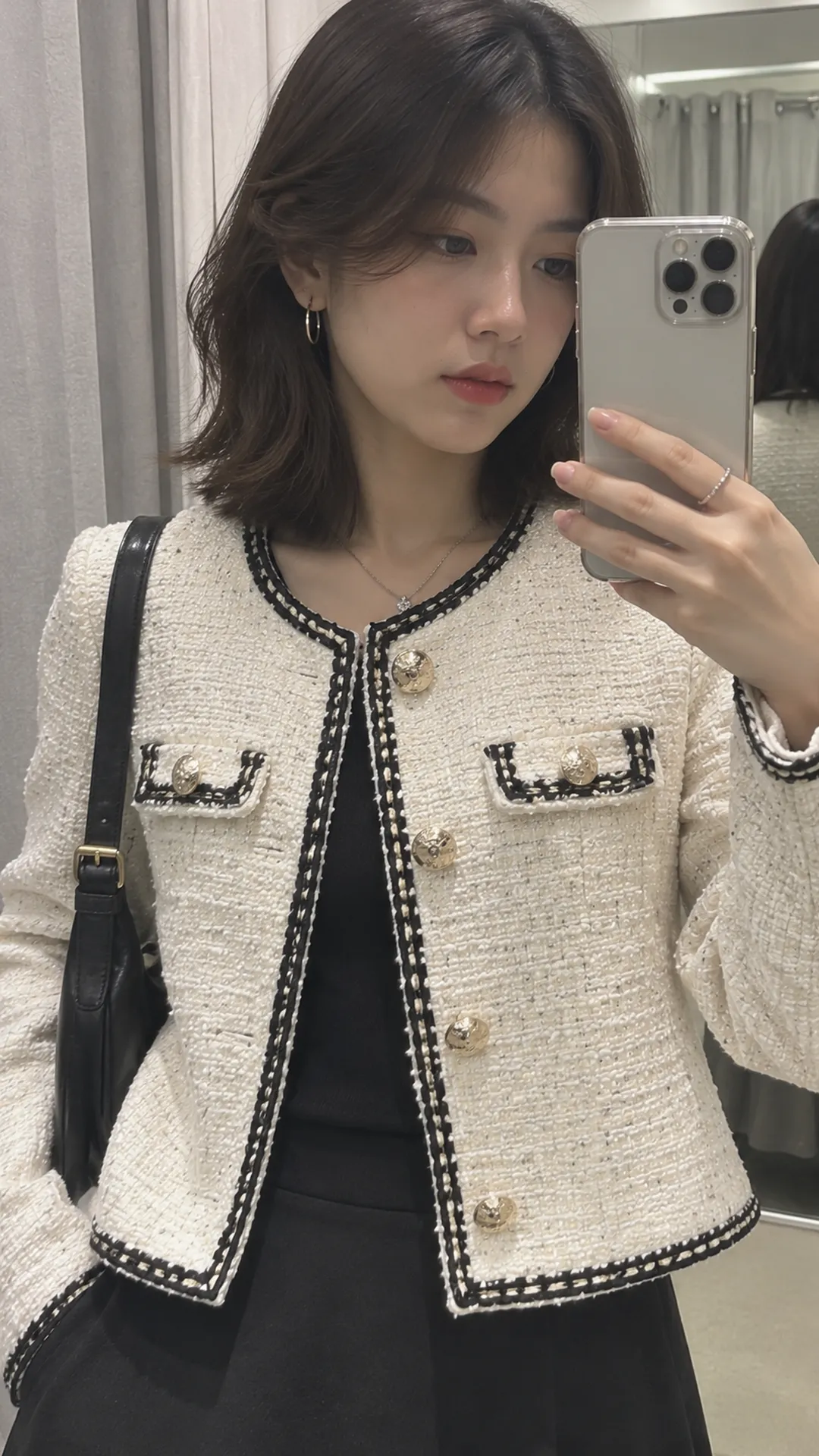
Cropped, boxy, or long?
A cropped tweed jacket ends near the waist and leaves more of the lower half visible. Raise your arms and sit to check the length. If you want more coverage, choose a longer base layer or a higher waistband so you can leave the jacket where it naturally sits.
A boxy jacket gives the body a squared outline. Try it with wide-leg trousers if you can still see the transition at the waist, or use a fitted base layer. Thick sleeves underneath can add bulk when the shoulders and texture already stand out.
For a long tweed jacket, see where the hem and pockets sit at the hip or thigh. The edges give you vertical lines when open and a larger block of texture when closed. Try both, especially if you’ll wear the jacket somewhere that calls for a polished look.
Short sleeves give less coverage, but a short-sleeved tweed jacket can still be warm. Check the thickness, lining, and space around the upper arm. Try a sleeved or sleeveless base layer according to the cut and check for bunching near the armholes.
Check the fit and finish in one try-on
Put on the base layer you plan to wear and button the jacket. Reach forward and sit to check the shoulders, bust, armholes, and hem. If the front pulls or the buttons gape, check the cut and width before assuming a thinner layer will solve it.
Look inside the neck, placket, and sleeve seams. The lining affects how the jacket feels on you. If you’ll wear it next to your skin, check the areas that touch you and read the care label before buying.
When shopping online, use our guide to reading garment measurements to compare shoulder width, chest width, and length. A dropped shoulder can fit differently from a set-in shoulder in the same labeled size. Ask for any missing measurements instead of comparing your weight with the model’s.
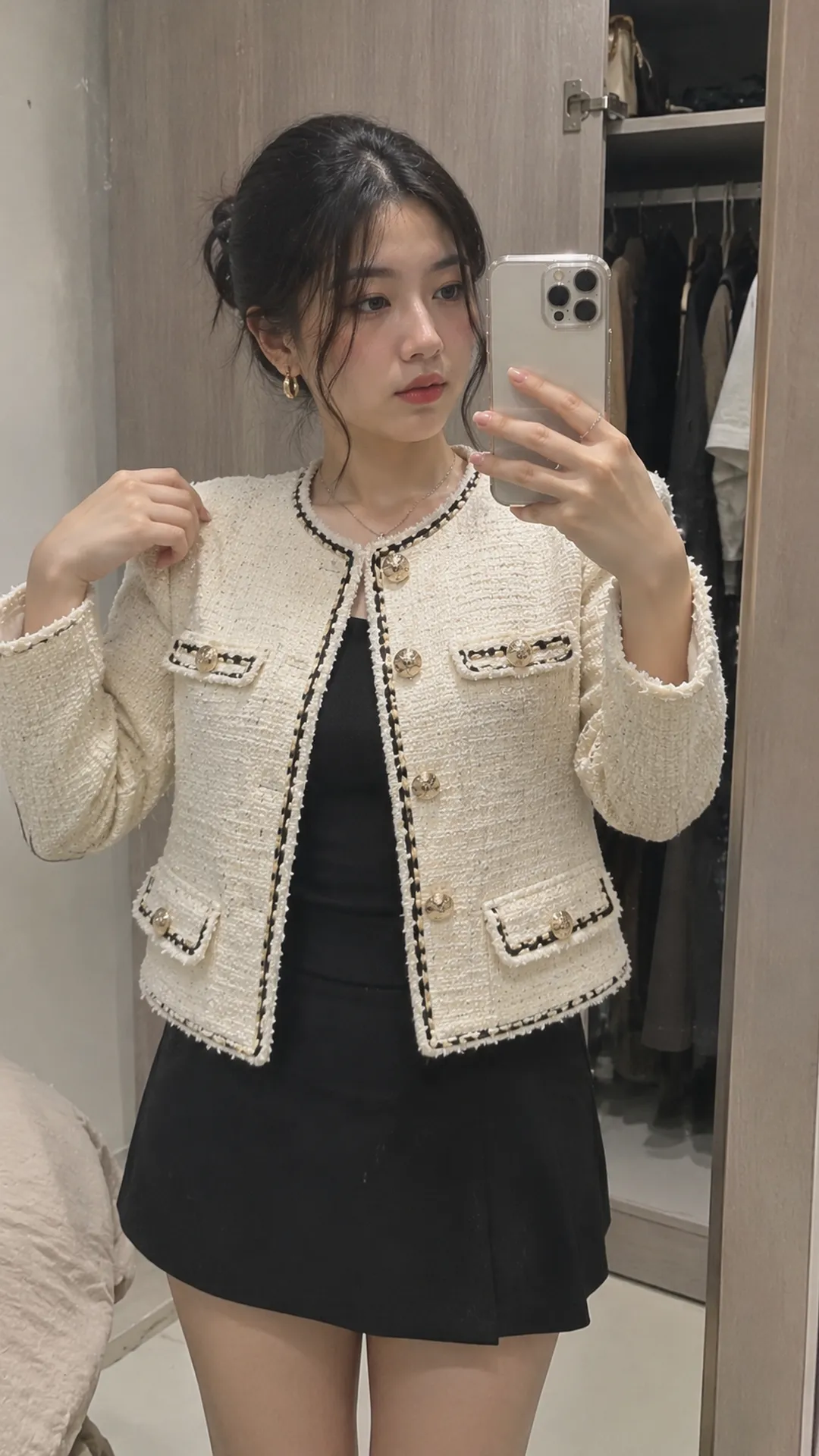
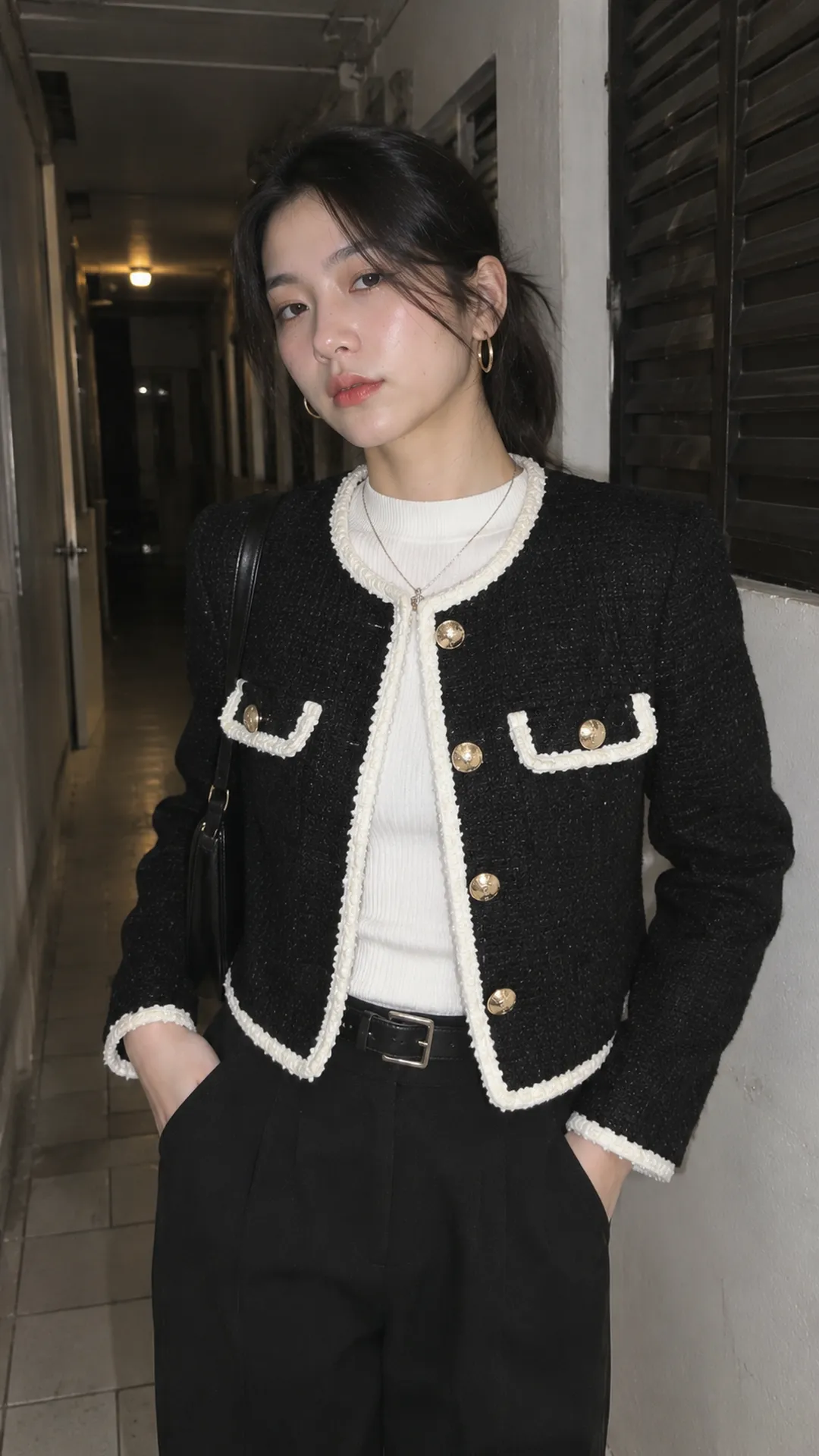
White and black tweed jackets: Work with contrast
A white tweed jacket over black trousers creates a clear line at the hem. Black trim can echo the trousers, leaving room for simple shoes and a bag. For a lighter combination, try light gray trousers or blue denim and check whether the jacket reads cream or cool white.
Black tweed can have several tones and textures. Raised yarns, buttons, and trim catch the light differently. Try smooth black trousers to show the texture or white trousers for a brighter, higher-contrast outfit.
With either color, try a base layer close in tone to the trousers so the center looks continuous when the jacket is open. If the neckline feels busy, remove a necklace or choose a simpler top. Our guide to layering women’s outfits can help you balance the thickness and role of each layer.
Pink and red tweed jackets: Choose a clear base color
With pale pink tweed, try gray, ivory, or soft blue denim. If the fabric has several flecks of color, use the dominant shade you see from a distance. Pick up an individual yarn color once if you like the effect.
Deep pink stands out against black trousers. Try a black top and simple shoes to keep the pink on the outside. For softer contrast, compare charcoal trousers with deep black and choose the result you prefer.
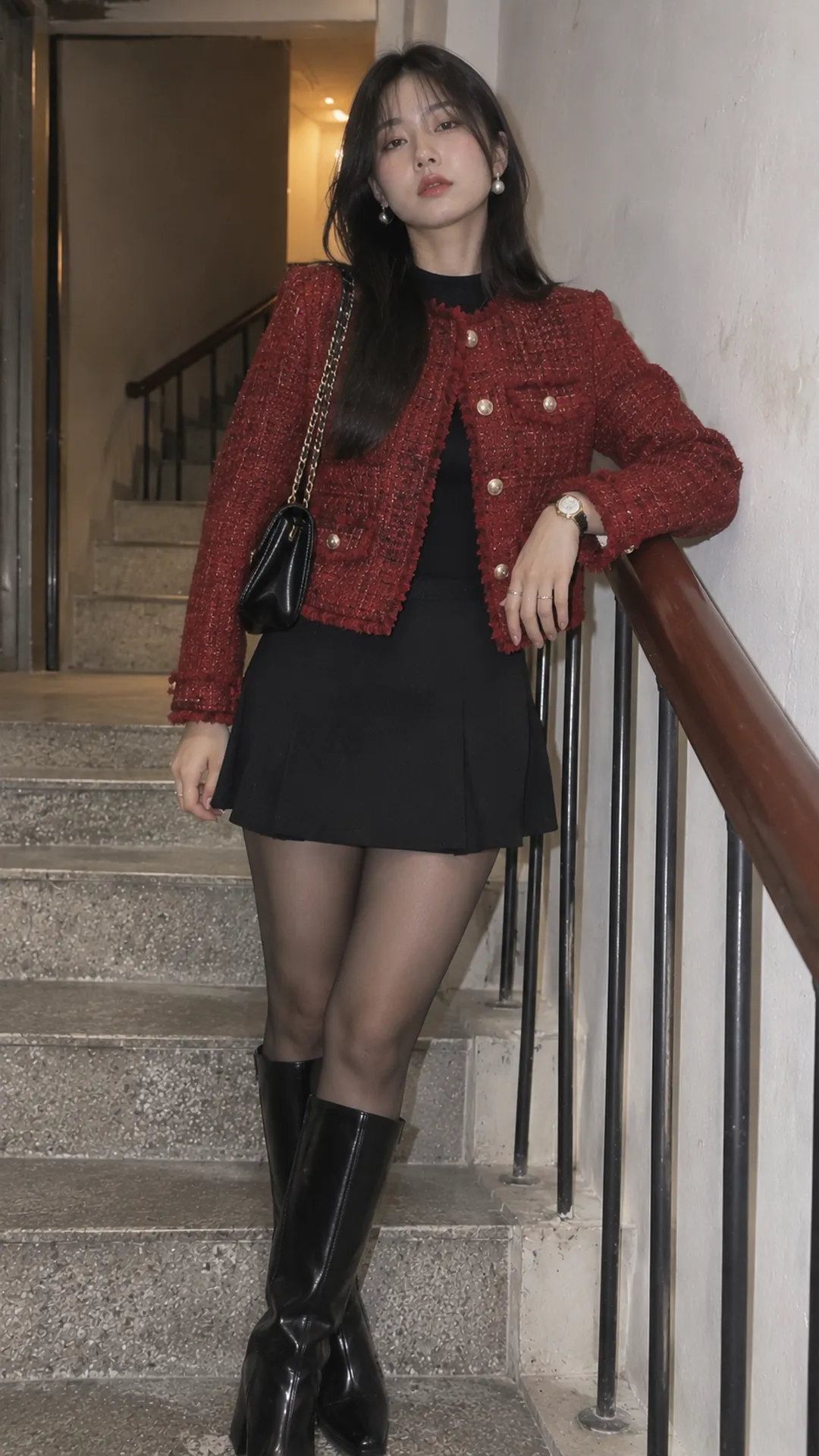
With red tweed, start with navy or black trousers and accessories with little color. If the jacket already has white trim or shiny buttons, see how much they stand out before adding a bag in a different bright color.
Change the mood with trousers and skirts
Straight jeans make tweed feel more casual. Choose the wash to suit the jacket’s surface. Denim with subtle fading can balance a jacket with several colors and trims. Check the jeans and shoes together so fabric doesn’t pool over the feet.
Straight tailored trousers give the outfit a cleaner line. With a short jacket, leave the waistband or base layer visible where it meets the trousers. If the trousers have large pleats and the jacket is boxy, sit down and check the hip area. Our women’s trousers styling guide can help you choose a shape before picking the color.
A plain straight or A-line skirt gives the textured jacket room to stand out. For a matching set, check how much fabric sits at the waist and how many trim lines the two pieces create together. Try the set on as a whole to see where the jacket meets the skirt.
With a dress, try the jacket open to keep the dress’s shape visible. If the dress has a decorated neckline, lace, or tiers, start with simpler shoes and a bag. One soft texture can contrast with the tweed without adding several more details.
Should accessories echo the jacket or contrast with it?
Try the bag over one shoulder and crossbody. See whether the strap rubs against raised yarns or covers the buttons. A chain strap changes both the look and how the pieces move together. If it catches on the trim, try another strap or carry the bag differently.
Repeat one detail to start: small earrings that echo shiny buttons, a black bag with black trim, or pale shoes that pick up a cream yarn. For contrast, try a strong boot shape and keep the other pieces simple.
Our guide to alternative accessories for women explains how to choose a focal area. Try a large necklace or long earrings with the actual collar. The jacket’s buttons and trim may already give you the detail you want.
Choose a jacket you can wear and care for
Try it with two outfits you already own, such as jeans and tailored trousers or a skirt. If each combination needs several new pieces, reconsider the color or the amount of detail on the jacket.
Check the care label, especially if the trim, raised yarns, buttons, or lining use different materials. Leave a snagged yarn alone until you know how the fabric is made. Store the jacket away from fastenings that could catch it and follow the product’s care instructions.
For simpler jackets and other layers, see our women’s tops guide by fit and layering. Choose the fit, level of detail, and care routine that suit you.