

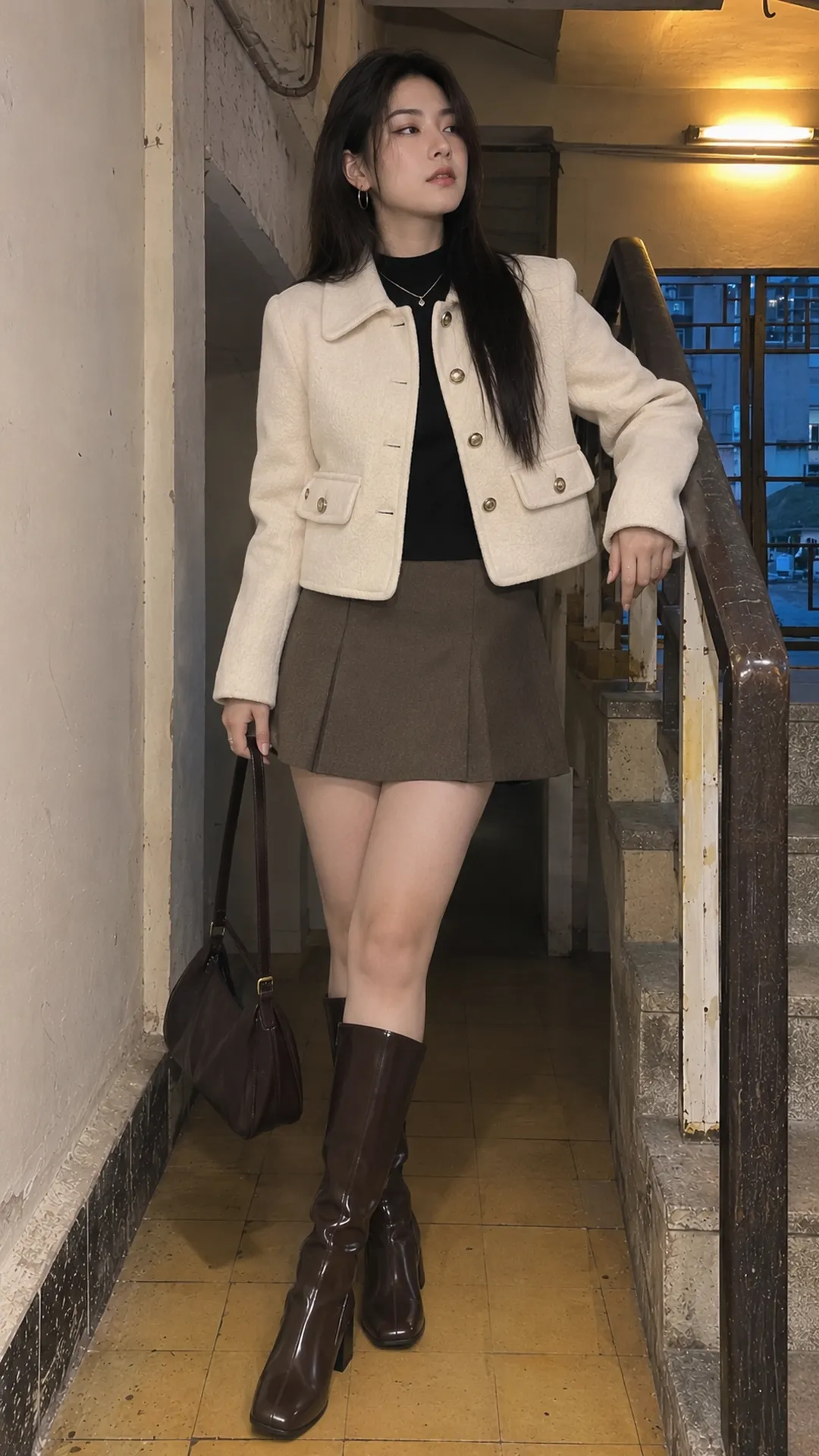
Where does a short jacket end on you?
“Short” can mean a jacket that ends near the waist, at the waistband, or at the upper hip. Compare the garment length with a jacket you own. A model with different proportions may show the hem at a different point.
A hem near the waistband defines the transition between the top and bottom. If the jacket ends above the waist, raise your arms and sit to check the gap. A longer base layer can give you more coverage. See whether its hem creates an extra horizontal line you want to keep.
A hip-length jacket offers more coverage and can sit easily over a shorter top. If the jacket is wide and ends where the trousers begin to flare, the two pieces can add volume in the same area. Compare another jacket length or trouser cut to see which proportion you prefer.
Our women’s tops guide by fit and styling can help you decide what the outer layer should do. With a short jacket, pay particular attention to the hem and shoulder line. They shape most of the silhouette.
Check the shoulders, sleeves, and armholes over your usual layer
Try the jacket over the top you normally wear. If you fit it over a thin tee and later add a thick sweater, the sleeves and armholes may feel tight. Check the measurements and the room built into the cut before sizing up.
With a set-in shoulder, check where the seam moves when you reach forward. With dropped shoulders, see whether the sleeves end too low or fabric bunches under the arms. A dropped seam can be intentional and still needs to give you room to move.
Button or zip the jacket and sit down. If the front pulls, the hem flips up, or the collar shifts, reconsider the width and length of the body. A jacket that looks best open can still work if that’s how you’ll wear it. Check what it feels like closed before relying on it for a cold day.
Our online sizing guide explains how garment measurements differ from body measurements. Ask for chest width, shoulder width, upper sleeve circumference, and sleeve length if the jacket’s chart leaves them out. An S or M alone won’t tell you how it fits.
Read the fabric, lining, and care details
In Vietnamese listings, “dạ” describes a broad category of coating fabrics. Check the label for the fiber content of the shell, whether the jacket is lined, and what the lining contains. Wool content and warmth can vary widely.
Feel the collar and cuffs where they’ll touch your skin. Look at the finish, edges, and lining inside. A soft shell can still have a seam or label edge that rubs. Check how the whole jacket feels on you.
Choose the thickness for the weather and how long you’ll wear it. A heavy jacket may spend most of an indoor outing in your hands. For colder trips, check the product’s stated features and plan the layers you’ll wear underneath. The fabric name alone doesn’t tell you what temperatures the jacket suits.
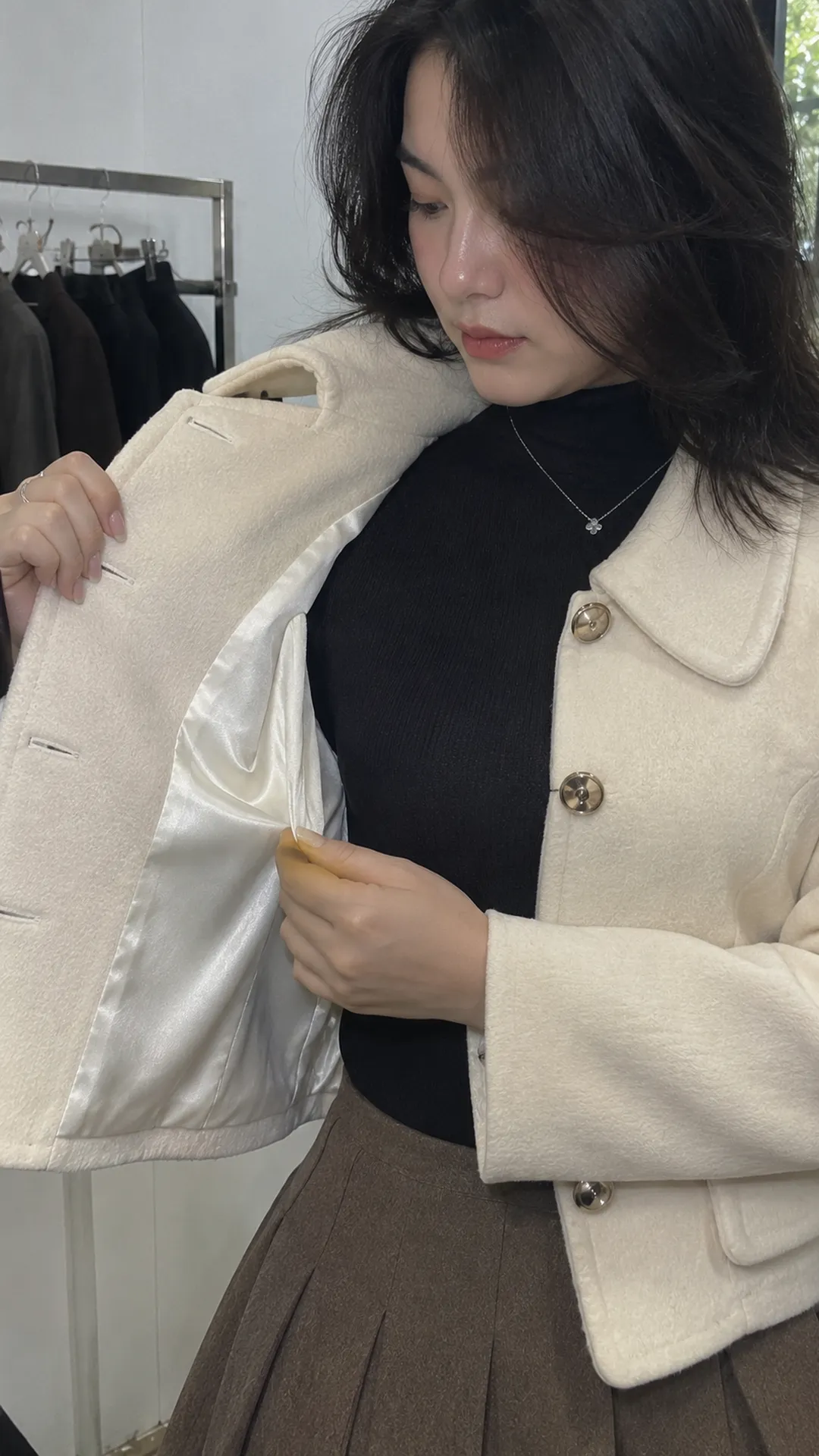
The base layer changes how a short jacket looks
Start with a plain top of moderate weight that ends near the waist. When the jacket is open, the top creates a clear panel between the two sides. To make the outfit more continuous, choose a base layer close in color to the trousers. To feature the jacket, keep the top simple.
A shirt can extend past a short jacket as an intentional layer. Leave enough of the shirt visible to show the difference in length and check how much fabric sits at the hips. If it looks too full, try a partial tuck or a lighter shirt.
With a turtleneck, check the space between the neck and jacket collar. Two thick layers can feel crowded and look bulky. Try a lower neckline or thinner knit if needed. Our guide to layering women’s outfits explains how to give each piece a purpose.
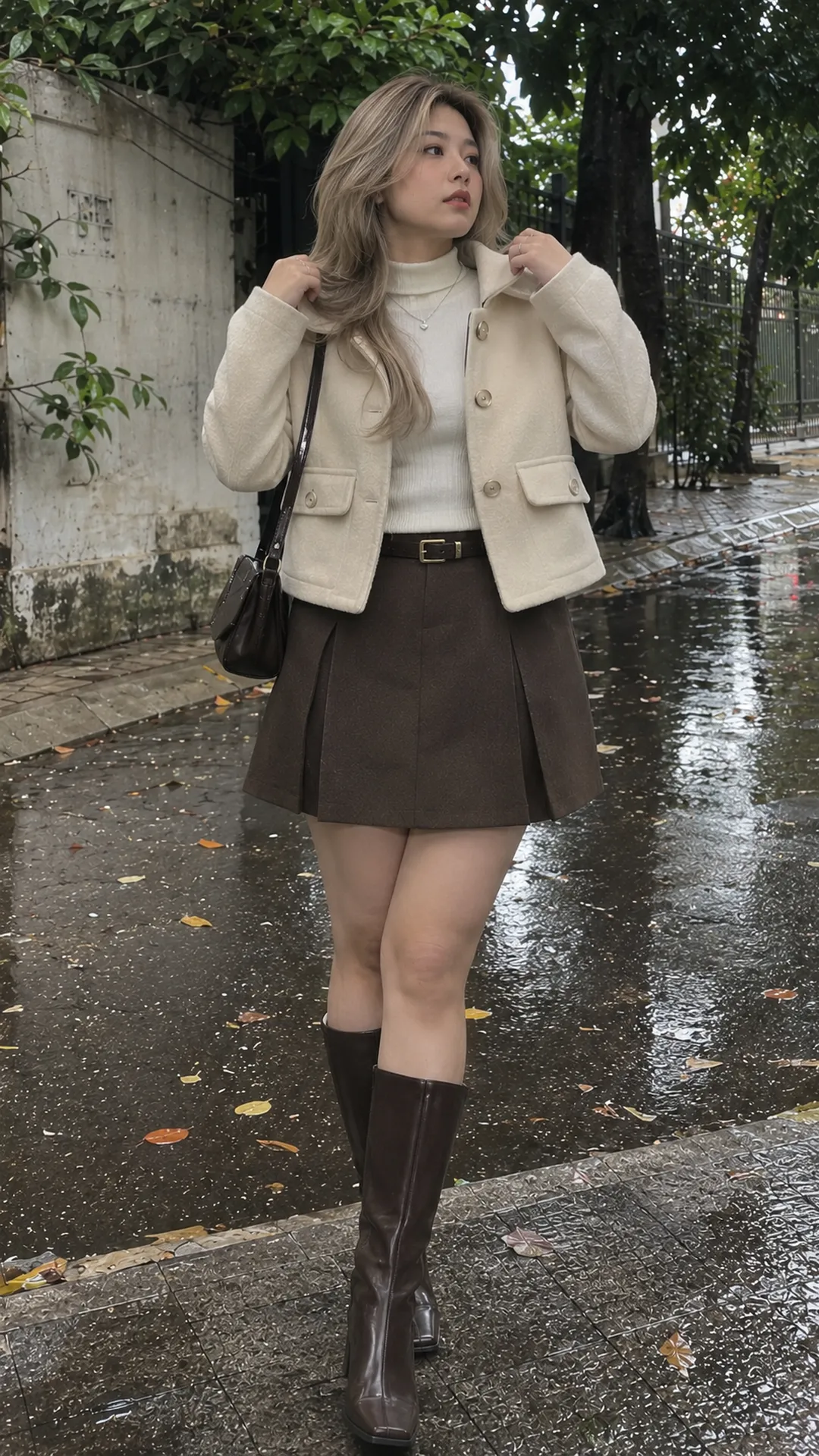
Three trouser shapes to wear with a short jacket
Straight-leg trousers give a clear line below the jacket. Try a short jacket, a fitted base layer, and straight trousers close in color to the shoes. Check the trouser hems while walking. Fabric pooling at the shoes can weigh down the look even when the jacket ends where you want it to.
Wide-leg trousers give a different amount of volume from a short jacket. If the jacket is boxy too, show part of the waistband or base layer to define the transition. You can keep the waist loose and still make the two shapes distinct.
Straight jeans give the jacket a casual feel. With a neutral jacket, blue denim can add color and black denim can keep the palette quiet. If the jeans have heavy fading or distressing, simplify the jacket accessories to give each texture room.
For other cuts, see our women’s trousers styling guide. Compare jacket length, trouser rise, and bodice length together before trying the same high-rise combination with every short jacket.
Wear it with skirts and dresses
With an A-line skirt, a jacket that fits at the shoulders and ends near the waist lets the flare show. If the hem covers the upper hip, see whether it presses down where the skirt starts to widen. Try wearing the jacket open or changing the base layer if there’s too much fabric in that area.
With a straight midi skirt, try an open short jacket and a top close in color to the skirt. The open edges frame the center while the skirt keeps its vertical line. Choose boots, loafers, or sneakers for the distance you’ll cover and check that the hem clears them when you walk.
With a dress, see where its waistline falls relative to the jacket hem. Two lines close together can leave a small gap you don’t want. Try a slightly shorter or longer jacket or a dress with a subtler waistline.
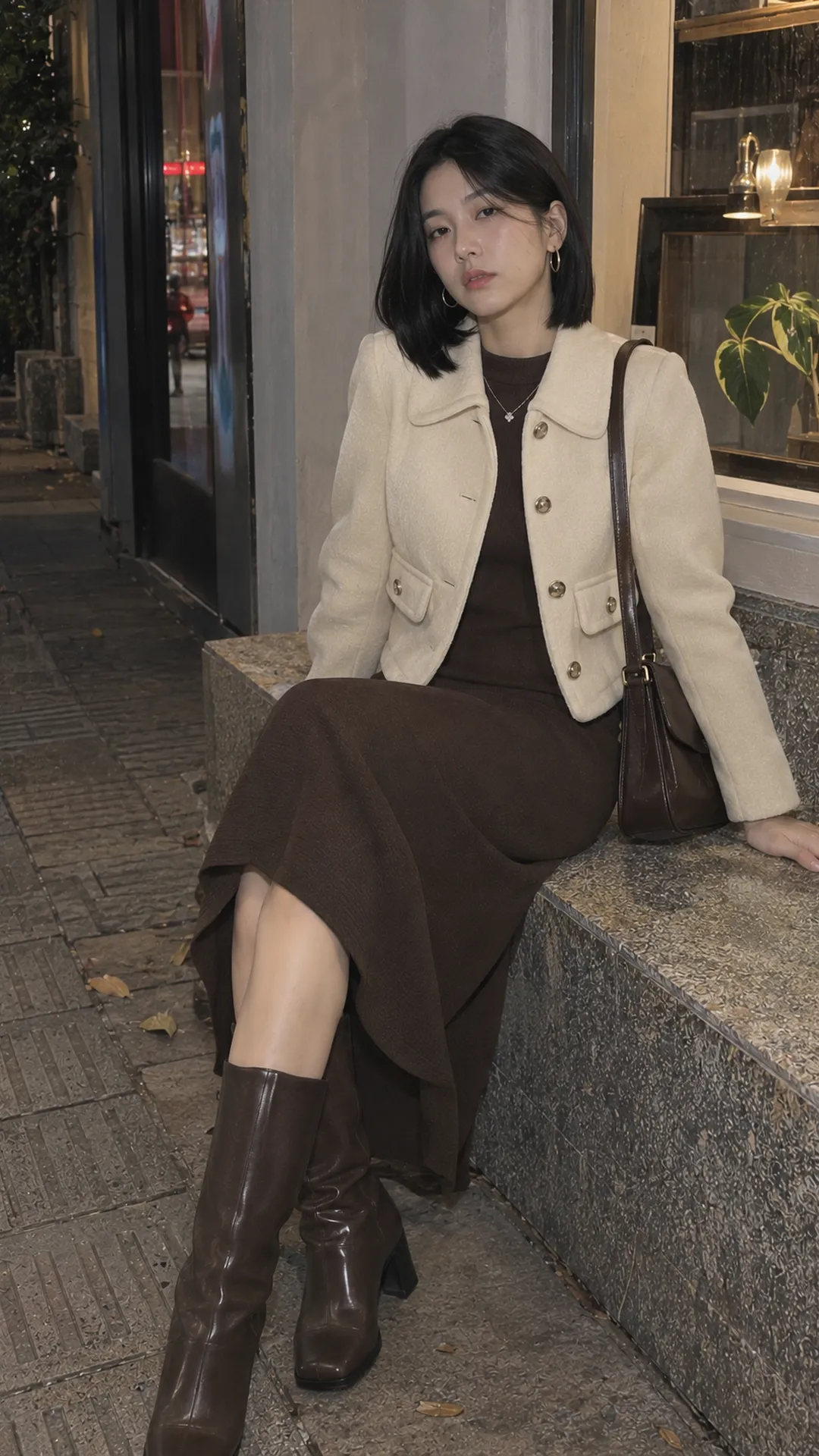
Short white jackets: Compare shades and textures
Cool white, ivory, and cream look different next to a base layer. Compare them in the same light if you want a near-monochrome look. A soft ivory top can give bright white more depth without matching it exactly.
A white jacket and black trousers make the jacket hem stand out. For a softer transition, try gray trousers or medium-wash denim. With brown trousers, see how their shade and the sheen of your shoes work together.
Consider how you’ll care for a light jacket. Check where the bag strap touches it and look at the collar and sleeves after wearing it. Read the product instructions before choosing a stain remover or rubbing a mark.
Three ways to fix an outfit that feels out of balance
If the upper half looks too bulky, remove a layer or try a thinner top first. Taller shoes won’t change how much fabric sits at the armholes and neck. If you like the width but the sleeves are too long, ask whether they can be shortened while preserving the cuff and button placement.
If the hem keeps flipping up, try the jacket open and closed to see what’s pulling. Check the body length, chest width, base layer, and how you sit. Finding the source of the tension helps you decide whether to change the size, cut, or layer.
If there are too many visible breaks, look at the neckline, top hem, jacket hem, waistband, and shoe opening in order. Try reducing one contrast or removing one layer. Compare photos taken from the same distance.
Make sure the outfit works when the jacket comes off
Before leaving, check the outfit without the jacket and decide where you’ll put it somewhere warm. For an outing with several activities, our guide to choosing an outfit for what you’ll be doing helps you plan the shoes, bag, and layers. Make sure you can wear the base outfit on its own at your destination.
After wearing the jacket, check the label before washing, drying, or ironing. Store it in a way that supports the fabric and construction without flattening the collar, shoulders, or buttons. Keep the short jacket that fits over your usual layer, ends where you want it, and stays comfortable when you move.