

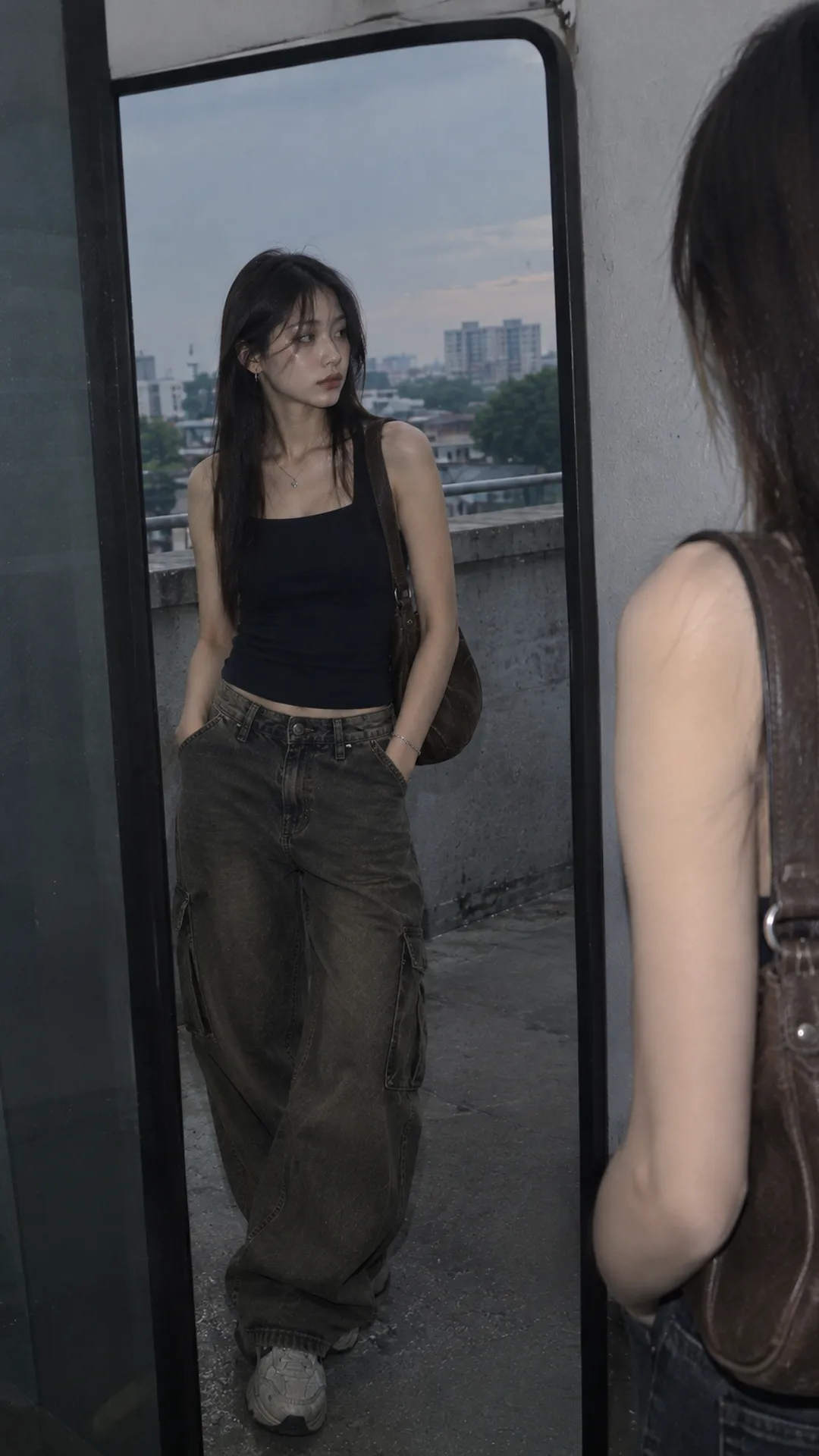
How do tanks, tube tops and crop tops differ?
In common shopping usage, sleeveless top and tank top generally describe tops with openings at the neck and both arms and no sleeves. Shop terminology varies, so examine construction photos instead of relying only on the product label.
A tube top wraps around the chest without the shoulder sections of a typical tank. Crop top describes a short length. A tank can therefore also be a crop top when its hem finishes high; a hip-length tank is not cropped simply because it is sleeveless.
Camisoles generally have narrower straps, while many tanks have broader shoulder sections. Market labels are not absolute, however. When choosing underwear or outer layers, actual strap width and armhole depth are more useful than debating the name.
To compare tanks with other tops in your wardrobe, see the guide to choosing women's top shapes. This article focuses on wearing tanks; specialized construction details of individual top types can be explored separately when needed.
Four points to test before choosing a size
Armholes should suit your desired coverage
Stand straight, then reach forward as if holding handlebars or hugging a bag. Check whether the armhole edges pull, fold or reveal more than expected. Deep armholes are not automatically a design fault, but should suit your plan to wear the tank alone or layered.
If you want more coverage and the armholes remain too deep, sizing up generally will not solve it. Try another cut or an intentional inner layer. Repeatedly pulling the top upward usually changes the neckline and hem too.
Shoulders and neckline should stay in place in motion
Broad or narrow shoulder sections and round, square or high necklines create different openings. Bend moderately and turn your torso to see whether the top shifts. Choose for comfort and your desired appearance without rules banning particular shoulder shapes from tanks.
If wearing a necklace, assess its spacing from the neckline. A high neck creates continuous fabric over the chest; a square neck opens a more distinct area. Use this difference to adjust emphasis around your face.
The fit must allow real activity
A close fit defines the torso; a straight cut feels relaxed. Excess tension can distort neck and armhole edges, while more width than intended may bunch under a jacket. Breathe, sit and raise your arms rather than checking only one standing pose.
Do not assume ribbing means substantial stretch or that you can size down. Read the specific composition and description, and check whether the fabric stretches thin on your body. Dark color does not guarantee opacity in strong light.
Body length determines the waistband pairing
A tank ending at the waist creates a clear transition with high-rise pants; longer tanks can be tucked or left out. Raise your arms to check whether the hem rises beyond your preference. An inner-layer tank should stay secure enough not to keep slipping out of the waistband.
Online, measure a well-fitting top and compare the exact product's chart. The online sizing guide explains body versus garment measurements, particularly useful when a shop says only 'fitted' or 'one size.'
Five formulas using wardrobe basics
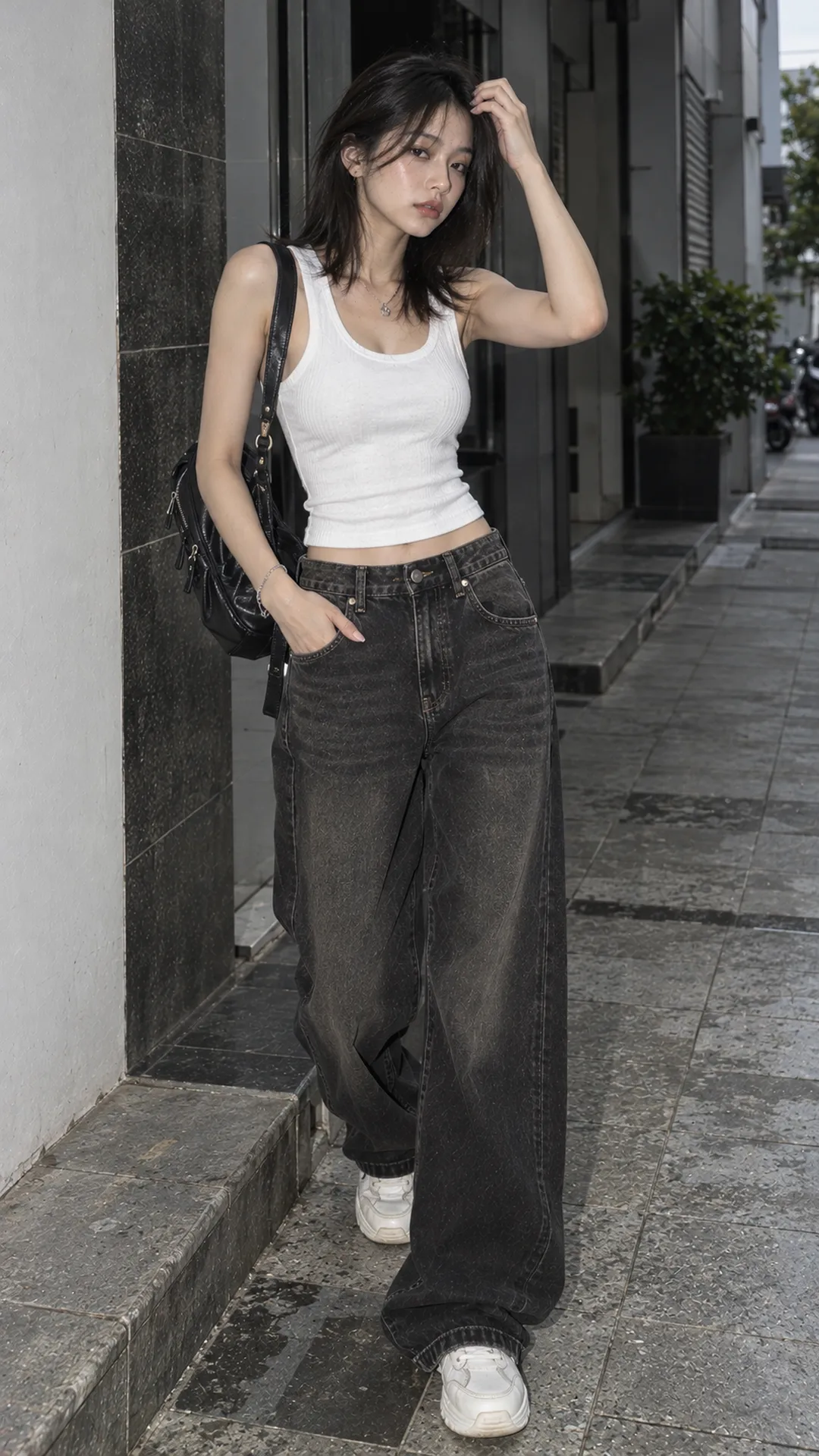
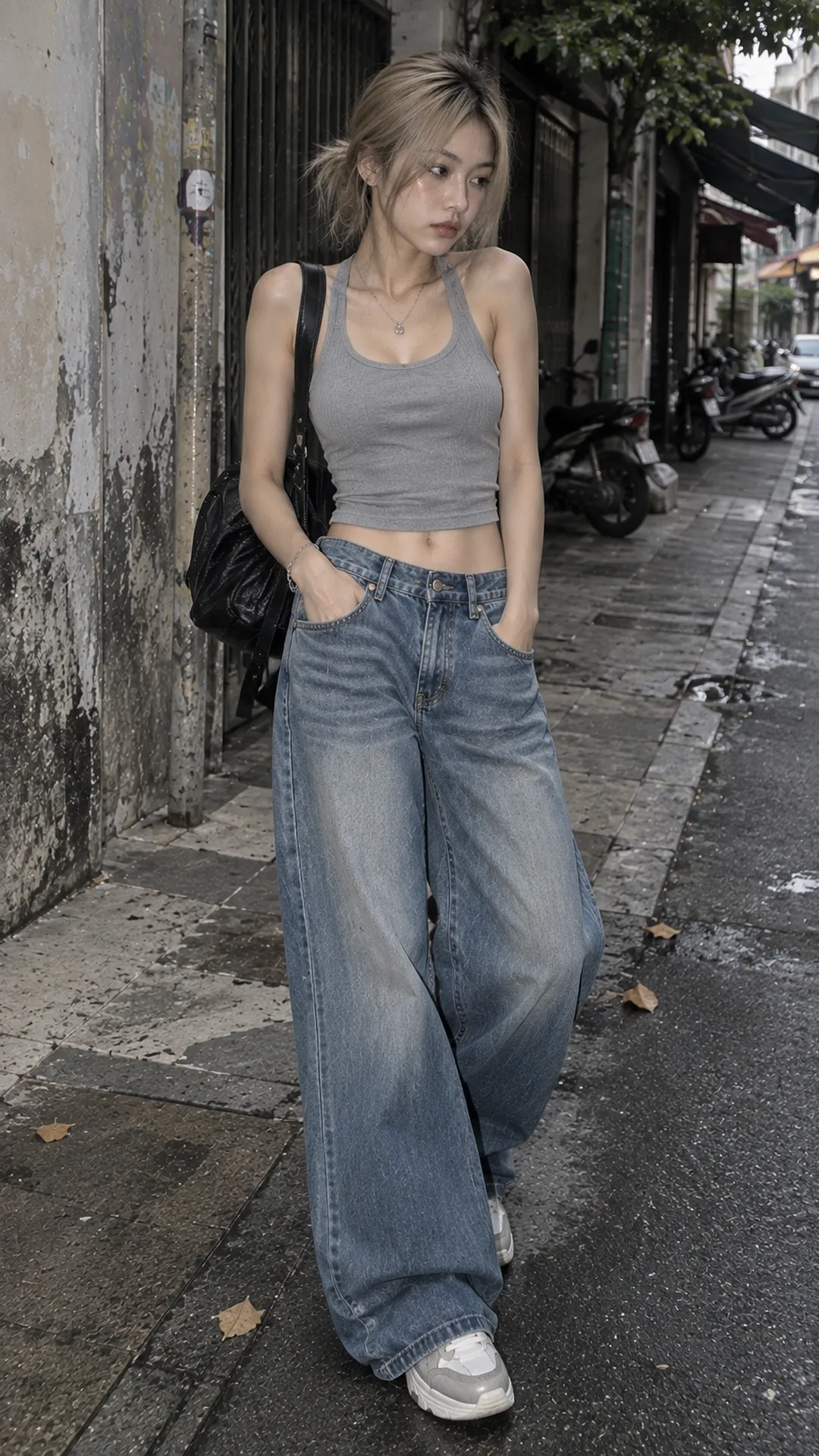
A neat tank with wide-leg jeans
A well-fitting tank and wide jeans contrast upper-body and leg volume. White with blue denim gives a simple base; black with gray denim feels more subdued. Choose top length relative to the waistband, avoiding thick rolled fabric if you want clean lines.
Wear sneakers for extensive walking or switch to loafers for a different shape at the feet. A belt is necessary only if you want to emphasize the waistband or hold the jeans. You do not need every accessory in a reference photo for the formula to work.
A loose tank with straight-leg trousers
With a wide tank, straight trousers retain vertical lines without clinging to the legs. The hem can finish around the hips or be partly tucked if thin enough. Check the side: puffing in front of the stomach may come from the tuck rather than your body.
A long top covering most of the fastening and waistband creates different proportions from a short one. If you like a loose silhouette, keep it intentional and choose shoes with enough presence. Not every outfit needs to follow a high-waist, long-leg formula.
A plain tank with a textured skirt
A plain top supports pleats, denim or glossy skirt surfaces. A black tank and A-line denim skirt contrast a neat upper half with a widening lower half. Cream with a draping skirt creates softer movement.
Observe where the hem meets the waistband. To preserve pleats, avoid tucking in excess fabric. If the skirt already has ties, fasteners or raised pockets, skip the belt to reduce waist detail.
A tank and tailored trousers for a clean outfit
A tank with neatly finished neck and armhole edges works with straight tailored trousers. Choose appropriate coverage and add an outer layer if the setting requires one. Black trousers with white create clear separation; tonal cream or gray relies more on surface and cut.
Minimally detailed shoes and a structured bag keep the look defined. For a suitable trouser width, see styling by women's trouser shape, especially if both pieces have substantial drape.
A graphic tank with cargos
A printed tank and cargos offer an accessible streetwear direction. With a large graphic, choose fewer cargo straps and less bulky pockets. If the cargos lead, a plain tank or small print reduces competition at the chest.
Repeat one print color in shoes or a bag to connect the pieces; a themed accessory set is unnecessary. In the mirror, ask whether you notice top or trousers first, then reduce detail elsewhere for a clearer focus.
Layer a tank without the pieces interfering
An open shirt over a tank makes an adaptable layer. The tank needs enough room without bunching at the armholes; the shirt needs space around shoulders and arms. If both are long, tuck the tank to reveal a clear inner waistband.
With a blazer, check the tank neckline when the jacket is fastened. A high neck and broad lapels may create intersecting lines, while a lower neck clarifies the space between lapels. Choose for coverage and emphasis rather than a fixed answer.
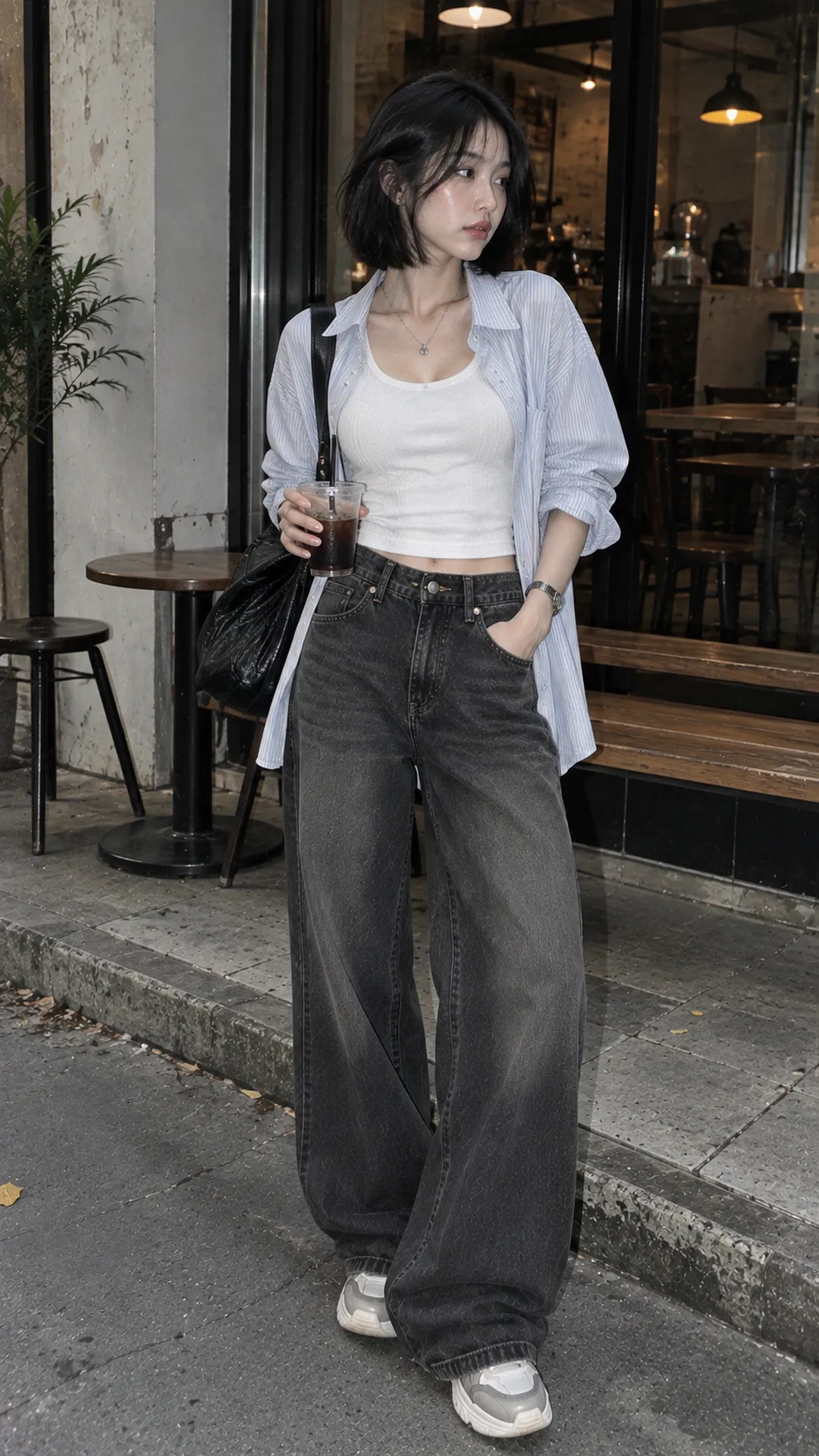
A thin cardigan provides an easy-to-remove layer. Do not choose a tight cardigan simply to hold the tank against your body. If outer sleeves or shoulders pull, check the outer size first; a correctly fitting tank can be displaced by an undersized jacket.
Read the principles of women's layering for more than two layers. In hot weather, retain only layers needed for the situation and choose pieces you can remove easily; several thin layers can still feel stuffy over time.
Try undergarments and accessories with the top
If you want bra straps hidden, compare their placement with the tank's shoulders while trying it. A deep back or armhole requires a different approach from broad straps. Choose undergarments for the construction or deliberately show an inner layer if you prefer.
Every tank need not use the same underwear. Support, coverage and movement comfort are individual needs. Check strong light and the back view as well as the front for an accurate picture.
Choose jewelry for the space near the neck and the top's prominence. A graphic tank may need only a small piece; a plain tank leaves room for a stronger necklace. Loose hair, bag straps and earrings also add lines, so assess the whole outfit before the final addition.
Check before going out and care after wearing
Put on your bag, walk, sit and reach upward. If the top works only with constant hem tugging, change the tuck or length. If armhole edges press, accessories cannot solve the cut.
Follow the specific label when washing, especially for prints, ribbing or mixed materials. Do not infer care from 'tank top' alone. Store without stretching the shoulders and inspect the neckline after washing to catch shape changes early.
A useful tank works comfortably with several pieces you own. Complete one standalone and one layered outfit first; those will clarify whether you actually need another color or cut.