

What Is a Midi Dress or Skirt? Hem Length, Cuts and Proportions
Midi describes a length category, not a particular cut or aesthetic. Understanding where the hem falls helps you read product descriptions and avoid confusing midi with maxi, A-line, pencil or pleated styles.
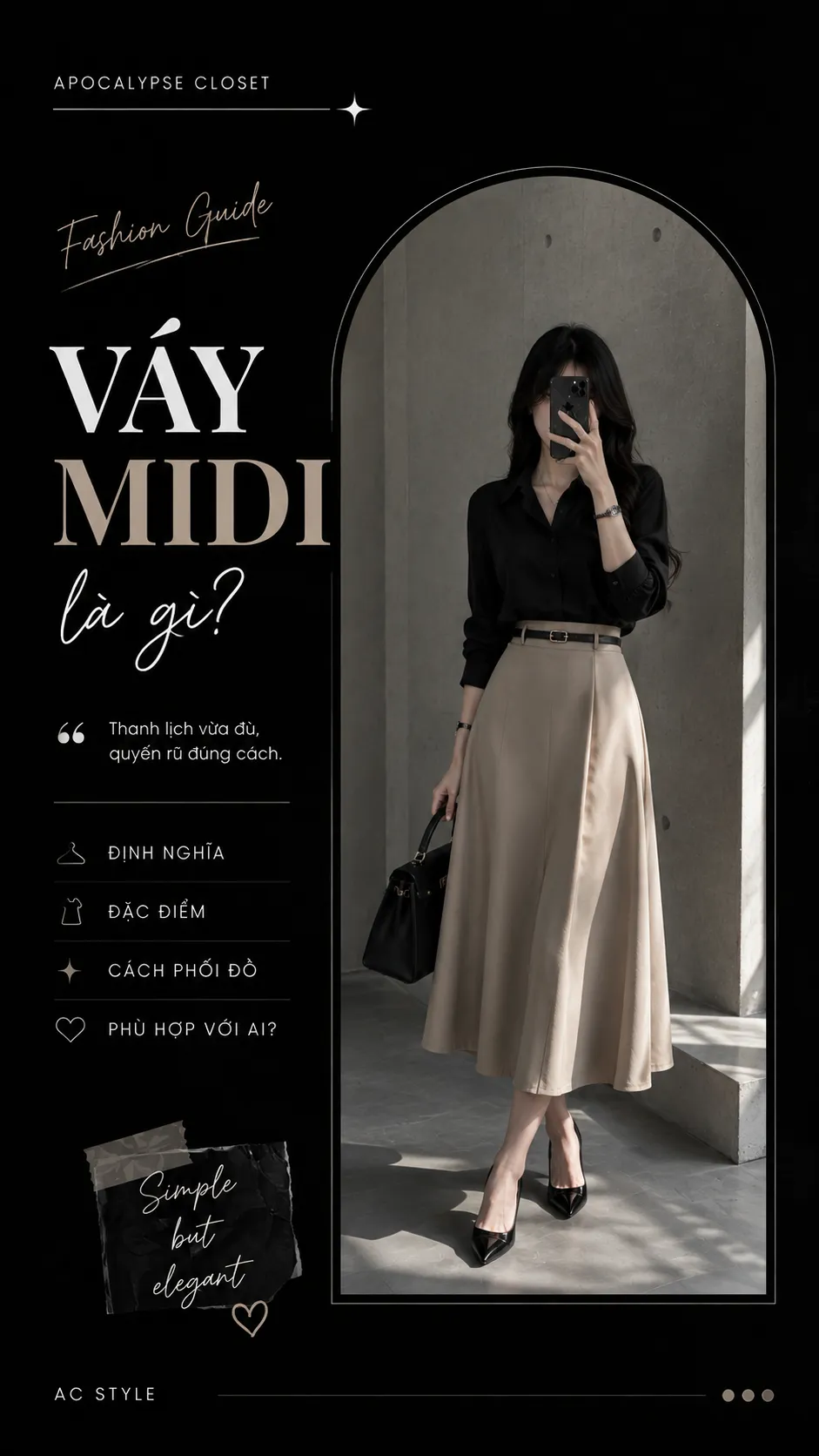
Guide collection: Women's Skirts and Dresses: Cut and Length Guide (Vietnamese)
midi dress or skirt has a hem that usually falls below the knee and above the ankle, often around the calf. There's no universal centimeter measurement because height and leg proportions vary. 'Midi' describes length; A-line, flared, fitted, pleated and slip describe shape or construction.
On this page
What Is Midi Length?

'Midi' is a term describing the position of a skirt or dress hem. In common fashion usage, a midi hem falls below the knee but above the ankle, usually around the calf. Because people have different heights, a garment sold as midi may sit higher or lower on different wearers.
Importantly, midi isn't one silhouette. There are A-line midi skirts, pleated midis, satin slip midis, fitted or pencil midis and full flared midis. 'What is midi length?' and 'What is an A-line skirt?' ask different kinds of questions: one concerns length; the other concerns shape.
How Is Midi Length Determined?
Instead of memorizing a number of centimeters, look at where the garment hem falls on the wearer. Mini skirts typically end above the knee, midi skirts fall between knee and ankle, and maxi skirts approach the ankle or extend past it. This is more practical because one garment may be midi on a tall person but nearly maxi on a shorter person.
Stand naturally in the shoes you plan to wear and examine the hem in a full-length mirror. If it falls below the knee but leaves a noticeable section of lower leg before the ankle, it is functioning as midi length on your body.
Mid-calf placement is often the trickiest because the hem creates a horizontal line across a relatively wide part of the leg. That doesn't mean midi skirts automatically make you look shorter; it means footwear, sock colors and hem width have more visual influence.
What's the Difference Between Mini, Midi and Maxi?
| Length category | Typical hem position | Styling consideration |
|---|---|---|
| Mini | Above the knee | More exposed leg; balances substantial footwear easily |
| Midi | Below the knee, above the ankle | Breaks the calf line and interacts with shoe opening |
| Maxi | Near the ankle or longer | Hem movement, drape and how much shoe remains visible |
These are overlapping zones rather than absolute boundaries. A 'long midi' can approach maxi, while a 'short midi' might fall just below the knee. When shopping online, actual garment length and model height are more useful than a category label alone.
Common Midi Skirt and Dress Silhouettes

A-line midi widens gradually from the waist and creates a clean, balanced outline. Pleated midi adds movement and volume through folds. Slip midi hangs fluidly, often in a satin or viscose-like fabric where surface texture matters. Fitted or pencil midi follows the body more closely and may include a slit for movement. Full or flared midi creates more volume and often benefits from a neater top.
When planning an outfit, add the shape to your question. 'What top works with a midi?' is broad; 'pleated midi', 'satin midi' or 'A-line midi' leads to more precise styling decisions.
Why Midi Can Seem to 'Cut Off' the Legs — and How to Assess It
A midi hem often sits across the calf, making a horizontal break between the knee and ankle. Add a shoe strap, contrasting socks and a long top ending at the hip, and the eye encounters several more breaks. A shortened appearance comes from the number and location of these lines rather than the word 'midi' itself.
For a smoother leg line, remove one or two horizontal breaks: choose footwear closer to the tone of your leg or socks, let the top finish near the waist, or move the midi hem toward a narrower part of your calf. If you deliberately want a heavier silhouette, you can do the opposite with boots and legwear.
Choosing Shoes for Midi Lengths
Mary Jane shoes work with midi because they give footwear a defined detail without always feeling too bulky; see what Mary Jane shoes are (Vietnamese) if you want to understand their strap construction. Ankle boots suit Dark Feminine styling; combat or platform boots move a midi toward Goth or Punk; simpler sneakers keep it casual.
Watch the space between the skirt hem and the top of the shoe. When the lines are very close, the exposed leg can appear squeezed into a short section. Changing boot height or moving the hem by a few centimeters often helps more than changing the entire aesthetic.
How to Identify Midi Without Trusting the Product Title
The two example outfits below both feature short skirts, not midi skirts. They're included for proportion comparison: aesthetic, dark colors and shoe type alone don't tell you whether a garment is mini, midi or maxi. Only hem placement on the leg provides that answer.
Example note: Neither outfit shown here has a midi skirt; use where the hem falls on the leg to identify skirt length.
- Measure from the highest relevant point at the waistband or shoulder, depending on whether it's a skirt or dress, down to the hem.
- Put on the shoes you normally wear and check the hem against the knee, widest part of your calf and ankle.
- Take a front-facing photo with the camera roughly at hip level; low camera angles can make a skirt appear longer.
Read the Proportions in Real Outfits
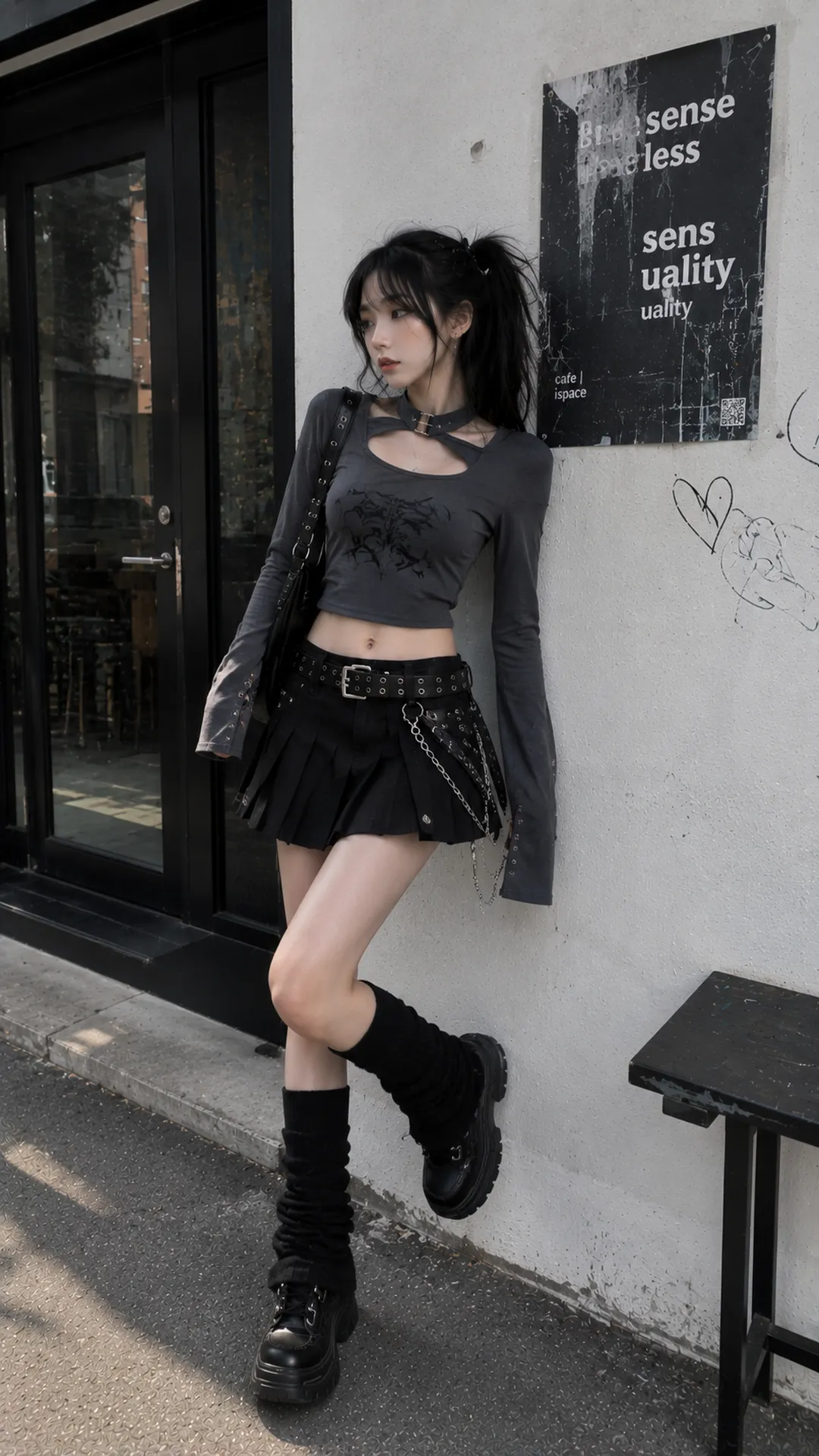

Midi Styles in Dark and Alternative Fashion
Midi isn't reserved for officewear or classic feminine dressing. A black satin midi with mesh and boots can feel Dark Feminine. Dark pleats with knitwear and platform Mary Janes can suggest Dark Academia. A denim midi with a graphic tee and combat boots can feel Grunge or Dark Y2K. A fuller midi paired with a simple corset can evoke Romantic Goth.
What makes the outfit alternative or dark is the color palette, texture, shoes and layers—not the skirt's length. Midi simply defines a range of lengths within which those styling choices operate.
From the Definition to Outfit Styling
Once you know your garment is midi, identify its cut and material. For pleats, read the pleated-skirt outfit guide (Vietnamese). For an A-line cut, see the A-line skirt styling guide (Vietnamese). For longer skirts generally, explore what to wear with a long skirt (Vietnamese).
How to Measure Whether a Dress or Skirt Is Midi
Don't rely solely on centimeter measurements in a size chart: the same length falls differently on someone who is 150 cm versus 170 cm tall. Measure from the waistband or shoulder, depending on the garment, to the hem; then compare the hem position on your body. Below the knee with clear space above the ankle generally falls in the midi range.
When shopping online, model images can mislead if the model's height differs from yours or the skirt is worn with a high or low waistband. Look for product length and model height when available. With skirts, waistband placement can shift the hem several centimeters; with midi dresses, shoulder placement and bodice length also matter.
Midi Dresses and Midi Skirts Aren't Identical Styling Problems
A midi dress is one complete garment whose length reaches the midi zone; a midi skirt describes only the bottom half. A dress also has a waistline, bodice, neckline and sleeves, so its proportions are established from the shoulder down. A skirt is more adjustable because changing the top moves the outfit's emphasis. 'Midi' is a length attribute, not a full description of the item.
Reading Product Labels: Midi Isn't A-Line, Pencil or Pleated
A product may be 'midi + A-line + pleated' or 'midi + pencil + slit' at the same time. These words describe different dimensions: midi is length; A-line, pencil and full describe silhouette; pleated describes structure; satin, denim and leather describe materials. Keeping them separate helps you read listings accurately and choose useful styling guidance.
If all you know is that the hem reaches mid-calf, start with a midi guide to understand proportions. Once you know the skirt is pleated, A-line, denim or leather, switch to the specific shape or material guide. This prevents treating midi as a fixed aesthetic and lets you use the same length across many styles.
Frequently Asked Questions
What Is Midi Length?
Midi refers to a dress or skirt with a hem below the knee and above the ankle, typically around the calf.
How many centimeters long is a midi skirt?
There's no universally correct length in centimeters. Hem placement on the wearer and actual garment dimensions matter because body heights vary.
How is midi different from maxi?
A midi leaves a visible section of lower leg before the ankle; a maxi usually reaches near the ankle or below.
Can petite women wear midi skirts?
Yes. Experiment with hem position, define the waist or top and reduce unnecessary horizontal breaks if you'd like a more continuous leg line.
Is midi a type of cut?
No. Midi describes length; the cut may be A-line, pleated, fitted, slip or flared.