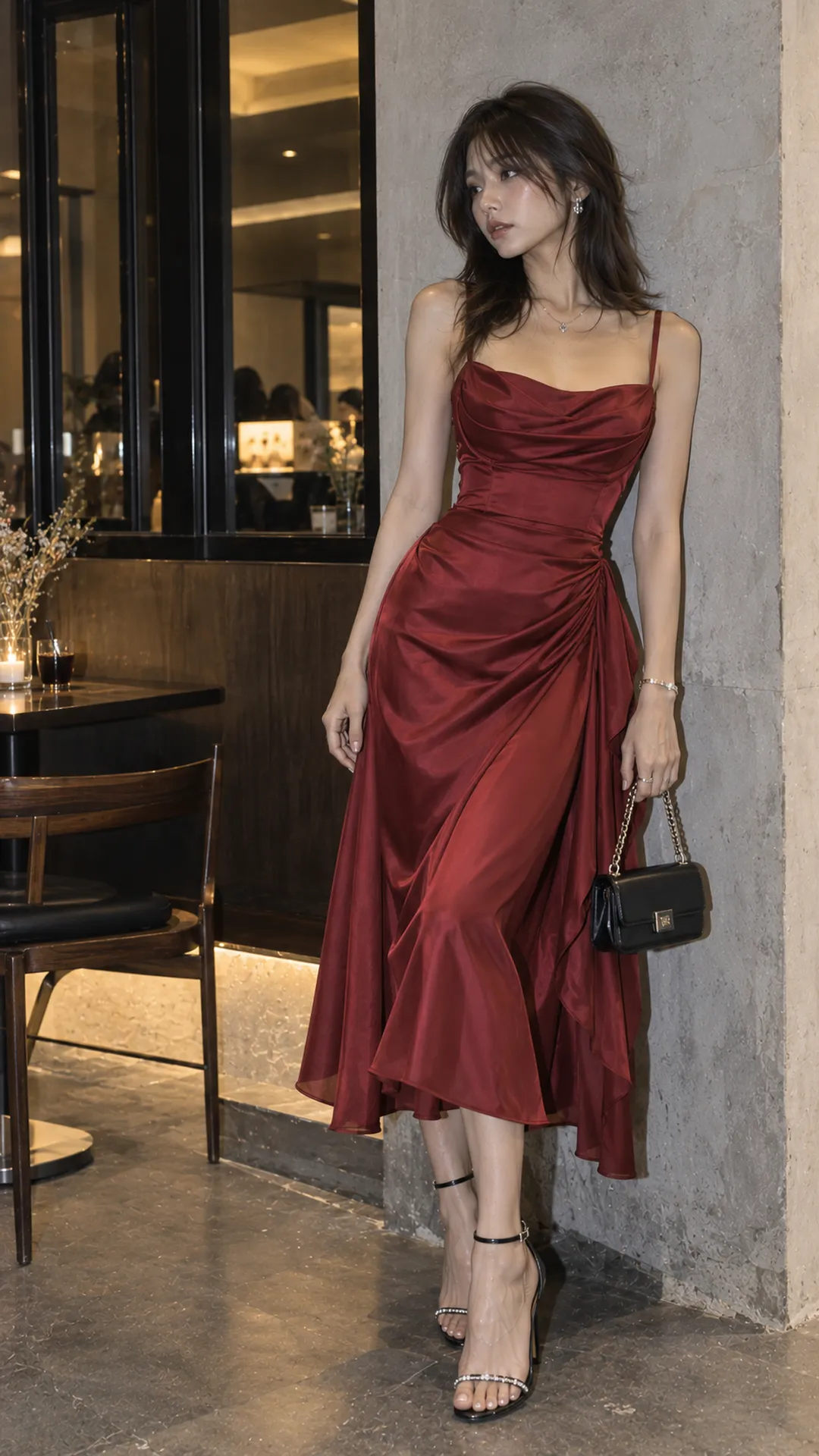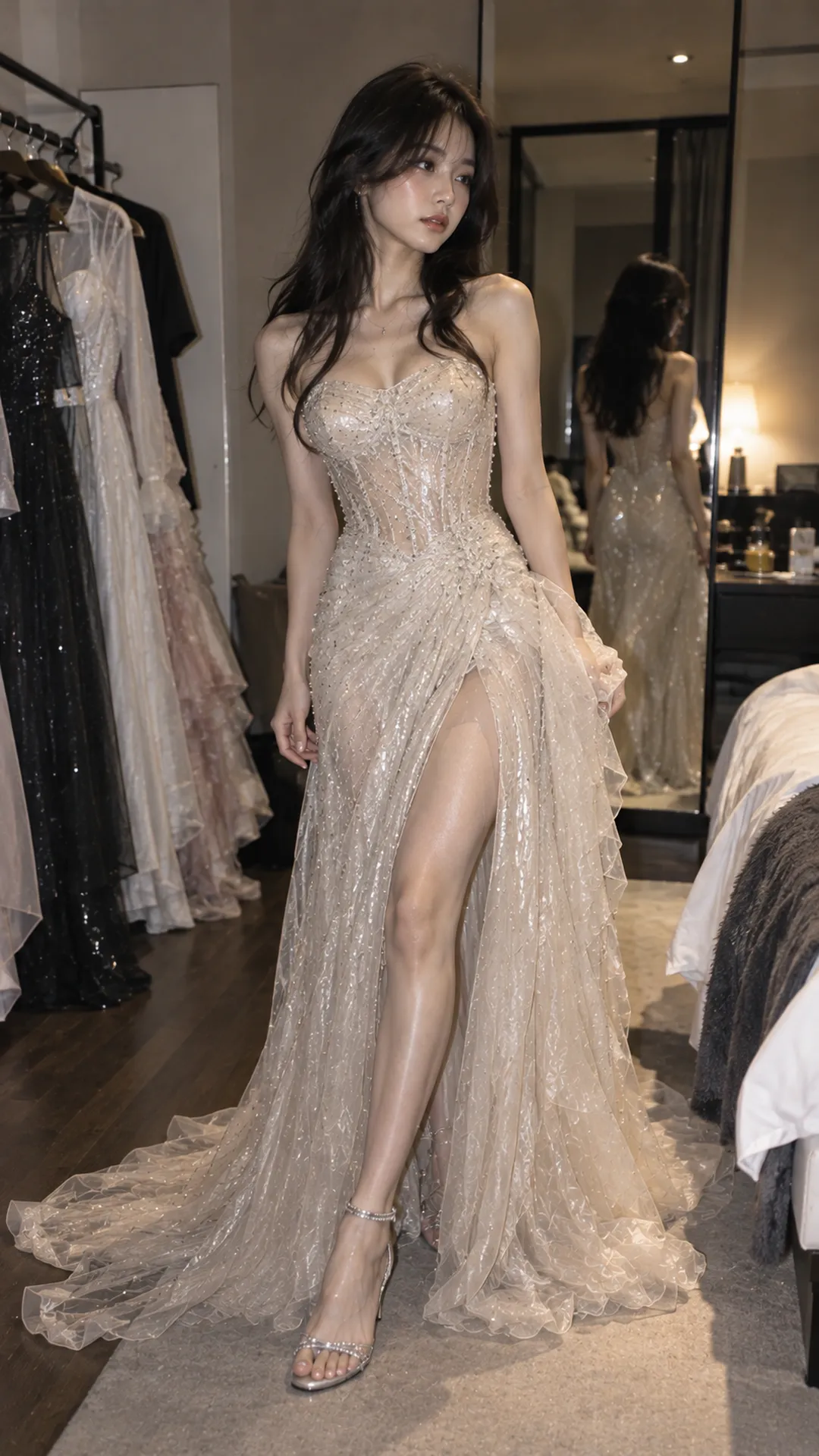
Start with the party's dress code
Women's evening dresses are often recognized through formal construction and finishing: intentional cuts, light-catching fabric or structured bodices. Party dress is broader everyday language; products in that category may be short, simple and suitable for relaxed gatherings. A store category cannot replace an invitation's requirements.
According to Emily Post's attire guide, white tie is more formal than black tie. For women, white tie calls for floor-length gowns; black tie can include a long gown or sufficiently formal cocktail dress. Specific host instructions are the direct reference.
For a gala or prom without a code, examine venue, program and organizer references. A seated dinner, stage and awards differ from standing outdoors. Ask about formality or recommended length rather than whether attractive clothing is allowed. Black tie does not require the entire outfit to be black.
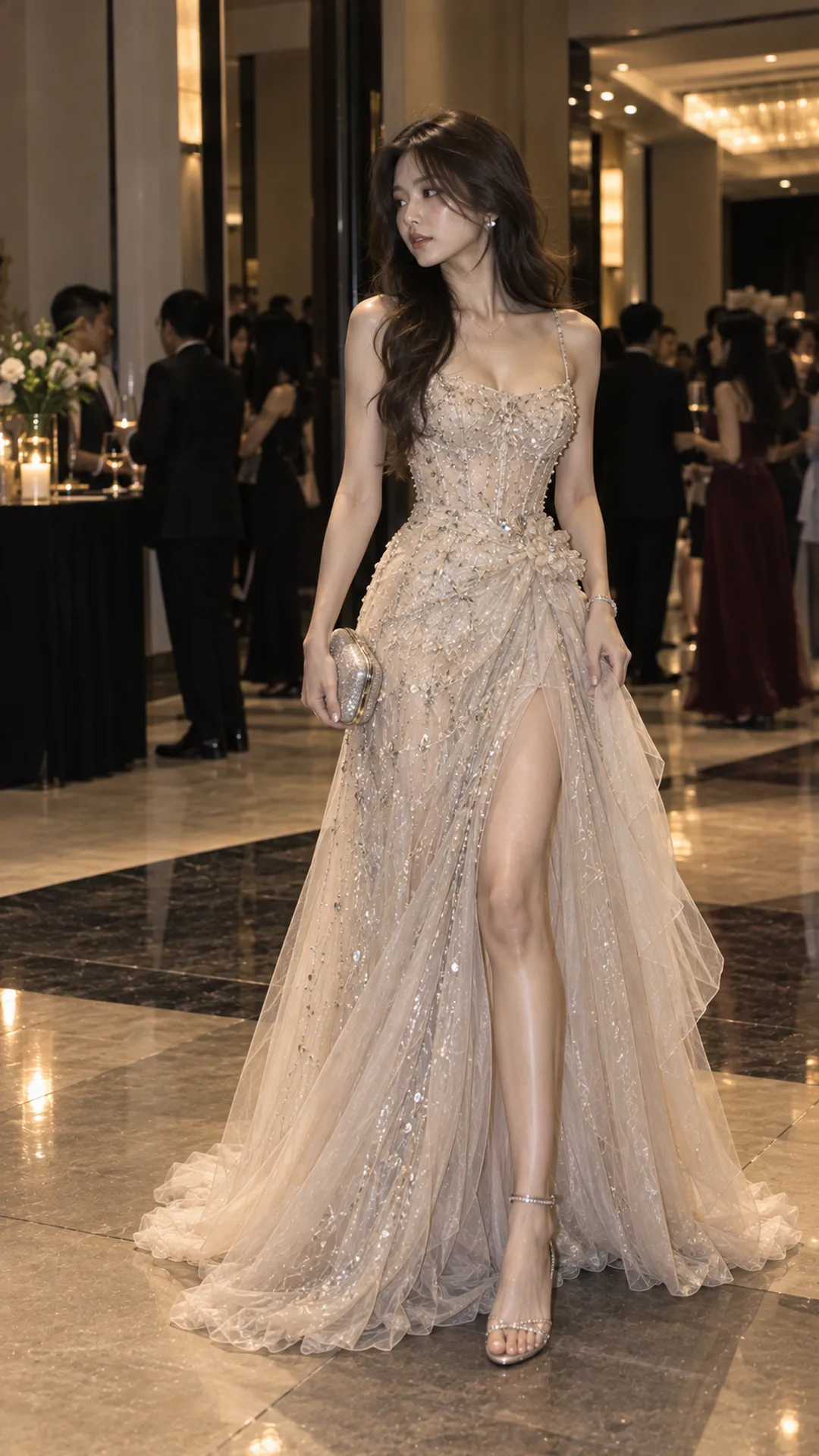
Choose shape for your intended effect
Instead of asking what your body type must wear, ask what to emphasize and where movement matters. Fixed body categories are unnecessary. Compare several cuts with the same intended undergarments and shoes for a clearer assessment.
A-line: room expanding from the waist
An A-line gradually opens toward the hem, often allowing more stride than a tight skirt. Multiple layers or rigid support can still be heavy. Check comfortable waist placement and whether sitting and standing pull the bodice. Do not oversize merely to increase fullness.
Straight or column cuts: assess fall rather than tightness
A column or straight fitted dress looks clean when fabric falls well. Horizontal hip tension, a curved zipper or compressed bust suggest another size or cut. Elegance does not demand tightness: sufficient ease stabilizes seams and reduces pulling after every position change.
Mermaid: test walking before deciding
A mermaid fits the body then opens below, creating a clear standing accent. Flare placement greatly affects movement. Walk normally, turn and try a low step safely. For dancing or frequent movement, an earlier flare and moderate fit may suit better than adapting to severe restriction.
Full skirts: consider the available space
A broad skirt creates a strong shape but needs room for sitting, cars and narrow passages. Assess beyond a front photograph. With a large skirt, simplify neckline or accessories for legibility. Explore styling by dress shape to compare upper-body proportions with hem width.
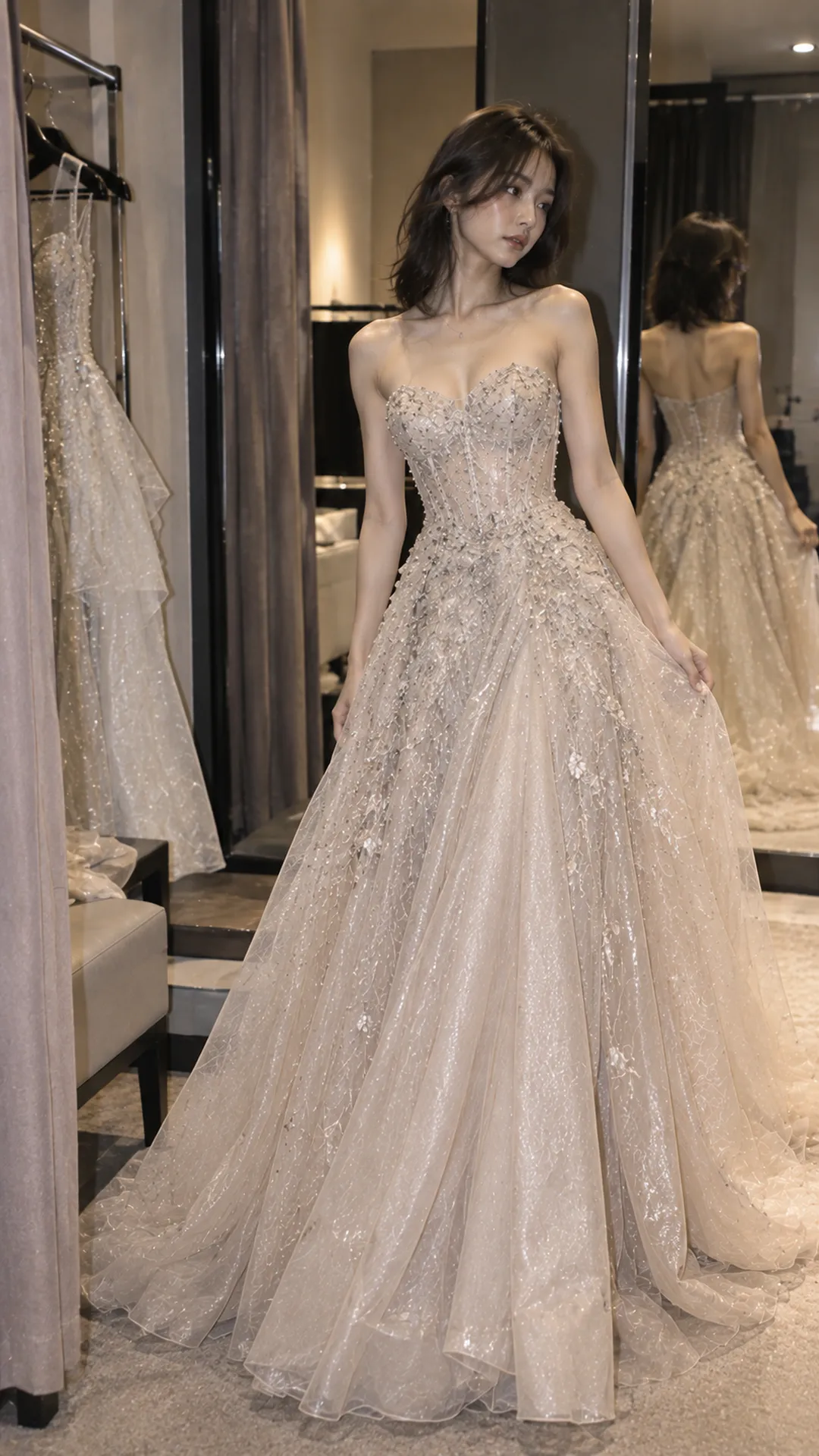
Neckline, support and fabric surface
Square, sweetheart, one-shoulder and high necklines can all appear in eveningwear. Choose comfort and intended jewelry. Embellished necklines may need only small earrings. For open necks, test a necklace at its actual length so the pendant does not strike the edge or disappear when seated.
Strapless or corset constructions need testing seated and standing. Boning does not guarantee suitable support for everyone. Check upper-edge gaping when bending slightly, slipping when raising arms and pressure from rigid elements. Bring a separate bra if intended rather than expecting every type to hide under one neckline.
Satin names a weave, not fiber content; read the label rather than assuming silk. Gloss makes light and folds more visible. Velvet creates another effect, while chiffon, mesh or tulle may need lining. Weight, layer count, stretch and construction all affect comfort, so material names alone cannot predict it.
View the dress under event-like light and inspect seams and interior. For stones or sequins, check rubbing at the underarms and arms during movement. “Premium designer evening dress” is sales wording; fit, finishing and specific alteration policies still need assessment.
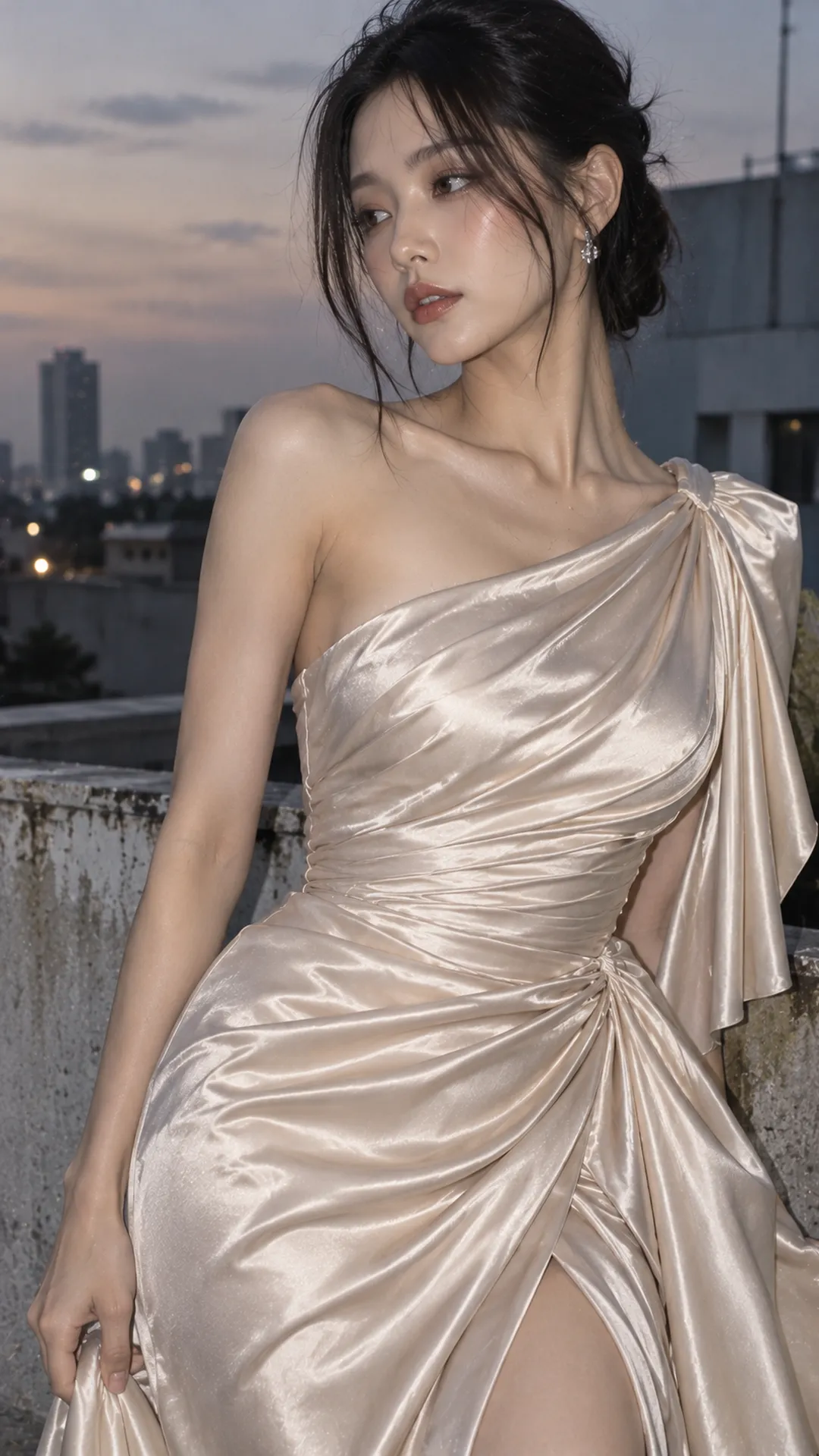
Three adaptable party combinations
An evening gala: one focal area
Start with a solid long dress, streamlined shoes and a small bag holding essentials. If the back or asymmetrical shoulder leads, give it space rather than more jewelry. Shoes need not be unwalkably high; assess design formality and event requirements alongside standing tolerance.
Prom: freshness through proportion and color
A youthful evening dress need not be short or pastel. A clean-cut long dress in a favorite color with simple accessories can suit prom. For individuality, try geometric earrings or a contrasting bag. Change one element first to see whether it supports or competes with the main design.
For dancing, the skirt, straps and closure need to accommodate your movement. Turn gently, walk moderately briskly and reach forward. A photogenic dress leaving you seated through most activities may not suit that evening's plans.
Less ceremonial evenings: reduce visual weight
When the invitation allows, a midi or fewer layers may be more convenient than a train. Try streamlined shoes, a small bag and one jewelry piece. Do not add formality merely to use every new accessory. The guide to styling from one main item keeps the dress as the starting point before the rest.
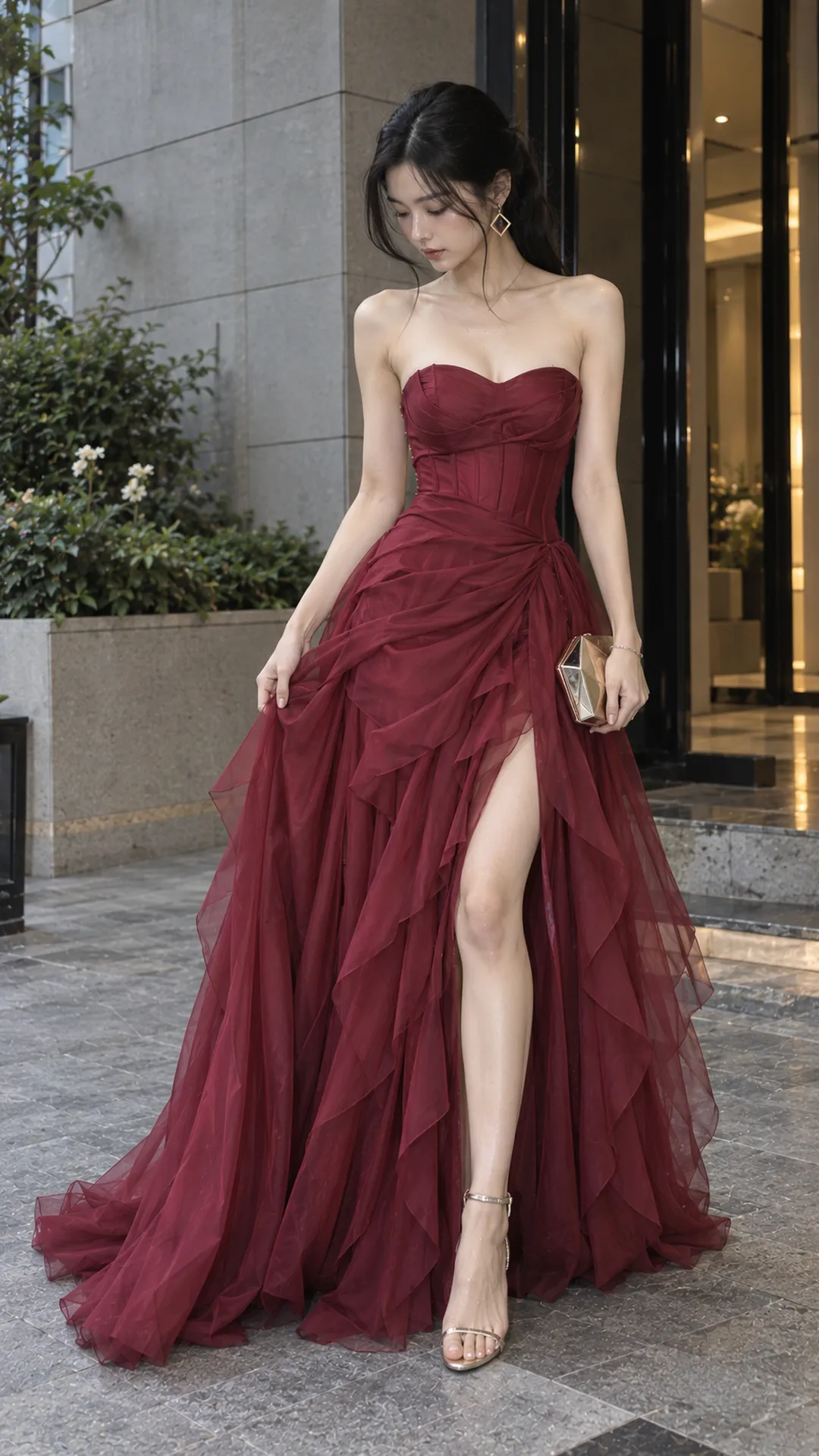
Check fit before buying or renting
Online, measure bust, waist and hips against that product's chart. Ask where dress length is measured from, whether lining and stretch are present and whether figures describe body or garment. The online sizing guide helps prepare information; do not transfer another brand's letter size unchanged.
At the fitting, perform party movements: stand, relax arms, raise them moderately, sit, stand again, stride, turn and hold the bag. Does the dress return to position? If you must hold the bust or continually pull the hem, try another shape or have alterations assessed before accepting it.
Test length with the actual shoes. An overlong hem can be stepped on; an excessively shortened one is difficult to restore. Ask what can be changed and whether trim, pattern or lining is affected. Allow another fitting after alterations rather than collection immediately before departure.
For rentals, read deposits, return timing, stain handling and alteration limits. For purchases, include alterations, labeled care and storage costs. Rewearability can help, while renting is worth considering for highly specific designs. Neither is always cheaper.
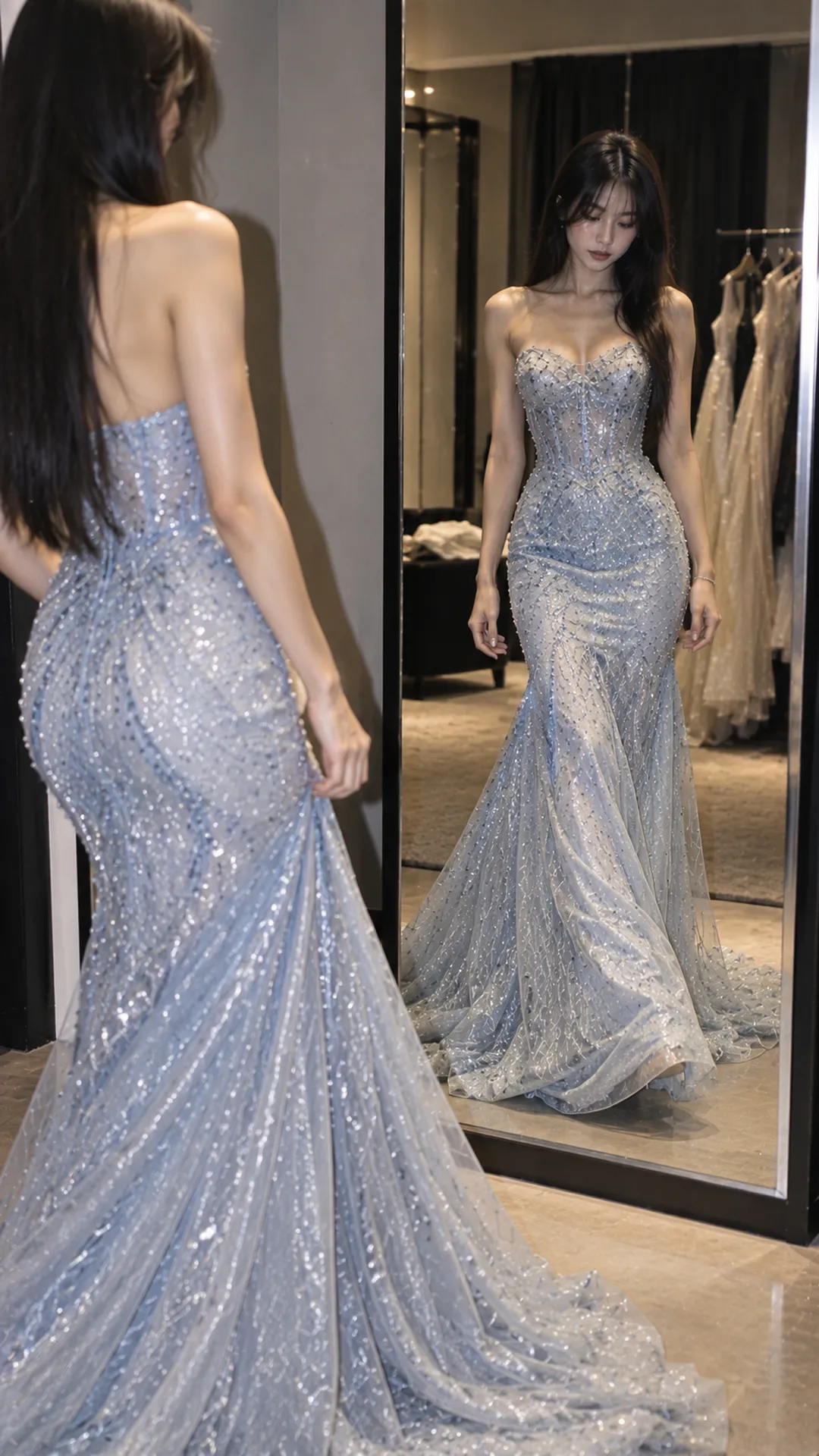
Finish accessories and prepare before the day
Lay out dress, shoes, bag and jewelry, then try everything. Choose one main area: neck, ears, wrist or dress surface. With heavy embellishment, fewer accessories often reveal details better. The women's fashion accessories guide helps by placement; compare its ideas with the actual neckline and sleeves.
The bag should hold essentials without requiring both hands to manage bag and dress. Check whether hooks, jewelry edges or clasps catch mesh or lace. Prepare and test a suitable outer layer for strong air conditioning or outdoor travel.
After wear, follow the care label and rental guidance. Avoid applying high heat to attachments, adhesives or unidentified fabrics. Clean appropriately and dry fully before storage. For a new design, the planned shopping guide reviews needs, fit and future use.