

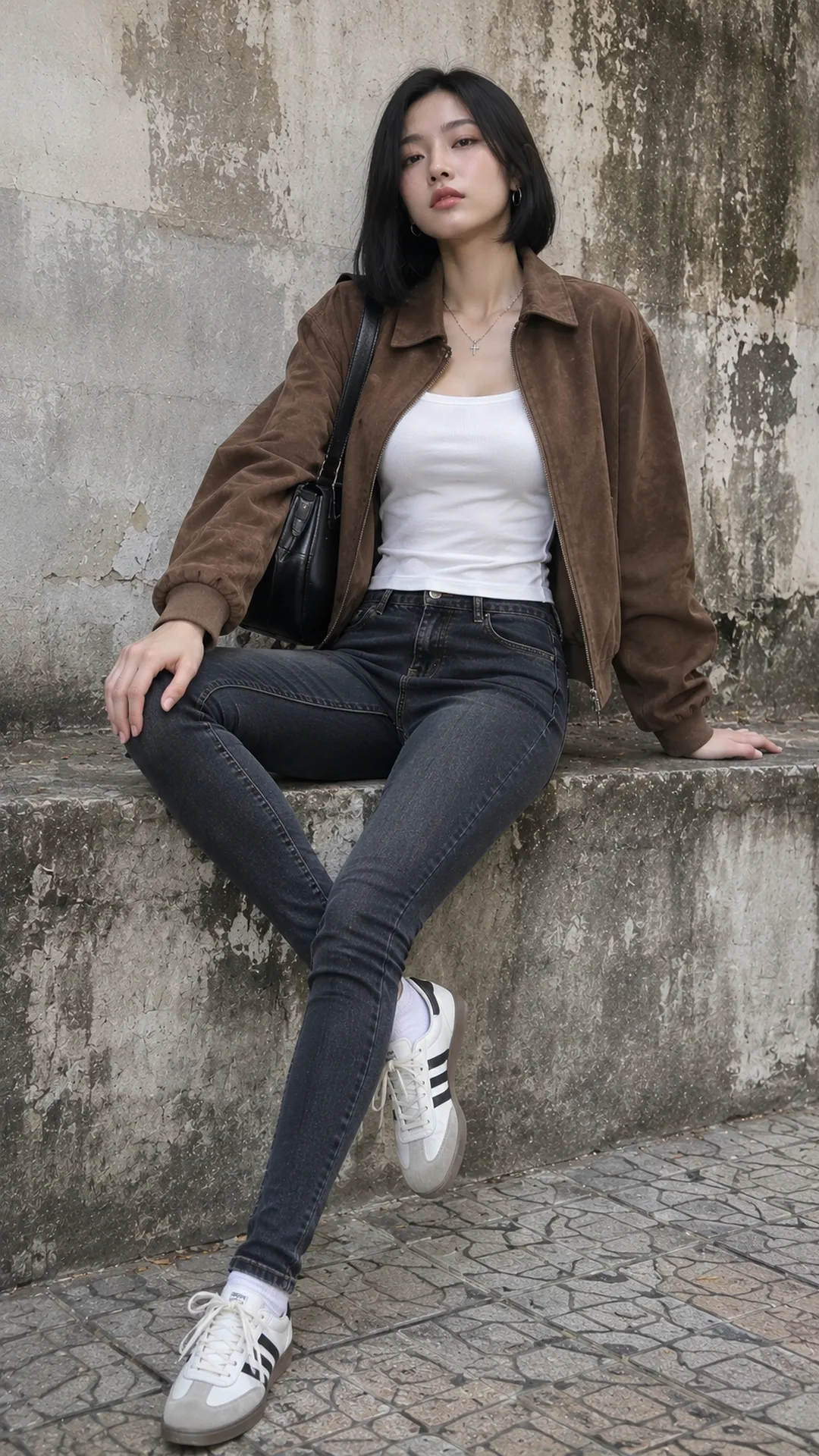
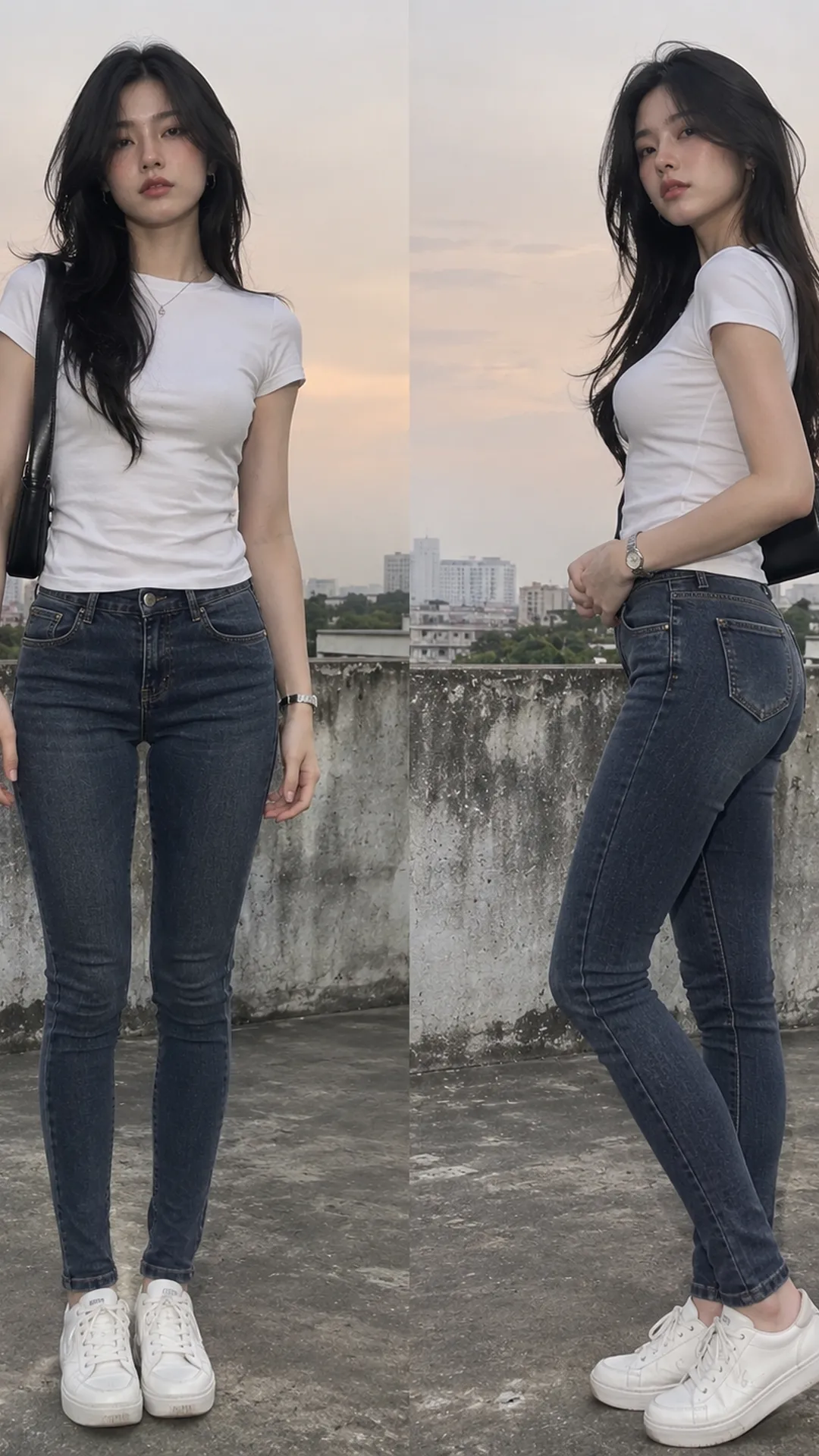
How do skinny jeans differ from slim jeans and leggings?
Skinny jeans follow the leg closely, while slim jeans generally leave more room. Levi’s fit guide also separates women’s skinny and slim cuts by how closely they fit and how much room they leave through the leg. Check garment measurements because cuts with the same name can differ across brands and models.
Look at the thigh, knee, and ankle from the front and side as well as the waist. Try skinny jeans if you want the denim to follow the leg. For a close shape with a little more room, try slim jeans. Choose the fit you find comfortable.
Leggings use a different construction and surface from denim. Stretchy jeans can still behave differently from leggings. Check the coverage in motion. If you’re styling leggings, our women’s leggings styling guide covers their fit and material.
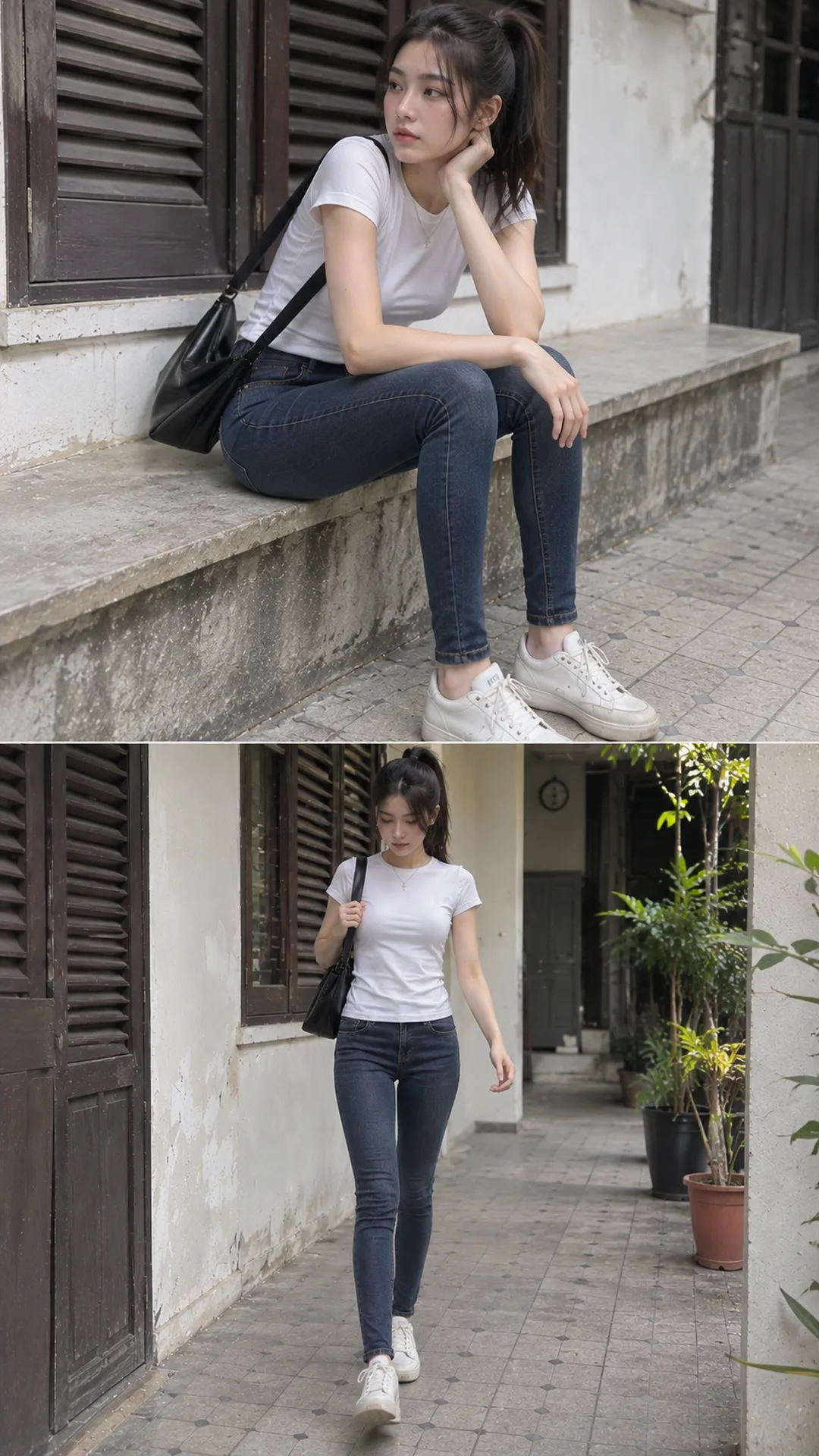
Five details to check when trying them on
The waistband standing and sitting
Fasten the jeans, breathe normally, and sit down. The waistband should stay where you want it without pressing uncomfortably. High-rise skinny jeans can define the waist if the rise suits your torso and how you sit. Try another cut if the waist rolls or digs in.
Hips, rise, and pockets
Look at the front and back seams. Small creases can form as you move. Watch for persistent pulling, distorted pockets, or a fly that starts to gape. If the waist fits and the hips feel tight, try a cut with different waist-to-hip proportions before going up a size.
Thighs and knees
Take a long step, step onto a low stair, and bend your knees. You should have enough room without pulling up the jeans before moving. If you’ll sit for a long time, stay seated for part of the fitting to check comfort.
Hems and ankles
Long hems can stack at the ankle, especially with boots or higher shoes. A narrow opening can also be hard to pull over your foot even when the thighs fit. Check how the jeans go on and off and where the hems fall with shoes. Shortening can be more comfortable than several thick rolls.
Recovery and surface
After sitting and standing several times, see whether the knees return to the shape you want. Fiber content helps explain how the fabric is made, but check recovery on the jeans themselves. For an online order, use our guide to measuring and reading size charts and confirm whether the chart gives body or garment measurements.
Choose among three levels of contrast up top
A fitted top keeps the lines close to the body
Try a fitted tee or light knit with skinny jeans. Choose a waist-length top, a tuck, or a slightly longer hem for the coverage you want. A structured bag or defined shoe shape can give a simple outfit a focal point.
A moderately loose top gives some contrast
Try a relaxed shirt or boxy tee with a close-fitting leg. Check the shoulders and sleeves so the width looks intentional. For a hip-length hem, try it untucked and with a light partial tuck. See which one stays in place better when you sit.
An outer layer adds vertical lines
An open blazer or jacket frames the upper body. Similar shades underneath give a continuous line in the center, while a contrasting jacket outlines it. For a bolder effect, pick one focal feature such as the shoulders, hardware, or shoes. Our women’s tops guide helps you choose a jacket shape.
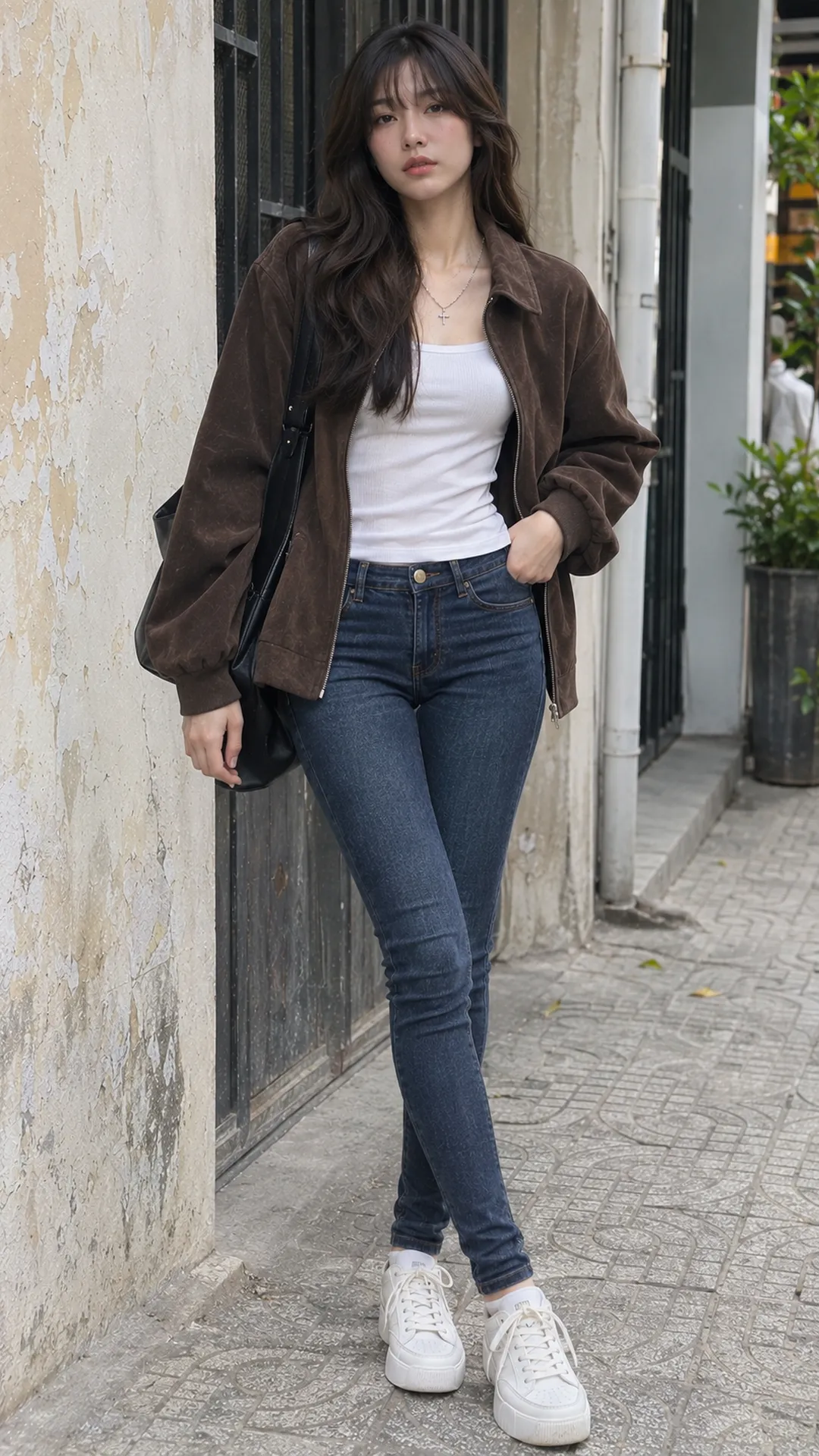
Four everyday skinny-jeans outfits
Dark blue skinnies, a plain tee, and streamlined sneakers: Keep the hem from stacking over the shoes. Check the shoulder fit and choose a bag large enough for your essentials. If the tee has a print, let it stand out with a simple belt and shoes.
Black skinnies, a shirt, and loafers: Try a soft shirt that tucks in without too much bulk. Make sure the jeans are comfortable for sitting. Check the workplace dress code if you plan to wear them to work, since black denim may still count as casual.
Gray skinnies, a simple base layer, and a cropped jacket: The jacket hem gives a visible break above the jeans. If the jacket has a thick hem band, keep the top underneath thin at the waist. Try boots or sneakers and choose for the hem length and walking distance.
Blue skinnies, a hip-covering top, and a small bag: Try this if you prefer more coverage up top. Look from the side to see whether extra fabric collects at the back when you sit. The fitted jeans already show the leg line, so flats can work here too.
Check where the hem meets the shoe
With sneakers or loafers, see how the hem sits near the shoe opening. Showing the ankle is optional. If you want more sock coverage, choose the sock length and color deliberately so you like how they look when seated.
With ankle boots, avoid pressing a bulky hem into a tight shaft. Try a hem that rests outside or jeans narrow enough to fit inside comfortably. Walk to check whether compressed seams or folds rub. If the jeans are too long, consider hemming before stacking several folds.
A large sole stands out below a narrow leg. If you like that effect, try a little structure in the jacket or bag. For a lighter look, use a slimmer sole. Our women’s footwear guide helps you compare shaft height and visual weight.
Denim washes and distressing shift the focus
Dark, evenly washed denim gives a continuous line. Pale fading at the thigh or knee draws the eye there. Keep it if you like the effect. A plain top gives several denim washes room to show.
With distressed jeans, sit down to check the openings and the coverage you want. A long top may cover one area while standing and shift when you sit. If the denim has several decorative details, try a simpler bag and belt.
If you’d like more room through the leg, try straight-leg jeans and compare the two silhouettes. Our women’s trousers guide covers other cuts before you decide what to buy.
Keep the jeans comfortable over repeated wear
Two pairs with different stretch and waist ease may need different tucks. A close waistband may take only a thin top. One with more room can handle more fabric. Sit down with the top tucked in to see whether the jeans or the extra layer causes the bulk.
A phone or wallet changes how close-fitting pockets feel. Try your usual items without forcing in anything too large. If a shallow pocket or tight surface pulls, carry the item in a separate bag.
Read the label for the exact jeans, especially if they contain stretch fibers or have a coating or trim. Follow any instructions to wash new denim separately before pairing it with light clothes. Check the pockets and details that can snag before washing.
Choose a pair you can wear comfortably from the first day. Different jeans stretch differently with wear. Record the measurements of a pair that fits so you can compare them with the next size chart.
Before leaving, sit, take a long step, and try your bag and shoes. If you keep adjusting the waist, knees, or hem, check that area first. Choose jeans that let you move and then use the top and accessories to change the look.