

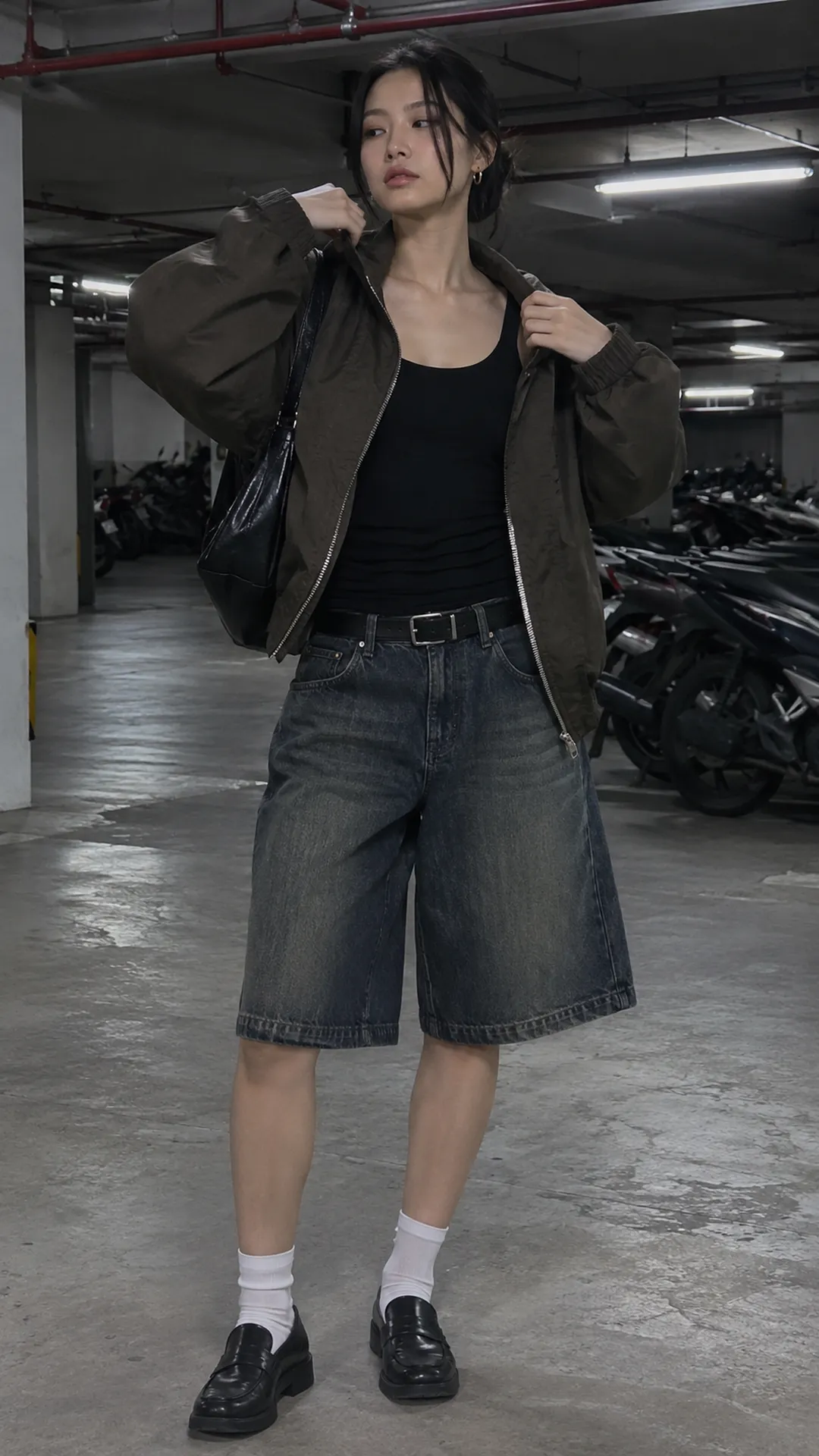
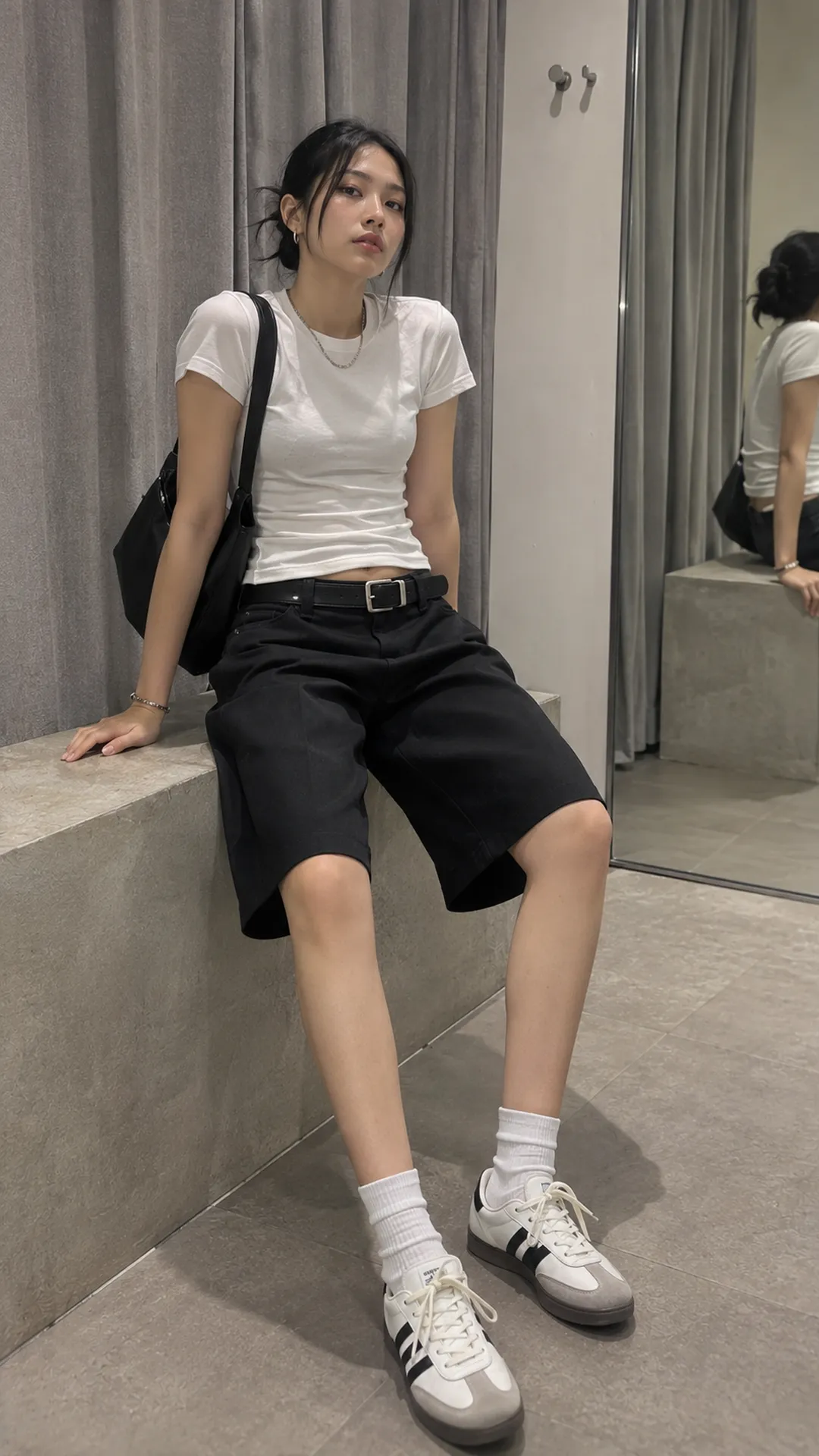
Recognize Bermuda shorts by length and leg shape
Here, Bermuda shorts are shorts that end near the knee. Retailers use the term broadly, so check the length and photos of the shorts being worn. The same pair can end above one person’s knee and below another’s depending on their height and leg proportions.
Women’s shorts that extend below the knee can look different from knee-length Bermudas. A mid-calf hem changes how much leg shows and how the shoes fit into the outfit. Choose the hem position you want before deciding by the label.
Bermudas can have straight or wide legs, front pleats, or cargo pockets. Once you’ve checked the length, look at width and fabric structure. For shorter options, see our women’s shorts styling guide. The advice here focuses on hems near the knee.
Try three hem positions before choosing
Above the knee
This length shows the knee and often works easily with low-cut shoes. Stand, step up, and sit to see how far the hem rises. For a clean line, leave enough room through the thigh so the shorts keep their shape as you move.
At the knee
Pay close attention to how the hem feels when you bend your knee. A stiff hem at the bend can get in the way even if the waistband fits. Sit for a moment, take a long stride, and try stairs. If the front bunches above the knee, reconsider the length or width before sizing up at the waist.
Just below the knee
Less of the leg shows, so sock length and shoe height make a more visible difference. Try low shoes for a continuous stretch of leg, or boots if you want more volume there. Use a full-length photo to see how the top affects the overall proportions.
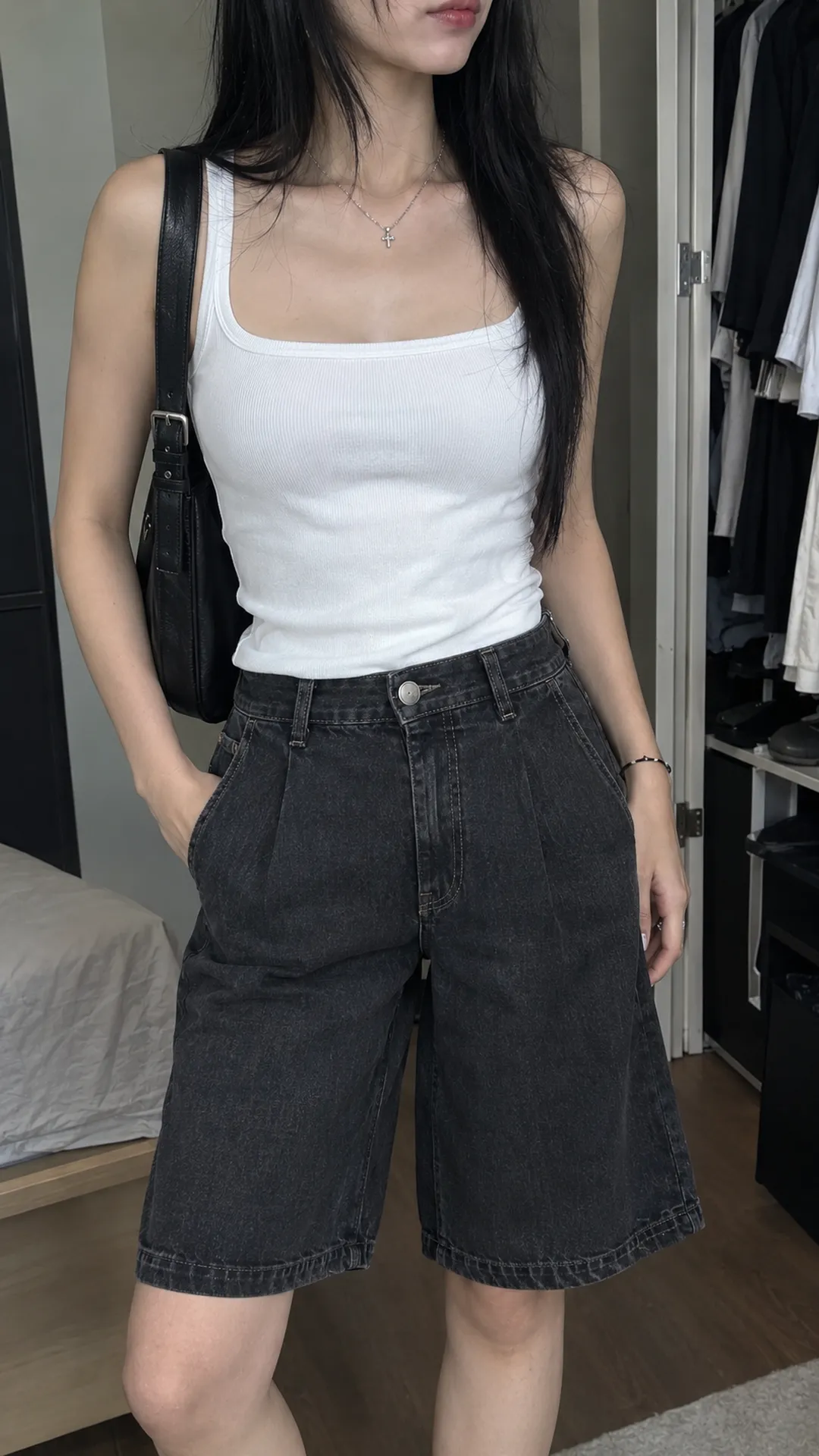
Check the waistband, pleats, and fabric
The waistband should sit where the cut is designed to sit and stay comfortable while seated. If the rise is too long or the waistband slides down, the front can crease even when the waist measurement is right. Check the rise and hips as well as the waist.
See whether front pleats hang straight or pull open while you’re standing. Open pleats can be intentional. If you want a flat front, try a different cut. Check empty side pockets for gaping, which can indicate too little room at the hips.
A crisp fabric defines the legs and adds volume. A drapey fabric moves more freely and may show folds from a tucked top. Check the fiber content and lining, then try the shorts for longer than a quick fitting. Our guide to size charts and measuring at home explains the difference between body and garment measurements.
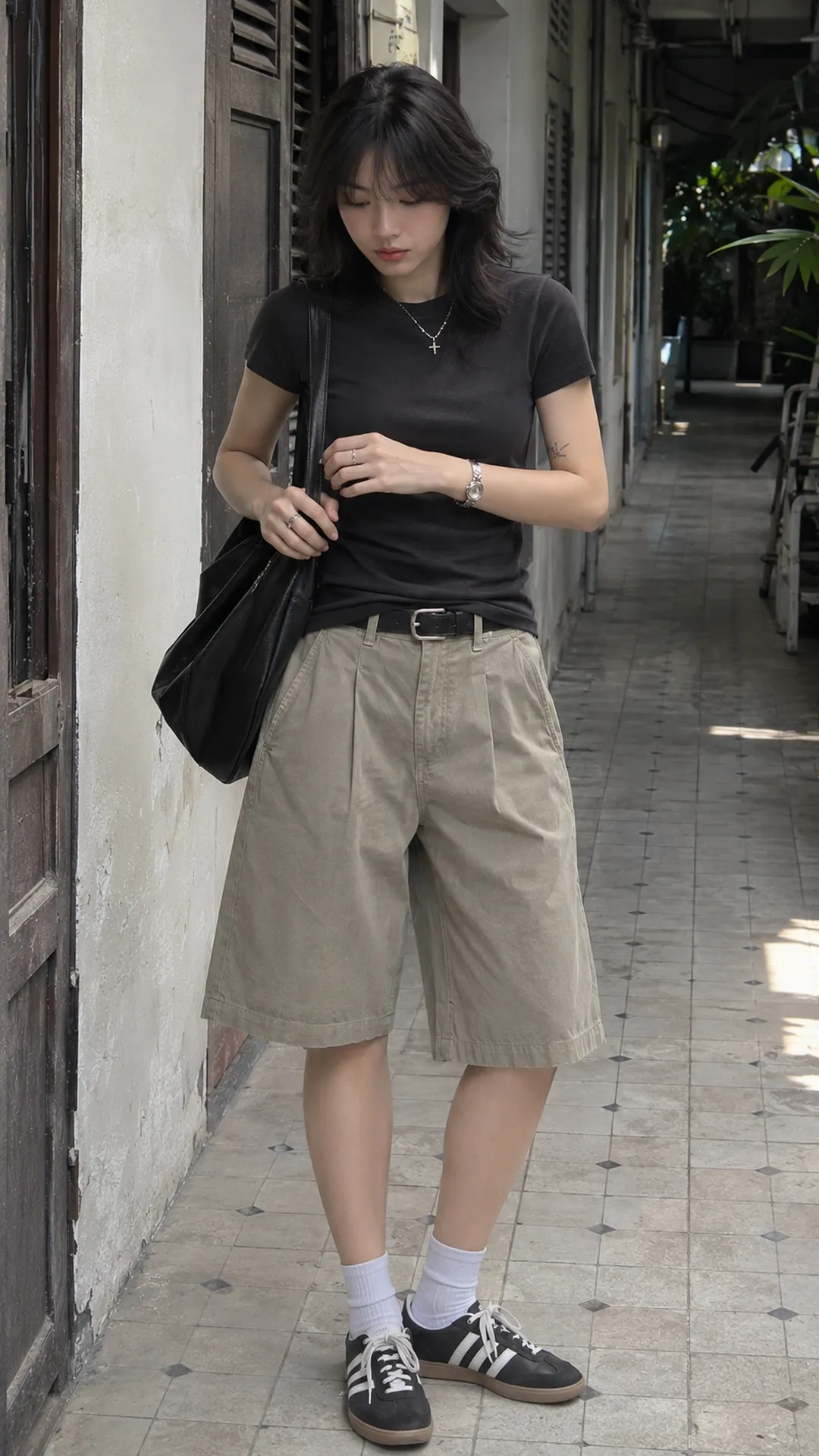
Four ways to choose a top for the leg width
A fitted tee with wide Bermudas
A close-fitting tee defines the transition above wider shorts. Try a waist-length tee or tuck in a thin fabric. With a large print, keep the shorts and shoes simple. Raise your arms to check that the top doesn’t lift the waistband or bunch uncomfortably.
A button-front shirt with pleated Bermudas
Try a plain shirt, pleated shorts, and loafers or streamlined closed-toe shoes. For a full tuck, smooth the fabric around the waist before fastening and sit to check whether the waistband presses. A loose shirt can also work untucked if the length suits the shorts.
A tank and an open shirt for light layering
A fitted tank gives the center definition and an open shirt frames it. If the shirt reaches nearly to the shorts’ hem, check how much of the shorts you want visible. Try a shorter shirt or keep the longer proportion if you like it. Check the outfit while standing and with the shirt buttoned too.
A structured jacket for a defined shoulder
A blazer or cropped jacket can make Bermudas feel more polished. Check the dress code before wearing shorts to work. If both the jacket and shorts are roomy, try a simple top and a smaller bag, then check where the hems fall. Our women’s tops guide compares several silhouettes.
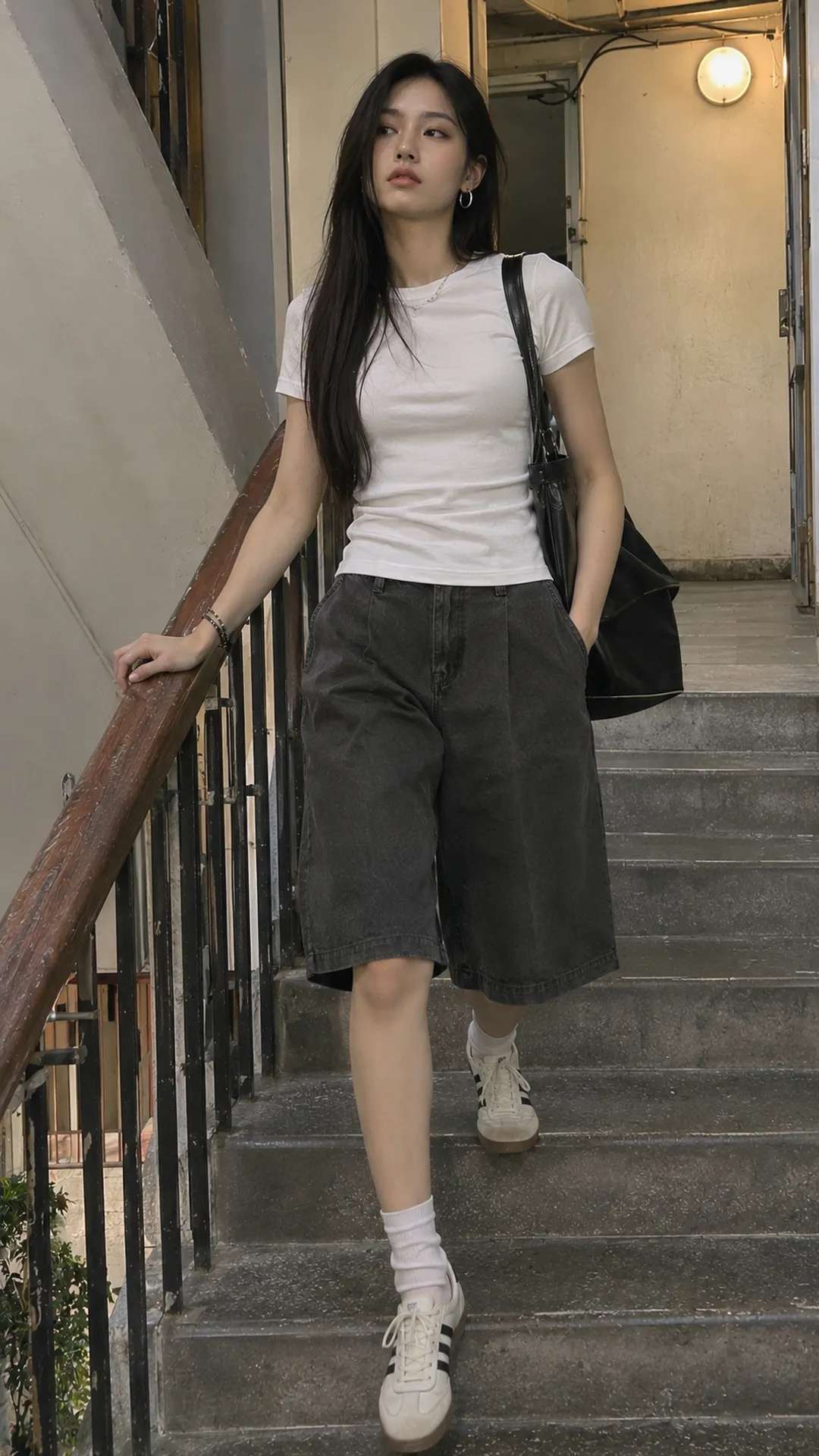
Shoes and socks change the lower half
Low-cut sneakers show the hem and leg clearly. Chunky soles add volume, while slimmer soles give a lighter finish. Try two pairs you already own with the same outfit and see which one works with the width of the shorts.
Loafers can go with low socks or visible socks. Contrasting socks add another horizontal line. With a knee-length hem and higher shoe, try a shorter sock or a color close to the shoe if you want fewer breaks.
Sandals give a lighter-looking finish. Check that the straps feel comfortable as you walk and that the shorts don’t catch on the trim. With boots, decide how much gap or overlap you want between the hem and shaft. Our women’s footwear styling guide compares shoe volume and shaft height.
Choose colors for the level of formality
Black or gray Bermudas with a white top create clear contrast and leave the shape of the shorts visible. For pleated shorts with a smooth finish, try understated accessories. With denim shorts, a plain top and simple shoes give an easy casual combination.
Similar tones, such as brown and cream or several grays, can soften the break at a knee-length hem. Add a bright top or bag if you want another focal point. If the shorts have several pockets, check the hips and hems before choosing the top and accessories.
Our women’s trousers guide by fit and rise can help you compare similar pairs. If the problem is the leg width or hem length, check those measurements before buying the same shorts in a new color.
Adjust the proportions without changing everything
Compare two lengths with the same top and shoes. Use the same camera angle and take photos while standing and walking. You can temporarily pin a hem to check the length if the pins won’t press or catch while you move. Before shortening, see how the new hem changes the leg opening and pocket proportions.
For Bermudas you’ll wear to several places, prioritize fit and length. A belt can change the waist detail and a shirt can replace a tee, but neither will fix a hem that catches at the knee. Choose shorts you can sit, walk, and stand in comfortably.
The top covers most of the shorts: Try a shorter top or tuck in a thin layer. If you like the long top, check how much of the shorts shows and whether that’s the proportion you want.
The legs feel too wide at the knee: Try a softer fabric or a straighter cut. Sizing down may tighten the hips and waist without fixing the leg shape. If you want an alteration, ask a tailor about the seams and pockets and pin the new length before cutting.
They look good standing but feel awkward seated: Check the rise, thighs, and leg openings. Empty heavy items from the pockets, then add what you normally carry to see whether the pockets pull the shorts out of shape. Walk in the shoes you’ll wear and check that the hem clears them, the waist feels comfortable, and the shorts settle back into place when you stand.