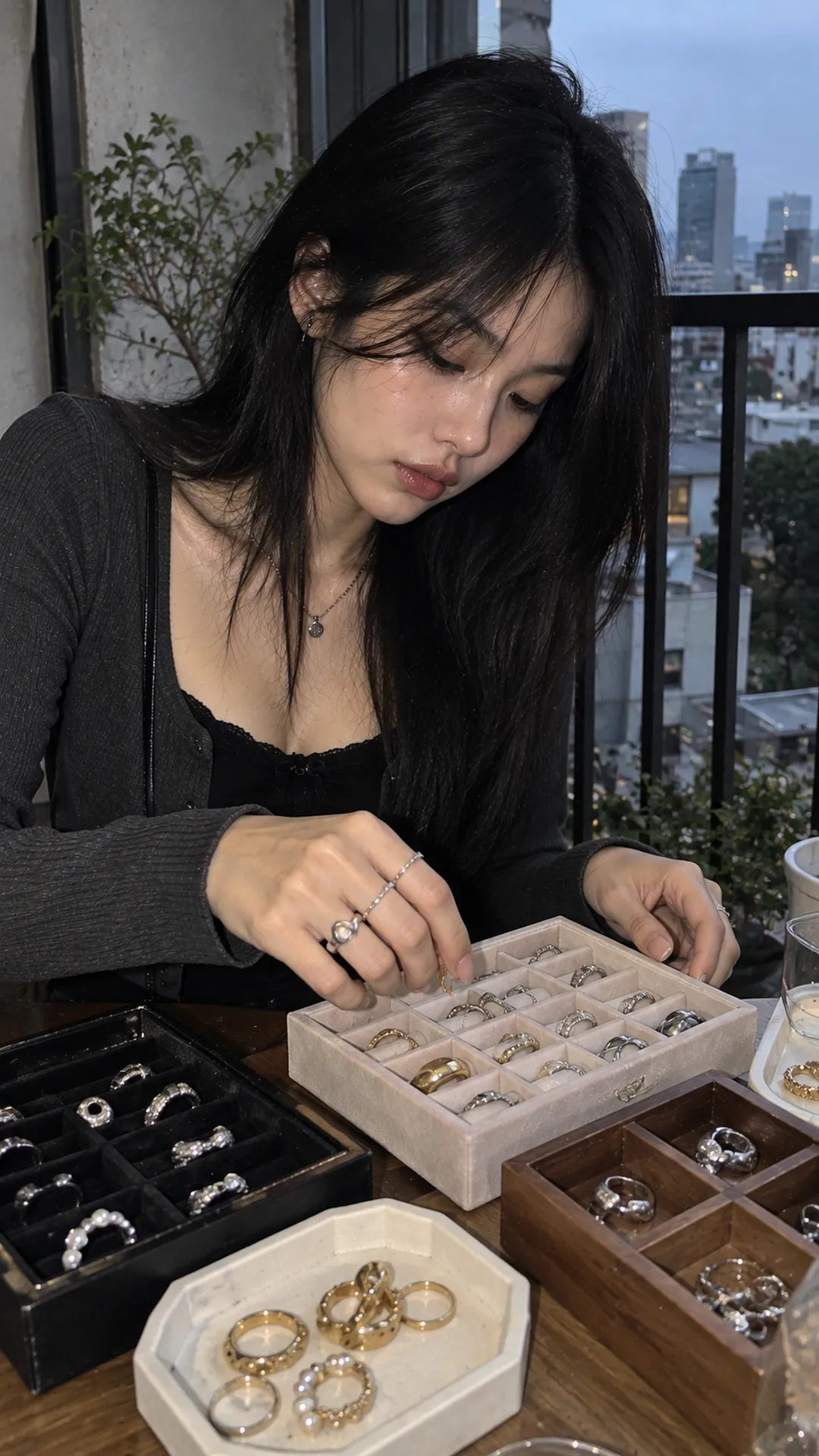
How much do you want your hands to stand out?
Rings can support an outfit or become its main accent. A small, low-contrast band feels subtle; a broad band, high setting or vivid color attracts more attention. Two equally sized rings can differ in presence if one is highly polished and the other matte.
Look at your hands in the context of clothing. Long sleeves extending toward the fingers partly hide rings; short sleeves expose them more. When you hold a bag, its clasp and strap sit nearby too. An isolated ring photo therefore cannot show how it will work in your outfit.
If unsure of your preferences, begin with a ring visible enough to notice but not cumbersome during daily tasks. Try it with several outfits before buying more. You can discover whether you want more color, a larger shape or just another surface instead of collecting pieces with identical roles.
This principle also appears in the guide to choosing accessories by focal point: identify the area already drawing attention. If your necklace and earrings stand out, rings can be quieter; with a minimal upper half, your hands can add personality.
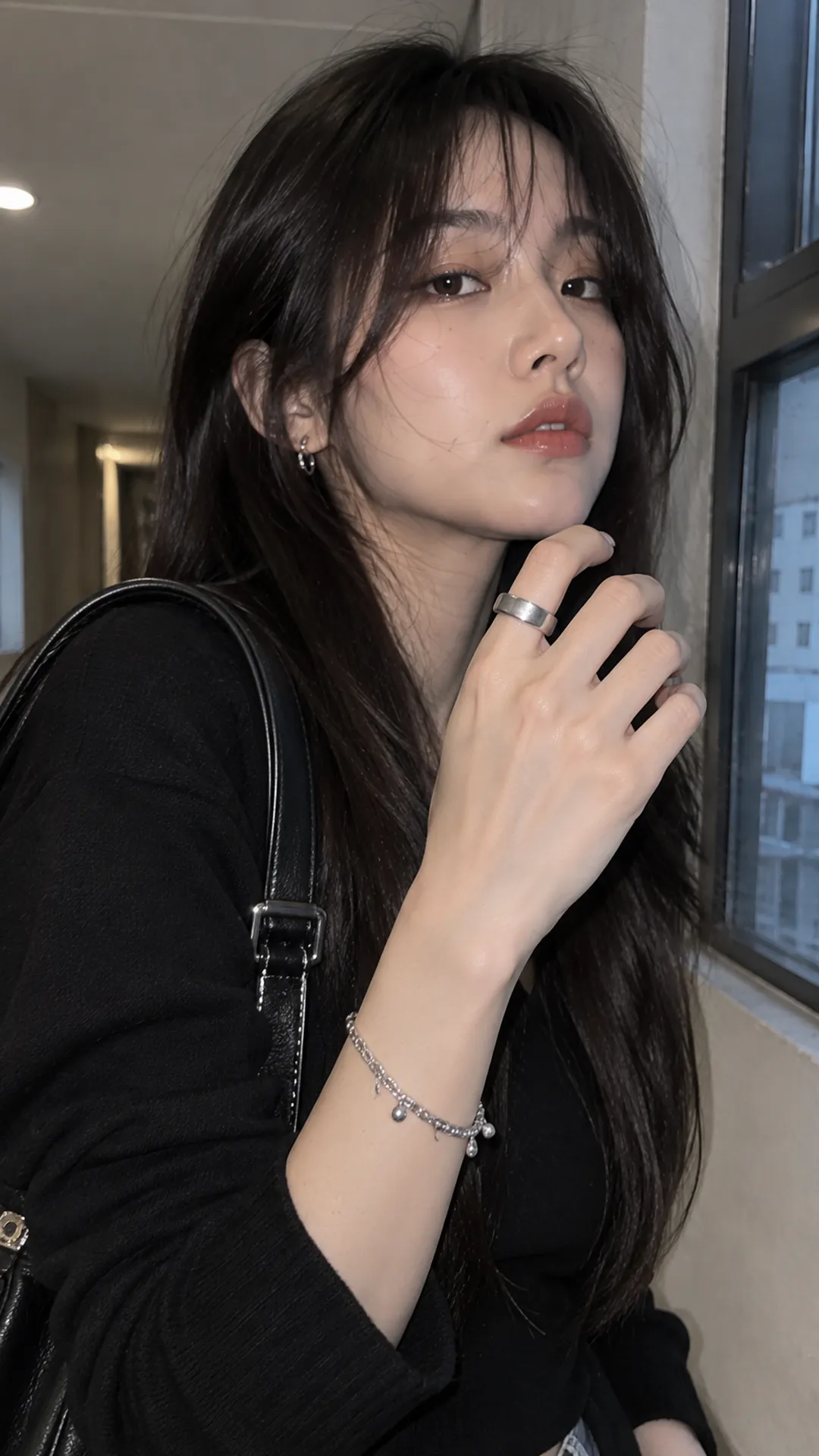
Five ring-style families to start with
Plain bands: consider the profile, not only color
Plain bands can be thin, thick, rounded or flat-edged. These differences affect finger feel and reflected light. A wide flat band creates a distinct area, while a soft rounded profile creates a smaller highlight. View side photos to understand the construction.
Plain rings work across outfits because they introduce no specific motif. Simple does not mean identical or equally comfortable, however. Check the interior, contact edges and thickness on the palm side, where the ring may press as you grip things.
Signet and geometric rings: one main shape
A signet typically has a face more pronounced than its band, whether round, oval or angular. This creates a visual anchor at the hand. Choose a shape related to your bag clasp or watch face to connect details without matching them exactly.
If the face is wide, bring neighboring fingers together to check contact. The design should not continually press against the next finger. To retain a bold shape with less visual weight, wear one ring and keep wrist accessories neat.
Stone-set rings: check setting height
Stones create highlights, but prominence depends on size, color and setting. A small, low-set stone feels different from a raised, layered face. If you often reach into pockets or wear open knits, pay particular attention to snag-prone edges and prongs.
Read the stone description instead of inferring it from photos. A generic term such as 'sparkling stone' does not establish composition or care. If you simply want an outfit highlight, choose within your budget while seeking clear product information and distinguishing color from material.
Sculptural rings, twists and raised surfaces
These designs use curves, asymmetrical forms or relief to create movement. They can lead an outfit of plain clothes. Examine both the top and palm side: a shape attractive from one angle may create a catching edge elsewhere.
With an intricate design, reduce motifs in supporting rings. A flowing shape beside a plain band reads more clearly than three heavily detailed pieces. To wear several, retain a shared feature such as color, shine or curvature rather than combining every style you currently like.
Colored rings and coated surfaces: a color accent
A blue, red or milky-toned ring can connect with your top, bag pattern or nail color. Exact matching is unnecessary; a clear relationship with the palette is enough. Against neutral clothing, one vivid ring can change the mood.
The same color does not imply the same material. Color may come from the base material, coating or an attached detail. Ask about construction and cleaning, especially for frequent wear. Do not apply solid-metal care methods to every colored ring.

Choose for what your hands do
Typing, writing and using a phone
If you spend much of the day at a desk, rest your hands on a table, type a few lines and hold a pen. A high setting or thick band may change your posture. Compact designs are often easier to use, but check the actual feel on your chosen finger.
You may find it convenient to move a statement ring to your less-used hand. Do not assume everyone's habits are alike, though. Mouse use, extensive writing and craftwork involve different contact areas; choose for real movements rather than posed photos.
Holding bags, traveling and outdoor activities
Hold your bag strap and gently close your hand to check whether the ring's underside presses into it. With a thin or rigid strap, a thick band can create a pressure point under a heavy load. Change the ring position or design rather than insisting on both pieces simply because they look good together.
For activities involving equipment, tools or specific safety rules, follow the setting's requirements and remove rings when necessary. Use a designated storage spot instead of putting them down temporarily and forgetting. Fashion accessories should adapt to your tasks rather than interfere with necessary actions.
Meals, meeting friends and events
These may be opportunities for a larger ring face, but still test holding a glass, opening a bag zipper and putting on a jacket. If the face immediately rotates underneath during movement, review the fit. You should not have to hold your hand in one pose to keep the ring looking right.

Style rings with four outfit groups
A shirt and structured trousers
With a neat outfit, geometric rings or plain bands can repeat the defined lines of a collar and waistband. If you already wear a watch, try one small ring before adding a bracelet. Related metal tones can connect pieces without a matching set.
For a sharper office direction, Office Siren offers proportion and accessory ideas. Take the degree of neatness appropriate to your workplace; a ring need not have a large face or many stones to give an outfit an accent.
A T-shirt and denim
This is an easy base for sculptural, signet or colored rings. A plain T-shirt gives your hands more prominence; a large print generally works with fewer ring motifs. If the jeans have many fasteners or a distinct belt, assess them with the rings before adding bracelets.
A colored ring can repeat a small shade in a T-shirt print, while a metal ring contrasts with denim texture. You need not use both approaches at once. Try one ring and take a full-length photo to see whether it has the presence you want beyond a hand close-up.
Soft, ruffled or patterned dresses
When a dress has movement and detail, simpler rings give the outfit breathing room. Try a small stone or softly shaped plain band. A neat signet can also create contrast; soft dresses do not require extremely thin rings.
With a plain dress, a bold ring can replace a large necklace as the accent. Consider the neckline and sleeves first. The guide to dress shapes helps establish how much volume and detail your clothing already contains so accessories support the right areas.
Dark outfits or lots of hardware
Choose a ring family such as curves, geometry or engraving. If your belt and bag already have many buckles, simpler rings keep the look clear. If the base is just a plain black top and trousers, a bold ring has more room to be seen.
The ring section and accessory-distribution ideas in the Alt Fashion accessories guide offer a starting point. You do not need many symbols to express personality; consistency among a few pieces often makes your choices easier to recognize.
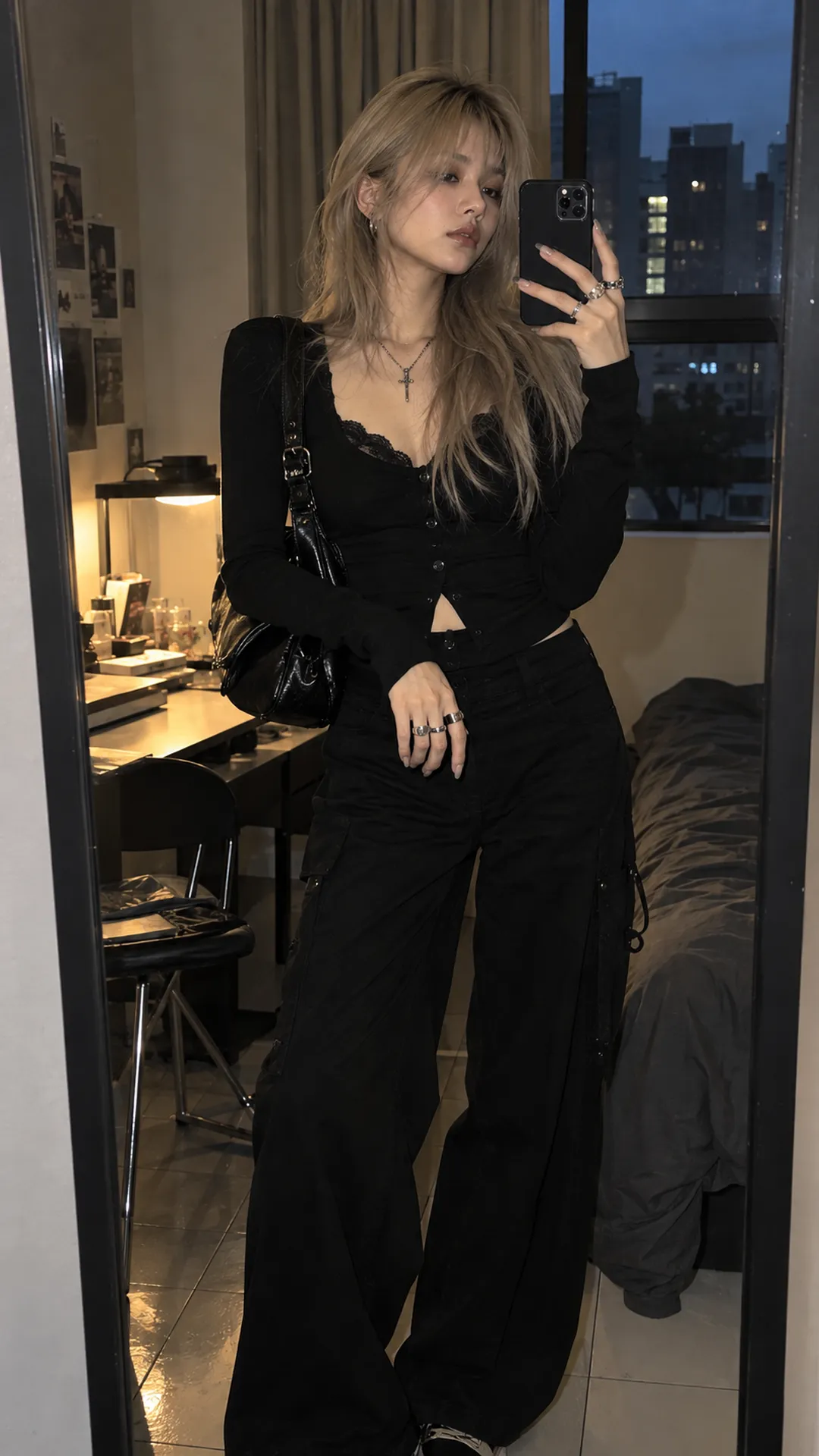
Build a small, reusable ring collection
Start with three roles rather than three similar designs: an easy supporting ring, a statement piece and one that changes color or texture. You need not buy all three immediately. After using the first, identify what is missing before adding something with a different purpose.
When wearing several rings, leave space between decorative areas. If one finger has a large face, leave the next bare or use a simple band. Your hands need not be symmetrical. View them both extended and holding objects for a more realistic assessment.
To mix metal tones, let one dominate and use the other as a small accent. No percentage formula is necessary. A watch or bag detail repeating the secondary tone can provide a connection; avoid buying more simply to repeat every color a set number of times.
Fit and information to check before buying
Choose the finger, consult the chart for the specific design and test putting the ring on and taking it off. A ring that slides easily when your hand relaxes may be unstable; one that makes bending difficult also needs review. Do not use the size of someone with similar height or weight.
An open ring does not fit every finger or permit frequent bending. Ask the seller about adjustment range and procedure. Large faces, attached details and coatings can limit resizing too; check before paying.
The principle of using measurements rather than size labels appears in the guide to buying the right size online. For rings, also request band width, setting height, interior photos and return information. A model's hand photo cannot replace those details.

Care by material, not ring color
Silver-colored and gold-colored describe appearance, not enough information to choose cleaning methods. Keep details of the base material, coating and embellishments when buying. If uncertain, ask the seller before applying cleaning solutions or abrasive materials.
Store rings separately or in suitable compartments to stop decorative faces rubbing together. Check edges, attachments and stability before wearing a long-unused piece. Address looseness or damage promptly instead of continuing to wear it and hoping the detail settles back into place.
A useful ring collection need not be large. Keep pieces that fit, work with your usual clothes and do not hinder activity. To change the feel, experiment with placement, texture or color before increasing quantity; this often clarifies which additional style you actually need.