

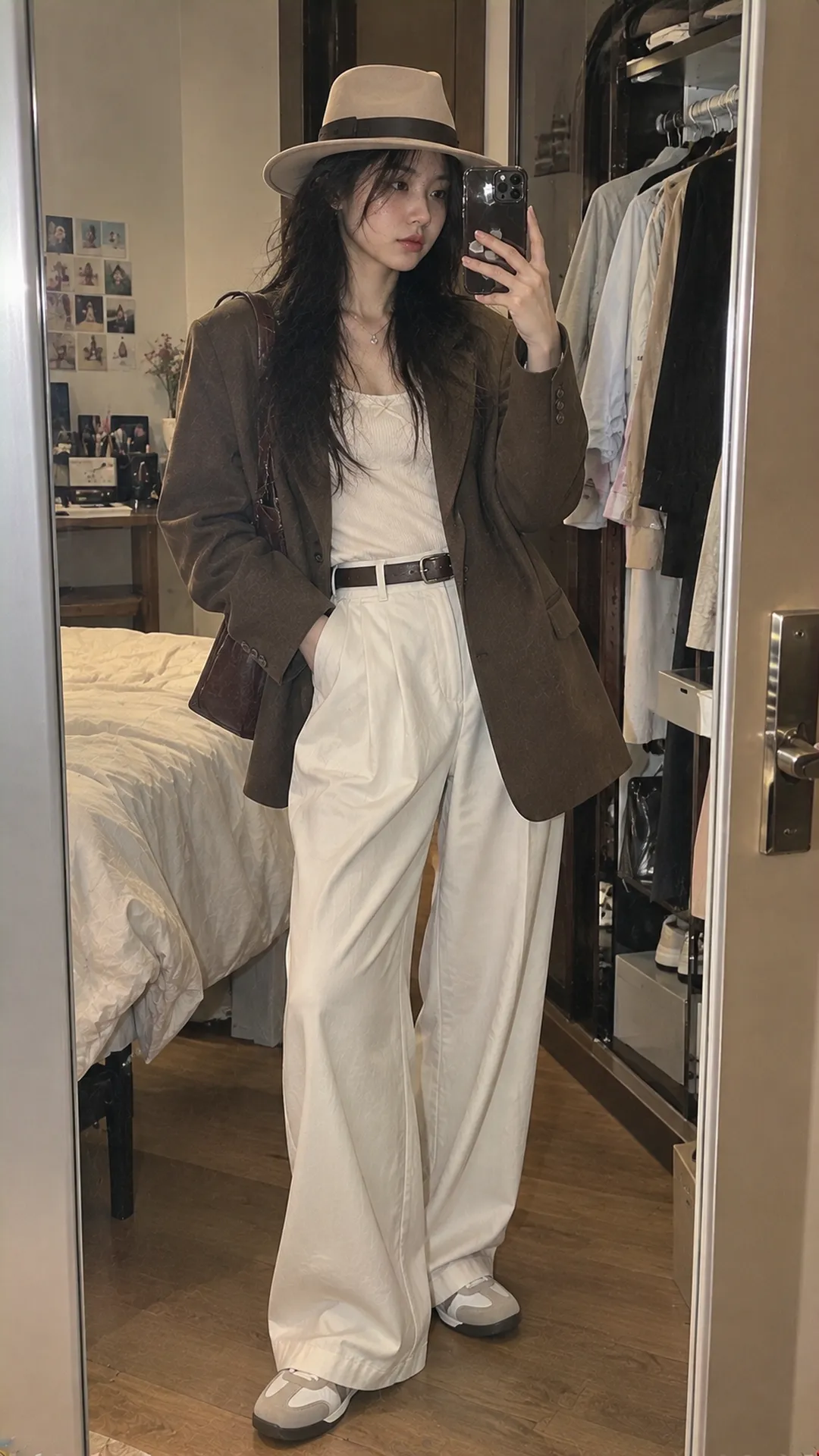
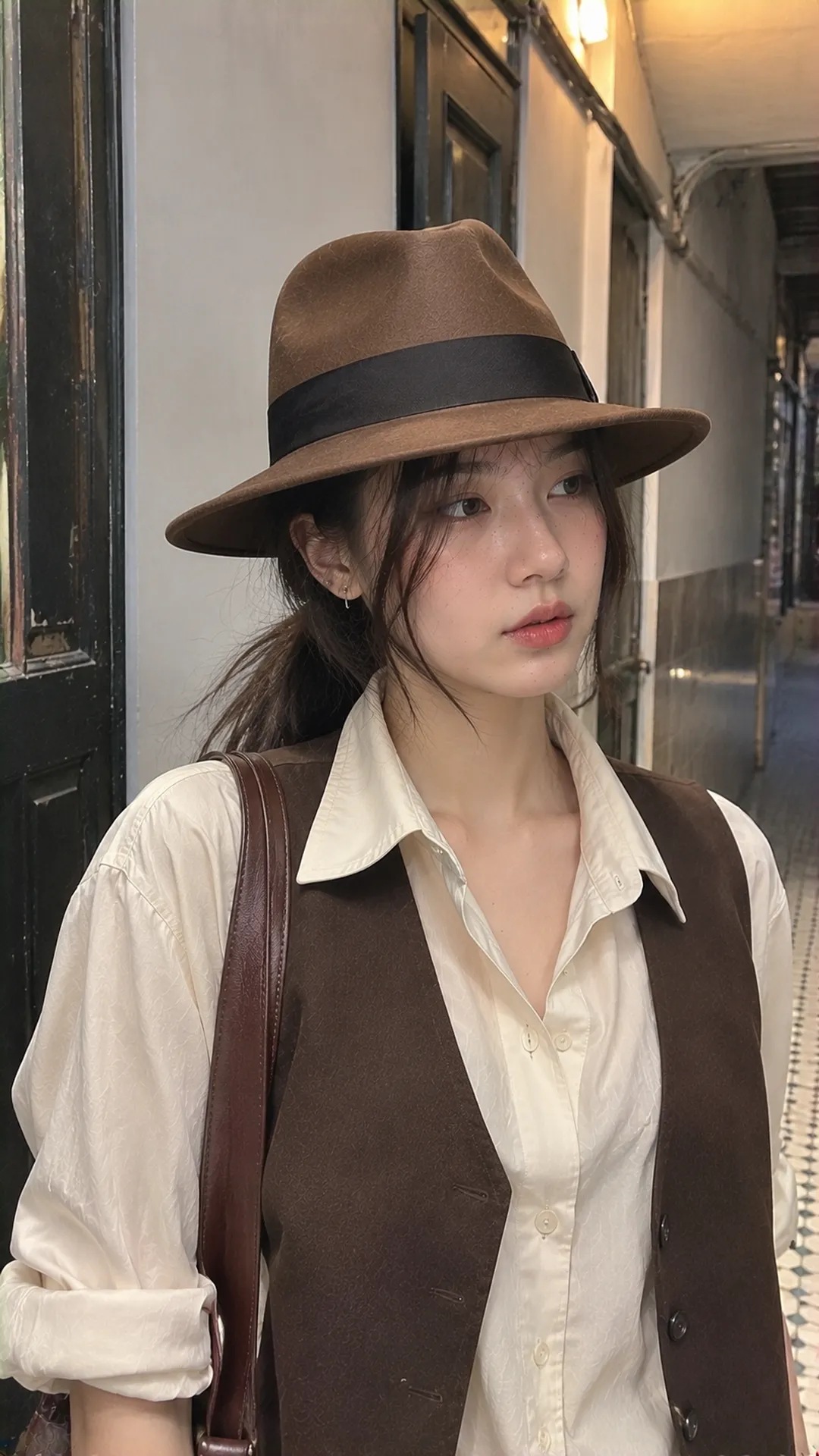
Recognize a fedora through crown and brim
In Stetson's hat-style guide, front crown shaping helps describe a fedora. Inspect top and side images: crease, height and brim line explain volume better than one front view.
Not every wide-brimmed hat is a fedora. Smooth rounded or otherwise shaped crowns differ even with similar brims. A felt-fedora title still needs composition and construction checks; style names cannot replace material information.
Fedora brims vary in width and the space occupied around the face. Beyond face compatibility, ask how prominently you want the head to feature, where you will wear it and where you will put it after removal.
Fit comes before styling
Stetson's sizing guide advises a snug fit without excessive looseness or discomfort, measuring head circumference against its chart. For another brand, use that product's chart and method rather than mechanically transfer familiar labels.
Wear for several minutes, look forward, turn and bend gently. Excess depth, obstructed vision or constant hand support suggest size or shape issues. If unusually high or pressing in one spot, do not force it downward to match a photo.
Try your regular hair. Loose hair, low ties and gathered sections change feel. Include glasses to check brim contact or excessive concealment of the eye area.
For internal adjusters, clarify range and use. They do not make every size universal. Follow seller instructions for padding or reshaping rather than pack the inside with objects that create uneven pressure.

Narrow, medium or wide brim?
Narrow brims: compact space around the head
A narrow brim occupies less space, though a tall crown can still stand out. Inspect half-body and full-length views beyond face close-ups. High and low crowns differ even with equal brim width.
Medium brims: a comparison starting point
If unsure, start medium and compare narrow and wide in the same outfit. Keep hair and placement fixed. Changing color, tilt and top together obscures which difference you prefer.
Wide brims: consider the actual space
Wide fedoras create a large horizontal line and may lead the look. Sitting near others, crowds or leaning back can require removal. Plan storage and carrying at selection rather than only outdoor-photo appeal.
Stiffness and curve matter too. Firm brims hold lines differently from soft drape. Do not bend unknown construction; choose a near-preferred shape or seek suitable manufacturer adjustment guidance.
Choose material and color for wearing conditions
Read composition instead of inferring felt or woven fibers from images. Appearance cannot establish ventilation or cleaning. Ask about lining and the head-contact band for extended use, especially in heat.
Black, brown, gray and natural tones are easy starting points with neutrals. Contrast bands or large side details can markedly increase prominence. Assess the complete hat as a composition rather than one swatch.
For integration, repeat one clothing, shoe or bag color. For a leading hat, reduce other patterns. Bag, belt and shoes need not exactly match it; a modest connection can suffice.
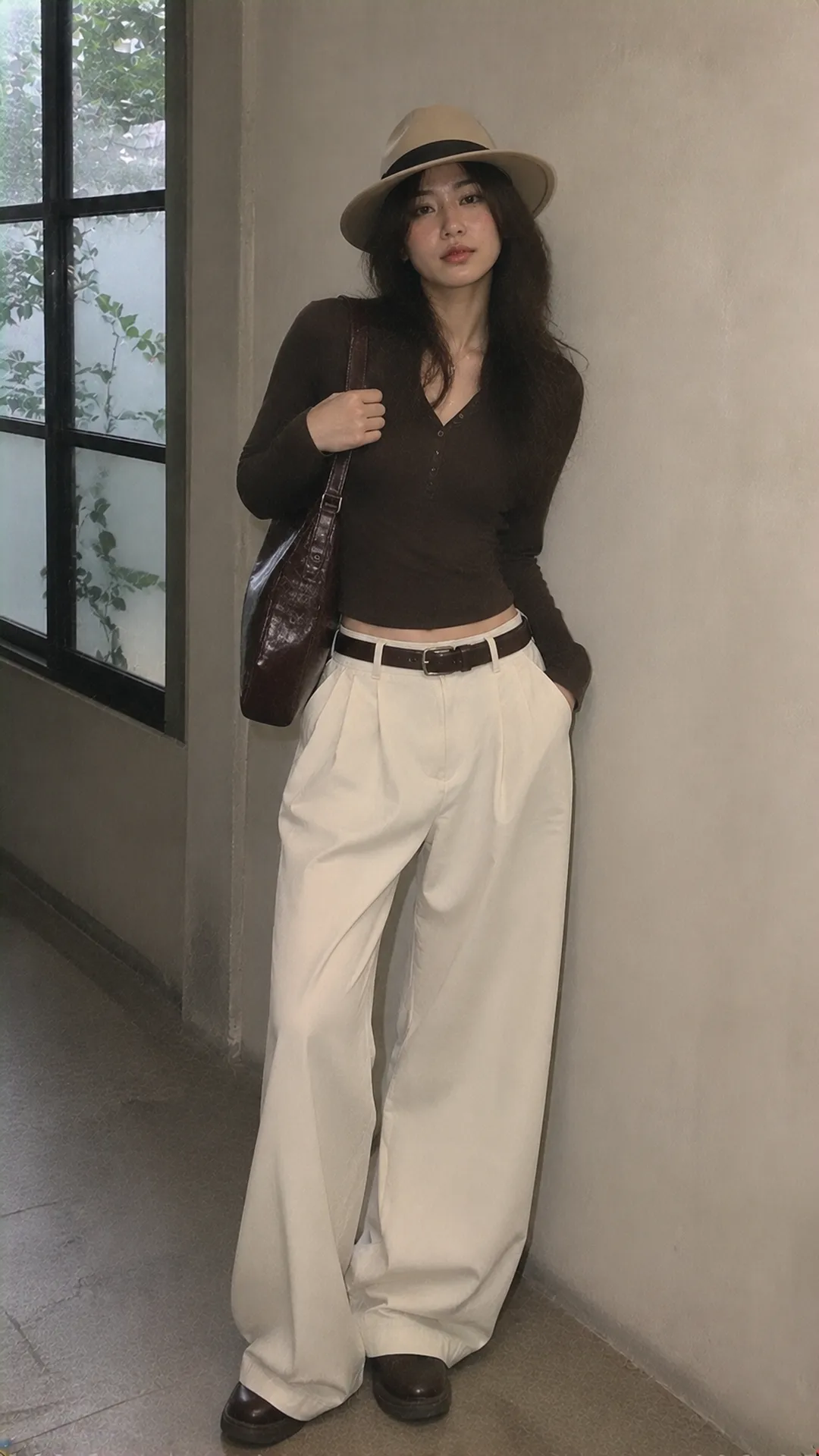
Three trouser-based fedora outfits
A tee and jeans for an everyday base
Try a plain tee, straight jeans, simple shoes and neutral fedora. The hat leads above, so large tee graphics are unnecessary. With strong washes or many pockets, simplify the hatband.
Do not add scarf, jacket and abundant jewelry simply because a hat is unfamiliar. Wear your usual base and assess whether the hat already changes enough. One deliberate change is easier than recreating an entirely untested reference.
A shirt and structured trousers
A neat shirt and straight trousers form defined lines. With a broad brim, simplify the neckline. For tuck or length, the women's top-type guides address the garment before more face-area accessories.
Dark clothing and texture
A black fedora over dark clothing can merge when surfaces match. A knit top or textured bag separates them. Very dark styling remains valid, but preserve shoulder and hem lines so volume does not disappear.
Fedoras with dresses without excessive details
With a plain dress, the hat can lead. Choose shoes for length and drape: neat ones preserve lightness, substantial ones anchor differently. Long dresses do not always require broad brims; test actual proportions.
With separate top and skirt, decide whether waistband visibility balances the hat. If both are wide, a defined top hem or gentle tuck can clarify proportions. For overall softness, retain it with simpler accessories.
Large patterns and elaborate hats can create two centers. Choose a leader: simple hat for a statement dress, plain dress for a leading hat. A fedora does not require naming the entire outfit as one aesthetic.

Hair, earrings and shoes around the hat
Loose hair adds side volume; low ties can reveal more brim. Use comfortable hair rather than compulsory changes. For large earrings, check clearance from hair and brim against contact or catching.
Choosing expressive women's accessories balances head, neck and torso. With a strong hat, simplify necklace or bag. For a few alt signals, see the essential Alt Fashion accessories guide and choose actual roles instead of everything at once.
View shoes full-length as the endpoint. A pronounced hat with delicate shoes concentrates attention above, which may be intentional. For balance, change shoes before adding a coat. The footwear-by-outfit guide checks weight and hem gaps.
Online buying, carrying and storage
Request front, side, top and interior photos with brim width, crown height and head measurements. Ask whether folding or rolling is permitted. Without confirmation, do not assume any fedora tolerates a suitcase or small bag.
After removal, place it cleanly without crushing, following material-specific guidance. No cleaning formula covers every hat. For wetness or distortion, consult the maker before heat or forceful hand reshaping.
Try two existing outfits and consider removal before buying. Suitable fit, preferred proportions and practical use establish a wardrobe role without many new purchases.
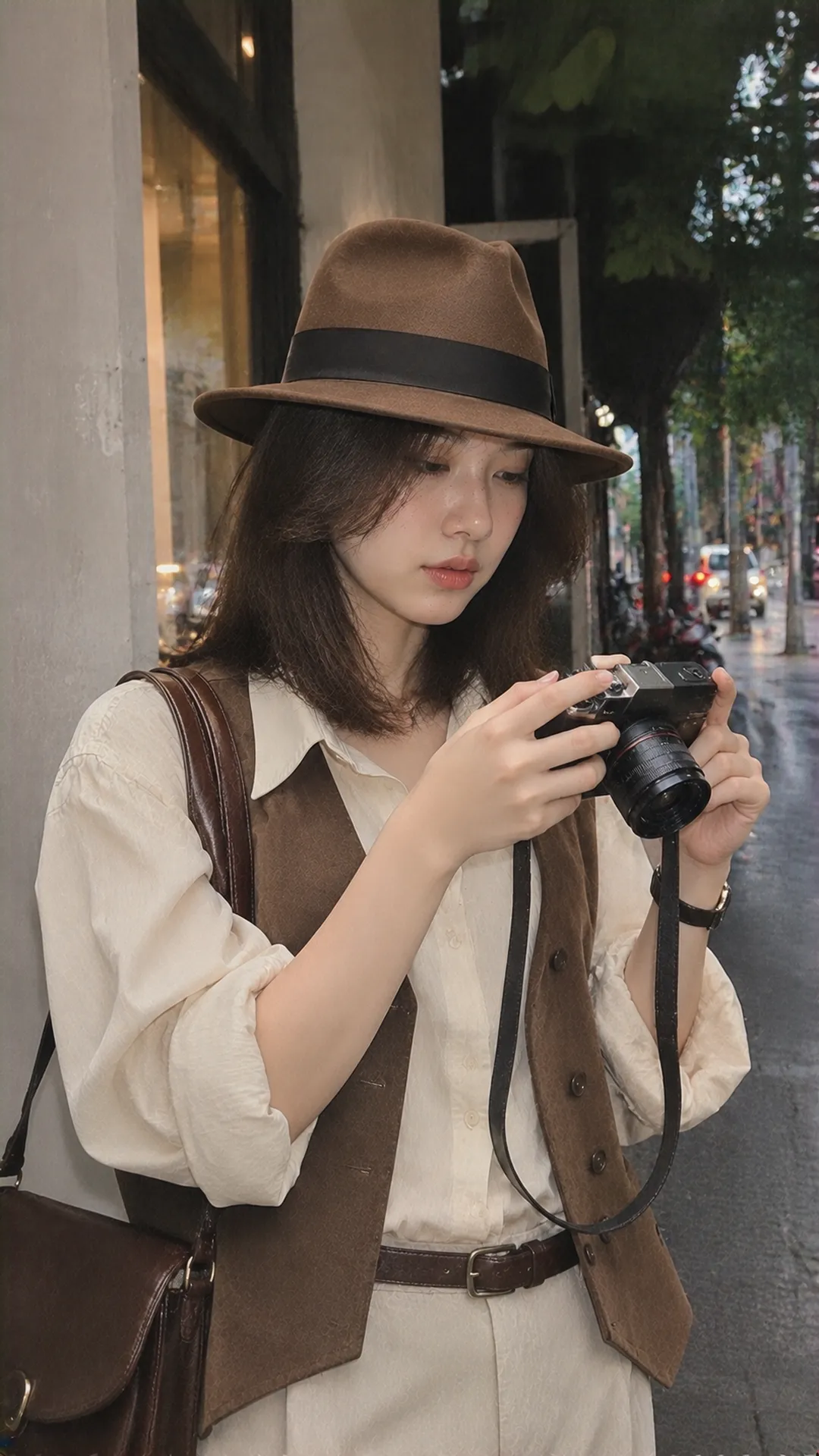
Test the hat within your actual plans
Try finished hair and intended coat. Turn, bend and carry the bag to check brim contact with collar or straps. Constant hand support means fit reassessment or another model for those plans.
For motorbike travel, remove the fedora and wear a correctly fitted helmet rather than stack them. Plan carrying space without compressing the brim. If impractical, reserve it for another outing rather than let an accessory dictate every activity.