

What Is a Bodycon Dress? Choosing and Styling a Fitted Silhouette
A bodycon outfit depends on fit, fabric, and layers working together, rather than closeness alone.
This guide treats bodycon as a clothing construction, not a body-type rule. Read tension, seams, and styling so you can choose the degree of fit you prefer.
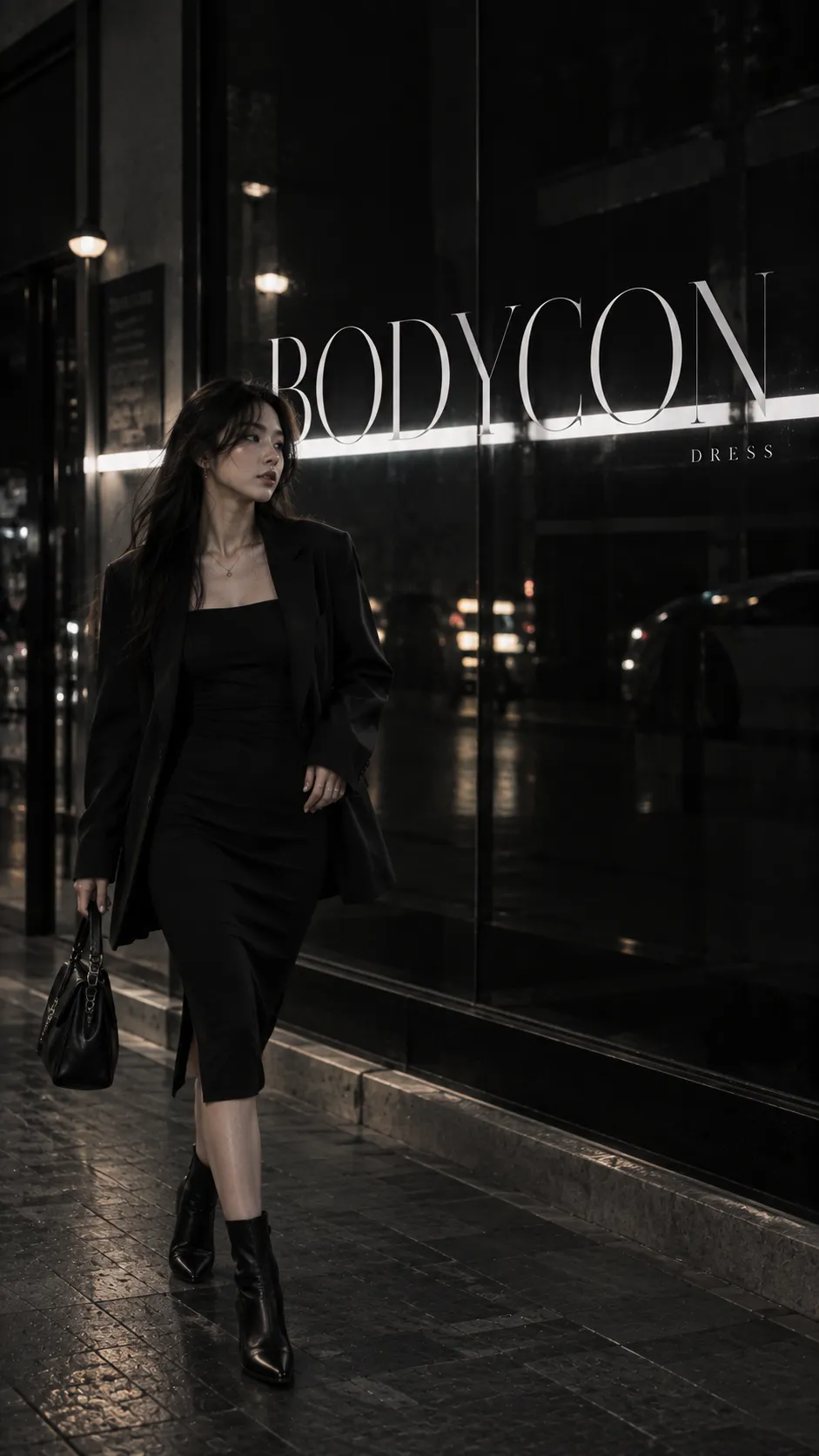
Guide collection: Women's Skirt and Dress Guides: Shape and Length
What Is a Bodycon Dress?
A bodycon dress follows the body's outline rather than creating substantial outer volume. Bodycon is associated with body-conscious styling; it does not require a short hem or restrictive compression.
A bodycon dress can be mini, midi, or longer, sleeved or sleeveless, and made in knit, jersey, rib, ponte, or suitable stretch woven fabric. Fit and stretch strongly influence the worn outline.
When asking what bodycon means, remember that closeness is a range. Fabric can skim the body without strong horizontal pulling and still create a bodycon silhouette.
Lightly fitted
Skims the body with fewer tension folds; one option for everyday styling.
Moderately fitted
More defined waist and hips; inspect fabric weight and opacity.
Closely fitted
Stronger contour, which can contrast with a roomier outer layer.
For the broader styling context, explore Dark Feminine outfits.
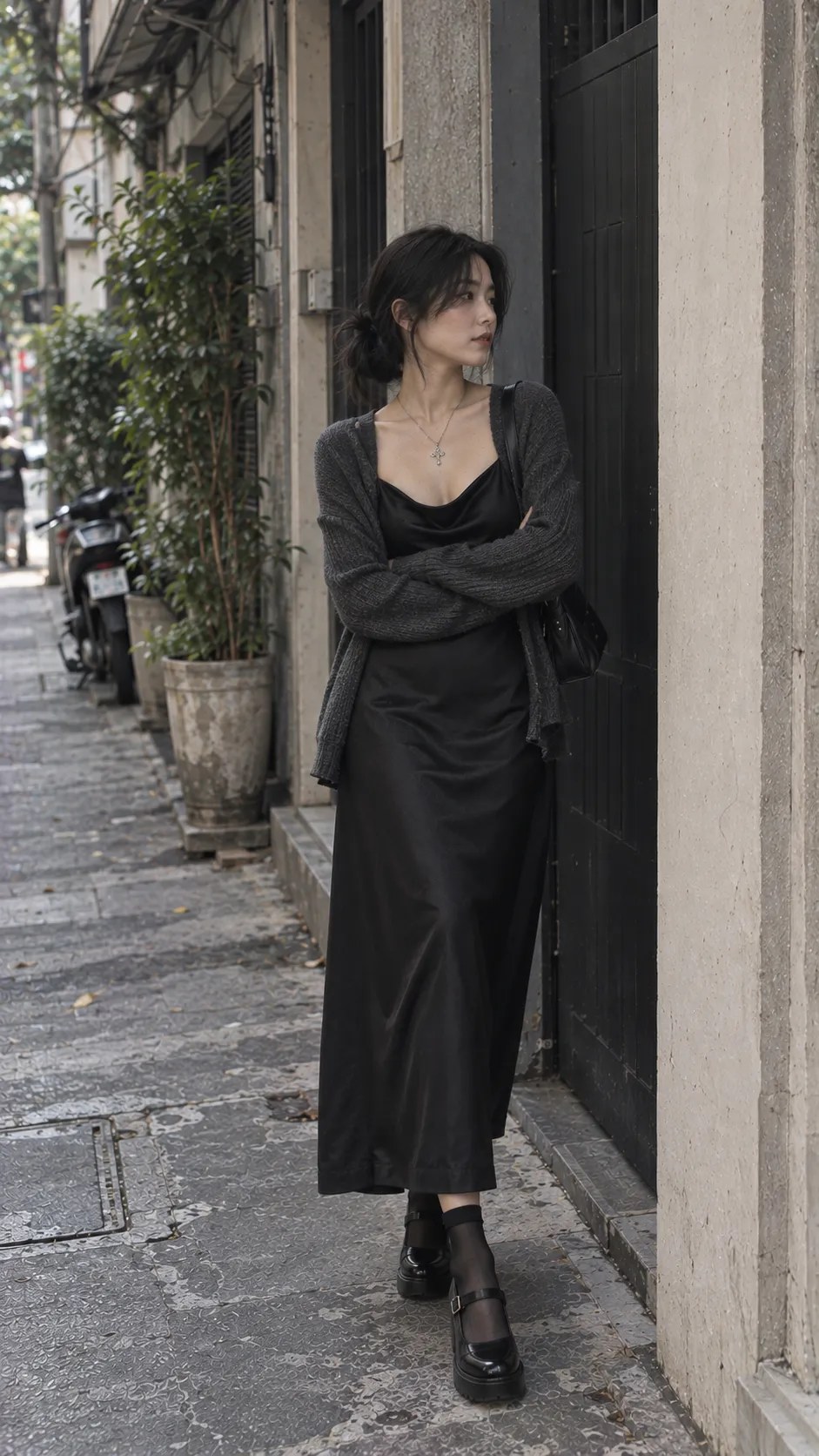
Four Fit Checks
Fabric Changes the Effect
Rib adds vertical texture and can look more casual than stretch satin. Ponte or thicker knit offers another surface, while soft jersey may reveal more detail beneath. Test sitting, larger steps, and raised arms as well as a standing pose.
Matte fabric and simpler seams create one quieter option. Satin or sheer overlays add dressiness. Mesh, leather, or selected hardware introduces alternative texture without requiring a tighter fit.
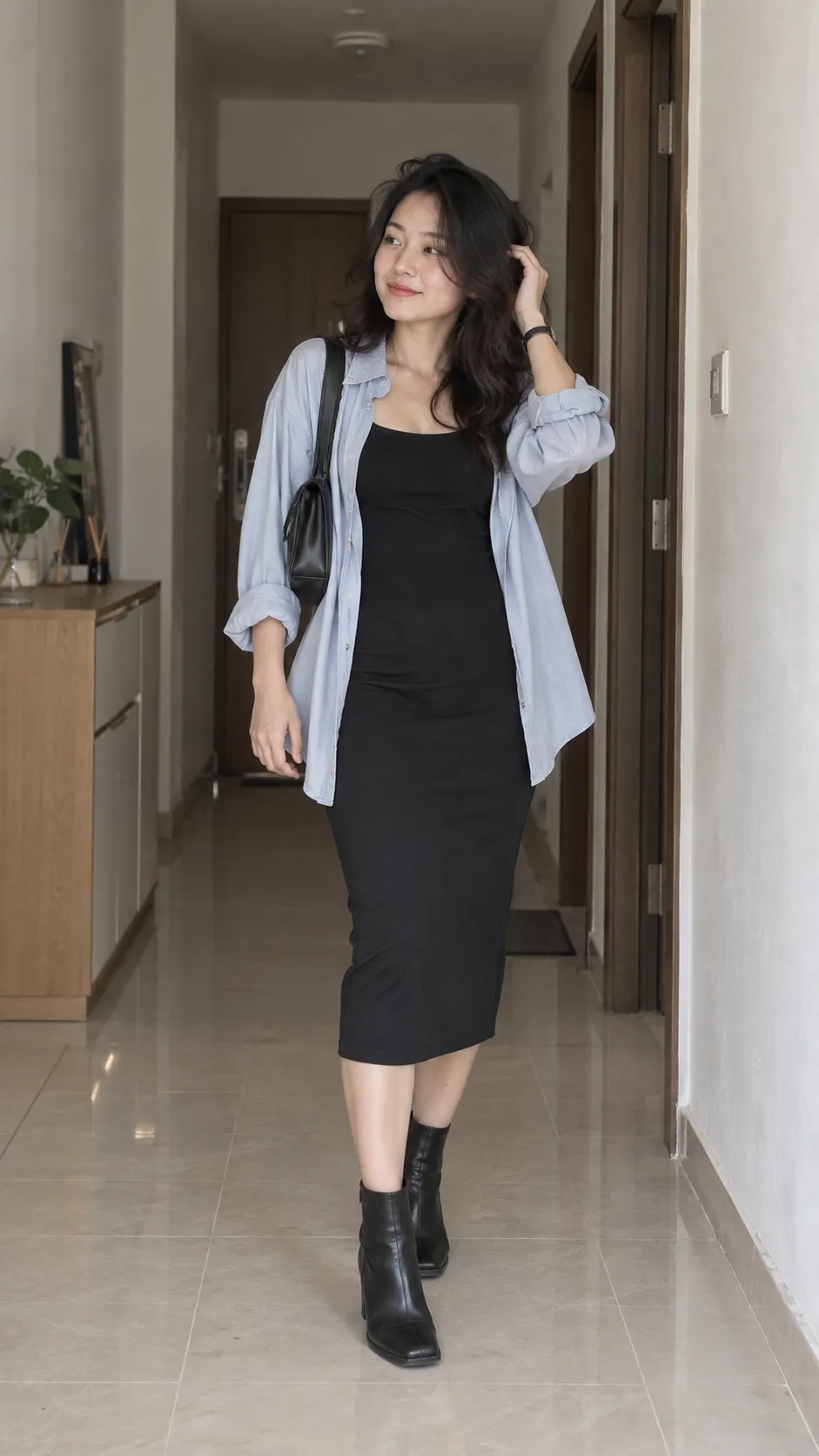
Nine Bodycon Outfit Formulas
Midi + Boxy Blazer
A close inner shape contrasts with roomier tailoring.
Mini + Combat Boots
More substantial shoes add Grunge or alternative references.
Black Bodycon + Leather Jacket
Retain a darker palette while changing texture and shoulder shape.
Bodycon + Open Oversized Shirt
Two open vertical edges distinguish the torso layers.
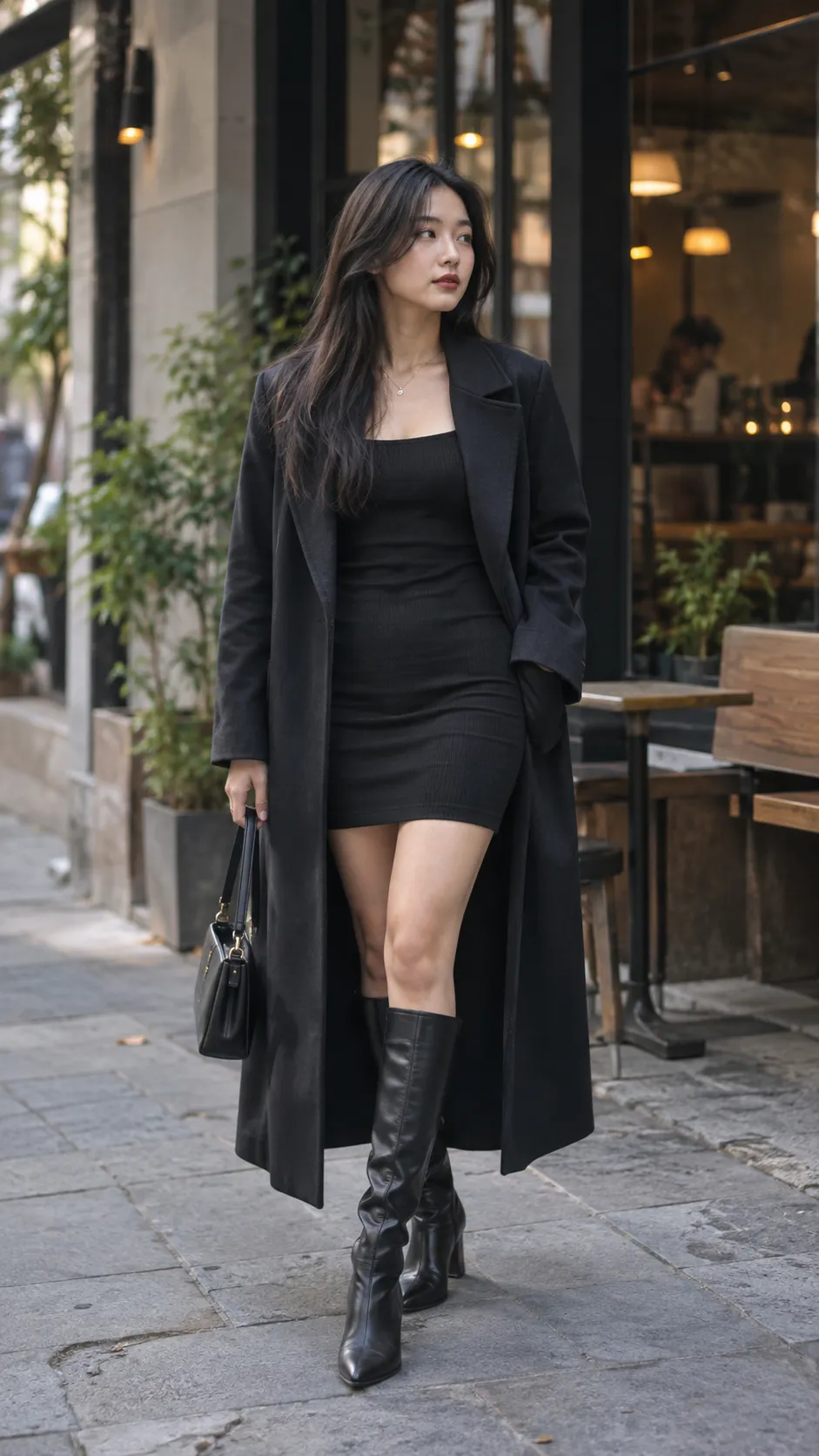
Midi + Pointed Boots
A defined toe continues the longer dress line.
Bodycon + Zip Hoodie
A more casual streetwear layer.
Bodycon + Sheer Layer
Add texture while retaining the inner silhouette.
Bodycon + Loafers
Structured footwear can make the dress feel less evening-oriented.
Bodycon + Long Coat
A longer open frame adds vertical edges outside the dress.
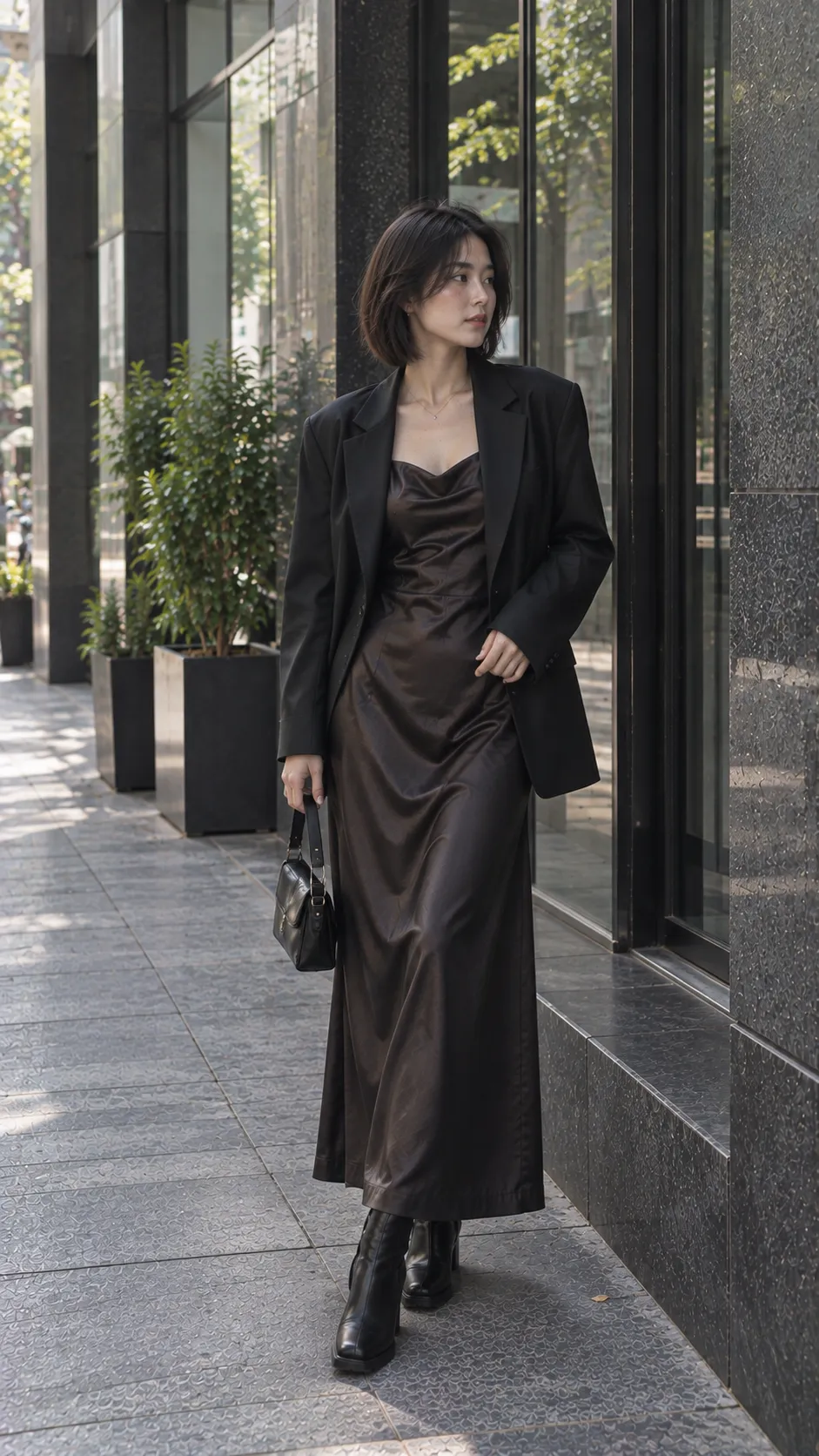
Layer Without Hiding the Whole Silhouette
Cropped jackets reveal waist placement; boxy blazers add contrast; open shirts add coverage; long coats extend the frame. For underlayers, suitable fine mesh or knit may add less bulk than a thick tee beneath a close dress.
Several tight layers can restrict movement or create tension. A roomier outer layer supplies another visual rhythm and space to move beside a close-fitting dress.
Optional Proportions, No Body-Type Permission Rules
Anyone who enjoys bodycon can wear it. A jacket defines shoulders; a continuous palette reduces color breaks; a deliberate hem-to-shoe gap changes the lower line. These are styling choices rather than ways to correct a body.
For other dress shapes, explore the women's skirt and dress directory. For another sharper aesthetic context, explore Femme Fatale styling (Vietnamese).
Five Common Styling Checks
1. Sizing Down Only for More Tightness
Excessive tension can pull seams and restrict movement. The intended fit need not mean maximum compression.
2. Skipping an Underlayer Trial
If a smoother surface matters to you, try the actual underwear and dress together. Visible lines are not inherently wrong.
3. Every Layer Equally Close
A roomier outer layer provides another contrast if desired.
4. Several Competing Cutout Details
If cutouts already lead, selected simpler accessories leave them clearer.
5. Assigning Bodycon to One Aesthetic
It can support minimal, Dark Feminine, Grunge, or streetwear interpretations.
Mini, Midi, and Longer Bodycon Shapes
Shorter hems expose more leg and emphasize footwear. Midis create a longer continuous area beside blazers or coats. Longer close fits need particular stride, stretch, and existing-slit checks.
Mini bodycon
Combat boots, substantial loafers, or sneakers reduce conventional eveningwear references. With heels, a quieter upper area can leave the dress's details central.
Midi bodycon
Ankle boots, loafers, or flats offer different structures beside a calf-area hem. Assess their openings together rather than assuming one is universally more flattering.
Long bodycon
Check mobility, hem width, stretch, and any slit. A close ankle-area dress without sufficient movement allowance can be inconvenient despite a clear standing outline.
Underwear: Choose the Surface You Want
Underlayer lines do not have to disappear. Seamless options or a suitable slip can change the surface if desired; no body change is required to serve the garment. Comfort, coverage, and freedom of movement come first.
With fine fabric, the dress's lining may matter more than seeking completely invisible underwear. Assess how the outer fabric falls and whether it needs repeated adjustment.
Bra and neckline
Strapless, halter, and square-neck constructions have different support and coverage needs. Try the full combination before the event to assess straps and gaps.
Color and Continuity
A tonal palette reduces color divisions. Black supports a darker interpretation; charcoal, navy, chocolate, and deep red provide other continuous areas.
White, cream, and pastel can make texture and seams more visible. Inspect opacity and lining for the surface you want rather than treating lighter color as a body restriction.
Choose by Setting
Café: ribbed midi + open shirt + sneakers or loafers. Evening: black dress + leather jacket + ankle boots. Creative workplace: midi + boxy blazer + structured bag, where the dress code permits. Concerts: mini + suitable combat boots + compact jacket. Date: tonal dress + heels or pointed flats according to the desired dressiness.
Layers can adapt one dress to several settings. Choose the underlying fit and fabric first, then the occasion styling.
Buying Bodycon Online
Compare garment measurements with a similarly stretching dress you own, alongside the brand's body chart. Stretch and recovery can differ even when size labels match. Read material and fit information where available.
Use the brand's stated measurement origin to compare length on your body. If between sizes, consider desired closeness and actual movement rather than assuming bodycon must be very tight.
Change Footwear, Keep the Dress
Ankle boots sharpen, combat boots add rougher contrast, loafers add everyday structure, sneakers make a casual finish, flats lighten, and heels increase dressiness. These are flexible ways to adapt one black midi without many new accessories.
A mini leaves more room for substantial or taller footwear. A midi interacts with toe and shoe opening; a maxi can conceal the shoe. Decide the intended visibility and check movement.
Preserving the Shape
Follow the care label for stretch fabrics. Where appropriate, fold heavier knits rather than allowing prolonged hanging to stretch them, avoid unsuitable high heat, and do not pull the dress from one small strap or neckline point.
Shape retention affects the seams and surface over repeated wear. Assess construction and care as part of styling rather than judging only the first photograph.
Bodycon Beyond Eveningwear
For daytime, consider less shine and a casual denim jacket, open shirt, sneakers, loafers, or cardigan. Ribbed midis offer visible texture; a simpler tote or shoulder bag reinforces everyday use.
A midi, boxy blazer, and loafers or ankle boots can suit a creative workplace where allowed. Adapt neckline and cutout coverage to the actual dress code with appropriate layers.
A Before-Buying Movement Check
Sit, take larger steps, raise arms, turn, and inspect the hem. Repeated adjustment suggests reassessing the garment before buying. The dress should serve your intended movement rather than require a motionless pose.
Accessories: One Leading Detail Can Be Enough
A structured bag, silver earrings, or fine belt can provide a focal accent. Ruching, cutouts, or a distinctive neckline may already lead, leaving room for quieter jewelry.
For an alternative reference, try hardware at the bag or boots instead of automatically adding necklaces, chains, and belts together. Retain the dress outline as the main shape if desired.
Frequently Asked Questions
Is a bodycon dress difficult to style?
No. Begin with silhouette, proportion, and footwear rather than adding many aesthetic references together.
Which colors are useful starting points?
Black, gray, white, or another wardrobe neutral can connect with existing pieces before adding accents.
Do I need many accessories?
No. One leading detail and suitable shoes can establish a direction.