

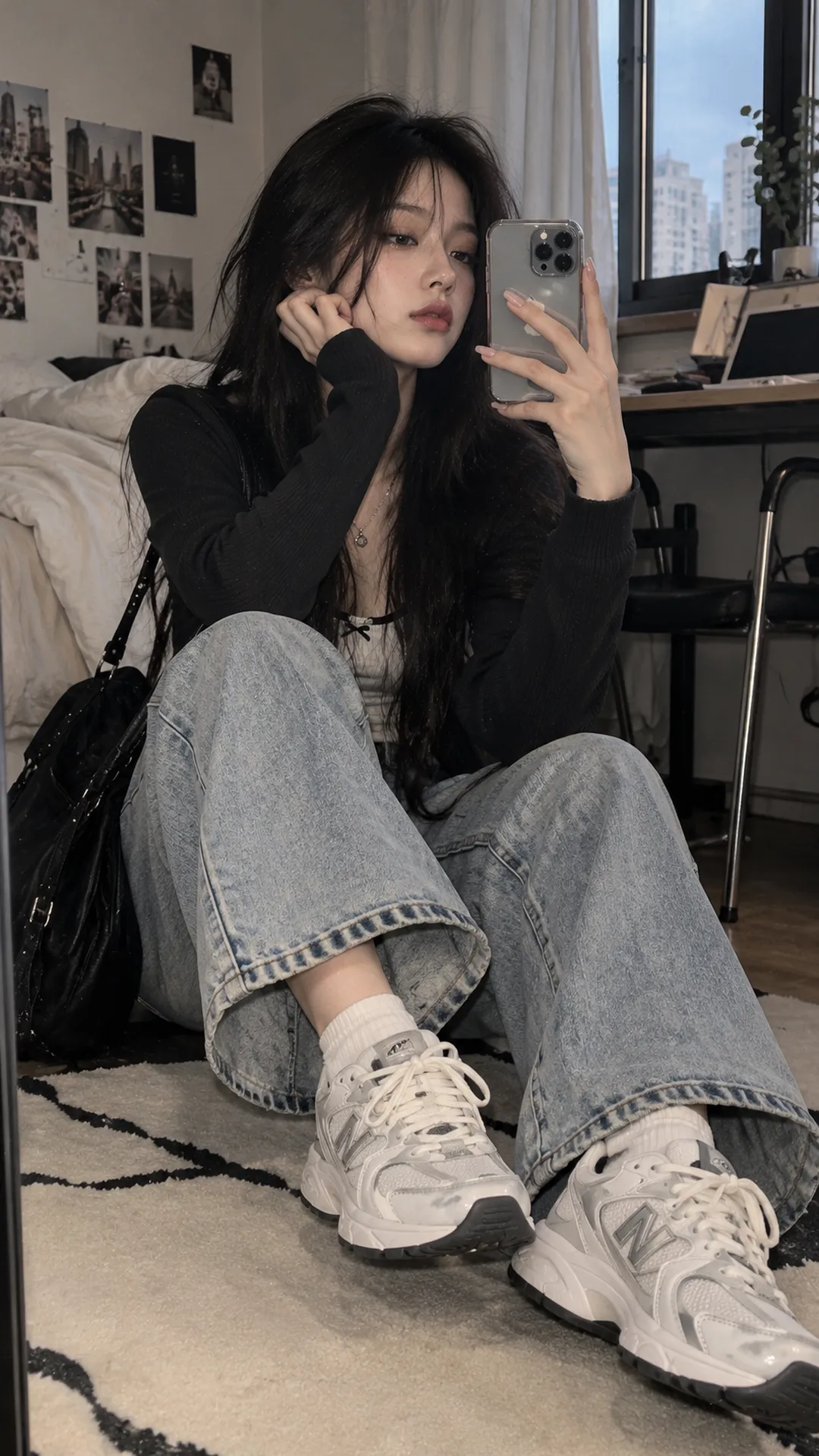
Choose purpose before style
Fashion sneakers serve everyday dressing; running, training and sport-specific shoes need selection for the corresponding activity. Running-inspired appearance does not mean a design suits your current running session.
Write down common plans: seated study with short walks, indoor work, hours out or several ground surfaces. Then inspect that design's description. Thick soles, sporty panels or a few upper holes cannot establish performance.
Read workplace or school footwear rules first. Plain sneakers may suit flexible settings without replacing uniforms or specialist-shoe requirements. Context prevents a photogenic pair with little use.
A day combining travel and a differently coded event may need two shoe options. Plan trouser length and storage when changing. Convenience does not make sneakers the answer to every stage.
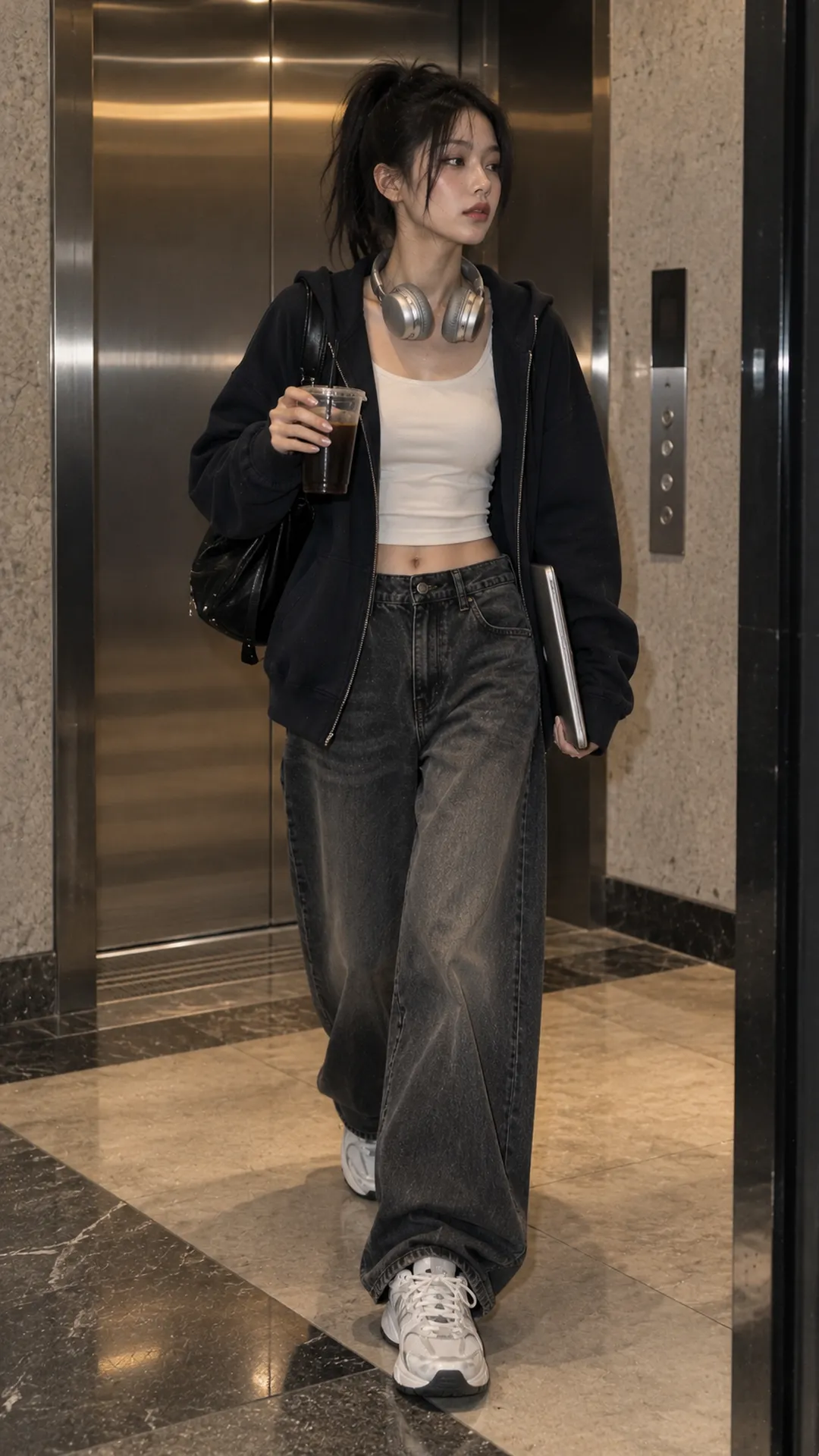
Read three visible parts of the shape
Upper and toe
Slim lines and few panels look streamlined; round toes and layered uppers create volume. This is external assessment, not interior fit. Long-looking shoes may be narrow; bulky exteriors may contain material rather than equivalent foot space.
Low, thick and platform soles
Low soles usually occupy less visual area; thick soles anchor more strongly. Platforms may raise front and back, but height does not establish weight, flexibility or walking feel. Handle and walk in the actual pair.
Low and high tops
Low tops expose more ankle, while high tops connect a larger area up the leg and need comparison with hems and socks. Do not infer specialist support from fashionable high tops without intended design and published information.
For comparison with boots or other shoes, the women's footwear guide identifies visual lightness, weight and breaks. Shape helps more than asking only which pair is popular.
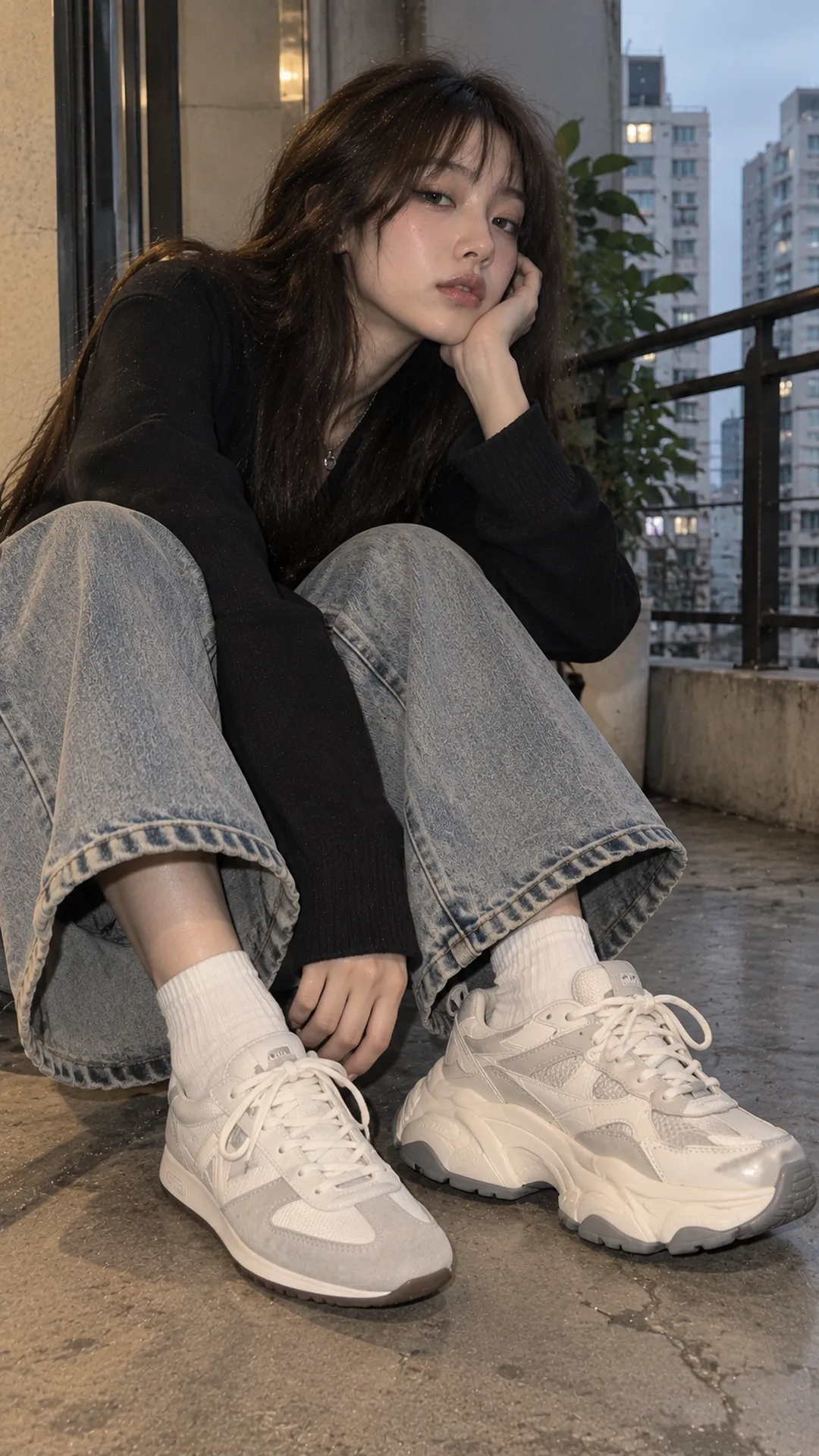
Check fit on both feet
Use usual socks, try both shoes, stand and walk in permitted areas. Check toe movement, side pressure, uncomfortable lace or tongue contact and repeated heel slipping. A size number alone cannot establish fit.
For wide feet, extra length may leave spare toe space while sides still compress; try a more suitable cut. If heels slip but toes already pinch, forceful lacing or thick socks may only add discomfort.
The Nike women's Air Force 1 '07 EasyOn page includes design-specific sizing notes. Read the product code's guidance rather than transferring one experience to every shoe in a brand or line.
Do not buy pain or numbness on promises of eventual stretching. Getting used to new shoes cannot correct every unsuitable last. Without in-person fitting, prioritize clear measurements and returns supporting arrival checks.
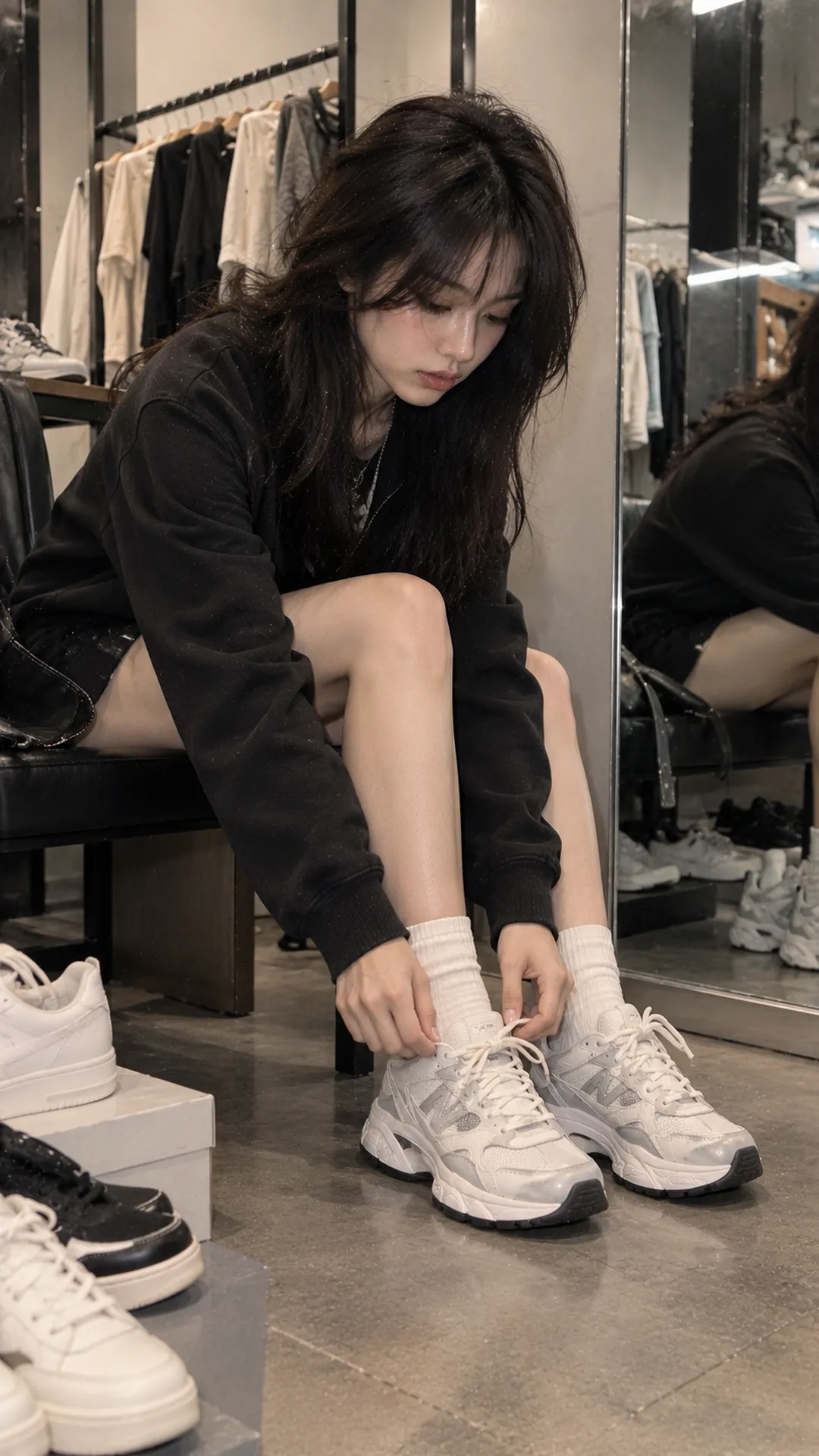
Streamlined sneakers with jeans and straight trousers
With straight jeans, simple low tops clarify the hem. Try its endpoint near the shoe opening or a little sock showing. For fabric piling over shoes, adjust length before compensating with a larger pair.
With long straight trousers, check the side and walking views. Hems should not catch beneath soles or drag. Defined toes and moderate soles can emerge beneath legs, but replacing shoes cannot fix excessive length except in one pose.
Try a pale blue shirt, dark jeans and off-white sneakers. Light shoes connect with the upper light area; a plain bag avoids competition. For dark taste, use gray or black above and let the sneakers provide the main contrast.
For blending, choose a shade near the trousers; for prominence, increase light-dark difference. Skin-adjacent shoe colors are not required for good proportions. Choose the effect and compare full-body images at the same angle rather than one formula for all bodies.
Skirts: hems, socks and sole volume
A soft midi can use streamlined sneakers for reduced foot volume or clear soles for stronger contrast. Decide whether dress or shoes lead. With both detailed, bag and top need clear supporting roles.
Visible socks with short skirts become part of the outfit. Repeating the top color connects; contrast creates a break at the leg. Test seated and walking, as standing hems change in motion.
For ruffles or small prints, first try a minimally detailed surface. Dark sneakers can anchor without enormous soles. Visual weight comes from color, texture and panel count as well as sole height.
The skirt and dress hub helps by specific shape. If comfortable shoes still feel wrong in an outfit, try skirt length or flare before concluding sneakers cannot accompany skirts.
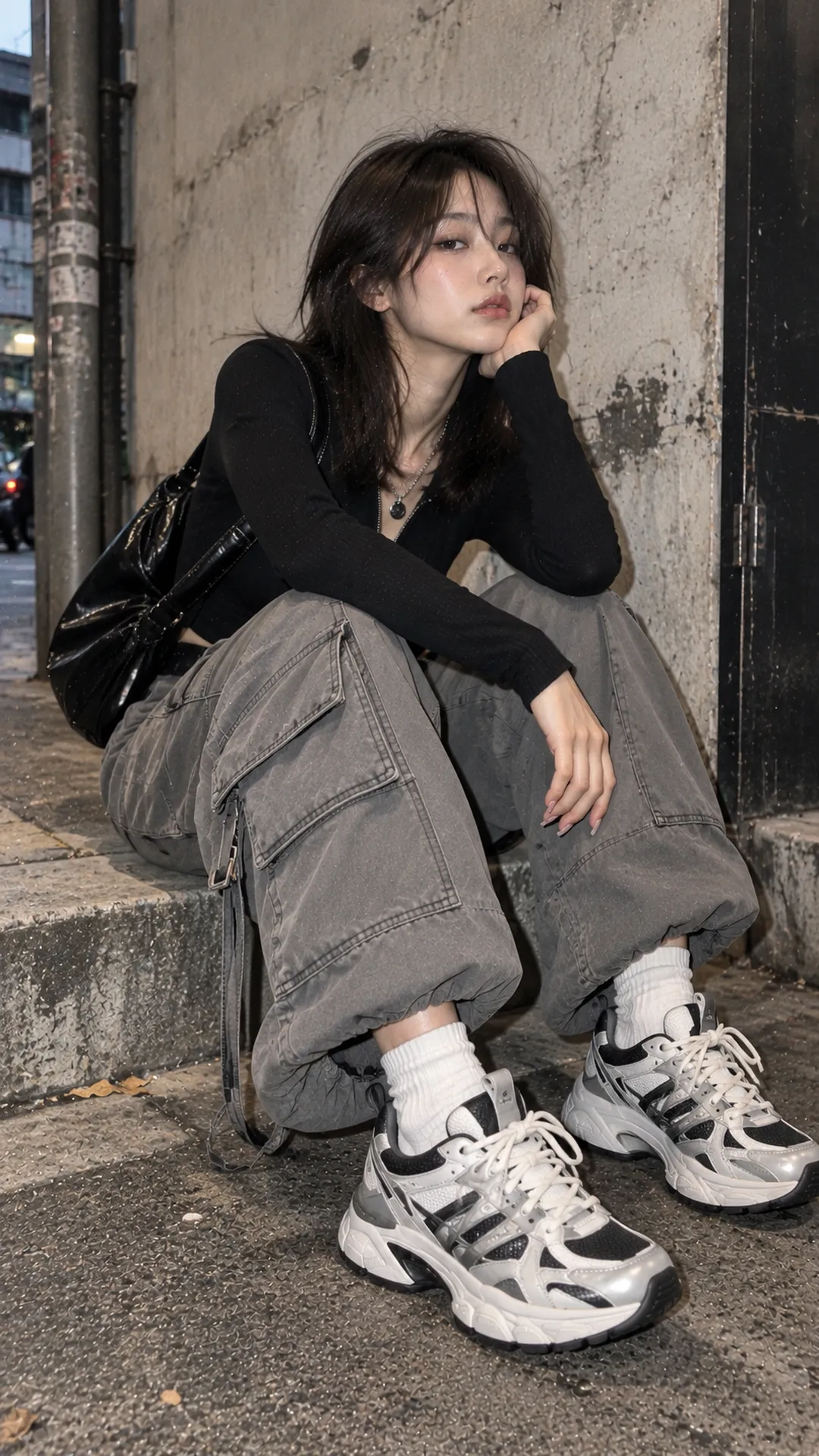
Use chunky or colorful sneakers intentionally
Chunky sneakers give substantial lower volume and can accompany wide trousers and structured tops. Gray cargo trousers, a streamlined black top and paneled gray sneakers connect through color. With a large bag, check the whole outfit to confirm intentional overall volume.
For multi-color shoes, repeat one secondary color in a top or small accessory. Clothing need not contain every sneaker color. One repeated point connects the result while preserving the shoes' prominence.
Streamlined-sneaker wearers can create distinct style through tops and trousers. Streetwear does not require huge soles, and plain white shoes do not belong exclusively to one taste. Read the items' lines together.
For excessive detail, use the garment-based styling guide to select a main piece. Keep statement sneakers and reduce top graphics, or a statement top with simple shoes. Individual changes reveal their effect.
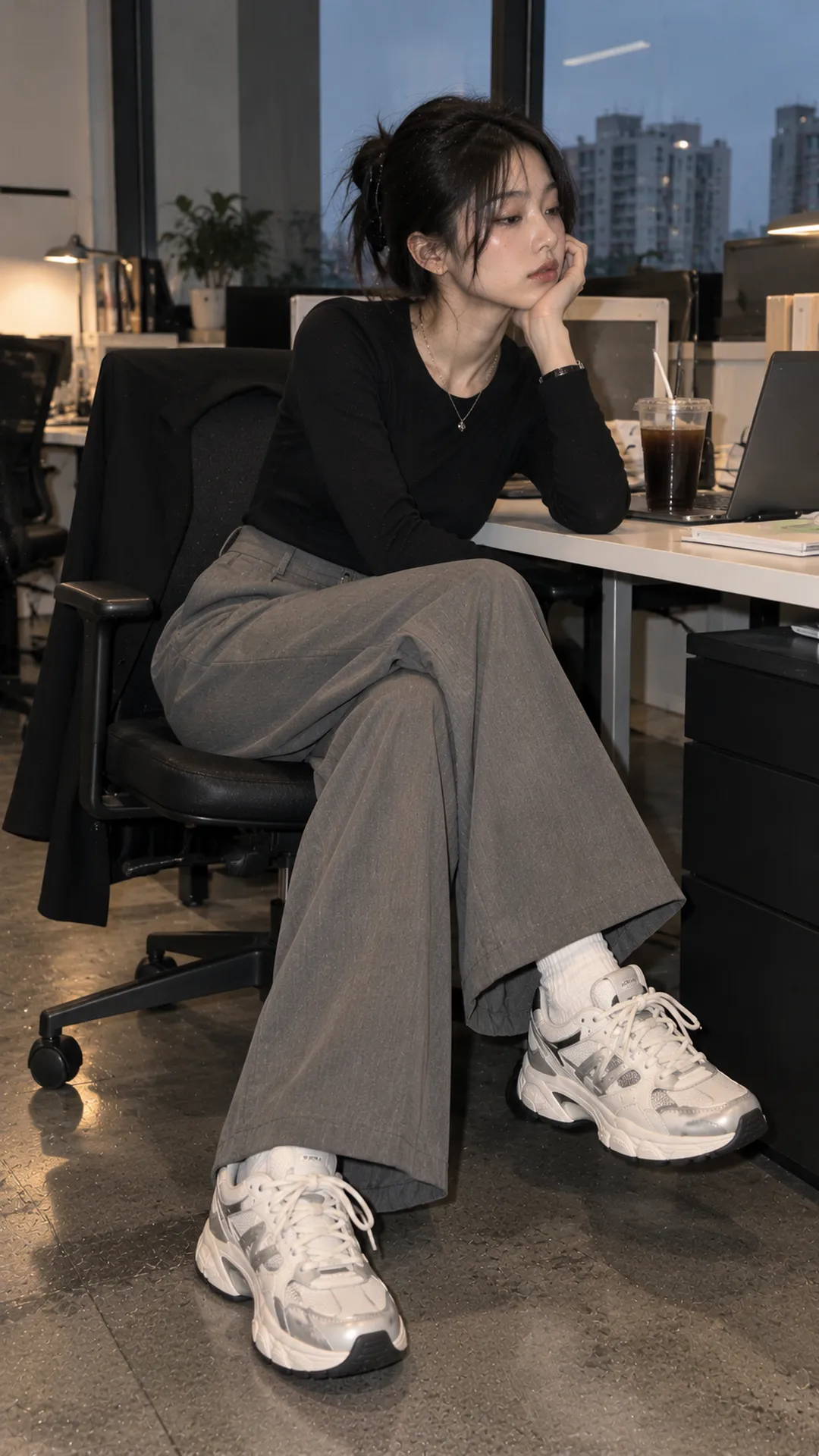
Read office sneakers through workplace context
Where permitted, streamlined sneakers with straight tailored trousers and a plain top can work daily. Inspect surfaces, laces and hems, visible when seated or speaking nearby. Neutral color still looks neglected with dirty uppers and laces.
For an unusual meeting, read its own requirements. A blazer does not make every sneaker appropriate. Smart Casual assesses context rather than treating one item as universal permission.
Try the actual work bag too. Technical-looking shoes, a large utility bag and wide trousers can shift the direction more than intended. For restraint, replace one or reduce contrast before another jacket purchase.
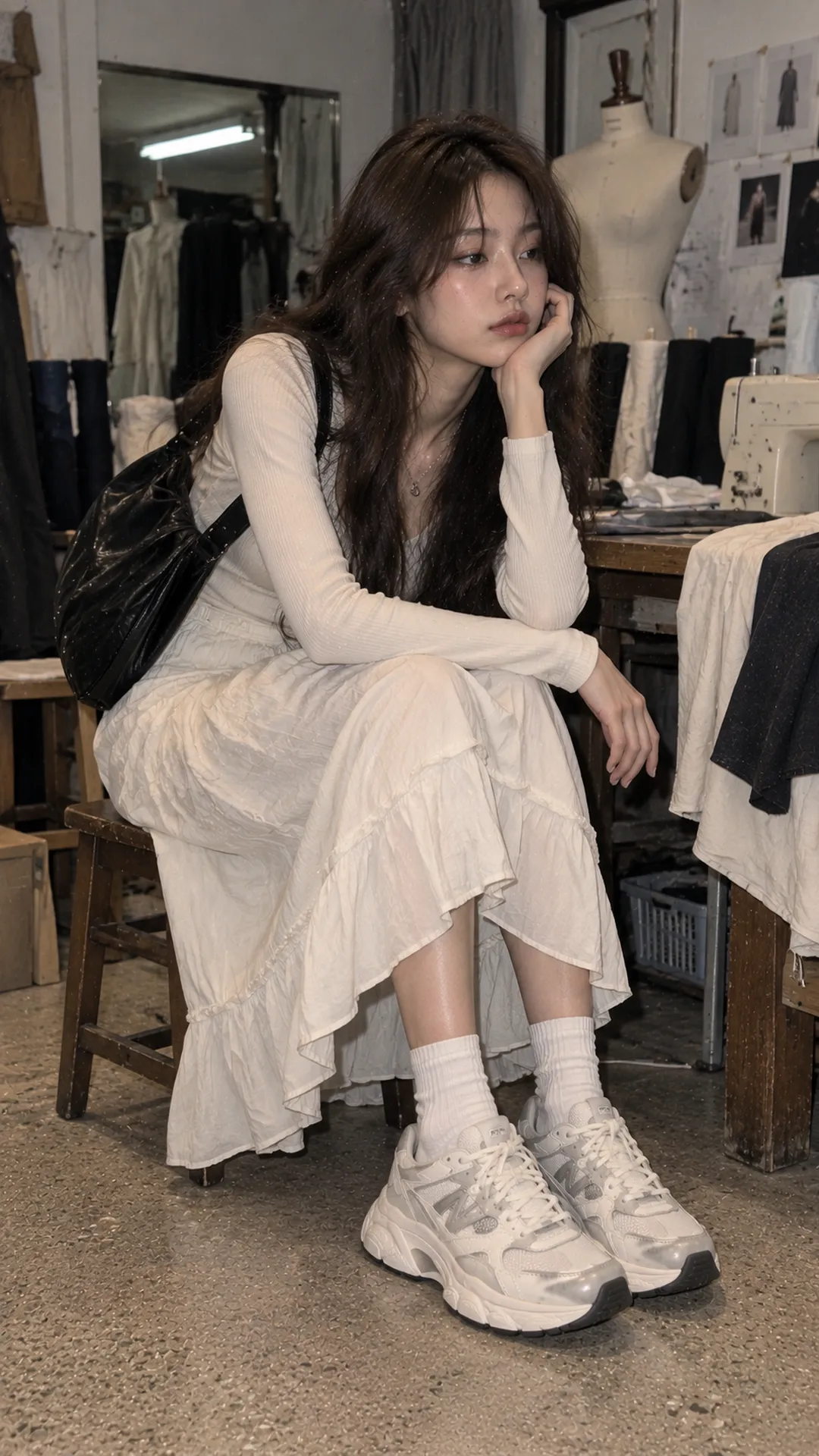
Choose materials for use and care
Textile, leather, suede and synthetics need different cleaning. Linings, adhesives and assembly matter too. Do not assume every textile shoe is machine washable or every rubber sole resists slipping in rain.
For humid heat, assess shoe and sock comfort together and drying time between wears. Mesh alone cannot guarantee all-day ease; interior and last still need checking.
Nike's cleaning guide separates material handling and emphasizes drying before reuse. Prioritize the exact model's guidance, test appropriate cleaning in a concealed area and avoid harsh rubbing on delicate surfaces.
White sneakers show dirt readily without needing aggressive whole-shoe bleaching for each mark. Treat by material, inspect laces and soles separately and dry correctly. If care exceeds your available time, another color or material may be more practical.
Decide through three existing outfits
Before buying, combine sneakers with a school/work outfit, an outing outfit and another regular option. If they work only in the sample photograph, consider whether you want an entire new outfit around them. Usefulness depends on fit and wear frequency, not images alone.
On arrival, check code, size, both shoes, joins and included accessories before outdoor use. Preserve return conditions during indoor testing. A suitable pair allows natural steps, fits the schedule and combines with your real wardrobe.