

Recognize Oxfords through their lacing
Look where the eyelet sections meet the front upper. The guide from Crockett & Jones describes Oxford closed lacing, with the quarters sewn beneath the vamp. Derbys use open lacing. Lacing construction is therefore a more reliable identifier than heel height or leather color.
Oxfords can have plain toes, cap toes or decorative perforations. Brogue refers to perforated decoration, not automatically to Oxford construction. Inspect the lacing to classify a perforated shoe; plain Oxfords do not require broguing.
Loafers slip on without Oxford-style laces. Consider that if quick dressing matters. Oxford laces offer a different way to adjust the instep. Neither is better for everyone; foot shape and movement needs guide the choice.
How do toe, sole and surface change the look?
Round and tapered toes, and room for your feet
Round toes give a softer endpoint with flared skirts or moderate-width trousers. Tapered toes extend the line for a straighter look. This is visual, not a requirement to squeeze your foot into the shape. The decorative extension is not the entire toe compartment.
Stand with normal weight distribution and walk. If toes crowd or sides compress, do not choose solely for appearance. Extra length may not fix width; another last may be needed. Reconsider if fit requires much thinner socks than you normally use.
Slim and thick soles create different styling directions
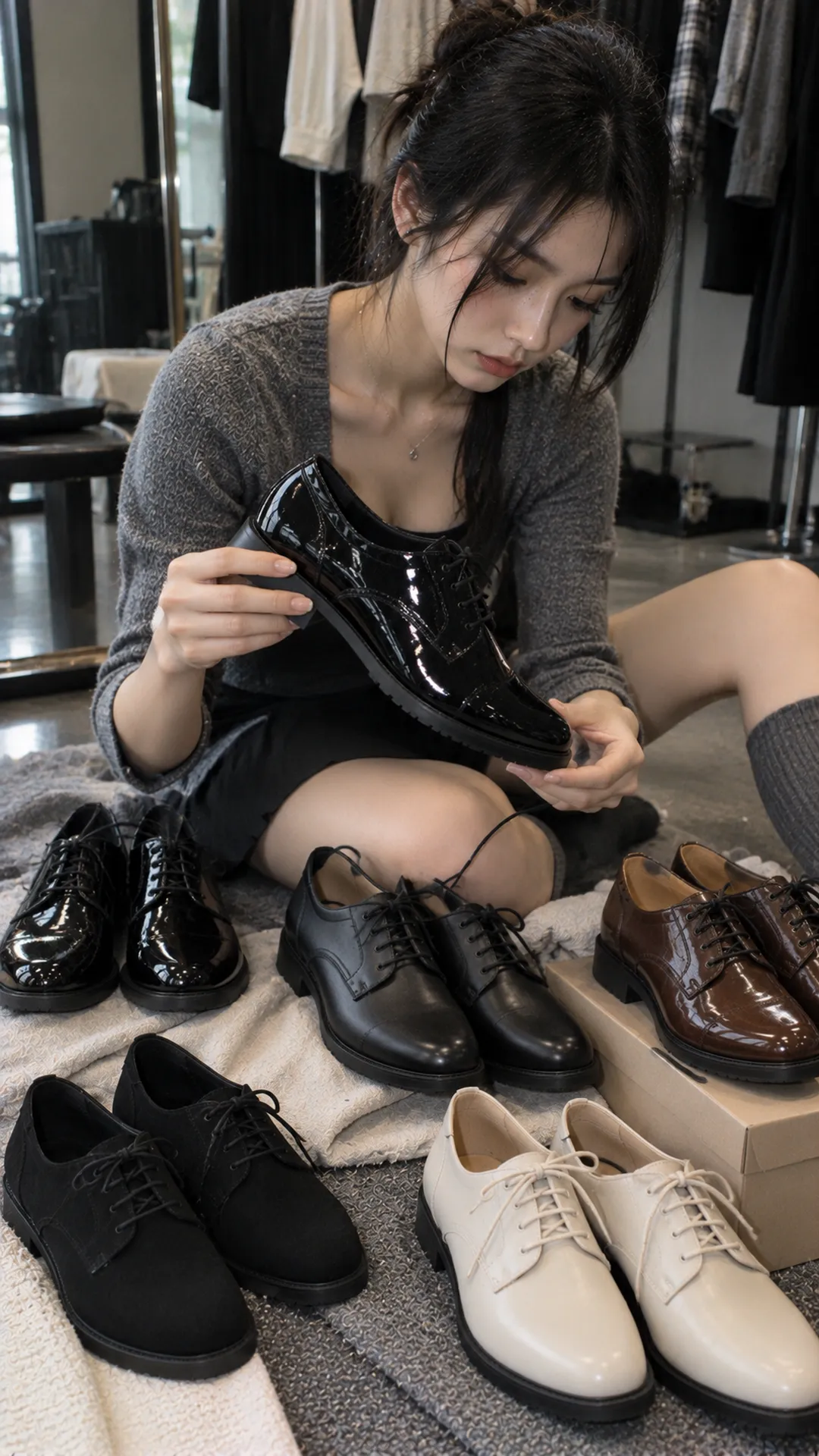
Slim soles focus lines on the upper, useful with already structured clothing. Thick soles add foot-level visual weight and can balance wide trousers or large jackets. They do not guarantee low weight, cushioning or grip. Handle the shoe, inspect the outsole and walk instead of judging a side photo.
Low block heels and platforms differ too. Raising both forefoot and heel feels different from raising mainly the heel. Test walking for the duration and distance the shop permits. Maximum height is unnecessary if a lower version gives your desired look.
Glossy, matte and alternative materials
Shine reflects light and draws attention; matte surfaces generally stand out less. Clarify any leather description through composition and care instructions. Natural leather, coated materials and synthetics cannot all use the same cleaners. Do not buy polish or solutions simply because the shoes are black.
Test fit on both feet
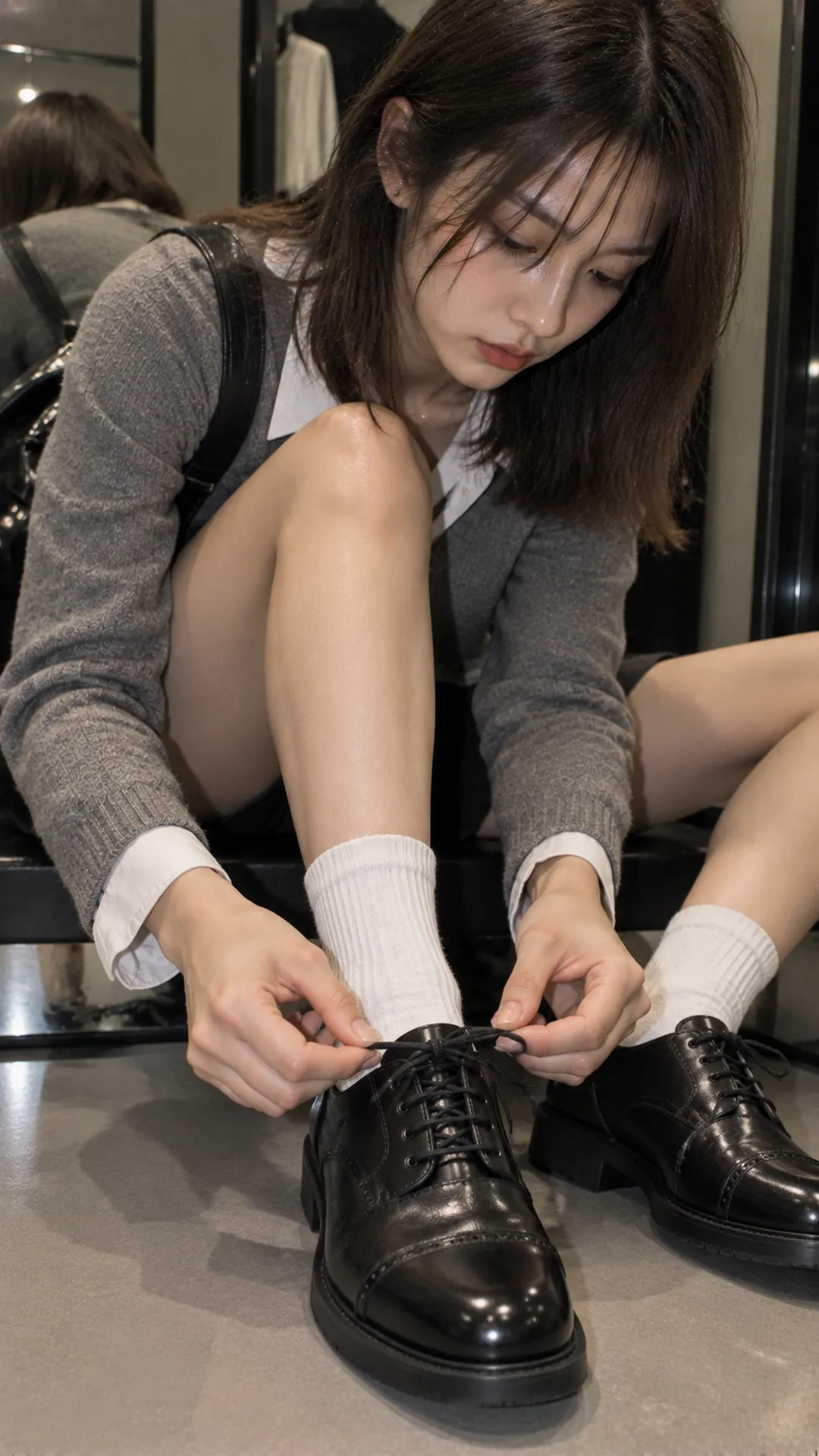
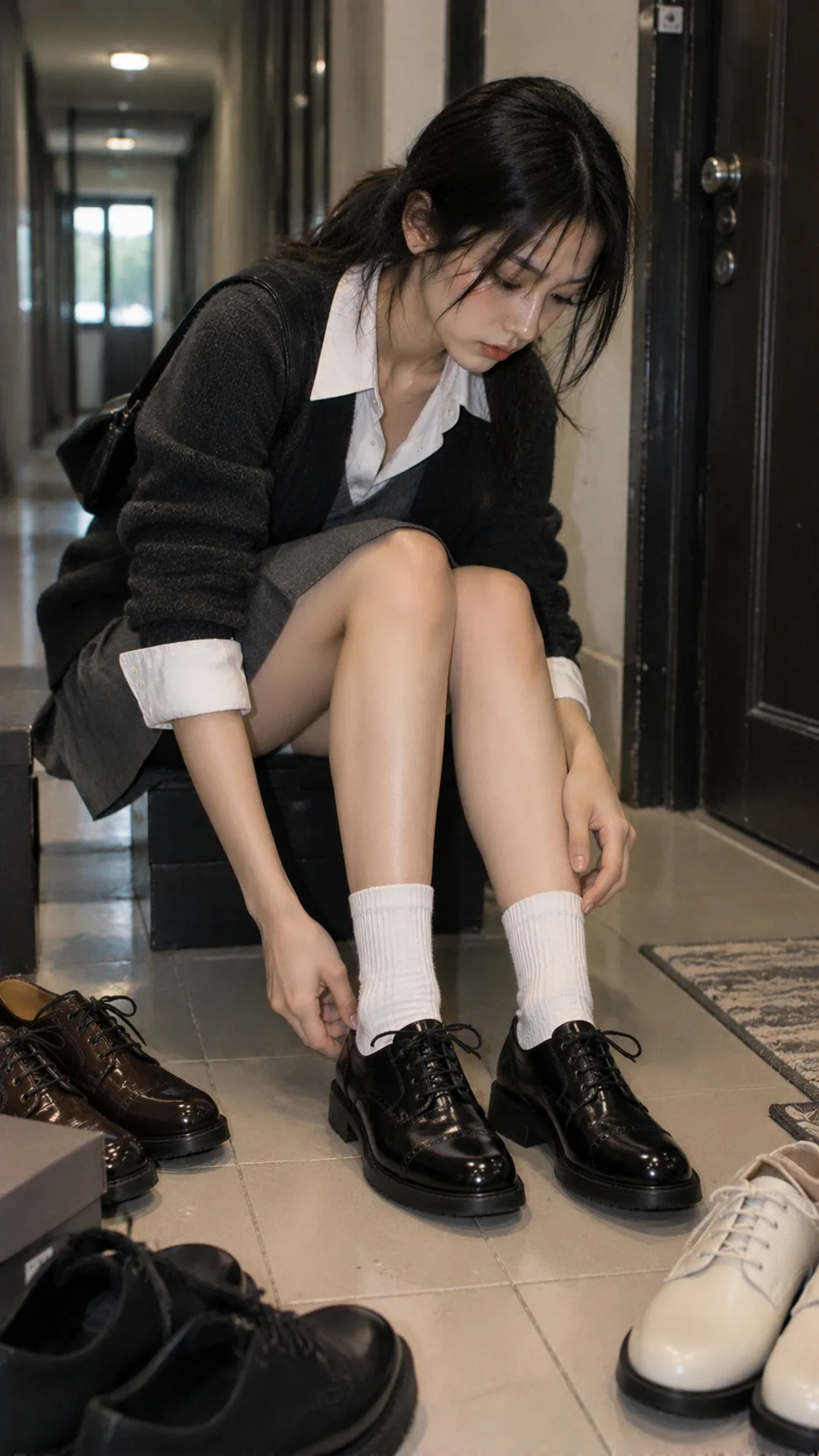
Wear your intended regular socks and try both shoes. Adjust evenly from bottom upward rather than overtightening one point to conceal looseness elsewhere. Check instep, heel and toes, then walk, turn and sit. Look for rubbing or sliding that makes you grip with your toes.
Closed lacing does not require the edges to meet completely on every foot. Assess a small gap alongside hold and the specific design. If strong tightening is needed to secure the foot, or a loosened shoe still presses the instep, try another last. Pain is not a mandatory step toward attractive shoes.
Online, consult the brand's or model's chart, interior photos and size-exchange policy. The guide to choosing Alt Fashion sizes online helps prepare measurements. Compare a comfortable existing pair without assuming the same numbered size fits across all brands.
Three trouser outfits with women's Oxfords
Ankle-revealing straight trousers and a neat shirt
Choose hems above the shoe opening to reveal the laces. A tucked shirt or waistband-length top keeps trouser proportions visible. Black Oxfords and a black belt connect two points, with white or pale blue above. Use this where the workplace dress code fits.
For less severity, replace a stiff shirt with a fine knit or well-fitting plain tee. Neat hems and clean shoes retain structure. Avoid many rolled layers just to reveal shoes; adjust length or try a suitably weighted pair.
Straight jeans and a short jacket
Medium or dark denim contrasts with the shoes' surface. Try brown Oxfords, a white top and short cream jacket, or black Oxfords with washed black jeans. Hems can lightly touch the shoes without accumulating stiff folds. Straight legs let the eye follow the line from hip to foot.
With a hip-length jacket, open it to reveal the inner top and waistband for a clearer vertical line. With two-tone shoes, reduce large top patterns. Casual denim against structured Oxfords is often interesting enough without abundant decorative accessories.
Wide trousers and a defined sole
Try wide trousers with the shoes before deciding hem length. Thin soles may disappear, while thicker ones provide a readable endpoint. A well-fitting top or neat tuck balances trouser volume. If you prefer a loose top too, leave some neck or wrist space for breathing room.
Consult women's trouser shapes and styling if unsure whether the cut is straight, baggy or wide. Different shapes need different hem treatment; one length rule does not apply merely because all are worn with Oxfords.
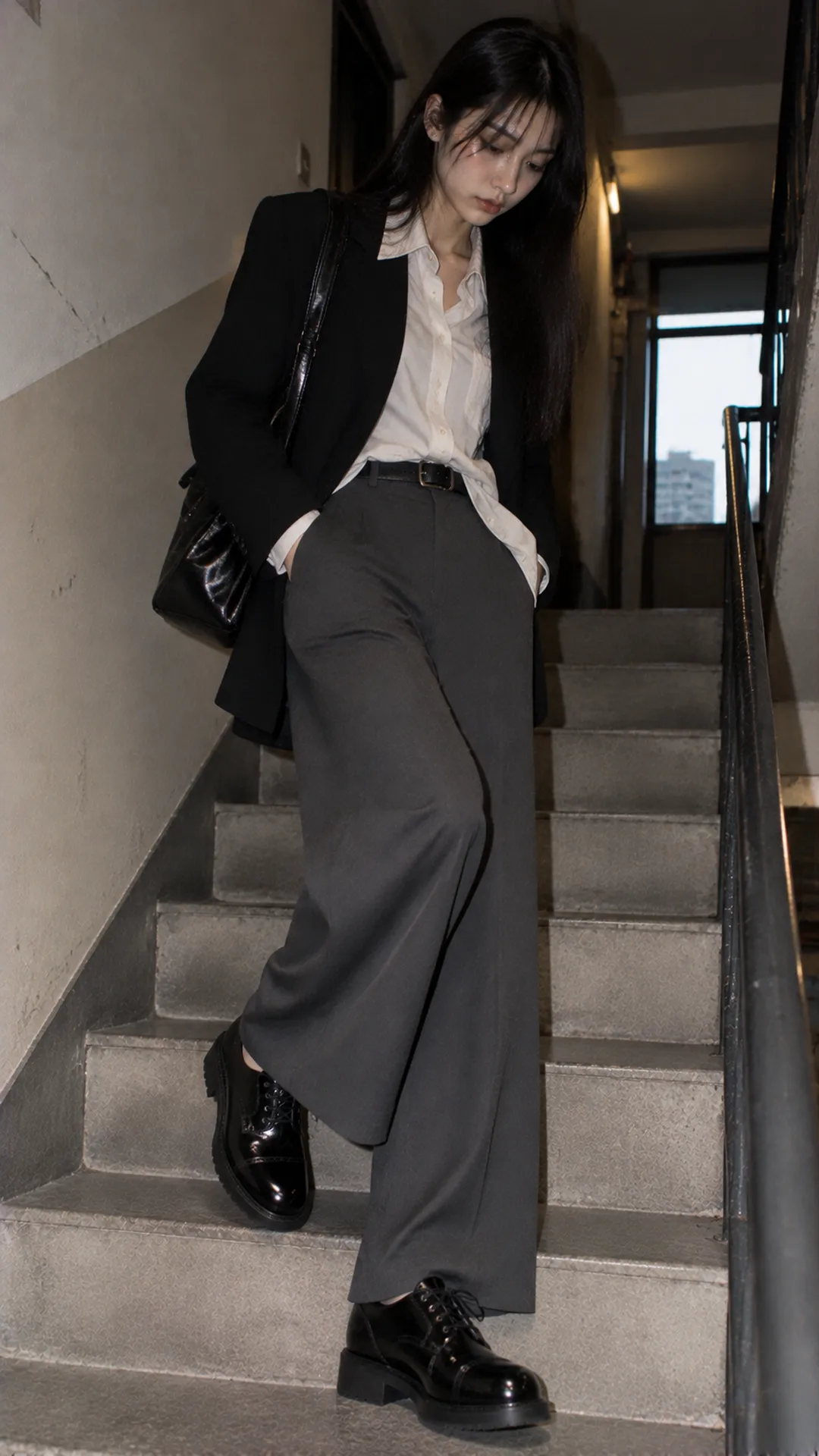
Style skirts without making the feet look heavy
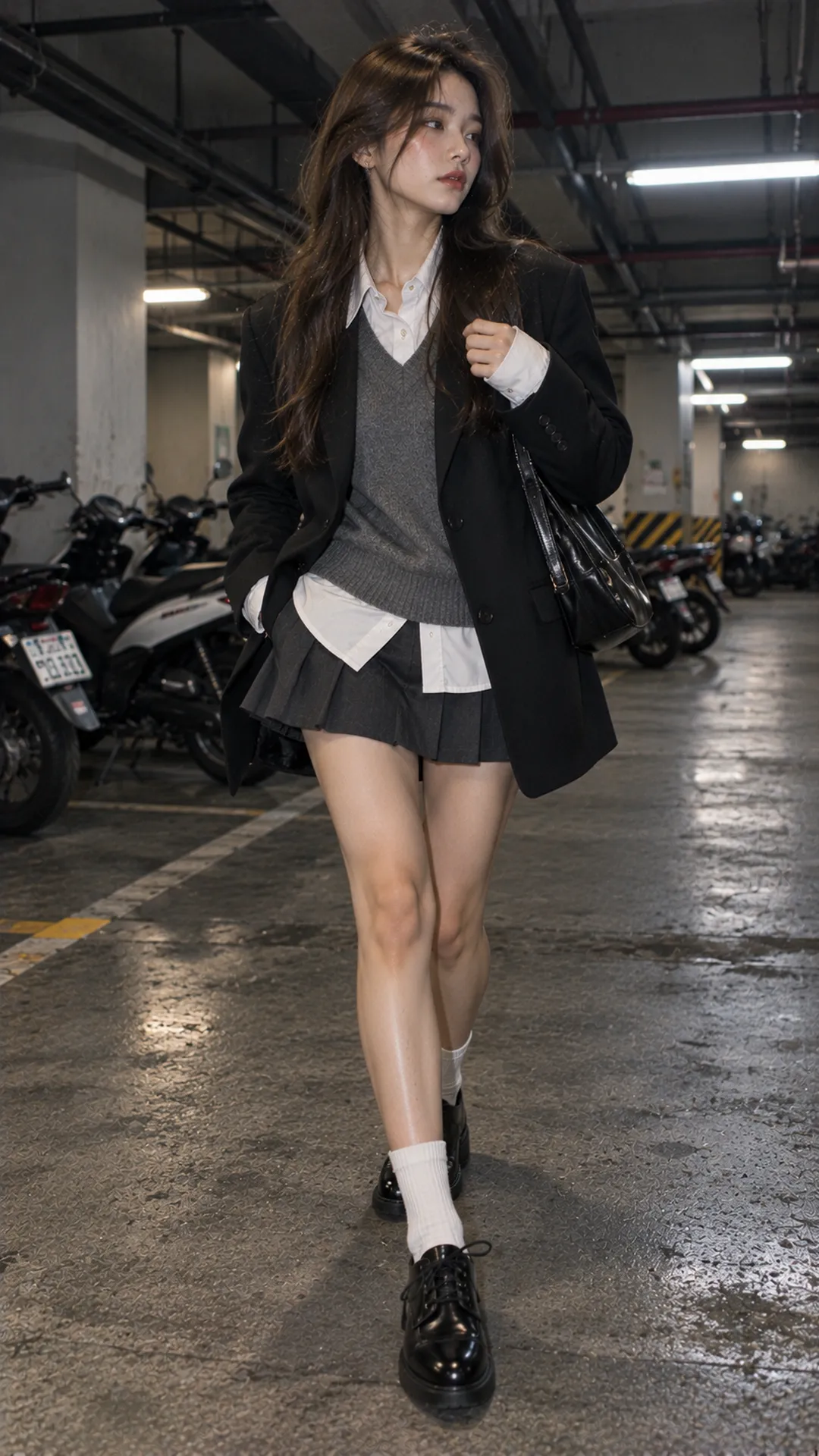
With a short A-line skirt, round-toed Oxfords and ankle socks create defined lines, while a fitted cardigan or shirt keeps the upper half neat. Reassess if adding a loose blazer: large jacket, flared skirt and very thick soles can create three competing points. Reduce one for clarity.
With midi skirts, inspect the area between hem and shoe opening. Tonal socks can create continuity; an exposed ankle gap is another option where appropriate. No skirt length is forbidden with Oxfords. Compare flared and straight hems and sole thickness for your preferred contrast.
A soft dress and black Oxfords contrast draping fabric with a defined shoe. A structured bag can connect them. With bows, lace and large patterns, start with plain shoes; a minimal dress leaves room for broguing or two-tone footwear.
The aim is your preferred contrast rather than a fixed feminine or strong formula. The guide to choosing women's shoes for outfits compares Oxfords with other wardrobe options. Suitable shoes should work with existing clothing without requiring a whole new set.
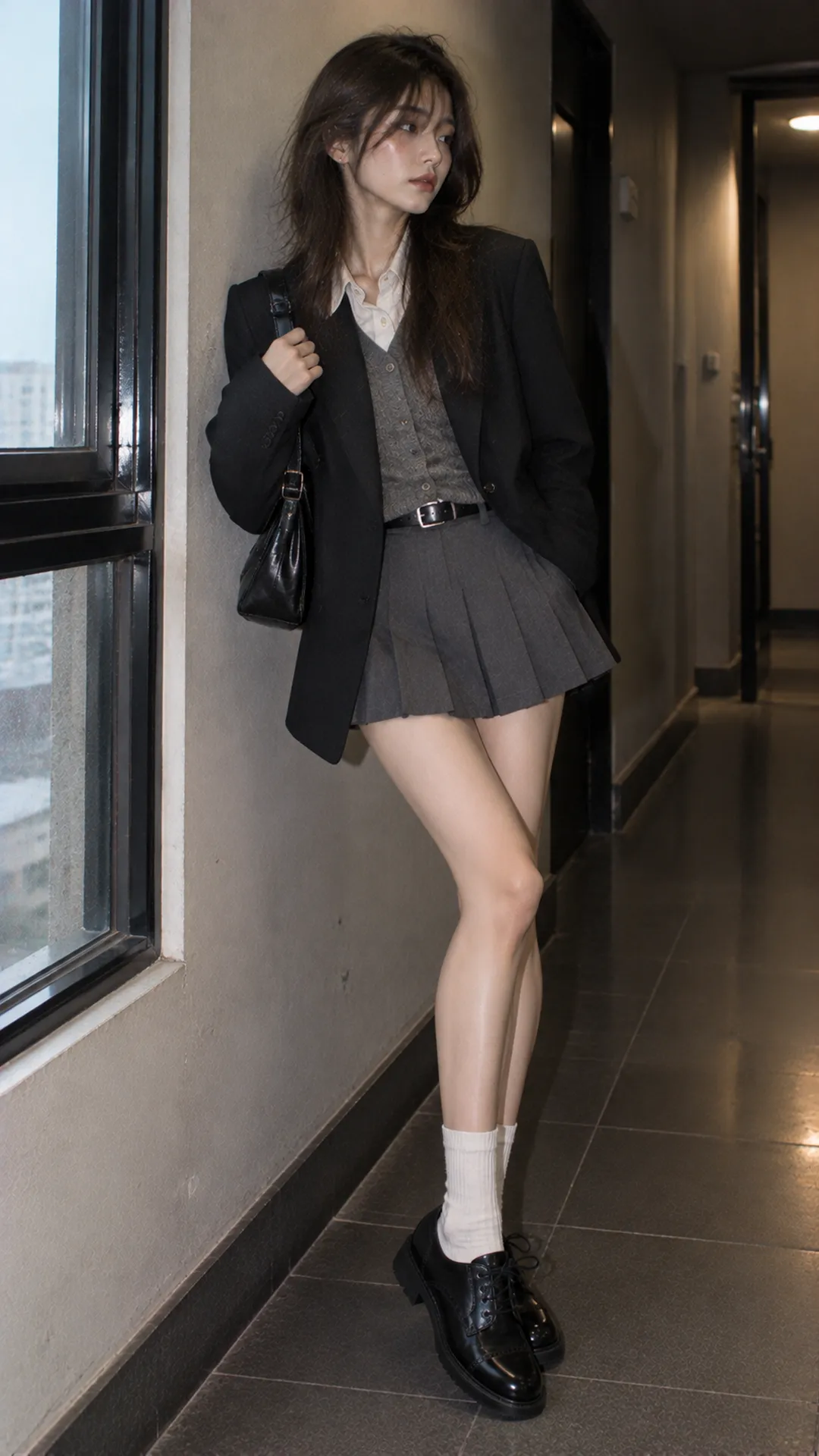
Socks and accessories: manage visual breaks
White socks and black Oxfords create an ankle contrast. If you like it, repeat a little white in the top. For fewer leg divisions, choose socks close to trousers or shoes. No-show socks work only when secure and free of rolling during walking.
With patterned trousers or plaid skirts, try plain socks before adding another pattern. Bags need not exactly match brown Oxfords: cream, deep blue or black can work if supported elsewhere. Do not buy accessories only to satisfy a color rule unnecessary to the actual outfit.
Care and purchase decisions
If comparing sellers, use the guide to checking information before Alt Fashion purchases to assess real photos, material descriptions and returns. Price and model name alone cannot establish quality or origin.
Ask for cleaning guidance for the specific shoe material. Dust, moisture and suitable storage matter, but brushes, solutions and drying methods must follow the product. Avoid nearby heat or harsh chemicals to rush drying before an outing.
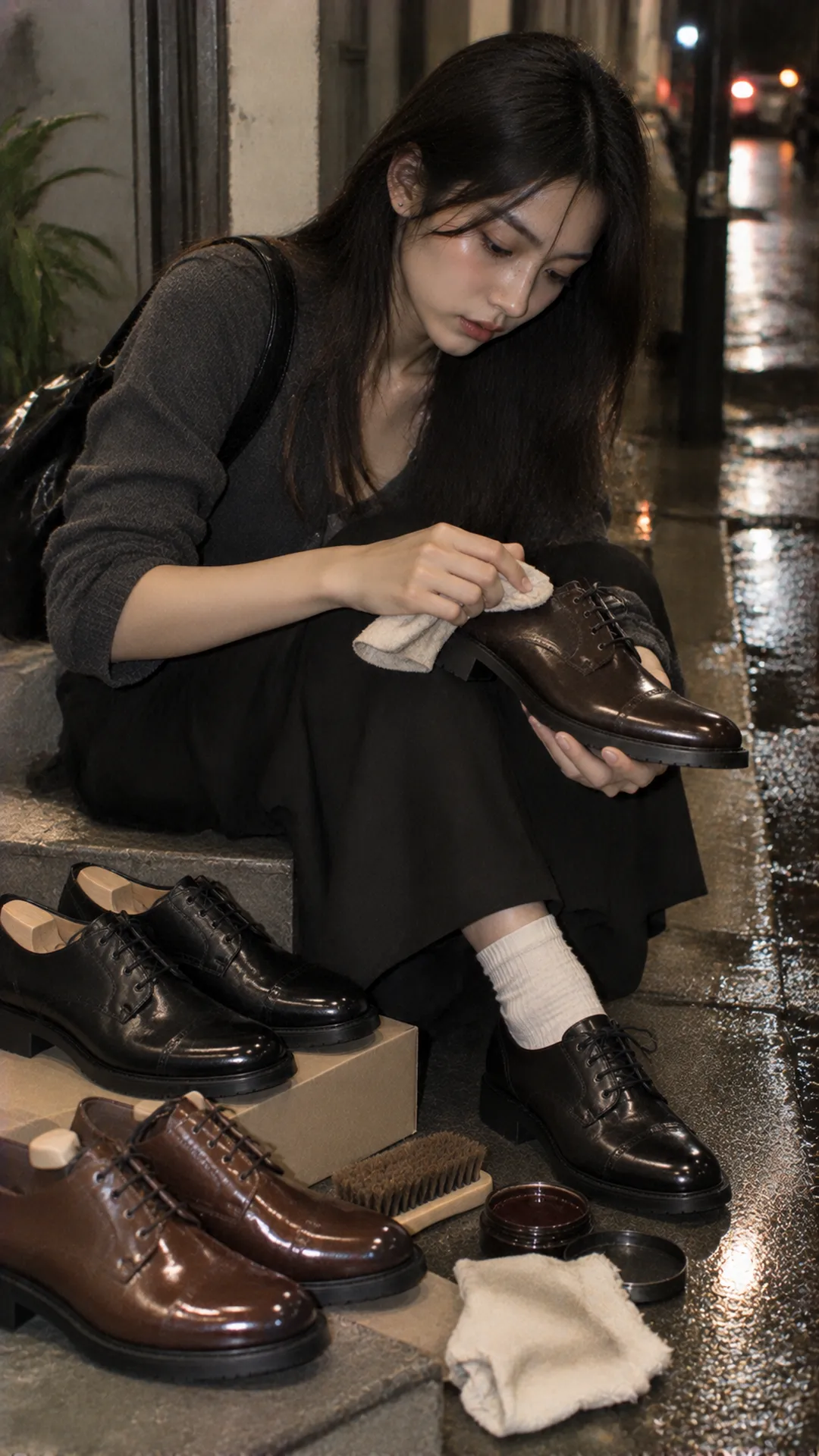
Before buying, pair Oxfords with at least one existing school or work outfit and one casual outfit. If they suit only a reference image, review color, sole or toe shape. Prioritize fit and reuse: simple comfortable Oxfords are more likely to become wardrobe fixtures than a striking pair you hesitate to wear.