

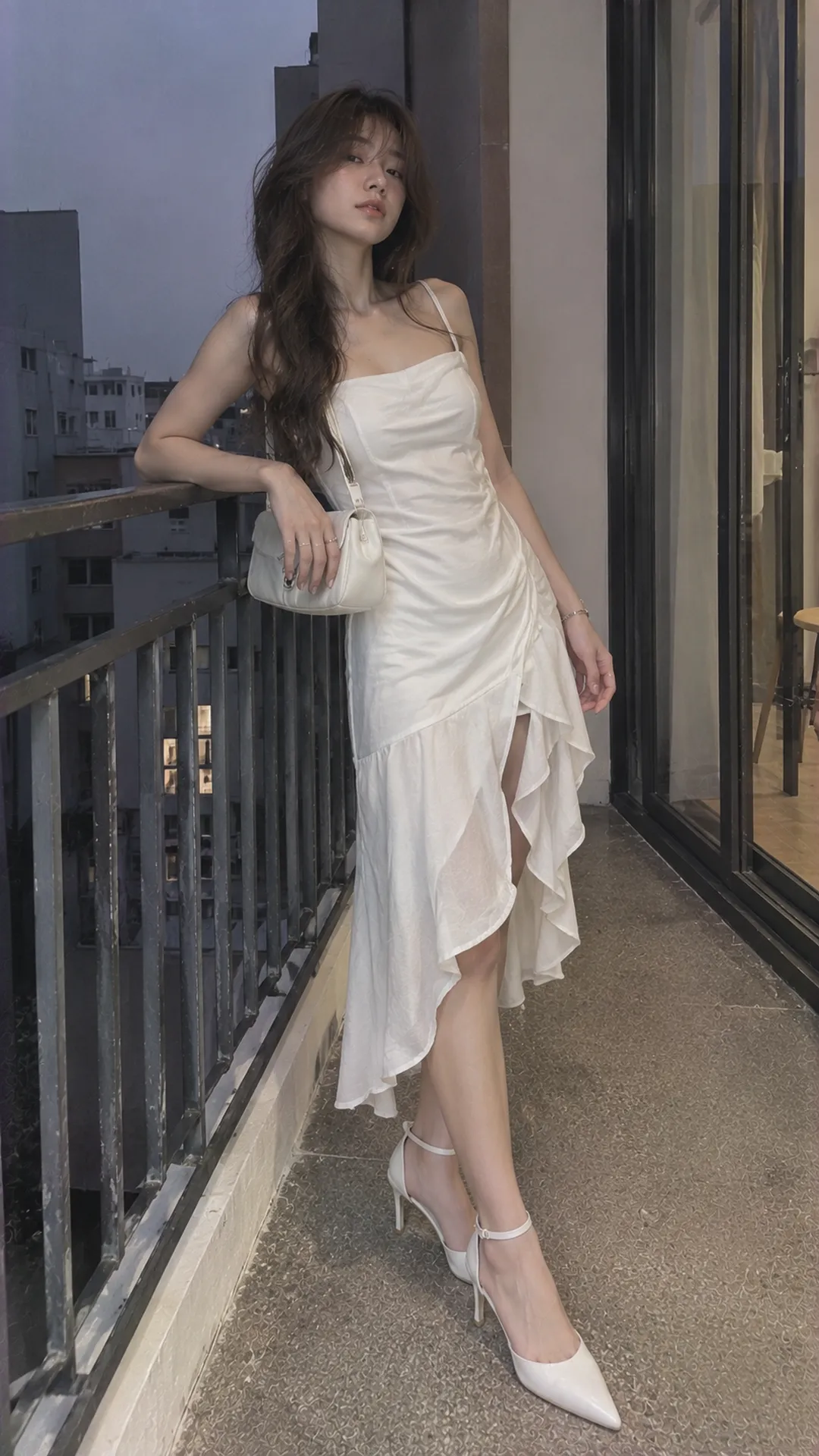
Bright white, ivory, and different finishes
Set the shoes beside the top or dress you’ll wear in ordinary lighting. Bright white can contrast sharply with a cream dress, while ivory may look closer. The shades can differ if you like the effect. Compare them to see whether they work together as you intended.
A glossy finish catches light differently from matte material, lace, or fabric. If the outfit already has reflective details, a simple white shoe gives a clean finish. Against plain fabric, a textured shoe can stand out on its own without several straps or a bow.
For online shopping, ask for real photos from several angles and the exact color name for that version. Screens and photography can make white look bluer or yellower. If the shoes are for a specific outfit, compare them with the clothes in person if possible.
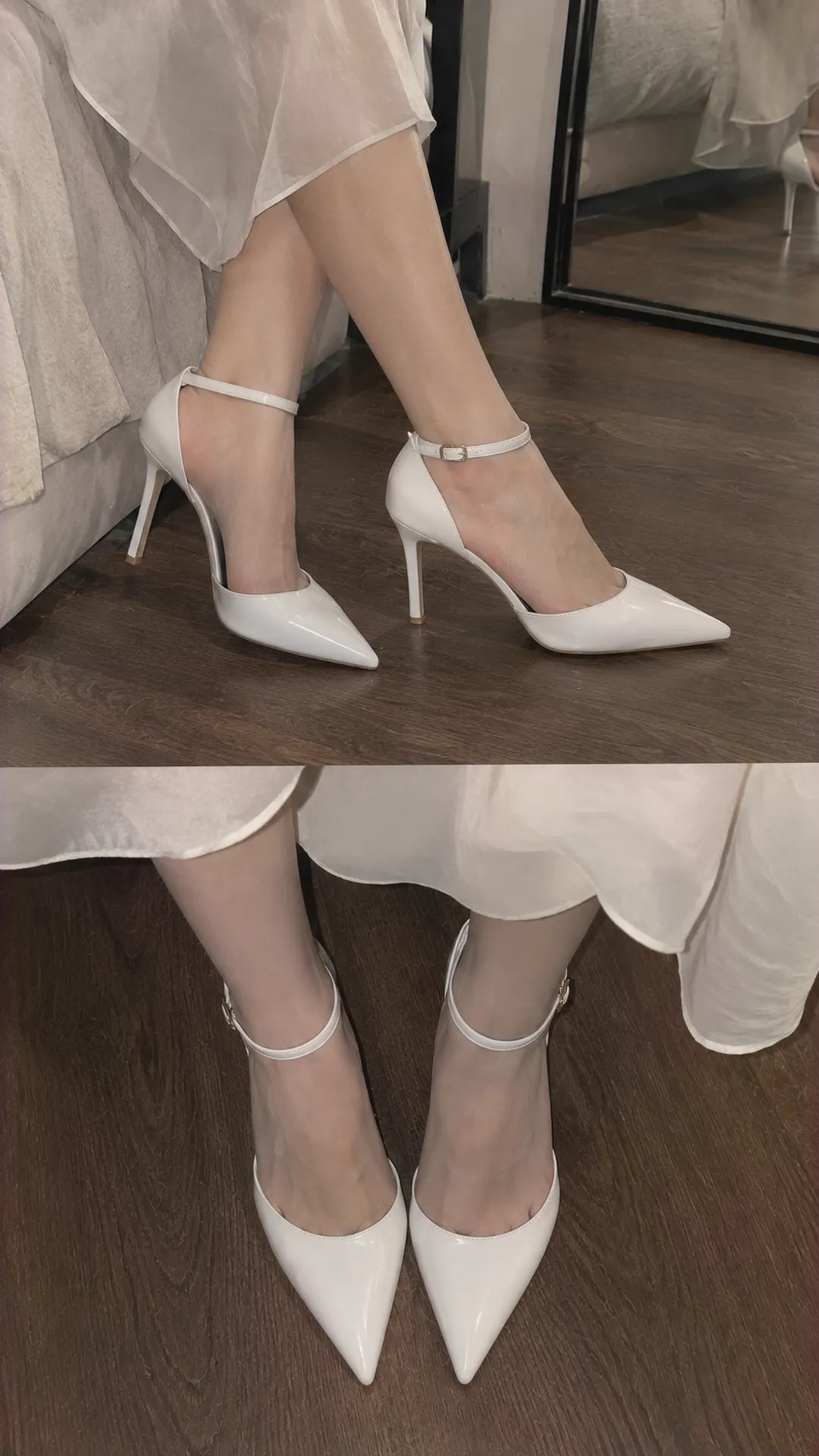
How pointed, round, and square toes change the line
A pointed toe gives the front of the shoe a longer, sharper line. Under trousers, see how much of it shows below the hem. With a dress, check whether you like the sharper finish. The point is part of the design. Your toes need room without having to fill the entire tip.
A round toe gives a softer finish, while a square toe adds a defined edge. Check the room inside as well as the shape from above. Two pointed or square-toe shoes can fit quite differently.
For a pointed white mule, check whether it’s backless or has a strap that holds the heel. Walk and try a step in a backless design. If you have to keep gripping with your toes to hold it on, try a different fit or cut. Sizing up to relieve tightness elsewhere can make the shoe harder to keep on.
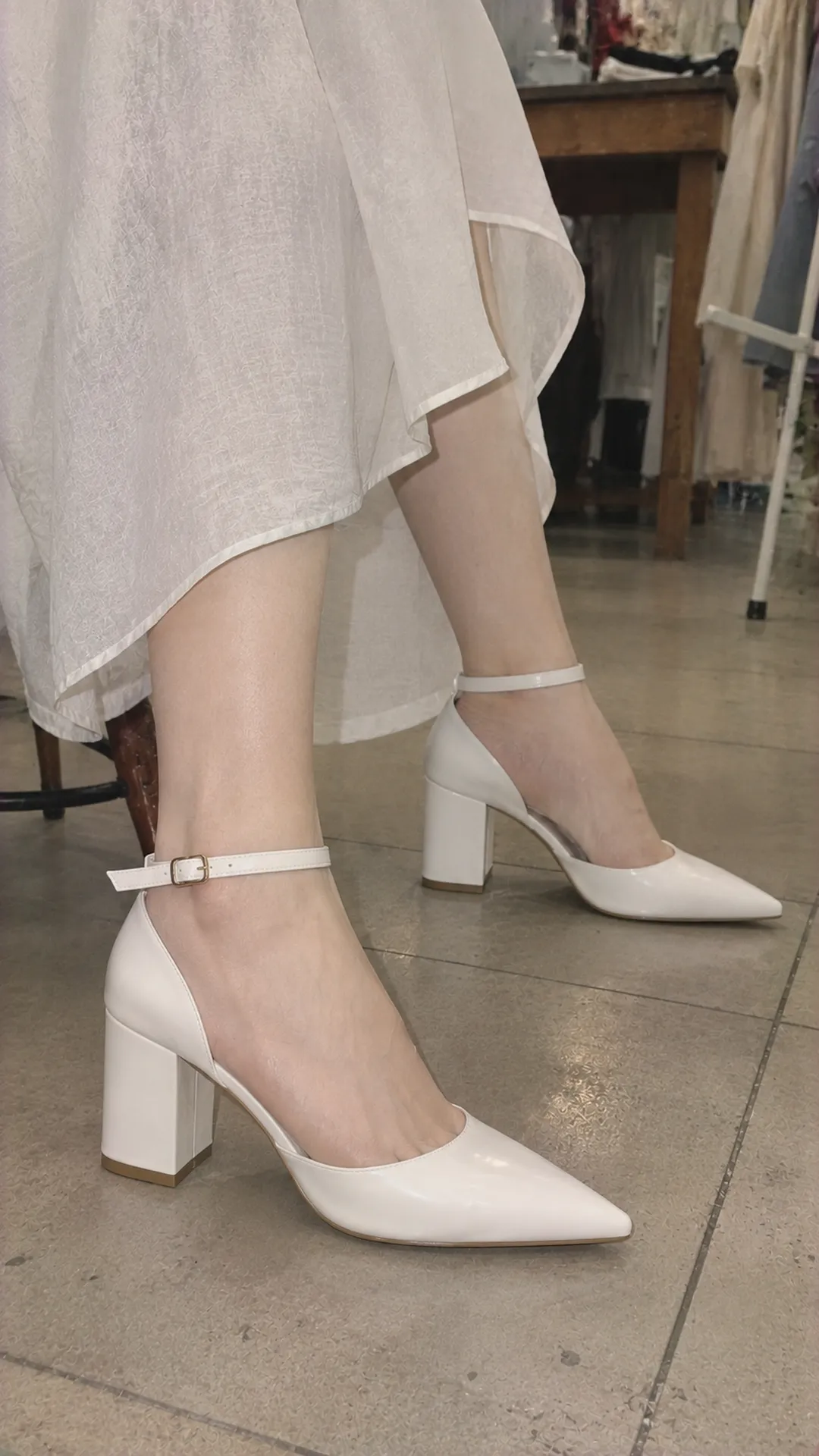
Consider heel shape and height together
A white block heel meets the ground differently from a slim heel. Stability also depends on fit and construction. Stand in both shoes, check how securely the uppers hold your feet, and consider whether the soles suit the venue. A block heel can still be difficult to walk in on some surfaces.
If you’re comparing 5 cm and 7 cm heels, try both if you can. Keep the same socks or liners and walk the same way. The platform or forefoot sole can change the pitch of the shoe, so try the actual pair rather than relying on the height alone.
Slim and block heels give different side profiles. With wide trousers or a voluminous dress, you might want the contrast of a slim heel or prefer to echo that volume with a block heel. Check the walking distance and surface before deciding which look to wear.
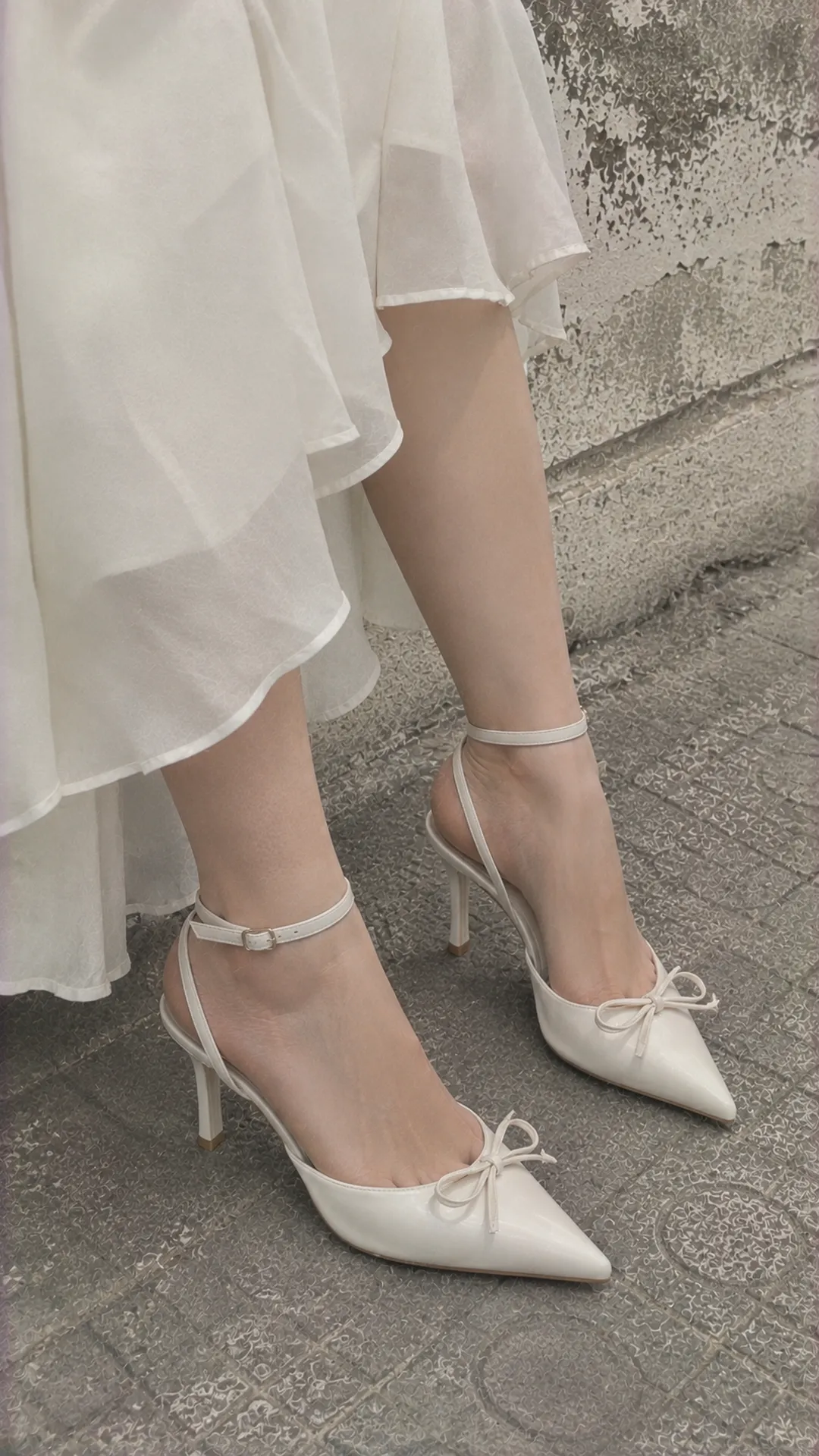
Straps, bows, and other details that draw the eye
Ankle straps, instep straps, and slingbacks create different lines. Check how the strap fits where it sits and whether it slips when you walk. Adjustment can help, but the upper still needs to fit and the toe box needs to suit your foot.
On white heels with bows, see whether the bow sits at the toe, side, or back. A large bow can become the focal point with a short dress or cropped pants. If the dress already has florals, lace, or ruffles, simpler accessories can give those details some room.
Check whether bows and other trim are securely attached, touch your foot, or catch on the hem. A detail that looks good on a shelf can get in the way when you cross your legs or step up. Try the movements you expect to make wherever the shop allows it.
Try both shoes and walk around
Measure your feet according to the brand’s guidance and use the chart for the exact model. Shoes with the same labeled size can vary in length and width. Try both shoes, stand, and walk a few steps where permitted. A seated fitting can miss heel slip or pinching at the toe.
Watch for a heel that slips, a strap that needs excessive tightening, pinched toes, or a change in your stride to keep the shoe on. Try a different shape if these happen. Choose a size you can wear comfortably instead of sizing down for a neater look.
Our online sizing guide explains how to compare measurements with a size chart. Use the chart for the specific pair of white heels. Sizing advice for boots doesn’t transfer directly to heels.

With trousers, check the toe and hem
Straight black trousers make white heels a light accent. A white top or a small pale detail can repeat the color if you want. To make the shoes stand out on their own, keep the top simple and check the contrast in a full-length mirror.
Cream or white trousers give a closer color match. Compare them with the shoes in ordinary light and check how much of the toe the hem covers. Try long trousers with the heels you’ll actually wear, since a different heel height can change where the hem falls.
Blue jeans and white heels can work for an outing with a suitable dress code. The cut and wash of the jeans change the result. Our women’s pants guide helps you choose a silhouette before trying it with the actual shoes.
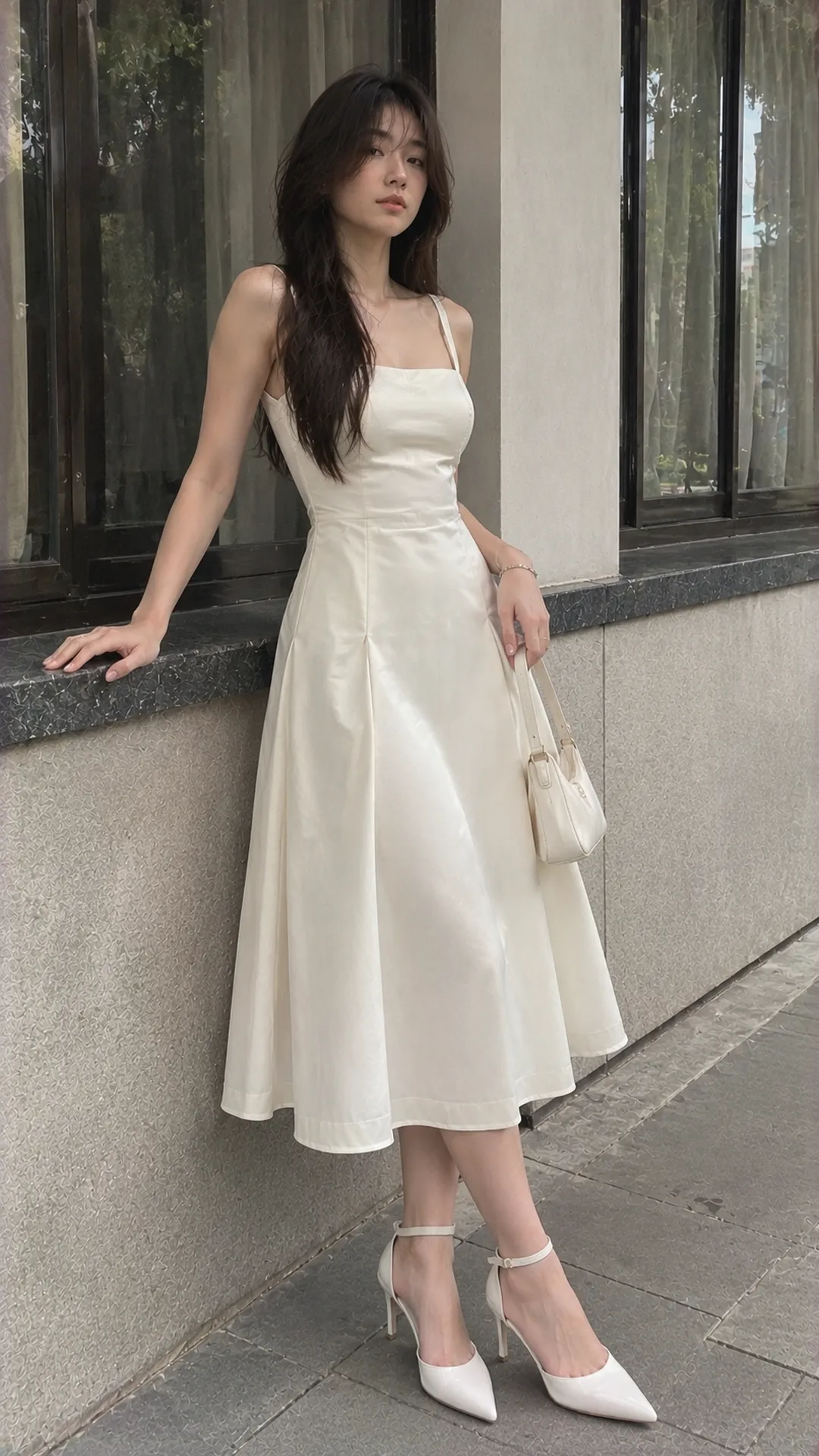
Style heels with dresses by length and focal point
A plain dress lets the toe shape, straps, or bow show clearly. With a print, white shoes can echo a light detail or stand out against the colors already there. Look at the bag and jacket too before settling on the contrast.
With a midi dress, look at the gap between the hem and straps. If several strong horizontal lines sit close together and you don’t like the effect, try another strap placement or hem length. The choice is about the lines you like on the outfit.
With a long dress, walk and sit to check that the hem doesn’t catch on the heel or trim. For other dress options, see our skirts and dresses guide for lengths and drape. A simpler shoe can be easier to wear when fabric regularly falls over it.
Choose shoes for the occasion
Work or a daytime meeting
Try a streamlined pair for the dress code and the distance you’ll cover. Straight trousers, a simple top, and white heels give you a base you can adjust with a bag. If you’ll be walking often, test the actual pair. A low heel is only one part of comfort.
An indoor party
White heels with a bow or textured finish can draw attention to the feet with a plain dress. If the dress is already embellished, try a simpler shoe. Walk on a similar surface if possible and account for the time you’ll spend standing, waiting, or traveling before the party.
An outdoor event
Check whether you’ll walk on grass, gravel, or uneven ground before choosing. If a pair is hard to wear at the venue, try another style or plan a change of shoes. Choose for what you’ll do at the event as well as how the outfit looks.
Care for the color and finish by material
Check what the upper, sole, and trim are made of before cleaning. Leather, coated materials, fabric, and lace can need different methods. Follow the care product’s directions and test it in a suitable hidden area if recommended.
After wearing the shoes, check for marks and look over the heels and straps. Store them dry as directed and keep sharp or heavy objects off the uppers. If they get wet, check the manufacturer’s guidance before using heat to dry them.
Before the next wear, look at the soles and heel tips to see whether they need repair. Have structural issues repaired rather than covering them with white polish. Our women’s footwear guide can help you find more ways to wear the shoes once they’re ready.
Choose a pair that fits, suits your plans, and gives the outfit proportions you like. Try it with one or two outfits you’ll actually wear before buying. That shows where white heels will fit into your wardrobe.