

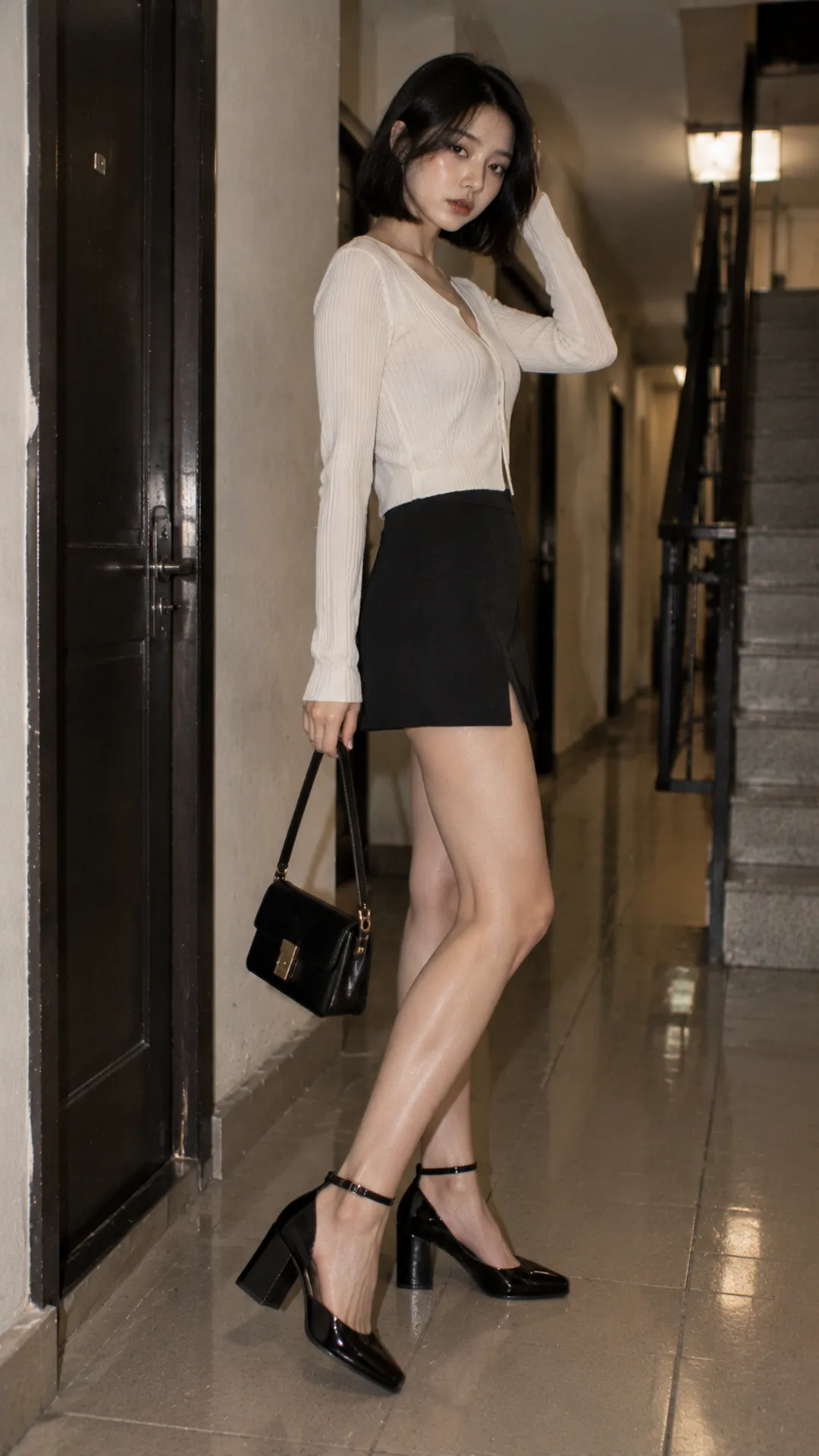
Block heel, square toe and platform describe different areas
The Vietnamese square-heel label generally refers to broad block heels. Their shape can be straight, flared or beveled rather than perfectly square. Inspect side and back views because the front rarely shows enough.
Square toe describes the front independently of heel shape. Block heels can have square, round or pointed toes. Platform describes a raised forefoot sole. A title containing all three describes three shoe areas, not one repeated feature.
Clarks distinguishes block heels from platforms and explains that a raised forefoot can reduce slope compared with a nonplatform shoe at the same total heel height. This does not establish fit, weight or feel on your feet. Try the complete shoe rather than compare label heights alone.
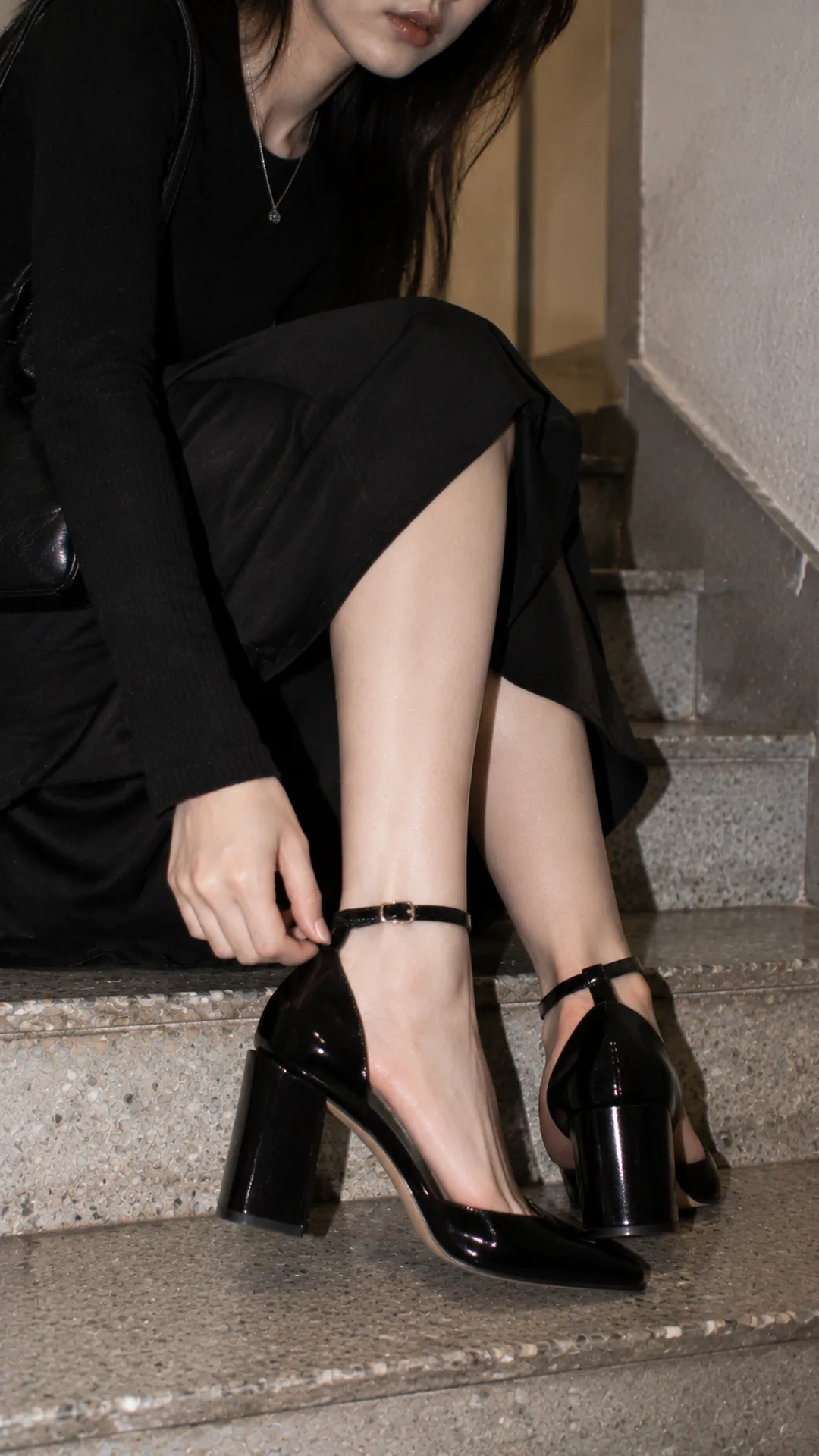
Choose height through needs rather than one standard
Around 3–5 cm: start with moderate lift
If unfamiliar with heels or planning varied activities, try lower designs before increasing as appropriate. A 5 cm block heel helps filter products, not define universal comfort. Compare similar uppers to isolate the height change.
For work, stand from a chair, walk and turn. If you change gait substantially or slide forward, review size and construction. Low heels still need checking; tight toes or unsuitable straps remain inconvenient.
Around 6–7 cm: reconsider standing time
Specify the activity: walking from a car to a table differs from receiving guests upright all evening. Short-term success in 7 cm shoes does not prove everyday suitability. Test near your needs where possible and consider different shoes for long transfers.
Do not compare numbers alone when one has a platform or different toe construction. Ask how heel height is measured and inspect side photos. Missing specifications need clarification rather than estimation from camera angle.
From 9 cm upward: inspect the full construction
Designs at 9, 10 or 15 cm require consideration of experience, setting and the exact shoe. A broad heel is insufficient reason to exceed your familiar height. Separate photographic styling needs from prolonged real-life movement.
Greater height may also change sole mass substantially. Lift, walk and turn to feel weight rather than only stand at a mirror. If natural steps are hard to control, try another model. Formality does not require a specific height.
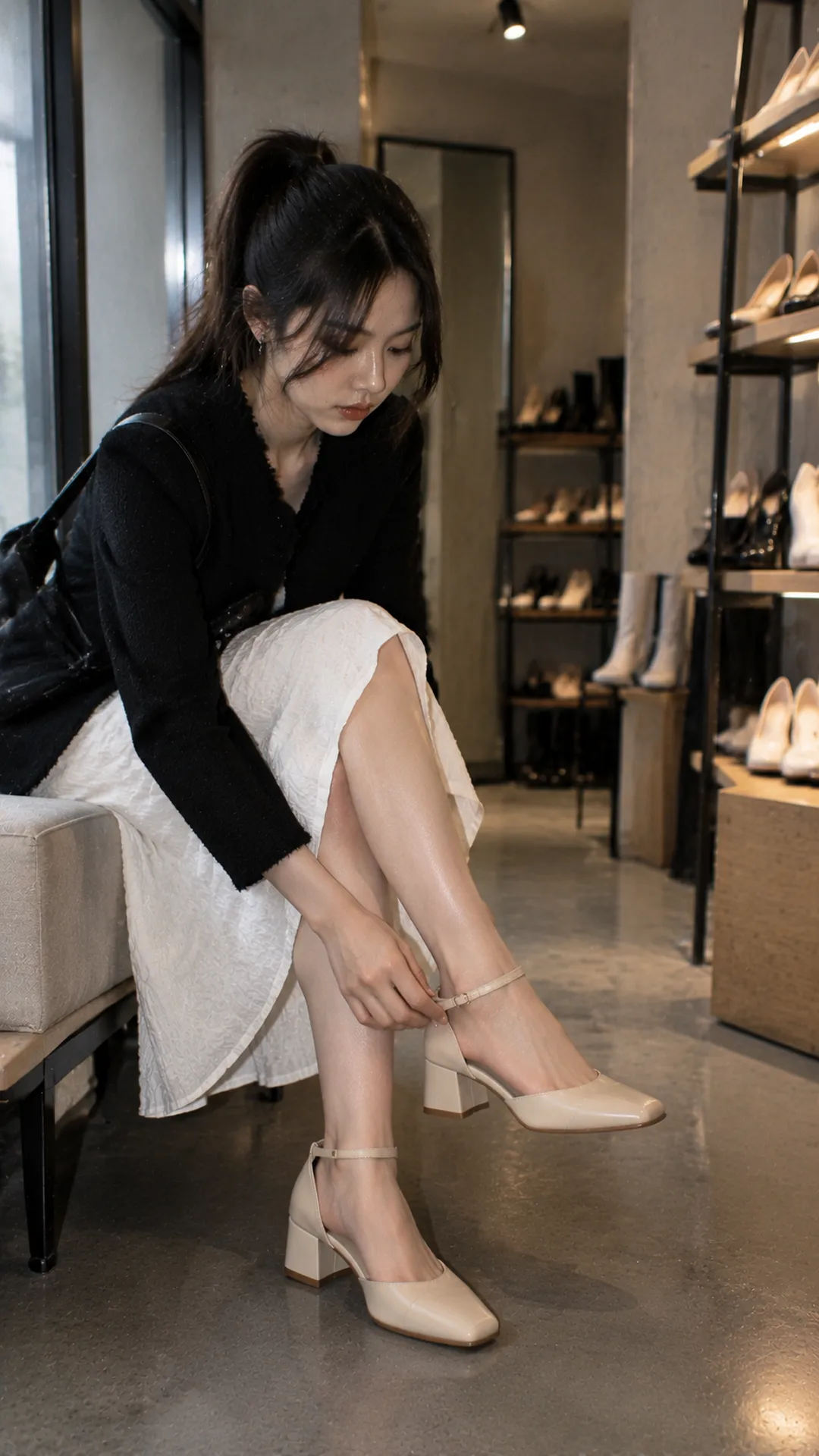
Foot retention matters as much as the heel
Closed toes: check room for your toes
Square toes look wide, but internal room depends on the last. A pointed extension does not by itself mean oversized fit. Check toe compression, forward crowding and heel lift while walking. Actual sensation matters more than the toe label.
For cross-straps, inspect placement standing and seated. They should function without maximum tightening to rescue an unsuitable last. If a favorite shape's straps always press or slip, another similar design may work better.
Heeled sandals and backless styles: inspect contact points
With open toes, check support beneath the toes and sliding through straps. With open heels, notice whether toes curl to retain the shoe. Sizing down does not automatically solve width or strap-position problems.
If comparing shoe types, the women's footwear-by-outfit guides compare overall constructions. Once choosing block heels, return to the exact footbed, toe, straps, outsole and how they work together.
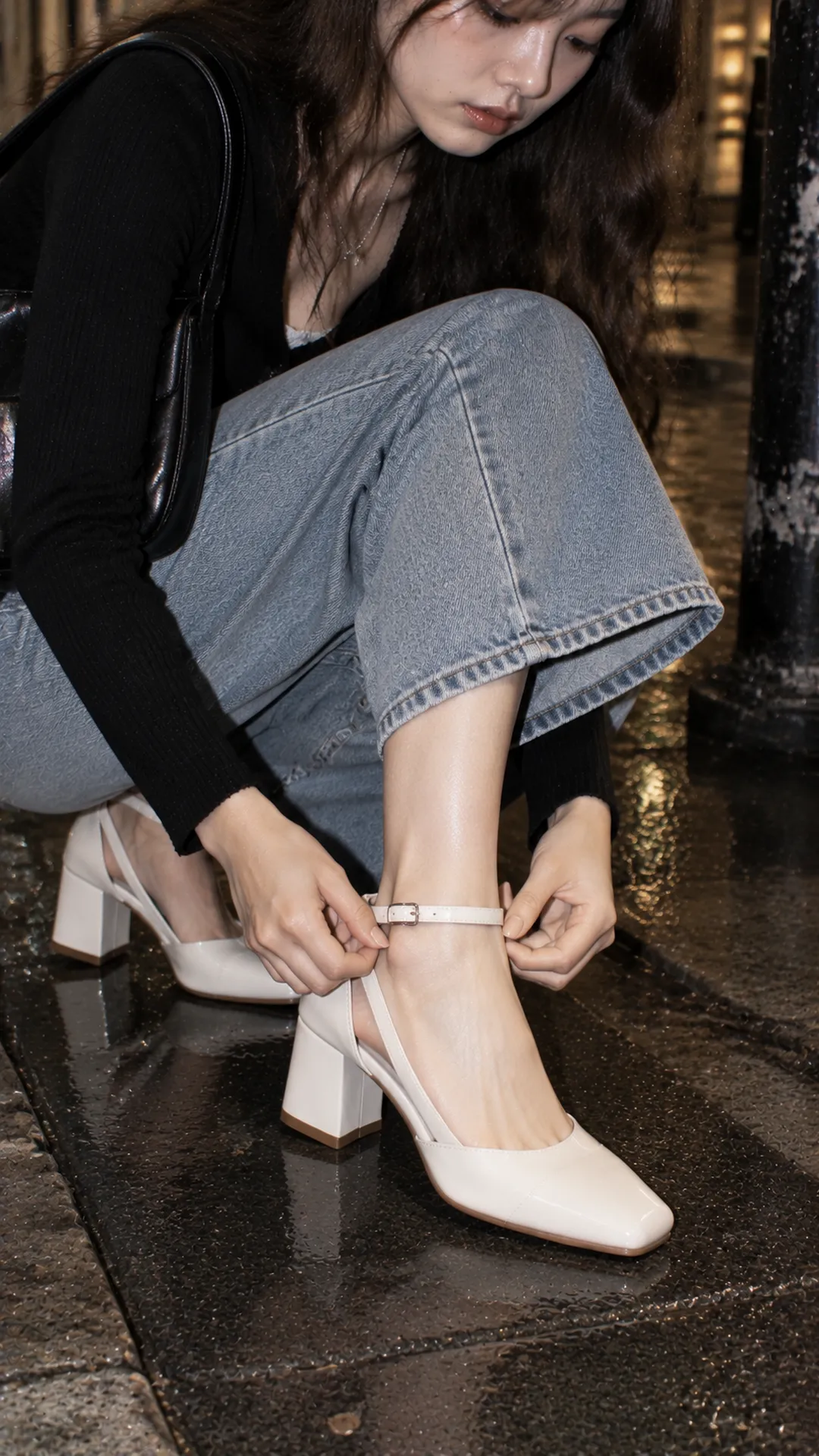
What should a short fitting include?
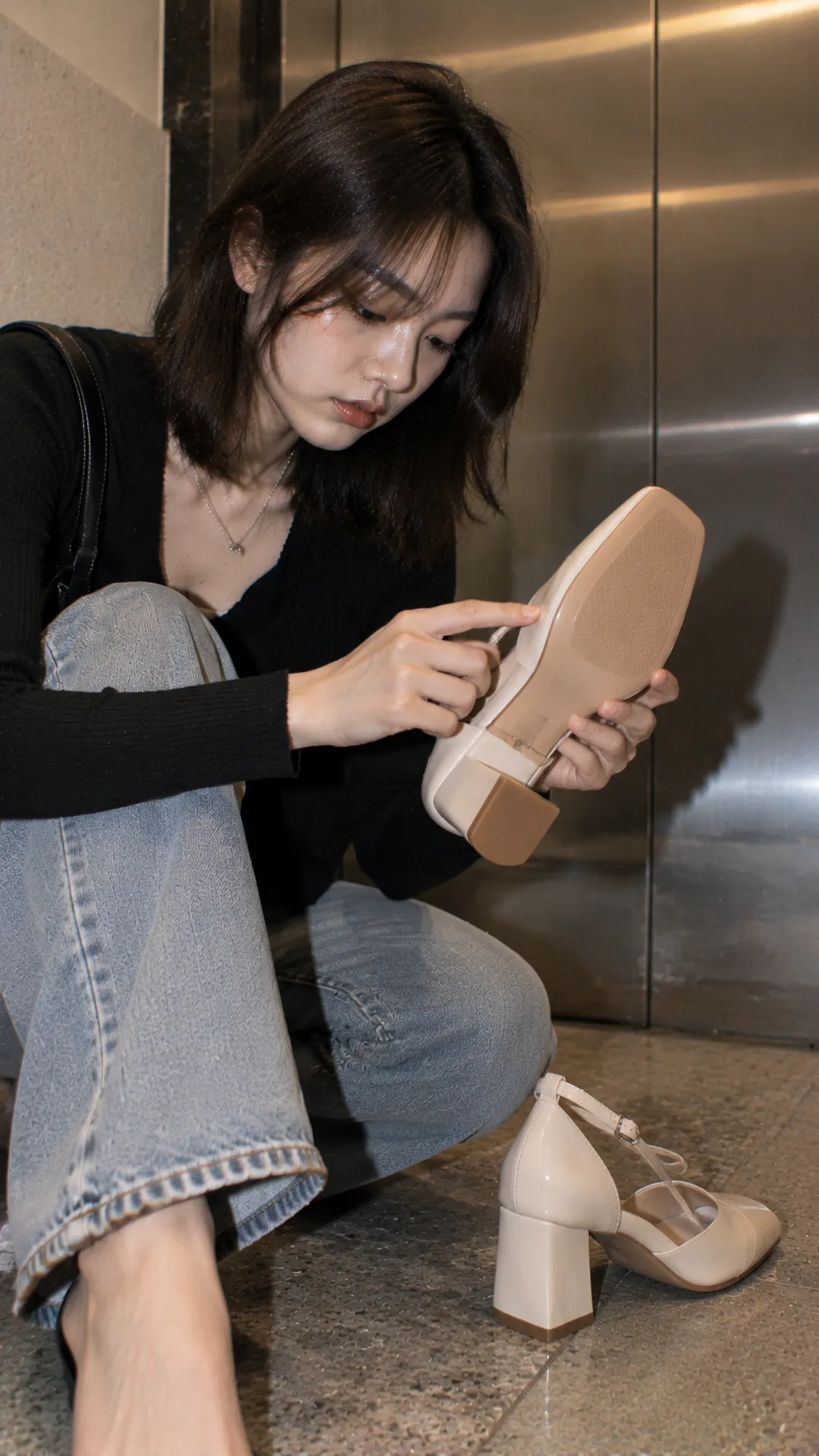
Try both shoes with intended socks or liners. Stand naturally, then walk several times on permitted surfaces. Check side differences, pressing edges and heel movement. Walking fast is unnecessary to prove capability.
Turn, sit and rise. Visually inspect outsoles, heel joins and balance between shoes without treating appearance as a guarantee on every surface. Stop for another model if unstable or uncomfortable rather than endure the fitting.
Online, use the exact chart and clarify foot versus footbed measurements. Include width if available. Choosing clothing and shoe sizes online prepares measurements and return checks beyond one familiar size number.
With trousers: coordinate hem and toe lines
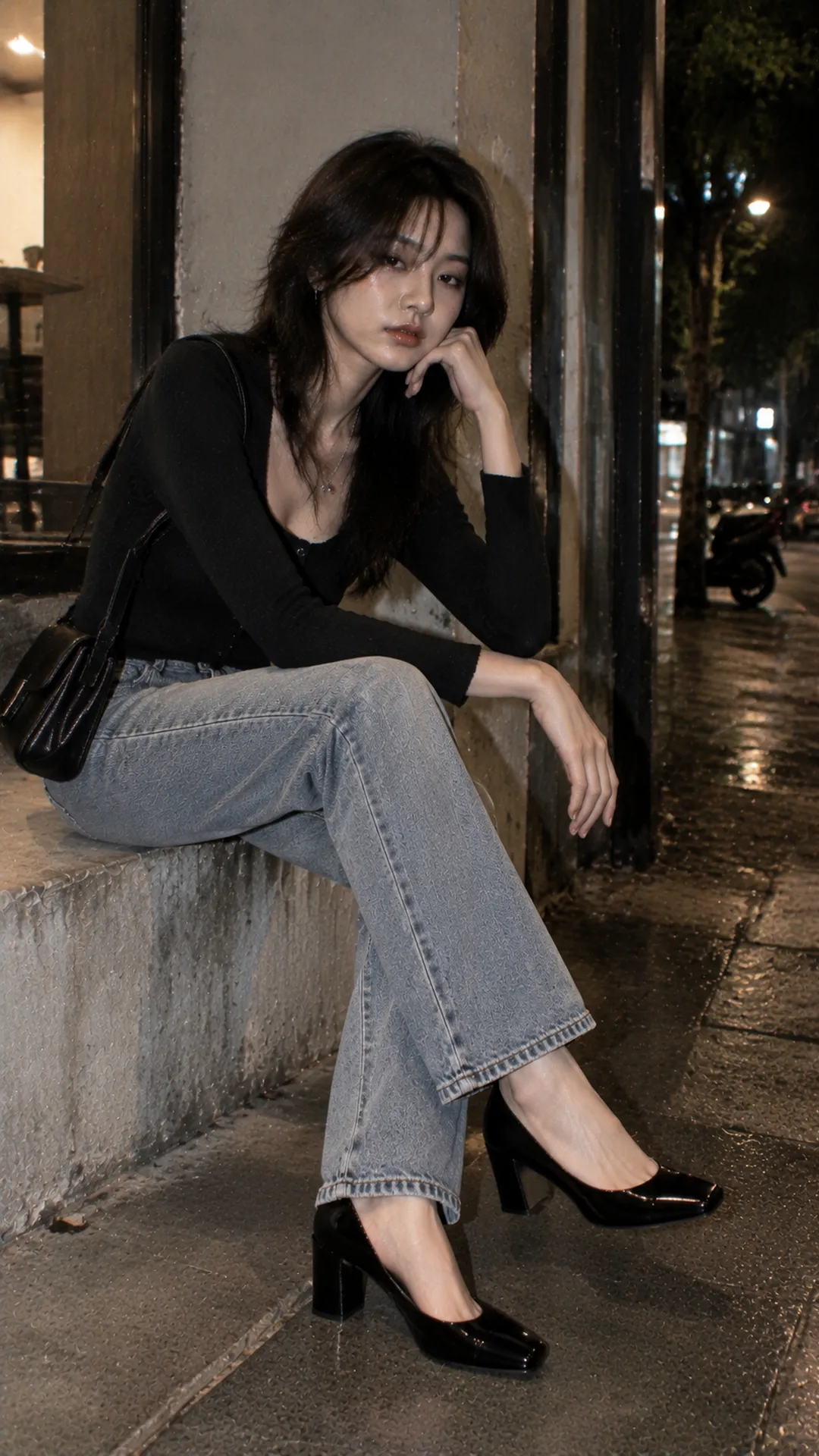
With straight legs, choose how much toe and upper show. An ankle hem reveals straps and gaps. Square toes give geometry; round toes soften the transition. Choose your effect without compulsory body-type rules.
With wide trousers, walk to check the hem does not catch beneath the heel. Block volume can relate visually to leg width, but length still needs to fit. If trousers work only with unusually high shoes, reconsider everyday practicality.
Above, try a neat shirt or minimally detailed tee. With glossy shoes, test a matte bag; with many buckles, reduce belt hardware. See choosing tops by fit to alter polish while retaining your footwear.
With dresses: assess length and flare
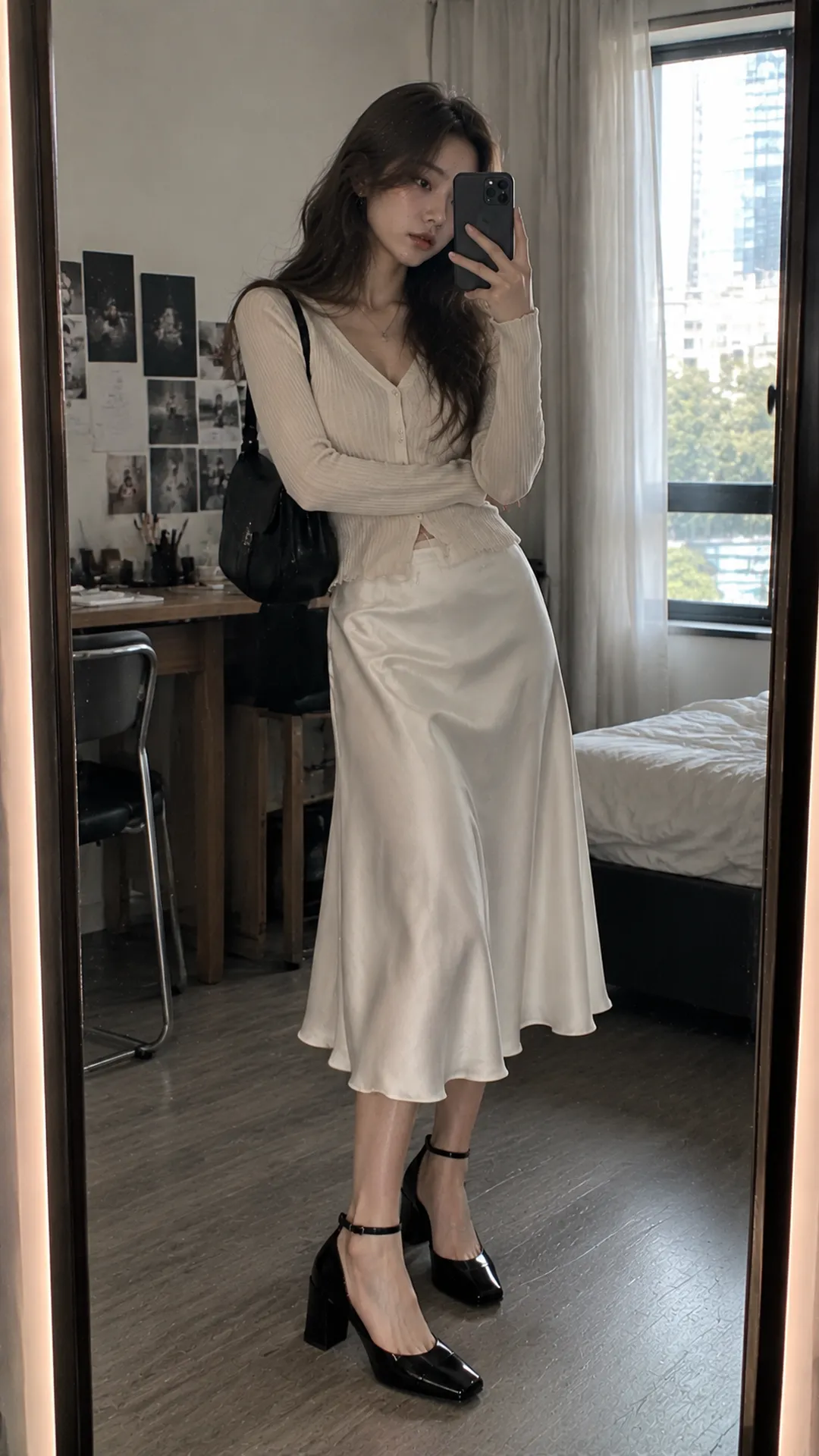
Plain midis and block heels can look defined with your preferred leg gap. For flare, view from the side to see whether shoes are too small for the dress volume or too heavy for light fabric. Change strap thickness before replacing the entire pair.
Short dresses expose shoes clearly, making color, toe and buckle important. For clarity, let shoes, jacket or bag lead. For multiple details, repeat one color or material to relate them.
For long occasion dresses, wear the actual shoes while checking hems. Include sitting at a table, stepping up and turning. Choosing dresses by shape and length establishes the outline before deciding delicate versus substantial footwear.
Choose colors, surfaces and achievable care
Black works across dark wardrobes but differs in matte, gloss and texture. Pale shoes may create a break beneath dark hems. Try at least two existing outfits; if many new purchases are required, reassess the shoes' budget role.
Read stated materials and model-specific cleaning. Do not soak or apply one cleaner to every block heel. After use, inspect heel tips, outsoles and joins; address damage affecting use before wearing again.
For long-term shopping, include returns, care and use frequency. Shopping for Alt Fashion according to need combines these criteria beyond price. An attractive shoe incompatible with movement may see less use than a thoroughly tried simple pair.
Decide through actual movement
Establish the task, test a controllable height and inspect foot retention before toe shape, color and details. This order preserves preference by turning it into a usable item.
Block heels vary, so no centimeter figure fits everyone. Retain a pair with understood construction, checked fit and a specific wearing plan. This is firmer evidence than a promise that block heels alone enable all-day walking.