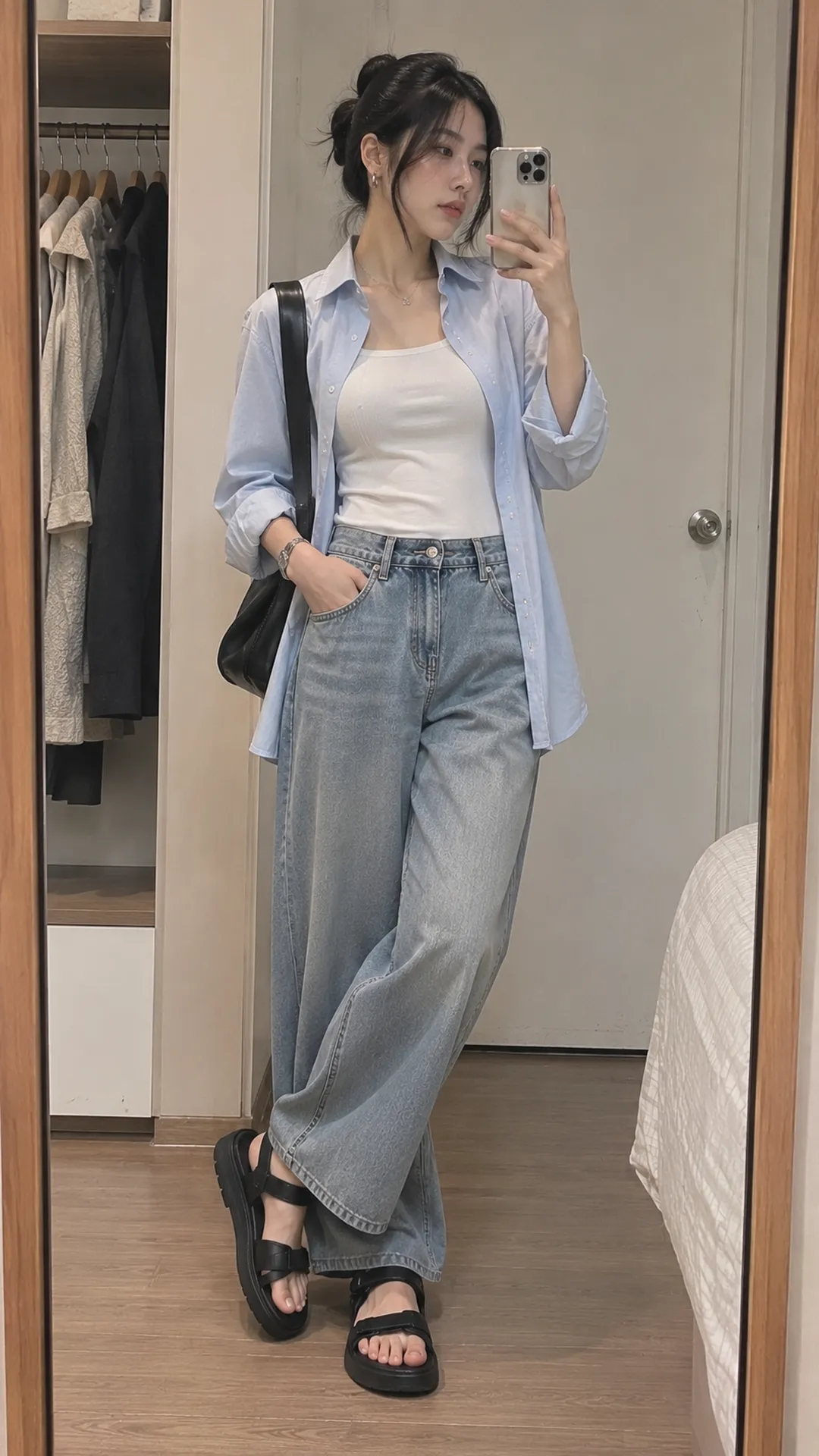
Choose for your plans before choosing strap style
A day mainly spent sitting in class differs from walking between many places. For extended movement, prioritize stability and adjustable straps over a decorative detail you only enjoy in photos. For a short event, you can give more attention to toe shape and styling.
For school sandals, check the school's or class's rules first. Not every setting permits open-toed footwear, even with a back strap. Practical classes or specific activities may require other shoes; a pair suitable for classroom lessons may not suit your entire timetable.
If traveling by motorbike, consider the journey and weather too. An open sandal may work for a city stroll but does not provide the coverage of closed shoes. No sandal suits every condition simply because it has thick soles or broad straps.
The guide to choosing women's shoes for outfits considers mobility alongside proportions and formality. The same order helps with sandals: meet your schedule's needs first, then balance the sole's visual weight with trousers or a skirt.
Three sandal types and what to test in each
Thin straps and low soles: light lines
Thin straps expose more skin and often look lighter in a full-length view. When trying them, check whether straps lie flat or twist along the edges. A narrow but rigid strap in a friction-prone spot can still be uncomfortable despite a light sole.
These can work with neat straight-leg trousers, dresses or skirts with few tiers. Very loose, layered clothing may visually overwhelm delicate sandals. Try a wider strap or more contrasting color rather than necessarily increasing sole height.
Medium or broad straps: a stronger accent
Broad straps create visible areas across the instep and often suit structured outfits. Check contact points, stitched edges and adjustment range. If the front presses into your foot while the back strap remains loose, tightening the back will not solve the front's fit problem.
Broad straps can balance jeans or structured shorts. If the sandals already have many buckles, reduce hardware on the bag and belt to avoid concentrating detail from waist to feet. Judge more than color; strap area strongly affects prominence.
Thick soles or heels: test actual stability
Thick soles add volume at the feet, but height alone does not determine stability. Check how your foot sits on the sole, whether it slides when turning and how stepping feels. Large soles are not automatically easy to walk in, and low heels do not suit every foot.
For heeled sandals, test both standing and moderately long steps. Your foot should not slide forward until your toes extend beyond the edge. You do not need to accept a hard-to-control pair just because it gives the height seen in a reference outfit.
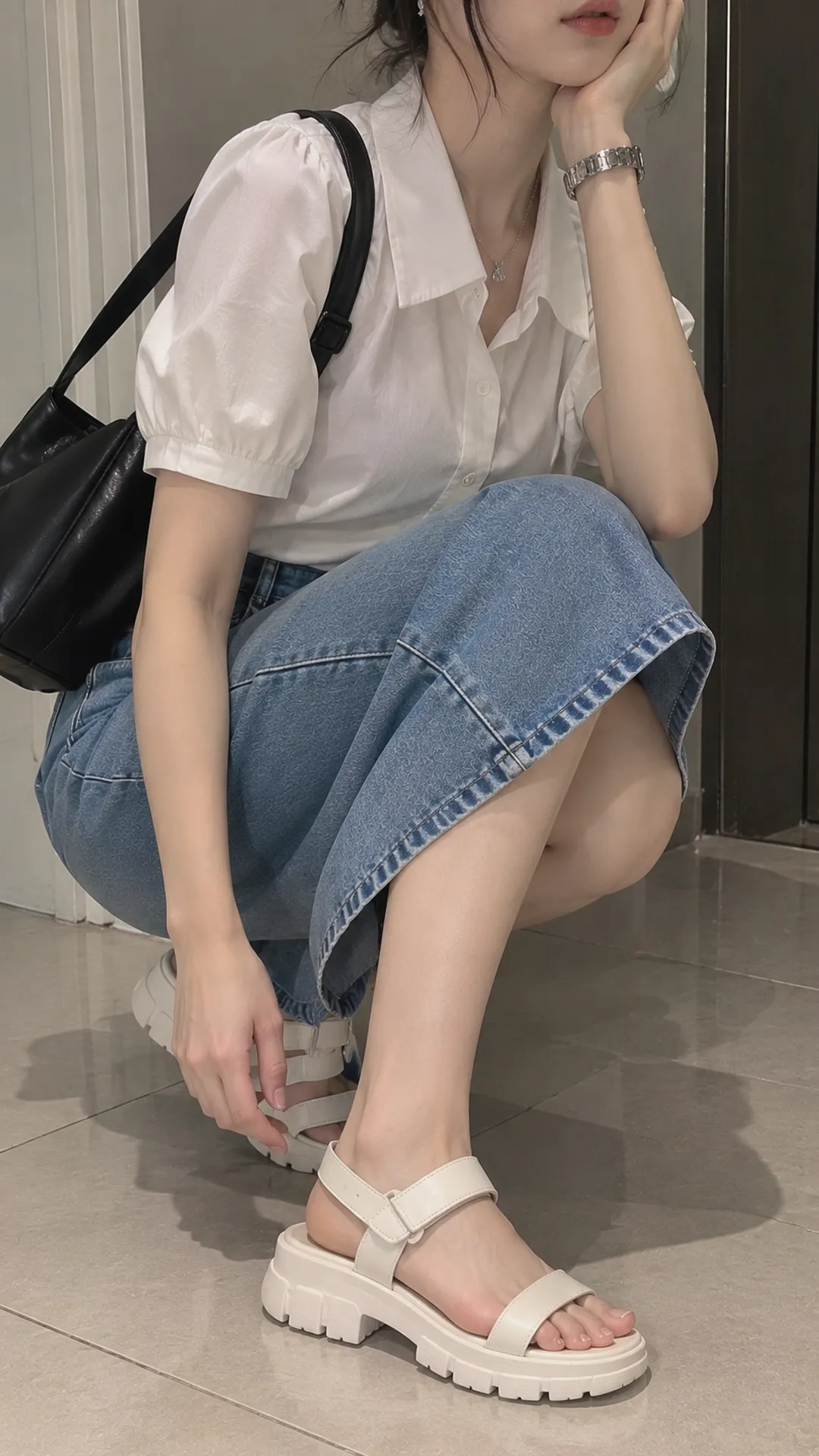
Check fit from toe to heel
Place your foot on the sole before tightening straps
Rest your foot naturally and check whether the toes, heel and sides are supported in the right places. If you curl your toes to hold the sandal or your foot clearly spills over, reconsider size or shape. A longer pair will not necessarily solve a width problem.
Measure both feet according to the seller's instructions and use the chart for that model. Do not assume one general conversion means the same number fits alike across brands. If your feet differ, try the sandals so both sit securely rather than choosing only for your dominant side.
Check front straps, back straps and fastenings
Front straps should hold your foot without pressure concentrated in one spot. The back strap should stay in position while walking without slipping down or pulling too tightly. For hook-and-loop or buckle closures, check whether the adjustment range suits you or is already at its limit on the first try.
Inspect where straps join the sole. Check stitching, attachment points, edges and contact surfaces. Attractive decoration should not obscure areas you need to examine. When buying online, top and side photos matter as much as model photos.
Try the movements you will actually make
Walk straight, change direction and step onto a low step if the fitting conditions permit. Notice excessive heel lift, rubbing as your foot bends and any change to your natural stride. Test on a safe shop surface; do not create a slippery situation yourself.
Do not rely on promises that every painful spot will disappear after a few days. Initial stiffness can play a part, but incorrect dimensions or strap placement should not be solved by enduring discomfort. Ask about size exchanges and try again before wearing them outdoors.
The guide to reading size charts and measuring feet for online purchases helps prepare your measurements. For sandals, also check sole area and straps: feet of the same length may need different shapes because of width or instep height.
Sandals with trousers: pay attention to the hem
Straight-leg jeans and a T-shirt
Straight jeans and a T-shirt provide a simple base for trying different sandals. Hems above or near the ankle reveal straps more clearly than long hems covering most of the foot. If keeping your trouser length, try straps with enough presence rather than letting the sole almost disappear.
With blue jeans and a white top, black sandals provide a clear endpoint. Brown gives a different feel without requiring a brown bag. A small connection in color or surface is enough; you do not need a complete matching accessory set.
Wide straight-leg trousers and a neat top
Try loose straight-leg trousers with the actual sandals to check hem length. If fabric touches the ground or slips under your heel, alter the length rather than changing how you walk. A neat or tucked top defines the waist when the lower half is already wide.
Slim straps lighten the look; broad straps make it more casual. With pleated, structured trousers, minimally decorated straps keep the outfit clean. For a suitable top, see the guide to women's tops by fit and proportion rather than choosing by color alone.
Shorts or Bermudas
Shorts expose the legs and sandals, making strap width prominent. Longer Bermudas create different proportions: assess the gap between hem and sandal and balance the top. If both top and shorts are loose, many large sandal buckles can make the outfit heavier than intended.
Keep things clean with a lightly printed or plain T-shirt, clearly cut shorts and a small bag. A sporty direction should come from the whole outfit and strap construction, not simply added socks. If wearing socks with sandals, check fit again because socks change the contact.

Style sandals with skirts and dresses
Flared skirts: balance lightness and fullness
A soft flared skirt and neat straps can look light together. With thick, tiered or strongly flared skirts, medium straps or a more substantial sole can keep the feet from looking visually undersized. This is an aesthetic choice; preserve comfort first.
With a patterned skirt, try sandals in one of its background colors. With a plain skirt, buckles or small sandal details can provide the accent. Avoid increasing emphasis in sandals, bag and belt at once if you want one clear focus.
Fitted or midi skirts: look at the ankle gap
A midi hem and ankle-area straps both create horizontal lines. If the lower section looks fragmented, try lower-contrast straps or a different hem position. There is no need to ban ankle straps according to height; compare two outfits directly and choose the effect you prefer.
The guide to choosing skirts by length and flare helps distinguish a skirt issue from a shoe issue. Sandals that suit a fitted skirt may feel different with a heavily pleated one, even when the lengths are similar.
Dresses for outings
A dress creates a continuous area of color or pattern, so sandals can provide a light finish. With a simple dress, a textured bag adds distinction without elaborate footwear. With ruffles and ties already present, prioritize clear strap construction and minimal extra details.
For walking between several places, try dress and sandals together to check whether the hem impedes your stride. A look that works only for standing poses does not reflect real plans. Choose a length that lets you use steps and sit to rest without holding the fabric throughout the journey.
Choose colors, buckles and a coordinating bag
Black creates defined lines against many outfits; brown can connect to a bag or belt material; light shades affect the feet differently depending on contrast. No sandal color is mandatory for a skin tone. Choose by how prominent you want the pair to be in the whole outfit.
If the sandals have large metal buckles, repeating that tone in one small bag detail can suffice. Necklaces, rings and earrings need not form a matching set. The guide to balancing accessories across focal areas helps prevent every area from becoming overly detailed.
Buy and care for sandals for longer use
Before ordering, check the size chart, sole photos, inner strap surfaces and return terms. Read specific material descriptions rather than inferring them from color or shine. For slip-resistance or water-resistance claims, consult information for the exact model; grooves alone do not prove either capability.
After wearing, clean according to material instructions and dry appropriately before storing. Do not assume every sandal can be soaked, machine-washed or exposed to strong heat. Follow manufacturer guidance for any specific requirements of the lining, adhesive or straps.
Periodically inspect fastenings, straps and sole wear. Address loose straps or a separating sole before wearing the sandals again instead of concealing them with decoration. A pair worth keeping fits, works across outfits and serves your real schedule.