

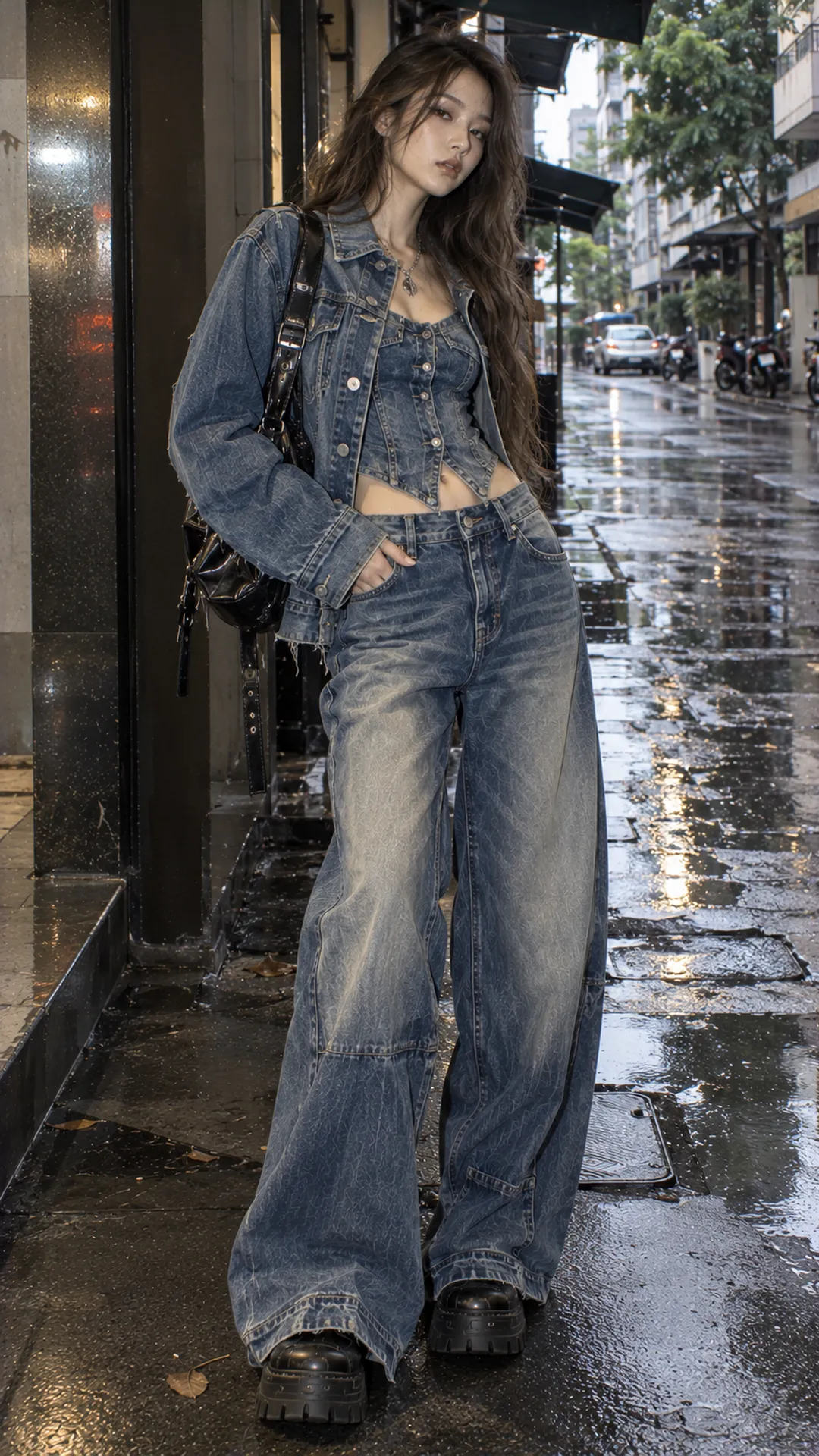
Where should two denim pieces connect?
In How to Style Double Denim, Levi’s presents both similar and contrasting washes. Here, wash refers to the color and surface effects of treatment. Two blue pieces can still differ in brightness, fading, stitching or softness.
Do not just place two pieces side by side and ask whether their colors match. Put them on with your intended shoes. A medium-blue top and medium-blue trousers can work with clear cuts; a pale faded top and dark indigo trousers can still feel heavy if both are thick, wide and covered in pockets.
To choose quickly, decide which piece you want to keep first. If you like your existing jeans, use them as the base for trying two tops. If the top is the statement piece, select trousers or a skirt around its length and volume. You need one starting point, not a replacement wardrobe.
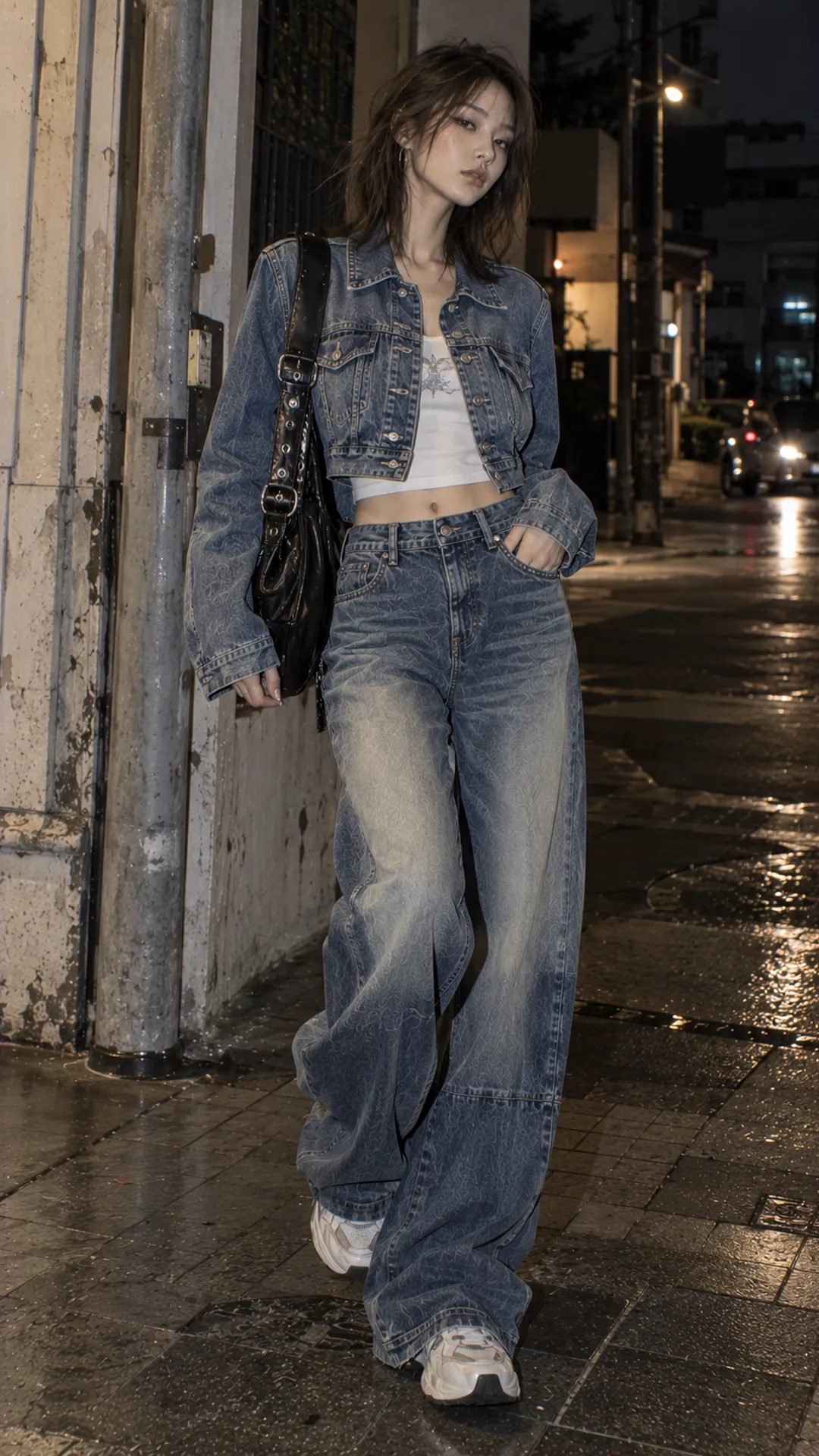
Matching or contrasting washes: choose the effect
Similar tones for a continuous block
A top and trousers in similar colors feel coordinated, especially when seams and metal details relate. This works when you want a restrained palette. Use the collar, front opening or waistband position to keep the construction visible.
For example, a medium-blue denim shirt tucked into tonal jeans can create a continuous vertical line from shoulder to hem. A plain belt marks the waist if you want emphasis there. If you dislike belts, choose a suitably short top or fasten the shirt in a way that reveals the waistband.
Different lightness to separate top and bottom
A light top with dark trousers usually emphasizes the upper half; reversing them shifts attention downward. Choose around the piece you like rather than rules for body types. A small difference in shade is valid too; look at seams and the inner layer to decide.
To reduce the sense of two disconnected colors, use a linking piece: a pale gray inner top, a bag matching the shoes or a belt close to the stitching's tone. The link does not need to be a third denim item, leaving a break in texture.
Black, gray and white denim are options too
Denim-on-denim style is not limited to blue. A gray denim top with black jeans creates a subtle transition, while a blue top with a white denim skirt gives stronger contrast. Check coverage and pocket linings when wearing light colors. Inspect black pieces in daylight to notice brown undertones or gray fading.
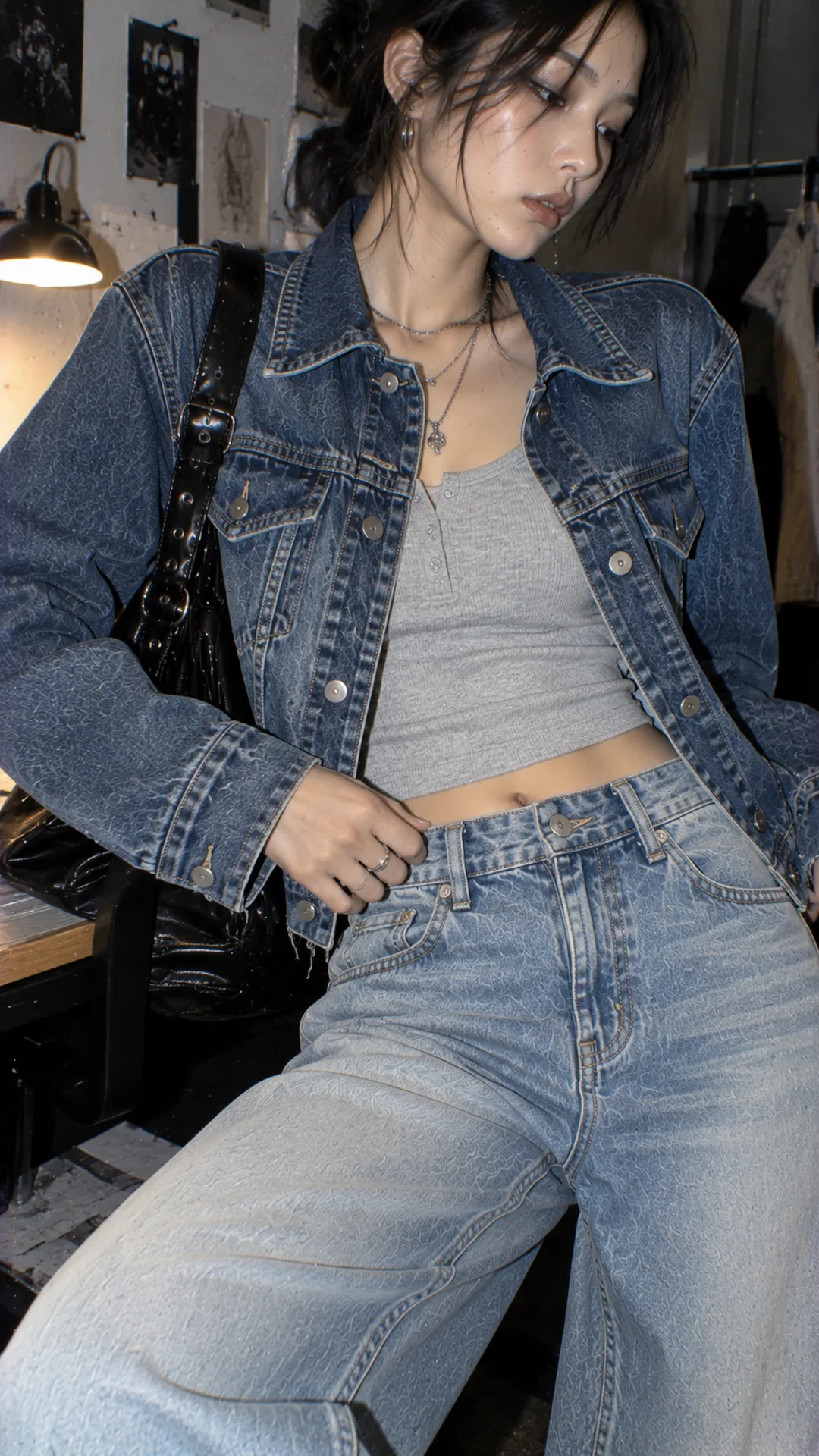
Balance the silhouette through length, not just tight versus loose
“One loose, one streamlined” is a useful starting point, but not the whole answer. A very wide top ending near the waist creates different proportions from one covering the hips. Soft, draping wide-leg jeans also feel different from a rigid wide pair. Look at the actual fabric volume rather than just the fit label.
With a short jacket, the waistband and upper trousers are usually more visible. If you prefer a long, loose jacket, keep the inner layer low in volume and open the jacket to create separation. The guide to women's denim jacket outfits separately explains cropped, regular and oversized cuts; in a two-piece denim outfit, also check where the jacket hem meets the waistband.
Do not tuck at any cost. A very thick denim shirt can create bulk around the waist, especially with rigid jeans. Try a partial tuck, a shorter shirt or an open shirt over a light base. The right approach lets you sit and stand without readjusting everything.
With a skirt, test your stride and the slit. Large areas of denim above and below may look good standing still, but the skirt needs enough movement for stairs and sitting. Assess fit in both garments, not just the one nearest your face.
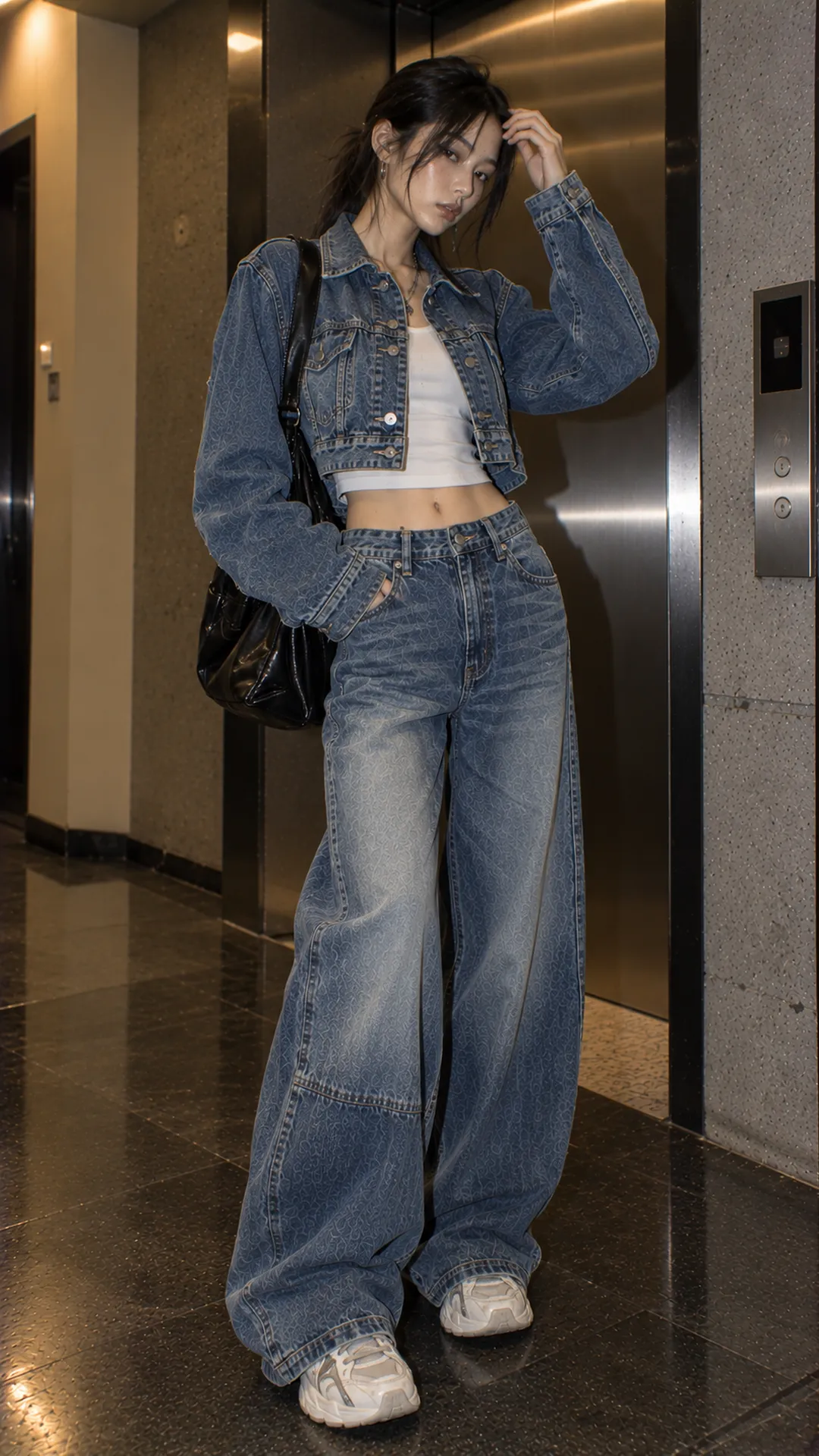
Four women's denim outfits, from simple to striking
A soft shirt and straight-leg jeans for everyday wear
Try a medium-blue denim shirt, darker jeans and clearly shaped flat shoes. A soft shirt makes the waist easier to manage, while a relatively straight trouser line keeps the result streamlined. Open a collar button or roll the sleeves if comfortable; neither is compulsory.
If a full tuck makes the shirt balloon, move surplus fabric gently toward the sides instead of gathering it all at the front. If the jeans pull at the thighs and flare sharply from the knee, reassess the cut. The guide to what to wear with straight-leg jeans distinguishes straight legs from fitted and wide cuts.
This combination suits a day when you want minimal readjustment. A plain shoulder bag and familiar shoes help more than adding many accessories just to make double denim less simple.
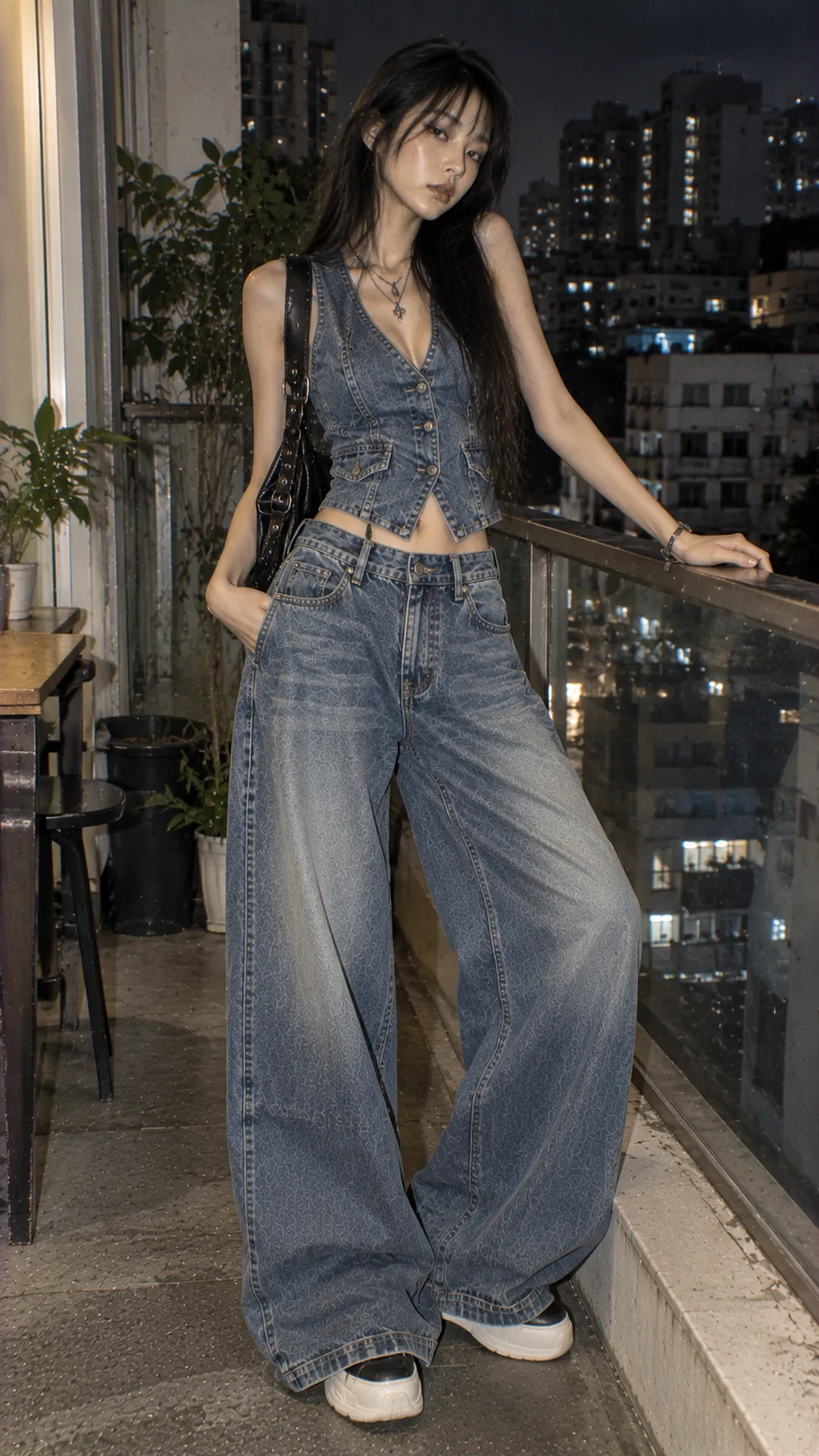
A denim vest and wide-leg jeans for coffee
Choose a well-fitting denim vest, a thin tee underneath and wide-leg jeans. The vest creates a compact upper frame while the trousers add movement below. The denim pieces can match in color; the tee visible at the neck and arms separates the surfaces.
Do not choose an overly tight vest just to define the waist. The buttons should lie flat when seated, with space at the armholes for the inner top. If the trousers have many pockets or construction details, use a simpler vest to avoid competing areas.
Try long trousers with your shoes before altering the hem. The guide to women's wide-leg jeans outfits goes deeper into rise, width and shoes. Here, the important point is that the vest hem does not completely cover the waistband you want to show.
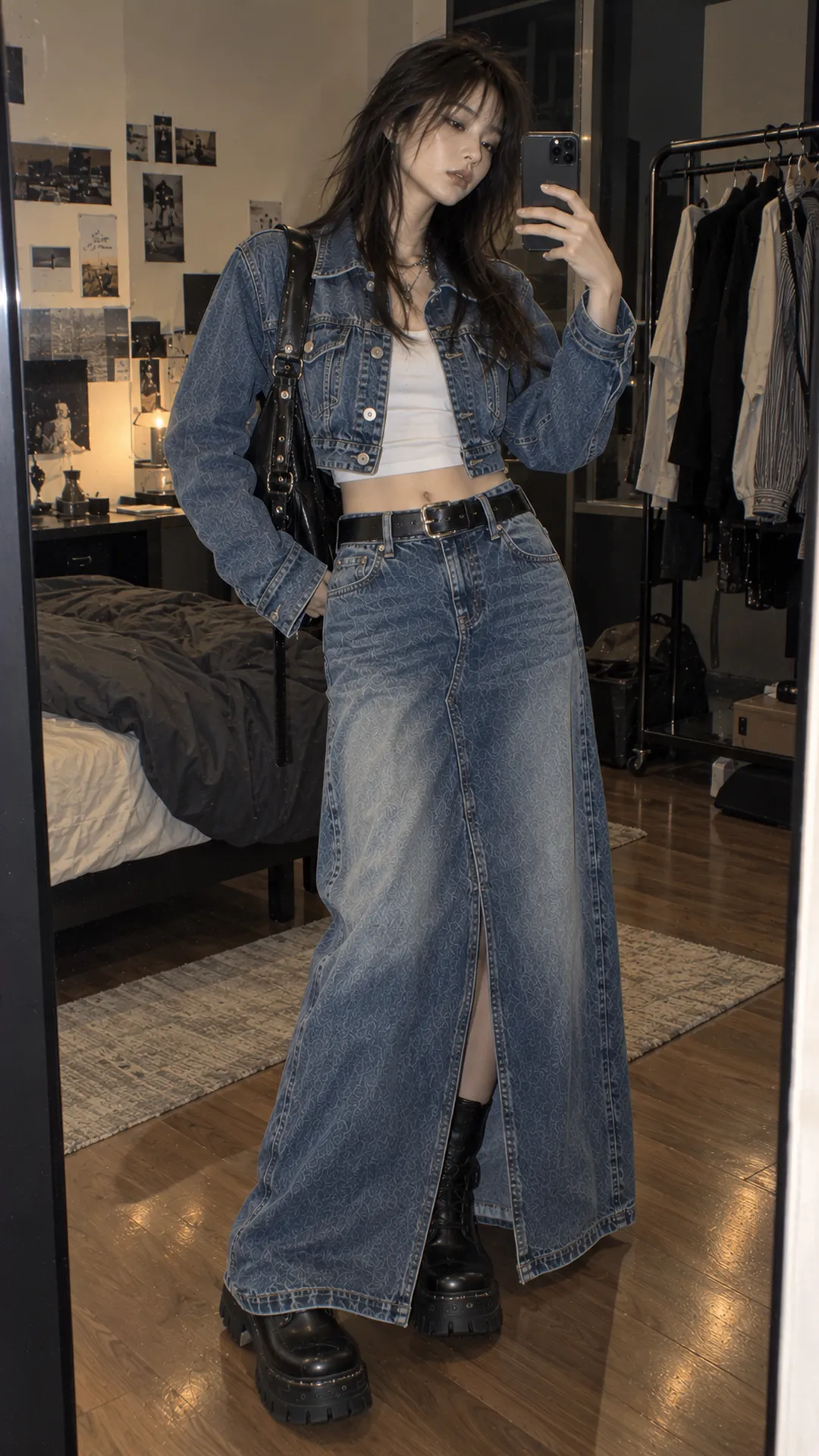
A short jacket and long denim skirt for the weekend
Pair a short denim jacket with a plain inner top and a long denim skirt. With a straight skirt, a moderately roomy jacket can provide balance. If an A-line skirt flares widely, try a more streamlined jacket or wear it open so the upper half does not form one closed block.
Choose similar colors for continuity, or a gray jacket over a black skirt for a subtle difference. Low-cut shoes leave the end of the outfit more open; boots also work when the hem and slit allow a natural stride.
For length and movement, explore long denim skirt outfits. Carry your actual bag and sit while trying the full outfit: a large bag at the hip may hide more of the short jacket and skirt waistband than you expect.
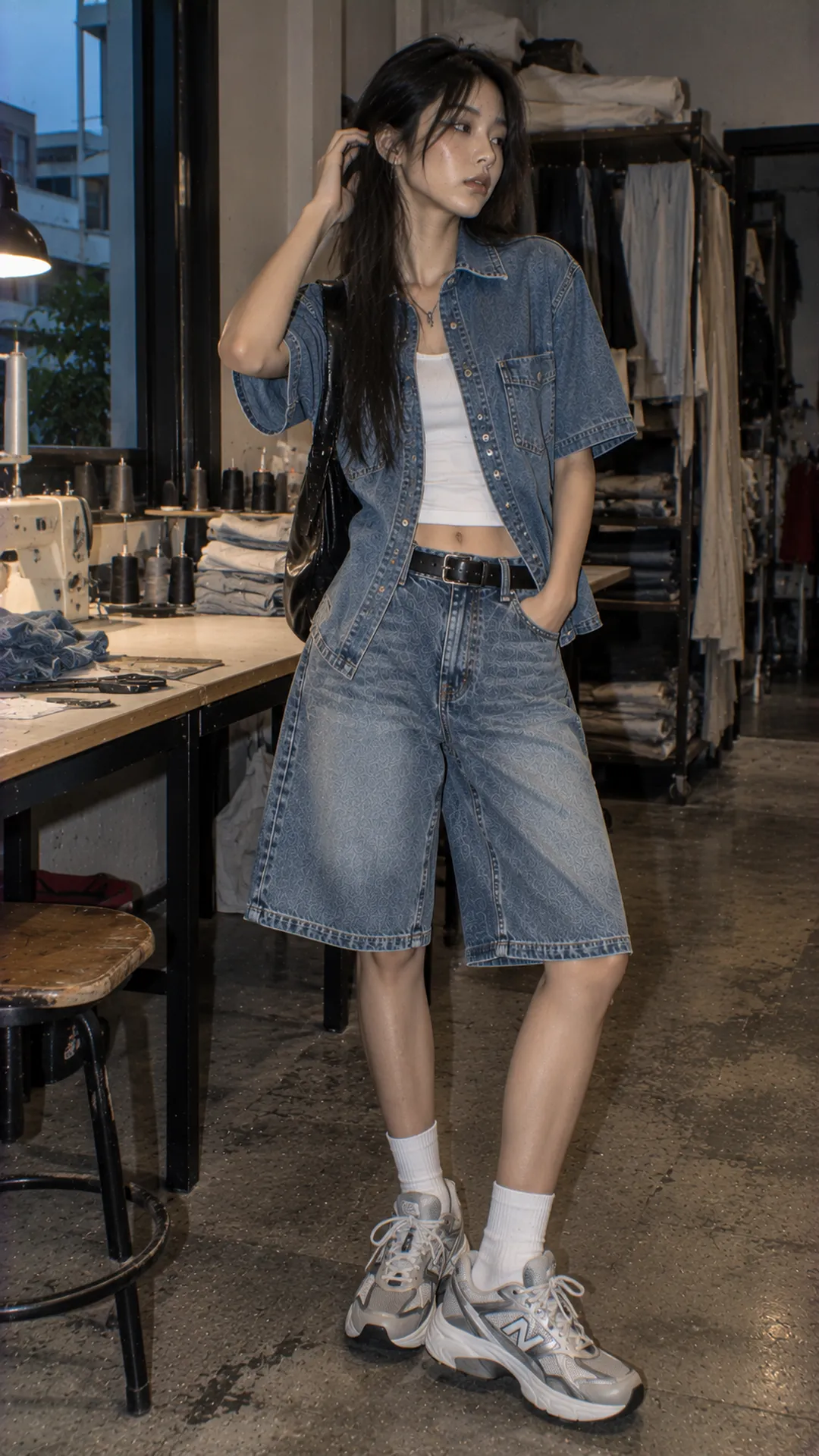
A short-sleeved denim shirt and Bermuda shorts for hot days
Try a boxy short-sleeved denim shirt with minimally detailed denim Bermuda shorts. Choose one softer piece so the outfit is not too rigid. The shirt can be buttoned as the main top, avoiding an extra outer layer in high temperatures.
Test the shirt both untucked and lightly tucked. If it covers most of the shorts, change one piece's length to make the division clearer. Securely strapped sandals or streamlined sneakers can work depending on your schedule.
You do not need both pieces in the same size. The shirt and shorts may need different sizes to fit well. For a ready-made set, ask for each garment's measurements and whether separate exchanges are possible before buying.
What should accessories and inner layers do?
An inner top can separate the two denim areas or brighten the neckline. Choose its neckline and length for the section you want to reveal. White is not the only option: gray, black, cream or an accent color can work if it has a purpose in the outfit.
For a belt, decide whether you need to hold up the trousers or simply add a horizontal line. A large buckle emphasizes the waist but may compete with the shirt's metal buttons. If the shirt is already detailed, a plain belt with a small buckle is often easier to coordinate.
Your bag and shoes do not have to match. Let one stand out and the other stay quieter. With gray double denim and a small green bag, for example, black shoes keep the lower half grounded. For strongly colored shoes, try removing some jewelry near the neck so attention is not pulled in too many directions.
Do not add a denim bag just because the outfit already has two denim pieces. A third is worth using only if you like its shape or function. Two main garments are enough to make an outfit denim on denim.
Check the whole outfit before going out
Check the temperature: two denim garments do not require two thick layers on the upper body. Choose a weather-appropriate top, considering the lining and overlapping fabric at the waist. If you already feel hot trying it indoors, accessories will not fix that.
Check movement: reach forward, sit down and step onto a stair. Notice whether the shirt back pulls, the waistband digs in or the hem catches on your shoes. Test the actual bag, because its strap can pin a jacket down and restrict your shoulders.
Check the destination: clean denim with little distressing may suit some relaxed offices, but follow the specific rules. A formal meeting may require something else, however neatly your denim is styled.
Keep a repeatable formula and change one variable
When you find a double-denim outfit that suits you, save a full-outfit photograph with a short note on shoes and the tuck. Next time, change one variable: the inner top, bag or how open the shirt is. That makes improvements easier to identify than changing everything at once.
Care for each item according to its label, especially when the top and trousers have different surface treatments. Do not assume they need the same washing method because they match. To preserve a coordinated appearance, observe color changes with use and adjust the styling as needed.
An easy-to-wear double-denim outfit starts with two well-fitting pieces and a clear relationship between them. Matching and contrasting colors can both work; the final decision rests on the cuts, surfaces and how the outfit behaves in motion.