

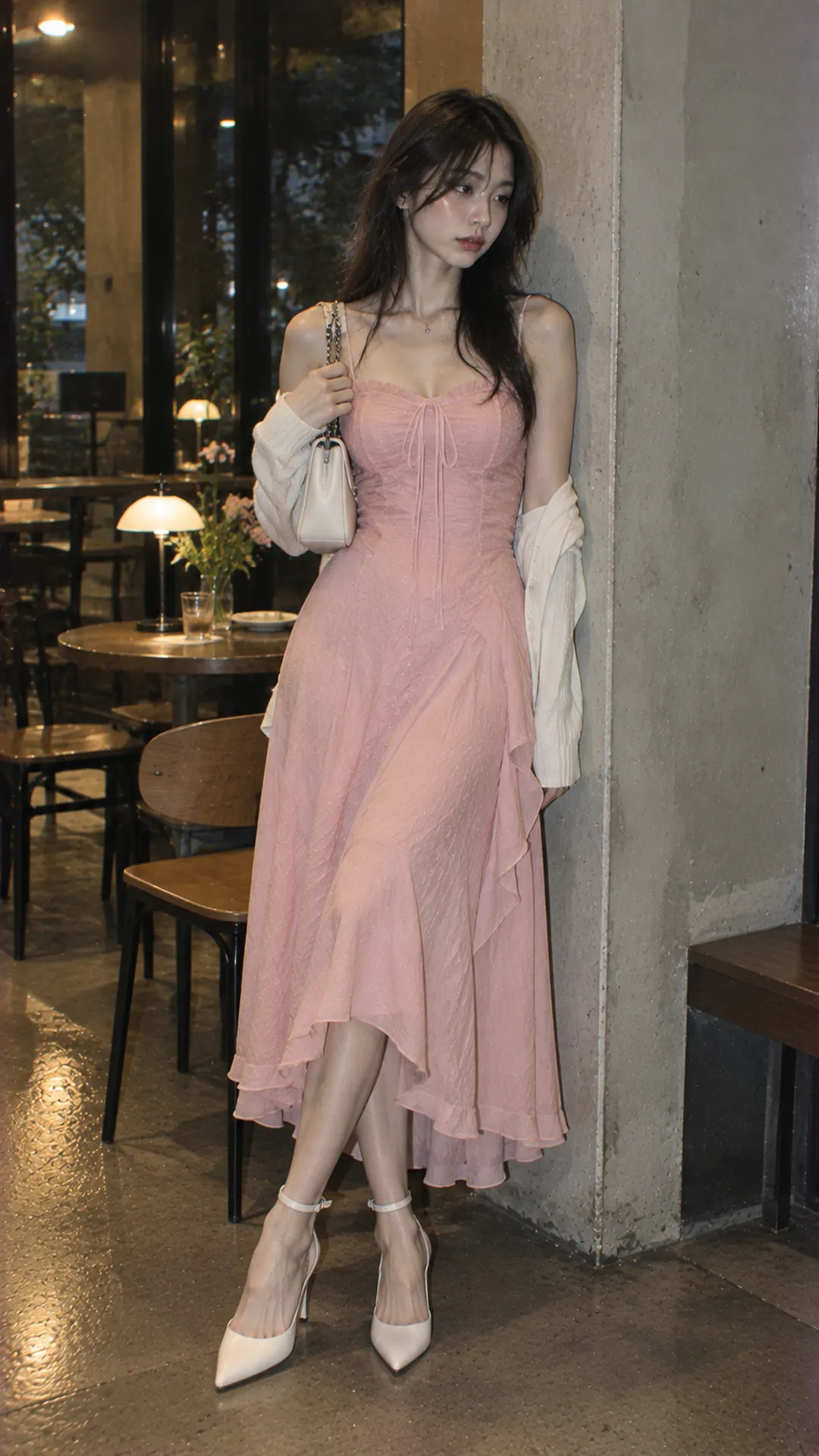
Look at pink across the whole dress
Pastels usually create light areas; dusty pink is more muted; peach leans warm, while fuchsia feels deep and prominent. Sales names are inconsistent, so examine real photographs under varied light rather than deciding from “powder pink” alone.
Place the dress beside its intended partner rather than relying on color memory. A cream bag may sit close to peach but contrast more with cool pink. No fixed skin category determines permission; test near your face to find the contrast you enjoy.
Surface also changes color presentation. Reflective fabric makes pink shift lighter and darker with folds; matte surfaces look more continuous. Online, movement video and close-ups often explain a dress better than one heavily brightened photograph.
Do not seek exact shoe-bag-dress matches through screens alone. Three almost-matching pinks can differ from your intention in person. Without direct comparison, choose intentional contrast, such as pale pink with burgundy, instead of chasing an identical shade.
Silhouette and neckline guide the remaining accessories
An A-line dress opens from waist or torso toward the hem, a straight dress falls more freely and a fitted one defines body lines. Choose comfort and desired emphasis rather than body-shape prohibitions. In the same pink, changing silhouette may do more than changing the bag.
A square neck and puff sleeves already create clear upper volume. Try neat earrings and tucked-back or tied hair to reveal the neckline. With a high neck or layered ruffles, a large necklace can crowd an already prominent area; move emphasis to wrist or bag.
Try straps or open necklines with the intended undergarment. Check adjustable straps, stable cups and neckline movement when bending. If you continually hold the dress in place, address fit or choose another design before buying accessories to rescue it.
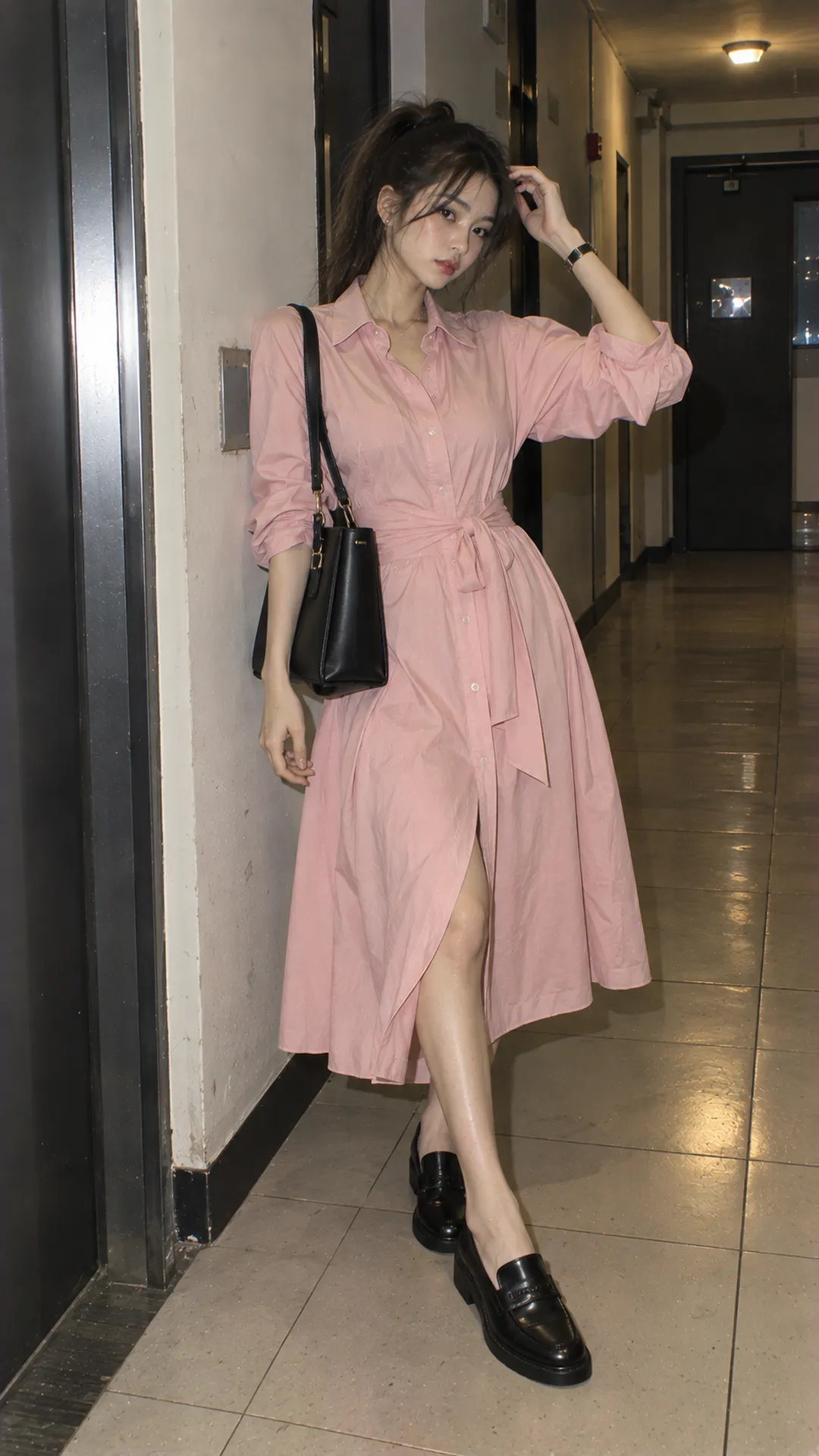
Buttons and collar already structure a shirtdress. Add a belt only for desired waist emphasis when the fabric allows; not every dress needs cinching. The women's dress guide helps you continue by the shape and length of your existing dress.
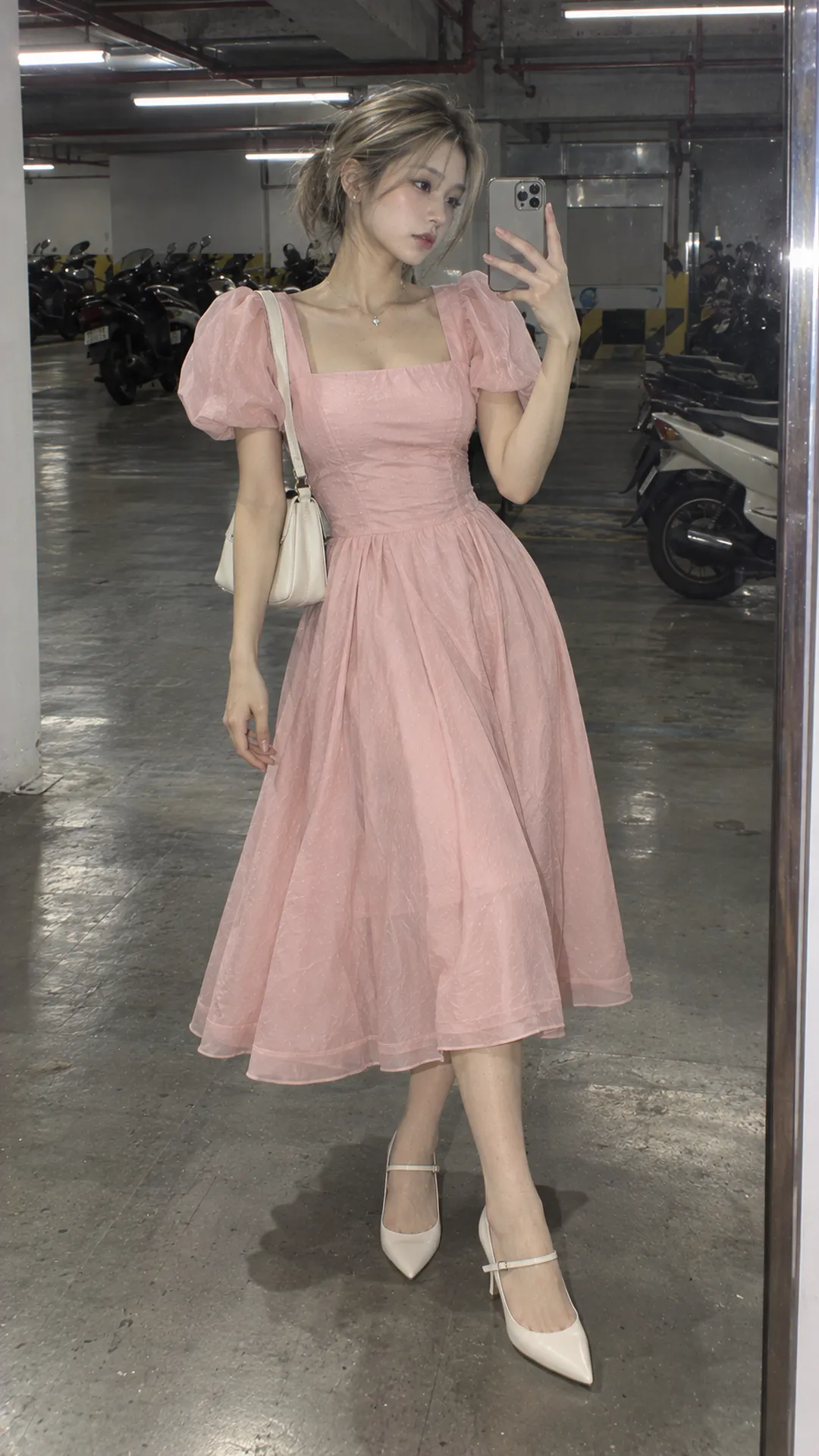
Check lining, transparency and fabric
View light fabrics under realistic lighting. Stand near a window, sit and walk to inspect transparency, tension folds and lining movement. A shorter lining may be intentional, but know where its endpoint sits on you.
Sales fabric names do not always identify fiber content. For example, Adeline's TK09 dress uses the Vietnamese term “tơ” in its description but lists 100% polyester. Do not read “tơ” as proof of natural silk or infer breathability from it.
In humid heat, consider total layers, closeness of fit, sleeves and outdoor time. A thin dress with several linings may feel unlike your expectation. For long sitting, check waist and thigh ease; for walking, test stride.
Embroidery, beads and bows affect care too. Ask whether they detach, catch bag straps and require particular washing. Do not choose from the front alone when the back or zipper may need the most adjustment.
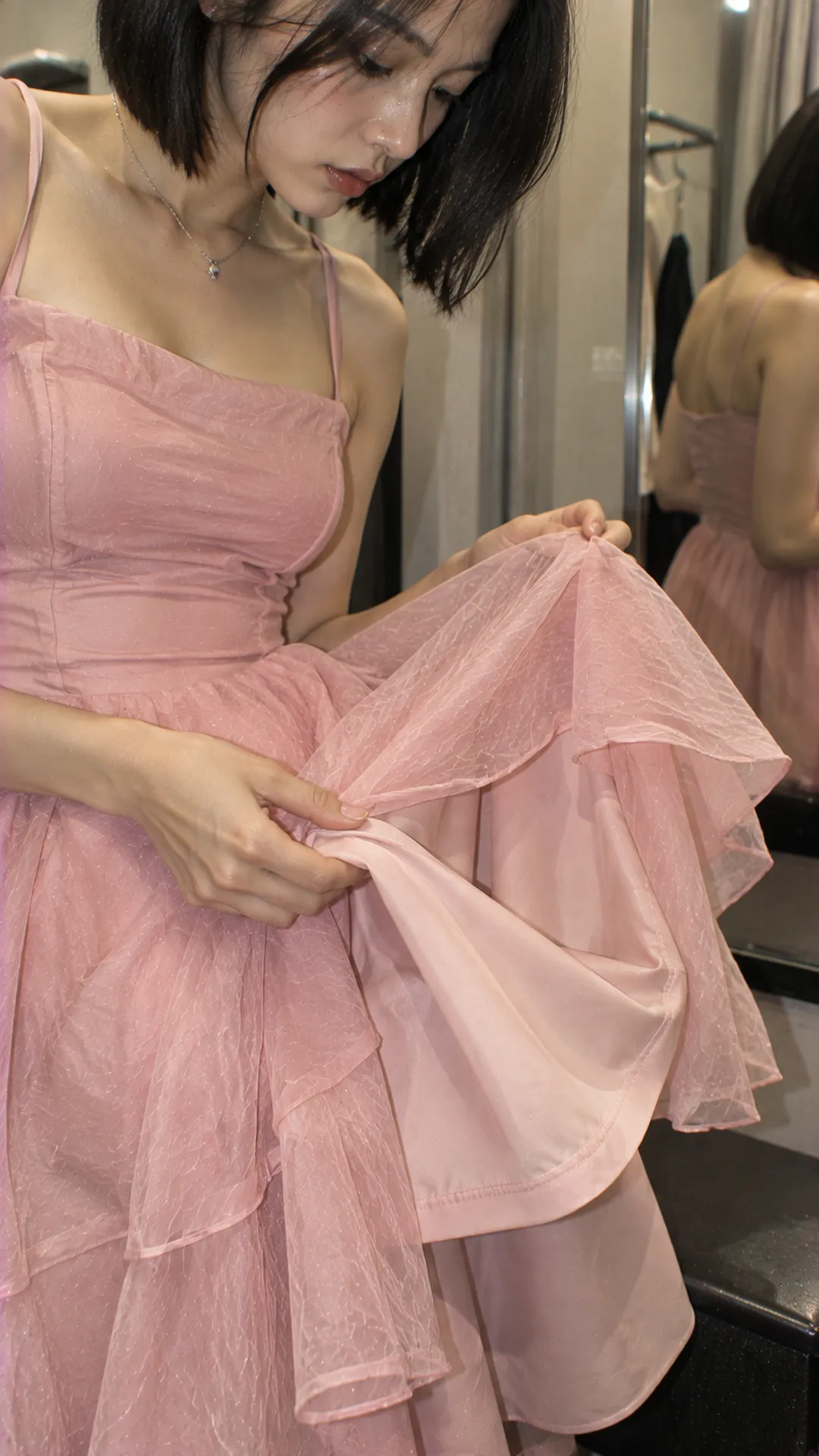
Choose shoe color for your intended effect
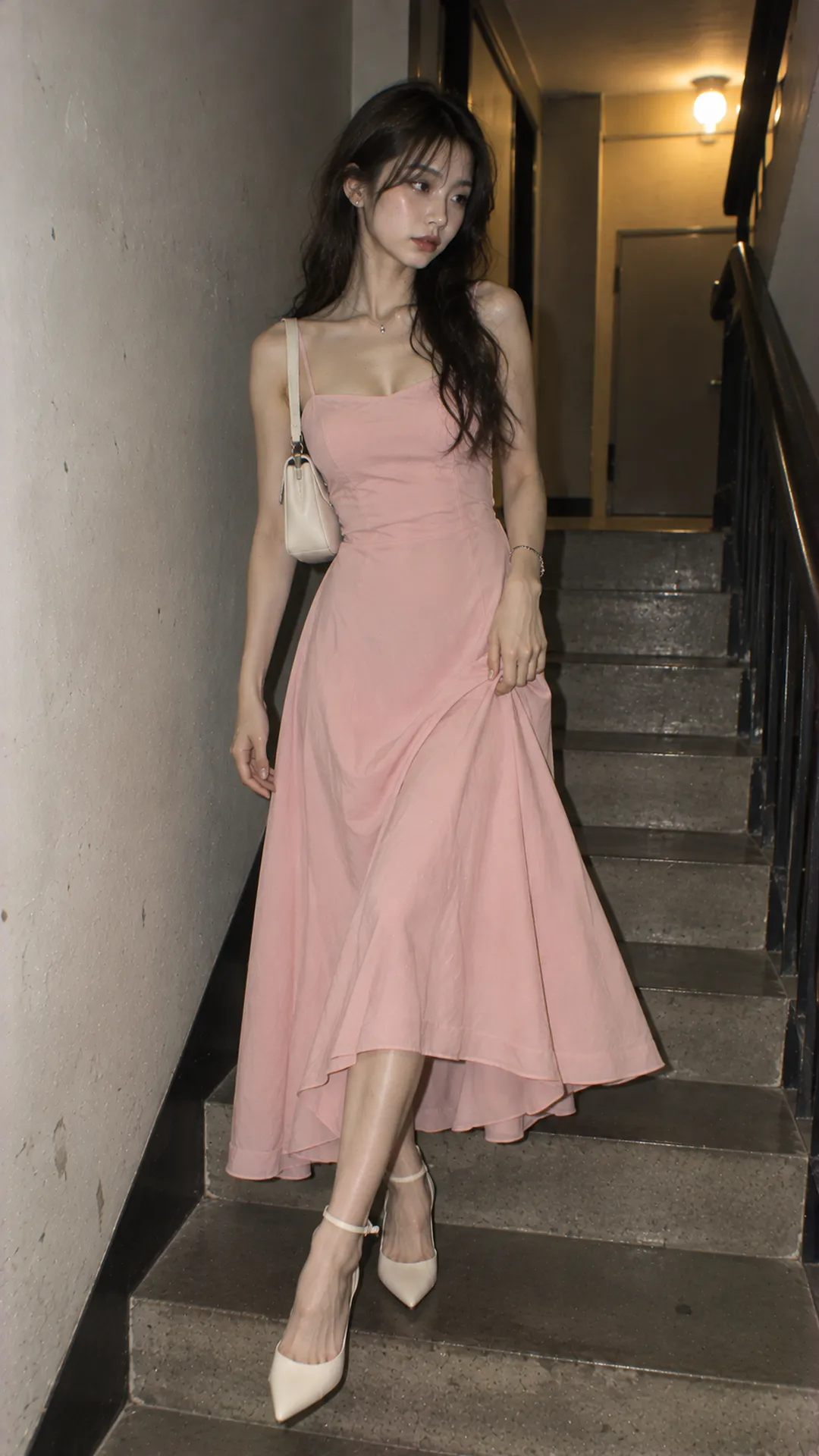
White or cream for a light overall result
Pale pink with white creates clear, clean contrast; cream produces another transition depending on the pink. With a soft long dress, try streamlined flats or minimally strapped sandals. White sneakers can suit casual plans, but compare sole weight with skirt volume.
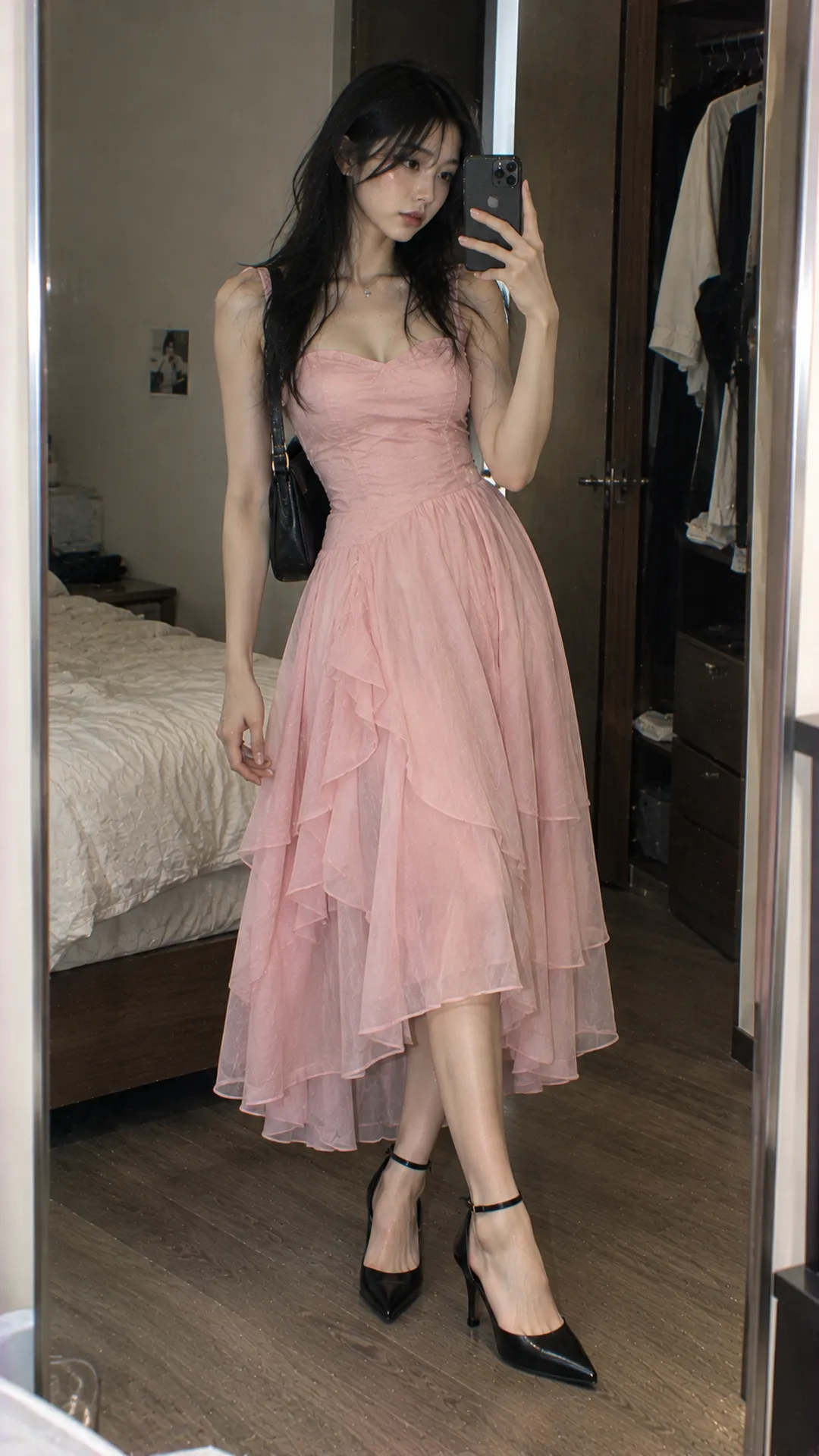
Black or dark brown for an anchor
Black defines the feet against a light dress. If abrupt, repeat it in a small bag or jacket rather than every accessory. Dark brown is worth trying with dusty pink for a dark area softer in effect than pure black.
Metallics for one highlight
Silver or gold can create a party accent. Choose the effect you enjoy and existing jewelry; no rule assigns every pink one metal color. With heavily strapped or jeweled shoes, a plain bag reduces competing detail.
Skin-adjacent colors are also options, judged on the actual wearer. Prioritize fit and schedule before color. The outfit-based footwear guide explores hems, exposed space and visual weight.
Three formulas from dress to complete outfit
A dusty-pink shirtdress for a polished day
Pair a knee-length or midi dusty-pink shirtdress with dark-brown loafers and a moderately structured bag. Buttons maintain verticality while bag and shoes anchor it. Where work permits this dress, check seated placket coverage and sleeve length against requirements.
A thick blazer is unnecessary merely to look office-ready. A light layer with fitting shoulders and enough sleeve room is often easier. Try it closed and open to retain the dress collar without bunching.
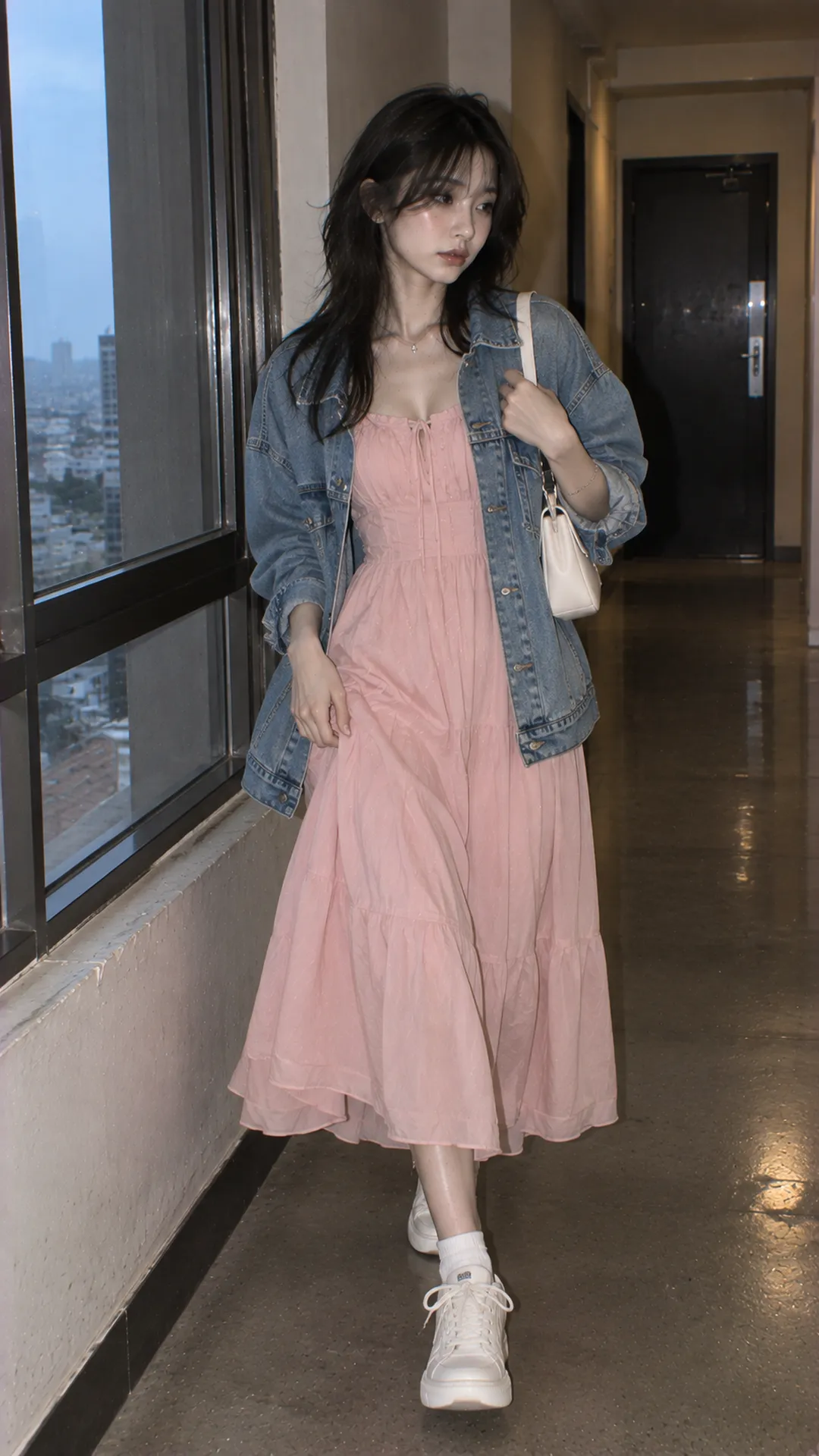
A softly draped pastel dress for an outing
Choose a pastel pink dress with few tiers, streamlined sneakers or flats and a small shoulder bag. For less sweetness, add a medium-blue denim jacket rather than several black accessories at once. Denim contrasts with the soft dress surface.
Test jacket length against the dress waistline. An ending exactly where the skirt expands may add a horizontal block. Try a shorter or open jacket, or less-flared dress, for a clearer torso line.
A plain fuchsia dress for a party
Fuchsia already supplies strong color: try a plain small bag, black or silver shoes and one main jewelry type. With a large shoulder bow, avoid long earrings catching it. Let one area lead instead of large details at neck, shoulders, waist and feet simultaneously.
Confirm formality for a specific dress code; bright pink alone does not establish appropriate partywear. Construction, length, coverage and venue still matter together. These formulas are starting experiments, not replacements for the organizer's requirements.
Choose bags, jewelry and jackets afterward
Try dress and shoes, take a full-body photograph, then add the bag. A large one may hide the waist or pleats; a tiny one may lack room for the day. Choose capacity first, then adjust carrying position to preserve key lines.
For jewelry, consider neckline, sleeves and print together. A plain dress with a simple collar offers more space than ruffled lace. Choosing accessories by focal area helps when individual pieces look good but compete together.
Check dress sleeves before adding a jacket: puffs can compress under a blazer and back bows can create bulk. For intermittent warmth, a removable layer may be more practical than one attractive only standing still. Preserve the movement you chose in the dress.
Fix three common fitting situations
Sweeter than intended: keep the dress and change one feature to a clearer line, such as streamlined black shoes or a plain square bag. Replacing all accessories changes too many variables to identify what works.
Good color, uncertain fit: inspect placket, zipper, waist placement and length before changing color. Pulling can result from size or cut, not pink being unflattering. Try another size or silhouette to keep the shade you like with movement room.
The received dress differs from the product photograph: compare in natural light, read the shade description and consult saved information. Do not wash or alter before checking returns. To continue with existing clothes, the garment guide helps select jacket, shoe or bag changes in order.
Care and storage to preserve the fabric's fall
Read the exact design's care label, especially color combinations, linings and attached details. Do not assume all pink dresses tolerate soaking, machine washing or the same iron temperature. Follow product-specific guidance for special finishes rather than generic tips.
Dry fully before storage and choose hanging or folding according to construction. Check closures, adjustable straps and seams before the next wear. When shade, silhouette and accessories share a purpose, small changes let one dress work in varied settings instead of requiring a new outfit each time.