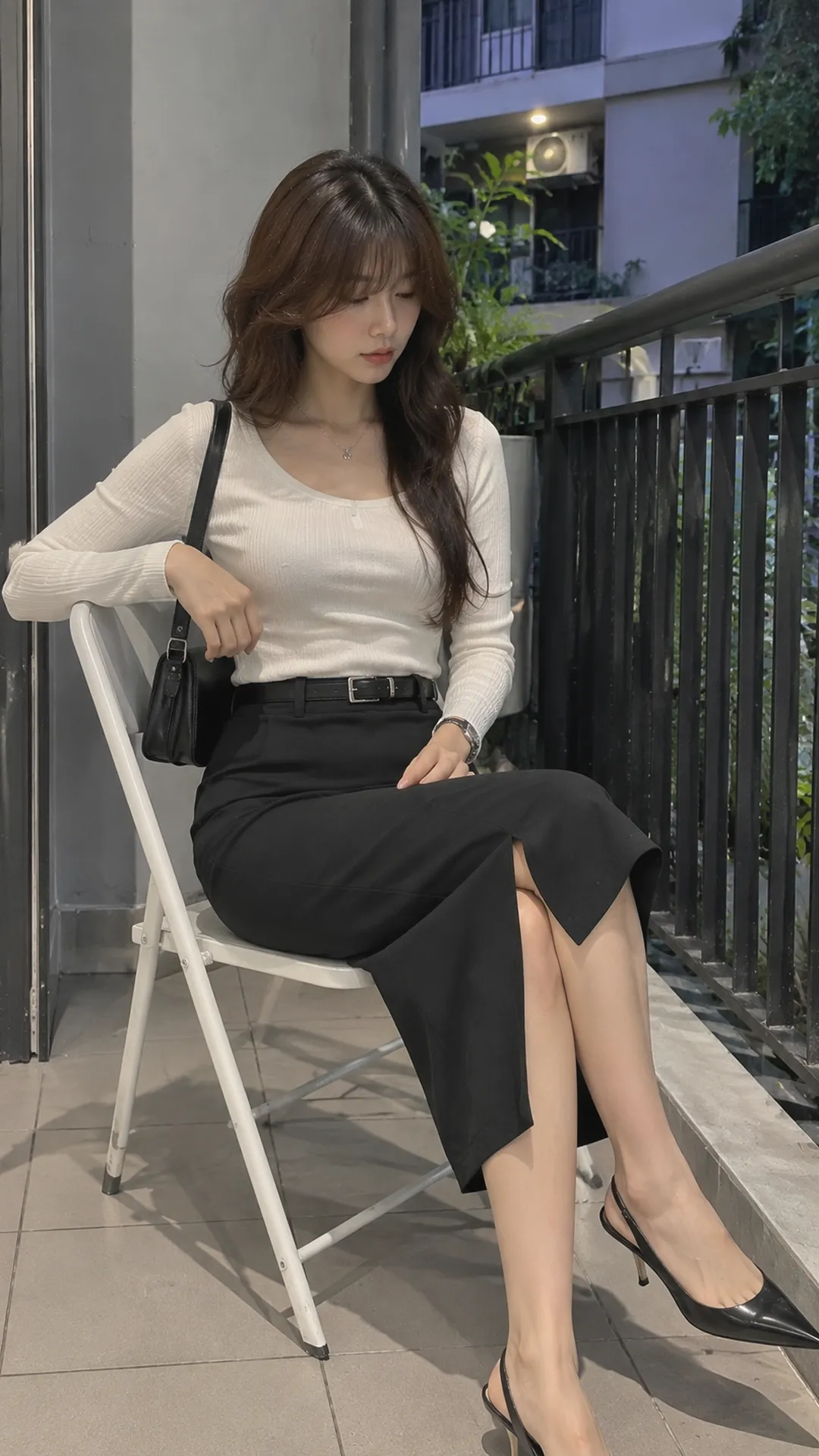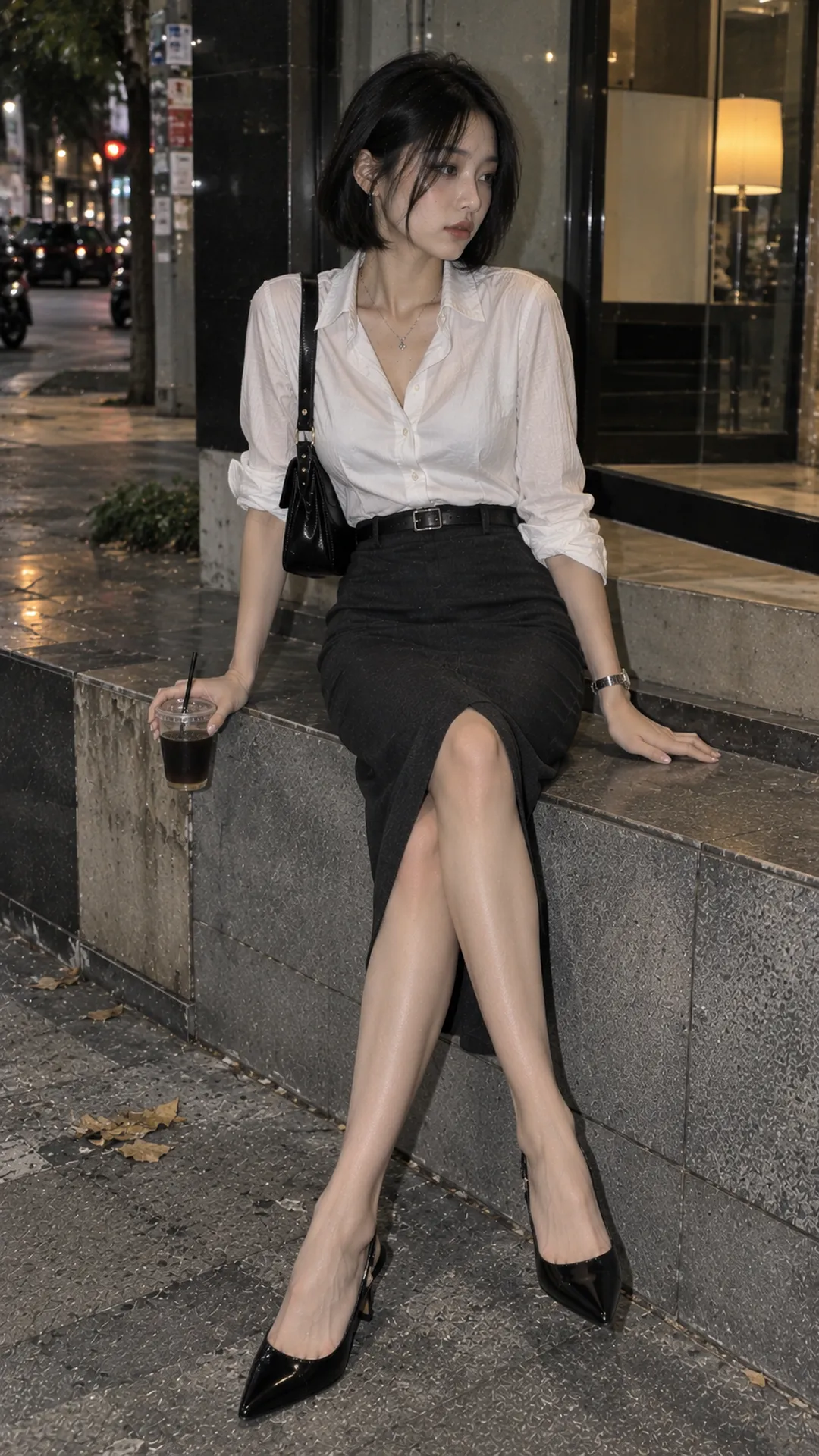
Distinguish pencil shape from length labels
'Pencil' describes shape, while short, knee-length and midi describe length. A long pencil skirt therefore belongs to the same family as a short one, but requires different attention to shoes and movement. Check front and back photos and measurements rather than choosing by the product name alone.
A straight skirt may resemble a pencil skirt from the front. Sellers may also use several names for a stretchy, close-fitting skirt. Examine side seams, hem width and the slit rather than forcing a precise category from one photo.
When comparing A-line or mermaid skirts, notice where they widen. An A-line gradually flares; a mermaid skirt opens out lower down; a pencil skirt keeps a narrower silhouette. The guide to choosing skirt and dress shapes helps you compare styles before deciding.
A pencil skirt does not automatically belong to one aesthetic. A shirt can give it an office direction; a T-shirt and sneakers make it more casual; a dark top and sharp accessories take it elsewhere. Fabric, proportions and accompanying pieces shape the overall look.
Choose length for your plans and shoes
Short designs: check them sitting down first
A short pencil skirt exposes more leg, but assess its length while seated. Sit in a chair, stand and reach into your bag. If the hem rises beyond your preference, try a longer design or one with more suitable hip room instead of repeatedly pulling it down.
With a loose top, reveal some waist boundary or skirt hem so the pieces do not merge into an unclear block. A neatly tucked T-shirt or short jacket creates different proportions from a long sweater covering the hips. There is no single correct choice; decide whether you want to emphasize the waist, legs or upper-body volume.
Knee-length designs: compare the hem in motion
Knee-length skirts are often considered for plans requiring a polished appearance, but exact placement depends on height and proportions. The same centimeter length may fall above or below different people's knees. Do not buy solely because the model's hem sits where you want yours.
Try the shoes you will actually wear. Loafers add a distinct shape at the feet; sleek-toed shoes keep the lines light; sneakers change the formality. If your setting has a dress code, check the shoes and slit as well as skirt length.
Long designs: allow room to step
A long pencil skirt extends the silhouette downward, but a narrow hem may restrict your stride if the design lacks movement room. Check its slit or opening while walking, stepping up and sitting. Stretching the fabric by hand cannot establish how easily you will move.
If the hem approaches the shoe collar, examine their meeting point: edges that repeatedly touch can make the lower section look heavy. Change the shoe height, skirt length or shoe shape. The guide to choosing shoes for trouser and skirt hems explains how to balance this area.
Check the waist, hips and slit together
The waistband should sit where you intend to wear it
Measure and try a high-waisted pencil skirt at its intended height. A waistband that fits only when pulled lower may not suit your planned outfit. Sit and breathe normally; definition should come from the cut rather than holding your stomach in throughout the occasion.
Allow enough hip room to sit and turn. Persistent horizontal pulling, a skewed zipper or side seams drawn forward signal a fit issue. Do not automatically size up when only one area is wrong; a different cut may suit your proportions better.
Check the slit while walking
Back, side and front slits differ in appearance and exposure as you move. Take a moderately long step, step up and sit to assess comfort. A slit that looks closed while standing may open more than expected as you change position.
Do not sew a slit shut for more coverage without checking its function. On a narrow hem, that may make walking harder. Discuss preserving movement room with a tailor, or choose a design whose construction already suits your needs.
Lining and stretch matter too
A stretchy outer fabric can still feel tight if the lining restricts movement. Turn the skirt inside out to see where the lining ends and whether it follows the slit. Bend to pick up a light object and sit for a few minutes instead of checking only the outer fabric by hand.
Online, ask whether the chart gives body or finished-garment measurements. Compare a well-fitting skirt to visualize length and width. The guide to reading size charts and wearing ease gives general principles; do not apply one fixed centimeter allowance to every fabric.
Five outfit formulas for different uses
A shirt and knee-length skirt: keep the waist smooth
A tucked shirt and pencil skirt define the waist, but the tucked fabric should lie neatly. A very long, thick shirt may bunch under a fitted skirt. Try a more suitable shirt length or a tuck with less fabric rather than tightening the waistband to hold everything.
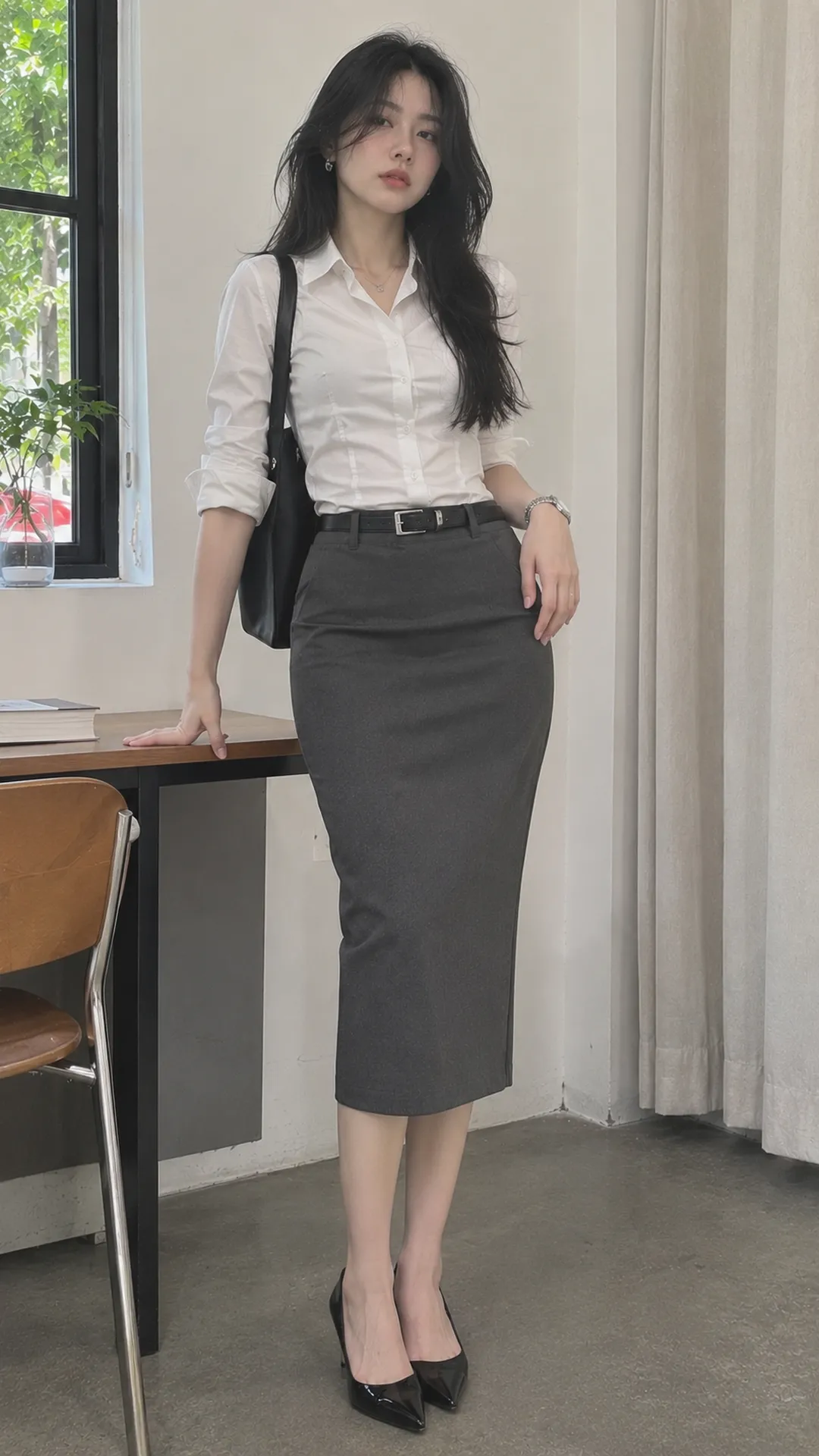
A white shirt and gray skirt work with sleek black shoes and a moderately structured bag. For more color, switch to pale blue or fine stripes while keeping the skirt plain. With buttons and a collar already adding detail, small earrings often provide enough around the face.
A T-shirt and long pencil skirt: reduce the office feel
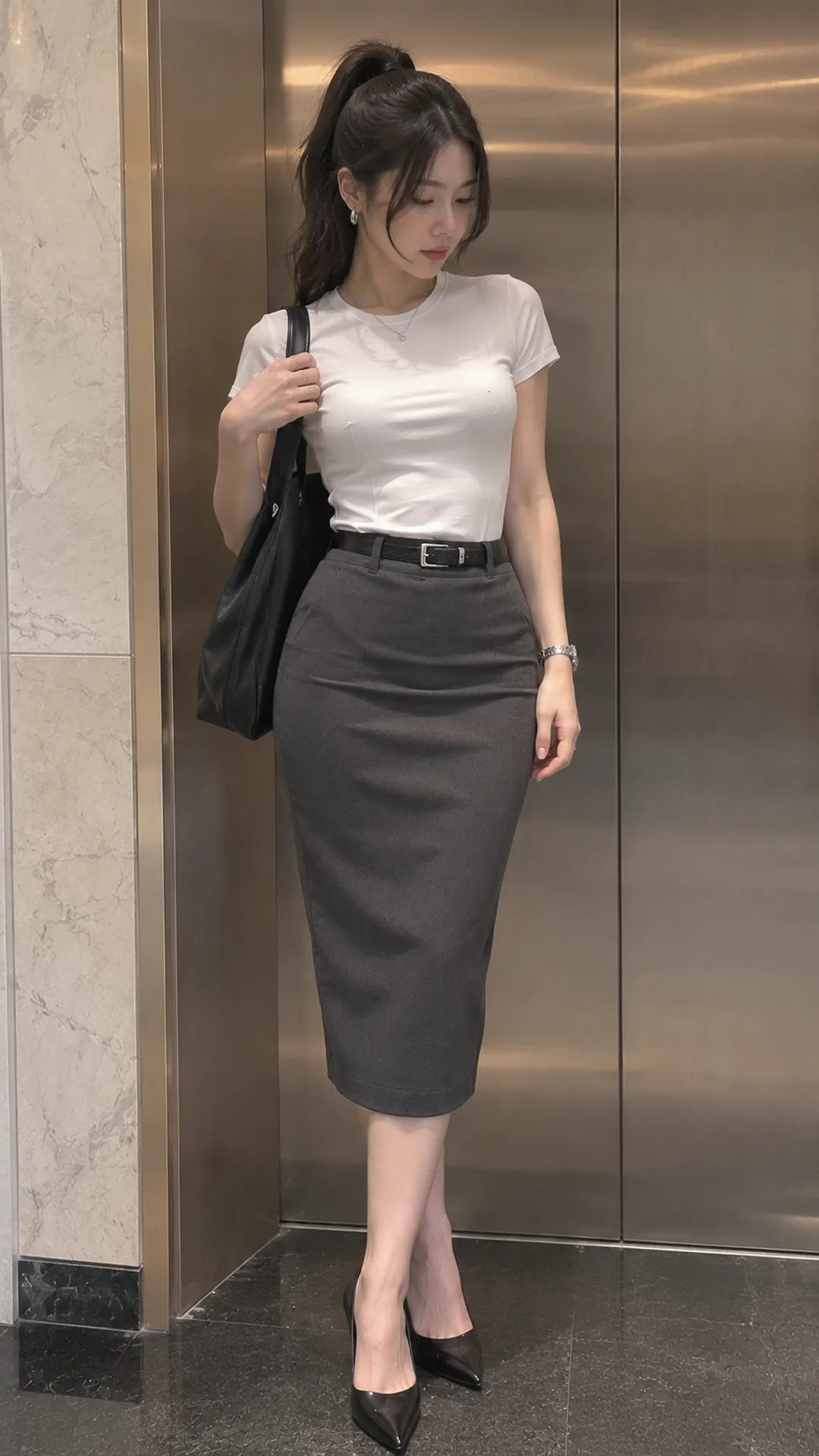
A plain T-shirt and long skirt can work for coffee or meeting friends if the fit allows easy movement. A full tuck defines the waist; a partial tuck feels more relaxed. Check the side view so excess fabric does not collect into a lump at the stomach.
Sneakers make the look casual, while simple sandals lighten the feet. If the skirt is patterned, start with a minimally detailed top. In an all-dark outfit, different surfaces can separate top and skirt without adding a bright color.
A neat knit and high waist: softness above, definition below
A thin knit ending near the waistband avoids tucking a lot of fabric into the skirt. A crew neck feels covered and neat; a V-neck opens space around the neck. If a tight ribbed hem makes the top puff, try a straight hem or different length.
When adding a cardigan, consider the combined thickness. Two thick knitted layers can make the upper body heavier than you want. Choose an easy-to-open outer layer and check the outfit without it, since you may move between outdoors and air-conditioned rooms.
A blazer and skirt: choose the jacket's endpoint
A short blazer reveals the waistband and hips; a long blazer creates an outer frame. Wear a long design open to preserve the base outfit's central vertical line. The jacket need not fit tightly just because the skirt does; moderate contrast can give the look more visual breathing room.
For sharper office inspiration, the Office Siren guide provides context on tailoring and accessories. A pencil skirt remains an independent item: wear it simply without needing tiny glasses, high heels or every detail of a particular trend.
An asymmetric top and plain skirt: concentrate the accent
With an uneven neckline or draped top, choose a skirt with few pockets or decorative fasteners so the top remains visible. A neat lower silhouette supports its movement. Add jewelry in areas that do not directly compete with the main detail.
Check the top while reaching and wearing a bag, since asymmetric sections can shift. An occasion outfit still needs to let you sit, eat and walk. Avoid relying on tape or constant readjustment to make an ill-fitting top work throughout an event.
Fabric and color: choose by their actual effect
Firmer fabric generally defines the cut; drapier fabric creates softer movement. Fiber names alone cannot establish comfort. Thickness, lining, construction and pattern all contribute. Ask for a video of walking and sitting if sales photos show only one pose.
With light colors, check transparency and underlayer outlines in strong light. With shiny surfaces, see whether reflections emphasize pulling lines. A skirt that looks perfectly smooth in studio lighting may look different outdoors or in an office.
Black, gray and brown combine easily within a narrow palette, but no color is compulsory for a pencil skirt. If the skirt is vivid, let the top and bag support it rather than competing. You can repeat a small shade from the skirt in earrings or a top's pattern.
Small adjustments for more wearable outfits
If the skirt keeps twisting as you walk, check fit and contact with inner layers before securing it with a belt. If the waist fits but the hips are tight, another cut or an alteration may work better than sacrificing comfort. If it fits standing but rises too far when seated, review both length and movement room.
If the upper body looks heavy, reduce sleeve volume or outer-layer thickness. If the legs look broken into too many sections, revisit the gap between hem and shoes. Change one factor at a time to understand what actually helps instead of replacing everything together.
Finally, try the whole outfit with your intended bag and shoes, walk around and sit down. A suitable outfit should not require constant tugging at the top, skirt or waistband. After wearing it, clean and store according to the label, paying attention to the zipper, lining and slit to preserve its construction.